On guard

My nurse’s breath catches. “Oh, no,” she says.

I am new here. Less than a year. “What?” I say.

“We have Janna Birchfield on the schedule.”

“Who is Janna Birchfield?”

Tonna leans back in her chair at the nurse’s station, a high set desk that runs behind the front office. We have new glass barriers along it to make it more hipaa compliant. It is also more claustrophobic. She throws her pen down. “She’s one of the most hostile people here. She’s known for throwing a brick through her second doctor’s plate glass window.”

“Ah,” I say.

“She was Dr. M’s patient but apparently she and Dr. K got in a screaming fight in the hallway. She is banned from that clinic. So we are the last clinic in town.”

My nurse knows the local stories and she has seen a lot. She doesn’t have a lot of unconscious monsters. Yeah, there is some impatience and some anger there, but she’s pretty good. No real fear, nothing cringing at her feet.

“Hmm. Let me talk to Marnie.” Marnie is our office manager.

Marnie and I talk. I read the last notes from Dr. M and an account of the screaming fight with Dr. K. I call Dr. K. I don’t know of anything that scares her and she is tough. I rather enjoy envisioning her yelling back at this patient.

The day arrives and Mrs. Birchfield is put in a room. Vitals are done. I go in.

Janna Birchfield is big. She weighs about twice what I do, and it’s muscle rather than fat. She looks solid. Not like a body builder, just strong. She tops me by nearly a foot. She looks sullen and unfriendly.

And I am looking at her monsters. Three are guarding a fourth, at her feet. Fear is there, anger is the biggest and posturing, like a body builder, in front. The third is morphing back and fourth: envy and hostility. The fourth is in a stroller, guarded by the other three. Asleep? Unconscious? Well, yes, duh, but it’s not often that a monster is so undeveloped that it is still an infant. Not good.

“Hi, Miz Birchfield. I am Dr. Gen.” I hold out my hand, moving slowly and smoothly. Her monsters alert, fear flinching and anger ready to punch. I stand with my hand out. She eventually touches it, glaring.

“Hi,” sullen.

“We need to talk about the clinic rules first.” I say calmly. Anger puffs up and her shoulders rise as the monster swells and takes control, her elbows rising and hands are fists. Her eyes don’t turn red, but nearly. “I have heard about your argument with Dr. K.”

Furious voice, “She screamed at me. She’s a horrible doctor! She got me thrown out!”

I am smooth and calm, “I am not going to discuss Dr. K,” I say. Honestly, it’s even more fun to think of Dr. K taking this on and not budging an inch. Dr. K is my size, small. “In this clinic, I need you to understand that you are not allowed to yell at anyone at the front desk, in the hallways or on the phone.” Anger flees immediately, small again and she looks confused. “You may not yell at the staff, at the other patients, or at anyone on the clinic property.”

“Why would I agree to that?” she says. She is mostly confused because I am not scared or angry. I am not behaving the way she expects, the way most people behave around her.

“If you are upset, the only people you can yell at are me or the office manager and you need an appointment.”

“They are rude to me!” Basically she means everyone. “You can’t make me do that!”

“Take it or leave it.” I say. “You need to agree and keep the agreement, or we will discharge you immediately. If you say no, leave now, and I won’t charge for the visit.”

Her monsters are confused. Anger has shrunk back down and they are conferring, heads together. Confusion has shown up as well, morphing though different colors and stripes, stars and paisleys. She stares at me, frozen hostility. I just wait, sitting in front of my laptop, serene. This is going well. She isn’t yelling and she hasn’t left.

“What if they are mean?” she says.

“You will make an appointment with me or the office manager, and we will help you.”

“Ok,” she says. The monsters are still surrounding the carriage, but really, now confusion is in charge. We work through the rest of the visit, as I get to know her a little. She has had a hard, hard life.

I let the front office and the nurses know the rules. The office manager and I let them know that this is a contract with the patient and she has agreed. They feel protected. They feel protected enough that they are nice to her. She behaves and starts, infinitesimally, to relax. She is still angry and hostile in the exam room but it’s not directed at me. It is directed at the entire world, the rest of the world outside the clinic. I try to help her medically but also let the monsters have their say. The visits start with anger and hostility but tend to subside into confusion. I am not getting at the fear or whatever is in the stroller. It is one of the large old fashioned ones, heavy, navy blue, where an infant can lie flat. Clearly it does not fold up to go in a car or anywhere else convenient. There are no toys hanging from the top or across it, no stuffed animals. Only a form under the blankets, always still.

I may reach that form, or not. I do not know.

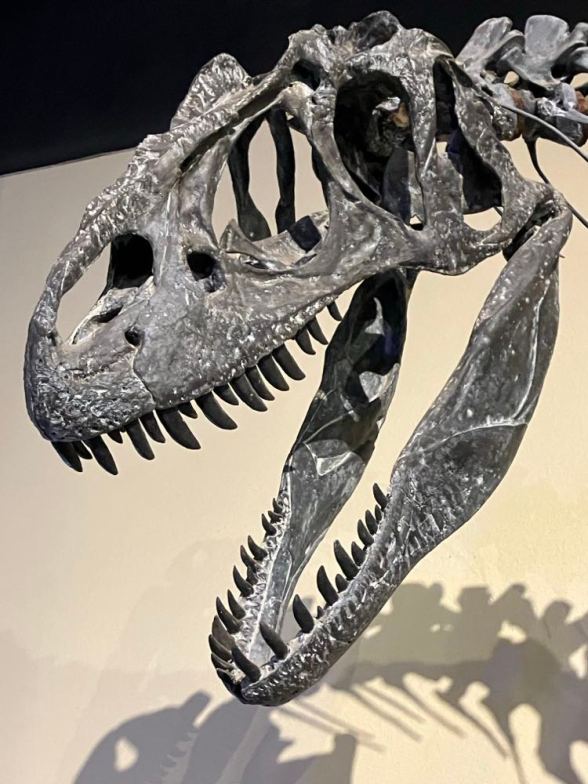
For the Ragtag Daily Prompt: paleontology.

Tenacity

Two skills needed in primary care are tenacity and listening. That is a combination that can make a diagnosis. Here is an example.

In residency, many years ago, I have a patient with developmental delay. He lives in a group home. He can’t talk though makes some noises. The group home staff bring him to me. His head is misshapen because his mother had measles in her pregnancy.

The staff says, “We think his head hurts. He just isn’t behaving right.”

“Did he fall?”

“We don’t think so.”

“Fever? Nasal congestion? Cough?”

“No.”

“How long?”

“Over the last week.”

I do an exam. I really can’t see his tympanic membranes because of his skull shape.

“Maybe he has an ear infection. I can’t see. We’ll try antibiotics, but if he is not improving, bring him back. In five days.”

They bring him back. “He’s no better.”

I get on the phone. I need a CT scan of his head and the group home say he won’t stay still. I need anesthesia to sedate him for the CT scan. It takes two tries and quite a bit of phone explaining with both the anesthesia department and the radiology department. Persistence. I am looking for a subdural bleed in his head from a fall, or a sinus infection, or something.

It is done and I get a call. Not from radiology or anesthesia but from the ear, nose and throat surgical resident. He is very excited. “Your patient!”

“Yes,” I say.

“He has a pseudocyst! In his sinuses! He has abnormally large sinuses and this is the biggest pseudocyst anyone here has ever seen!”

“Um, ok.” Honestly, I’ve never heard of a pseudocyst. It turns out to be packed nasal drainage in the sinus. Bad ones can erode through bone into the brain. Certainly that seems like the cause of the headache!

“We are taking him to surgery!”

Residency can be pretty weird, when someone gets really excited about a rare disease or interesting trauma case or whatever. I found that I was entirely happy just doing health maintenance exams and encouraging people to quit smoking and exercise and drink less. However, I was also good at finding weird things.

The ear, nose and throat surgeons in training were very happy about the surgery. The group home staff were happy too. “He’s back to his old self. Thank you!”

It took tenacity to set up the head CT. It’s important to listen to the families and caregivers too, because they know the person better than I do. They were right: his head hurt. And we found out why and were able to treat it.

For the Ragtag Daily Prompt: tenacity.

Water is tenacious too, wearing down stone and wood and glass.

Nanowrimo

I have finished my first try at Nanowrimo.

I do NOT have a coherent novel at the end. I have pieces and sections and chapters and questions. I have to look up a bunch of microbiology and also how the goblets cells in the stomach work, because I don’t remember and anyhow, I am sure it has changed since I was in medical school.

BUT I DO have 50,000 words.

I got stuck twice at the beginning and had two days where I didn’t write anything except this blog. And then another two. I kept dreaming about an ogre who wanted to be in the novel. Well, ok. I finally decided that the goal was to write the 50, 000 words, not stick to an outline. I added the ogre and have not missed a day since. To finish 50,000 words in 30 days, it breaks down to 1667 per day. If you miss four days it is more. I had two days where I wrote over 5100 words. That helped a lot.

Now I think I will rest for a day or two and then start looking it over. Write a list of questions, work on some needed research, think about it. That ogre is interesting. Unexpected.

I think it was fun! At least, some of it was. I got stuck writing about something based on when I was ill, so that was difficult. It brought up the fear and the deep loneliness of that time. I learned to skip to something else when I get overwhelmed.

Anyhow, HOORAY!

Covid-19: aftermath

I am thinking about the roaring twenties a lot. I think people went a little nuts, not because of the war, but because they had difficulty being emotionally honest about the influenza pandemic. I think we humans will do it again to forget the deaths, to go into denial, to refuse to grieve.

Yes, that is my prediction.

Be very quiet, I am hunting wabbits.

Be careful in our future roaring twenties. Money will flow like honey and people will go nuts. Hold fast, hunker down, don’t go out without your macintosh, wear clean underwear. Remember what your mother told you, remember what your father tells you. Because that was followed by the Depression and that is one risk.

I don’t know if it will start this spring or next spring. Ok, I AM hoping that my son and future daughter-in-law can get married in early May, since they’ve put it off for two years. But. The 1918-19 influenza was really three years, not two. It tailed off. Half the people in the world got it. In Samoa, half the adults died, or was it 70%? They had little exposure to infection but a ship brought it. They KNEW they were high risk, but a sailor didn’t know he was sick yet.

Why a roaring twenties? Because we want to forget this pandemic, as the last one was forgotten. Our history books say that the Roaring Twenties was about the end of World War I. We teach lots about that. We barely mention the influenza world pandemic. I am reading a book about the 1918-19 influenza pandemic published in 2018. The author says that it is only now, 100 years later, that we are starting to really tell the stories of that pandemic. She gathers stories from all over the world, including stores of different infection control strategies in two cities. One guessed right and one guessed wrong, and in the wrong one, way more people died.

I read about that 1918-19 pandemic after influenza nearly killed me in 2003. I was 42, healthy, a physician, a mother, an athlete. I had NO risk factors except stress. Now it looks like it was a PANS reaction, but at the time, neither my doctor nor I could figure out why I was short of breath and tachycardic walking across a room for two months. Fatigue, chest pain, tachycardia, shortness of breath. Hmmm, what does that sound like? My partners thought I was faking and I was so sick that I could barely communicate. The stresses were my mother dying of ovarian cancer in May 2000 and my marriage being pretty on the rocks and me working way too hard. My psychiatrist said I should take time off. I said, I can’t. He said, you’d better. Then I got flu. “See?” he said. The body decides, not the conscious brain. He was correct, damn him.

The book I read in 2004 looked dry and medical from the outside. It had pages and pages of footnotes. It had photographs of Los Angeles. They knew the influenza was coming towards them like a wave and they tried to get ready. Bodies under sheets were stacked five deep in the hallways of the hospitals. It hit that fast. People, usually age 20-50, turned blue and fell over dead. WHY? It was the immune response. The 20-50 year olds had a better immune response than the 50 and older and their lungs would swell until there was no airspace left. Even then, that pandemic death rate was only 1-2 % in the US. But it was so fast and spread so quickly that everything was disrupted because it was the workers that were deathly ill and at home and there was no one to work.

People wore masks in public, except for the mask refusers, but not in their homes. So entire families would get ill. I don’t think they had figured out viral loads yet. If you are the last one standing, and you are trying to take care of a spouse and six children, you were high risk from viral load and exhaustion.

The Roaring Twenties WAS a way to grieve, it’s just a dysfunctional one. The stages of grief: denial, bargaining, anger, grief and acceptance. My sister said that acting out and revenge ought to be added as stages of grief. She died of breast cancer after fighting it for 8 years. Roaring is denial and bargaining and acting out and revenge, all at once. Everyone grieves differently, remember that. There is not an order to the stages of grief and you don’t do them once. You do them over and over and over.

I am a Cheerful Charlie, right?

War is one way to forget/deny/act out. Let’s not do that. Let’s not have a civil war of forgetfulness and denial.

Let us remember clearly and lean on each other.

Playing for change: lean on me

I think this fits the Ragtag Daily Prompt: inflammable.

My sister’s blog: https://e2grundoon.blogspot.com/2009/01/chemo-not-in-vain.html . She died on March 29, 2012. The start of the blog is here: https://e2grundoon.blogspot.com/2002/02/ .

Blessings.

______________

I got Cheerful Charlie from Pogo comics: read the Albert Alligator section. https://comicstrips.fandom.com/wiki/List_of_Pogo_characters
More recently, Downton Abby used Cheerful Charlie. https://downtonabbey.fandom.com/wiki/The_Cheerful_Charlies

cracks

For the Ragtag Daily Prompt: fault.

I realized last night that I had not put up the prompt, and got back up to do it. My daughter called while I was thinking and told me about segmentation faults. I wrote the poem this morning.

cracks

people talk about me

whisper gossip
social skills aren’t right

they only see now

I had to grow in cracks
hold on tightly
find nourishment where I could
not fall
survive

if they could see my roots
if they could see
where I had to grow
no choice

maybe they would be kinder

door to the past

For Norm2.0’s Thursday doors.

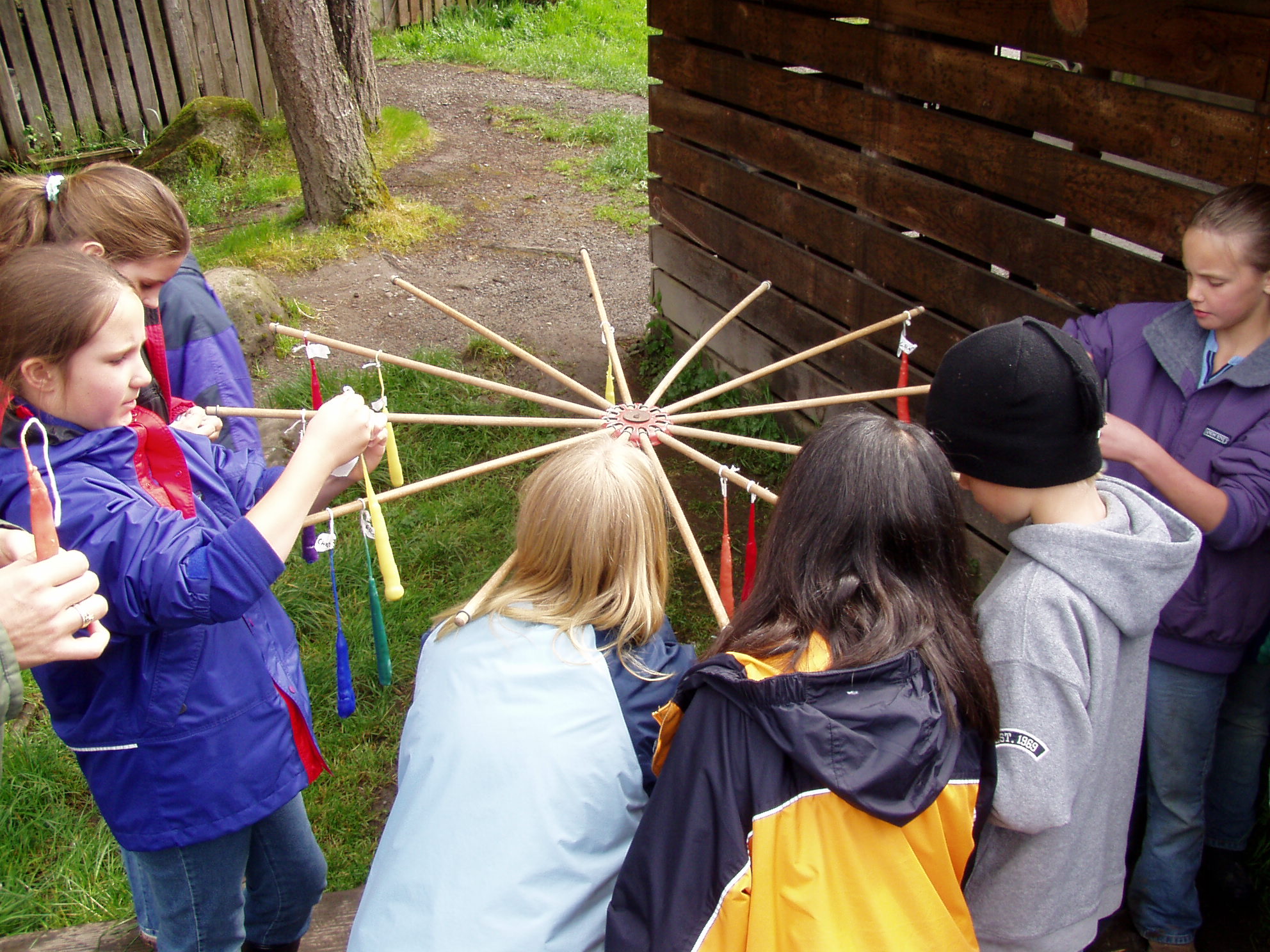
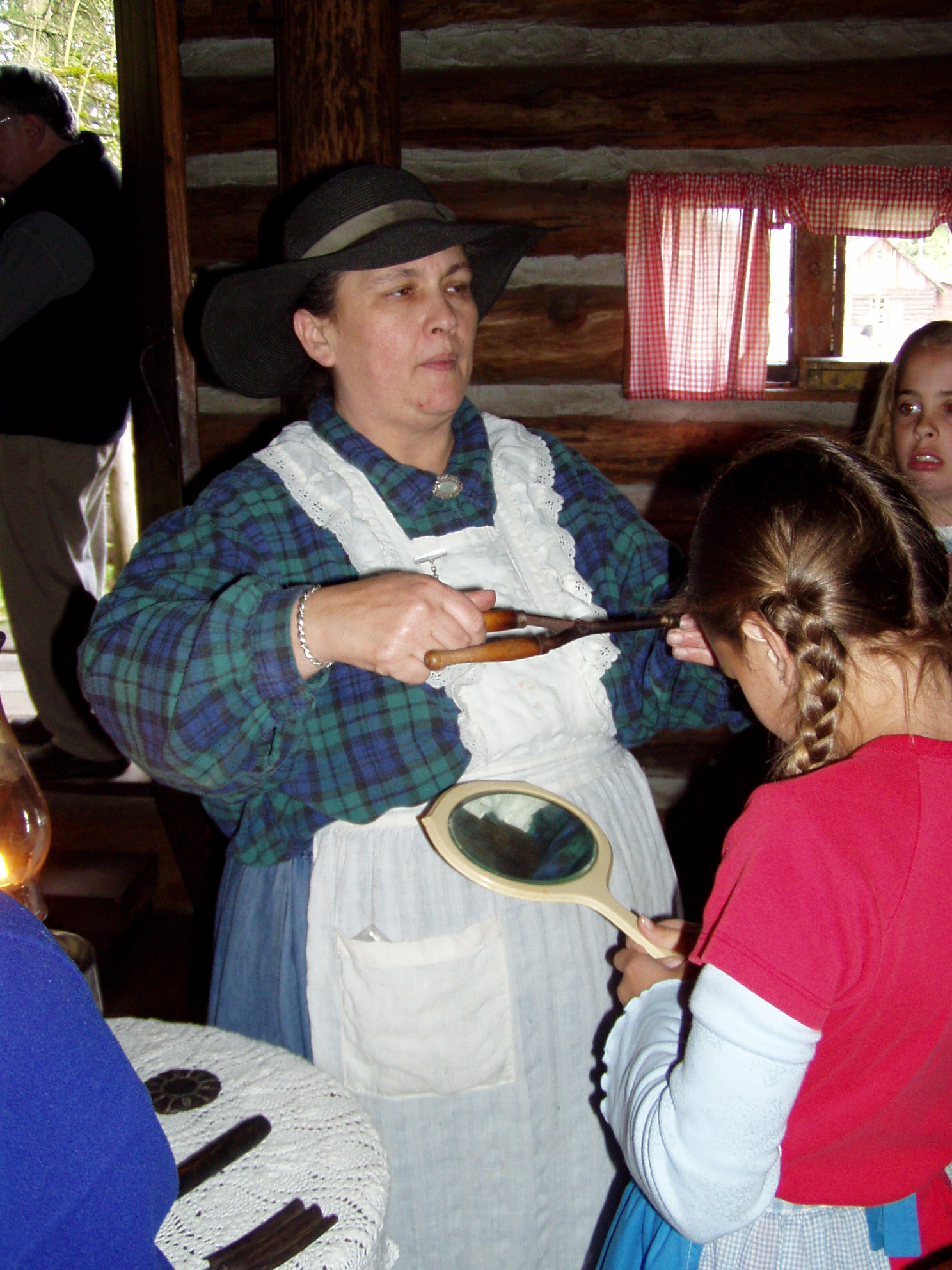
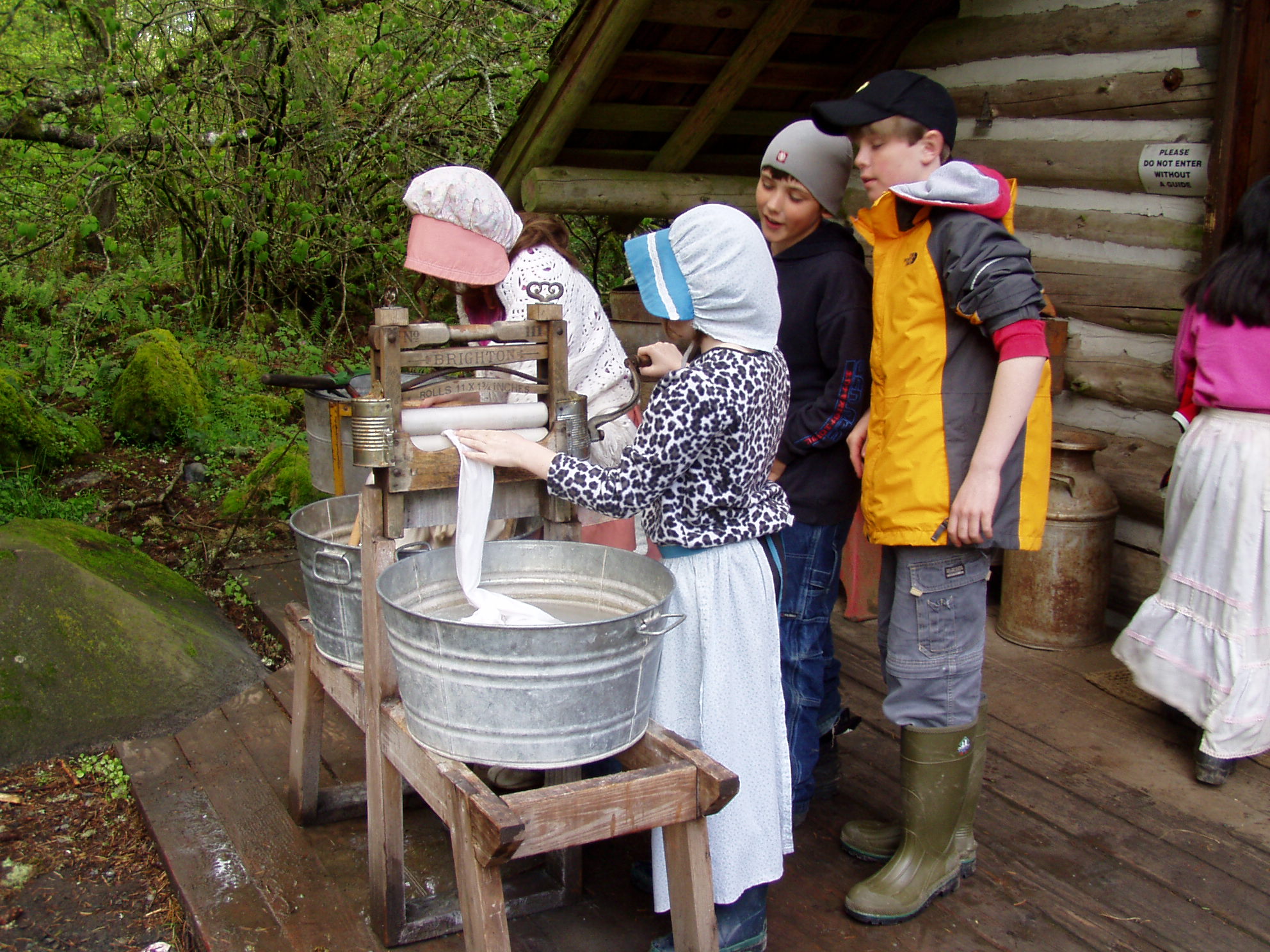
These are taken on a 2004 school trip to a pioneer farm and native american village site with a school trip. I don’t think I got a photograph of any of the cabin doors, but it was certainly an interesting trip. The parents chaparoned the kids, staying in the cabin over night. We all slept in sleeping bags on the floor. I did sleep, since I am lucky enough to be able to ignore noise. The kids got to dip candles, explore the cabin, explore the village, and were assigned the farm chores in the morning. My son was delighted by a young pig. I think the parents enjoyed it as well and were glad not to wash clothes using washtubs and a wringer.

students hanging dipped candles to dry
Dipping candles
student in vest, cowboy hat and bandana
dressing as a settler
students at pioneer cabin learning about curling iron that you heat in a fire
curling iron and other tools
two students in sun bonnets using washtubs outside a cabin, while two others watch
old style laundry
three students patting a sleeping pig
morning chores

Mundane Monday #191: reflection

For Mundane Monday #191, well, it’s New Year’s Eve: so my theme is reflection.

What are you reflecting on this New Year’s Eve? What photographs have you taken this year that reflect what you love, what you value, what you learned? Or just have a reflection?

Link by message or to this post and I will list them next week. Happy New Year!

______________________________

Last weeks prompt was nature’s patterns. Everyone was busy! Hopefully with family or friends or both, and hooray for that!

Late entry: klallendorfer with a lovely reflection on the end of the year and resolutions.