Pulmonary Manifestations of Long Covid

Today’s Zoom lecture was about pulmonary manifestations of Long Covid, and this is from the Schmidt Initiative for Long Covid Global ECHO Webinar Series, out of the U of New Mexico.

First of all, the talk is brilliant. The speaker is Lekshmi Santhosh, MD, MAEd, Asso Prof Med, Pulm Critical Care Med, UCSF, Intensive Care.

Two things to start with: she stressed the six minute walk test for patients, to distinguish oxygen desaturation (dropping) from the people who have terrible tachycardia (fast heart rate) only. The oxygen drop indicates that the person needs lung studies and may need oxygen, while tachycardia alone means either a heart problem, chronic fatigue/ME pattern or dysautonomia, where the heart goes fast when the person sits or stands up. Her point was that it’s a simple test and that Long Covid presents in multiple different patterns.

The second point is that there are least five main mechanisms that Long Covid can mess us up and people can have one or many. There is a review article in Nature last month (I need a copy!) and it talks about these five: immune system problems, gut microbiome problems, autoimmune responses, blood clotting/microclotting/endothelial problems and dysfunctional neurological signalling. SO: this is a MESS. She says that patient care needs to be individualized depending on which mechanism(s) are predominant and it can be more than one. This Covid-19 is a hella bad virus.

So: “The underlying biological mechanism may not be the same in each patient.” That is the understatement of the year.

She reiterates that the current diagnostic criteria, subject to change, is symptoms that last longer than 12 weeks after Covid-19 and two months past that. She states that the symptoms can wax and wane and that we need to listen to and believe patients.

In JAMA this month, there is an article that uses big data to find which symptoms are more associated with Long Covid, and lists 13 symptoms. Smell/taste tops the list but fatigue is there too. However, this is not a list for diagnosis, it’s a study list.

She also is careful to say that the treatment for the pulmonary manifestations is not the same as the people with the pattern that resembles chronic fatigue syndrome/ME. The pulmonary people can build exercise tolerance, but the CFS/ME folks need a different regimen, with pacing and energy conservation. That sounds like a subtle difference. I had both though my CFS/ME is weird. It does not put me in bed, I just can get really tired and need to sleep. It’s a bit invisible. People see me dance and would not guess that I have CFS/ME. All relative to previous function and energy, right?

For lung manifestations, she lists a pyramid, with the more rare things at the bottom. As follows:

  1. persistent dyspnea (shortness of breath)
  2. post viral reactive airways disease (asthma that can resolve from irritated pissed off lung tissue)
  3. deconditioning. She says that the isolation and quarantine with some people in very small rooms, leads to terrible deconditioning in some folks. They can build up, especially with supervised exercise with pulmonary rehabilitation and/or physical therapy. It is scary to exercise when you are short of breath and the supervision really helps, with limits on how much you should push, or encouragement to push.
  4. organizing pneumonia. This is rare and responds to steroids. Otherwise steroids are not good for the muscles in Long Covid, with the exception of inhaled steroids for the asthmatics and post viral reactive airways.
  5. post ARDS fibrosis: fibrosis is fibrous scarring that can form in the lungs. Anyone who has any terrible pneumonia and is in the ICU and intubated and on a ventilator can get this. Not everyone gets it, thankfully. ARDS is Acute Respiratory Distress Syndrome. Luckily the fibrosis is rare and it turns out that in some people it improves with time, like years. She does not recommend the pulmonary fibrosis medicines right now. There are many causes of pulmonary fibrosis besides infection.
  6. PVD: peripheral vascular disease. Covid-19 increases clotting, so we have to look for both clots and for disease in arteries, which could be lungs, brain, heart, anywhere in the body.

She says DON’T assume that chest pain is from the lungs and don’t miss cardiovascular. That is, rule out a heart attack and pulmonary embolus first.

Other lung problems have to be kept in mind that are not caused by Covid-19. This list: Reflux associated cough, pleuritic pain, neuromuscular disease, vocal cord dysfunction, tracheal stenosis, tracheomalacia. Watch for those. She says that it is very very important to look at old chest x-rays and CT scans, because those can show previous signs of emphysema/COPD/asthma/fibrosis.

Testing: She puts the 6 minute walk test first. AFTER the thorough history and making sure there are no red flags for pulmonary embolism and heart attack. Those have to ruled out if there is any suspicion. Next: pulmonary function testing. If the DLCO is low, consider a chest CT. Consider TTE -TransThoracic Echocardiogram, to look at the heart. Labs: CBC (blood count), ESR, CRP, thyroid, +/-CPK.

She has diagnosed people who are sent to her with NOT Long Covid: they have metastatic lung cancer, metastatic prostate cancer, new pregnancy, hypersensitivity pneumonitis and many other things. She says, “Don’t assume it is Long Covid. Sometimes it isn’t.”

Now, this is all a formidable list of problems and this is JUST the lungs. Long Covid can affect every system in the body and every patient is different.

She also says that she has done more disability and accommodation paperwork in the last three years than in her entire career before that. That the US disability system is a horrid mess and that she has to talk to employers and insurers OFTEN to say that the person will get better faster and have less long term problems if she treats now and they have rest and return to work may need to be very gradual.

She approaches new patients by asking which symptoms are worst. She thinks about severity of the infection, vaccination status, previous/present other medical problems and habits that can contribute or worsen things (smoking, vaping, exposures). Her clinic is for Long Covid pulmonary, but now they have opened up a neurological branch. They use multiple other specialists as well.

Last quotation: “Until we elucidate the biology and have clinical trials, treatments are largely symptomatic.” So the basic science studies working on immune system, the gut microbiome, the clotting problems, are huge in figuring out what to do in clinical trials. This is a tremendously complex illness and three years into Covid-19, we are still trying to figure out the multiple mechanisms that cause Long Covid.

This was a very hopeful lecture from my standpoint, admitting that this is complex but that we are also working to sort out the mechanisms and work on treatments. She works hard at getting patient input and feedback as well.

Two links: A free PDF from Johns Hopkins on Bouncing Back from Covid. https://www.hopkinsmedicine.org/physical_medicine_rehabilitation/coronavirus-rehabilitation/_files/impact-of-covid-patient-recovery.pdf

The American Physical Therapy Association has articles as well: https://www.apta.org/patient-care/public-health-population-care/long-covid

Also here are webinar links:

SILC Global ECHO Webinar Series Resource Links June 28, 2023

Now, how will I use the Ragtag Daily Prompt riposte for this? I think I will just say again how important it is to listen to and believe our patients!

The photograph is from Marrowstone Island, East Beach. The shape in the driftwood is sort of lung shaped.

Long Covid and framing

Long Covid is being framed as the immune system going nuts and there are all sorts of ideas about what it is doing and why. And it may be that more than one of them is correct. But the assumptions that I am hearing are that we have to “fix” it. A disease model.

Since I have been through four rounds of pneumonia, and two other rounds that were probably also flares, I have a different feeling. I think that Covid-19 is a really nasty virus and that the immune system is CORRECT to be on high alert and upset.

But wait, you say, we are just supposed to put up with it?

No, that is not what I am saying. Treat infection. I wouldn’t be here if it weren’t for penicillin and clindamycin, not to mention that we know that tuberculosis is airborne and infectious. I would most probably have died as an infant if we did not know what we did about tuberculosis. However, rather than thinking of my immune system as broken now, I am thinking of it as being hyperalert. Perhaps having PTSD. What it is really saying is, “Do not get another infection.”

How does it say this? In my case, relatively mild chronic fatigue. Also, slower healing each round, this time taking two full years to get back to a chronic fatigue baseline. I am still feeling very lucky to not have a hypoxia and permanent oxygen baseline. I am also feeling lucky that my fast twitch muscles work again. But I have about half of what I would consider my “normal” energy. But don’t we all judge that “normal” from our peak energies in our teens and twenties? One friend says, “Welcome to your sixties!” when I complain that each time it takes more work and is slower rebuilding muscle.

Am I an outlier? I don’t think so. I think I am the canary in the coal mine, warning of what can come. I think that ANYONE can get a version of this, resulting from too much stress, infection or a combination of the two.

I don’t think we have to develop medicines to tweak the immune system. I think we have to change our CULTURE in the United States. We have to learn to value the parasympathetic state, not just the sympathetic fight or flight, aggressive, go go go, peak performance state. I think we are driving ourselves nuts and setting ourselves and our children up for illness and damage and a highly unhappy immune system.

So my approach to my version of PANS or Long Covid is to work on the parasympathetic state. Listen to my body. Rest. Think about what I want to do and then plan half of it. Be realistic about my energy level. Because if I can convince my immune system that I will take care of myself as best I can, and rest daily, and not be crazy, it will stand down. It will calm down. It doesn’t need drugs as much as rest, good food, good friends, and some work but not too much.

In a high sympathetic nervous system state, the immune system works less well. It is hyperalert too. People are more likely to develop auto-immune diseases, with Hashimoto’s thyroiditis being the most common. People are more likely to get infections too. We have to learn to value and support the parasympathetic nervous system.

The start is rest. If that sounds awful, the next step is breathing. Five seconds in, five seconds out, count and use a timer. Start with a couple minutes and work up to twenty. Pay attention to how your body feels at twenty minutes. It may feel unfamiliar. It’s also hard to keep paying attention to that five seconds in, five seconds out, even if you count. I start thinking about my grocery list or food or a friend I want to call and I have been doing this for YEARS. When you realize that you are not counting, return again.

I am a minimalist on pills, any pills. Supplements, vitamins, prescription. None of the pills grow on trees so I don’t distinguish between “natural” and um, what, “unnatural”? I think of it as “less tested” and “more tested”. As an allopathic physician, I prescribe when necessary and I get rid of pills whenever I can. It is better to take a daily walk and eat healthy food. And maybe take a nap too.

So this is where I start. I attended a whole program on LDN this week, low dose naltrexone. It is being used for fibromyalgia pain and for Long Covid and ME/CFS fatigue and brain fog. It has a very reassuring safety profile, pharmaceutical companies don’t want to fund research because it is old and relatively cheap, and we don’t know how long to put people on it, or what it does long term. More detail soon.

_______________________

One thing I am doing for health and joy is dancing. I try to dance at the Bishop Hotel every Tuesday, because it makes me so happy. The music makes me happy too and my friends.

Neurogognitive effects of Long Covid I

Here is the first part of my notes from this lecture: May 24, 2023 Neurocognitive effects of Long Covid (International) part 2, by Dr. Struminger PhD, neuropsychologist.

I am trying to make this fairly clear to almost anyone. Some words may be unfamiliar to start with, but I will bet that you can sort it out. I would be happy to try to clarify any part if needed. These are my notes from the first half of this lecture, fleshed out to be clearer.

This is the Schmidt Initiative for Long Covid Global in English with real time translation into Arabic, French, Spanish, Portuguese and closed captions. Session recordings: https://app.box.com/s/onh1ma57ttjpi2c19qqxvmdao0kd2nsr

Dr. Struminger said that 1/4 to 1/3 of Long Covid patients have cognitive symptoms. A study comparing Long Covid patients with people who never got Covid-19 shows the Long Covid people to be three times more likely to have attention deficits or confusion. Part of the barrier to treatments is to define the problem, figure out the mechanisms and then start studying treatments. She said that she would share a few proposed mechanisms for cognitive impairment in Long Covid, but that it is probably multifactorial and it’s a rat’s nest. (Ok, I said rat’s nest. Dr. Struminger did not use that term.)

There are two main phenotypes of Long Covid brain problems: Hypoxic/anoxic and Frontal/subcortical. In hypoxic/anoxic certain brain functions are intact: Attention, visuospatial, cognitive fluency and memory encoding. There is impairment in problem solving and memory retention. This pattern is associated with the people who were hospitalized, deathly ill, on ventilators, or heart/lung bypass machines.

Frontal/subcortical is more common in the people who were never hospitalized and were not on a ventilator or ECMO machine. It can show up even in people who seemed to have mild Covid-19. The impairment is in attention, cognitive fluency and memory encoding, while the intact functions are visuospatial, memory retention and problem-solving.

Here are those lists in a table, HA for hypoxic/anoxic and FS for Frontal/subcortical.

Attention: HA intact, FS impaired
Visuospatial skills: HA intact, FS intact
Cognitive fluency: HA Intact, FS impaired
Memory Encoding: HA intact, FS impaired
Memory retention: HA impaired, FS intact
Problem-Solving: HA impaired, FS intact

The two types probably have different mechanisms and the super sick are more often the hypoxic anoxic. And there can be a mixed or both presentation.

Neuropsychologists test people to see what parts of the brain are working. Testing locally usually takes about four hours or more. Some brain functions have been mapped to parts of the brain but others are still mysterious. Efforts continue to match function to neuroanatomy. Going through each of the brain functions, some are mapped and others are not.

Attention is mapped and mediated by the frontal lobes. Attention is impacted by physical fatigue, dysautonomia, pain, shortness of breath, further impacted by emotional symptoms. It is REALLY easy to get stuck in a vicious cycle where physical symptoms or pain or hypoxia decrease attention function, which in turn makes physical symptoms worse. For example, hypoxia can decrease attention, which makes the person anxious and tachycardic, which in turn affects attention more.

The frontal lobes are very sensitive to hypoxic damage and to inflammation. Any inflammation in the body messes with them. The frontal lobes need oxygen and glucose. If a person can’t breathe, this messes up attention; if they are dizzy, it messes up attention.

Cognitive fluency. The anatomical correlates are less clear. Probably frontal and temporal, vulnerable to hypoxia and broad networks in the brain, vulnerable to physiological and mood disturbance. So vulnerable to the same things as the frontal lobes.

Learning and memory: Map to the hippocampi – sensitive to hypoxia and can be injured while the rest of the brain is comparatively unscathed. People have difficulty with retention of new information and not just attention/encoding problems. Neuropsychology distinguishes between attention/encoding and retention/recall problems. Those are different. In alzheimer’s, there is trouble retaining new information, even though people can encode it. In the frontal/subcortical long covid brain fog, there is more difficulty with attention/encoding. That is, if the person is tachycardic or in pain or dizzy or short of breath, it is more difficult to pay attention and encode information into memory.

Executive functioning. Frontal lobe: sensitive to hypoxia and metabolic dysregulation, significantly impacted by physical symptoms and mood disturbance.

The hypoxic/anoxic pattern has effects more like Alzheimer’s or a dementia. The frontal/subcortical is more like a concussion or traumatic brain injury. Neither sounds great, but there is more healing from the second than the first. Treatments for now are coming from the Alzheimer’s/dementia established treatments or from the concussion/traumatic brain injury established treatments. The first part of treatment is rest, rest, rest, and try to keep the brain from getting overwhelmed. I will write more about the ongoing changing recommendations.

More at: https://hsc.unm.edu/echo/partner-portal/echos-initiatives/long-covid-global-echo.html

The photograph is a screen shot of the brain from below from one of the conferences. There were over 300 people attending this zoom lecture, which is encouraging and hopeful.

For the Ragtag Daily Prompt: covert. The covert damage from Covid-19 is being sorted out.

Working theory

I attended two Zoom one hour programs on Long Covid this week.

Thursday from the University of Arizona, 330 people logged on, hard science with thirty minutes of information about Mast Cell Activation Syndrome. They said 17% of the population, which is huge, if it’s correct. This is not mastocytosis, the cancer. This is the immune system going rather batshit. Though I would frame it differently, as the immune system fighting a really difficult battle.

Friday from the University of Washington. I don’t know how many were logged on. This was at a much more aimed right at the physicians level. People sent in questions and they collated and gave answers. They promised to answer some of the questions later on. My question was whether a high Adverse Childhood Experience Score predisposed to Mast Cell Activation and they did not address that.

So mast cells apparently can produce over 1000 different signals: cytokines, histamines, proteases and I don’t know what all. They are all over our bodies (are you creeped out? I am a little.) near the boundaries: skin, nose, gastrointestinal tract, genitals. They produce different signals depending on what is happening. The Thursday researcher basically said that they could affect nearly any system in the body.

I’ve heard of mastocytosis and even had a patient with it, but Mast Cell Activation Syndrome was barely on my radar. I am not sure if 17% of the population is at risk or has it. It is tricky to diagnose, because the best lab test is a rather tricky and rare one, and it is sort of an orphan illness: few doctors know about it and it does not fit neatly into any specialties. Patients have seen an average of ten specialists before they get diagnosed. Hmmm. Sounds familiar.

This researcher has a ton of papers out, that I have not started reading yet. MCAS is implicated in Ehlers-Danlos, a connective tissue disease and in ME/CFS (myalgic encephalomyelitis/chronic fatigue syndrome) as well as POTS (postural orthostatic tachycardia syndrome) and can get triggered by Covid-19. Well.

The good thing is that treatment is quieting the sympathetic nervous system to let the parasympathetic take over. The sympathetic is the fight or flight hyper one. Parasympathetic is the rest, relax, mellow out, slow heart rate, blood pressure down, digestion and quiet one. I think United States culture is crazy fight or flight most of the time (We’re number one!– so what?) and the pandemic has put the whole world into fight or flight mode. Crazy.

Back in Family Medicine residency, 1993-96, I had a number of ME/CFS, chronic fatigue patients. They tended to be hyper sensitive to medicines and have all sorts of symptoms which were fluid and changable and difficult to pin down. What I noticed though is that many of them had been super high acheivers or working multiple jobs or crazy high stress, until they hit some sort of wall. Often an infection but not always. The ones I saw wanted to go back to working 18 hours a day. I said, “Um, that’s how you got this, I do not think that is a good goal.” This often pissed people off. Even back then, I thought that chronic fatigue was a body reset, where the body rebels, some sort of switch is thrown, and people rest whether they want to or not. Some do recover but it can take ages. The Thursday speaker seems to think it’s the mast cells doing this.

The UW speakers were careful. They said we do not know how long Long Covid lasts. One said they do not like to diagnose POTS, because POTS is usually permanent and the Long Covid tachycardia usually resolves. They are seeing people who got sick 2-3 years ago and are still sick, but they also have people who have recovered in 9-12 months. They do not know if patients are entirely recovered or whether there will be other problems later. They also aren’t sure that the chronic fatigue like symptoms are the same as the rest of the ME/CFS. Remember when dementia was Alzheimer’s? Now there are all sorts of different dementia diagnoses, Lewy body, frontotemporal, Huntington’s, stroke dementia, alcoholic dementia, Parkinson’s, Alzheimer’s, and others. When I was in residency, we had hepatitis A, hepatitis B and non A non B. Now we are up to G or beyond. Medicine changes and it’s moving as fast as possible for both acute Covid-19 and Long Covid.

The mast cell reasearcher talked about getting the sympathetic and parasympathetic nervous systems back in balance. I think maybe we ALL need that. Every person in the whole world. One way to quiet the sympathetic nervous system is to slow your breathing. Try it. For five minutes, or three minutes. Slow breath in for a count of four or five and slow breath out for a count of five. Let your brain roam around and fuss, but let go of each thought as it passes by and return to counting and breathing.

Slow in, slow out.

Practice and heal.

_____________________

The musicians are Johnathan Doyle and a friend. They were fabulous, last Tuesday at the Bishop Hotel.

.

Tubulin and antibodies

This is very science dense because I wrote it for a group of physicians. I keep thinking that physicians are scientists and full of insatiable curiosity but my own experience with to date 25 specialists since 2012 would say that many are not curious at all. This continues to surprise and sadden me.

______________________________

All science starts with theories. Mothers of children with PANS/PANDAS reactions had to fight to get the medical community to believe that their children had changed after an infection and that symptoms of Obsessive Compulsive disorder and all the other symptoms were new and unexpected and severe. This is a discussion of tubulin and how antibodies work, theorizing based on my own adult experience of PANS. I was diagnosed by a psychiatrist in 2012. No specialist since has agreed yet no specialist has come up with an “overaching diagnosis” to explain recurrent pneumonia with multiple other confusing symptoms.

The current guidelines for treating PANS/PANDAS are here: https://www.liebertpub.com/doi/full/10.1089/cap.2016.0148. This section discusses four antibodies that are a common thread in PANS/PANDAS patients. Antibodies to dopamine 1 receptors, dopamine 2 receptors, tubulin and lysoganglioside.

Per wikipedia “Tubulin in molecular biology can refer either to the tubulin protein superfamily of globular proteins, or one of the member proteins of that superfamily.” Tubulin is essential in cell division and also makes up the proteins that allow movement of cilia, flagella and muscles in the human body. There are six members of the tubulin superfamily, so there are multiple kinds.

Antibodies are complicated. Each person makes different antibodies, and the antibodies can attach to a different part of a protein. For example, there is more than one vaccine for the Covid-19 virus, attaching to different parts of the virus and alerting the body to the presence of an infection. Viruses are too small to see yet have multiple surface sites that can be targets for a vaccine. When a cell or a virus is coated with antibodies, other immune cells get the signal to attack and kill cells. At times the body makes antibodies that attach to healthy cells, and this can cause autoimmune disease.

Antibodies also can act like a key. They can block a receptor or “turn it on”. Blockade is called an antagonist when a pharmaceutical blocks a receptor and “turning it on” is called an agonist. As an example of how an agonist and antagonist work, take the pharmaceutical buprenorphine. Buprenorphine is a dual agonist/antagonist drug. In low doses it works as an agonist at opioid receptors. At high doses it is an antagonist and blocks the receptors. It also has strong receptor affinity. This means that it will replace almost all other opioids at the receptor: oxycodone, hydrocodone, morphine, heroin. The blockage and ceiling dose make it an excellent choice for opioid overuse. Higher doses do not give a high nor cause overdose and when a person is on buprenorphine, other opioids do not displace the buprenorphine and give no effect.

Similarly, a tubulin antibody could be an agonist or an antagonist or both. As an agonist, it would block function. My version of PANS comes with a weird version of chronic fatigue. When I am affected, my fast twitch muscles do not work right and I instantly get short of breath and tachycardic. I suspect that my lung cilia are also affected, because that would explain the recurrent pneumonias. My slow twitch muscles are fine. With this fourth round of pneumonia I needed oxygen for over a year, but with oxygen my slow twitch muscles do fine. We have fast twitch fatiguable muscles, fast twitch non-fatiguable, and slow twitch. With six families of tubulin and multiple subfamilies and every person making different antibodies, it is no wonder that each person’s symptoms are highly variable.

Currently the testing for the four antibodies is experimental. It is not used for diagnosis. When I had pneumonia in 2012 and 2014, the antibodies had not yet been described. There is now a laboratory in New York State that will test for them but insurance will not cover the test, it costs $1000 as of last year, and it is not definitive nor useful yet anyhow.

There are studies going on of antibodies in ME-CFS, fibromyalgia, chronic lyme disease, PANS/PANDAS and Long Covid. Recently antibodies from humans with fibromyalgia were injected into mice. The antibodies caused fibromyalgia symptoms in the mice: https://www.sciencedaily.com/releases/2021/07/210701120703.htm. One of the barriers to diagnosis and treatment of fibromyalgia is that science has not found a marker in common that we can test for. Even the two inflammatory markers that we use (C-reactive protein and Erythrocyte Sedimentaion rate) are negative in fibromyalgia. This doesn’t mean that people do not have pain or that it is not real, it just means we have not found the markers. It may be that the markers are diverse antibodies and there is not a single marker.

The research is fascinating and gives me hope. It boggles the mind, doesn’t it?

For the Ragtag Daily Prompt boggle.

Qia and the dark

This story is part of a series about a Balint group for angels. Balint groups are groups for physicians to get together and talk about cases that bother them. This often means facing their own biases and discriminatory feelings. I wrote this in January 2022. The current estimate of Long Covid is 10 to 30% of non hospitalized people. Which is huge and terrifying.

___________________________

“And really, it looks like at least half the population will get Omicron. The question,” says Qia, “is how much Long Haul it causes. If it causes 30-50%, like Delta, we are in serious trouble.”

The angels are silent.

“Do you think it will?”

“I am hoping for under 10%.” says Qia. “But of course I do not know.”

Silence again.

“Why do you go to WORST CASE?” snaps Algernon. His wings rustle.

Qia blinks at him slowly.

She thinks about it. “It is the safest place to start.”

Algernon frowns at her. Another angel slowly nods.

“If I start in the worst case scenario, I can face it. I have to think about it, work through it, plan for it. Then I can back off and hope for one of the less horrific scenarios.”

“You are WEIRD.” says Algernon.

Qia is annoyed. Her wings go bat and blood red.

“Word.” whispers a very young angel.

“WHY?” snaps Qia, “WHY NOT face the worst?”

“Most people never do,” says the moderator.

“What?” says Qia.

“Most people never face the worst. They don’t want to. They are terrified. They are scared. They do things to avoid thinking about it. They skip that step and just go straight to hope.”

Qia glares at her. The moderator smiles and her wings go black as pitch.

“We aren’t PEOPLE. We are ANGELS.” says Qia, nearly snarling.

Algernon laughs. “Yeah, well, some of us do not want to think about the worst either. That is Gawd(esses) job.”

Qia is doubly pissed off to be crying. “No, we have to think too.”

“Qia, I agree, but it is hard.” says the moderator. “That is why you have the job you have. Because you are willing to go straight to the dark.”

Qia has her face in her hands.

The angels surround her, soothing, and start to sing.

Conspiracy is easier than vulnerability and grief

“Our culture faces a flood of conspiracism” says the Atlantic Monthly.

My great Uncle forwards an article that says we are tracking along stages as we did to WWII.

I write back. No, I say, we are tracking towards WWI.

Because of Covid-19.

The problem with the pandemic is vulnerability and grief. It is difficult to be mature enough to accept vulnerability and grief. It is easier to find someone to blame and go after them. We can’t burn a virus, we can’t hang it in effigy, we can’t take it to court and give it the death penalty. Many people are terrified and do not want to feel vulnerable and do not want to grieve. So they fall into conspiracies: it is safer to believe that the pandemic is a lie, that alien lizards have taken over the US Government, that it is the fault of a country making it on purpose, or a race, or a religion. It is easier to believe that nanocomputers are being injected with the vaccine than to think about the number of dead. It is easier not to think about the number of dead, the terrifying randomness, to believe that this only affects people with preexisting conditions, or people who God wants to smite, or people the lizard aliens hate. Or that the whole thing is a lie.

We are mimicing the late 19 teens and early 1920s very well. A world pandemic. We have a war, that is not a world war. This time we have bombs capable of destroying current life on earth. We’d be left with tardigrades and those bacteria who live in the deep trenches in boiling water where the earth’s crust is thin. At least one of my friends thinks this might be a good thing.

We have just reached 8 billion people.

In London, the Black Death had a 50% kill rate in the 1400s. Half the people that got it died. It changed the world. Pandemics change the world. In this pandemic the death rate is about 1% or a little more. However, 10% to 30% of the people with Covid-19 have Long Covid. Today, Johns Hopkins says we are at 635 million people who have gotten Covid-19. 6.6 million or more are dead from it. Then we have between 65 million and 195 million people with Long Covid in the world.

We don’t know how long Long Covid lasts. We don’t know how to cure it. We do not know if we can cure it or if people will get better. We do not know, we do not know, we do not know.

Which is also terrifying. So the conspiracy and someone to hate or some group to hate or someone to fight is safer for many people.

Do not go there. We must grieve. We must help each other. We must face fear and not give in to it. We must not fall into the trap of the charismatic leader who will give us villains, who will lead us into a World War to distract us from our grief.

And from there into a world depression. Remember, the Roaring Twenties end with the worst depression the world has seen so far. Let us not repeat it, let us not beat it.

Peace you and blessings.

Covid-19: Long Haul III

The CDC has guidelines for Long Covid and it can qualify for disability in the United States.

Here: https://www.cdc.gov/coronavirus/2019-ncov/long-term-effects/index.html

And here: “As of July 2021, “long COVID,” also known as post-COVID conditions, can be considered a disability under the Americans with Disabilities Act (ADA). Learn more: Guidance on “Long COVID” as a Disability Under the ADA, Section

Here is the list of “most common” symptoms from the CDC:

General symptoms

  • Tiredness or fatigue that interferes with daily life
  • Symptoms that get worse after physical or mental effort (also known as “post-exertional malaise”)
  • Fever

Respiratory and heart symptoms

  • Difficulty breathing or shortness of breath
  • Cough
  • Chest pain
  • Fast-beating or pounding heart (also known as heart palpitations)

Neurological symptoms

  • Difficulty thinking or concentrating (sometimes referred to as “brain fog”)
  • Headache
  • Sleep problems
  • Dizziness when you stand up (lightheadedness)
  • Pins-and-needles feelings
  • Change in smell or taste
  • Depression or anxiety

Digestive symptoms

  • Diarrhea
  • Stomach pain

Other symptoms

  • Joint or muscle pain
  • Rash
  • Changes in menstrual cycles

There are recommendations for a work up by physicians. Depending on symptoms, this may include labs, ECG, echocardiogram (heart ultrasound), CT scan and other tests.

A friend has just gone through those four tests . They are “normal” except for her heart rate. At rest her heart rate is 70 with a normal oxygen level. Walking, her heart rate jumps to 135. Over 100 is abnormal in this athlete who is NOT exerting heavily.

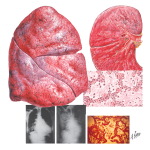
So WHAT is going on with NORMAL testing? I think this is “Covid-19 Viral Pneumonia”, a complication of Covid-19, just as “Influenza Viral Pneumonia” is a complication of influenza. Ralph Netter MD has an illustration of lungs from a person who died of influenza viral pneumonia: the lungs are swollen and inflamed and bruised. WHY is the testing “normal” then? The swelling is throughout the lungs, so a chest x-ray sees it as all the same density and a CT scan also sees it as all the same density. The lungs may have mildly decreased breath sounds, but the sounds are even throughout the lungs. The useful TEST is a walk test. I have tested patients with “walking pneumonia” in clinic for years: get a resting heart rate and oxygen level. Then have my patient walk up and down the hall three times and sit back down. Watch the heart rate and oxygen level. If the heart rate jumps 30 beats up or is over 100, the person needs to continue rest until the heart rate stays under 100 or jumps less than 30 beats. It is important to observe the heart rate until they recover. Sometimes the oxygen saturation will drop as the heart rate comes down, and some people qualify for oxygen. Steroids do not seem to work for this. The length of time to healing is not totally surprising, because a lobar pneumonia that is visible on chest xray takes 6-8 weeks to fully clear. It is not too amazing that a bad walking pneumonia could also take 6 weeks or more to clear. If the person returns to work too soon, they prolong the lung inflammation and they are at risk for exhaustion and for a secondary pneumonia. The treatment is REST REST REST and support.

Do they need oxygen? Currently oxygen is covered only if the person’s oxygen saturation drops down to 88%. However, I think that oxygen would help recovery and make them less exhausted. With my first walking pneumonia, which was influenza, my walking heart rate was 135 and my resting heart rate was 100. Both were abnormal for me. Neither I nor my physician could figure it out. This was in 2003. I did look in my Netter book: I took one look at the painting of the influenza lungs and shut the book. “Oh.” I thought. “That’s why I can’t breathe.” The image is here, though I wish it were bigger.

It took two months for my heart rate to come down, the lung swelling to improve, and me to return to work. I read the text of Dr. Netter’s image a year later and then I read an entire book about the 1918-1919 influenza. Since then I have walked people who come in complaining of exhaustion after a “cold” or “bad cough”. Viruses can cause this and so can bacteria: mycoplasma pneumonia, chlamydia pneumonia, pneumococcal pneumonia, legionella and strep A. If the fever is gone, the infection has probably resolved, but it still can take days or weeks for the lung tissue to recover.

For Covid-19, I would add a third test: walking with weights. We test cardiac patients by asking if they can carry two bags of groceries up a flight of stairs. That is 3 Mets, a measure of the heart load. We need to measure the lung load as well. If the lung tissue is swollen, the amount of airspace is cut down and can be half normal. The heart attempts to take up the slack. The person may tolerate a heart rate of 135 for a while, but it is like running a marathon. If they are older or have heart disease, this can trigger a heart attack. I would walk the person carrying hand weights, and see the recovery.

Also, brain fog is unsurprising. If your oxygen level is borderline, it is darn hard to think. I write really strange songs when I am hypoxic. I get goofy and feel weird. The fast heart rate also feels like anxiety: I think that the body is trying to tell me to rest.

The definition of Long Covid is symptoms after 30 days. Please see your physician if you are still ill and continue to have symptoms.

Blessings.

Here is a recent article about T-cells and inflammation in the lungs of Covid-19 patients: https://www.ncbi.nlm.nih.gov/pmc/articles/PMC8460308/

and this: https://www.frontiersin.org/articles/10.3389/fimmu.2020.589380/full