Frail

I wrote this two years before my father died. I did find him…..

Frail
We are going sailing
My partner says to me
“Invite him if you want.”

Then I am busy for a while

I think of calling, then forget

He was not at chorus on Monday

At last I say,
“I haven’t called. We’ll just sail.
Just us today.”

I haven’t called
because he was not at chorus on Monday

He is frail
55 years of camels
two packs a day
as if each cigarette
destroyed one alveolus
in his lungs
one tiny air/blood interface
built to exchange oxygen
and carbon dioxide
the loss is cumulative
He is frail
he is proud that the choral director
says, “I need you.”
He can’t sustain
but his entrances and time
are the best
among the basses.
They need him.

Chorus
is our winter link
two introverts
we hug at the start of chorus
sing for two hours
and talk for a few minutes at the end

Occasionally we go for a beer
I invite him for dinner
but he comes less and less
he often does not feel well at night

He looks smaller at chorus
this season
this is normal in emphysema
the body sheds weight
too much tissue to oxygenate
too hard for the lungs
and the heart, working overtime
to make up the difference
he is blessed with low blood pressure
genetic, from his father,
tough English stock,
otherwise I think he’d be dead

I didn’t call
before we went sailing
because I am afraid

I’ve driven out before
when he has not answered the phone
for a day or two
wondering if I would find him dead

I didn’t call
before we went sailing
because he was not at chorus on Monday
because if he didn’t answer today
I would not go

 
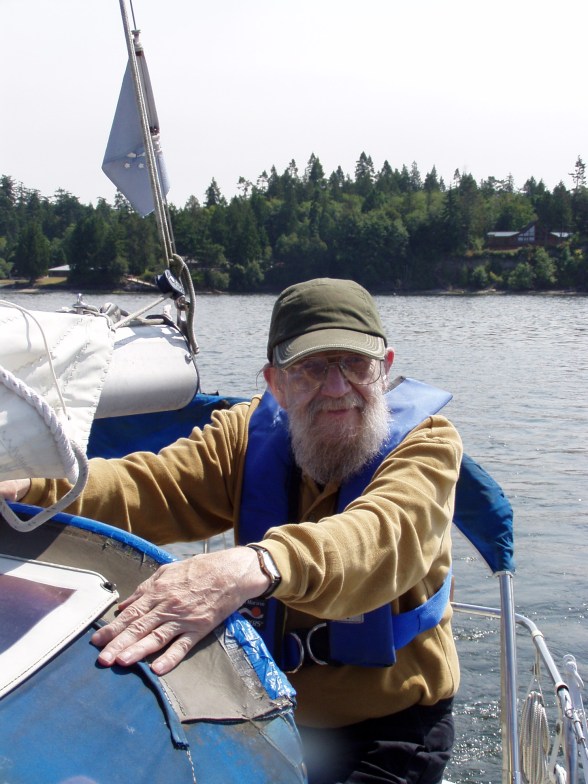
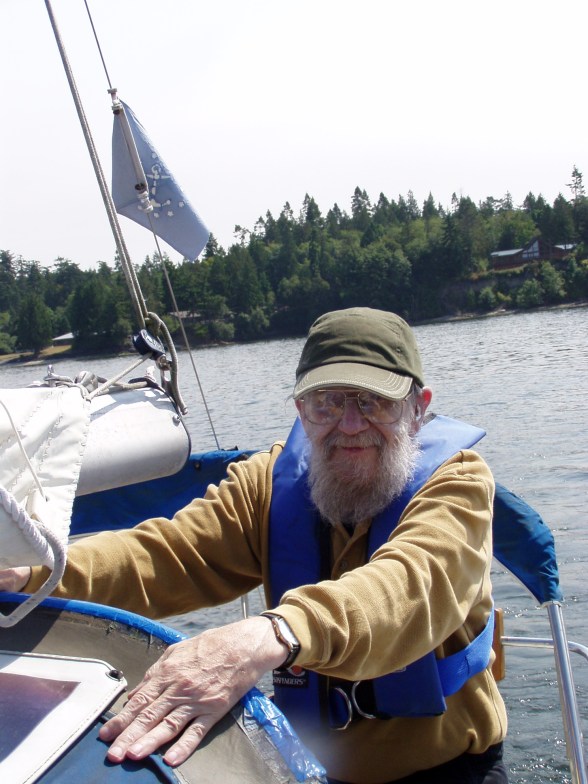
I took the photograph in 2009

Q is for querulous

Welcome back to 7 sins and friends…. Have you ever felt querulous?

1. full of complaints; complaining.

2. characterized by or uttered in complaint; peevish:

a querulous tone; constant querulous reminders of things to be done.
Querulous is like a sophisticated version of whiny.
I used it in an alphabet poem, for querulous quail. And the truth is that I thought of myself and my sister as the quail. Right before that was One old orangutan’s pompous pronouncements were being ignored by many merry meercats. My sister and I and our cousins again… and the orangutan was my father. My mother did the illustration…. and it does look like my father when he was in THAT mood….
Alphabeasts

ambulating antelopes
bellies bearing beer
carrying cantelopes
deride damp deer

elegant elephants
feeling fitly fat
give generous gifts
handing hippos hats

ignorant iguanas
jealously jeer
keen kindly kites
lilting laughing leers

many merry meerkats
nearly never notice
one old orangutan’s
pompous pronouncements

querulous quail
reject reports regarding
shimmering snow snakes
tearing through tunnels

undulating ungulates
veer vivaciously
wondering why whales
xerox xylophones

yellow yaks yell
zip zap zoo!

Q

Adverse Childhood Experiences 2: Out on a Limb

We are approaching a seismic shift in psychiatry. I am now going out of a limb to predict the direction we will go in.

The allopathic medical community will resist, including many psychiatrists. But it is the neurobiologists and brain imaging and psychiatrists who will prevail. If the creek don’t rise and we aren’t hit by a giant asteroid, nuclear winter, devolve into fighting over the remaining arable land as the world heats up….

I have been thinking about this all through my career, but especially since the lecture on adverse childhood experiences, which I heard in Washington, DC about ten years ago. I wrote about that lecture on January 6, 2015. The lecturer was a woman. She said that it appeared that the brain formed differently in response to childhood adverse experiences. She said that we don’t yet know what to do with this information.

Staggering understatement. I went from that lecture to one about ADHD. The lecturer was male. He said, “Children diagnosed with ADHD have brains that are different from normal children on PET scans and functional MRIs. We don’t understand this.” He sounded puzzled. I thought, he didn’t go to the previous lecture….

Childhood adverse experiences are scored zero to seven. I score a five. I am at high risk for addiction. I assumed this when I realized at age 19 that my father was an alcoholic and my mother was enabling. I was very very careful about alcohol. I tried pot twice and didn’t like it. I refused to try anything else, and refused benzodiazepines when I was depressed: they are addictive. With an ACE score of five, I am also at higher risk than a person with a score of zero for ALL mental health diagnosis: ADHD, depression, bipolar disorder, obsessive compulsive disorder, etc. People with a score of five had a 60% chance of being diagnosed with depression compared with a 10% chance in people with a score of zero over the life of the study. In the last fourteen years I’ve only been diagnosed with a “grief reaction” which is a temporary reaction to grief. It is also called an adjustment disorder. High adverse childhood experience scores are also at higher risk for morbidity and mortality from heart disease, emphysema, arthritis, basically everything and tend to die younger.

What this means, I think, is that our brains are plastic in utero and in childhood: the wiring is put down in response to the environment. This is adaptation. I have crisis wiring: my mother had tuberculosis when I was conceived and born. Really, from an evolutionary standpoint I AM weird: babies whose mothers had tuberculosis died. Quickly. I was saved because my mother coughed blood one month before I was due. A lot of blood. She thought she had lung cancer and would die. The fetus is bathed in those stress hormones, grief, fear….

I was removed from my mother at birth to save my life. I then was removed from people at 4 months and at 9 months. I grew up trying to be independent and highly suspicious of adults.

I predict that we are going to revamp all of our ideas about mental health. The brain wiring is set up depending on the environment, physical and emotional, that the child grows up in. My friend Johanna was outraged in college when we learned that the fetus and placenta basically take over the hormones of the woman for 9 months. “I’m not letting some baby grow in me and do that!” Johanna said. “I am going to figure out how to implant the pregnancy in a cow. You take good care of the cow and you can drink beer through the whole pregnancy! The cow won’t even notice when the baby falls out!” She has three children, an MD and a PhD in genetics. She did not use a cow.

The brain wiring is an adaptation to the environment. If there is war or domestic violence or addiction or mental health problems, the child’s brain kicks in emergency wiring. This is to help the child survive this childhood. As an adult they are then more at risk for mental health disorders, addiction and physical health disorders.

In the end, the sins of the parents, or the terrible circumstances of the parents, are visited upon the children. We have to take care of the children from the start in order to be healthy.

And people who have low adverse childhood experience scores don’t understand. They grew up with nice people and in a nice environment. They wonder why people can’t just be nice. The fear and grief and suspicion and emotional responses that appear maladaptive in adults, that is what helped people survive their childhoods. That is what I remember each time I see an addict in clinic, or someone who is on multiple psychiatric medicines, or someone who is acting out.

Adverse Childhood Experiences

I went to a sparsely attended lecture about the Adverse Childhood Experiences Study, or ACE Study, in 2005 and it blew my mind. I think that it has the most far reaching implications of any medical study that I’ve read. It makes me feel hopeful, helpless and angry at God.

The lecture was at the American Academy of Family Practice Scientific Assembly. That year, it was in Washington, DC. There are 94,000 plus Family Practice doctors and residents and students in the US, the conference hall had 10,000 seats and the exhibition hall was massive. At the most recent assembly, there were more than 2600 exhibitors.

I try to attend the lectures numbered one through ten, because they are the chosen as the information that will change our practices, studies that change what we understand about medicine.

The ACE Study talk was among the top ten. Yet when I walked in, the attendees numbered in the hundreds, looking tiny in three joined conference rooms that could seat 10,000. The speaker was nervous, her image projected onto a giant screen behind her. My experience has been that doctors don’t like to ask about child abuse and domestic violence: I thought, they don’t want to go to lectures about it either.

The initial part of the study was done at Kaiser Permanante, from 1995-1997, with physicals of 17,000 adults. The adults were given a confidential survey about childhood maltreatment and family dysfunction. A simpler questionnaire is at http://www.acestudy.org/files/ACE_Score_Calculator.pdf, but it is not the one used in the study. Over 9000 adults completed the survey and were given a score of 0-7, their ACE score. This was a score for childhood psychological, physical or sexual abuse, domestic violence, or living in a household with an adult who was a substance abuser, mentally ill or suicidal, or ever imprisoned.

Half of the adults reported a score over 2 and one fourth over 4. The scores were compared with the risk factors for “the leading causes of death in adult life”. They found a graded relationship between the scores and each of the adult risk factors studied. That is, an increase in addiction: tobacco, alcohol and drugs. An increase in the likelihood of depression and suicide attempt. And an increase in heart disease, cancer, chronic lung disease, fractures and liver disease. The risk of alcoholism, drug addiction and depression was increased four to twelve times for a score of four or more.

The speaker said that the implications were that the brain was much more malleable in childhood than anyone realized. She said that much of the addictive behaviors and poor health behaviors of adults could be self-medication and self-care attempts as a result of the way the brain tried to learn to cope with this childhood damage.

I left the lecture stunned. How do I help heal an adult who is smoking if part of it is related to childhood events? From there I went to a lecture about ADHD, where the speaker said that MRIs and PET scans were showing that children with ADHD had brains that looked different from children without ADHD. I thought that speaker should have come to the other lecture. And I did not much like my ACE score, though it does explain some things.

I feel hopeful because we can’t address a problem until we recognize it.

I feel helpless because I still do not know what to do. The World Health Organization has used the ACE Study in their Preventing Child Maltreatment monograph from 2006. But it is not very cheerful either: “There is thus an increased awareness of the problem of child maltreatment and growing pressure on governments to take preventive action. At the same time, the paucity of evidence for the effectiveness of interventions raises concerns that scarce resources may be wasted through investment in well-intentioned but unsystematic prevention efforts whose effectiveness is unproven and which may never be proven.”

Do I do ACE scores on my patients? With the new Washington State opiate law, we do a survey called the Opiate Risk Tool. It includes parental addiction in scoring the person’s risk of opiate addiction. But not the rest of the ACE test. At this time, I don’t do ACE scores on my adult patients. I don’t like to do tests where I don’t know what to do with the results. “Wow, you have a high score, you will probably die early,” does not seem very helpful. But I remain hopeful that knowledge can lead to change. And it makes me more gentle with my smoking patients, my addicted patients, the depressed, the heart patient who will not exercise.

I am angry at God, because it seems as if the sins of the fathers ARE visited upon the children. It is the most vulnerable suffering children who are most damaged. That does not seem fair. It makes me cry. I would rather go to hell then to the heaven of a God who organized this. I stand with the Bodhisattva, who will not leave until every sufferer is healed.

1. ACE study   http://www.cdc.gov/ace/about.htm

2. American Academy of Family Practice   http://www.aafp.org/events/assembly.html

3. ACE questionaire   http://www.cdc.gov/ace/questionnaires.htm

4. Score correlation with health in adults   http://www.ajpmonline.org/article/PIIS0749379798000178/abstract

5. WHO preventing child mistreatment   http://whqlibdoc.who.int/publications/2006/9241594365_eng.pdf

6. Washington State Opiate Law   http://www.agencymeddirectors.wa.gov/

7. Opiate Risk Tool   http://www.partnersagainstpain.com/printouts/Opioid_Risk_Tool.pdf

First published on everything2 November 2011.
Voice lesson

The picture is my father in 2009. We went sailing on his friend Paul’s boat. My father loved to sail and loved to sing. He taught me to sing from when I was tiny….

I had five voice lessons in the spring. The teacher is a woman who comes into town to see her mother, from New York. When she comes, she teaches many of the best soloists in town, including people I’ve taken lessons from. One of our soprano soloists gave her my name.

She started by asking my singing history. I explained that my family had sung folk songs since I was tiny and that I’d been in a chorus for the last 14 years. That my father had been in the chorus and that he had recently died. We are working on the Faure Requiem and the Rutter Requiem. Our director asked me to work on the Pie Jesu in the latter and I was having trouble with the high notes. She asked about my father’s voice. I said that he was a very fine bass, who had died from cigarretes. In the last few years he couldn’t sustain, but his entrances kept the bass section on track.

She took me through the lesson. There were five things that she had me work on. It was hard to keep them all in my head at once, since they were all a change.

1. To breathe in so that the back of my throat felt cold, like the feeling you get in icy air. This opens it.

2. To think of the breath as circling along my jaw when I sustained a note or phrase. This made the notes feel alive and stay alive. Richer.

3. As I went into the passagio, to think of the sound going out the top of my head and then directly out through the back of my skull.

4. On the very high notes, to press down more with my lower ribs in my back. This increases support.

5. To open my mouth dropping my jaw, but keeping it narrow. This changes the quality of the vowels tremendously.

The lesson was so helpful that I scheduled a second one two days later and had the sense to tape it. I can practice it with my tape. She will come back within a year and I hope that I’ve improved in all five.

first published on everything2 April 2014

Fraud in medicine: oxygen

My father died of emphysema in June of 2013. I found him dead on the floor of his house. I expected this because he was nearly a hermit, but it was still hard.

He was on oxygen. It was prescribed to be continuous.

I started cleaning up the house and trying to find his will. I lined up oxygen tanks and called the oxygen company. There were ten tanks.

The oxygen company picked up the tanks.

I found eight more. I was very busy with a large house, a complicated estate, two years of unpaid taxes, he paid bills on line but had not updated the payments when costs increased……

I hired a local estate sale group. They did an excellent job. The house was sold. I picked up the last few things, including the oxygen tanks.

I called the oxygen company. “Why did my father have 18 oxygen tanks?”

They said, “We delivered them as needed.”

I said, “He didn’t need 18 tanks.”

They said, “They are paid for.”

Oh! Medicare paid for the oxygen. No, not medicare. You and he and I paid for it, because we pay taxes to medicare and medicare pays the oxygen company. Well, 80% and then my father paid the other 20% unless he had a medicare secondary insurance, which he also pays for…. Oh, are you under 65 and thought medicare paid for everything once you got it? Sorry to disillusion you…..My father  was supposed to be on oxygen continuously. So the company kept delivering it at the intervals covered by medicare, even though he was not using it all. He sometimes didn’t wear his oxygen and he also had bought his own oxygen concentrator, smaller and easier to move than the one from the oxygen company.

I was furious. “So you kept delivering oxygen even though it was not all being used. And kept charging.”

They said, “We delivered it when it was needed.”

Liars. They delivered more than was needed and I gave some back to them, after medicare had already paid for it.

I still have 8 tanks of oxygen. After all, it’s paid for by medicare, by my taxes and by your taxes. The oxygen is paid for. The tanks belong to the company. I’ll return them when they are empty….. I don’t think the corporation should be able to charge medicare for it twice…..

I should check to see if the company reimbursed medicare and my father for the oxygen when it was returned. If not, I can check into filing a fraud complaint with medicare against the company. But even if they reimbursed medicare and my father’s estate, I am still angry that they kept delivering it when they knew darn well that he had tanks already. Or maybe they don’t even keep track of how many tanks they’ve given out. It’s all about money.

Fight back against corporate greed and fraud. Ask questions. Do not give the oxygen back if it’s been paid for….. give it to someone who needs it instead.