Navigating disability

I am having an interesting week regarding disability. Maybe it will make me a curmudgeon.

A woman says, “It must be difficult to be disabled, with your lungs.” I wear my oxygen to sing in chorus. I did the concert without the oxygen but had to drop some held notes at the end. I get goofy when I am hypoxic. I also write really strange rhyming songs when hypoxic, which I recorded.

I reply, “Well, my mother and father and sister are all dead, so by comparison I am doing well.”

She looked horrified. “ALL DEAD?”

“Yes.” I said.

Mother at 61, father 75 and sister at 49. Cancer, emphysema, cancer. I am so lucky that I don’t smoke and have always disliked sodas and thought that addictive things were very dangerous for me before I started college.

I also attended a Roam Echo Telemedicine yesterday, about Long Covid. WOW. It was EXCELLENT.

https://hsc.unm.edu/echo/partner-portal/echos-initiatives/long-covid-fatiguing-illness-recovery/

Yesterday’s program was given by an attorney, discussing disability. She was describing how the chart notes can damage a patient’s chances of obtaining disability and she gave us forms to help us document disability successfully.

She put the number of people with Long Haul Covid at 30% of the not hospitalized people.

Thirty percent. That is HUGE and damaging. I have heard numbers from 10-30%.

There were also physicians attending the Roam-Echo program who have Long Covid and are realizing that they can’t work to the level they did before. Some can’t work at all.

The panel recommended neuropsychiatric testing if the patient is having any trouble with memory or executive function or brain fog. Document, document, document.

Not only that, the previously taped programs are linked to the site above. So I can watch the rest of them. It is FREE and I get Continuing Medical Education from it.

I trained in Family Medicine from 1989-93 in medical school and residency 1993-96. When I was in school I got virtually no training on how to do disability paperwork. Or even how to tell if someone is disabled. The truth is that people do not want to be disabled. In our culture it is shameful and anyhow, social security disability is often $1000 per month. Try living on that. Unenviable.

It turns out that I am lucky or smart or some weird combination. I bought disability insurance way back in medical school and paid $1000 per year for 29 years. I used it twice before 2021. I was on bed rest for 3 months of preterm labor. My insurance doesn’t kick in until I have been off work for 3 months. I wrote them a letter and said I expected to return to work six weeks after having my child, unless there were complications. The company paid me for an extra week. I called them and basically they said, we are so happy to have you return to work that we do not care.

The second time was after my third pneumonia. Strep A and my lungs and muscles were trashed. Both burned like strep throat. It hurts. I was out for six months and then worked half of my usual for another six months. Really I was working about 1/4 of a regular Family Practice Physician. I was seeing 4-5 patients a day and then sleeping for 12 hours, exhausted. A “normal” load is 22 or more. Which is not really sustainable with today’s complex patients, but that is another essay. I had chronic fatigue, MECFS, as it’s now called, but I was in denial. I never got past 8-10 patients a day for the next seven years. I was also running my own small business and had continual hostility from the only hospital in the county. I was one of three independent practitioners. I really do not understand why they thought my tiny clinic was a threat, but whatever. They could grow up.

From 2014 to 2021, I asked any patient with upper respiratory symptoms or a cough to wear a mask for the visit and I masked too. I explained that if I got a fourth pneumonia, I would be disabled for Family Practice medicine. I hoped it wouldn’t happen. I masked the people with allergies too, because after all, you can have allergies AND a cold. When Covid-19 hit, my patients just rolled their eyes and wore the masks. I only ever had one man, a new patient, object. “I won’t wear a mask,” he said.

I said, “Sir, you don’t have to. But I won’t see you without a mask, so please leave and go to Urgent Care.” This was in my waiting room.

“You mean that!” he said.

“Yes I do. I get pneumonia, so that is a firm policy.”

He put on the mask.

I closed the clinic in early 2021. Covid-19 hit us too hard and we were a shoestring clinic anyhow, with 8-10 patients a day. I went to work in the next county. I kept walking into patient rooms where people had their masks off. I had pneumonia in five weeks.

So it goes.

My disability insurance is paying. I did have to hire an attorney to get the company to explain the policy rules clearly. I don’t speak legalese, I hate it, and I think that insurance companies will use any loophole they can find to get out of paying. So far I am lucky to have navigated this. Now I have to look over my policy again, because some policies change after two years of paying and they don’t have to pay if you can do ANY paid employment. It’s pretty clear that I can’t. I went for a beach walk yesterday and then crashed for a two hour nap and then slept 8 hours last night. Any labor, walking OR brain, will crash me. ME-CFS sucks. I think we will have a handle on it in another decade and it’s clear that it is an immune system response. Too late for my employment, though. Ah, well. I got 30 years in. I was annoyed because I was NOT planning to retire yet. I keep running in to people who say, “How do you like retirement?” “I didn’t retire. I am disabled by my fourth pneumonia and grumpy about it.” “Oh,” they say. I should do the social thing, “Love it!” but I’ve never been good at that anyhow. I joke that I tell the truth because I am often not believed, so why bother to lie?

At any rate, 10 or 30% of the people who have had unhospitalized Covid-19 is a huge number of people, and we do not know how long Long Covid will last or how to resolve it. Stay tuned. I hope it is less than a decade, but it will be a little while yet.

Prayers and blessings for all.

The photograph is the really beautiful agate I found yesterday. For the Ragtag Daily Prompt: curmudgeon.

A Good Reaction 2

I am still working my way through my immune response to an influenza shot and six days later, my Covid-19 booster.

I am kicking myself a bit for having them that close together, but at least my immune system responds. I think my immune system takes a shotgun approach and raises ALL the antibodies, and since I most probably have some antibodies that attack my own tissues, it’s not terribly much fun. I’ve had to put pulmonary rehab on hold until my fast twitch muscles work again. They aren’t working and my slow twitch muscles are very pissed off and stiff at having to do double duty. If I do aerobic things, my rib muscles hurt for two days. THAT feels awful.

The good thing (ha.) is that I am having the antibody response but I do not have pneumonia. The working theory is that I have PANS and antibodies to tubulin. Tubulin powers muscles, including lung cilia. Their job is to clean any trash out that gets breathed in. I am at much higher risk for getting pneumonia while the lung cilia are on auto-immune vacation. I am mostly staying home and masking when I go out. A friend got exposed to Covid-19 and refused to test at day five. Well, ok for him, but he could be asymptomatic. So he’s not allowed anywhere near me for at least another ten days. I disapprove of his callousness towards me and others.

Tobacco also paralyzes lung cilia. When I was working I would warn smokers that they might cough more when they stopped smoking, because the cilia would wake up and clean house. “Hey! No one has swept here in years!” A year after quitting smoking, the lung cancer risk drops almost to that of a non-smoker, because those cilia clean house. Isn’t THAT cool?

I don’t know how long my fast twitch muscles will be screwed up. With the last pneumonia, it was nearly a year before the antibodies finally went down. I woke one morning with my slow twitch muscles insanely stiff and my fast twitch back but weak as a newborn kitten. My slow twitch muscles were yelling at my fast twitch: “Where have you BEEN? We’ve been doing YOUR WORK!!” My fast twitch were confused, weak and surprised. I could barely walk down my stairs that day.

Even so, I am lucky. I have a version of chronic fatigue, but because only my fast twitch muscles are affected, I can still do stuff while sick. The people who can barely get out of bed, my working theory is that it is both the fast twitch and the slow twitch muscles that are affected.

And then there are the brain antibodies. Ugh. The silver lining is that the antibodies make me a bit OCD and a bit ADHD, so I am organizing the house. I vacuumed the stairs. That sounds trivial except that I HATE the vacuum. I usually use this peculiar cat hair sponge thing on the stairs, but this time I got the vacuum out. I think organizing and vacuuming are hella funny symptoms of autoantibodies.

Here is a blog post by another physician, also about brain antibodies and encephalopathy. Brain inflammation.

https://www.potomacpsychiatry.com/blog/infectious-diseases-and-psychiatric-illness

Great blog post. And the NIH paper on multiple studies of encephalopathy:

https://www.ncbi.nlm.nih.gov/pmc/articles/PMC6455066/

If I have the energy today, I may try to look up the trajectory of antibody rise and fall after immunization. My brain tells me somewhere between 6 weeks and 6 months, pulling old data from somewhere, but I took immunology classes when I was working at the National Institutes of Health (late 1980s) and in medical school (early 1990s), so there may be new information. Science changes. I am hoping for less than six months really, and meanwhile trying not to get pneumonia.

Blessings and peace you.

I took the photograph in 2021, while I was REALLY sick. Glow in the dark Zombies stealing the cat food. I have to entertain myself somehow when I have pneumonia.

Covid-19: Long Haul III

The CDC has guidelines for Long Covid and it can qualify for disability in the United States.

Here: https://www.cdc.gov/coronavirus/2019-ncov/long-term-effects/index.html

And here: “As of July 2021, “long COVID,” also known as post-COVID conditions, can be considered a disability under the Americans with Disabilities Act (ADA). Learn more: Guidance on “Long COVID” as a Disability Under the ADA, Section

Here is the list of “most common” symptoms from the CDC:

General symptoms

  • Tiredness or fatigue that interferes with daily life
  • Symptoms that get worse after physical or mental effort (also known as “post-exertional malaise”)
  • Fever

Respiratory and heart symptoms

  • Difficulty breathing or shortness of breath
  • Cough
  • Chest pain
  • Fast-beating or pounding heart (also known as heart palpitations)

Neurological symptoms

  • Difficulty thinking or concentrating (sometimes referred to as “brain fog”)
  • Headache
  • Sleep problems
  • Dizziness when you stand up (lightheadedness)
  • Pins-and-needles feelings
  • Change in smell or taste
  • Depression or anxiety

Digestive symptoms

  • Diarrhea
  • Stomach pain

Other symptoms

  • Joint or muscle pain
  • Rash
  • Changes in menstrual cycles

There are recommendations for a work up by physicians. Depending on symptoms, this may include labs, ECG, echocardiogram (heart ultrasound), CT scan and other tests.

A friend has just gone through those four tests . They are “normal” except for her heart rate. At rest her heart rate is 70 with a normal oxygen level. Walking, her heart rate jumps to 135. Over 100 is abnormal in this athlete who is NOT exerting heavily.

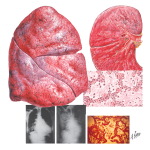
So WHAT is going on with NORMAL testing? I think this is “Covid-19 Viral Pneumonia”, a complication of Covid-19, just as “Influenza Viral Pneumonia” is a complication of influenza. Ralph Netter MD has an illustration of lungs from a person who died of influenza viral pneumonia: the lungs are swollen and inflamed and bruised. WHY is the testing “normal” then? The swelling is throughout the lungs, so a chest x-ray sees it as all the same density and a CT scan also sees it as all the same density. The lungs may have mildly decreased breath sounds, but the sounds are even throughout the lungs. The useful TEST is a walk test. I have tested patients with “walking pneumonia” in clinic for years: get a resting heart rate and oxygen level. Then have my patient walk up and down the hall three times and sit back down. Watch the heart rate and oxygen level. If the heart rate jumps 30 beats up or is over 100, the person needs to continue rest until the heart rate stays under 100 or jumps less than 30 beats. It is important to observe the heart rate until they recover. Sometimes the oxygen saturation will drop as the heart rate comes down, and some people qualify for oxygen. Steroids do not seem to work for this. The length of time to healing is not totally surprising, because a lobar pneumonia that is visible on chest xray takes 6-8 weeks to fully clear. It is not too amazing that a bad walking pneumonia could also take 6 weeks or more to clear. If the person returns to work too soon, they prolong the lung inflammation and they are at risk for exhaustion and for a secondary pneumonia. The treatment is REST REST REST and support.

Do they need oxygen? Currently oxygen is covered only if the person’s oxygen saturation drops down to 88%. However, I think that oxygen would help recovery and make them less exhausted. With my first walking pneumonia, which was influenza, my walking heart rate was 135 and my resting heart rate was 100. Both were abnormal for me. Neither I nor my physician could figure it out. This was in 2003. I did look in my Netter book: I took one look at the painting of the influenza lungs and shut the book. “Oh.” I thought. “That’s why I can’t breathe.” The image is here, though I wish it were bigger.

It took two months for my heart rate to come down, the lung swelling to improve, and me to return to work. I read the text of Dr. Netter’s image a year later and then I read an entire book about the 1918-1919 influenza. Since then I have walked people who come in complaining of exhaustion after a “cold” or “bad cough”. Viruses can cause this and so can bacteria: mycoplasma pneumonia, chlamydia pneumonia, pneumococcal pneumonia, legionella and strep A. If the fever is gone, the infection has probably resolved, but it still can take days or weeks for the lung tissue to recover.

For Covid-19, I would add a third test: walking with weights. We test cardiac patients by asking if they can carry two bags of groceries up a flight of stairs. That is 3 Mets, a measure of the heart load. We need to measure the lung load as well. If the lung tissue is swollen, the amount of airspace is cut down and can be half normal. The heart attempts to take up the slack. The person may tolerate a heart rate of 135 for a while, but it is like running a marathon. If they are older or have heart disease, this can trigger a heart attack. I would walk the person carrying hand weights, and see the recovery.

Also, brain fog is unsurprising. If your oxygen level is borderline, it is darn hard to think. I write really strange songs when I am hypoxic. I get goofy and feel weird. The fast heart rate also feels like anxiety: I think that the body is trying to tell me to rest.

The definition of Long Covid is symptoms after 30 days. Please see your physician if you are still ill and continue to have symptoms.

Blessings.

Here is a recent article about T-cells and inflammation in the lungs of Covid-19 patients: https://www.ncbi.nlm.nih.gov/pmc/articles/PMC8460308/

and this: https://www.frontiersin.org/articles/10.3389/fimmu.2020.589380/full

Achievement

My first achievement for today’s Ragtag Daily Prompt is spelling achievement. And no, I did not spell it correctly on the first try.

My daughter has finished her first two years of teaching eighth grade, during Covid-19. She taught remotely until March of 2021 and then in person. She worked on her teaching certificate the first year and finished her Masters last month. She is SOOOO amazing!

Hooray for ALL of the teachers who continued to teach during Covid-19, remotely, in person, hugs and prayers and sending love.

Covid-19: Hope for Long Haul

I want to offer hope to the people with Long Covid-19. Having been through four bad pneumonias, with increasingly long recovery times, and now disabled for doing Family Medicine, I have experience to share. First I want to talk about chronic fatigue and fibromyalgia.

I am a piler, not a filer. Including in my brain. I have been adding to the chronic fatigue and fibromyalgia pile since I was in medical school.

In residency a new patient questions me. “Do you believe in chronic fatigue?” he says, nearly hostile.

“Yes,” I reply, “but I don’t know what it is or what causes it or how to fix it.”

For years different causes were suggested. Often infections: EBV, mononucleosis, lyme disease. Some people didn’t have any infection. I did note even in residency that my chronic fatigue patients all had one thing in common: they were exhausting.

Does that sound terrible? They were all type A, high achievers, often super high energy. Often they got sick or crashed when they were working three jobs, or working 20 hours a day on their own business, or doing something that sounded insanely exhausting and unsustainable. And most of them wanted that back. “Ok, wait. You were working 20 hours a day, seven days a week, got sick and THAT is what you want to get back to?”

None of the chronic fatigue people seemed to be type B.

Eventually I read that one in ten people with ANY severe infection can get chronic fatigue.

Then I work with the U of Washington Telepain Clinic, on zoom. They start studying functional MRIs of the brains of people with fibromyalgia.

They use a thumbscrew. They put a measurable amount of pressure on a person with no fibromyalgia. The person reports 3-4 out of 10 pain. The brain lights up a certain amount in the pain centers on the MRI. The doctors can SEE it. Then they test the fibromyalgia people with the same amount of thumbscrew pressure. The fibromyalgia people report 8-9/10 pressure and they are not lying. The pain centers in the brain light up correspondingly more. So they ARE feeling 8-9/10 pain.

Is this a muscle problem? A brain problem? Or both?

It appears to be both. Chronic fatigue and fibromyalgia and other disorders with pain out of proportion to the physical findings were being called “central pain processing disorders”.

I thought of chronic fatigue as a sort of switch. As if at a certain level of stress or exhaustion or infection the body would throw a switch. And force the person to rest.

I wondered if the type B people just rested and got over it, while the type A people fought it like tigers. Which seemed to make it worse.

And now we have Covid-19. The study getting my attention is saying that 20%, or 1 in five people age 18-64, have Long Haul symptoms. Over 65 it is 25%, one in four. And it can happen in people with no preexisting conditions. Preexisting conditions or not, this sucks. The two biggest complaints are lung related and muscle related.

I have chronic fatigue following my third pneumonia in 2014. I might be just a little type A. I went back to work too soon (6 months after the pneumonia) and after a half day would crash asleep at 3 pm. For another 6 months. Now that I have had the fourth pneumonia and have been off for a year and been on oxygen, I feel better than I have since before 2014, even though I still need oxygen part time. Guess I was in denial about the chronic fatigue. NOT ME!

So, dear reader, learn from me and don’t be like me. The biggest thing that I have had to get through my thick type A skull is that when my body wants rest, I need to rest. This can be hella annoying, as my son would say. I have to pay attention to my energy level and decide what to do. And some of my precious energy has to go to things like laundry and paying bills! How very frustrating. My markers are energy level and also pulse. My pulse tells me when I need oxygen and when I am really sick. With the first pneumonia back in 2003, influenza, my resting pulse stayed at 100. My normal then was about 65. When I stood up, my pulse went to 135. It was EXHAUSTING to stand up. I had to rest half way up one flight of stairs. It was hard to walk two blocks to pick my daughter up from primary school. And I looked fine. Neither my doctor nor I could figure it out. I finally guessed that it was lung tissue swelling and hoped it would go down eventually. It did, but it was a full two months and my doctor partners thought I was malingering. I tried not to wish it on them. It sucked and I felt awful back at work, but my pulse had finally come down. We even did a heart ultrasound, but all it showed was a fast heart rate. My chest film looked “normal”, because the tissue swelling is throughout the lungs, so it cannot be seen on a chest xray. It was very weird, but I recovered. And all the descriptions of Long Covid sound like my lung swelling. Fast heart rate, difficulty breathing, muscle pain and terrible fatigue. Go back to the couch.

Go back to the couch and wait. Do what you have to but if your heart rate is over 100 when you get up, you have to rest. Otherwise you will prolong it. Seriously.

More later. Peace me and sending love and peace.

Anna’s hummingbirds can survive below freezing temperatures by slowing their metabolism at night, until it warms up in the morning. Talk about resting!