Establishing a diagnosis

All of the Long Covid information is pretty confusing, isn’t it? I’ve read that most of it resolves at nine months. Another article says a year. The conference last week says that 96% are clear at two years if they are treated. What percentage are being treated? The US defined Long Covid as symptoms lasting over a month at first, while Europe said three months. I think they have now agreed on three months. This will continue to change and evolve.

When viagra first came on the market, women complained that there was not a drug for them. Pharmaceutical companies were working on it, but you cannot treat anything unless you establish a diagnosis first and women’s sexuality is more subtle then men’s. Anyhow, I wrote this silly poem making fun of the whole thing.

Little Blue Pill

Little blue pill
Little blue pill
Help me help me
I’m over the hill

Don’t wanna have sex
Nope nope nope
Little blue pill
Gives my husband hope

Can’t make a pill
Til we define the disease
Doctors would you
Hurry up please

Little blue pill
Little blue pill
Help me help me
I’m over the hill

Thought them hormones
Would make me hot
Doc was right
They did not

Hot flashes make me
Sweat and moan
No help from that
Testosterone

Little blue pill
Little blue pill
Help me help me
I’m over the hill

Doctor this
Is really no joke
My husband says
He’ll slit his throat

Can’t make a pill
Til we define a disease
They’re trying hard
Those drug companies

I think we’ll know
If they define a disease
Drug companies will plaster it
On tv

Doctor I found
Just the thing
A brand new stimulating
Clitoral ring

Don’t wanna have sex
Nope nope nope
Little blue pill
Gives my husband hope

____________________________

For the Ragtag Daily Prompt: establish.

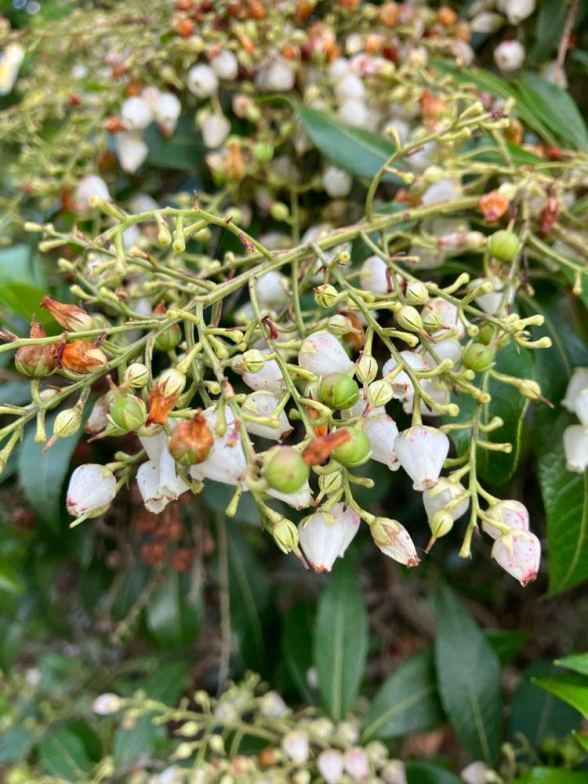
I took the photograph of the old drug bottles today. I like that the potassium oxalate just says POISON on it and gives antidote instructions. Also, no guarantee on the clitoral ring, ok?

Neurogognitive effects of Long Covid I

Here is the first part of my notes from this lecture: May 24, 2023 Neurocognitive effects of Long Covid (International) part 2, by Dr. Struminger PhD, neuropsychologist.

I am trying to make this fairly clear to almost anyone. Some words may be unfamiliar to start with, but I will bet that you can sort it out. I would be happy to try to clarify any part if needed. These are my notes from the first half of this lecture, fleshed out to be clearer.

This is the Schmidt Initiative for Long Covid Global in English with real time translation into Arabic, French, Spanish, Portuguese and closed captions. Session recordings: https://app.box.com/s/onh1ma57ttjpi2c19qqxvmdao0kd2nsr

Dr. Struminger said that 1/4 to 1/3 of Long Covid patients have cognitive symptoms. A study comparing Long Covid patients with people who never got Covid-19 shows the Long Covid people to be three times more likely to have attention deficits or confusion. Part of the barrier to treatments is to define the problem, figure out the mechanisms and then start studying treatments. She said that she would share a few proposed mechanisms for cognitive impairment in Long Covid, but that it is probably multifactorial and it’s a rat’s nest. (Ok, I said rat’s nest. Dr. Struminger did not use that term.)

There are two main phenotypes of Long Covid brain problems: Hypoxic/anoxic and Frontal/subcortical. In hypoxic/anoxic certain brain functions are intact: Attention, visuospatial, cognitive fluency and memory encoding. There is impairment in problem solving and memory retention. This pattern is associated with the people who were hospitalized, deathly ill, on ventilators, or heart/lung bypass machines.

Frontal/subcortical is more common in the people who were never hospitalized and were not on a ventilator or ECMO machine. It can show up even in people who seemed to have mild Covid-19. The impairment is in attention, cognitive fluency and memory encoding, while the intact functions are visuospatial, memory retention and problem-solving.

Here are those lists in a table, HA for hypoxic/anoxic and FS for Frontal/subcortical.

Attention: HA intact, FS impaired
Visuospatial skills: HA intact, FS intact
Cognitive fluency: HA Intact, FS impaired
Memory Encoding: HA intact, FS impaired
Memory retention: HA impaired, FS intact
Problem-Solving: HA impaired, FS intact

The two types probably have different mechanisms and the super sick are more often the hypoxic anoxic. And there can be a mixed or both presentation.

Neuropsychologists test people to see what parts of the brain are working. Testing locally usually takes about four hours or more. Some brain functions have been mapped to parts of the brain but others are still mysterious. Efforts continue to match function to neuroanatomy. Going through each of the brain functions, some are mapped and others are not.

Attention is mapped and mediated by the frontal lobes. Attention is impacted by physical fatigue, dysautonomia, pain, shortness of breath, further impacted by emotional symptoms. It is REALLY easy to get stuck in a vicious cycle where physical symptoms or pain or hypoxia decrease attention function, which in turn makes physical symptoms worse. For example, hypoxia can decrease attention, which makes the person anxious and tachycardic, which in turn affects attention more.

The frontal lobes are very sensitive to hypoxic damage and to inflammation. Any inflammation in the body messes with them. The frontal lobes need oxygen and glucose. If a person can’t breathe, this messes up attention; if they are dizzy, it messes up attention.

Cognitive fluency. The anatomical correlates are less clear. Probably frontal and temporal, vulnerable to hypoxia and broad networks in the brain, vulnerable to physiological and mood disturbance. So vulnerable to the same things as the frontal lobes.

Learning and memory: Map to the hippocampi – sensitive to hypoxia and can be injured while the rest of the brain is comparatively unscathed. People have difficulty with retention of new information and not just attention/encoding problems. Neuropsychology distinguishes between attention/encoding and retention/recall problems. Those are different. In alzheimer’s, there is trouble retaining new information, even though people can encode it. In the frontal/subcortical long covid brain fog, there is more difficulty with attention/encoding. That is, if the person is tachycardic or in pain or dizzy or short of breath, it is more difficult to pay attention and encode information into memory.

Executive functioning. Frontal lobe: sensitive to hypoxia and metabolic dysregulation, significantly impacted by physical symptoms and mood disturbance.

The hypoxic/anoxic pattern has effects more like Alzheimer’s or a dementia. The frontal/subcortical is more like a concussion or traumatic brain injury. Neither sounds great, but there is more healing from the second than the first. Treatments for now are coming from the Alzheimer’s/dementia established treatments or from the concussion/traumatic brain injury established treatments. The first part of treatment is rest, rest, rest, and try to keep the brain from getting overwhelmed. I will write more about the ongoing changing recommendations.

More at: https://hsc.unm.edu/echo/partner-portal/echos-initiatives/long-covid-global-echo.html

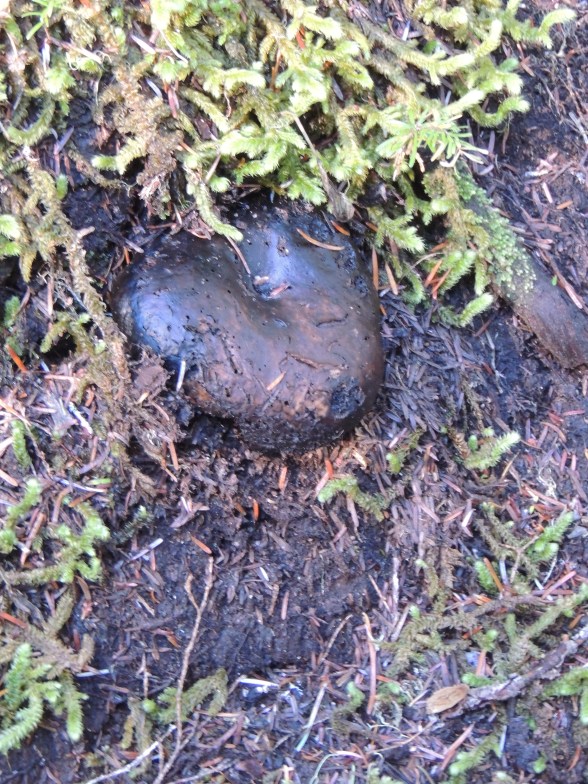
The photograph is a screen shot of the brain from below from one of the conferences. There were over 300 people attending this zoom lecture, which is encouraging and hopeful.

For the Ragtag Daily Prompt: covert. The covert damage from Covid-19 is being sorted out.

Stone heart

My mind is done and unsurprised. My heart a stubborn rock.
My heart does not give up: loves where it loves. It doesn’t care
about reality or whether it is derided or mocked.
My mind moves on and kicks my heart, wondering where
this tenacity stems from. My heart is done with tears.
It agrees to new friends and joys in dance.
When my mind says forget, my heart jumps and steers
my body into a warrior fighting stance.
My mind is cynical and laughs and derides my heart.
I let them fight back and forth every day.
I cannot reach an end unless I start
to honor my feelings, the heart must hold sway.
My mind moves on, ignoring what you do.
Yet my stubborn heart remains a friend, strong and true.

The New Old Time Chautauqua

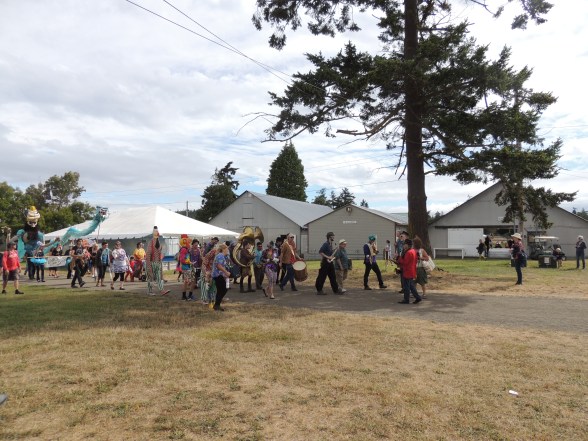
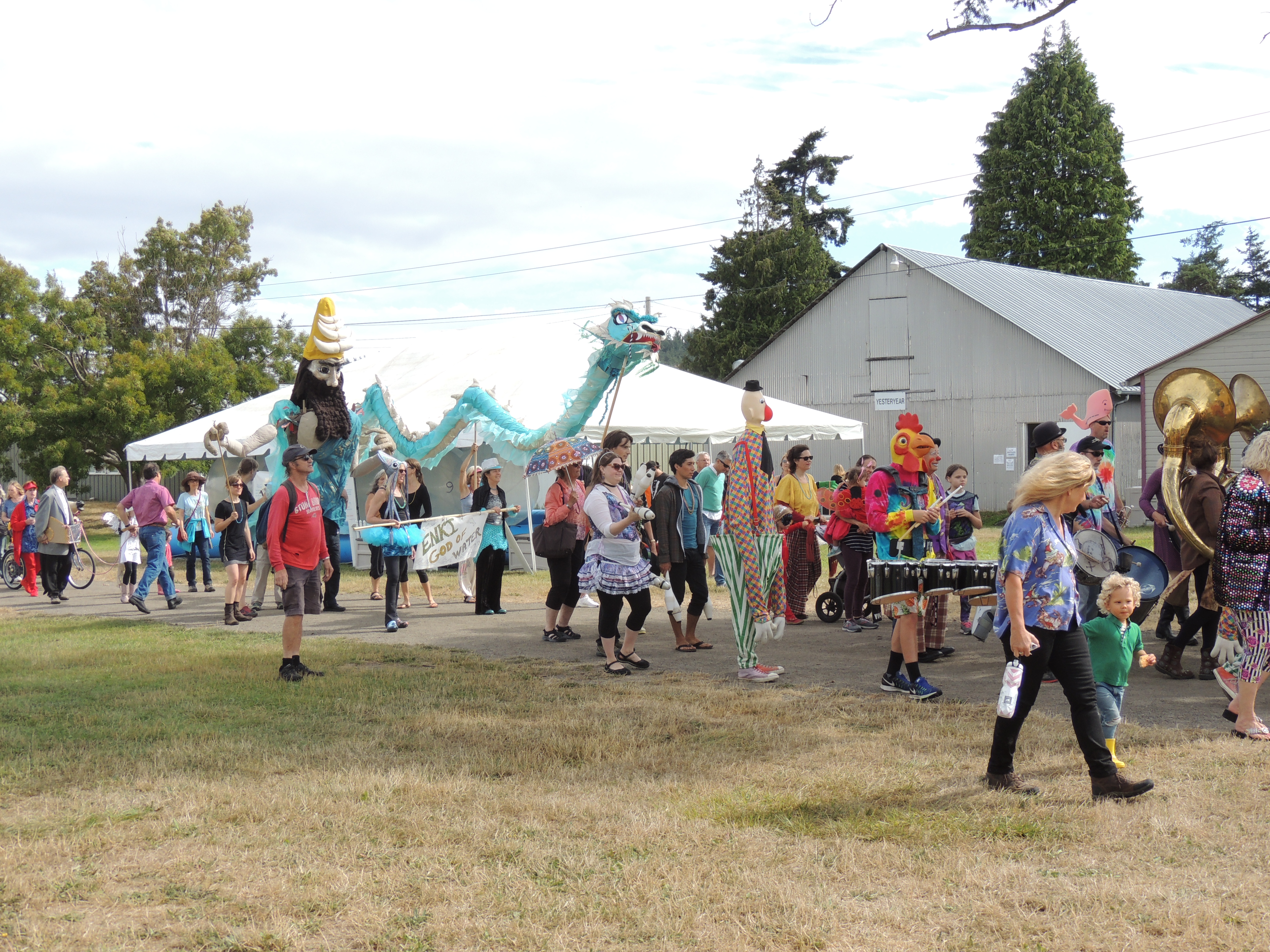
Funny how our brains work. I think of going to the other computer and then think I will look in this one for a moment. I have photographs from years past of the New Old Time Chautauqua. I open the file of Nikon photographs. There are 28 subfiles. I go to July 2018. At the end of the file, here is this motley parade. The New Old Time Chautauqua with our local Unexpected Brass Band and Other Friends.

I didn’t “know” that these photographs were even on this laptop. At least, not consciously. These are taken at the fairgrounds, August 11, 2018, in Port Townsend, Washington.

The New Old Time Chautauqua is the last one on the road. They are fundraising to go work and play with the Blackfoot Confederacy in Canada and the US. There are too many people dying from fentanyl, so the Chautauqua is part of the healing process. They are fundraising as they hit the road. I wish all of them the best.

And here is the Unexpected Brass Band at THING last year. You can hear them even if you can’t see them!

To donate to the New Old Time Chautauqua, go here. No, I mean back there. Right.

For the Ragtag Daily Prompt: Chautauqua.

Frame

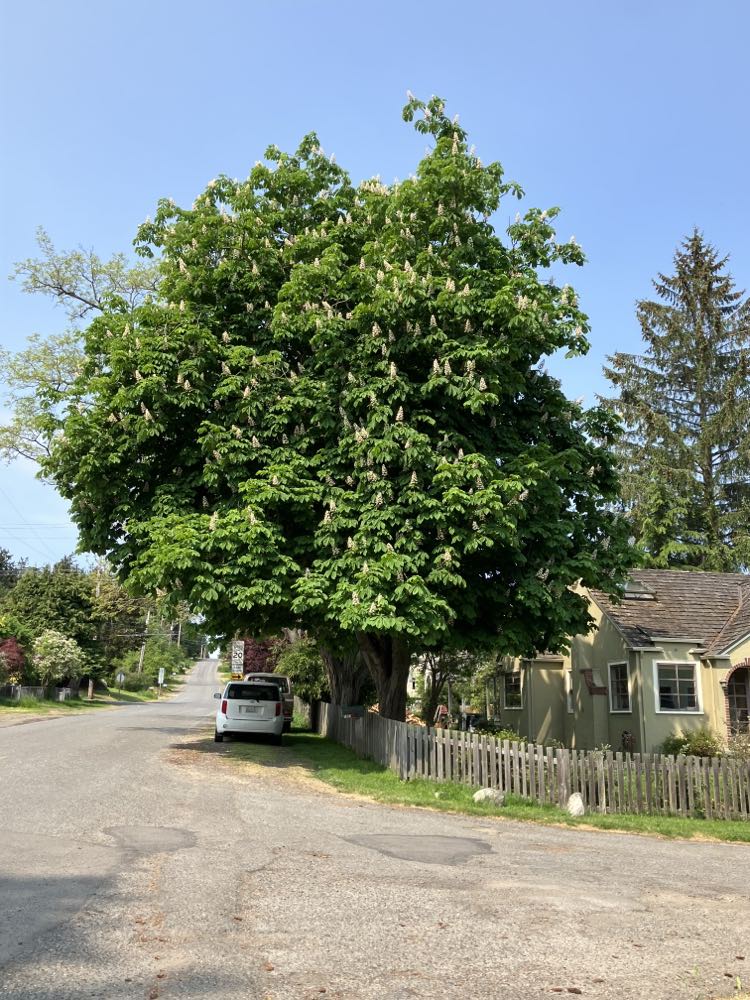
What is the tree and where is it?

I am still thinking about the Inflammatory Brain Disorder Conference.

The researchers and physicians are talking about the immune system as if it is broken in Long Covid and ME/CFS and the other illnesses, but I am not sure I agree. Maybe the immune system knows what it is doing. Maybe Covid-19 is a really really nasty infection and the immune system sends out antibodies to make us stay down, stay in bed, rest and keep from catching something else. Maybe an antibody that suddenly makes you weird will make you isolate and hide and not interact with the other potentially infectious humans.

Ok, the inflammatory brain disorders that destroy the brain, those are not adaptive. However, I’ve thought that MC/CFS was a “repair mode” since residency.

When I had my third pneumonia in 2014, I refused to admit to myself that I had chronic fatigue. It was sort of obvious. I went back to work six months after I got sick and seeing just four or five patients left me exhausted. I would come home and sleep on the couch. I also skipped breakfast, because I would go to sleep as soon as I ate. My blood sugar was fine and it was not a food allergy. It felt as if my body wanted to do repair work and wanted me to sleep while it was doing the repairs. I would sleep after lunch. For the next six months of work, I slept twelve hours a day and hoped that I would not have more than five patients. Also that I would not get sick.

We had everyone who had upper respiratory symptoms or a cough wear a mask and I wore one too, hoping to not get another pneumonia. That worked. I only got sick when I went to work in another hospital clinic system. I kept walking into rooms with patients with their masks off. I got Covid-19 in a mere five weeks there, after going a year at my clinic without getting it.

I spoke to a friend yesterday. She was talking about her damaged immune system. I said I didn’t think of it as damaged. With enough stress and infection, I think the immune system gets primed. And then it is as if it has PTSD: the immune system says, “Enough already! We are not going to LET you overdo and get sick again! We are putting you DOWN to sleep if you overdo!” It is an extreme version of “listen to your body”, as if the body is shouting. The immune system is hyperalert and goes all out if there is any threat or suspected threat.

Maybe we need to be more gentle with ourselves and each other. The US culture is so oriented to production and work and money as success. But is that really success, if we work 20 hours a day and drive our immune system to desperate measures?

Maybe we need to learn to relax. To take time off. To breathe.

And the talk about Mast Cell Activation Disorder said exactly that. We need to teach how to go from the sympathetic fight or flight crazy to the quiet, relaxed, parasympathetic state. That quiets the immune system down very nicely.

It won’t fix everything, I am not saying that. But it is something everyone can learn. Slow breathe, in five and out five. Practice.

Breathe.

______________________________

The tree is a Redwood and it’s in the Chimacum Woods Rhododendron Nursery. Not just rhodys and on the Olympic Peninsula.