For the Daily Prompt: courage.
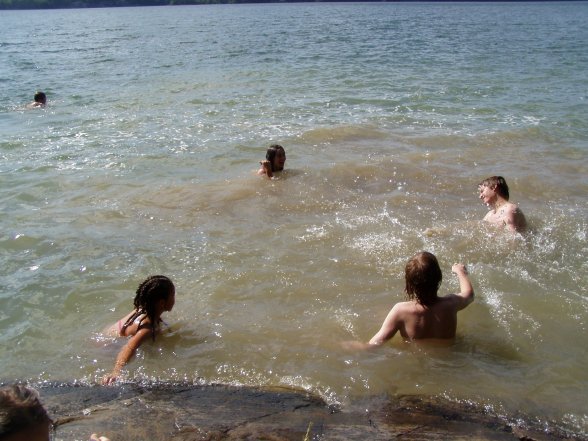
In 2006, I am photographing the cousins all swimming and a mud fight starts…. oh. Should I stop it? “No rocks!” I say. My sister chimes in, “Don’t throw mud at us!” My daughter prudently gets out.

For the Daily Prompt: courage.
In 2006, I am photographing the cousins all swimming and a mud fight starts…. oh. Should I stop it? “No rocks!” I say. My sister chimes in, “Don’t throw mud at us!” My daughter prudently gets out.

For Wordless Wednesday, from 2006.
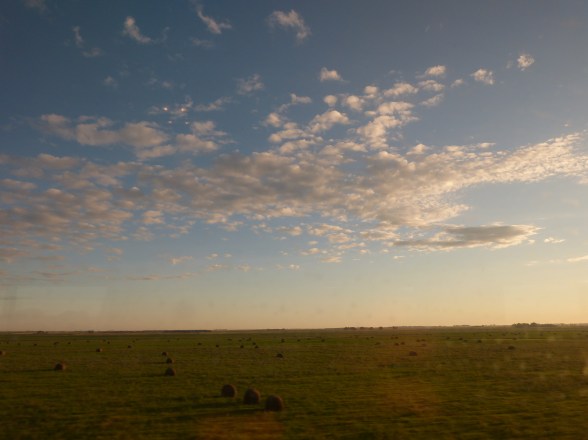
More from my 2014 train trip. I love the long shadows of the hay bales. The other shadows are subtle: reflections in the window of the train….
For the Daily Prompt: insist.
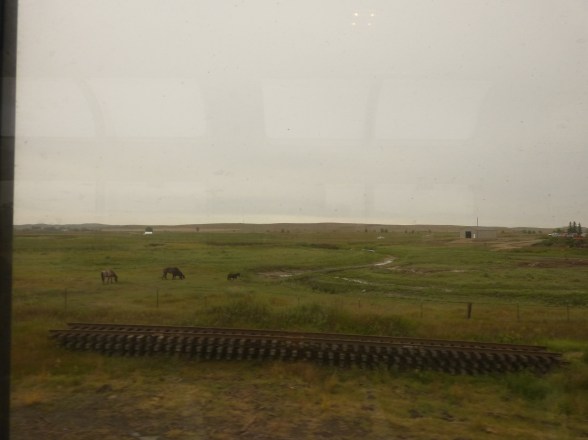
A field, a picture from a train. A mundane field….
….wait. There are tracks. That go no where….

“Please write something from a medical perspective about anxious people who worry every little thing is some serious disease.” — reQuest 2018
This is quite a brilliant and timely question.
Here: https://www.anxiety.org/hypochondriasis-replaced-by-two-new-disorders-in-dsm-5.
The DSM V was published on May 18, 2013. This is the Diagnostic and Statistical Manual of Mental Disorders version 5, and it redefines various disorders. For example, opiate dependence has disappeared and so has opiate addiction. Instead, there is one diagnosis: opiate overuse syndrome. Which really combines both opiate addiction and opiate dependence and makes it a spectrum.
The DSM V drops hypochondriasis. Wait, you say, that diagnosis no longer exists? Well, yes, correct. So the diagnoses are made up? Yes, as my daughter says, “All the words are made up.” So psychiatry changes and the diagnosis definitions change and some diagnoses disappear. Medicine is like the Oregon Dunes, really. The information is changing daily. I went into medicine thinking it is like a cookbook, where I just have to learn all the recipes. Nope, sand dunes: the wind and waves and new information change the contours daily. It drives my patients nuts. “My insurance won’t cover the medicine I’ve been on for 26 years.” Um, yeah, sorry, work for single payer and shut down the insurance companies, ok? “This combination of medicines has never killed me yet.” Um, yeah, sorry, but you are in fact getting older and we no longer think that combination is safe and first do no harm: I can’t prescribe combinations that I think may kill you.
Hypochondriasis has been replaced by two diagnoses: Somatic Symptom Disorder and Illness Anxiety Disorder.
From the Mayo Clinic website: https://www.mayoclinic.org/medical-professionals/clinical-updates/psychiatry-psychology/diagnostic-statistical-manual-mental-disorders-redefines-hypochondriasis.
“Patients with illness anxiety disorder may or may not have a medical condition but have heightened bodily sensations, are intensely anxious about the possibility of an undiagnosed illness, or devote excessive time and energy to health concerns, often obsessively researching them. Like people with somatic symptom disorder, they are not easily reassured. Illness anxiety disorder can cause considerable distress and life disruption, even at moderate levels.”
“To meet the criteria for somatic symptom disorder, patients must have one or more chronic somatic symptoms about which they are excessively concerned, preoccupied or fearful. These fears and behaviors cause significant distress and dysfunction, and although patients may make frequent use of health care services, they are rarely reassured and often feel their medical care has been inadequate.”
So, subtle difference. Broadly, the illness anxiety disorder people are sure they have SOMETHING and are worried about ALL THE SYMPTOMS. The somatic symptom disorder people are worried about A SPECIFIC SYMPTOM OR SYMPTOMS and WHY HAVEN’T YOU FIXED ME.
Some of the people complaining of weird symptoms do have a medical diagnosis that has not been sorted out. Take multiple sclerosis for example. The average time from the start of symptoms to diagnosis is 4-5 years.
Here: http://biketxh.nationalmssociety.org/site/DocServer/Facts-about-MS.pdf?docID=54383).
Also here: https://www.nationalmssociety.org/Symptoms-Diagnosis/Diagnosing-Tools.
Another one is sarcoidosis: https://www.mayoclinic.org/diseases-conditions/sarcoidosis/symptoms-causes/syc-20350358. It’s hard to diagnose, can affect different parts of the body, and it’s still pretty mysterious. Add to that list chronic fatigue, fibromyalgia, chronic pain, and numerous other diagnoses.
With multiple sclerosis, you may be thinking, well, if they had just done the brain MRI sooner, the diagnosis would be made. Not necessarily. I did find a patient with a bunch of MS brain lesions: made the diagnosis. She had had a brain MRI 3-5 years before because of suspicious symptoms during pregnancy. At that time her MRI was entirely normal.
The DSM V does not have a diagnosis called psychophysiological disorder. This is an ongoing discussion:
1. https://pdfs.semanticscholar.org/7f7f/21a9b524fb677d575428bea11aab4c8d70c5.pdf
2. https://thoughtbroadcast.com/2011/01/21/psychosomatic-illness-and-the-dsm-5/
This site: http://www.stressillness.com/ is my current favorite about psychophysiological disorders. I heard a lecture from the physician who runs the site. He is at OHSU in Portland and gets the gastrointestinal patients where “they can’t find anything wrong” from all over the state. He is really good at this. He and I are in agreement: the symptoms are real. However, the symptoms may come from emotional suffering and from emotional trauma in the past and present.
It is clear that fibromyalgia is a “real” disorder: functional MRI of the brain shows the pain centers lighting up more with a standardized pain stimulus than “normal” patients. PTSD is “real”. It is interesting that there is more stigma surrounding fibromyalgia and chronic fatigue than PTSD: is that because the former two are more often diagnosed in women, and the latter is legitimate (finally) for male (and a smaller number of female) veterans?
And what do I, your humble country doctor, think? I think that chronic fatigue and PTSD and fibromyalgia and illness anxiety disorder and the others all may be variations of the same thing. Our body will handle and “store” or “stuff” emotions that we cannot handle or are not in a safe situation to handle it. Eventually our body decides that we are now safe enough and will notify us that we have to handle the emotions. Currently our culture is terribly unsupportive of this and there is huge stigma attached to dealing with it. We are all supposed to just be nice.
In the end, we can’t judge how a friend feels or whether they are well or not. We have to treat them with respect and kindness.
The photograph is me on my grandfather’s lap. He became a psychiatrist and I am a family physician. Taken in 1962 or 3. We are at cabins in Ontario, Canada. What a pair of grubs, but happy…..

For Wordless Wednesday.

For the Daily Prompt: riff.
I think of a rock and roll riff.
Lots of them.
And here is a rock. A rock and a leaf. A riff on rock and roll….

For the Daily Prompt: black.
I took this hiking in August 2013. I was out sick with strep A pneumonia and it was in my muscles as well. I had been sick since June. Talking made me cough. I couldn’t hike fast, but I could hike.
We were mushrooming, carefully. We found a few black mushrooms. Photographed and left: we only collected edibles that we were solid on.
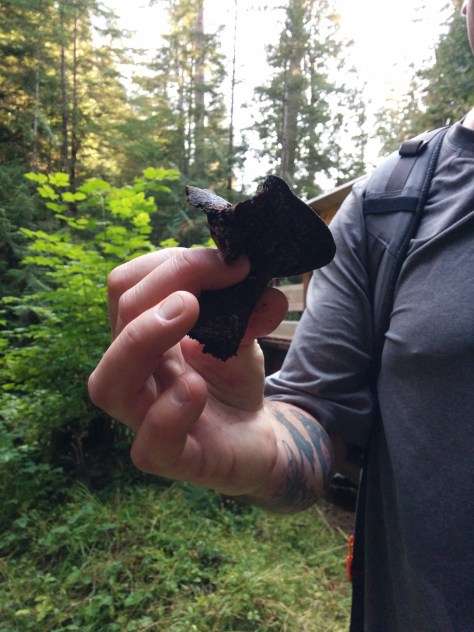
It was a beautiful and healing hike for me.

A patient told me about the “cancer pen” yesterday. I promptly pictured Star Trek’s Bones holding his device over patients, but no, this has to touch tissue…aka a piece of you…and do a chemical evaluation. It is to be used during surgery.
Here: http://www.bbc.com/news/health-41162994
This is neat new technology… but. I can hear my sister saying, “Uh, so what about PREVENTION?”
This is technology to remove cancer after it’s already grown. And presumably metastasized. So this is stage II, stage III, stage IV cancer.
Cancer deaths are the second biggest cause of death in the US. Around 23% of yearly deaths and that does not count the people who survive cancer. At present we do not have many screening tests for cancer: pap smears continue to evolve, and now the recommendation is an HPV test or pap smear every five years AND we have a vaccine for the high risk HPV.
We can screen for colon cancer.
Mammograms for breast cancer.
The screen for prostate cancer sucks.
We can do skin checks.
The screen for lung cancer is now a low dose CT in a certain population that is high risk, that is, smokers. The recommendations have not addressed smoking marijuana.
Recommendations in the US are here: https://www.uspreventiveservicestaskforce.org/.
There are lots of cancers that we don’t have screens for…. yet.
Proteomics is on the horizon. Genomics is looking at the genes, but it turns out that lots of cancers and infections and other illnesses have particular protein patterns. There is TONS of research in this area. Someday we may have protein tests: put a drop of blood or urine on it and say, “Hmmm. Looks like you have a positive test, probable lung cancer.”
That in turn creates problems. Initially we may be able to diagnose a cancer but not FIND it. Also not know how to treat it. The first big study trying to set up lung cancer screening had over 600 worrisome CT scans out of 1000. How many lung cancers did they find? Nine. And half of the nine had symptoms and could be found on chest xray by the time they did repeat CTs. Think of the anxiety of the 600 people who might have cancer and “We will repeat the CT scan in four months. Don’t worry too much.” Also there were complications from biopsying the lungs, like bleeding and pneumonia….
The best bet to avoid cancer is still living in a healthy way: don’t smoke anything, avoid addictive substances, eat good food, exercise, have friends and loved ones, work for yourself and your community, do some things you love…..
I took the photograph of my sister in 2011. She died of breast cancer in 2012. Her blog is here: butterfly soup.
For the Daily Prompt: strut. Struts support things: airplane wings, cars, things that move. How do we as a culture support people to live healthy lives?

For the Daily Prompt: gingerly.
I took this in Poulsbo, during the World Wide Photowalk.
I like this because it sneaks up. Ok, stubborn photographer, trying to get the right shot…. oh, wait, crutches. The hike was not terribly long, luckily. Balancing on crutches with a camera, well, there were no falls.
BLIND WILDERNESS
in front of the garden gate - JezzieG
Discover and re-discover Mexico’s cuisine, culture and history through the recipes, backyard stories and other interesting findings of an expatriate in Canada
Or not, depending on my mood
All those moments will be lost in time, like tears in rain!
An onion has many layers. So have I!
Exploring the great outdoors one step at a time
Some of the creative paths that escaped from my brain!
Books, reading and more ... with an Australian focus ... written on Ngunnawal Country
Engaging in some lyrical athletics whilst painting pictures with words and pounding the pavement. I run; blog; write poetry; chase after my kids & drink coffee.
Coast-to-coast US bike tour
Generative AI
Climbing, Outdoors, Life!
imperfect pictures
Refugees welcome - Flüchtlinge willkommen I am teaching German to refugees. Ich unterrichte geflüchtete Menschen in der deutschen Sprache. I am writing this blog in English and German because my friends speak English and German. Ich schreibe auf Deutsch und Englisch, weil meine Freunde Deutsch und Englisch sprechen.
En fotoblogg
Books by author Diana Coombes
NEW FLOWERY JOURNEYS
in search of a better us
Personal Blog
Raku pottery, vases, and gifts
𝖠𝗇𝗈𝗍𝗁𝖾𝗋 𝖶𝗈𝗋𝖽𝖯𝗋𝖾𝗌𝗌.𝖼𝗈𝗆 𝗌𝗂𝗍𝖾.
Taking the camera for a walk!!!
From the Existential to the Mundane - From Poetry to Prose
1 Man and His Bloody Dog
Homepage Engaging the World, Hearing the World and speaking for the World.
Anne M Bray's art blog, and then some.
My Personal Rants, Ravings, & Ruminations
 KO Rural Mad As Hell Blog
You must be logged in to post a comment.