Adverse Childhood Experiences 5: Love your brain

L for Love your brain, in the Blogging from A to Z Challenge.

I have just been to another conference and met a woman neurologist. She is studying traumatic brain injury patients. She is applying for a grant to study adverse childhood experience scores in traumatic brain injury patients because they have noted that the people with fairly awful or very awful childhoods tend to cope better than the people with a nice childhood. She wants to do a formal study to see if this observation holds up.

Why would people who have had major trauma during childhood do better after a traumatic brain injury than those with a good childhood?

The suspicion is that their brains are wired differently. The high ACE score people have “crisis” wiring. They have brain wiring for survival in difficult circumstances. They have already used this wiring in childhood and have survived something or survived many things. When they have a catastrophic injury, the wiring kicks right in: ah, back to this, well, I can survive.

The brain is especially plastic as a child. We want to see all children treated well and loved and cared for, but it may be necessary as a species to have a survival back up. What if there is a disaster or a tsunami or a war? How do we adapt? Who survives? What becomes necessary that was unthinkable previously? Children are still growing up in the midst of wars and disasters and the crisis wiring is put in place to help them survive.

Children growing to adults in difficult circumstances work hard to survive and continue to work hard as adults. Dr. Clarke, from the OHSU primary care review, says that the personality characteristics of responsibility and hard work described in my last essay “produce a strong positive response from the world. Over time (sometimes a long time) this tends to overcome the poor self-esteem and eventually produces a major shift in how a person views him or herself. This major shift can be summarized as “I DESERVE BETTER.”

a. Often the individual will decide that they deserve a better partner or a better work environment.

b. Often they will no longer tolerate being treated disrespectfully.

c. Often there is the idea that the individual deserved better treatment when they were children.

d. The first relationship with a supportive, respectful partner may occur at this time. This, too, can be stressful because it is such a change from the past.

e. Resentment or anger about how the individual was treated as a child may be generated at this time though it may not be consciously acknowledged. It is common for the anger to be suppressed because it is an unpleasant emotion, because childhood stress survivors spent years learning how to control emotion and because the anger is often directed at people about who there is still some caring. When there is enough of this anger present it can cause physical symptoms that can be mild or severe or anywhere in between. Many people are unaware of how much anger they have. Highly educated people often have the most difficulty comprehending their level of anger.

f. Imagination techniques to uncover anger: pretending that you are watching a child you care about endure the same environment you did; pretend you are overhearing a conversation between a child you don’t know who suffers as you did and the child’s parent.

g. Often it is during this time of significant change in self-image that physical illness occurs.”*

My hope is that as we learn more about how the brain is wired in childhood and how versatile and adaptable it is, we will also gain understanding of the differences among adults. That we will grow in tolerance and in ability to support growth and healing, rather than judging and rejecting.

*Dr. Clarke has kindly given me permission to quote from his work. This is from his handout at the 46th Annual OHSU Primary Care Review.

Further reading, that I am looking forward to:
They can’t find anything wrong!, by David Clarke, MD. See also http://www.stressillness.com/

Hurt and healing

H is for healing and hurt in the Blogging from A to Z. I mentioned dreaming of monsters in my Gift post, and this is the poem about that dream. It is hard work to heal.

Advice to Micheal

Neverland
Is such an ironic name
Can’t they hear?
Can’t they think?
The land where boys never grew up
The Lost Boys

And you
Are not molesting
Boys
You are
Searching
When I heard
About your childhood
I knew
They were wrong
They’ve missed the boat

You sang
Like an angel
And the world
Stole your childhood

Hotel rooms
With older brothers
Sex
Drugs
Alcohol
Money
Chaos
And you must have been
So frightened
Lost
Pressure to sing
As the star

Locked your core self away
To keep it safe

My childhood
Was scary too

I started my search
With a dream
Of a dark hole
From which came the sound
Of monsters
Howling

I was scared

I went to the hole
anyway
scared
of the howling

The hole was dark
And roots stuck out of the side
Like reaching fingers

I got a flashlight
And looked

It wasn’t as deep
As I thought
And the roots worked as
A ladder

I climbed down
Into the hole

I found three monsters
Howling

Baby monsters

I put them in my pack
And carried them up
Into the light

They howled

I bathed them
And diapered them
And fed them
And rocked them

They howled
They didn’t know what to do
When taken care of

I named them
Fear
Grief
Shame

At last they stopped howling
And sat
Warm
Wrapped in blankets
Ugly
Sullen
Lower lips thrust out

And I found a shrink
To talk about my dream
And to help heal the monsters
That I had rescued

We always have more
Work to do
But now I have a little girl
Inside me
Who came to greet me
When I had healed the monsters
Enough
She is beautiful

You won’t find
The Lost Boy
That you are looking for
Outside you
He is inside
He is innocent
And beautiful

You may have to face
The monsters
Of your childhood
To reach him
Yours was worse than mine
I’m sorry

You may have to face
How much people you loved
Hurt you
Even though they loved you
I’m sorry

Find help
And rescue
The Lost Boy
And joy

Good luck.

Poem written August 10, 2005. Previously published on everything2.com.

Love in Ten Sentences

Janebasilblog nominated me for this challenge and I finally have done it. Now to tag ten MORE people…..

Details of the challenge: Write a 10 line poem with four words to each line, and each line must contain the word ‘love’. Nominate 10 people to carry on the challenge.

love complicates my life
love and don’t like
behavior not deserving love
love pours forth anyhow
love feels deep hurt
love withdraws lick wounds
love heals ventures forth
less contact mean loves
behavior change brings love
complicated joy : love anyhow

I still need to nominate ten people to carry on and write the NEXT love in ten sentences. I will add that…

The Introverted Thinker on high school fights

I just watched Taylor Swift’s Mean and it makes me think of what the Introverted Thinker says about high school fights. I asked if she sees a lot of bullying.

“Oh, mom, mostly it’s not bullying. Mostly it’s misunderstanding.”

She said that mostly the fights are mistakes. “Mom, one girl isn’t really thinking and she says something as she’s leaving. She is not even trying to hurt the other person. But she says something that is not thoughtful or can be taken wrong.

Then the other girl thinks about it and gets all upset. She talks to her friends and then snubs the first girl. The first girl doesn’t remember the comment and has no idea that it has hurt anyone. She doesn’t know what the fight is about, so she feels attacked out of the blue by the second girl and her friends.

It’s silly and it’s usually a misunderstanding. The first girl made a dumb or thoughtless or confusing comment. It gets taken wrong and then it all escalates from there.”

It is hard to go back to a person who made a comment that feels really hurtful and ask: what did you mean when you said this? There is bullying and meanness as well. But my daughter thinks that it’s mostly not deliberate or thoughtless cruelty: mostly it’s thoughtless comments.

Taylor Swift Mean
More Introverted Thinker and Extroverted Feeler stories here.

Off balance/balance

Plato’s Groove lovely poem from yesterday reminds me of Portia Nelson’s poem “A Poetic Interlude:  Autobiography in Five Short Chapters”. I wrote my own version of this back in 2005, about trying to change. It is hard. I also want to submit this to the Ronovan Writes BeWoW Wednesday, for Be Wonderful Wednesday. @RonovanWrites. I think looking inside and trying to change and changing is wonderful…..

Off balance/balance

Confusion
Makes no sense
React react react
Engage
Argue
Fight
Want to bite kick scream
Argue (control) argue
Icky tone of voice
Ugly
Confusion confusion
Told I am wrong
I am overreacting
I am invalid
Child again
Hide

Confusion
Makes no sense
React
Stop
Don’t react
Stop…..
Wait…..
Feel…..
Confusion ANGER
Let anger go
Confusion: Sad, Hurt
Sad feels lonely
Not engaged
Remember you are loved
Remember you are lovable
Sad is ok
Remember
Roses and violets and lupine
Spring from the path
Where your true self steps
Call true friends
Comforted.

Confusion
Makes no sense
Hurts
No react
Listen
Confusion not mine
Sad
Disengage
Remember
Roses and violets and lupine
True self
Comfort self

Confusion
Not mine
Step away
Comfort self

Comfort
Comfortable
I am loved
I am cherished
I am safe

June 11, 2005

previously published on everything2.com

My mom loved me

My mom loved me

It’s herself she didn’t love
She didn’t love her anger
She didn’t love her fear
She didn’t love her sorrow
She didn’t love her shadows

She packed all her troubles in her saddlebags
and rode forth singing.

When I was angry
she felt her anger
When I was scared
she felt her fear
When I was sad
she felt her sorrow
When I felt my shadows
she felt hers
I hid my shadows

I hid my shadows for many years
and then my saddlebags were full
They called me

I dove in the sea
I rescued my anger
I rescued my fear
I rescued my sorrow
I rescued my shadows

At first I couldn’t love them
My mom didn’t; how could I?

But I loved my mom
I loved all of her
Her anger
Her fear
Her sorrow
Her shadows
Her singing and courage

I thought if I could love her shadows
I could love my own

It was hard
It took months
I looked in the mirror at my own face
And slowly I was able to have
Compassion for myself

I am sad that my mom is not
where I can touch her warmth
and tell her I love all of her
I tell her anyway

I’m finding many things as I surface from my dive
Sometimes I feel the presence of angels
I was looking for something else
I found a valentine
that she made me
No date
Many hearts cut out and glued
to red paper

I am so surprised

My mom loves me
shadows and all
now and  forever.

Sometimes I feel like a motherless child Sweet Honey in the Rock

I took the photo of my mother working at the etching press while I was in college.
This was previously posted on everything2.com in 7/2014 and written before that.

The future of medicine

we recognize the true embodied mind
we stop the stigma of the many beaten down
the damage done in childhood caught in time
hearts open and lift the broken off the ground

we learn that diagnoses are a crutch
drugs plaster over deep and seeping wounds
mental labels hurt the patients oh so much
we learn to listen: broken hearts sing grieving tunes

cruel medicines and thoughts are shelved for good
gentle boundaries surround hearts to keep them safe
we rise as friends and families and doctors really should
the angry monster revealed as longing waif

damage done in childhood to the brain
lays survival pathways that we no longer call insane

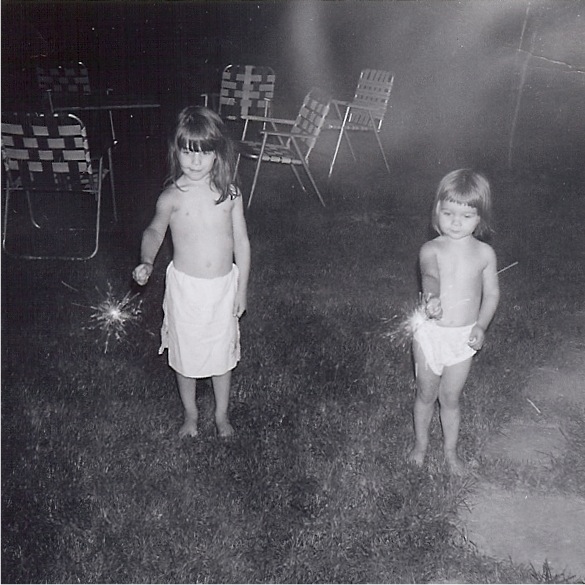
The photo is me and my sister Chris. I do not know who took it, but I think it was at my maternal grandparents. They are deceased, my parents are deceased, my sister is deceased. I don’t know who to credit.

Adverse Childhood Experiences 4: Psychophysiological Illness

I went to the 46th Annual OHSU Primary Care Review, held at the Sentinel Hotel in Portland, Oregon last week.

It was excellent. It was surreal since the Sentinel Hotel started as a 1923 Elks’ Club and the satyr cupid friezes kept distracting me with the marble penises and war chariots during the lecture updating us on urinary incontinence.

Three lectures that I went to talked about Adverse Childhood Experiences.

This is the first conference that I’ve been to that anyone has talked about that study since I heard about it, in about 2005. I have not been to a lot of big conferences over the last few years because I opened my own clinic and money was tight.

Anyhow, the study is creeping into consciousness.

In the mornings, we had the big lectures in a large hall. There were three break out sessions in the afternoon, held in the main meeting, billiard room, club room and library. We all joked about Colonel Mustard and candlesticks.

A gastroenterologist, Dr. David Clarke, gave a two hour session titled “Hidden Stresses and Unexplained Symptoms II”.

Objectives:
1. How to uncover the cause of an illness when diagnostic tests are normal.
2. How to find hidden psychosocial stresses that are responsible for physical symptoms.
3. The process used to achieve successful outcomes in stress-related illness.

He talked about childhood stress. That if someone had a really difficult childhood:
“Surviving a dysfunction home is a heroic act and produces individuals who are:
a. reliable and get things done
b. detail-oriented
c. Perfectionist
d. Hard-working
e. Compassionate”

So what is the down side? “Surviving a dysfunctional home also produces emotional consequences that may lead to :
a. Long-term relationships with partners who treat you poorly.
b. Addictions to nicotine, Alcohol, Drugs, Food, Sex, Gambling, Work, Shopping, Exercise.
c. Quick Temper or being violence prone
d. Anorexia and/or bulimia
e. Mental health problems such as nervous breakdown or suicide attempts
f. Sacrificing your own needs to help others
g. Self-mutilation
h. Learning not to express or feel your emotions.”

Got that? Right. Not everyone, not all the time, but the adverse childhood experiences add up. These reliable individuals may eventually get enough positive feedback to decide that they deserve a relationship that is actually good. They may get angry about their childhood or past bad treatment. “They may have a really hard time expressing that anger because they spent years learning how to suppress emotion and the feelings may be directed at people for whom there is still some caring. When there is enough of this anger present it can cause physical symptoms that can be mild or severe or anywhere in between.”

Let me give two examples from my own practice. I can’t remember their names or the details, so I am making those up: no hipaa violation.

The first was an elderly woman who came in with her husband for stomach pain. We started with a careful history. We tested for helicobacter pylori. We tried ranitidine. We tried omeprazole. We studied her diet and did an ultrasound to rule out gallbladder disease.

At the third visit I was starting to talk about an upper endoscopy. This was more than 15 years ago, back when we did not start with a CT scan. Her husband said, “Doctor, is there anything else it could be?”

I was surprised. “Well, yes. Depression is on the diagnosis list. Sometimes depression can present as stomach pain. Could you be depressed?”

My elderly lady covered her face with her hands, started crying and said, “I try not to be!” while her husband nodded.

We cancelled the endoscopy. I said it really was not something to be ashamed of and we talked about therapy. She did not want talk therapy and we tried paxil. She came back in two weeks, and already she and her husband were brighter and relieved.

Second case: again, stomach pain, this time in a four year old. Mom brought her in.

I did a history and did a gentle exam. The exam was normal. Her stomach was not hurting now. She wouldn’t say anything.

We established that the stomach pain occurred on week days only, not on the weekend. In fact, usually at the after school daycare, not in school.

“Is there a time at the school daycare that she has stomach pain?” Mom was shaking her head when big sister piped up.

“It happens before recess.” Mom and I turned to stare at the six year old.

I said, “What happens at recess?”

“The big kids knock her down,” said big sister, pissed. “I try to stop them, but they are bigger than me. She’s scared. The teachers don’t see.”

“Oh. Thank you for telling us!” Little sister was crying and mom hugged her and big sister. Mom did not need instruction at that point. She called me a few days later. She talked to the daycare, they watched and the four year old was protected. Her stomach stopped hurting.

Dr. Clarke also described a case, where driving through a town would trigger four days of nausea and vomiting that required hospitalization. This had been going on for 15 years. He figured out why that particular town was a trigger: when the patient recognized the why, he was able to go for therapy.

People aren’t lying about these illness, they are not making them up. Doctors have called it somatization, but really it is the body holding the emotions until the person is safe enough to deal with them. Doctors need to learn how to recognize this and help with respect instead of stigmatization and dismissal.

I hope that more doctors learn soon…

Dr. Clarke’s list for further reading is below. I don’t have any of these yet, but they are on my wish list.

They can’t find anything wrong!, by David Clarke, MD. See also www.stressillness.com

Psychophysiologic Disorders Association: www.ppdassociation.org

Caring for Patients, Alan Barbour, MD

Unlearn Your Pain, Howard Schubiner, MD

Pathways to Pain Relief, Frances Anderson PhD and Eric Sherman PhD

Ted talk about ACE scores: http://www.acesconnection.com/blog/nadine-burke-harris-how-childhood-trauma-affects-health-across-a-lifetime-16-min
Between trapezes

Two and a half years
Between trapezes

Letting go is hard
Enough
But then to hang
Wait for the next
On Faith
When you can’t see your way
After a while you aren’t
Flying through the air
But falling

Falling
And screaming inside

Free fall
For hours
Days weeks years

In the company of angels
Letting go
Calls the angels
I dream of angels
Falling in a black void

And after a while
You don’t want to fall anymore
And you understand
Those who end it
It takes great strength
To hold on to the idea
That it will end.

Two and a half years
And suddenly my hands are solid
Not falling
Swinging

Joy wells up
My mind is freed
From the hard work
Of falling and screaming
And I am swinging in the air
Safe

Color is back
Sensation
Sound
Music
Taste
Food melts in my mouth

Who would not be manic?

previously published on everything2.com in 2010, written in mid-2000s.