For Cee’s Flower of the Day.
Red leaves 3
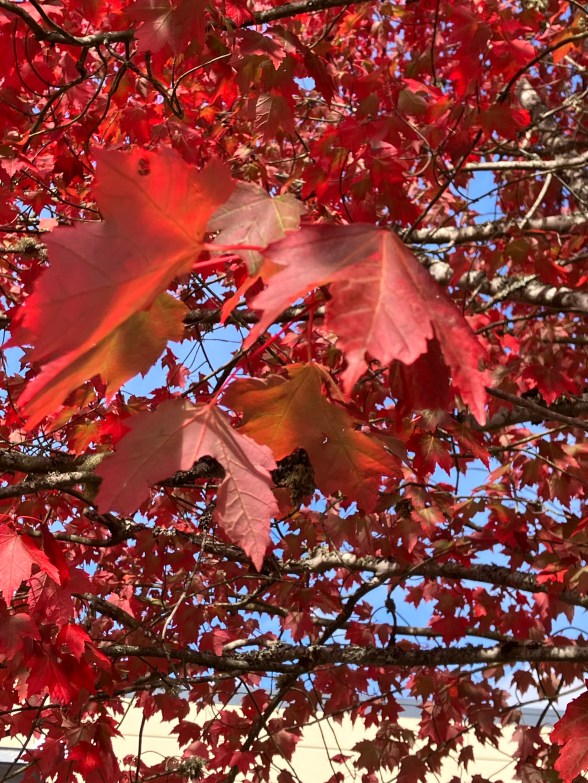

For Cee’s Flower of the Day.

I am attending parts of the online Collective Trauma Healing Summit, led by Thomas Hubl. This morning I listened to two speakers, each about an hour long. The first was by Rev. angel Kyodo Williams, an African-American buddhist teacher and the second is by Tristan Harris, who is the co-founder of the Center for Humane Technology.
Mr. Harris gives me hope about humans learning to live with social media without continuing to be polarized and angry. He speaks about the way that many platforms work. We tend to click on things that worry us and that we are traumatized about, and the platform immediately starts feeding us more of that. In a way, Facebook and other platforms gas light us: the algorithm figures out what makes us upset and agitated and promptly feeds us more of it.
He advocates moving to more humane platforms, that aren’t built on feeding us trauma, and especially for schools and parents to do this collectively with children. He co-hosts the podcast “Your Undivided Attention” each week, so I will be looking in to that.
However, I have a second reason to be hopeful about social media. I am in more than one group now that has rules and that has administrators that enforce them. Kindness. An insect group that forbids people saying “squash it”, because it’s a group of people that are interested in insects. A physician mom group. A pacific northwest rock group and a women’s pacific northwest rock group. I am now one of the administrators for a local group and am fine with it.
Even though Facebook is still feeding us more trauma and horror if that is what we click on, people are starting to see through this and refuse. They are forming groups where insects and people aren’t squashed. Rural farm groups. Music groups. In these groups I feel that people are coming together and are working to be supportive and help each other, identifying rocks, discussing child behavior, singing together.
Each time that technology makes the world smaller and more connected, we have to relearn how to get along. With our family, then our small tribe, then a larger tribe, then cities, countries and now we can see each other the world over. If all we see is what we fear and what horrifies us in our feeds, then we need to turn it off, breathe, and look for something to calm us down. Knit. Silly cat pictures. Flowers. What gives you a feeling of peace and hope? Whatever it is, do more of it and share it.
Blessings and peace you.
I don’t know who the person in the tintype is. I think that it came from a box from my Great Aunt Esther Parr, when I was in my early teens. My sister and I divided the tintypes and used them as portraits in our china doll houses.
For the Ragtag Daily Prompt: obituary.

For Cee’s Flower of the Day.
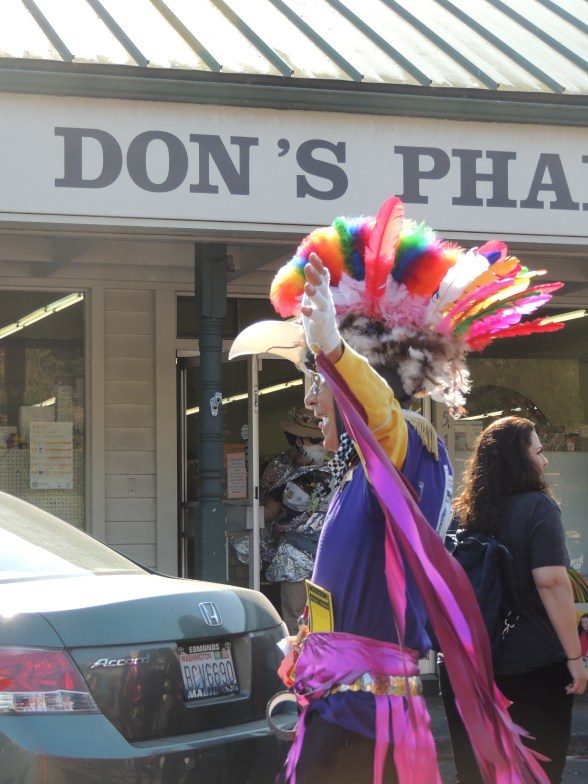
I am still enjoying my photographs of The Great Port Townsend Bay Kinetic Sculpture Race. Above we have a Kinetic Kop in action, just as the parade is starting! Stop the cars! The sculptures are on the move!
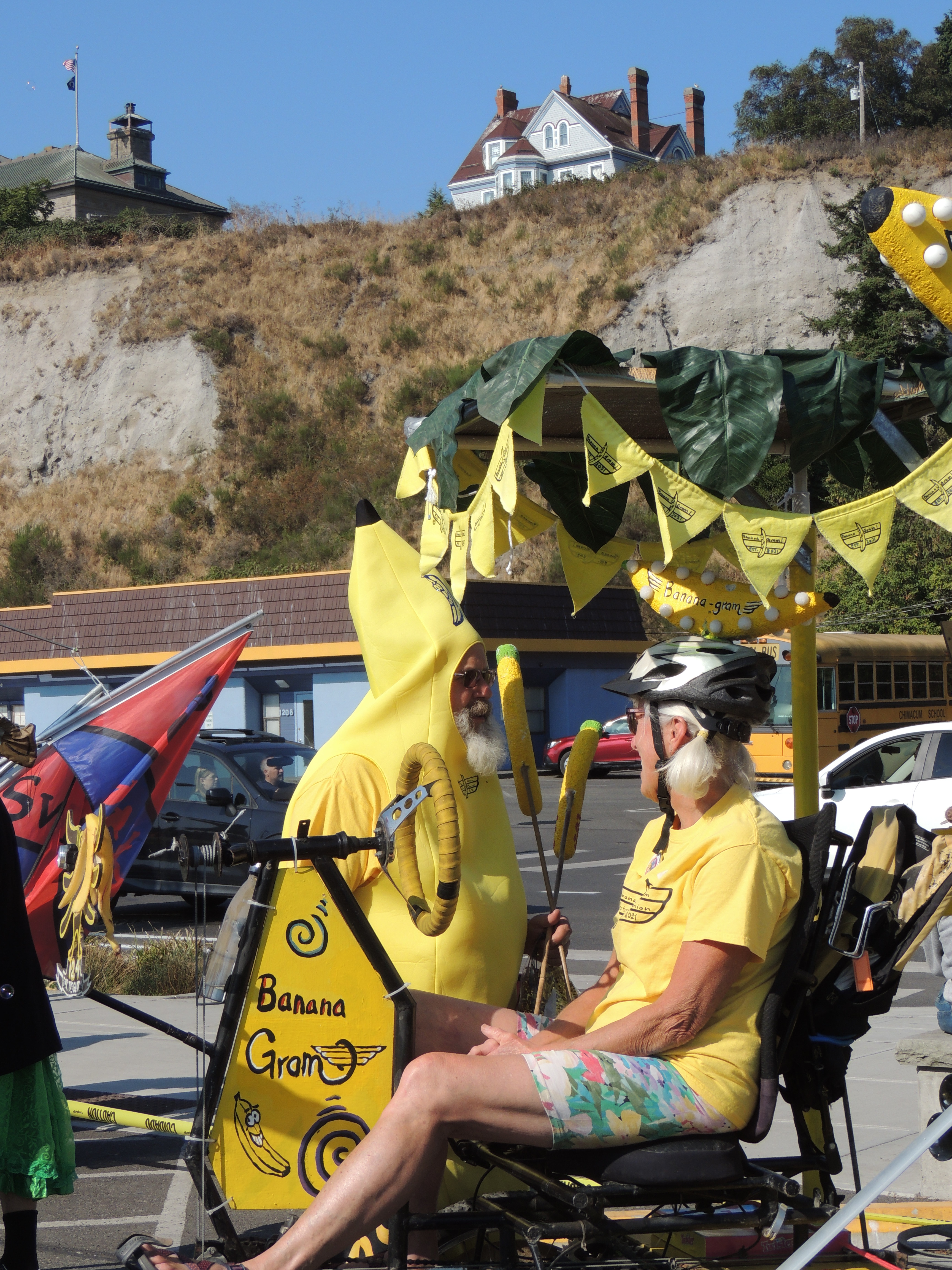
All of the color and costumes are so fabulous, especially after quarantines and isolation. Red, orange and yellow predominated!

Talents show up! Walking on stilts in costume with wings!

These racers are having a grand time!

A serious discussion on the Kiwanis Train.
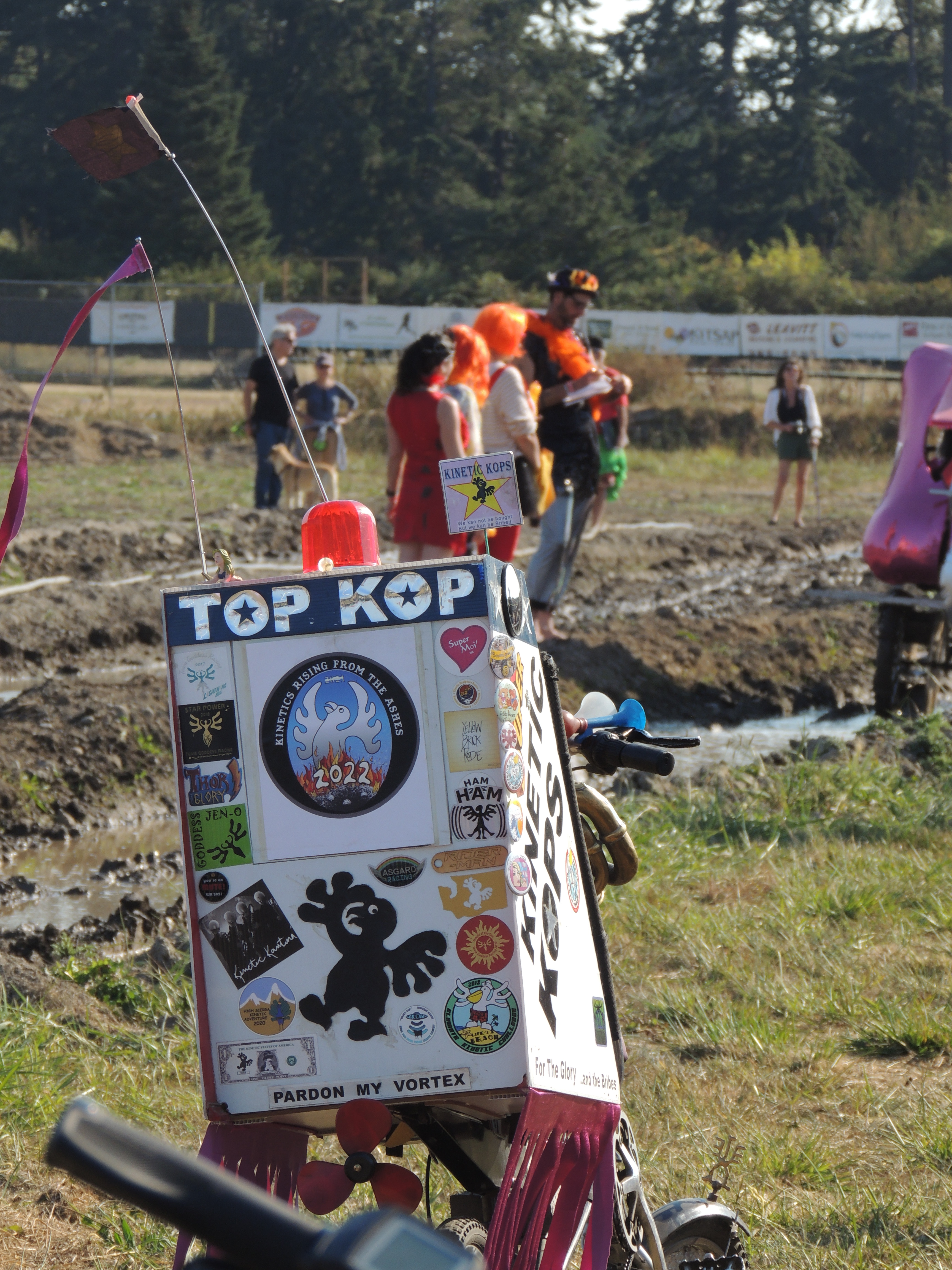
Kop Kar, I mean, Kykle.
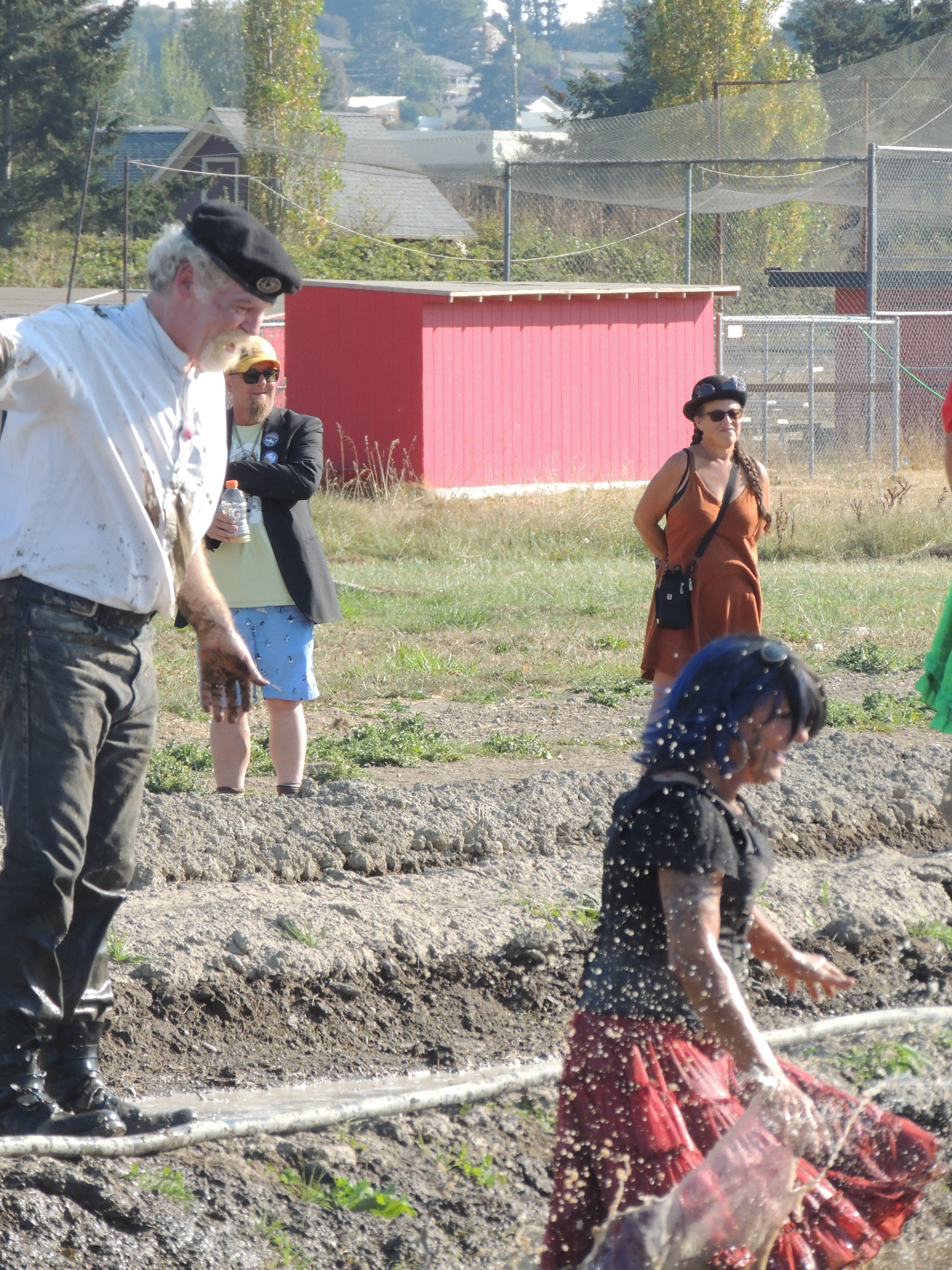
Mud, mud, glorious mud, nothing quite like it for cooling the blood!
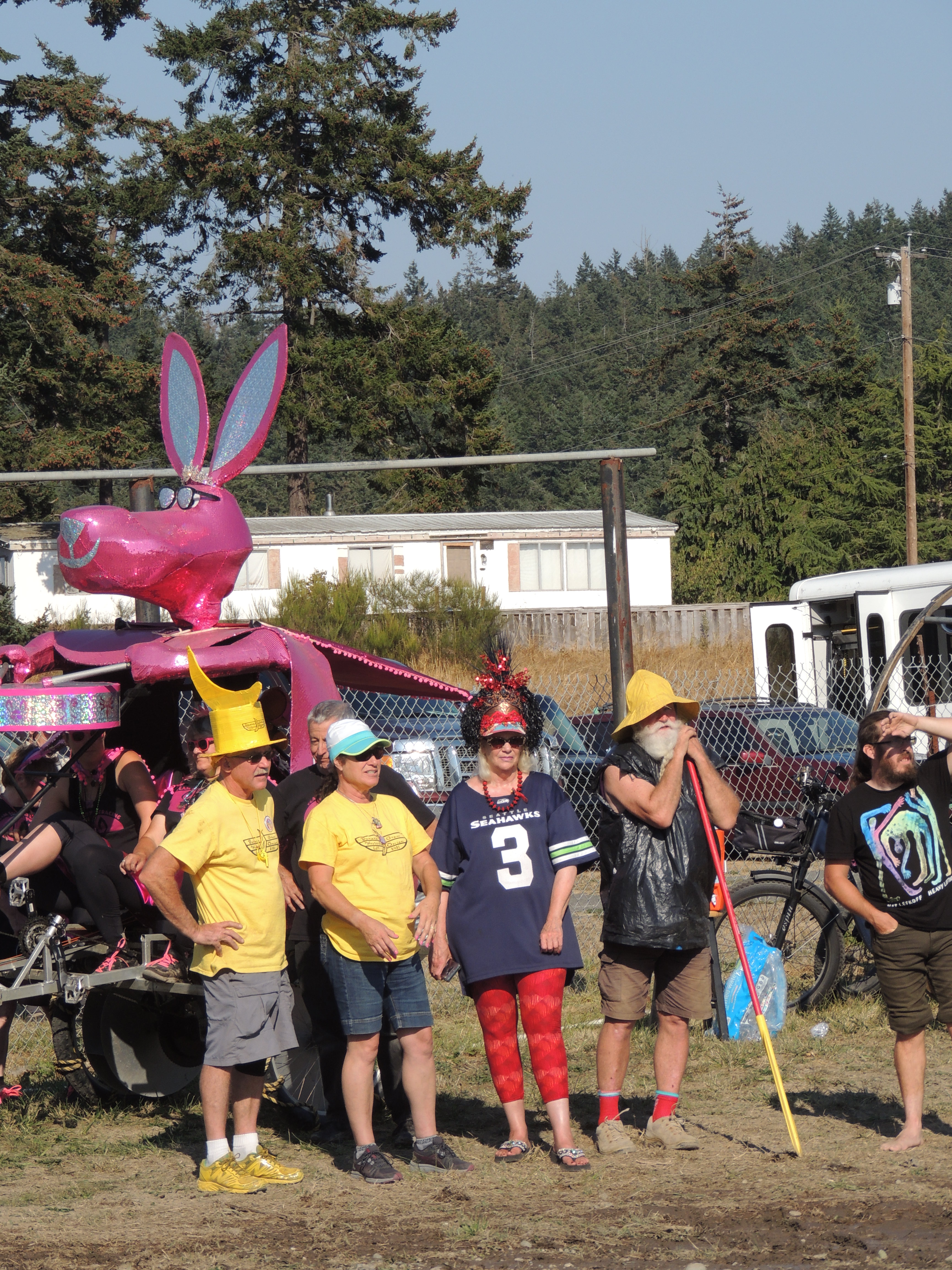
Waiting for their turn at the Mud Bog.

Superlative Feathers!
For the Ragtag Daily Prompt: superlative.
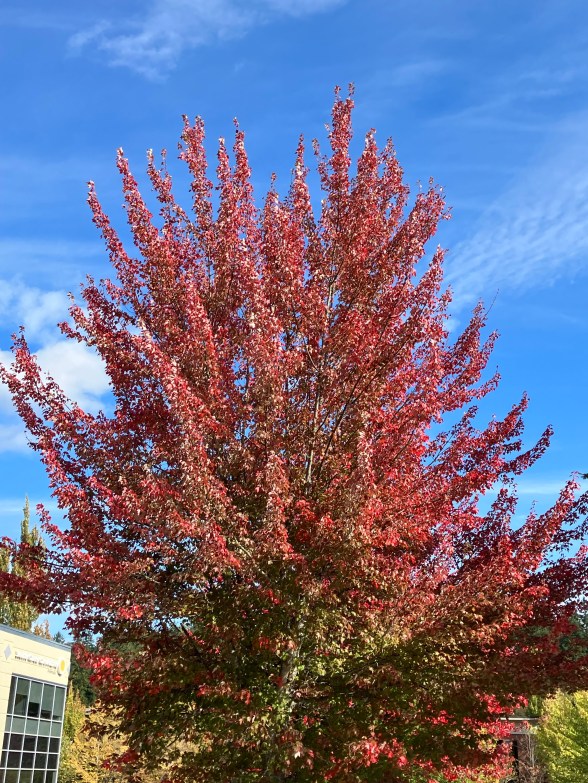
I went an hour south last week. These maples are not native and are very very bright.
For Cee’s Flower of the Day.

When I was married, my husband described my parents as “Time-Warp Beatniks”. That is a good description. We had no television until I was nine and my sister was six, because my parents disapproved of television. This lack made me even less social at school, even though I was never ever good a small talk. I still don’t understand the small talk code.
My mother disliked Barbie, so she conspired with her brothers. We had five girls and two boys in my maternal cousin generation. My mother got the four younger girls all 8 inch china dolls, instead of Barbie. The next summer, the younger boy got one too, since the girls were all sewing and building furniture and generally going to town with them.
I was also given the doll in the picture. She was my grandmother’s china doll, Katherine White Burling. I do not know who sewed the dress that she has on, possibly my great grandmother. The stitches are by hand and tiny. We understood that the dolls’s world was in the late 1800s and since this doll came with a wardrobe, we sewed doll nine patch quilts and my grandmother helped make demure pantaloons for our dolls.
My sister and I did manage to score Barbies eventually, though our china doll world was much more full. The china dolls went with us to Ontario, to Blind River, Canada, where my maternal family has shacks on a lake. We were all allowed to use scrap wood to build tables and chairs and benches and beds, as long as we PUT THE TOOLS AWAY.
Meanwhile, my paternal grandmother, Evelyn Bayers Ottaway, was a brilliant knitter. She taught me to knit at age 8, but it didn’t really take. I learned again in Denmark and still knit. Grandma Ottaway knit elaborate Barbie clothes on microscopic needles. I still have a few of them. They were in the late 1960s and early 70s and really beautiful. One was a tiny knit stole, with a mohair, lined with brown satin. My china dolls stole it from my Barbies. Or perhaps there was an exchange, I don’t know.
The hand sewing came in handy. I have had surgeons ask me where I learned to stitch. “Doll clothes,” I say. They tend to look confused at that.
At one point I had a patient here who was indigenous to the area and age 104. She told me, “When I was in my twenties, even if I dressed like the Caucasian women, they would get up and move to a different pew if I sat by them in church.” I apologized. She told me not to worry, things are changing. So in the photograph, the woman behind my grandmother’s doll is an indigenous weaver. There is a tiny baby on a cradle board. They are having tea together. That is wishful thinking on my part, but we are allowed to wish for peace and work for harmony. Two cultures, still trying to come together with respect.
Blessings and peace you.
__________________________
For the Ragtag Daily Prompt: culture.
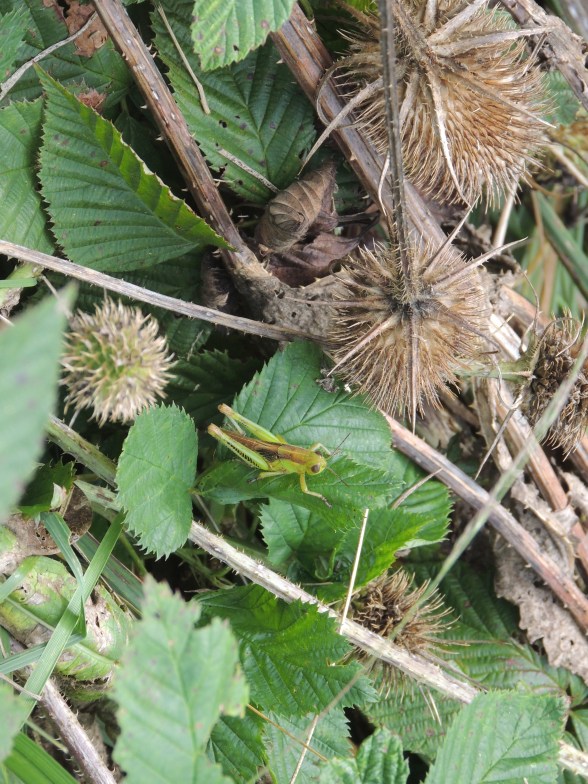
I traveled to the midwest over Labor Day for two weeks. This is taken in Ohio.
For Cee’s Flower of the Day.

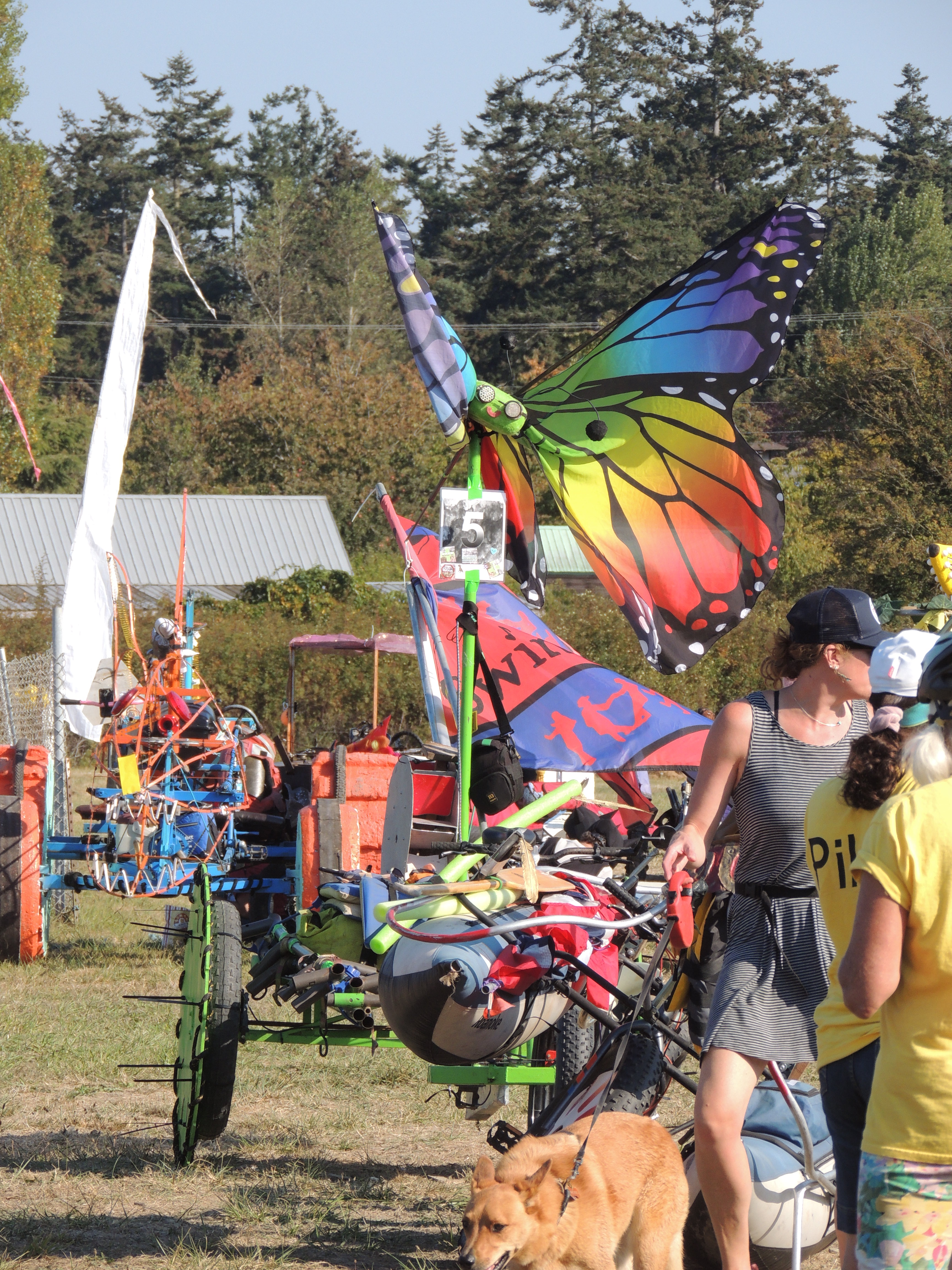
Day 2 of the Great Port Townsend Bay Kinetic Sculpture Race. The race starts at “low noon” and winds up up up hill and then some downhill to the fairgrounds: and there is the Mud Bog. Each sculpture has to pick one of three courses. They are deep and muddy and rutted. The sculptures can be moved sideways but not forward or back. There is a time limit. It looks like very hard work!

There is a lot of standing around. In costume. Observing and commenting. Kinetic Kop presence.

I love this sculpture. Headed for the mud.

Others waiting.
He is fairly snappy.

Uh-oh!

He makes it and the buns are next!

For the Ragtag Daily Prompt: snappy.

I am out of order: I already put up Squash blossom 3. But it’s the Kinetic Sculpture Festival and why do things in order! Just don’t get run over by a sculpture! Even though they are covered with feathers or glitter or sequins, some are very heavy and have impressive engineering. Hooray for human powered vehicles!
For Cee’s Flower of the Day.

We are half way through the Great Port Townsend Bay Kinetic Sculpture Race.
https://ptkineticrace.org/2022-annual-art-kontest-and-parade
Yesterday was the Parade and the Brake Test and the Bribing of Judges and the Going Full Speed No Brakes into Port Townsend Bay and then paddling or floating or somehow getting out. And the glorious Kinetic Ball and Krowning of the Kween!
Today, so many more events! The race up the winding hill and then the Mud Bog at the fair grounds! The Teddy Bear trebuchet! More Bribes! And the coveted “most mediocre” award!

Blessings on all the Kinetic Kops for keeping everyone from being run over and for everyone who contributed! The Chimacum High School Marching Band and the Unexpected Brass Band added to the festivities!

For the Ragtag Daily Prompts: ribbon and red and yellow.
BLIND WILDERNESS
in front of the garden gate - JezzieG
Discover and re-discover Mexico’s cuisine, culture and history through the recipes, backyard stories and other interesting findings of an expatriate in Canada
Or not, depending on my mood
All those moments will be lost in time, like tears in rain!
An onion has many layers. So have I!
Exploring the great outdoors one step at a time
Some of the creative paths that escaped from my brain!
Books, reading and more ... with an Australian focus ... written on Ngunnawal Country
Engaging in some lyrical athletics whilst painting pictures with words and pounding the pavement. I run; blog; write poetry; chase after my kids & drink coffee.
spirituality / art / ethics
Coast-to-coast US bike tour
Generative AI
Climbing, Outdoors, Life!
imperfect pictures
Refugees welcome - Flüchtlinge willkommen I am teaching German to refugees. Ich unterrichte geflüchtete Menschen in der deutschen Sprache. I am writing this blog in English and German because my friends speak English and German. Ich schreibe auf Deutsch und Englisch, weil meine Freunde Deutsch und Englisch sprechen.
En fotoblogg
Books by author Diana Coombes
NEW FLOWERY JOURNEYS
in search of a better us
Personal Blog
Raku pottery, vases, and gifts
𝖠𝗇𝗈𝗍𝗁𝖾𝗋 𝖶𝗈𝗋𝖽𝖯𝗋𝖾𝗌𝗌.𝖼𝗈𝗆 𝗌𝗂𝗍𝖾.
Taking the camera for a walk!!!
From the Existential to the Mundane - From Poetry to Prose
1 Man and His Bloody Dog
Homepage Engaging the World, Hearing the World and speaking for the World.
Anne M Bray's art blog, and then some.
 KO Rural Mad As Hell Blog
You must be logged in to post a comment.