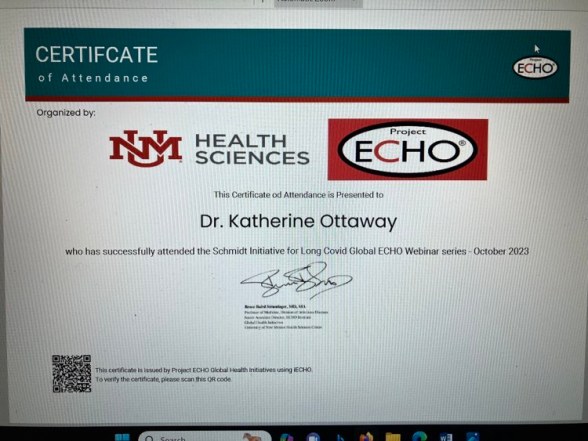
Schmidt International iECHO: Long Covid Patient Perspective

The latest Schmidt Initiative iECHO Long Covid zoom two days ago is by Hannah E. Davis, MPS, the co-founder of the Patient Led Research Collaborative (PLRC).

She got Covid-19 in March of 2020. Her first sign that something was really off was that she couldn’t read a text message. She thought that most people recover in two weeks so didn’t do much about it. She went on to clotting and neurocognitive problems and MECFS.

Her job and expertise were in machine learning data sets. As she realized that she was really sick and was not improving, she also realized that Long Covid was not even on the radar for physicians, overwhelmed by the acutely ill and dying. She started the interdisciplinary team co-led by four women and with over fifty patient researchers. The group is 61% women and 70% disabled.

They published an op ed piece about the body politic in the New York Times in April of 2020. By May of 2020 they had a fifty page article out documenting that even mild cases of Covid-19 could cause long term impacts. They describe multiple symptoms long term, not just respiratory. They also noted and documented medical stigma happening and were instrumental in changing the dialog from anecdotes of non-recover to data about non-recovery.

In June to August of 2020 they appealed the the World Health Organization (WHO) with a video message presenting data about long term effects.

In December of 2020 they presented a paper characterizing Long Covid. There are now 3-4 biomedical papers coming out each day.

She states that there are multiple myths about Long Covid: “It’s mysterious, we don’t know anything about it.” is not true. She listed other myths, but I have to go back through the slides.

The group is still highly active in research and is advocating for patient involvement in research. They have developed score cards for the level and quality of patient engagement. Tokenizing gives a score of -1 or -2, where instead of patient engagement in all stages of the research project, they are told “Come look at our final paper and give us the patient engagement gold star.” That is not adequate engagement. Other diseases have also made patients push for engagement in research: HIV, Parkinsons, PANDAS and more. Patients just want to get better and they want research that matters.

Worrisome data include that 10-12% of vaccinated people who get Covid-19 still can get Long Covid. This is less than the unvaccinated, but it’s still one in ten.

Their data shows that the majority of that 10-12% are not recovered at one year.

Another myth is that there is no treatment, but there are treatments at least for symptom management.

They published the Long Covid paper in the January 2023 Nature, documenting the many many symptoms and ongoing early stage treatments, many taken from other diseases such as MECFS.

One third of people who get Long Covid do NOT have preexisting conditions. It attacks all ages, women more then men, and prior infection may increase risk. Respiratory problems are more likely to recover, barring lung scarring. 43% of Long Covid patients report a delayed onset of neurocognitive symptoms.

Regarding mental health, research shows that stigmatization is still common and that patients who have experienced that are more likely to be depressed, anxious or even suicidal. In contrast, even one non-stigmatizing encounter, medical or family or friends, makes people have lower rates of depression, anxiety or suicidal ideation.

It is abundantly clear that this is a biomedical illness. Enabling google research will allow those papers to be delivered daily. I am on a list where I get daily reports of Covid-19 research and papers.

Next she talked about the current treatments, many taken from other similar illnesses. I have to say that the microclots scare me the most. There are clinical trials ongoing as well as amazing bench science, but meanwhile physicians need to listen to patients, believe them, pay attention to the ongoing research and help patients.

I spoke to a provider yesterday that I last saw two years ago. I said I wanted to work with Long Covid patients. “Good!” he said, “Because I don’t want to!” I think that attitude may be very wide spread.

I also looked at our county (and only) hospital’s page on Covid-19. There is not ONE WORD about Long Covid. Isn’t that interesting? Denial ain’t just a river in Egypt.

This is just what I got from the lecture. There was and is more. Physicians and patients can attend and they file the talks so that you too can watch them. Here:

https://hsc.unm.edu/echo/partner-portal/echos-initiatives/long-covid-global-echo.html

Blessings.
Work again

I have been wondering whether to try to work again. It’s risky.

I asked the pulmonologist from Swedish Hospital if there was any way to keep from getting pneumonia number five. “We don’t know.” Is it safe for me to return to work? “We don’t know.” I like the plural in the answer, is he speaking for pulmonologists or Swedish or what? Anyhow, the risk is pneumonia number five and death or ending up permanently on oxygen or needing a lung transplant or something stupid like that.

It’s not raining yet and I promised not to even attempt to return to work until it rains.

I saw my cardiologist yesterday. He thinks I should return to work. Early on he said that I am smart, “like one of those old fashioned internists who read everything.” I laughed, because yes, I am a science geek. At the next visit he said, “The family doctors aren’t always as thorough as they could be.” I replied, “I don’t know, after all, I’m a Family Practice Doctor.” “Oh.” he said, “I thought you were an internist.” Which made me laugh because it’s a sort of back handed compliment. Cardiologists do a three year internal medicine training and then more years of sub specialty to become a cardiologist. Most specialists seem to scorn Family Practice a bit, though not all. And I have definitely had specialists ask me for help. A perinatologist: “How do I help people stop smoking?” I laughed at that, too, and replied, “Do you want the five minute , the ten minute, the thirty minute or the one hour lecture?” A med-peds doc asks me to put a cast on a child’s arm because even though she is board certified in internal medicine and pediatrics, she has almost no orthopedic training. I was at that clinic to see obstetric patients that day, but was happy to do the cast too. I love the broad training and the infinite variety of rural Family Practice. It is SO INTERESTING and OFTEN FUN THOUGH NOT ALWAYS. Sometimes it’s sad.

Here is an article about a physician doing what I want to do: https://nymag.com/intelligencer/article/long-covid-treatment-lisa-sanders.html. She thrives on complexity, she thrives on diagnostic puzzles and she writes the column that the television series “House” was based on. When I watched House, what I noticed was the nearly all of the patients on the show were either leaving something out or lying. In reality, I think it’s just that sometimes we need a lot of time to pull together the complex picture and clues. I always pay attention to the pieces of the puzzle that do not fit and sometimes those are the key to finding a diagnosis that is unexpected. Dr. Sanders spends an hour with a new patient. That is what I did in my clinic for the last decade, because that hour gave me so much information and it allows people to feel heard. A ten or fifteen minute visit doesn’t let people speak. It’s slam bam here is your prescription ma’am. What I see in the multitude of notes from all the doctors I’ve seen since 2014 is that they leave most of the conversation out of the note. Things I think are important. I think most of the clinic notes about me are crap and the physician is not listening and doesn’t know what to do. I include the stuff that doesn’t fit and doesn’t seem to make sense in the notes I write. Patient appreciated, when I gave them their note at the end of the visit. “You got all that?” Oh, yes, I tried.

One of the Long Covid symptoms that Dr. Sanders mentions is people “feeling like they are trembling inside.” I’ve seen that before Covid-19. That was a symptom that I did not pin down in a particular patient, but now there is more than one person complaining of the same thing. Really, why don’t physicians include those complaints? It’s egotism to cut out anything you don’t understand and most patients want help so are motivated not to lie. Ok, they might admit that they’ve been out of their blood pressure medicine for two weeks and that’s why their blood pressure is too high, or they’ve been drinking mochas and that’s why their blood sugar is way too high, but they are really in to get help. I think it is a terrible disservice not to document what they say, even if it’s not understood and the physician thinks it’s unrelated to their specialty and they don’t know what to do.

So: I want to do a Long Covid Clinic, with an hour for the first visit, and longer than usual follow ups. Part time because of my lungs and the fatigue. We shall see, right? I am going to look for grants to help set this up.

Think of how much work went in to this statue and this church. The Basilica di San Marco took at least 400 years to build and decorate!

Not immune

I am attending multiple Zoom conferences on Long Covid and Chronic Fatigue and PANS/PANDAS and fibromyalgia. The speakers are talking hard science, digging in to the immune system to figure out what is wrong. Then they can find a drug to fix it.

Maybe it doesn’t need to be fixed. I think the immune system is smarter than we are and it knows that Covid-19 is a really really bad virus. What the immune system wants is to keep from getting any other infections so it shuts us down. It hits the chronic fatigue button, so we stay home or in bed. It hits the fibromyalgia button so that it hurts to move: we stay home or in bed. It hits the PANS button so that antibodies seriously change our behavior and we stay home or in bed. Anyone see a theme here? I think that the immune “over-response” is not an over-response. It’s not broken. It is trying to reduce exposure and just maybe we should pay attention. I thought that in residency, in the early 1990s, when chronic fatigue patients would interview me to see if I “believed” in chronic fatigue. Heck yeah, I said, but I don’t know what it is or how to fix it. My chronic fatigue patients had something in common: they were all either working 12-14 hour days continuously when they crashed, or they overworked and had insane stress, deaths of loved ones, car wrecks, accused of a crime, something horrible. The workers all wanted “to get back to where I was.” I would ask, “You want to work 12-14 hours a day again?” “Yes!” they’d say, “I want to be just like I was in the past!” “Um, but that’s what crashed you. Do you think maybe your body is not up to that?” “FIX ME.” I would try to improve things, but fix them back to what crashed them? No way and anyhow, that is not really sane.

There are some levels of illness where we have to intervene. In really bad PANDAS, antibodies to the brain are followed by macrophages that destroy brain cells. I was horrified and wanted to run around screaming “NOT MY BRAIN!” when I heard that. Then I thought, don’t be silly, I am in my 60s and if I had brain eating cells it would have happened by now. I consider myself really really lucky to have the mildest version. At least, that’s what it seems to be. (Officially we don’t believe in PANS or PANDAS in adults in the US but we do in Europe and Canada. Ironic.) With that version, especially in children, I am all for intervention, as soon as possible. And it’s not that I do not think we should intervene in these illnesses. I just think we need to step back and think a little and just maybe listen to our bodies and listen to the immune system. Slow down. Breathe. Watch some stupid cat videos. Whatever makes you relax and laugh. Reduce stress. Limit stupid hyper news to 15 minutes a day and not before bed, ok? Reduce the drama.

I am liking movies less and less. The drama bugs and bores me. I might last an hour. I have nearly quit going to our downtown movie house because it’s always “moving” and art films. Bleagh, drama. Also when it’s about illness or addiction, I want to argue with it. Easy lying endings which are nothing like reality. I like cartoons and sometimes superheroines, but it’s all drama too. I am tired of people behaving badly and don’t want to watch it on tv or a movie. There’s enough for me in the real world. I think it’s time to bring back musicals. I would watch them. Maybe. My father’s last movie was Blazing Saddles. He refused to ever go to another movie. I think I understand that now.

None of us are immune to stress or immune to infection. A person might be immune to Covid-19, or they might be immune until the tenth or hundredth strain shows up. I chose Family Practice for my specialty because I wanted to have children and be able to see them. I thought about Obstetrics-Gynecology or General Surgery, because I loved babies and loved surgery, but the Ob-Gyn residency was 4 years and General Surgery was 7 years and I was starting medical school five years out of college. Choose the more flexible and portable specialty and go rural.

Doctors and nurses are burning out because hospitals and administrators “maximize production”. Hospitals and administrators are stupid and destroying medicine. It’s not about money, it’s about helping people and science and healing. Having it be about money is soul-destroying and causes moral injury to any ethical provider. If we’d prefer unethical ones, keep on the present path. Otherwise we need single payer health care so that any physician or nurse can take care of whoever shows up. The system is breaking down more and more and it is hard to watch. Another nail of stress in the coffin of ethical medicine. I suppose when enough people die, change will come.

My working theory is that anyone can get one of these immune system illnesses: chronic fatigue, fibromyalgia, PANS/PANDAS and so forth. Medicine says that Hashimoto’s Thyroiditis, antibodies to the thyroid is the most common autoimmune disorder, but that may change. The evidence is mounting that Long Covid and these other “vague” illnesses are immune system shifts. Immune systems in “Code Red”, let’s not catch anything else. Are they an illness or are they our immune system trying to keep us quiet to protect us? I think the latter. Time may tell. I am listening to the science and listening to my body, both.

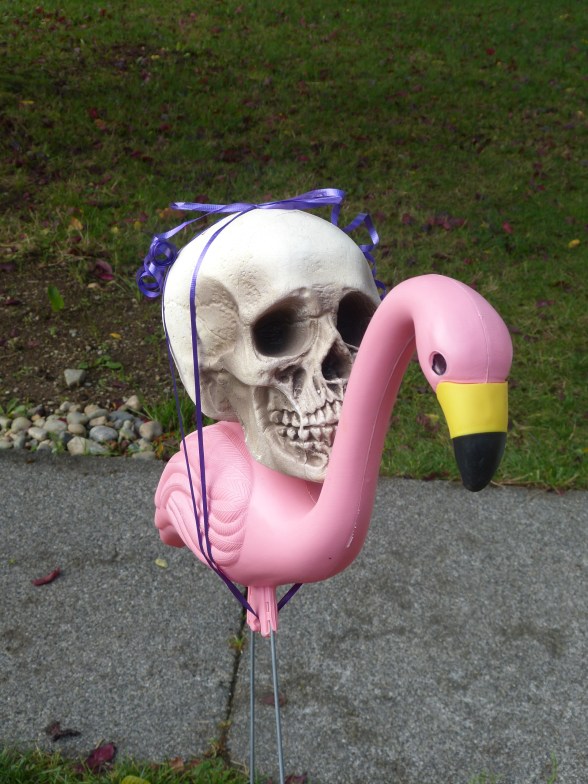
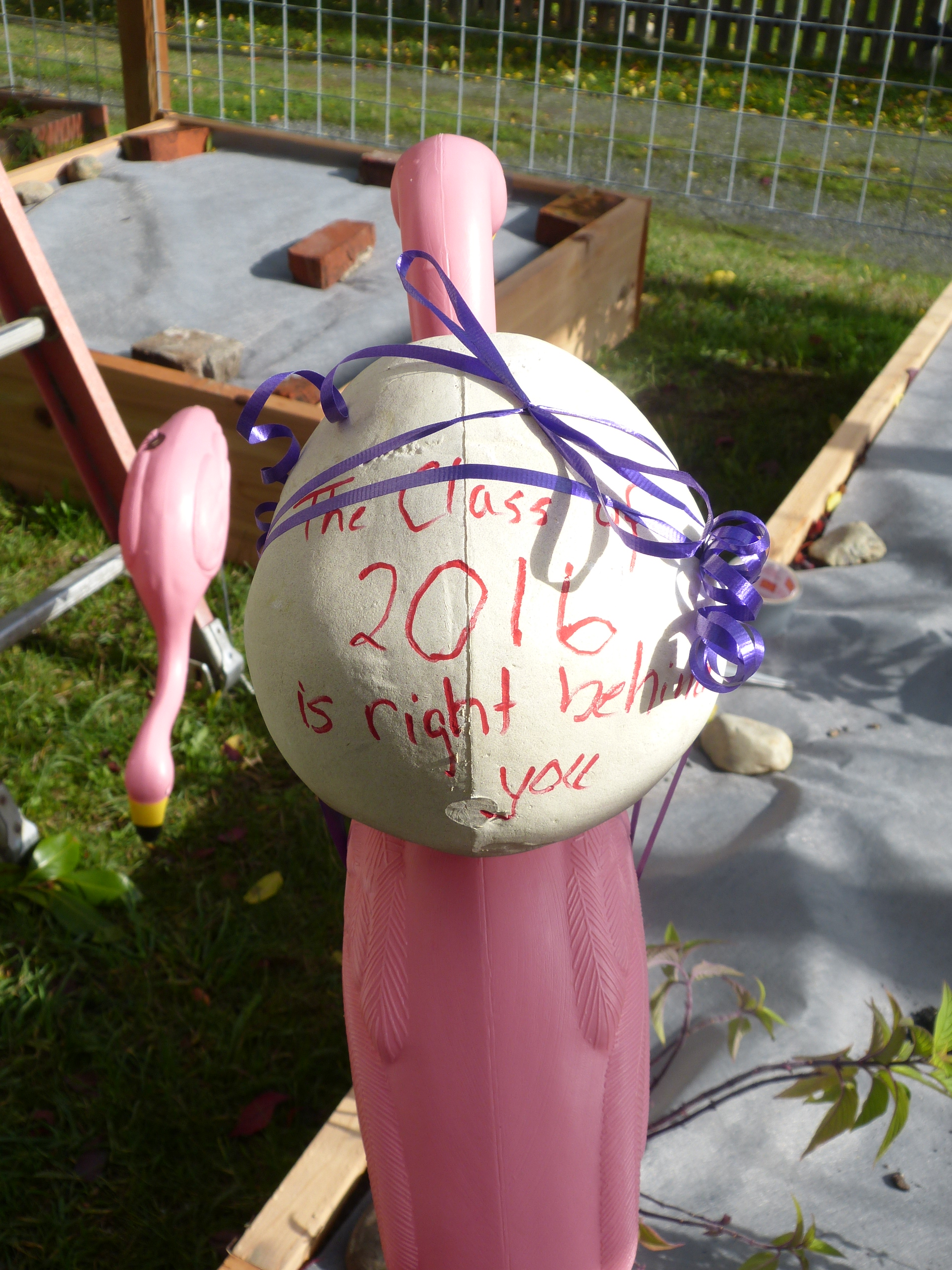
The photographs are from 2016, when a flock appeared in my yard. They demanded money to be moved to the next house.

For the Ragtag Daily Prompt: fiddlesticks. Oh, fiddlesticks, we have to figure out the very very complicated immune system. Or listen to it.

The work of disability

I look up the CDC website to see how many people are disabled. The CDC says that 27% of adults in the US have a disability. Yes, that is one in four. https://www.cdc.gov/ncbddd/disabilityandhealth/infographic-disability-impacts-all.html.

I find being disabled to be a ton of work.

I think the view of disability in the US is often people who sit at home and have money thrown at them from the government.

This is not so, not so, no, no, no.

In clinic a patient needs a new socket for his artificial leg, having had a cancer amputation. He is an expert still working in disability exams, so we do a visit where he dictates much of my note, because in order to get a new socket, medicare requires very specific information in the clinic note. We also have notes from physical therapy and his occupational therapist and the company that makes the sockets. Why does he need a new one? He has lost weight and the old one doesn’t fit any more so he can’t walk securely.

Even so, I think it took six months and we kept redoing versions of the paperwork.

Another patient needs a new electric wheelchair. That one takes a year of repeating insistence and paperwork.

After my March 2021 pneumonia, I am disabled, which pisses me off. I like my work. It’s unclear how long I will be on oxygen and since we’ve been working on a diagnosis besides “gets pneumonia super easily” since 2003, it’s hard to predict the trajectory. I don’t know if I will be on oxygen permanently. It is exhausting to drag myself to physician visits, in four different hospital systems. Oh, and a patient can apply for patient assistance with the finances, but then all four have different paperwork. I am sick as snot and have to try to keep track of the bills from four systems and four sets of on line passwords and where is the stupid appointment? Edmonds? Seattle? Bremerton? Augh. The fatigue that accompanies the pneumonia makes it hard to cook, hard to clean, hard to comprehend bills, exhausting to make phone calls. Anyone want to trade? I’ll work and you can be disabled?

My disability company requires paperwork too, lots of it, and my taxes, and there is a long list of rules that I reread periodically. I needed an attorney to sort out the rules, since the disability company won’t answer my questions.

Now I am off oxygen and better, though still dogged by fatigue. I think that is probably permanent, but then I sometimes hope it’s just that I am finally rebuilding muscle, since the fast twitch muscles didn’t work for two years. They are a bit recalcitrant now.

And I am not in a wheelchair, have not had an amputation, am not in a rehab. If you have to take buses in your wheelchair everywhere, need two people and a crane to get you out of bed into the wheelchair, have to use a computer to talk for you, imagine. Anyone who thinks disability is easy money is insane.

It’s not clear if I can return to work. I might get pneumonia number five, which would probably take me out. No one knows how to lessen my risk. And I don’t have the energy and do not know if I will.

All the unknowns and unclears and we don’t knows. No one is disabled for easy money because it’s a job trying to get well or trying to survive it. And yet, I am happy to be alive and even to be able to dance some! Dance on!

Keyboard supervisor

Elwha supervising me at the keyboard.

In high school I took typing for dummies. I was terrible at it and slow. Many women were avoiding typing classes in the late 1970s because they did not want to be secretaries. I wanted to be a writer and knew that I was a terrible typist. I also could not spell my way out of a paper bag. My mother was quite dyslexic and did not care. Once I had to sound out a word at the store from her grocery list: “LETIS”. Oh. Got it. Her letters are wonderful, not only interesting and creative spelling, but also wandering tenses and subjects.

We got our first electronic medical record in the early 2000s. We went from looking up labs on a computer and using a computer for maybe an hour total per day to full on eight hours a day. My shoulders and the nurses’ shoulders all locked up and we all filed for Workman’s Comp. I had to work with physical therapy to get my shoulders to unlock. My nurse pointed out that all problems were treated as “User Problems”. That is, WE were the problem, not the program. I realized that having the doctors who love computers pick out the program, learn about it for a year, and then teach us in two days and go live was a massive mistake. None of us understood it nor did we understand any of the computer lovers’ terminology. We rapidly quit asking questions because we didn’t like being treated as morons. Every person who was not a computer lover figured out their own work arounds. Two years later, the computer lovers tried to get us to standardize what we were doing. It’s not very surprising that we resisted and hated them. We had had to figure it out on our own with no help and we were very cynical and disbelieving that they would now “Make it easier.” Nope, they didn’t.

If I were to do it over again, the team picking the electronic medical records would include a couple of older doctors who hate computers. One of the selling points to the computer lovers was “you can write your own templates”. Our response was “We would rather be boiled in oil.” Three years after we got the system I asked the head computer lover doctor to write me a template. It was generic. Patient is complaining of (a problem) (more than one problem). The (problem) has been present for (a day, two days, a week, a month, a year, too long). The problem is (getting worse, the same, getting better). And so forth. Because we had all sorts of problems that did not have a template. My computer lover doc rolled his eyes, but set it up for me.

I also asked the clinic CFO WHY they didn’t set up typing lessons for the doctors who couldn’t type. I watched one of our group hunt and peck with two fingers. “You want them faster, right? You’ve said we could do the whole note in the room. How can they if they can’t type?”

“We are not giving them typing lessons.”

“Well, I think that’s misguided.” Ok, what I meant was that I thought it was STUPID.

Another selling point was that we could finish the note in the room. It turned out that I could do the note in the room after I had fought with the program for two years. It consistently took me 25 minutes. Then they ramped up the schedule and set us all at 20 minute visits. I started running late all the time. I told the front desk, “I’ve been told I should get the note done so I am. And if it takes me 25 minutes, that is what it takes.” Once the hospital kicked me out, I started my own clinic and did 30 minute visits. This did not make me rich but it made me a heck of a lot happier.

_________________

For the Ragtag Daily Prompt: keyboard.

Adverse Childhood Experiences 14: Hope

I keep reading bits about despair and about how a generation of children is being “ruined” by the pandemic.

Not so, I say. There is hope. We need to support each other to survive and then to thrive.

This generation WILL have a higher than average ACE score. If the Adverse Childhood Experience scale is from zero to eight, children in this time period will have at least one higher point than average and many will have three or four or more. Loss of a parent, a sibling, beloved grandparents during covid. Increases in domestic violence, child abuse and addiction. These are all part of the ACE score.

What does this do to children? They have survival brain wiring. They will do their best to survive what is happening. A friend and I both have high ACE scores, 5 or more, and we are both oppositional defiant. We showed this in different ways. He grew up in the same community. He escaped from home and knew all the neighbors. He walked to the local church and attended at age 3 or 4. He has lived in this community all his life.

His oppositional defiance showed up at home, where he consistently refused to obey. And in school, where he confounded and disobeyed teachers and passed anyhow.

My family moved every 1-5 years. I hated moving. I wouldn’t talk to kids in a new school for a year. It was very difficult. So my oppositional defiance was very very internal. I hid in books and in my head. In 6th grade I got in trouble for hiding novels inside the school book I’d already read. I also would just not listen and my respect for the teacher got even lower when she would be angry that I knew the answer to the question once she’d repeated it. I wasn’t listening because I was bored. She was the first teacher that I thought, well, she is not very bright. The next year they stuck me in the honors class and I stopped being bored, though I still questioned practically every opinion every teacher had. I wanted evidence and I did not believe it just because the teacher said it.

I am not saying that oppositional defiance is in every high ACE score. I don’t know that. Why oppositional defiance? Imagine you are a small child and you are beaten. There isn’t rhyme or reason. You can’t predict when the adult will be out of control. Why would you behave “well” if it makes no difference? You might as well do what you want, because nothing you do will change the adult. Or imagine you are a small child who is with one person, passed to another, then to another. You may not exactly trust adults after two or three repetitions. And you want to survive.

There is an increase in addictions, behavioral health diagnoses, and chronic illness in adults with a high ACE score. A researcher when I first heard a lecture about it said, “We think perhaps that addiction is a form of self medication.” I thought, oh, my gosh, how are we ever going to treat THIS? Well, we have to figure that out now, and we’ve had 30 years to work on it.

I was very comfortable with the oppositional defiant patients in clinic. I got very good at not arguing with them and not taking their behavior personally. They might show up all spiky and hostile and I might be a little spiky and gruff back: sometimes that was enough. I think the high ACE score people often recognize each other at some level, though not always a conscious one. With some people I might bring up ACE scores and ask about their childhood. Sometimes they wanted to discuss it. Sometimes they didn’t. Either was ok.

One thing we should NOT do is insist that everyone be “nice”. We had a temporary doctor who told us her story. Her family escaped Southeast Asia in a boat. They had run out of water and were going to die when they were found by pirates. The pirates gave them water. They made it to land and were in a refugee camp for eight years or so. She eventually made it to the US. She was deemed too “undiplomatic” for our rural hospital. I wondered if people would have said that if they knew her history and what she had been through. It’s not exactly a Leave it to Beaver childhood, is it? When she was telling us about nearly dying of thirst in the boat, my daughter left her chair and climbed on my lap. She was under ten and understood that this was a true and very frightening story.

We can support this generation of children. This has been and is still being Adverse Experiences for adults as well. Family deaths, job loss, failure of jobs to support people, inflation. Remember the 1920s, after World War I and the last pandemic, of influenza. “On October 28, 1919, Congress passed the National Prohibition Act, also known as the Volstead Act, which provided enabling legislation to implement the 18th Amendment.” (wikipedia). There were forces trying to legislate behavior, as there are now. The result in 1920s of making alcohol illegal was speakeasies, illegal alcohol, and violence. Some people acted wild after WWI and the influenza pandemic and some people tried to lock down control, by controlling other peoples’ behavior. It did not work then and it will not work now. The wildness is out of control grief, I think, grief dysfunctional and drinking and shooting and doing anything and everything, legal or not. We remember how the 1920s ended too. Let us not repeat that. Let us mourn and grieve and support each other and support each other’s decisions and autonomy.

Blessings.

kooky klothes

I took this May 31, 2022. I was still pretty sick with pneumonia and needed oxygen to do practically anything. I had dropped ten pounds the first week of being sick, March 20th. In 2014 it was six months before I could return to work and then only part time and exhausted. So I knew I was likely to be in for a six month haul. I hadn’t figured on needing oxygen, but it made me feel so much better and be able to think again!

Anyhow, I was entertaining myself by going through my closet and putting on things that I did not wear to work. I like the sun lighting up my legs in this photograph. The dress is shorter than it looks and the jacket has tags in Japanese and is a soft woven silk. I thrift shop by feel, because silk and mohair and cashmere and wool and cotton feel so wonderful.

Later the same day, I took this photograph:

I would wear out very quickly during the day. Today it is pouring here and last summer by now it was much much warmer! The sun made my lungs hurt less.

For the Ragtag Daily Prompt: kooky.

how to use a specialist

I am a rural Family Medicine doctor, board certified and board eligible. I have used the Telemedicine groups in the nearest big University Hospital since 2010.

Initially I started with the Addiction Telemedicine. I accidentally became the only physician in my county prescribing buprenorphine for opioid overuse in 2010. I panicked when I started getting calls. Dr. Merrill from UW had taught the course and gave me his pager number. I acquired 30 patients in three weeks, because the only other provider was suddenly unavailable. Dr. Merrill talked me through that 21 day trial by fire.

I think that I presented at least 20 patients to telemedicine the first year. The telemedicine took an hour and a half. First was a continuing medical education talk on some aspect of “overuse”, aka addiction, and then different doctors would present cases. We had to fill out a form and send it in. It had the gender and year of birth, but was not otherwise supposed to identify the person. TeleAddiction had a panel, consisting of Dr. Merrill (addiction), a psychiatrist, the moderator/pain doctor, and a physiatrist. Physiatrists are the doctor version of a physical therapist. They are the experts in trying to get people the best equipment and function after being blown up in the military or after a terrible car wreck or with multiple sclerosis. There would usually be a fifth guest specialist, often the presenter.

After a while, TeleAddiction got rolled into Telepain and changed days. They added other groups: one for psychiatry, one for HIV and one for hepatitis C. These can all overlap. I mostly attend TelePain and TelePsychiatry.

After a while, I pretty much know what the Telepain specialists are going to advise. So why would I present a patient at that point? Ah, good question. I use Telepain for the weight of authority. I would present a patient when the patient was refusing to follow my recommendations. I would present to Telepain, usually with a very good idea of what the recommendations would be. The team would each speak and fax me a hard copy. I would present this to the patient. Not one physician, and a rural primary care doctor, but five: I was backed up by four specialists. My patients still have a choice. They can negotiate and they always have the right to switch to another doctor. Some do, some don’t.

I am a specialist too. Family Practice is a specialty requiring a three year residency. The general practitioners used to go into practice after one year of internship. My residency was at OHSU in Portland, with rotations through multiple other specialties. We rotated through the high risk obstetrics group, alternating call with the obstetrics residents, which gave me excellent training for doing rural obstetrics and knowing when to call the high risk perinatologist. In my first job I was four hours by fixed wing from the nearest more comprehensive obstetrics, so we really had to think ahead. No helicopter, the distance was too far and over a 9000 foot pass, in all four directions. That was rather exciting as well.