Alcohol myths

I am back working in Colorado and a recurring theme this month is alcohol and alcohol myths.

Myth: If I only drink on my days off, I am not an alcoholic. Nope. People can binge one day a week and still be an alcoholic. A standard “dose” of alcohol is 12 ounces of 5% beer, 5 ounces of standard wine or 1.5 ounces of liquor. But what if someone drinks 8% beer, 12 ounces? Well, that’s 1.6 standard drinks. An 8% 16 ounce beer? That is 1.6 times 1.3, so 2.08 drinks. Perhaps we should have an app that calculates this. And locks the car ignition when we are over the limit.

How much alcohol means that we are an alcoholic? The guidelines right now in the US say 7 drinks per week maximum for women, 14 for men, no more than one in 24 hours for women, no more than 2 in 24 hours for men and no saving it up for the weekend. Here: https://www.niaaa.nih.gov/health-professionals-communities/core-resource-on-alcohol/basics-defining-how-much-alcohol-too-much#pub-toc3. However, alcohol is bad for the liver, bad for the heart, bad for the brain, and increases cancer risk. There is not a “safe” amount.

What is binging or heavy drinking? For women—4 or more drinks on any day or 8 or more per week, For men—5 or more drinks on any day or 15 or more per week. The rate at which people drink is also part of this.

MYTH: If I don’t throw up, I’m not an alcoholic. Now that’s an interesting one. When we drink, alcohol is absorbed into the blood and goes through the liver. The liver has enzymes which break alcohol down into aldehyde. Aldehyde is a carcinogen, causes cancer. Aldehyde is broken down by other enzymes into acetate and then to carbon dioxide and water. Some people break down the aldehyde quickly, fast metabolizers. They can drink a lot and not throw up because they break the aldehyde down fast. However, the process inflames and kills liver cells. If they keep drinking, the liver slowly dies, and this is cirrhosis. Eventually they will not be able to break down alcohol fast because the liver makes the enzymes. Then they will start throwing up.

Other people make enzymes that are slower or make less, and they get sick and have alcohol poisoning more quickly. The fast metabolizers are at higher risk for cirrhosis and the slow ones for liver cancer, but they can get either.

MYTH: “My blood pressure is fine.” I spoke to a person who stated that their blood pressure was ok during pregnancy so they did not have high blood pressure. The chart shows very high blood pressure for the last three years and I didn’t look back further. I ask, “Did you stop drinking alcohol while pregnant?” “Of course.” When NOT pregnant, this person admits to 4-5 drinks a day. Also, the history in the chart states that they had blood pressure complications in pregnancy. I did not have time to go through the chart and look at that, but this person is in denial. I think of denial as the addiction taking over and the addiction lies. It lies to me but it also lies to the person. They want to believe what they say. They want everyone else to believe what they say even if it is patently a lie and ridiculous. A woman who says a friend gave her something, she didn’t know what it was, for a headache. “How did you take it?” I asked, looking at the urine dip results. “I snorted it.” “So what things do you snort for a headache?” She was positive for cocaine and pleading ignorance was ludicrous. Another person has a positive urine drug screen for multiple things. “Can I try again?” Pause. “Sure.” I say. The first one is a false sample and I am very curious to see what the real sample will have. It has nothing. He is then surprised that I won’t fill his prescription and offer inpatient drug rehabilitation. Come now, sir, you got a urine sample from a dealer when you sold the medicine I gave you for something else. Your dealer must have been annoyed or gave you the wrong sample. When someone is really out of control, they do not have convincing lies and the only person they can convince is themselves. It is interesting to watch someone be all outraged that I do not buy the story, accusing me of discrimination or hating them or hating their race or whatever. They attempt to accuse and distract. It is harder for families because they desperately want to believe their loved one, even when the evidence shouts the opposite.

What does blood pressure have to do with alcohol? Alcohol drives blood pressure up and pulse, especially when it is wearing off. Severe alcohol withdrawal is delerium tremens and people can have such high blood pressure that they have a stroke or a heart attack or encephalopathy — a poisoned brain. They can hallucinate or have seizures and it is very dangerous. “Very dangerous” means they could die or have permanent disability. Tobacco, cocaine, methamphetamines, all raise blood pressure. The number one cause of death in the United States is the heart, but it’s not just from hypertension and weight and cholesterol and inactivity. Addictive drugs have a huge contribution.

There is nothing cheap about the cost of addiction in our country.

For the Ragtag Daily Prompt: cheap.
On guard

My nurse’s breath catches. “Oh, no,” she says.

I am new here. Less than a year. “What?” I say.

“We have Janna Birchfield on the schedule.”

“Who is Janna Birchfield?”

Tonna leans back in her chair at the nurse’s station, a high set desk that runs behind the front office. We have new glass barriers along it to make it more hipaa compliant. It is also more claustrophobic. She throws her pen down. “She’s one of the most hostile people here. She’s known for throwing a brick through her second doctor’s plate glass window.”

“Ah,” I say.

“She was Dr. M’s patient but apparently she and Dr. K got in a screaming fight in the hallway. She is banned from that clinic. So we are the last clinic in town.”

My nurse knows the local stories and she has seen a lot. She doesn’t have a lot of unconscious monsters. Yeah, there is some impatience and some anger there, but she’s pretty good. No real fear, nothing cringing at her feet.

“Hmm. Let me talk to Marnie.” Marnie is our office manager.

Marnie and I talk. I read the last notes from Dr. M and an account of the screaming fight with Dr. K. I call Dr. K. I don’t know of anything that scares her and she is tough. I rather enjoy envisioning her yelling back at this patient.

The day arrives and Mrs. Birchfield is put in a room. Vitals are done. I go in.

Janna Birchfield is big. She weighs about twice what I do, and it’s muscle rather than fat. She looks solid. Not like a body builder, just strong. She tops me by nearly a foot. She looks sullen and unfriendly.

And I am looking at her monsters. Three are guarding a fourth, at her feet. Fear is there, anger is the biggest and posturing, like a body builder, in front. The third is morphing back and fourth: envy and hostility. The fourth is in a stroller, guarded by the other three. Asleep? Unconscious? Well, yes, duh, but it’s not often that a monster is so undeveloped that it is still an infant. Not good.

“Hi, Miz Birchfield. I am Dr. Gen.” I hold out my hand, moving slowly and smoothly. Her monsters alert, fear flinching and anger ready to punch. I stand with my hand out. She eventually touches it, glaring.

“Hi,” sullen.

“We need to talk about the clinic rules first.” I say calmly. Anger puffs up and her shoulders rise as the monster swells and takes control, her elbows rising and hands are fists. Her eyes don’t turn red, but nearly. “I have heard about your argument with Dr. K.”

Furious voice, “She screamed at me. She’s a horrible doctor! She got me thrown out!”

I am smooth and calm, “I am not going to discuss Dr. K,” I say. Honestly, it’s even more fun to think of Dr. K taking this on and not budging an inch. Dr. K is my size, small. “In this clinic, I need you to understand that you are not allowed to yell at anyone at the front desk, in the hallways or on the phone.” Anger flees immediately, small again and she looks confused. “You may not yell at the staff, at the other patients, or at anyone on the clinic property.”

“Why would I agree to that?” she says. She is mostly confused because I am not scared or angry. I am not behaving the way she expects, the way most people behave around her.

“If you are upset, the only people you can yell at are me or the office manager and you need an appointment.”

“They are rude to me!” Basically she means everyone. “You can’t make me do that!”

“Take it or leave it.” I say. “You need to agree and keep the agreement, or we will discharge you immediately. If you say no, leave now, and I won’t charge for the visit.”

Her monsters are confused. Anger has shrunk back down and they are conferring, heads together. Confusion has shown up as well, morphing though different colors and stripes, stars and paisleys. She stares at me, frozen hostility. I just wait, sitting in front of my laptop, serene. This is going well. She isn’t yelling and she hasn’t left.

“What if they are mean?” she says.

“You will make an appointment with me or the office manager, and we will help you.”

“Ok,” she says. The monsters are still surrounding the carriage, but really, now confusion is in charge. We work through the rest of the visit, as I get to know her a little. She has had a hard, hard life.

I let the front office and the nurses know the rules. The office manager and I let them know that this is a contract with the patient and she has agreed. They feel protected. They feel protected enough that they are nice to her. She behaves and starts, infinitesimally, to relax. She is still angry and hostile in the exam room but it’s not directed at me. It is directed at the entire world, the rest of the world outside the clinic. I try to help her medically but also let the monsters have their say. The visits start with anger and hostility but tend to subside into confusion. I am not getting at the fear or whatever is in the stroller. It is one of the large old fashioned ones, heavy, navy blue, where an infant can lie flat. Clearly it does not fold up to go in a car or anywhere else convenient. There are no toys hanging from the top or across it, no stuffed animals. Only a form under the blankets, always still.

I may reach that form, or not. I do not know.

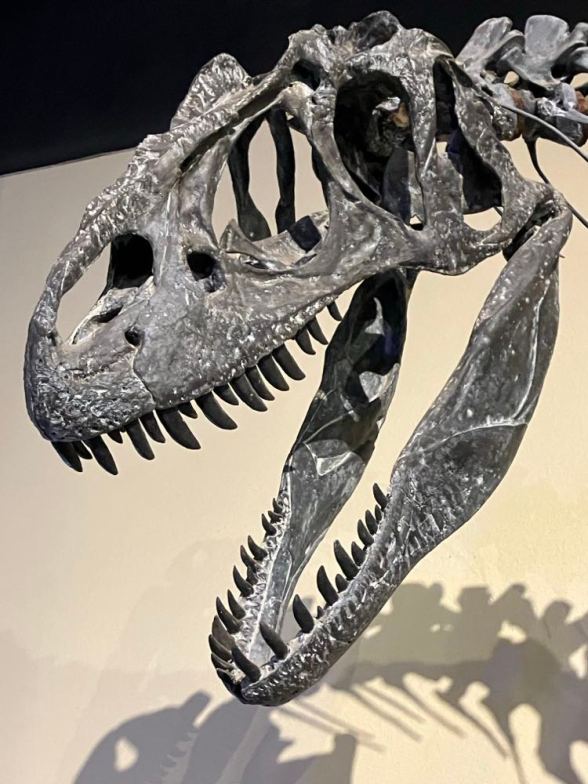
For the Ragtag Daily Prompt: paleontology.

What to check before bringing your elder home from the hospital

I get a call from the hospital (this is over a year ago). They say, “Your friend is ready for discharge. What time can you pick her up?”

I reply, “Can she walk?”

“What?”

“She has three steps up into her house. Can she walk, because otherwise I can’t get her into her home.”

“Oh, uh, we will check.”

They call me back. “She can’t walk. She’ll have to stay another day.”

I knew that she couldn’t walk before they called. She could barely walk before the surgery and after anesthesia, surgery and a night in the hospital, her walking was worse. She had been falling 1-5 times at home and the surgeon knew that. He did not take it into account. The staff would have delivered her to my car in a wheelchair and then it would have been my problem.

She was confused by that afternoon, which is not uncommon in older people after anesthesia. She stayed in the hospital for six days and then went to rehab, because she still couldn’t walk safely.

Recently I have a patient, an elder, that I send to the emergency room for possible admission. He is admitted and discharged after two and a half days. Unfortunately he can barely walk and his wife is sick as well. The medicare rules say that he needs 72 hours in the hospital before he qualifies for rehab. We scramble in clinic to get them Home Health services, with a nurse check and physical therapy and occupational therapy, and I ask for Meals on Wheels. It turns out that Meals on Wheels will be able to deliver in two months.

The wife refuses to go to the emergency room. I tell her that if she does get sicker, that they both need to check in. The husband can barely walk and is not safe home alone. If one gets hospitalized, they both need it.

If you have a frail elder, be careful when you are called about discharge. Go look at them yourself, make sure that you see that they can get out of bed, get to the bathroom, walk up and down the hall. Can they eat? Do you have steps into your house or theirs and can they go up the steps? I got away with saying please check that my friend could walk because I am a physician, because I knew she couldn’t and because there was no one else to pick her up. Do NOT ask your elder. They may want nothing more than to go home and they may well exaggerate what they can do or be firmly in denial. You want them to be safe at home, to not fall, to not break a hip and to not be bedridden.

For an already frail elder, even two and a half days in bed contributes to weakness. And being sick makes them weaker. If they are barely walking when they are admitted, it may be worse even after just 2-3 days. I used to write for physical therapy evaluation and exercise when elder patients were admitted, to help them for discharge. Once I got a polite query from physical therapy saying, “This patient is on a ventilator. Do you still want a consult?” I reply, “Yes, please do passive range of motion, thank you!”

Your elder does not have to be doing rumbustious dancing before they go home, but they need to be able to manage stairs, manage the bathroom, manage walking so that they can get stronger. Otherwise a stay in a nursing home or rehabilitation facility may be much safer for everyone.

For the Ragtag Daily Prompt: rumbustious.


Snew

“Knock knock.”

“Who’s there?”

“Snew.”

“Snew?”

“I don’t know, what’s snew with you?”

I will have to pull out my patience cards today because, yes, it’s snowing. And I have family supposed to come from east and apparently that atmospheric river is dumping in the mountains. It’s supposed to snow in the mountains until midday Thanksgiving. I’m not sure I can have the whole meal all ready for them to arrive.

Ok, but patience, and let’s get creative. We could always do the cooking and have the meal on Friday instead of Thursday.

It is supposed to turn to rain here and the snow will be gone by noon. I jumped out of bed like a little kid, though, shouting “SNOW!” Sol Duc is unthrilled. The roads don’t look too awful and I wonder if anyone will cancel in clinic or it will be as usual.

Yesterday was a bit of a zoo, mostly because over 100 people realized that they are nearly out of some prescription and called for a refill. I knocked my message box down from 48 to 31 in the first 25 minutes and then it kept piling back up over 50. I also wish that if an 87 year old has a serious emergency room visit, they’d give me a longer follow up, because it can’t be done WELL in 20 minutes.

I expect that today will continue a bit nuts. Getting ready for Thursday and Friday off, to lie around pooped!

It’s all good.

For the Ragtag Daily Prompt: patience.

Conserving energy

I was out of clinic for two years and then very part time for a year and now not quite full time as a temp. I bargained to not quite be full time.

The electronic medical record is having a consequence, along with the pressure to see more people faster. The primary care doctors, at least the younger ones, do not seem to call their peer specialists any more. (Family Medicine is a specialty, just as Internal Medicine and Obstetrics/Gynecology are.) I called a gastroenterologist and left a message last week about a difficult and complex patient. The patient had cried three times during our visit. The gastroenterologist was very pleased I had called, was helpful, agreed with my plan of using the side effects of an antidepressant to try to help our patient, and thanked me three times for calling her. Wow. I am used to calling because during my first decade in Washington State, our rural hospital had Family Practice, General Surgery, a Urologist, Orthopedics and a Neurologist. For anything else, we called. I knew specialists on the phone for a one hundred mile radius and some knew me well enough that they’d say a cheery hi.

Now communication is by electronic medical record and email on the medical record and by (HORRORS) TEXT. Ugh. I think that there is quite a lot of handing the patient off by referring them to the Rheumatologist or Cardiologist or whatever, but the local Rheumatologist is booked out until February for new patients. That leaves the patient in a sort of despair if we don’t keep checking in on the problem. If I am worried, I call the Rheumatologist and say, “What can I do now?” I’ve had two people dropping into kidney failure and both times a call to the Nephrologist was very very helpful. I ordered the next tests that they wanted and got things rolling. One patient just got the renal ultrasound about three months after it was ordered. Sigh.

I have one patient who is booked in February for a specialist. I called that specialist too, they did not want any further tests. I told the patient, “You aren’t that sick so you won’t be seen for a while. It isn’t first come first serve: it is sickest first. We all have to save room for the emergencies and sometimes those are overwhelming.” The specialist agreed and the patient is fine with that and I think pleased to know that we do not think she’s that sick. She feels better. If things get worse, she is to come see me and might get moved up. Neither I nor the specialist think that will happen.

Is this conservation of energy, to communicate by email and text? I don’t think so. I think sometimes a phone call is much more helpful, because the other physician knows exactly what I am worrying about and they can tell me their thoughts swiftly. Sometimes they want me to start or change a medicine. Things can get lost in the overwhelming piles of data and the emails and labs and xrays and specialist notes all flowing in.

My Uncle Jim (known as AHU for Ancient Honorable Uncle Jim) used to sing part of this:

Yeah, that’s just how I call my fellow specialists.

For the Ragtag Daily Prompt: conservation. Don’t cats win at conservation of energy?

Love gently

Honey is older, nearly thirty years since that first feeling of being bitten by ants. She is back in corporate medicine, as a temp. Temporary, short term, maybe that will work better.

It is a joy to go in a room and be alone with a person and their monsters. Theirs and hers. Sometimes the younger ones haven’t experienced it, they are terrified if one of their monsters becomes a little bit visible, they hate seeing them. Honey tries to be gentle. If they only want to talk about the sore shoulder and not the stress and violence, well, she leaves the door open a crack. Sometimes the monsters cry.

Older people may be stiff to start with, but when they realize their monsters are seen, acknowledged, this isn’t another robot doctor in to say increase your diabetes medicine, lower your diabetes medicine, tell them a plan without ever connecting, the older ones lean back, sigh, and relax. The monsters play on the floor, Honey’s monsters playing with theirs, happy, engaged.

The hard part is the clinic staff. Honey is with them daily. The medical assistants are young. They kick their monsters aside as they walk down the hall. It is terribly hard and heartbreaking to work at her desk, with the medical assistants’ monsters cowering under their desks, kicked, abused, silent tears and holding bruises. Honey’s monsters mind. They climb into her lap and hide their faces in her shirt, under her jacket, peer over her shoulder. They don’t understand! Why can’t she be nice to THESE monsters?

Honey whispers to her monsters when the medical assistants are rooming patients. “I am so sorry, loves. If I acknowledge these, the monsters of the women working, I become a demon. It is very hard to share an office, no wonder I worked in a clinic alone for eleven years.” Honey has been through that. It is still inconceivable that some people don’t see the monsters at all. Is it learned blindness? Or just not developed unless someone had to learn it? Unless someone grows up in terror and seeing the monsters is the only way to survive.

Honey thinks some people learn to see them as adults, at least their own monsters. Hard enough to do that, without seeing the monsters clinging to other people.

Honey is tired of her monsters crying in sympathy with the staff’s monsters. She thinks maybe there are small crumbs that she can leave for these demons. Little gifts. Her monsters can creep under the desk when she is the only one in the room and leave something. A flower. A dust bunny. A crumb of a crisp. A small rock. A little gift to let them know they are seen and loved. A poem. A prayer. Just a tiny bit of love.

_____________________________

For the Ragtag Daily Prompt: crisp.

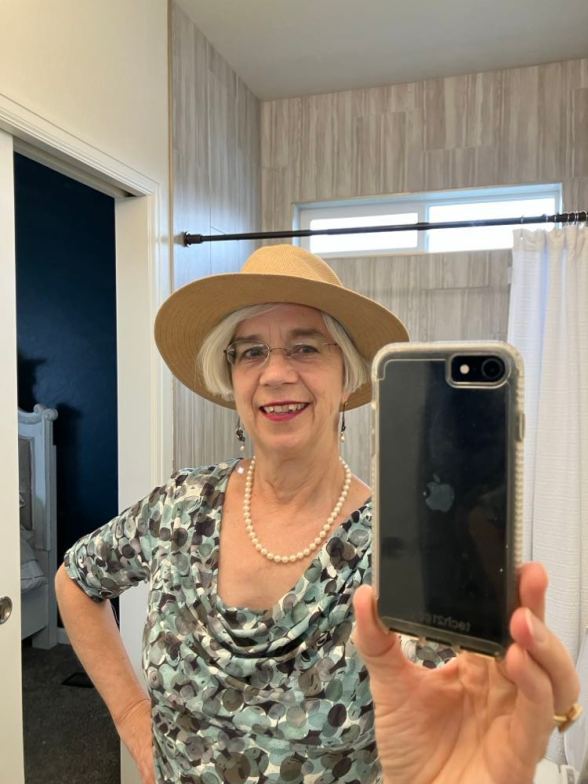
The photograph is me all dressed up for the 1940s ball.

______________________________

Weighing in

No nightmares about clinic since the one I wrote about two days ago. I do feel like a bit of a dinosaur in clinic, though. Most of my older patients seem to really be fond of dinosaurs.

I’ve heard from other docs that they don’t have time to talk to each other in clinic either. Patient time but primary care we read all the notes from everyone: specialists, PT, OT, xrays, CT, MRI, ultrasound, lab, lab, lab, lab, prescription refills, phone calls. I read that people are trying to insert Artificial Intelligence into this. I am fine with a computer learning to read mammograms, but condensing information from notes? The AIs currently can “hallucinate”, and make things up. Is that worrisome or am I being silly? Notes are often wrong ANYHOW, way more than I would like. I saw a patient yesterday who has a neurological disorder. The hospital discharge note lists the wrong one! The patient caught the error, I didn’t. I am very glad he corrected me, but the hospital note is still sitting there wrong. Having been labeled with wrong diagnoses myself, I think it is a big deal. In order to fix it, he would have to fill out a form and the form would go to the physician, who is supposed to respond and add an addendum to the note. How often do you think THAT happens?

The discharging physician suggests he see a specialist for testing. I call that specialist and they agree with me: that testing is not indicated, it won’t make one bit of difference in his treatment. The discharging physician also suggests lung testing. I don’t think it works or is useful with a serious neurological disorder that affects muscles! Think, people.

My patient is grumpy and asks how we know the medicine is working. I reply, “You’re not dead.” Which is true. Undiplomatic, but he does not mind, because he is already saying, “What is the point of this?” To explain more about the medicine working, I ask, “Is your breathing better than when you went to the emergency room?”

“Yes,” he says.

“That is because the medicine is working.” I explain how it works and what happens if he stops it.

Sometimes it makes me feel heavy, heavy, like a dinosaur.

But I think I will try discussing my clinic day with my cat. I think she might enjoy it and I can clear the grumps out. And it’s not a hipaa violation! She doesn’t like other cats and won’t tell them anything.

For the Ragtag Daily Prompt: dinosaur.

This is new to me:

I’ve never seen these cartoons. The animation is, well, not the best. The guitar work is fun though!

Honey and the ants again

The next two times Honey feels the ants biting from the inside feeling are also on obstetrics.

Both times it is a VBAC. Vaginal birth after cesarean. The woman has has a cesarean section in the past and is trying for a vaginal birth.

Both times, Honey gets the biting ant feeling. There doesn’t seem to be anything wrong with the woman in labor, the nurse is relaxed, the fetal heart monitor looks ok.

With the first one it is the younger male obstetrician who is on call. He is a big man. He sits and peruses the monitor strip outside the room, taking his time. “There were some decelerations back here, but the heart rate looks fine now. Do you really want me to consult?”

Honey can’t stand still, the ants feel so bad. She tries to sound professional and calm. “Yes, this is a VBAC. I would like you to go in and meet her.” She is trying not to shoo him towards the room. He shrugs and gets up, not quite slouching towards the room, Honey trying not to jump up and down in impatience behind him.

In the room, he introduces himself. Again, Honey has not told her patient. The obstetrician says, “Dr. B. asked me to stop by since you have previously had a cesarean section, but everything looks fine.” Two minutes later she and the nurse and the obstetrician all alert as the the fetal heart rate monitor chirp slows, dropping from the 120s down to 60. THERE IT IS! thinks Honey. It stays down, they have the mother roll on her side and pop oxygen on her. It comes back up, but that is that. Off to the operating room. Again, they don’t have to do a crash cesarean. This time it is not clear what was wrong, but everything comes out well.

On the third round, it is the older male obstetrician. He looks at the strip and is calm and goes right into the room. He introduces himself and everything looks fine. Honey is wanting to dance from foot to foot from the ants. Again the fetal heart rate drops, right as the obstetrician gets up to leave the room. The nurse has the woman roll to her side and adds oxygen. The calm obstetrician gives Honey a look and has the nurse get the surgical consent. The heart rate is back up and off they go.

Honey wonders. Ants? Little voices? She knows that we all pick up information from body language and information that is not conscious. That could be a scientific explanation. Information that is not quite conscious. Honey decides that she really does not care what the ants are. When those voices speak, she listens. Who cares what it is, as long as it works.

______________________

What is the word? “Fictionalized”, from fallible, friable memory.

Honey and the ants

Honey is in her second year working. She escapes clinic because she has a labor patient. In the daytime! Not on a weekend or at 2 am! Hooray!

She has to hang out, because this is baby number five, so it could come really really fast. Everything is cool. The mom has more experience than she does, nearly. Well, Honey has done more deliveries, but has only had one baby.

Honey starts to feel itchy. Agitated. It’s not skin at all. Something is bugging her. She goes in and out of the room. The nurse seems totally unperturbed, but Honey feels like ants are attacking her, from the inside. She goes out the room and studies the rhythm strip, the baby’s heartbeat. There is a printer feeding out in the central nurses station.

Screw it, thinks Honey. I make look stupid, but I don’t care. She calls the obstetrician. It’s the woman who is on. Honey is a Family Medicine physician. They are in rival clinics. “Hi,” says Honey, identifying herself, “I need a consult on this woman.” She reels off the medical details, Gravida 5, Para 4, all vaginal deliveries, no complications. “I just feel like there is something wrong. There isn’t anything really bad on the strip. But I need you to come.”

The woman obstetrician comes. She sits and studies the heartbeat strip. Honey still feels like ants are biting from inside. The OB puts the strip down. “There is nothing on this that would get you in trouble. But you’re right: something is wrong. Come on.”

Honey has not told the patient that she’s calling the obstetrician. The patient might be annoyed. They go in the room. The obstetrician introduces herself. “Dr. B called me to consult. We have a bad feeling. We want to do a cesarean section.” Honey is sure the patient will say no. She is wrong.

“Me too,” says the patient. “Do it.”

They do the paperwork and move quickly to the operating room. Not a crash cesarean, not an emergency, so spinal anesthesia, not general. Honey assists.

They are in. There it is. The umbilical cord is wrapped four times around the infant’s neck. It has not tightened down. Honey has goosebumps as they gently unwrap the cord and do the delivery. The baby is fine, no problems, apgars of 9 and 9. They complete the surgery, mom is doing fine too. Honey still feels rattled but the ants have gone away.

The mother is relieved when she wakes, glad they did it, glad to hold her fifth child. The obstetrician is in charge of post operative and Honey is managing the baby. They don’t really talk about it, everyone acts as if it’s all routine. If the cord had tightened down, everything still could have been ok, but it would be a crash cesarean section, general anesthesia, more risky for everyone. It could also have not been ok.

Honey is relieved to go home, adrenaline draining away and leaving her very very tired.

Honey decides that she will listen to those ants, that feeling, any time it shows up.

______________________

Based on a true story, at least, on memories, that are unreliable. Aren’t they?

Sisyphus

Sometimes clinic feels a bit like Sisyphus must feel. Rolling the stone of illness up the hill but it is eternally rolling back down. I can’t stop it. People age and people die and otherwise there would be no room for young ones.

The last two weeks of clinic has worn me out a bit. A friend says that I take too much of it home, worrying about people. How to let go of this?

I make connections in clinic. Not all the time. Sometimes I fail. I made a connection with more than one person with diabetes this week, but one was funny. The connection is that he mentioned that he is an elk hunter. Oh, and flies to California to fish and has a very lot of fish. I said that I’ve had elk and like it. That was when the connection engaged: he was very pleased that I am not horrified by hunting. Hunting elk is not at all easy or cheap and cleaning the animal and carrying it out, well. He is coming back about his diabetes and left cheerful.

If I go home trailing those connections and spend my time worrying about this people, I’ll wear out. I don’t want pneumonia number five. So how do I connect but let it go when I go home?

I will think of the connection as much smaller than the boulder that Sisyphus deals will. Not a boulder. A small piece of the rock. I can suggest how the person can lighten the load a little. Then I must stand aside and let them go. They have to decide what to do about their health. It is between them and the Beloved, they can try what I say or not.

Now it is not a boulder that I am trying to keep from rolling down a mountain. Each person has their own mountain to climb in their life, their own habits and histories, good or bad, trailing them like Marley’s Ghost in A Christmas Carol. I can suggest a tool to loosen a link of diabetes, or a slightly different trail up the mountain. Then it is up to them. I can’t carry them and should not carry them. Maybe they are approaching a patch of scree and I can suggest an easier or safer path. And then stand aside, stand down, let the people go.

Now I am not pushing a huge rock. I am standing on my own mountain, quiet, and looking at the path behind. I am resting a little and on my own path. I don’t know what will be around the next bend in the path. But I love the mountain and the forests and the birds and the ocean. All of it.

Thank you, oh Best Beloved.

For the Ragtag Daily Prompt: olympics!