My receptionist of 6 years at Quimper Family Medicine, Pat McKinney, died on February 6th. The photograph is from October, when I was in Port Townsend again for two weeks. She and I went for a walk. Well, I was walking and she was in a wheelchair. She was in hospice for over a year.
We had fun working together. Pat played music at her desk because the patient rooms were not quite sound proof enough. One day she was playing whale songs. I hear her on the phone with a patient. “The noise? Those are whale songs.” Pause. “Oh, Dr. Ottaway insists on whale songs.” I started laughing, because she was the one that picked them. So much for MY reputation.
When the covid vaccine came out, I got mine as a first responder. A few days later we had a lull between patients. I was standing in the hall near Pat’s desk. I said, “I don’t know why people are fussing about the vaccine, it seems fine to me,” and I gave a big twitch. Pat started laughing. I could set her off all day by twitching at her.
I got a letter from a family member, talking about happy memories of my father, mother and sister, who are all dead. How much fun they were and my mother’s influence taking them to museums, art museums and the Smithsonian.
It’s a bit difficult to answer, since my memories are much more complicated and tangled.
I wrote a poem called Butterfly Girl Comes to Visit a long time ago. It is about my sister. My mother could charm a room full of people and enthrall them with stories. Sometimes the stories were about me and my sister and actually making fun of our feelings: fear or grief. However, my mother was so good with an audience that I didn’t break the stories down until after she died. She was 61. That involved exploring a lot of really dark feelings. My sister and I even asked my father what our mother was really like: his reply was “Morose”.
I inherited my mother’s journals. My sister told me not to read them because they were “too depressing”. I don’t agree. They explain some things. My parents often fought, screaming at each other at 2 am while I was in high school. The family story was that my father was an alcoholic. As an adult, I wondered why she would fight with someone who was drunk. Her journal says “I drank too much last night,” over and over. Well, that would explain it, right? It takes two to tango. Or fight.
My sister could also charm a room. That is the sparkle in the Butterfly Girl poem. There was a period where she would tell me that I couldn’t talk about certain things, that she was fragile, that I was hurting her. This is after I gained control my feelings and had actual boundaries: I could refuse to fight with her. Before that, she could set me off like dry tinder. Her first husband called me once, saying, “I can’t not fight with her when she wants to fight. What do I do?” I replied, “I can’t either. I don’t know. I am so sorry!” I think it took until I was in my early 30s to refuse to fight with her and took a lot of conscious work. A fiance that broke up with me right after college told me I was an ogre when I was angry. I took that seriously and worked on it. My parents were not good role models for dealing with anger or grief or fear.
I am not much in contact with my maternal family. One person said that we could be in contact if we only said nice things about my mother, father and sister. I suggested we never mention them at all. We did not reach an agreement. I realize that our society wants to speak well of the dead, but to really be someone’s true friend, I think we have to accept that people may be angry at the dead as well. I gave this handout, Mourner’s Rights, to a patient on Friday. He is in the midst of grief and we talked about it. He thanked me and said, “I am grateful to talk to someone who knows about grief.”
My parents moved to Washington State in 1996. My mother was diagnosed with stage III ovarian cancer in 1997. I moved to be near them when her cancer recurred, arriving on Y2K. My mother died on May 15, 2000, four and a half months after we arrived.
My mother was only in that area of Washington for four years. She made such a charming impression that I had people tell me how wonderful and charming she was for a full decade. I was working though the complex feelings about her and tried very hard to thank people, even though I did not feel thankful.
I have not answered the letter yet. I want to return a gentle replay but I will not play the “only happy memories game”. I don’t mind my dark feelings. The family member would mind my dark feelings, I think. It is nice to be a physician and to be allowed to let patients talk about their dark feelings. Our culture wants to deny them, remove them, be positive. That is a disservice to love and to grief.
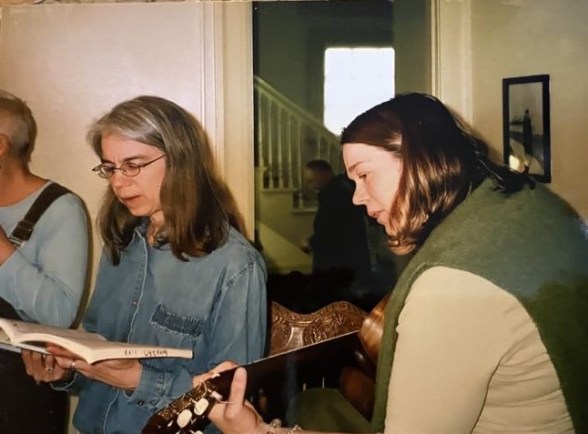
The photograph is of my friend Maline, me, and two of her husband’s family members. Maline was one of my alternate mothers, a friend of my parents. She died within the last few years.
The next two times Honey feels the ants biting from the inside feeling are also on obstetrics.
Both times it is a VBAC. Vaginal birth after cesarean. The woman has has a cesarean section in the past and is trying for a vaginal birth.
Both times, Honey gets the biting ant feeling. There doesn’t seem to be anything wrong with the woman in labor, the nurse is relaxed, the fetal heart monitor looks ok.
With the first one it is the younger male obstetrician who is on call. He is a big man. He sits and peruses the monitor strip outside the room, taking his time. “There were some decelerations back here, but the heart rate looks fine now. Do you really want me to consult?”
Honey can’t stand still, the ants feel so bad. She tries to sound professional and calm. “Yes, this is a VBAC. I would like you to go in and meet her.” She is trying not to shoo him towards the room. He shrugs and gets up, not quite slouching towards the room, Honey trying not to jump up and down in impatience behind him.
In the room, he introduces himself. Again, Honey has not told her patient. The obstetrician says, “Dr. B. asked me to stop by since you have previously had a cesarean section, but everything looks fine.” Two minutes later she and the nurse and the obstetrician all alert as the the fetal heart rate monitor chirp slows, dropping from the 120s down to 60. THERE IT IS! thinks Honey. It stays down, they have the mother roll on her side and pop oxygen on her. It comes back up, but that is that. Off to the operating room. Again, they don’t have to do a crash cesarean. This time it is not clear what was wrong, but everything comes out well.
On the third round, it is the older male obstetrician. He looks at the strip and is calm and goes right into the room. He introduces himself and everything looks fine. Honey is wanting to dance from foot to foot from the ants. Again the fetal heart rate drops, right as the obstetrician gets up to leave the room. The nurse has the woman roll to her side and adds oxygen. The calm obstetrician gives Honey a look and has the nurse get the surgical consent. The heart rate is back up and off they go.
Honey wonders. Ants? Little voices? She knows that we all pick up information from body language and information that is not conscious. That could be a scientific explanation. Information that is not quite conscious. Honey decides that she really does not care what the ants are. When those voices speak, she listens. Who cares what it is, as long as it works.
______________________
What is the word? “Fictionalized”, from fallible, friable memory.
Honey is in her second year working. She escapes clinic because she has a labor patient. In the daytime! Not on a weekend or at 2 am! Hooray!
She has to hang out, because this is baby number five, so it could come really really fast. Everything is cool. The mom has more experience than she does, nearly. Well, Honey has done more deliveries, but has only had one baby.
Honey starts to feel itchy. Agitated. It’s not skin at all. Something is bugging her. She goes in and out of the room. The nurse seems totally unperturbed, but Honey feels like ants are attacking her, from the inside. She goes out the room and studies the rhythm strip, the baby’s heartbeat. There is a printer feeding out in the central nurses station.
Screw it, thinks Honey. I make look stupid, but I don’t care. She calls the obstetrician. It’s the woman who is on. Honey is a Family Medicine physician. They are in rival clinics. “Hi,” says Honey, identifying herself, “I need a consult on this woman.” She reels off the medical details, Gravida 5, Para 4, all vaginal deliveries, no complications. “I just feel like there is something wrong. There isn’t anything really bad on the strip. But I need you to come.”
The woman obstetrician comes. She sits and studies the heartbeat strip. Honey still feels like ants are biting from inside. The OB puts the strip down. “There is nothing on this that would get you in trouble. But you’re right: something is wrong. Come on.”
Honey has not told the patient that she’s calling the obstetrician. The patient might be annoyed. They go in the room. The obstetrician introduces herself. “Dr. B called me to consult. We have a bad feeling. We want to do a cesarean section.” Honey is sure the patient will say no. She is wrong.
“Me too,” says the patient. “Do it.”
They do the paperwork and move quickly to the operating room. Not a crash cesarean, not an emergency, so spinal anesthesia, not general. Honey assists.
They are in. There it is. The umbilical cord is wrapped four times around the infant’s neck. It has not tightened down. Honey has goosebumps as they gently unwrap the cord and do the delivery. The baby is fine, no problems, apgars of 9 and 9. They complete the surgery, mom is doing fine too. Honey still feels rattled but the ants have gone away.
The mother is relieved when she wakes, glad they did it, glad to hold her fifth child. The obstetrician is in charge of post operative and Honey is managing the baby. They don’t really talk about it, everyone acts as if it’s all routine. If the cord had tightened down, everything still could have been ok, but it would be a crash cesarean section, general anesthesia, more risky for everyone. It could also have not been ok.
Honey is relieved to go home, adrenaline draining away and leaving her very very tired.
Honey decides that she will listen to those ants, that feeling, any time it shows up.
______________________
Based on a true story, at least, on memories, that are unreliable. Aren’t they?
The Ballad of the Shape of Things is one of those songs that I learned very young and from my cousins, so I did not know who recorded it. Another “dead girl song” only this one is a “dead guy song”. I loved the puns: “They say he died of the chickenpox. In part I must agree, one chick too many had he.” I also liked songs with words I didn’t know: transom, in this one. We were fairly bloodthirsty kids and happily learned songs about death, unfaithful lovers, murder, betrayal, noble suicide to save the highwayman, and so forth. My Darling Clementine, another dead girl song. We had a very educational childhood in song.
We needed the triangular “garment thin that fastens on with a safety pin” explained at the end of the song, because the cloth diapers we’d experienced were rectangular. I find memorizing things that rhyme and especially if there is a story and a tune, much easier than memorizing the varied side effects of drugs such as ACE inhibitors. The story behind the side effects escapes me, though maybe there is one! Think of that, a ballad of the ACE inhibitors, with each one having its individual good and bad effects! I am certain that I could make up a story, even if we don’t really understand all the effects.
What IS intimacy? And what is love? And are they the same thing? Do you have to be intimate to love someone? Not meaning sex, but what level of intimacy is “normal” and “appropriate”?
I am thinking of my mother. When I was just starting college, she started talking to me about my father and about his drinking. I became more and more uncomfortable and finally asked her to find a counselor or someone other than me. The thing is, she refused to DO anything about his drinking and in fact, covered it up. The two of them would scream at each other at 2 am and fight when I was in high school. It would wake me up and I would think, I wish they wouldn’t, because I have school tomorrow. But I certainly didn’t go say anything because then they would have screamed at me. And as I got older, I wondered if my mother was drinking heavily too. Because why would she argue with someone drunk at 2 am, that makes no sense. Unless she either was drunk or loved to argue or both.
It is clear that she was drinking heavily at that time from her journals. Over and over she writes, I drank too much last night. Hard to blame her for not intervening with my father if she is drunk too. But she was using him as her cover up. Her family blamed him. My grandmother, her mother, didn’t blame him. She loved them both.
When we had guests, my mother would turn on the charm. She could mesmerize a room and entertain people with stories. My sister and I and others would be the butt of the stories. My father too. After the guest left, she would often talk about them. Analyze them. Talk about their faults and weaknesses. I was fascinated but a bit horrified too. She seemed to like these people so much and to charm them and invite them back, but was talking about them behind their backs. Ick.
So intimacy interests me. I wonder how to do it “right”. Maybe right is not the best word. How to do it “functionally”. I really don’t know what normal is, my maternal family certainly did not model healthy intimacy. My generation still gossips about each other. I quit that at age 19 and refused to be part of it. I don’t think anyone saw my rebellion except my maternal grandmother. She did not say a word but I knew that I had her respect. She did not play the family game with me.
I don’t think that gossip and triangulation are a good form of intimacy or love. Person A talks to person C about person B. Word gets around and sometimes it is person D that says something to person B and person B gets upset when they realize where this came from. And how twisted and one sided the story is. And aren’t we seeing this play out on a national level? All these people saying that THEY KNOW the status of the President’s memory. I don’t. I can’t judge it from a debate. And frankly, if we are going to do a psychiatric evaluation of one, I think we have to do BOTH. Stop following stupid rumors. Why not require a neuropsychiatric evaluation on every candidate for President and Senate and House of Representatives and the Supreme Court. And make them public. That would cause some chaos, wouldn’t it? And how do you decide who is “sane” enough to govern?
I think that gossip and triangulation is a dysfunctional form of intimacy. People feel closer when someone is whispering a secret to them. I don’t think it’s healthy. It might be normal for our culture, though. Normal does not mean healthy, after all. What do you think?
This election is like a bad hallucination. Why do we accept candidates that behave badly? Are we so addicted to television and movie drama that we want it to happen in our government? I don’t. How about you?
So far I have gotten positive Covid tests on one patient a week, all with really different symptoms.
One older person who was short of breath walking, tired, coughing and loose at the other end.
One young one whose only symptom was profuse throwing up.
One with a sore throat, nasal congestion, cough and feeling fairly awful and about to go on a trip, darn it.
There isn’t a nice pattern to tell me what the local strain is doing. It can do any darn old thing. I have also seen someone with strep throat and another couple who had similar symptoms to the others but did not have Covid. It’s morphing like an AI, I swear. I am masking in clinic but so far so good.
The Ragtag Daily Prompt is essential. I think it’s pretty essential for me to wear a mask in clinic, in crowds and on airplanes, since I am quite tired of pneumonias.
I have been the only “provider”, that is, doctor, in the clinic for the last two days. The medical assistants and front desk and I are starting to work as a team. I ask the front desk person how to communicate with her from the clinic room most efficiently. Something was weird about the refill system and it kept refusing refills. On Tuesday I had over 100 “documents” in the computer “box”. Lab work, specialist reports, refill requests, x-ray reports, nursing home things, surgery reports, wound clinic, emergency room, and so forth. I am trying to skim them, but I can’t say that I will remember person A’s dermatology report after skimming 60 others. If you go to your primary care provider and have had some major medical thing recently, remind them. They may have gotten and read the note, but gosh, it’s hard to remember at 100+ per day. Right now I have not met most of the people, so it is even harder.
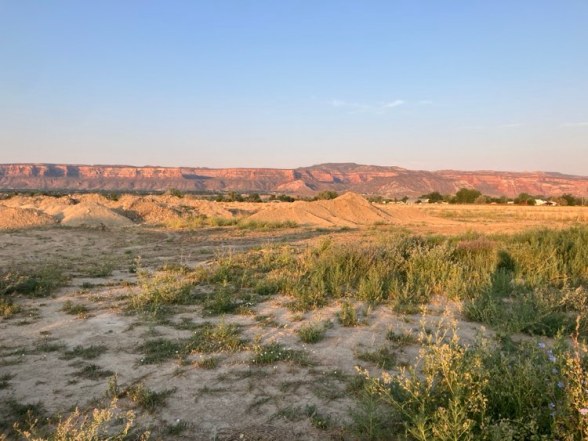
The photograph is just for fun, taken a few weeks ago on the trail that runs by the Colorado River. Lovely!
Death from memory loss is a mixed bag for families.
In the past, the average time to death from Alzheimer’s was 8 years. I don’t find a number on the CDC website, CDC Alzheimer’s. I find these statistics:
Alzheimer’s disease is one of the top 10 leading causes of death in the United States.2
The 6th leading cause of death among US adults.
The 5th leading cause of death among adults aged 65 years or older.3
The site also says that the number of people with Alzheimer’s doubles every five years after age 65. Sigh. Those numbers are the same ones that they taught me years ago, in a different format. 6% at age 60, then 2% more every year. By 70, 26%, by 80, 46%, by 90 66%. Like hypertension, if you live long enough, you may well get it. And yet, I have had patients over 100 years old with intact memories.
The death of a family member with memory loss can have complicated grief. On the one hand, loss and grief. On the other, a burden is lifted. If the person is in memory care, the cost may be very heavy. In our town, the memory care facility costs $7000 per month. That is a heavy burden to carry when the person no longer recognizes the family or speaks. The family may feel hugely relieved when their person passes and at the same time, feel guilty. This is someone that they love and loved. And yet, they are relieved by death. I think of it as a patient of mine described it: “The grief group at the hospital said that my husband isn’t gone. I said, yes he is, he just left his body.” It is very very hard for a family to watch their loved one deteriorate, lose skills, become confused and/or frightened and/or paranoid and the process can happen for years. With an average death at 8 years, some people live beyond 8. Maybe 12 years. It is very hard.
Blessings on those who care for the memory loss people and the families who do their best for them. Alzheimer’s is one sort of dementia, but we now have many. Pick’s disease, frontotemporal dementia, Parkinson’s dementia, multi stroke dementia, alcohol induced dementia, illegal drug dementia, primary progressive supranuclear palsy, and others.
The spirit has already taken wing and let the body follow.
My cousins sent me a packet of letters. Some are from my mother to her mother, but this one is from… well, see if you can guess.
Dear Mother and Father,
We got in the car and Grandfather and me sat in front and Grandmother sat in back. Grandmother said, “Do you want your window closed?” and I said, “No.” Then, in a few minutes after that I said, “I am getting kind of chilly.” Then in a few minutes after that I tumbled over the back of the seat into the back seat. Then I shot my pistol out the window and tried shutting it again but it wouldn’t go. Then I waited awhile and then I shot off my pistol again and it worked. Then I shot off my pistol again in a few minutes after that but somehow it didn’t work. And then after awhile it started raining.
Then we got home. After a little while Eva May came over. Then after awhile Jimmie came. Jimmie brought over his gun with him. He had a long gun.
After supper I took my sparklers over to Jimmy’s and Eva May’s house. They invited me over before supper and then I started lighting my sparklers. I lit one after another and in a few minutes I said, “I’ll go over and get my pistol,” so I did.Then I went back for awhile and then I came home and stayed and we had the rest of my sparklers in the house. And then we all went to bed pretty early.
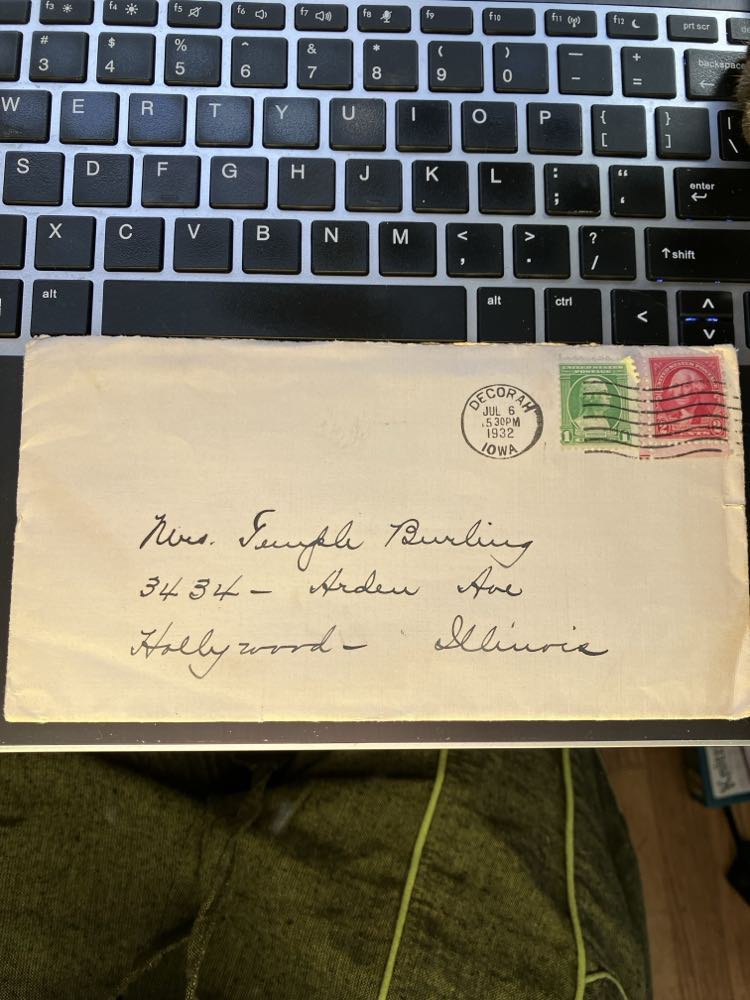
This is postmarked July 6, 1932 Decorah, Iowa. It cost .03 cents in stamps to mail. It was sent to Mrs. Temple Burling, 3434 Arden Ave, Hollywood, Illinois. The handwriting is quite beautiful. The letter is signed “Bobby” in quite different handwriting. The letter was sent from “Bobby” — Robbins Burling, age 6,as the narrator, with one of his grandparents transcribing to his mother (my grandmother) Mrs. Temple Burling (Katherine White Burling). I think it is a charming letter and so like a kid, with the repeats: “and then in awhile”. I am going to send it to “Bobby’s” grandson, who now has a child of his own. Here is the rest:
In the morning I got up and got dressed. Before I got up I was real quiet because I thought they were asleep because they were so quiet and they thought I was asleep because I was so quiet. Then finally they came past the door and when I knew – it they were awake – and they knew it – I was awake. And then I got up and got dressed.
Then after breakfast Grandmother and me went out and weeded. In a few minutes I said, “I’ll get the hay off the lawn for you.” so I did. I told her if she thought it was worth a penny and Grandma said, “Yes.” And then I said, “Do you think it’s worth any more than a penny?” and Grandma said “Yes.” In a few minutes we came in and she gave me a cent.
I left the penny in my hand and Jimmie came over and called me and we decided that we would make giant fingers and then as we were making giant fingers we decided we would make funny masks but we didn’t. We decided to make Chinamen’s hats but we didn’t.
Jimmie wore his hat in a funny pointed way and I wore mine with a round hole in the middle and kind of crooked too. And we went out to scare the girls and at first we didn’t scare girls but we scared Jimmie’s mother and we didn’t scare the girls after all. He went out to scare a man and he told me he’d be back and I got an idea while he was gone but he didn’t appear.
And then we went out and did some errands – got some peanut butter and then went to the library to see if they had any Dr. Doolittle books and they did. At first they asked if we’d read Dr. Doolittle at the Circus and I said, “I have.” and they put that back and looked some more and found another and asked me about that and it was called Dr. Doolittle and the Movie. Then at night Grandma read me some. We read part of it while I was in bed and then I started talking to Sixen and fell asleep finally and work up next morning. Then we had breakfast and I raked some more and I got another penny.
I’ve been seeing some embroidered stories. They are based on a true story, but the details are wrong or exaggerated.
One is an old friend of my sister. He notices a chair in his garage and contacts me. Now, my sister died in 2012. He says the chair is from Grandmother Tessie and that my sister told him “It’s the only thing I have left from my grandmother.” He wants the chair to go to my sister’s daughter and he may be willing to have it recovered for her.
He sends me photographs. Touches your heart, doesn’t it?
Except that Tessie was not our grandmother. She was my maternal grandfather’s mother, so my great grandmother. I have never seen the chair before and it would have to be late 1800s or bought late in her life. It does not look that old, though it looks chewed. Also, we all got boxes of stuff from my maternal grandmother Katherine, to the point where we all agreed it was ok to get rid of some of it. We offered it to each other first. Seven cousins and I got two pitchers. I asked my mother, “Why two pitchers?”
“After your uncles and I picked what we wanted, we lined up seven boxes. Then we went pitcher, pitcher, pitcher, pitcher. There were enough to send everyone two.”
Oh. My grandmother was a serious packrat. I got a silver plate pitcher and sugar bowl that look like they are from the 1930s, art deco. I had never seen them before they came in the box. So they are not attached to my memories of my grandparents at all, but I like them very much.
I send the chair message on and I don’t know if my niece will want the chair. Nor do I know if it was great grandmother Tessie’s chair. I had an enormous box of tablecloths and pulled thread doilies and so forth after my parents died. I would bet money that there was something from Tessie Temple in there. I offered it to both my children and my niece. They each took one tablecloth and napkins. I kept a few and got rid of the rest.
The other day I noticed that one cloth that I kept is signed Margaret White. She was my maternal grandmother’s oldest sister. I have Margaret’s small leather sewing kit as well, made in Germany and stamped with her name. I’ve had that since my teens and used it until the leather corners are wearing down. My mother said that my grandmother found her sister Margaret difficult, but I don’t know if that is true either.
At one point I emailed with a family member found on Ancestry.com. This is my paternal grandmother’s father’s half-sister’s descendant. She said the family rumor was that they were related to John Philip Sousa. I said, “My great grandfather, Fredrik Bayers, played saxophone in John Philip Sousa’s band.” She said, “Oh, that must be where that story came from.”
Are these stories benign or not? With social media and the ongoing trials of various people from both the government and investment schemes, the stories seem less benign to me. If my niece wants the chair, I think that is very kind of my sister’s friend to make the effort to get it to her, but the story was rather garbled. It makes me want to be careful with the stories I tell.
Peace.
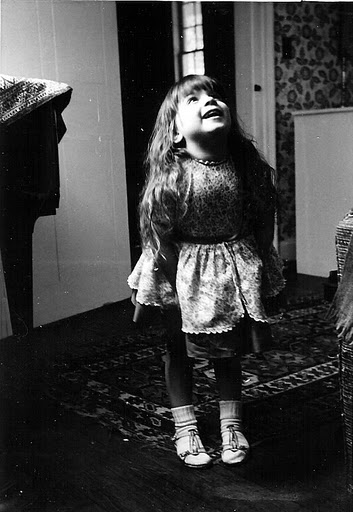
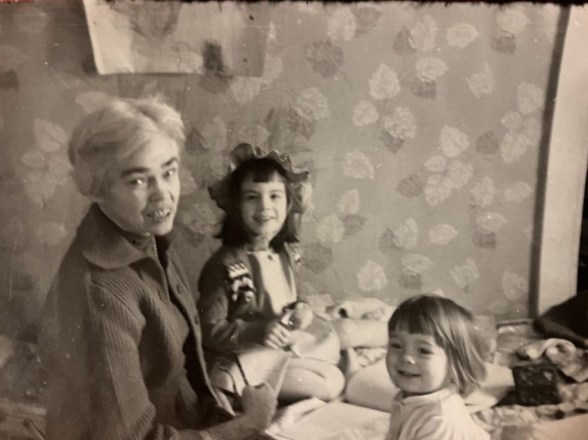
The photograph is from 1965 or 1966, of my grandmother Katherine White Burling, me, and my sister, Christine Robbins Ottaway. I would guess that my grandfather took it.
Discover and re-discover Mexico’s cuisine, culture and history through the recipes, backyard stories and other interesting findings of an expatriate in Canada
Engaging in some lyrical athletics whilst painting pictures with words and pounding the pavement. I run; blog; write poetry; chase after my kids & drink coffee.
Refugees welcome - Flüchtlinge willkommen I am teaching German to refugees. Ich unterrichte geflüchtete Menschen in der deutschen Sprache. I am writing this blog in English and German because my friends speak English and German. Ich schreibe auf Deutsch und Englisch, weil meine Freunde Deutsch und Englisch sprechen.





 KO Rural Mad As Hell Blog
You must be logged in to post a comment.