I am quiet, thoughtful, meticulous with patient charts
I am not shy so much as lonely
and mistrustful
I don’t trust many people
my small child self still loves you
but it’s a child love
and she knows you’re leaving
everyone has left her before
so she is very sad
everyone but me and the Beloved
so not everyone
but you are the first not me
that she opened up to
so yes, shy
she is terribly shy
she hid for years under rock
bedrock
in my soul
now she and I and Beloved
are walking hand in hand
in the gardens of my mind
This is for Ronovanwrites weekly haiku challenge #75: the words are charm and look. The prompt includes that the first two lines should make a sentence with the opposite meaning of the sentence made by the second two lines…..
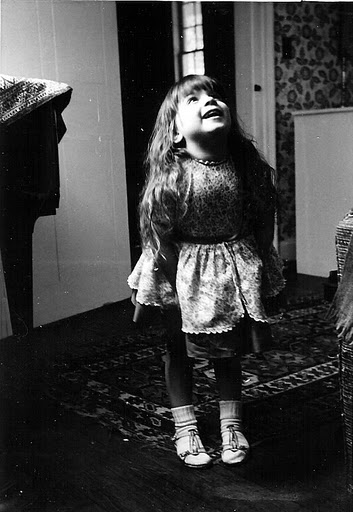
you gift a young girl
I see your charm, look longing
see you lie to me
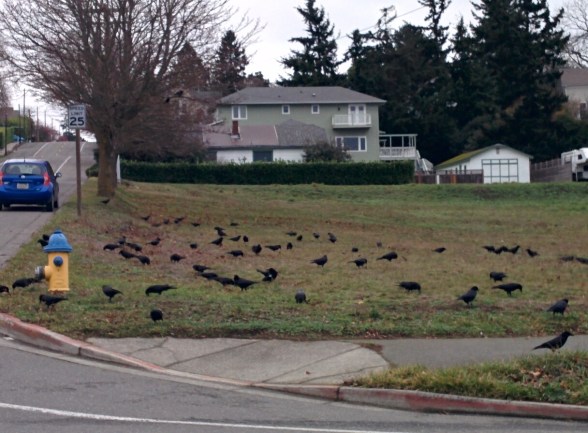
I took the photo across the street from my clinic just a few days ago.
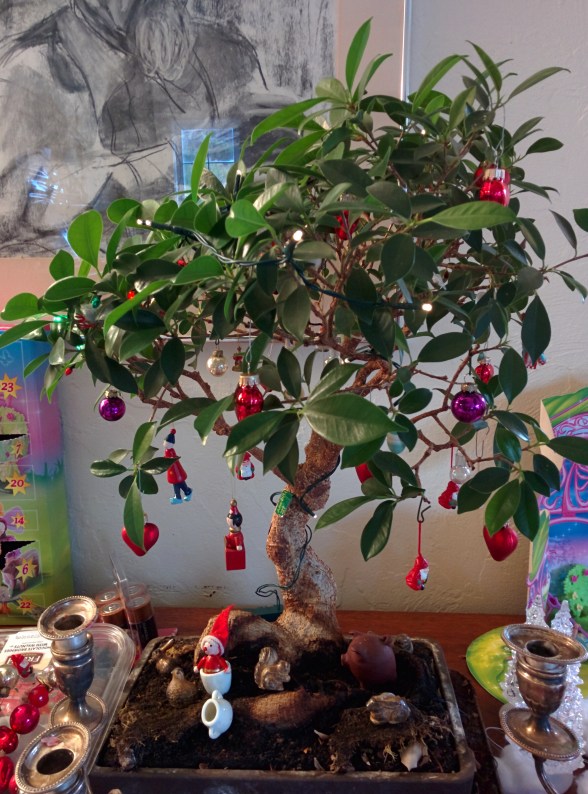
This year both my children are 18 or over and they wanted this small tree for the Christmas tree. “Don’t kill a tree, mom.” they said.
This tree is the last bonsai from my parents. My mother died in 2000 from ovarian cancer. She was at home in hospice for nearly seven weeks and we had over thirty visitors. My sister and my father and I all ignored the plants: and most of the bonsais died with her.
My father cared for the remaining ones even as his health deteriorated. He died at home as he would have wished, in 2013, alone and a sudden death. Two of the three remaining trees died. So this ficus came home with me. I water it faithfully and brought out the small ornaments to decorate for the holidays. I don’t know how old it is. After we lose our parents, we wonder about things: where is this from, how old is it, was it important to you, was it a random gift? Did you buy it, did you love it, was it not something that you cared about?
This holiday ask a family member to tell you a story about something in their house. Ask about something that you like, or is unique, or that really doesn’t fit in. Ask about a piece of art or a piece of furniture or jewelry. And write the stories down for the next generation…. while you can.
I go in the sea
of dreams
open the chest
the trunk
the saddlebags
Empty the dirty laundry
Of emotion
On the floor
Grief and joy
Fear and hope
Mine
All mine
There is a place
Beyond words
I see you in that place
It is very old
And very young
It is so frightening to go there
Lose words
The first time
It is haunted and hunted
Are you aware
Of that place
Do you go there
Of your own volition?
Or do you struggle
Fight and suffer in the
Choppy boundary between air and water
Fear drowning
Water surrounds you
Above you too
You are in the wordless place
Over your head
Are you too deep?
Open your eyes
In the green water light
A mermaid waits to lead you
To a rope to a raft
And me
But first you must open your eyes
I did not take this photo: it was taken at the Weyerhaeuser Pool in Seattle in 2009 at the National Junior Synchronized Swimming Competition. The professional photographer asked our girls to jump in so that he could get some practice shots from the underwater window. No one else was allowed down to that window. My daughter was in her third year of synchro and already so comfortable in the water that she and the others just mugged and played….
I thought about cover meaning shelter and meaning the song, and the refugees needing shelter, harbor and cover. We are frightened and seek cover, shelter, harbor. Who do we have to harbor us but each other?
The US culture seems to suppress grief, take grief away, heal grief, get over grief, but think about love without grief.
Could we love someone if we didn’t grieve when they died?
No. We couldn’t. That wouldn’t be love. Or that would be the pale shadow of love, love without loss, love that turned from the grave and forgot.
We cannot love without grief, so we need to make room for grief. We need to stand by each other during grief. We need to help each other, be present, be there, say the wrong thing, say the right thing, say nothing and just give love.
Love builds the Taj Mahal. Love writes Rumi’s poems. Love is the memories of the person we loved, we tell our children about them, we hold them in our hearts.
Love loves without logic, without sense. Love in spite of alcohol, addiction, lies, how can a person love an abuser? They love the person, not the abuse. They love the person, not the actions, not when the alcohol takes over, when the meth takes over, when the oxycontin takes over. Love loves the whole person and grieves the damage.
Love and grief are intertwined, a rosebush with thorns, there is no one without the other. No joy without despair, no light without dark, no you without me, no joining without separation.
I enter grief as I enter love, whole heartedly, oh, I may be afraid of the dark but I go there anyhow, I know as the waves close over my head and I sink into the depths:
There is no love without grief.
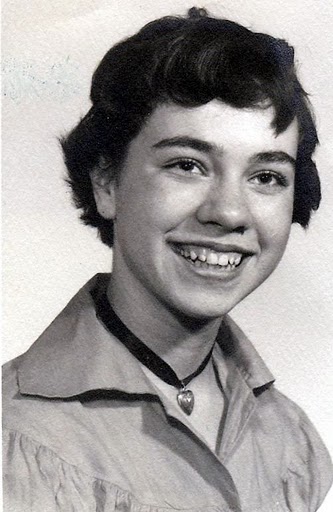
The picture is my mother, Helen Burling Ottaway, in high school. She died of cancer in 2000 and I still miss her terribly.
This song interests me. It is the fourth in my series about the songs that my sister and I learned growing up.
When we recorded our family songs, my sister said she liked it. I said, I think it is creepy, with that juxtaposition of a sweet tune and then words that are not so sweet.
No use cryin’
Talking to a stranger
Namin’ the sorrows you’ve seen
Oh, ’cause there are
Too many bad times
Too many sad times
Nobody knows what you mean
If somehow
You could pack up your sorrows
And give them all to me
You would lose them
I know how to use them
Give them all to me
The line that bothered me was “I know how to use them”. What does that mean? Use them for what?
No use ramblin’
Walkin’ in the shadows
Trailin’ a wanderin’ star
No one beside you
No one to hide you
An’ nobody knows where you are
Ah, if somehow
You could pack up your sorrows
And give them all to me
You would lose them
I know how to use them
Give them all to me
And how could you give your sorrows to someone else? The singer is offering to listen to sorrows but also take them away. “You would lose them.” And then the singer “knows how to use them”.
No use roamin’
Walking by the roadside
Seekin’ a satisfied mind
Ah, ’cause there are
Too many highways
Too many byways
Nobody’s walkin’ behind
Ah, if somehow
You could pack up your sorrows
And give them all to me
You would lose them
I know how to use them
Give them all to me
I never got around to asking my sister if it was the tune she liked or the words or what it meant to her. I chose to play that recording at her Washington memorial. I could not go to her California memorial because I was too ill. My father had terrible emphysema and was on oxygen. I thought I had pertussis but it turned out to be systemic strep A, which hurts. At any rate, I was too sick to travel. Her Washington Memorial was a month or two later, when I was well enough to organize it…..
You would lose them
I know how to use them
Give them all to me
It is by Pauline Baez. The version by Richard and Mimi Farina is the one I’m familiar with, so my parents probably had the record: https://www.youtube.com/watch?v=U4LbU8w7Th4.
I knew the song “Billy Barlow” as “Let’s go hunting”. It was one of the silly songs that we recorded. I adored this song when I was little for two reasons. One was that it was funny. The other was that I interpreted it as a song that could be changed and sung about more than one animal. I can remember when I realized that no, the adults sang it the same way each time and they would not change the animal. I was disappointed but I still loved the song. And I could change the animal on my own.
It’s a good song to raise girls: an illustration of a group of guys….
Let’s go hunting, says Risky Rob
Let’s go hunting, says Robin to Bob
Let’s go hunting, says Dan’l and Joe
Let’s go hunting, says Billy Barlow
When my son was a teen, another parent commented that the IQ dropped in half for each teen added to a group. Two boys cut the IQ in half, three had it to one quarter and four was trouble.
What’ll we hunt for, says Risky Rob
What’ll we hunt for,
What’ll we hunt for,
Let’s hunt rats, says Billy Barlow
How’ll we catch them,
How’ll we catch them,
How’ll we catch them,
Let’s borrow a shotgun, says Billy Barlow
How’ll we divide them,
How’ll we divide them,
How’ll we divide them,
How’ll we divide them, says Billy Barlow
I also loved this song because the last line changed. Sometimes Billy Barlow said the same thing and sometimes he said something different. When I was very small and still learning the song, that was part of the joy of it, to see what Billy Barlow would do. And clearly he was wicked, like Coyote or Pan or Loki and going to lead the group to trouble if he could….
I’ll take shoulders,
I’ll take sides,
I’ll take hams
Tailbone mine, says Billy Barlow
How’ll we cook them,
How’ll we cook them,
How’ll we cook them,
How’ll we cook them,
Oh, delicious ickiness, raw rat tailbone… It would give my sister and me shivers….
Let’s go hunting, says Risky Rob
Let’s go hunting, says Robin to Bob
Let’s go hunting, says Dan’l and Joe
Let’s stay home, says Billy Barlow
And relief. Billy was messing with them all the time and he doesn’t want to go and he never did, which is why he suggested a shotgun to hunt rats…. I like this Billy.
When I search on Billy Barlow, here is an entirely different song, a civil war marching song for Company B from New York City that marched into Maryland in 1863 and had a 63% loss. My sister had a civil war marching band play at her rehearsal dinner and we ended up marching in pea gravel for a couple hours. It turns out that my oldest cousin had ambitions to be a marching band drum leader. The band thought we were so funny that they offered to return. But the civil war fighters on both sides had marching bands with them. https://www.youtube.com/watch?v=M1ZlfsP7dZA
Discover and re-discover Mexico’s cuisine, culture and history through the recipes, backyard stories and other interesting findings of an expatriate in Canada
Engaging in some lyrical athletics whilst painting pictures with words and pounding the pavement. I run; blog; write poetry; chase after my kids & drink coffee.
Refugees welcome - Flüchtlinge willkommen I am teaching German to refugees. Ich unterrichte geflüchtete Menschen in der deutschen Sprache. I am writing this blog in English and German because my friends speak English and German. Ich schreibe auf Deutsch und Englisch, weil meine Freunde Deutsch und Englisch sprechen.






 KO Rural Mad As Hell Blog
You must be logged in to post a comment.