Fun in hell

Even when I go through hell on earth
mother dies, marriage crumbles
sister cancer, father cries
divorce, sister dies
pneumonia, pneumonia, pneumonia
can’t breathe and still have to defend myself
when accused of crazy and reported
Bitch is not a psychiatric disorder
hypoxia is not a psychiatric disorder
my cousin helps my niece to sue me
I never thought my family would have lawsuits
never
yet my sister sets them to explode
after she dies

I don’t quite die
though it is pretty rough
and grief tears at my throat
like a wolf, like a lion
like a hyena,
piranhas
I have two children and I stay
because they do not deserve this mess
I guard and fight and stay present

And there is laughter
even in hell
I time a comment and my daughter
snorts milk out her nose
I tell my children I shouldn’t handle knives
because of a meeting at work
“Five against one?” says my son
“Yes,” I say
“Well, they didn’t have enough people, did they?”
And I laugh and we go out to dinner.

Is this my fault?
Is it something I did?
The marriage was me, yes,
I do two years of counseling
trying to understand
I can’t change it
but maybe I can understand

A sort of a friend
ok
a false friend
a liar
says he never changes.
I say I always try to learn
I want to know
I want to grow
how can he not grow?
how can he refuse to learn?

he doesn’t talk to me any more
he stops speaking to people forever
but
there is no forever
there is now and the Beloved
and the dark and the light are united
after death
will you be a proton
or an electron
or gravity?

There are hells on earth
worse than mine
prayers
I send prayers
for the innocents
everyone was newborn
and innocent
once

Storm tossed

The word tethered makes me think of the year and a half on oxygen. I had a standing concentrator for in the house. This means that I have oxygen tubing following me on three floors. I had to have connectors and I got caught on everything. I tripped over it. I wondered why it wasn’t helping and discovered the tubing was unplugged. The kittens chewed holes in it.

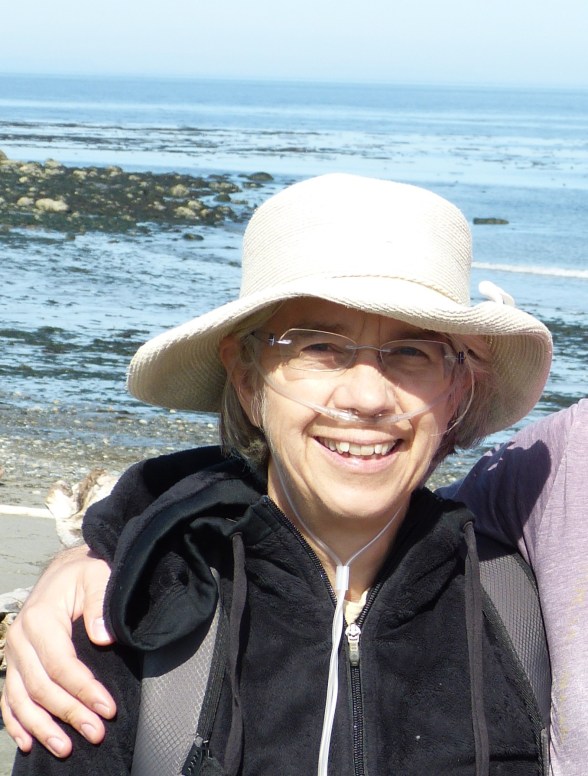
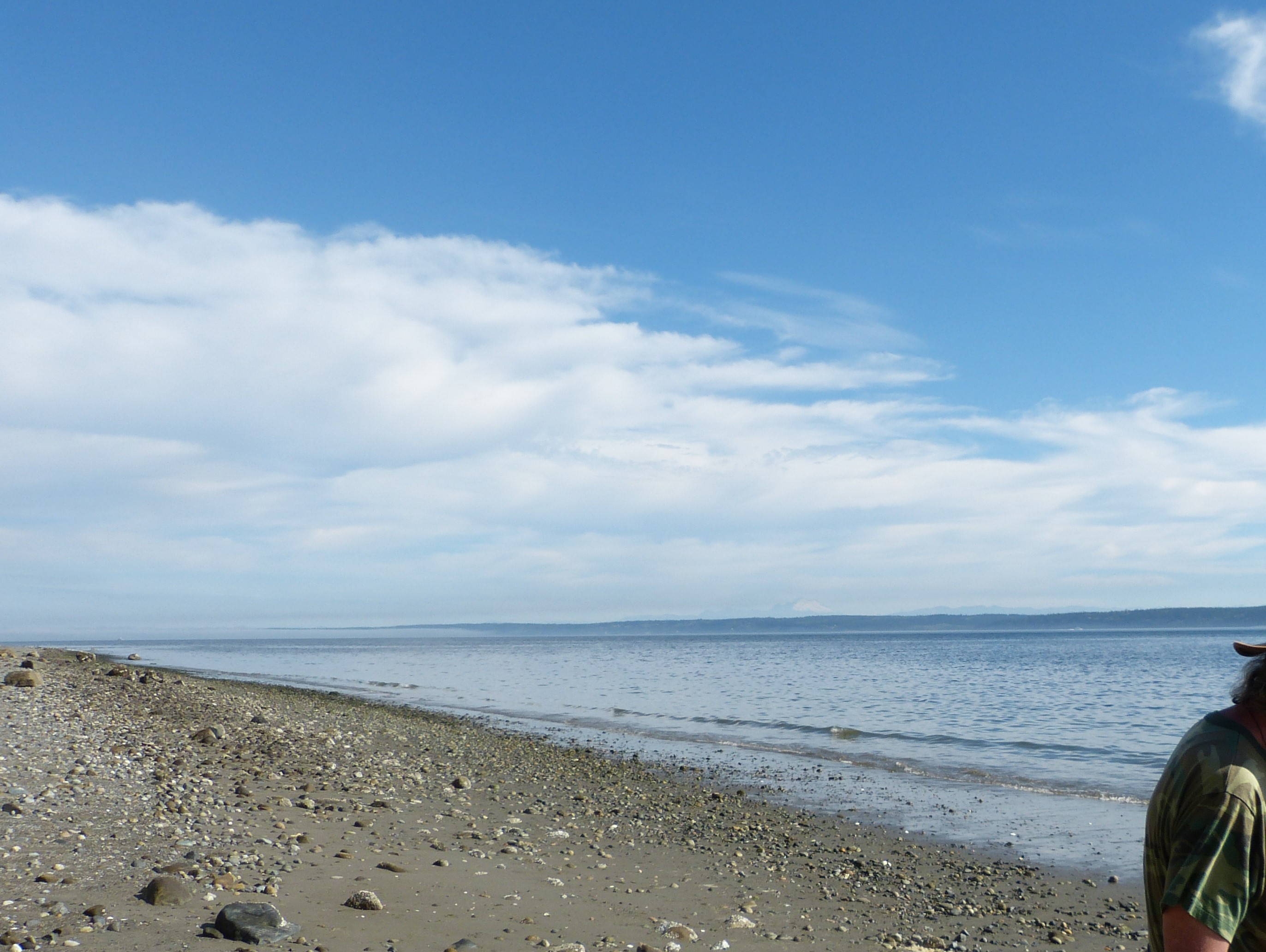
The sea plants are tethered too, to rocks, to grow up from the deep. I think this looks like a distressed stranded mermaid. Poor thing, her rock, her foundation has been thrown on shore by a storm. She can’t get home. I took this in May 2021, when I was still on continuous oxygen.

For the Ragtag Daily Prompt: tethered.

The DSM Stew

Pyschosis
Neurosis
Babeiosis
Psittacosis

Medicine shifts
out the old, in the new
neurosis is gone
from the DSM stew

https://www.nimh.nih.gov/health/publications/understanding-psychosis

https://www.cdc.gov/parasites/babesiosis/

https://www.cdc.gov/pneumonia/atypical/psittacosis/index.html

The DSM V is the Diagnostic and Statistical Manual of Mental Disorders, volume V. The DSM III was published in 1980, DSM-IV in 1994 and the DSM-V in 2013. Some disorders are dropped or combined with others or the criteria are changed. In the DSM-V, tolerance and overuse (formerly addiction) were combined from two disorders into one spectrum.

Medicine is always changing and updating. Before h. pylori was recognized as a cause of stomach ulcers, there was much more ulcer surgery and ulcer bleeding deaths.

I don’t know what will come out of Covid-19, but the research on the immune system and Long Covid (now called PASC) is formidable.

The DSM-V and the ICD-10 are humans categorizing things, defining diseases. They will continue to change.

For a history of the DSM, read here: https://www.psychiatry.org/psychiatrists/practice/dsm/about-dsm/history-of-the-dsm.

____________________

For the Ragtag Daily Prompt: neuroses.

The photograph is taken in September 2021, with my camera. Hypoxia and a fast heart rate makes me really anxious, but neither is considered a psychiatric disorder.

Long Covid imaging

In the last Long Covid talk that I attended and wrote about (here: Pulmonary Manifestations of Long Covid), the pulmonologist and intensivist says that one problem with Long Covid is that we do not have imaging that can “see” it.

That is, the chest x-ray looks normal, the echocardiogram may look normal (heart ultrasound), the chest CT scan may look normal, a brain CT or MRI may look normal, but the patient may still be tachycardic, feel exhausted, feel brain fog and have multiple other symptoms.

That pulmonologist listed five of the top mechanisms that are prolonged in the immune system. Most of the scientists and physicians are framing this as “immune system dysfunction”. I am not. I am framing it as “you were really really sick and your immune system is still on high alert and trying to protect you so you can recover”. Now wait, you say, how could chronic fatigue like symptoms protect me? Well, if you are exhausted, you can’t go to work and you’ll stay quiet at home most of the time and less exposure chance. But what about brain fog? Again, this will slow your interaction with other people and force you to rest and heal. But, you say, I don’t like it. Well, yeah. Patience. We call grumpy patients that are recovering “convalescents”. It is a good sign when they are grumpy and over it and just want to be better. That doesn’t mean I can make myself or anyone else heal faster.

The pulmonologist says that the best test is the six minute walk test. This is usually done by a respiratory therapist. The person walks in a circle for six minutes wearing a pulse ox, with the respiratory therapist doing regular checks. This distinguishes between the people who have primarily a lung issue from all the other issues. If the person is tachycardic (fast heart rate) but not hypoxic (oxygen level dropping), then it’s not primarily lungs though blood clots to the lungs sometimes have to be ruled out. One of the mechanisms in the immune system is microclots and an increased risk of blood clots. That can mean heart attack, stroke, or pulmonary embolus, a clot in the lungs. The microclots are suspected of causing some of the muscle fatigue and exercise intolerance, by clogging capillaries and reducing oxygen flow to muscle cells. Muscle cells do not like this at all.

I have done my own quick walk test with patients since 2003, when I had terrible influenza. About a week after my influenza started, with the temperature of 104 and heart rate at 100 at rest and 135 walking, my temperature came down. However, the fast heart rate continued. Normal heart rate is 70-100 and 135 walking will make you feel exhausted. I lay on the couch and could barely make my kids dinner for two months. It resolved then. I read a book about influenza and thought that I had “influenza viral pneumonia” where there is lung tissue swelling, reducing the air spaces, after influenza.

My quick walk test in clinic is to check a sitting oxygen level and heart rate and then have the person walk. I would have them walk up and down a short hall three times then sit down. When they sat, I watched the pulse oximeter recovery. Some people would jump from a resting heart rate of 62 to a walking heart rate of over 100, say 120. Their oxygen level could stay normal or it could drop. If they dropped below 88, I would get home oxygen and forbid them to return to work. If their oxygen level held, then they needed to rest until their walking heart rate stayed under 100 and they were no longer exhausted by gentle or normal activity. If they return to work with a walking heart rate of 120, they will be exhausted and are more likely to get a secondary pneumonia or have other problems. The heart does not like to run at 120 all the time. You can see why a person who already has some coronary artery blockage would be more likely to have a heart attack if they get pneumonia from influenza or Covid-19.

The conferences I am attending are talking about “targets” in the immune system. That is, new drugs. I think the science is wonderful and amazing, but I also think we need to step back and say, this is a really really bad infection and some people need a lot of support and reassurance and time to heal. Reassure them that even though they have not yet returned to normal, the immune system is working hard to protect them from other infections and it is saying very very loudly that they need to rest. Rest, recuperate and trust the immune system. Some things need immediate treatment, especially blood clots, heart attacks and strokes, but once those are ruled out, we need to support people through their convalescence and healing.

______________

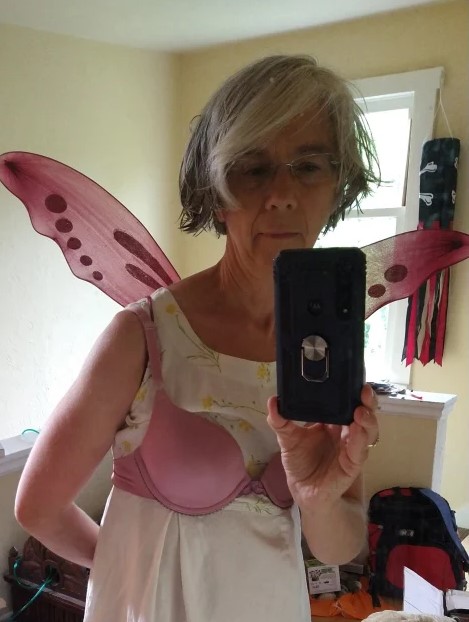
The photograph is from April 2021, a few days after I was put on oxygen. A selfie.

Lungs, again

I saw the pulmonologist from Swedish Hospital last week and am still thinking about the visit.

My lung function on the pulmonary function tests did not change much from December. He gives me an inhaler, with a steroid and a long acting bronchodilator, two puffs twice a day. I use it for one day in December and promptly get Covid-19 mildly. I then ignored the inhaler until I talk to him in March. He says, “Use it for two months and we will see if your lungs improve.” I try it in March and get a cold, not Covid, within a day. I try it again in April and get a cold within two days. I then ignore the inhaler.

But at the end of March I start feeling a lot better and my fast twitch muscles start working again. I would get very tired and stiff when I use them. They are “back” but are very weak. I wanted to know if my lung testing improved too, but it didn’t. So what is going on here? I feel better but the lung studies are not better.

The pulmonologist says, “Well, the infections are probably coincidence.” Yeah, um, well, three for three. “But, if it’s not asthma, it could be bronchiectasis.” He asks when I did the methacholine test, negative, gold standard for asthma. I did it in 2014. Negative along with allergy testing.

I don’t know much about bronchiectasis. Mostly that it’s not asthma and not chronic obstructive pulmonary disease. It may be the garbage can that holds obstructive disorders that don’t fit either of those categories.

“Bronchiectasis means what?” I say. He says, “Usually there is a lot of coughing and mucous.” Nope. Well, I cough a lot with pneumonia and with colds if I don’t rest, but rarely cough anything up. “The test is a chest CT but we can’t do anything about it if you have it, so I don’t know if you want to do a CT.”

“If there’s nothing to do, then I don’t want one.” Because repeated CT scans increase cancer risk, way more so then an x-ray. I ask about work. “I still get really fatigued, and my muscles are recovering. If I am stronger at the end of the summer, I would think about work, but how would I protect my lungs?”

“Mask.” he says. “An N95 all the time would maybe help. We don’t really know.”

Ugh. We agree that I will see him in October. If my fatigue level stays where it is now, returning to work even half days is going to be too high risk, I think. I am liable to get pneumonia AGAIN and this time I might get stuck on oxygen. Or die, which I’d rather not right now.

I am reading about bronchiectasis. The Mayo Clinic doesn’t have an entry for it, though it has clinical trials and a special clinic. That would support it being a garbage can diagnosis. I am reading on Wikipedia, here, not my usual medical resource. Brochiectasis can particularly be caused by tuberculosis, mycobacterial illness. They distinguish cystic fibrosis bronchiectasis from non-cystic fibrosis bronchiectasis and other infections can cause it. Influenza, streptococcus, um, yeah, the infections I’ve had. I do not have cystic fibrosis or the alpha-1-antitrypsis disorder. And there is another disorder listed, a genetic one where the cilia don’t work right. Primary ciliary diskinesia. I don’t have that either, but my working diagnosis is PANS, with antibodies that screw up my cilia and fast twitch muscles. And that would put my lungs at risk for pneumonia.

So, says a friend, what do you need to take?

Nothing, I say. It means I have to keep stress down, be in a parasympathetic state instead of fight or flight sympathetic state, and stay the heck away from sick people. Oh, and mask on airplanes and probably avoid huge crowd things. Jazz Fest, big music festivals, riots, wars, etc. Exercise, eat right, don’t drink too much alcohol, don’t smoke anything, don’t do stupid things. Try not to get tuberculosis.

And still, I am doing well. The treatment for really bad bronchiectasis is lung transplant. I am still quite mild after four pneumonias and the kid illnesses and mononucleosis and colds and so forth. I do not cough all the time and am off oxygen. It’s looking less likely that I could return to work in person, though I don’t know about internet. It really depends on my energy level, what that does. Darn it. Uncertainty, isn’t it hella annoying? Oh, well, I am pretty used to it by now.

And that’s the lung news.

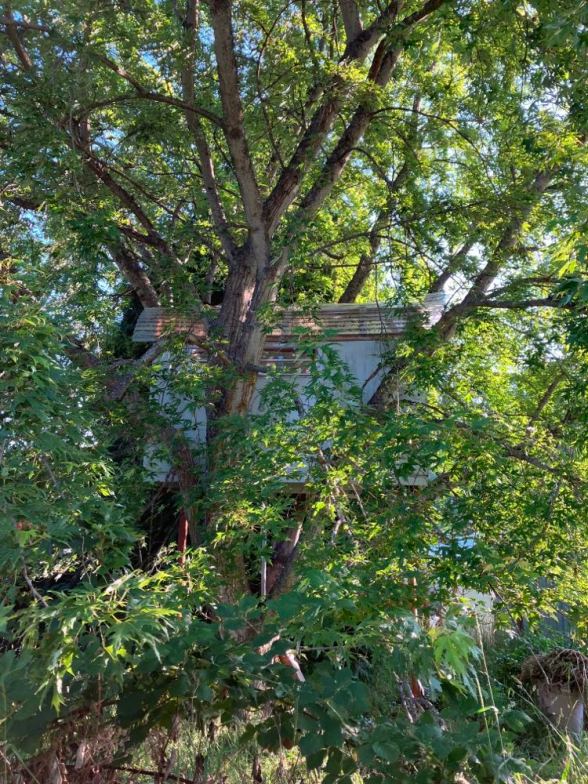
I can always hide in my tree house. But the food and water supply there is not so good.
The work of disability

I look up the CDC website to see how many people are disabled. The CDC says that 27% of adults in the US have a disability. Yes, that is one in four. https://www.cdc.gov/ncbddd/disabilityandhealth/infographic-disability-impacts-all.html.

I find being disabled to be a ton of work.

I think the view of disability in the US is often people who sit at home and have money thrown at them from the government.

This is not so, not so, no, no, no.

In clinic a patient needs a new socket for his artificial leg, having had a cancer amputation. He is an expert still working in disability exams, so we do a visit where he dictates much of my note, because in order to get a new socket, medicare requires very specific information in the clinic note. We also have notes from physical therapy and his occupational therapist and the company that makes the sockets. Why does he need a new one? He has lost weight and the old one doesn’t fit any more so he can’t walk securely.

Even so, I think it took six months and we kept redoing versions of the paperwork.

Another patient needs a new electric wheelchair. That one takes a year of repeating insistence and paperwork.

After my March 2021 pneumonia, I am disabled, which pisses me off. I like my work. It’s unclear how long I will be on oxygen and since we’ve been working on a diagnosis besides “gets pneumonia super easily” since 2003, it’s hard to predict the trajectory. I don’t know if I will be on oxygen permanently. It is exhausting to drag myself to physician visits, in four different hospital systems. Oh, and a patient can apply for patient assistance with the finances, but then all four have different paperwork. I am sick as snot and have to try to keep track of the bills from four systems and four sets of on line passwords and where is the stupid appointment? Edmonds? Seattle? Bremerton? Augh. The fatigue that accompanies the pneumonia makes it hard to cook, hard to clean, hard to comprehend bills, exhausting to make phone calls. Anyone want to trade? I’ll work and you can be disabled?

My disability company requires paperwork too, lots of it, and my taxes, and there is a long list of rules that I reread periodically. I needed an attorney to sort out the rules, since the disability company won’t answer my questions.

Now I am off oxygen and better, though still dogged by fatigue. I think that is probably permanent, but then I sometimes hope it’s just that I am finally rebuilding muscle, since the fast twitch muscles didn’t work for two years. They are a bit recalcitrant now.

And I am not in a wheelchair, have not had an amputation, am not in a rehab. If you have to take buses in your wheelchair everywhere, need two people and a crane to get you out of bed into the wheelchair, have to use a computer to talk for you, imagine. Anyone who thinks disability is easy money is insane.

It’s not clear if I can return to work. I might get pneumonia number five, which would probably take me out. No one knows how to lessen my risk. And I don’t have the energy and do not know if I will.

All the unknowns and unclears and we don’t knows. No one is disabled for easy money because it’s a job trying to get well or trying to survive it. And yet, I am happy to be alive and even to be able to dance some! Dance on!

Breathe

I was trying to think of a debacle. Oh. Getting my fourth pneumonia, March 21, 2021, Covid-19. This is the first pneumonia that put me on oxygen. The fast heart rate, dropping ten pounds, and feeling anxious were familiar from the other three. This photograph was from December 2021, visiting Maryland. We did a bike ride. I was pretty happy that I was able to do it, though the last mile had a sloping uphill that made me think I was not very strong. Oxygen helped.

And Covid-19 is a debacle that we are still trying to understand and absorb and avoid and heal and recover from. I am reading an article that entirely denies viruses existing. I guess it’s like porn on the internet: they say if there is a story, there is a porn version. Every possible idea of what has happened over the last three years is out there, though this article doesn’t make any sense at all.

I don’t remember who took the photograph of me. It may be a steathie. I needed oxygen at night and whenever I was being active, but not at rest. Ok, at rest talking.

Things and people were lost and found and lost during Covid-19. I spent a lot of time on our beaches. I am so grateful for the beaches.

For the Ragtag Daily Prompt: debacle.

Frame

What is the tree and where is it?

I am still thinking about the Inflammatory Brain Disorder Conference.

The researchers and physicians are talking about the immune system as if it is broken in Long Covid and ME/CFS and the other illnesses, but I am not sure I agree. Maybe the immune system knows what it is doing. Maybe Covid-19 is a really really nasty infection and the immune system sends out antibodies to make us stay down, stay in bed, rest and keep from catching something else. Maybe an antibody that suddenly makes you weird will make you isolate and hide and not interact with the other potentially infectious humans.

Ok, the inflammatory brain disorders that destroy the brain, those are not adaptive. However, I’ve thought that MC/CFS was a “repair mode” since residency.

When I had my third pneumonia in 2014, I refused to admit to myself that I had chronic fatigue. It was sort of obvious. I went back to work six months after I got sick and seeing just four or five patients left me exhausted. I would come home and sleep on the couch. I also skipped breakfast, because I would go to sleep as soon as I ate. My blood sugar was fine and it was not a food allergy. It felt as if my body wanted to do repair work and wanted me to sleep while it was doing the repairs. I would sleep after lunch. For the next six months of work, I slept twelve hours a day and hoped that I would not have more than five patients. Also that I would not get sick.

We had everyone who had upper respiratory symptoms or a cough wear a mask and I wore one too, hoping to not get another pneumonia. That worked. I only got sick when I went to work in another hospital clinic system. I kept walking into rooms with patients with their masks off. I got Covid-19 in a mere five weeks there, after going a year at my clinic without getting it.

I spoke to a friend yesterday. She was talking about her damaged immune system. I said I didn’t think of it as damaged. With enough stress and infection, I think the immune system gets primed. And then it is as if it has PTSD: the immune system says, “Enough already! We are not going to LET you overdo and get sick again! We are putting you DOWN to sleep if you overdo!” It is an extreme version of “listen to your body”, as if the body is shouting. The immune system is hyperalert and goes all out if there is any threat or suspected threat.

Maybe we need to be more gentle with ourselves and each other. The US culture is so oriented to production and work and money as success. But is that really success, if we work 20 hours a day and drive our immune system to desperate measures?

Maybe we need to learn to relax. To take time off. To breathe.

And the talk about Mast Cell Activation Disorder said exactly that. We need to teach how to go from the sympathetic fight or flight crazy to the quiet, relaxed, parasympathetic state. That quiets the immune system down very nicely.

It won’t fix everything, I am not saying that. But it is something everyone can learn. Slow breathe, in five and out five. Practice.

Breathe.

______________________________

The tree is a Redwood and it’s in the Chimacum Woods Rhododendron Nursery. Not just rhodys and on the Olympic Peninsula.

Lose the chest strap

After my fourth pneumonia, I couldn’t stand the chest strap any more. Chest strap? say the guys. “What chest strap?” Dudes, bra, brassiere, whatever you want to call it.

It made my lungs hurt. My lungs already hurt. I thought, ok. I am 60 years old. I am “small” and don’t need any “support” unless I go running or something that really makes breasts jiggle. Don’t need a bra for dancing. And anyone who stares at my tits, well, gosh, thought you guys didn’t like “old” ladies. I don’t care.

Let’s think about that chest strap though. Guys, have you ever tried a bra on? What exactly is a bra for? Well, running or soccer or pole vault or football or all sorts of other heavy athletics, yeah, it can be really uncomfortable. Strap those babies down. But the day to day bra is to enhance support, stop jiggle and hide nipple action.

Uh, and meanwhile guys can take off their shirts in public. I think this is unfair. They have nipples too and breast tissue, just less.

Also, what is wrong with jiggle? The breast tissue drains in multiple directions, through lymphatics. I think some breast jiggle may be important to that drainage. Jiggle means slut to guys? Well, go suck a lemon, guys. And if you really stare at my breasts when I am talking to you, I might not sock your eye, but I sure as hell will lose all respect for you. All. And why are nipples evil in women but not in men? Because they are functional in women and men are jealous? Tit envy.

Now support. Yes, there are women who are so well endowed that they have back pain and may choose a breast reduction. This is covered by insurance if the clinician documents that pain over time. And breasts do change with time and age. But when is our culture going to accept and even celebrate aging! We do congratulate people turning 80 or 90 or 100, but otherwise older women are often ignored. I am delighted by the older actresses and musicians who are now finding parts and are still out there and dancing. Go Tina Turner, the legs go last!

I also think the chest strap is not nice for the lungs. Certainly not after four rounds of pneumonia, but bras have to be tight enough that they do have an effect on a deep breath. I’ve retired my bras. Ok, if I am in a Madonna mood and want to wear a lace see through white shirt, then I might pull out the scarlet one for the evening, but otherwise, no way. How good are bras for people with asthma, with emphysema, with post covid?

Lose that chest strap, ladies, and take a deep breath. Breathe free.

Long Covid and post pneumonia update

I was up above 5000 feet last week and did not need oxygen.

This is wonderful! I was on oxygen continuously from March of 2021 for a year and a half. I was really getting better and then had my Covid booster in early October. I crashed again. Do I regret the shot? No, because the crash is because antibodies went back up. Only some of them, though. My muscles and lungs were not working well again, but brain was fine (ok, some people do not like my brain, but they are idiots) and aside from having to avoid gluten, no digestive stuff.

About a month ago I really started feeling my fast twitch muscles work again. It was two years in March since this fourth pneumonia and I’ve had something Long Covid like after each one. Recovery took 2 months in 2003, 2 months in 2012 and 6 months off in 2014 and then an ongoing mild chronic fatigue, so I worked about half of a regular family medicine schedule. I saw 7-10 people per day instead of 16-22. I was also a single parent running a business with two children, so that has a lot of energy draw as well.

On the second morning there, my pulse was 61 and oxygen level 98% on room air. HOORAY! I am back to baseline from 2014. Since it took 2 years to recover, I really do not want to do this again. No more pneumonia. I have had two more rounds of Covid, but apparently the super high antibody level made it really really mild. An immunologist tested the antibodies since I keep getting pneumonia. He said I have the highest Covid antibody level he’s ever seen. Protective was over 50 and mine was 25,000. I seem to be darn good at making antibodies.

Now what? I have felt better for the last month. I still get tired and have about a half day of the energy level from my 20s or 30s, which was high. I am hiking, up to 6 miles in a day twice two weeks ago. Now to start biking and maybe running. I don’t like to run but it’s good training. I want to ski next winter at least one day. Maybe I will swim too. I used to swim a mile twice a week, but it’s been a long time. Also my swim team daughter expressed scorn for my freestyle stroke. Sigh, children are born to humble us, which sucks.

I am still trying to see if I can work with Long Covid patients. I have rather too much experience with something very like it. But I think I would like to enjoy feeling well for a month or two, first!

Hooray! I hope other Long Covid folks are working their way out of the woods too.