There were lots of fallen branches and ferns down off of their branches.
Here are the trees they fall from.

Ferns and moss on a big leaf maple.


For the Ragtag Daily Prompt: staghorn.

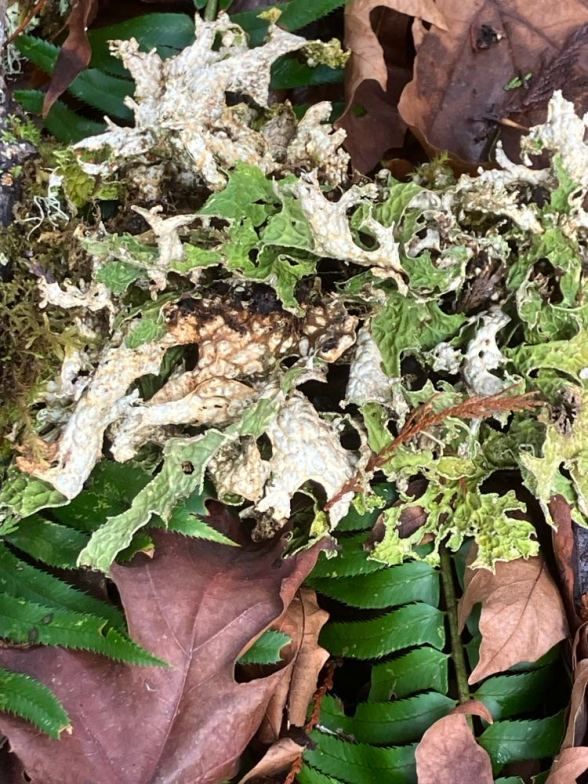
There were lots of fallen branches and ferns down off of their branches.
Here are the trees they fall from.
Ferns and moss on a big leaf maple.
For the Ragtag Daily Prompt: staghorn.

For Judy’s Numbers Game: 128.
I have enough showing up that it can be all beach. Brandt geese out in the early morning.

Let’s look closer at the eagle in the tree. Splotchy feathers, not quite fully mature.

Rocks and logs and sand.

The deer come down too.

A gull in the evening as the light falls.


Is the sea lion the scamp? Or the ocean wave splashing up? Or the cormorant in front of the right hand sea lion?
These are sea lions rather than seals, in Puget Sound. The small ear flaps give them away. They are also just bigger than most of our local seals. Males are bigger than females, up to 390 pounds, while the females are up to 110. Here: https://www.eopugetsound.org/articles/california-sea-lion
For the Ragtag Daily Prompt: scamp.
We learned this one as kids and sang it very happily.
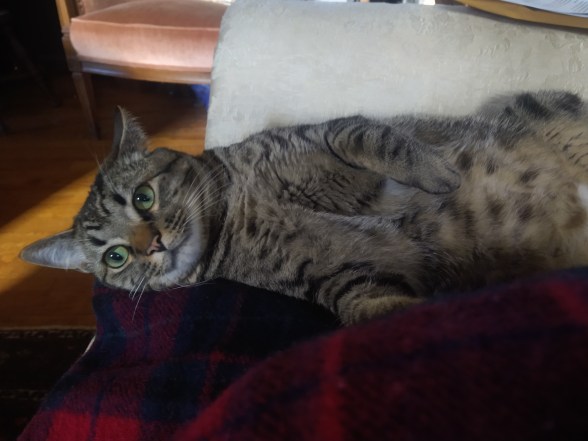
The Yes Yes Boys, Take Your Tomorrow.
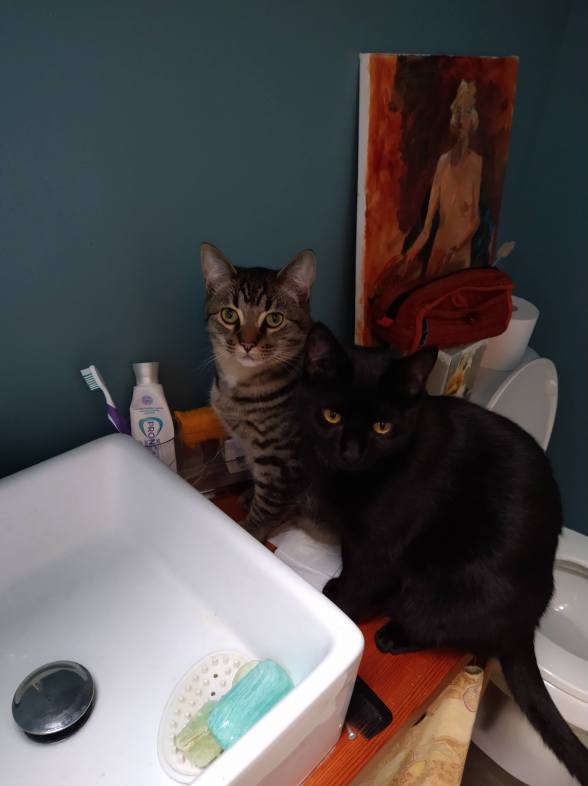
My cats are pound kitties, rescues that were still half-starved kittens when they arrived. They were supposedly six weeks old when I got them, so born in August 2021. This photo is from February 2022. They are still exploring and fascinated by water and faucets and showers. They are doing cat research. Meanwhile, Long Covid research continues.
This is a report on a study which started in October of 2020. “Participants were actively followed for severe acute respiratory syndrome coronavirus 2 (SARS‑CoV‑2) infection. In the study, Hannah E Maier, PhD, University of Michigan, Ann Arbor, Michigan, and colleagues compared the prevalence of symptoms and symptom severity between vaccinated and unvaccinated individuals.” People were enrolled for a year as they got infected, with demographic and health information recorded as they enrolled. They turned in information every two weeks and had blood draws every two months. After a year they were invited to continue for a second year. 3375 were enrolled, more than 1370 filled out Long Covid forms, and 1007 of the 1370 were vaccinated. Long Covid was defined after 90 days.
“At 30 and 90 days post infection, 38% and 13% of individuals reported persistent symptoms, and 6% and 2% reported ≥5 symptoms, respectively. Fatigue (19%), cough (15%), and cognitive dysfunction (12%) were the most commonly reported symptoms at 30 days, whereas loss of smell/taste (8%), fatigue (6%), and cognitive dysfunction (5%) were the most commonly reported symptoms at 90 days. The mean score of symptom severity was 3.6 and 3.9 at 30 days and 90 days post infection, respectively.
At 90 days post infection, 8% of vaccinated individuals reported persistence of any symptoms compared with 27% of unvaccinated individuals (relative risk [RR] = 0.31; 95% confidence interval [CI], 0.22-0.42). Similarly, vaccinated individuals were less likely to have ≥5 symptoms compared with unvaccinated individuals (RR = 0.34; 95% CI, 0.15-0.79).
Furthermore, vaccinated individuals had significantly lower average symptom severity scores at 90 days post infection compared with unvaccinated individuals (relative severity [RS], -2.70; 95% CI, -1.68 to -3.73).“
There also was more Long Covid in the pre Omicron group than Omicron and beyond.
This study is community based and most of the patients were not hospitalized. Overall it has a lower estimate of how common Long Covid is than studies in hospitalized patients. It is reassuring that Long Covid symptoms and prevalence are lower with vaccination, but some people are still severely affected even with vaccination. Vaccination does not stop Long Covid completely though I certainly wish that it did. Mixed good news, but vaccination still looks like the best bet other than moving to a bunker permanently.
The study is published in Open Forum Infectious Diseases: https://academic.oup.com/ofid/advance-article/doi/10.1093/ofid/ofae039/7585852. The quotations are from the DGAlerts article.

It’s just a scarf. One to wear when you are feeling alienation. Those are just stripes. Don’t look at the other end of the scarf. No, you are imagining things. It’s just a scarf.
For the Ragtag Daily Prompt: alienation.

I really enjoy elder care in Family Medicine. Mostly. Even some of the very difficult or very complicated people.
One thing I would try to figure out is what is the person’s goal? This can be quite funny at times.
“Can we talk about what you would want if you got really sick? If you were too sick to talk to us?”
“I don’t want to talk about death.” Ok, this person is in their 90s.
“That is fine, but if we don’t talk about it, your daughter and I have to guess what you want. And we tend to do more when we don’t know.”
That person glares at me. “Oh, all right.”
Sometimes a person says, “I don’t want to die of cancer.”
It turns out that this is an opening. “Ok, what DO you want to die of?”
“I don’t want to die!”
“Well, me either, but I can’t fix that. There are at least three “ideal” deaths that the Veterans Administration talks to people about. Maybe we could go over them. You could put your request in with your higher power.” I have written about the three here: https://drkottaway.com/2023/10/06/an-ideal-death/. The “Hallmark” or hospice death, sudden death and fight it all the way.
But, other than not dying, what is the goal? To stay in one’s home? To move to a retirement organization that has a nursing home and care until death? Home care insurance to stay home? I do have people imply that they will go into the woods or crash their car or something if they get very sick, but not very often. They are usually aware that I have to respond to any suicide threat. How much care do they want? People often say, “I wouldn’t want to be disabled,” but it turns out that life is often worth living even when very challenging. Most people want to be treated for cancer, for heart disease, for congestive heart failure, to go on.
Sometimes death comes from a cumulative load of chronic problems. We had a gentleman in his 80s in the hospital ICU many years ago. He had pneumonia, congestive heart failure and bad kidneys as well as a host of other problems. I sat down with him. “We are treating you, but when we give you enough medicine to help you breathe, your kidneys are getting worse. This is a small rural hospital. I could transfer you to the Seattle hospital, 2 hours away. You would have a cardiologist, a kidney doctor, a lung doctor. Here you just have me and the nurses. Either way, I do not know if you will live through this. What do you want to do?”
He chose to stay. “My family can visit me here.” His family was visiting daily. “I do not want a breathing tube. I do not want dialysis. If my kidneys go, let me go.” We discussed this with the family.
Four days later it was clear that without dialysis, he was dying. Dialysis might have slowed it, but he may still have died. He was no longer waking up. We withdrew the antibiotics and removed most of the monitoring and switched him to hospice. His family continued to visit and he died a few days later.
He did die in the hospital, and yes, we used some machines up until care was withdrawn, but this still seems like he got to make choices and his family understood. It can be much harder with memory loss when the person really can’t make choices any more.
He was complicated. To keep him breathing well without a machine, we had to give him diuretics, that were eventually too much for his kidneys. A bad heart, lungs with emphysema and pneumonia, and bad kidneys. Sometimes the liver is not working either, and then what is there left to work with? Nearly all drugs are broken down by either the liver or kidneys. Simethicone is not absorbed, so that’s the exception.
Sometimes people get along until too many things accumulate and then they end up in the hospital and on multiple new medicines. It can be very confusing. Regular maintenance is a good idea.
Sometimes the family wants something different from the patient. Or there is an elder parent and three adult children, who all disagree. My job is advocate for the patient. But this is Family Medicine, so I have a responsibility to the patient but also to the family. The person, the family, the community, how is it all fitting together? Sometimes functional, sometimes not.
I had one person who called me when he had been flown to a Seattle hospital. “I have to get home.” he says, “Can you release me? I have to take care of my wife!” I panicked for a moment. “Is your wife bedridden? Where is she? Why are you in the hospital?” She was not bedridden and she was fine. He was being more and more behaviorally squirrelly. He could no longer drive, but drove anyhow. His wife disabled the car, because he would disappear. I sent him to a neurologist for memory testing. The neurologist said, “Hmmm.” and sent him for neuropsych testing. The neuropsych report said dryly that his memory was fine, but he had certain long standing behaviors related to past heavy alcohol use. Oh. He was quite proud of not drinking and going to AA, but he also triangulated with his family and me. I sat him down and said, “Ok, I am not going to talk to a different one of your five children every time you see me in the clinic, because you’ve said, “Don’t tell mom I called you.” Pick ONE person for me to talk to and now you have to have a family member with you when you come to clinic.” He grinned and chose his wife. He had certainly fooled me about his memory, because he blamed his behavior on his memory. The neurologist was not quite fooled. The family calmed down and he did not drive any more, thank goodness. He was not an easy patient, but he was entertaining and educational too. And I felt that I had helped both him and the family.
Sometimes families fight. Sometimes a dysfunctional family will get way worse when someone is sick or dies. Sometimes families go on fighting. Other families are so kind and so good to each other and their elders. Every family is different.
For the Ragtag Daily Prompt: concentration.
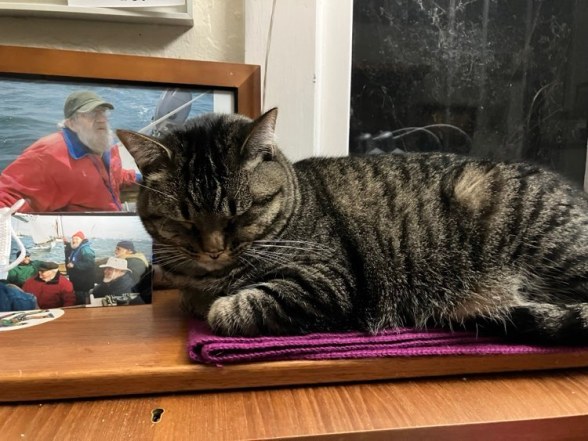

Back in 2002, our private clinic became part of the hospital. The biggest local insurer had quit paying for everyone’s work for 9 months and then was taken over by the state. We were still not getting paid.
One day the employees were very tickled and happy. I cornered the office manager at lunch and asked what was going on.
“We have to use the hospital to order everything,” she said. The nurses and staff at lunch had expectant grins. “We asked them to procure a henway. The order was put in. Yesterday we got a call from someone in the ordering department. She said, “We’ve searched the medical catalogs, but we can’t find it. What’s a henway?” She got transferred a few times and reached the office manager. Reply: “About the same as a rooster.” The clinic staff broke up again. My office manager said, “Well, that person was pretty new, so we hope they’ll get over it.”
I am sure that the hospital loved having us on board.
For the Ragtag Daily Prompt: procure.

BLIND WILDERNESS
in front of the garden gate - JezzieG
Discover and re-discover Mexico’s cuisine, culture and history through the recipes, backyard stories and other interesting findings of an expatriate in Canada
Or not, depending on my mood
All those moments will be lost in time, like tears in rain!
An onion has many layers. So have I!
Exploring the great outdoors one step at a time
Some of the creative paths that escaped from my brain!
Books, reading and more ... with an Australian focus ... written on Ngunnawal Country
Engaging in some lyrical athletics whilst painting pictures with words and pounding the pavement. I run; blog; write poetry; chase after my kids & drink coffee.
Coast-to-coast US bike tour
Generative AI
Climbing, Outdoors, Life!
imperfect pictures
Refugees welcome - Flüchtlinge willkommen I am teaching German to refugees. Ich unterrichte geflüchtete Menschen in der deutschen Sprache. I am writing this blog in English and German because my friends speak English and German. Ich schreibe auf Deutsch und Englisch, weil meine Freunde Deutsch und Englisch sprechen.
En fotoblogg
Books by author Diana Coombes
NEW FLOWERY JOURNEYS
in search of a better us
Personal Blog
Art from the Earth
𝖠𝗇𝗈𝗍𝗁𝖾𝗋 𝖶𝗈𝗋𝖽𝖯𝗋𝖾𝗌𝗌.𝖼𝗈𝗆 𝗌𝗂𝗍𝖾.
Taking the camera for a walk!!!
From the Existential to the Mundane - From Poetry to Prose
1 Man and His Bloody Dog
Homepage Engaging the World, Hearing the World and speaking for the World.
Anne M Bray's art blog, and then some.
My Personal Rants, Ravings, & Ruminations
 KO Rural Mad As Hell Blog
You must be logged in to post a comment.