Listen

There is anger and blame and silence.
People talk about each other.
People talk about others.
What is truth? What is rumor?
No one wants to listen.
They want to blame.

I do not see
I do not feel
I do not hear
how to heal this, Beloved
if no one will listen.

Only love.
Anger drains away.
I send love
Into the anger
Into the blame
Into the echoing silence.

Masks and selfs

I call a friend yesterday and sing, “Happy Day Before Your Birthday to You”. It sounds silly. She has just gotten Covid and this cheers her up.

She is telling me about her summer and about a class at a camp. Some for adults and some for children, but one where people really dropped their masks and just got to be themselves.

What identity is your deepest self? She is talking about her nine year old self. I think mine is more like four and rebellious and skeptical of adults, adulthood and all of their rules. I don’t think I am ever out of touch with this identity, though I don’t let it talk out loud in clinic. Mostly. A rebellious four year old informed by medical school and years of experience is a pretty frightening thought, isn’t it? Or the basis for a great cartoon.

That part of me is very observant and quite smart. It does not care what we are supposed to see or the cues people give. Growing up in an alcohol household, it looks for what people do not say. This can be terribly helpful in clinic and also a bit weird. It is body language and tone of voice and what questions a person shies away from answering and the puzzle pieces that do not fit.

Last week I see a small child with her parents for vomiting and coughing and fever. I am interviewing the child and asking if things hurt. “Do your ears hurt?” I ask. She shakes her head no. I point to my throat next and she nods. Yes, that part hurts. Her toes do not. I include toes or something silly to find out if the child is saying yes to all of it. I tell the parents that we will do a strep test, that mostly people don’t cough with strep except when they do. The strep is positive. My medical assistant grumbles, “They didn’t tell me that,” but I think the parents were more worried about the vomiting and she may not have complained about her throat.

Are the masks we wear always bad? I don’t think so. I think it is frustrating if we believe our mask or never ever get to drop it. There is some formality to my role in clinic and I tend to get more formal when I am worried about someone. That has been interpreted as anger or brusqueness, but it isn’t. I am wearing a real mask with all patients because we are seeing at least one person with Covid every week. The literal mask does not help me connect with people, but sometimes I can anyhow. I have to take it off for the 90 year olds because most of them are hard of hearing and lip reading helps.

For the Ragtag Daily Prompt: identity.

I hiked the Beaver Brook Trail this weekend with my daughter.

Sisyphus

Sometimes clinic feels a bit like Sisyphus must feel. Rolling the stone of illness up the hill but it is eternally rolling back down. I can’t stop it. People age and people die and otherwise there would be no room for young ones.

The last two weeks of clinic has worn me out a bit. A friend says that I take too much of it home, worrying about people. How to let go of this?

I make connections in clinic. Not all the time. Sometimes I fail. I made a connection with more than one person with diabetes this week, but one was funny. The connection is that he mentioned that he is an elk hunter. Oh, and flies to California to fish and has a very lot of fish. I said that I’ve had elk and like it. That was when the connection engaged: he was very pleased that I am not horrified by hunting. Hunting elk is not at all easy or cheap and cleaning the animal and carrying it out, well. He is coming back about his diabetes and left cheerful.

If I go home trailing those connections and spend my time worrying about this people, I’ll wear out. I don’t want pneumonia number five. So how do I connect but let it go when I go home?

I will think of the connection as much smaller than the boulder that Sisyphus deals will. Not a boulder. A small piece of the rock. I can suggest how the person can lighten the load a little. Then I must stand aside and let them go. They have to decide what to do about their health. It is between them and the Beloved, they can try what I say or not.

Now it is not a boulder that I am trying to keep from rolling down a mountain. Each person has their own mountain to climb in their life, their own habits and histories, good or bad, trailing them like Marley’s Ghost in A Christmas Carol. I can suggest a tool to loosen a link of diabetes, or a slightly different trail up the mountain. Then it is up to them. I can’t carry them and should not carry them. Maybe they are approaching a patch of scree and I can suggest an easier or safer path. And then stand aside, stand down, let the people go.

Now I am not pushing a huge rock. I am standing on my own mountain, quiet, and looking at the path behind. I am resting a little and on my own path. I don’t know what will be around the next bend in the path. But I love the mountain and the forests and the birds and the ocean. All of it.

Thank you, oh Best Beloved.

For the Ragtag Daily Prompt: olympics!

Food, food, food

When I get pneumonia, I drop ten pounds the first week. Since I had influenza viral pneumonia in 2003, I don’t run a fever. I just have a fast heart rate resting and get short of breath walking across the room. With Covid, I needed oxygen.

Each time, it takes longer to gain the weight back. Then I go over my normal weight and eventually have to rebuild muscle. This time I did not gain any weight back for over a year. But now it’s been three years and I am in the muscle rebuilding and weight loss section.

It does get harder as I get more mature. Older and wiser, right? Well, maybe. At any rate, I am trying to lose weight without any drugs or injectables or herbs. I am trying to eat the way the diabetic educators tell us to: half the meal should be vegetables. Every meal. A small grain and a small protein and not too much fat and vegetables. Corn really falls into the grains.

In clinic I often do a diet history of the day before. What did the person eat? I think about half of the histories come back with almost no vegetables. Pizza is NOT a vegetable, it’s mostly in the grain department. Grains are plants, I agree, but they send blood sugar up a lot more than celery and kale and collards.

Meanwhile, where is CHOCOLATE on that plate half covered with vegetables? Darn. My dessert could be a small piece of chocolate with a carrot on the side? Chocolate dipped carrots? I honestly do not like celery. Celeriac yes, celery no, though I have it in the curried chicken salad I made yesterday. That chicken salad is not half vegetables. It has some celery for crunch but it also has grapes. So, I ate it last night with an equal amount of mixed lettuce and sugar snap peas from the Farmer’s Market.

I do not have diabetes, but if I am recommending a dietary change, I think I should be able to do it too. We shall see. I think right now my diet is about 1/3 vegetables. Fruit does not count as a vegetable for this.

The other thing about vegetables is you have to cut them up. Ok, wash them too. And it’s not like one doesn’t have to cook beans or rice or meat, but vegetables do take time. If I have a person with low blood sugar or who is feeling awful, saying make half the meal vegetables may not be realistic. When someone is really frail or ill, it may be that getting out of bed, washed and dressed and to the table is overwhelming. Cut up vegetables? Cook from scratch? Maybe not.

For the Ragtag Daily Prompt: lunch.

Covid Morph

So far I have gotten positive Covid tests on one patient a week, all with really different symptoms.

One older person who was short of breath walking, tired, coughing and loose at the other end.

One young one whose only symptom was profuse throwing up.

One with a sore throat, nasal congestion, cough and feeling fairly awful and about to go on a trip, darn it.

There isn’t a nice pattern to tell me what the local strain is doing. It can do any darn old thing. I have also seen someone with strep throat and another couple who had similar symptoms to the others but did not have Covid. It’s morphing like an AI, I swear. I am masking in clinic but so far so good.

The Ragtag Daily Prompt is essential. I think it’s pretty essential for me to wear a mask in clinic, in crowds and on airplanes, since I am quite tired of pneumonias.

I have been the only “provider”, that is, doctor, in the clinic for the last two days. The medical assistants and front desk and I are starting to work as a team. I ask the front desk person how to communicate with her from the clinic room most efficiently. Something was weird about the refill system and it kept refusing refills. On Tuesday I had over 100 “documents” in the computer “box”. Lab work, specialist reports, refill requests, x-ray reports, nursing home things, surgery reports, wound clinic, emergency room, and so forth. I am trying to skim them, but I can’t say that I will remember person A’s dermatology report after skimming 60 others. If you go to your primary care provider and have had some major medical thing recently, remind them. They may have gotten and read the note, but gosh, it’s hard to remember at 100+ per day. Right now I have not met most of the people, so it is even harder.

The photograph is just for fun, taken a few weeks ago on the trail that runs by the Colorado River. Lovely!

Adverse Childhood Experiences 15: Guidelines

I wrote Adverse Childhood Experiences 14: Hope quite a while ago.

The American Academy of Pediatrics has a guideline that physicians should introduce and screen for Adverse Childhood Experiences. The American Academy of Family Practice is skeptical, here: https://www.aafp.org/pubs/afp/issues/2014/1215/p822.html. Here are two more writeups: https://www.aafp.org/pubs/afp/issues/2020/0701/p55.html and https://www.aafp.org/pubs/fpm/blogs/inpractice/entry/screen_for_aces.html.

It is difficult to screen for ACE scores for the same reason that it is difficult to screen for domestic violence and to talk about end of life plans. These are difficult topics and everyone may be uncomfortable. Besides, what can we DO about it? If growing up in trauma wires someone’s brain differently, what do we do?

I don’t frame it as the person being “damaged”. Instead, I bring up the ACE score study and say that first I congratulate people for surviving their childhood. Good job! Congratulations! You have reached adulthood! Now what?

With a high ACE score comes increased risk of addictions (all of them), mental health diagnoses (same) and chronic disease. Is this a death sentence? Should we give up? No, I think there is a lot we can do. I frame this as having “survival” brain wiring instead of “Leave it to Beaver” brain wiring. The need to survive difficulties and untrustworthy adults during childhood can set up behavior patterns that extend into adulthood. Are there patterns that we want to change and that are not serving us as adults?

This week a person said that they blow up too easily. Ah, that is one that I had to work on for years. Medical training helps but also learning that anger often covers other feelings: grief, fear, shame. I had to work to uncover those feelings and learn to feel them instead of anger. Anger can function as a boundary in childhood homes where there are not adult role models, or where the adults behave one way when sober and an entirely different way when impaired and under the influence. There may be lip service to behave a certain way but if the adult doesn’t behave, it is pretty confusing. And then the adult may not remember or be in denial or try to blame someone else, including the child, for “causing” them to be impaired.

What if someone had a “normal” childhood but the trauma all hit as a young adult? I think adults can have trauma that changes the brain too. PTSD in non-military is most often caused by motor vehicle accidents. At least, that is what I was told in the last PTSD talk I went to. Now that overdose deaths have overtaken motor vehicle accidents as the top death by accident yearly in the US, I wonder if having a fentenyl death in the family causes PTSD. Certainly it causes trauma and grief and anger and shame.

I agree with the American Academy of Pediatrics that we should screen for Adverse Childhood Experiences. We need training in how to talk about it and how to respond. I have had people tell me that their childhood was fine and then later tell me that one or both parents were alcoholics. The “fine” childhood might not have been quite as fine as reported initially. One of the hallmarks of addiction families is denial: not happening, we don’t talk about it, everything is fine. Maybe it is not fine after all. If we can learn to talk to adults about the effects on children and help people to change even in small ways, I have hope that we will help children. We can’t prevent all trauma to children, but we can mitigate it. All the ACE scores rose during the Covid pandemic and we are still working on how to help each other and ourselves.

Here is another article: https://www.aafp.org/pubs/fpm/issues/2019/0300/p5.html.

Blessings.

For the Ragtag Daily Prompt: open wound.

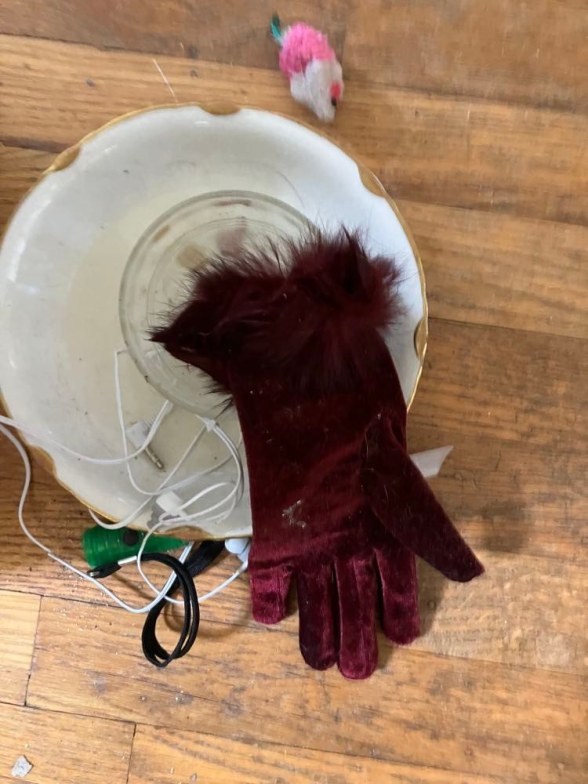
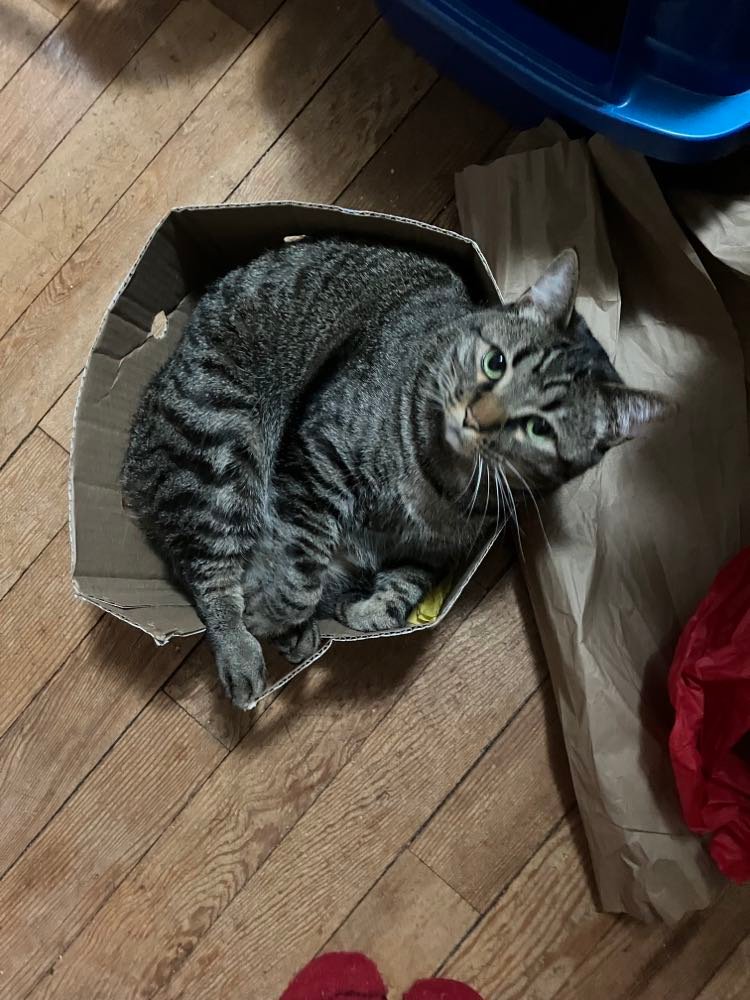
The photograph is one of Elwha’s cat art installations. He would pile toys on his bowl. Two bowels because I need to keep out the little ants. Sol Duc would do it too but not as often. I fed them in separate rooms. They would pile things on the bowl whether there was food left or not.

Elwha is still missing, sigh. That is a wound. The photographs are from March 2023.

Pneumonia makes me slenderize

Pneumonia makes me slenderize
I feel like I’ve been blenderized
Steals my breath and appetite
Work to breathe both day and night
My heart goes fast, trials one to four
I’d rather not have any more
Ten pounds down, gone like smoke
Carbohydrates make me choke
The legacy of my fourth round
I can’t eat gluten, ounce nor pound
And yet I still come out ahead
Since I am alive and still not dead

_____________________________________

Four pneumonias in 24 years. I have an antibody response, which peaks about six weeks after the infection. Colds don’t trigger it. This photograph is two months in to my 2021 round. I drop ten pounds in the first week and eating is always difficult. I do not recommend this method of weight loss.

For the Ragtag Daily Prompt: slenderize.

We change

In clinic, a very common complaint was, “My body has changed!” This was often with shock or annoyance or betrayal. Weight up, a knee hurting, headaches, menses behaving badly as menopause approached, gentlemen with their own problems.

My muscles are getting stronger but are really grumpy. I am starting to rebuild muscle and endurance but my muscles and joint complain. I think that pain is the pain of wisdom. I am clearly very very wise, if that pain is wisdom pain. It feels better to frame it as wisdom than as “Oh, I am old.” Also it’s fun to watch people when I say, “My wisdom is really acting up today.” They get a funny look on their faces.

Medicine changes all the time too. Isn’t that a little unsettling? Science changes, ideas change, frames change. A treatment that I used 15 years ago would not be done for the same problem now. And we can treat hepatitis B and C! Hepatitis C was still named “Non A, non B hepatitis” back when I was in residency in the early 1990s. Hoorah for some things getting better.

It’s been interesting watching the changing ideas about Long Covid. Over the last year they’ve said, “Better in nine months.” “Mostly better by a year.” “Better by two years, mostly.” Also the estimates of people affected in the US have ranged from 3% to 7.4%. There is not even agreement about the definition, with the CDC talking about symptoms staying present after four weeks. Meanwhile the World Health Organization says, “It is defined as the continuation or development of new symptoms 3 months after the initial SARS-CoV-2 infection, with these symptoms lasting for at least 2 months with no other explanation.” Here: https://www.who.int/europe/news-room/fact-sheets/item/post-covid-19-condition. CDC here: https://www.cdc.gov/coronavirus/2019-ncov/long-term-effects/index.html.

I hope that we vote grown ups into office. I hope we aren’t tempted by the childish want to be dictators who say, “I can fix anything, I can do what I want, I am so great. I can make YOU great too.” I think the pandemic was very frightening and the temptation is to try to hide in an imaginary past or freeze the future or think that if we make everyone behave a certain way, no further pandemics will come. I do not think that will work, people. Vote for adults.

The photograph is from the US Botanic Gardens. Here is the model, inside:

The sculpture faces are over each arch. Here is a close up.

I think the carved face will last the longest, then probably me, then the one on the model. The model looks like it would be delicious for various smaller creatures.

For the Ragtag Daily Prompt: change.

Doctors are leaving medicine

https://www.healthgrades.com/pro/7-reasons-doctors-are-leaving-medicine?CID=64embrdTINL120523

Ok, reason number five: “One study finds doctors spend two hours on EHR record-keeping for every single hour in clinical contact with patients. EHR dissatisfaction has been linked to higher burnout scores, and burnout can lead doctors to leave clinical practice or quit medicine altogether.”

Back in 2009 I argued with my employer about their policy. They had put us all to 20 minute visits, one 40 minute one a day, and continuous visits 8-noon and 1 to 5. Also, they had daily meetings from noon to 1. Full time was four eight hour days, except they are nine hours with the meetings. I said, “Look, one day of clinic generates at least two hours of work: reading lab results, reading radiology reports, calling patients, calling specialists, dealing with insurance, dealing with phone calls, refills, patient requests, calling pharmacies. So four 8 hour clinic days generates another 8 hours minimum of work, plus I have call nights, plus those four hours of meetings every weeks, so I am working 44 hours of week minimum and with call I can hit 60-80 hours in a week.” The administration did not care. I promptly cut to 3.5 patient days. They initially said, “You can only do 3 or 4 days, not 3.5.” I said, “Why?” They said it was not the most efficient use of clinic space. I said, “You don’t have anyone to put in for the full day, so using it for a half day generates more income than having it empty.” They reluctantly agreed.

I could finish a clinic EMR (electronic medical record) note in the room with the patient in 25 minutes but not 20, during the visit. The administration and computer loving doctors had said, this system is to let you finish the note in the room. It took me three years to be able to consistently do that in 25 minutes. Many providers were allowing their home computer to access the system. This meant they were working after hours at home after everyone else was asleep or on weekend morning. I refused to have it at home. I came into clinic at 5 am to do the work, since then I wouldn’t get interrupted, but I wanted home to be home. Also, I live four blocks from that employer.

I decided that I was sticking with finishing the notes in the room. I ran late. I apologized to patients, saying that the hospital was now requiring a quota of 18 patients a day and that I disagreed with it. I tried to convince the administration that I needed more time and help, but they dispensed with me.

Two years later another physician quit medicine and the hospital dropped the quota to 16 patients a day.

So it makes me laugh to see that it says in that article that eight hours of clinic generates sixteen hours of “EMR work”. The implication is often that it is busywork but much of it is NOT busywork. I have to read the xray report and decide what to do with it. Same for every lab. Same for the specialist letter. Same for physical therapy, respiratory therapy, home health, hospice, occupational therapy, notes from psychology or psychiatry, notes from the hospitalization here or elsewhere. Read, decide if I need to do anything, update the EMR? Sign the document off. Decide, decide, decide and get it right. Call the patient or a letter or call a specialist or ask my partner for a second set of brains, am I missing something? This is all WORK.

At one point a clinic shut down in three counties. My clinic (post hospital) took a new patient daily for months. We couldn’t get the notes so we had to look at med lists, get history from the patients and wing it. Or get hospital records labs xrays specialist notes. Yep. Nearly every patient had “deferred maintenance”: they were behind on colonoscopy, mammogram, labs, specialist visit, echocardiogram. We ordered and ordered. Then we had to deal with all the results! After about five months I say to my receptionist, “I’m TIRED.” She was too. We dropped to three new patients a week. Then two. Then one.

I also spent an hour with new patients and my visits were 30 minutes. I was the administrator of my clinic too, and pointed out to the physician (me) that we were not making much money. With 30 minutes I could look at things during the visit and explain results and get much of it, but not all, done.

So if a 20 minute clinic visit generates 40 more minutes of work, in labs, reviewing old records, reading specialist notes, reading about a new medical problem, keeping up on continuing medical education, reading xray reports, echocardiograms, writing letters for jury duty exclusion, sports physicals, disability paperwork, sleep apnea equipment, oxygen equipment, cardiac rehab reports and orders,etc, then how many patients would give us a forty hour week? At one hour per patient, that is 40 patients a week, right? 18 patients daily for 4 days is 72 per week and that is not including the on call or obstetrics done at night and on the weekend. 72 patients would generate another 144 hours of work according to that article which is untenable. 36 hours+144 hours+call = over 180 hours weekly. And so I am not surprised at the levels of burnout and people quitting.

We have to value the actual work of not only “seeing a patient” but “thinking about the patient, reading about a disorder, reading all of the notes and test results and specialist notes”. Isn’t that what we want, someone who will really spend the time and think?
Mortal

I am feeling mortal.

I am in my post-pneumonia phase where people say, “Well, you LOOK great.” This is round four, so it’s not a surprise. It just took two years this time, instead of two months. In 2003 it took two months.

There are various things feeding in to this. A friend my age has had a stroke. “NO!” I think, “TOO YOUNG!” The death of the actor from friends bothers me mostly because he’s nearly a decade younger. Drugs and alcohol shorten the lifespan by quite a bit. A study checking for five things: inactivity, drugs, tobacco, alcohol and very heavy weight showed that the people with all five tended to die 20 years sooner than the people with none. That study was at least a decade ago if not two. So cross off about 4 years for any of those, sigh. A cardiologist recently said tobacco is worse than alcohol and now I am wondering how much worse? And how do they measure that? Tobacco kills more but serious alcohol use is a lot faster at killing people. Both of them affect all body systems: GI, heart, lungs, brain, bone marrow, liver, kidneys, and so forth. Even skin.

Also, the last lung test was still abnormal even though I am off oxygen and feeling mostly good. I am having muscle trouble though. Every morning I wake with really bad pain in both thighs and whatever muscles I’ve been trying to build. This has been going on since at least August. Since I think that this is an antibody disorder, it implies that the antibody baseline has risen to the point where my muscles are grumpy and hurt. Alternatively it could be a Long Covid issue: microclots could be clogging the capillaries in the muscles when I exercise and causing hypoxia in muscles, which means they can’t build. Muscle cells are fascinating. When you exercise the cells need more food and build new insulin receptors in the cell wall. So exercise changes the individual muscle cells! How very amazing. My muscles are resisting the build and it is very annoying. There is research going on re the microclots, but there is bleeding risk from the anticoagulants including strokes. So, um, well, I seem to be stuck. It is not stopping me from hiking and dancing and being active but boy does it hurt in the mornings.

This is not very bucolic, is it? I am still attending the Long Covid talks and it is really fascinating and quite scary. It’s just a very very nasty virus. I wish it would calm down. The 1918-1921 influenza really calmed down after three years, but there are no guarantees. Anyhow, at least I can dance!

For the Ragtag Daily Prompt: bucolic.

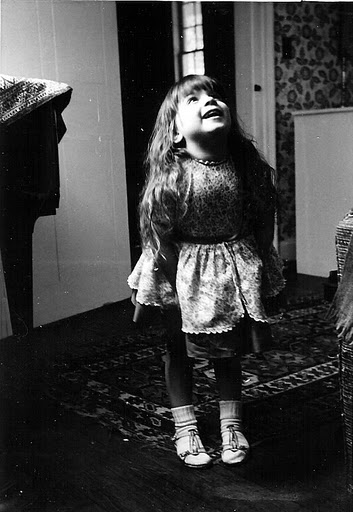
The photograph is taken in Michigan in 2014.