separation

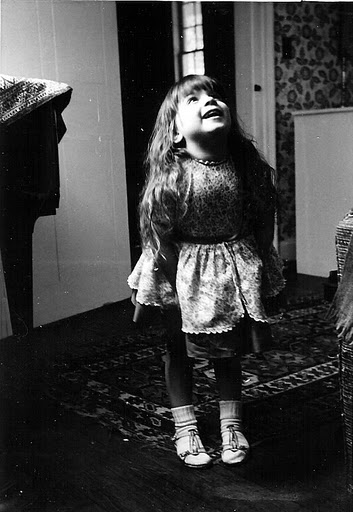
This is one of the most beautiful and saddest photographs I have taken. It is my sister, about a month before she died of cancer. And her daughter, who was 13.

_______________________________

On the last visit to my sister, she was in kidney failure, dying. We had conversations that were surreal. All I wanted was to stay with her.

One day a friend of hers, another mother and I, were working to make her more comfortable.

“I am sad!” my sister said, and started crying.

“Why are you sad?” I said, “What are you sad about?”

“I won’t be there! I won’t be there when she graduates from high school! I won’t be there for her first date! I won’t be there when she gets married! I don’t want to die!”

By now we are all crying. “You will be there!” I say. I am certain. “You won’t be in this form. You will be in another form!”

“I will?” my sister said, crying.

“Yes.” I said, crying too. “You have to go. You have to transform. You can’t stay. But you will be there for her.”

We cried and held her.

And I know for certain that she is there, she is here, she is with her daughter as her daughter graduates from high school, goes on a date, does all the things that daughters do.

Now and forever.

And the living children must be returned to the living parents. We cannot do otherwise and call ourselves humans.


loss

For the Daily Prompt: famous.

This is not Michealangelo’s Pieta. This is from the National Museum of Women in the Arts, in Washington, DC. This is Apres la temepete (After the Storm) by Sarah Bernhardt, a sculpture of a Breton peasant woman cradling the body of her grandson who had been caught in a fisherman’s nets. This is from about 1876.

I took this visiting my son at the end of last year.

Memorial Day and we remember our lost. Much love to you and yours.


black on white

black on white

white on black

it doesn’t matter

angels falling
made to fall
at peace with falling

I let myself fall
at peace with falling

and wonder what that means?

death?

no

though there are times I long
for the Beloved
for union with the Beloved
for all in one
and one all

let go

when an angel falls
they are at peace

they are at peace
with falling

people

see black and white

people

see good and evil

people

separate
label
categorize

angels don’t

black on white
or
white on black

it doesn’t matter
there is no separation
we are one

Beloved

One

Heart and brain and alcohol, 2018

For the Daily Prompt: infect. Maybe heart and brain health could be an infectious idea…..

Heart disease is the number one cause of death in the US, around 24% of deaths every year. Strokes are fifth most common cause of death at 5%, dementia sixth most common at 3.6%, data here from 2014. Accidents have beaten strokes out for fourth place because of “unintentional overdose” deaths.

I did a physical on a man recently, who said what was the best thing he could do for his health?

“Reduce or better yet quit alcohol.” is my reply. Even though he’s within “current guidelines”. I showed him the first of these studies.

Two recent studies get my attention for the relationship between the heart and the brain and alcohol.

In this study: http://www.onlinejacc.org/content/64/3/281, 79,019 Swedish men and women were followed after completing a questionnaire about alcohol consumption.

They were followed from 1998 to 2009 and 7,245 cases of atrial fibrillation were identified. The relative risk for atrial fibrillation was alcohol dose dependent: that is, the people who did not drink had a relative risk of atrial fibrillation set at 1.0. At 1-6 drinks per week the risk was 1.07, at 7-14 per week the risk was 1.07, at 14-21 drinks per week 1.14 and at >21 drinks per week 1.39. They also break it down by number of drinks per day. So why do we care about atrial fibrillation? “Atrial fibrillation (AF)/atrial flutter (AFL), the most common cardiac arrhythmia, is accompanied with a 4- to 5-fold increased risk for stroke, tripling of the risk for heart failure, doubling of the risk for dementia, and 40% to 90% increase in the risk for all-cause mortality.”

Atrial fibrillation, stroke, congestive heart failure, dementia and 40-90% increase in all-cause mortality. Want to protect your brain and live longer? Quit alcohol.

Well, that instantly decreased my enthusiasm for alcohol, now down to one drink per week if that.

Here is a second study: https://www.thelancet.com/journals/lancet/article/PIIS0140-6736(18)30134-X/fulltext?code=lancet-site

“Findings:
In the 599 912 current drinkers included in the analysis, we recorded 40 310 deaths and 39 018 incident cardiovascular disease events during 5·4 million person-years of follow-up. For all-cause mortality, we recorded a positive and curvilinear association with the level of alcohol consumption, with the minimum mortality risk around or below 100 g per week. Alcohol consumption was roughly linearly associated with a higher risk of stroke (HR per 100 g per week higher consumption 1·14, 95% CI, 1·10–1·17), coronary disease excluding myocardial infarction (1·06, 1·00–1·11), heart failure (1·09, 1·03–1·15), fatal hypertensive disease (1·24, 1·15–1·33); and fatal aortic aneurysm (1·15, 1·03–1·28). By contrast, increased alcohol consumption was log-linearly associated with a lower risk of myocardial infarction (HR 0·94, 0·91–0·97). In comparison to those who reported drinking >0–≤100 g per week, those who reported drinking >100–≤200 g per week, >200–≤350 g per week, or >350 g per week had lower life expectancy at age 40 years of approximately 6 months, 1–2 years, or 4–5 years, respectively.”

Ok, over half a million people followed, 40K+ deaths, 39K+ heart events (heart attack, atrial fibrillation, new congestive heart failure, etc), that’s a pretty impressive study.

A 5% 12 ounce beer is 14 grams of alcohol. Here: https://www.niaaa.nih.gov/alcohol-health/overview-alcohol-consumption/what-standard-drink. Our local brewery and pourhouse usually serve pints, 16 oz, and the range is from 5% to over 9% alcohol. Two 9% pints is how many standard drinks? You do the math. Currently the recommendations in the US are no more than seven drinks per week for women (98 grams) and fourteen for men (196 grams) per week, no saving it up for the weekend, no bingeing. The UK stops at 98 grams for both men and women. The rest of Europe goes higher.

Heart and brain, how I love you! I like my brain and don’t want to pickle it. I think I’ll choose heart and brain over alcohol, long term over short term, health over escapism.

Have a great week!

More:
https://www.sciencedaily.com/releases/2018/02/180220183954.htm


https://www.thelancet.com/journals/lanpub/article/PIIS2468-2667(18)30022-7/fulltext

http://www.acc.org/latest-in-cardiology/articles/2016/08/26/16/48/consumer-news-stroke-esc-2016

I took the photograph. It reminds me of neurons in the brain.
from the mist

For the Daily Prompt: forest.

My town is a forest at sunrise and sunset. The trees take over, dark against the sky. And look,  something is rising from the mist.

Medicine is like that too. Did the epidemic of unintentional overdose deaths catch you by surprise? People, including doctors, thought opioids were safe, if taken correctly. And that we should increase them if the person still had chronic pain. But the information is still changing and taking shape from the fog.

I have worked with the University of Washington Telepain service since 2011. I can’t attend every week, but many weeks I spend Wednesday lunch in front of the computer, logged on to hear a thirty minute lecture from UW and then to hear cases presented from all over the state.

I want to sing the praises of the doctors on Telepain and the Washington State Legislature for having this program. Here is a link to a five minute King5  news program about UW Telepain.

https://www.king5.com/video/news/local/fighting-opioid-epidemic-via-video/281-8115411

Forty two different sites were logged on. There are also UW Telemedicine programs for hepatitis C and for patients with addiction and psychiatric problems. The advantage is that all of we rural doctors learn from one doctor presenting a patient and the panel discussing it and making recommendations. We have Dr. Tauben, head of the pain clinic, a psychiatrist, a physiatrist, a family doctor who treats opioid addiction, a psychologist and a social worker. And often a guest speaker! We have a standard form to fill out, with no names: year of birth and male or female. It is a team that can help us to care for our patients.

New information in healthcare rises out of the mist….


Resources on opioid addiction

This is a list of resources on opioid addiction that I am putting together for a talk to a community advocate group this Thursday.

The big picture:

CDC Grand Rounds: Prescription Drug Overdoses — a U.S. Epidemic, January 2012: https://www.cdc.gov/mmwr/preview/mmwrhtml/mm6101a3.htm

CDC 2018 (It’s not getting better yet.) https://www.cdc.gov/media/releases/2018/p0329-drug-overdose-deaths.html


Snohomish County:

Snohomish County:

http://mynorthwest.com/878895/snohomish-co-opioid-crisis/

https://drkottaway.com/2018/03/03/reducing-recidivism-snohomish-county-sheriffs-office-and-human-services-program/

http://www.heraldnet.com/news/state-house-backs-snohomish-county-opioid-help-center/

http://knkx.org/post/snohomish-county-jail-now-offering-medically-assisted-detox-inmates

Washington State Pain Law

https://www.doh.wa.gov/ForPublicHealthandHealthcareProviders/HealthcareProfessionsandFacilities/OpioidPrescribing

https://www.doh.wa.gov/YouandYourFamily/PoisoningandDrugOverdose/OpioidMisuseandOverdosePrevention


Is it genes that make people addicts?
(The short answer is genes are a minimal contribution. It is society and patterns learned in childhood and adulthood.)

Adverse Childhood Experiences (put people at way higher risk for addiction):
https://www.cdc.gov/violenceprevention/acestudy/index.html


Books that helped me understand addiction
(in my teens):

It will never happen to me by Claudia Black (about the patterns children take in addiction households to survive and cope with childhood)

Manchild in the Promised Land by Claude Brown (a black male writes about his childhood in Harlem when heroin hit the community. He was in a gang at age 6.)

Big D, little d, what begins with D?

Happy things starting with D:

Discrimination, death, delight.

I am happy that slowly, slowly, it feels as if there is change in the world and a decrease in discrimination. It is NOT gone by any means, but I think it is slowly being eroded.

My parents had a party when I was two and they were both in college. The party was raided in Knoxville, Tennessee in 1963 and my father was taken to jail. My mother and I were left alone and she was afraid we would be lynched by the neighbors. The next morning the paper wrote about a MIXED RACE COLLEGE STUDENT PARTY possibly with orgies. My parents were both suspended from the University of Tennessee.

They were both reinstated after a hearing, because there were no drugs, no underage drinkers, and it was not illegal to have a mixed race party. My parents never touched marijuana ever and I think it was because of that party. I don’t remember it, but I still feel cautious at parties and in crowds. My mother refused to return to the U. of TN and eventually finished her undergraduate degree at Cornell. My parents were so notorious that we left Knoxville as soon as my father graduated.

I grew up learning protest songs and work songs and joke songs. My mother joked about the party and it was years before I found out how terrifying it was. My mother joked that they sat at the one liberal table at the University of Tennessee. I hate discrimination and I do not understand it.

Death: is death a happy thing? Death is as much a mystery as life, and we cannot have one without the other. How could we value life if it were eternal? And we’d also get awfully crowded. I have the privilege of caring for all ages in clinic, all genders, any race that comes in the door, age newborn to 104, what joy! I get to be present when someone is dying and try to help the person and the family. There is no single idea about death or about how to “do it right” and often families struggle with multiple opinions and ideas and feelings. Death is as intense as birth and I have had the privilege to attend both.

Delight: there are many things that I find difficult and depressing, but I find delight too! The latest morbidity and mortality report from the CDC on overdose deaths, up from 52K in the US in 2015 to 62K in the US in 2016: Overdose deaths involving opioids, cocaine and psychostimulents — United States, 2015-2016. We have to work harder to prevent addiction, why do we choose addictive substances, why do people think it won’t happen to THEM?

And yet, I still find delight, taking photographs of bird, seeing patients that I know well in clinic, we laugh often, finding joy walking outside, my family and friends.

D

The photograph is from Mauna Loa last week. It is not a giant dinosaur nest, it’s a cinder cone. At least, that’s what a geologist claims….


Croon

Blogging from A to Z, my theme is happy things.

Three happy things with C:

My daughter was home from college this weekend. Something came up about dealing with feeling tired or stressed. “I get cuddles when I feel that way, ” she says. I looked at her. “I’m not sure my office manager would go for that,” I say. “Oh,” says my daughter, “True. That might be sexual harassment.” “It would be a bit weird on a job description, wouldn’t it?” “Yes.”

At any rate, cuddles, appropriate cuddles, are certainly a happy thing for both me and my daughter. She is in college and has a great group of housemates and friends.

Second happy C word: cry.

How can crying be happy? The capacity to cry, I am grateful for that. I am grateful that I can feel love, feel vulnerable, feel loss, feel. How can we love without mourning and how can we mourn without crying? And tears release our grief. The worst grief for me is when I need to cry and feel locked, that I can’t cry, that it hurts so much the tears won’t come. I cry over patients, even expected deaths at 104. And I am glad that I am able to cry.

Third C word: croon.

I am not thinking of the “crooners”. I am thinking about lullabies and the poem Moon Song, by Mildred Plew Meigs:

Zoon, zoon, cuddle and croon–
Over the crinkling sea,
The moon man flings him a silvered net
Fashioned of moonbeams three.

The rest is here: http://wenaus.com/poetry/moonsong.html.

I am thinking of mothers and fathers crooning to babies as they slide into sleep….

The photograph is at 9000 feet up on Mauna Kea last week, the moon as night is falling.

C


Causes of death: which does your doctor treat?

What is the number one cause of death in the United States? The heart. You know that.

You might know the number two: all the cancer deaths put together.

Number three is lower respiratory disease: mostly caused by tobacco.

Number four. Can you guess? Number four is accidents. Unintentional deaths. In 2012 number four was stroke, but unintentional deaths have moved up the list, here: https://www.cdc.gov/nchs/fastats/deaths.htm. The CDC tracks unintentional deaths, here: https://www.cdc.gov/nchs/fastats/accidental-injury.htm. And what is the number one cause of unintentional death right now? It is not gun accidents. It is not car wrecks. It is not falls. It is unintentional overdose: usually opioids, legal or illegal, often combined with other sedating medicines or alcohol. Alcohol, sleep medicines, benzodiazepines, some muscle relaxants. No suicide note. Not on purpose. Or we don’t know if it is on purpose….

And does your physician try to prevent accidental death? Do they talk to you about seatbelts, about wearing bicycle helmets, about smoke alarms, about falls in the elderly, about domestic violence, about locking up guns? About not driving when under the influence? Do they talk about addiction and do they treat addiction?I think that every primary care physician should treat the top ten causes of death. I am a family medicine physician and I try to work with any age, any person. I treat addiction as well as chronic pain. I have always tried to talk about the risk of opiates when I prescribe them. I treat addictions including alcoholism, methamphetamines, cocaine, tobacco and opioids. Legal, illegal and iv opioids, from oxcodone and hydrocodone to heroin. That doesn’t mean I can safely treat every patient outpatient. People with multi drug addiction, or complex mental health with addiction, or severe withdrawal must be treated inpatient. But I have taken the buprenorphine training to get my second DEA number to learn how to safely treat opiate overuse. I took the course in 2011. I was the only physician in my county of 27,000 people who was a prescriber for two years. Now we have more, but still the vast majority of physicians in the United States have not taken the training even when it is offered free.

I don’t understand why more physicians, primary care doctors, are NOT taking the buprenorphine and recognition and treatment of opiate overuse course. Most are not trained. Why not take the training? Even if they are not prescribers, they will be much better informed for the options for patients. People are dying from opioids daily. Physicians have a DEA number to prescribe controlled substances: I think that every physician who prescribes opioids also has a duty and obligation to train to recognized and intervene and be informed about treating opioid overuse.

A large clinic group in Portland, Oregon made the decision last year that every primary care provider was required to train in buprenorphine. One provider disagreed and chose to leave. However, everyone else is now trained.

We as a country and as physicians need to get past fear, past stigma, past discrimination and past our fixed ideas and step up to take care of patients. If a physician treats alcoholism as part of primary care, they should also be knowledgeable and trained in treatment of opiate overuse.

Ask YOUR physician and YOUR local clinics: Do the providers prescribe opiates? Are their providers trained in preventing, recognizing and treating opiate addiction? Do they treat opiate overuse? Do they understand how buprenorphine can save lives and return people to work and to their families? Are they part of the solution?

For the Daily Prompt: provoke.