…today’s wordpress prompt is pretend….
Let’s pretend….
….that the presidential candidates for 2016 were suddenly revealed to be the opposite sex of what we all thought….
….what would that look like?

…today’s wordpress prompt is pretend….
Let’s pretend….
….that the presidential candidates for 2016 were suddenly revealed to be the opposite sex of what we all thought….
….what would that look like?

W is for wrath, the seventh sin.
From Webster 1913:
Wrath
1. Violent anger; vehement exasperation; indignation; rage; fury; ire.
Wrath is a fire, and jealousy a weed. Spenser.
When the wrath of king Ahasuerus was appeased. Esther ii. 1.
Now smoking and frothing Its tumult and wrath in. Southey.
2. The effects of anger or indignation; the just punishment of an offense or a crime.
“A revenger to execute wrath upon him that doeth evil.” Rom. xiii. 4.
Syn. — Anger; fury; rage; ire; vengeance; indignation; resentment; passion. See Anger.
Wrath is a sin, yet is it ever justified?
I am wrathful about this: http://www.npr.org/sections/health-shots/2016/03/23/471595323/drug-company-jacks-up-cost-of-aid-in-dying-medication
In my state a terminally ill patient may choose Death with Dignity: http://www.doh.wa.gov/YouandYourFamily/IllnessandDisease/DeathwithDignityAct
The person must be terminally ill, must not be suicidal and must go through a process. But one of the tablets prescribed, which only the person may administer to themselves, has had a price increase from $200.00 to over $3000.00.
I heard this from another physician, who has a patient who is going through the process.
I feel wrath and anger and hurt and rage that a corporation is choosing to make an enormous profit from terminally ill patients.
And so wrath may be a sin, but it is also an appropriate feeling at times.
In a sermon about forgiveness, hate is also discussed:
“Let me also say a word here about hatred, since I am speaking of forgiveness as being the release of hatred. Many of us, I suppose, like myself, have been taught not to hate. We have been taught that hatred is always a bad thing and there is no place for it. Thus, we feel uncomfortable in the face of this intense emotion and attitude. Many times I have stumbled on the line from the biblical book of Ecclesiastes which reads, “There’s a time to love and a time to hate.”
Can there be a time to hate? Ironically, when reflecting on the subject of forgiveness, I see that there is a place for hatred.
First, your hatred lets you know that you are feeling diminished and perhaps being stepped on and treated as no human being ought to be treated.
Secondly, your hatred lets you know that you’re fighting back and that you have something to fight back with. It lets you know that the situation is intolerable and you will not put up with it.
And so hatred can be a natural and even necessary response to situations that threaten human dignity. Says one author, “Not to feel resentment when resentment is called for is a sign of servility,… a lack of self-respect.” (Forgiveness, Haber)”
From: November 15, 2009, here: http://www.quuf.org/index.php?page=2009—2010-sermons
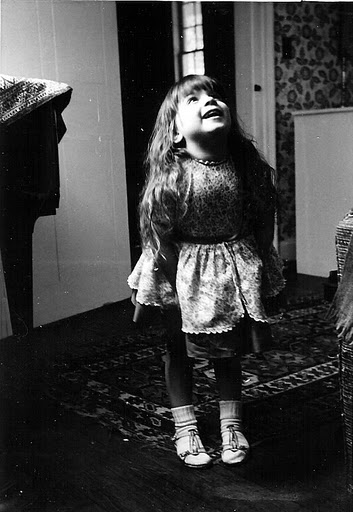
I took the picture in 2007. No wrath here, but three different expressions, and all complex….
Two weeks ago I sent this letter to Mr. Trump and all of the presidential candidates. To date I have gotten a form letter from Mrs. Hilary Clinton.
Dear Mr. Donald Trump and all Presidential candidates:
Mr. Trump, I am a rural family practice physician, a woman, who owns and runs my own medical clinic. I take care of patients from age zero to 104. Currently my oldest is 98. I take medicare and most insurances, but not medicaid.
I am running into legal immorality across the board from health insurance corporations that are maximizing profits at the expense of my health care dollar, our taxes and my patients. I would like your advice.
For example, the Veterans Hospital contacted me in May of 2015 and asked me to accept Veterans Choice patients, veterans who live more than 40 miles from the nearest VA Hospital. I accepted. I have 6 veteran patients, who are very complicated. To date I have not been paid for one visit. Now, before you say this is the fault of our government, it isn’t. It is the private for profit government contractor Triwest who is not paying me. They have my notes and we have followed their instructions on how to submit bills. Would you advise me to drop these patients?
For example, my father died in 2014. I called the oxygen company to pick up 6 tanks of oxygen. Then I found 8 more. I gently inquired why he had 14 tanks. The company said that his medical orders said that he should wear it continuously, so they delivered it. “Medicare paid for it.” they said. Ah. Well, I kept the other 8 tanks, because it is my and my father’s oxygen in those tanks: the company can have the tanks back when they are empty.
For example, the head of the sleep apnea supply company came to see me. He said, “You are getting in the way of your patients getting needed equipment.” I said, “Really? How?” “You only allowed a refill of one of the 8 necessary pieces of CPAP tubing instead of signing off on the whole group so we can fill as needed.” “Ah.” I said, “Actually my patients are tired of you mailing them 8 pieces of plastic that are filling up their closets and they don’t want extra plastic crap.” He mails it at the interval allowed by medicare, never mind whether the patient wants or needs it.
For example, I called a patient’s insurance to get a prior authorization last week for a limited sinus CT. They no longer do prior authorizations. They will decide whether to cover the CT scan once they read my notes. I asked if there was ANY way to see if it would be approved. They offered to let me send a letter to a PO Box in Wisconsin. My patient was sick, Mr. Trump. What do you suggest the patient and I do?
This is all legal. But it is not moral. So, Mr. Trump, where do you stand? Is our country’s highest value free enterprise and profit at any cost, no matter how many of our seniors are legally ripped off? Or do we have morals that health care and our elderly are important and need to be protected from legal but predatory businesses.
Please let me know, Mr. Trump. I would rather stick with my small clinic in the United States. At this point I would be financially and emotionally better off working as a temporary doctor internationally. I am sure that there is immorality internationally, but I will be less ashamed when it is not MY country.
Thank you.

The last time I visit my sister in hospice, my cousin is sitting by the bed when I arrive.
My sister looks terrible and like she is suffering. She is in renal failure and her eyes are slitted against the light. She is in a hospital bed and barely eating. It takes me three days to figure out how to make her comfortable.
But when I first arrive, I say hello and hug her. She laughs and it is dark.
She doesn’t want to talk. “Shall I sing to you?” I ask.
She nods.
I start singing a lullaby: I gave my love a cherry.
She shakes her head: no.
I study her. “How about Samuel Hall?”
She smiles and nods.
“My name is Samuel Hall,
Samuel Hall, Samuel Hall.
My name is Samuel Hall
And I hate you one and all
you’re a bunch of buggers all
damn your eyes, damn your eyes
you’re a bunch of buggers all
damn your eyes.”
Another song to raise girls. We adored it, because it is unrepentant, horrible and had swears.
I killed a man tis said
and I left him there for dead
with a bullet in his head
damn his eyes
My cousin’s eyes widen. “I haven’t thought of that song in years.” he says. He starts singing along, remembering.
They took me to the quod
They left me there by God
With a ball and chain and rod
Damn their eyes
My cousin has two children. I guess he is not raising them with the dark songs we were raised with….
The preacher he did come
And he looked so goddamn glum
As he talked of Kingdom Come
Damn his eyes
My sister is smiling, eyes slit against the light, angry.
The sheriff he came too
With his boys all dressed in blue
They’re a bunch of buggers too
Damn their eyes
To the gallows I must go
With my friends all down below
Saying “Sam, I told you so.”
Damn their eyes
I see Nellie in the crowd
I am shouting right out loud
I shout “Nellie, ain’t you proud!
Damn your eyes!”
“Let this be my parting Nell
Hope to see you all in Hell
Hope to Hell you sizzle well
Damn your eyes!”
And my sister laughs and then she sleeps for a while, angry, angry at death.
My name is Samuel Small: http://www.wtv-zone.com/phyrst/audio/nfld/02/sam.htm
My name is Samuel Hall: https://www.youtube.com/watch?v=iSpk1t4WYNY
My name is Samuel Hall: https://www.youtube.com/watch?v=pxiPCw21T-w
and Johnny Cash: https://www.youtube.com/watch?v=Ss_KyPfM1es
This is not the suffering photo. I can’t bear to post that….

I am in the April Blogging from A to Z Challenge and I am already late… that is, I did not post yesterday, my “A” day. I didn’t know what my theme for the month would be this morning. This morning, I am reading Micheal A. Singer’s The Untethered Soul and I found what I would be writing about.
I have written about my inner angel and devil before. That voice inside that talks all the time and makes judgements and gets excited about everything. Mr. Singer says that that voice is not us. That voice is like a roommate who talks constantly and is very dramatic. He talks about stepping back and watching that roommate and listening. If the roommate were a real person, we would cut them off. “Stop talking!” we would yell. But they won’t and they wouldn’t and we cannot get away.
So when that voice gets really irritating I call on my angel and devil to take over. They argue. The angel always says “Forgive.” The devil wants to whack the angel over the head with a hammer to shut them up. The angel forgives the devil for being nasty. The devil gets even more nasty and sarcastic and then I start laughing. The inner angel and inner devil are so over the top. Perhaps someone stepped on my toe and it hurt. The devil suggests what to say to them, where they should go, how to punish them. The devil is unreasonable and suggests punishments that are so far beyond the original insult that the angel appears and says, “Stop that. You aren’t being nice.” The devil swears. The angel says, “Well, your toe doesn’t hurt anymore does it and anyhow someone pushed the person who stepped on your toe so it wasn’t their fault and why did you come to a crowded concert if you can’t tolerate your toe being stepped on?” Then they may continue to fight for a while. At the concert I am laughing, inappropriately, because of the inner dialogue.
Today I want to thank that inner angel for all the times that she or he has calmed me down. Has stepped forward and said, “Stop reacting.” For being loving all the time.
Thank you, angel.
And here are synchronized swimmers, practicing before a competition. In the competition, they will not wear the swim cap or the goggles. This is a lift, remember, where none of them touch the bottom of the pool. It is all supported by the girls swimming. This is a team of eight, so four are supporting from under water, holding their breath. Trust and teamwork.

Plato’s Groove lovely poem from yesterday reminds me of Portia Nelson’s poem “A Poetic Interlude: Autobiography in Five Short Chapters”. I wrote my own version of this back in 2005, about trying to change. It is hard. I also want to submit this to the Ronovan Writes BeWoW Wednesday, for Be Wonderful Wednesday. @RonovanWrites. I think looking inside and trying to change and changing is wonderful…..
Off balance/balance
Confusion
Makes no sense
React react react
Engage
Argue
Fight
Want to bite kick scream
Argue (control) argue
Icky tone of voice
Ugly
Confusion confusion
Told I am wrong
I am overreacting
I am invalid
Child again
Hide
Confusion
Makes no sense
React
Stop
Don’t react
Stop…..
Wait…..
Feel…..
Confusion ANGER
Let anger go
Confusion: Sad, Hurt
Sad feels lonely
Not engaged
Remember you are loved
Remember you are lovable
Sad is ok
Remember
Roses and violets and lupine
Spring from the path
Where your true self steps
Call true friends
Comforted.
Confusion
Makes no sense
Hurts
No react
Listen
Confusion not mine
Sad
Disengage
Remember
Roses and violets and lupine
True self
Comfort self
Confusion
Not mine
Step away
Comfort self
Comfort
Comfortable
I am loved
I am cherished
I am safe
June 11, 2005
previously published on everything2.com
I was asked to write a poem from the perspective of the angels in my dream.
Falling
We are stars
We are born
We are made to burn
We flame
We explode or burn out
We are made to die
We are angels
We are made to fall
We all fall
We are white falling in black space
Or black falling in white space
If you prefer
It doesn’t matter
It is the contrast that is important
There is no light without dark
We are angels
We are made to fall
We all fall
Do you fear
your fear?
your anger?
your grief?
falling?
death?
We fall for you
If you reject
your fear
your anger
your grief
falling
death
We will fall for you
We accept falling
All must fall
If you accept
your fear
your anger
your grief
falling
death
We will fall with you
You will fall with us

You said it’s hard to let me in
I came to the door
you locked it
I came to the window
you shut it
I came to the chimney
you lit a fire
don’t be surprised
I won’t leave
I will stand outside
and burn

I went to the 46th Annual OHSU Primary Care Review, held at the Sentinel Hotel in Portland, Oregon last week.
It was excellent. It was surreal since the Sentinel Hotel started as a 1923 Elks’ Club and the satyr cupid friezes kept distracting me with the marble penises and war chariots during the lecture updating us on urinary incontinence.
Three lectures that I went to talked about Adverse Childhood Experiences.
This is the first conference that I’ve been to that anyone has talked about that study since I heard about it, in about 2005. I have not been to a lot of big conferences over the last few years because I opened my own clinic and money was tight.
Anyhow, the study is creeping into consciousness.
In the mornings, we had the big lectures in a large hall. There were three break out sessions in the afternoon, held in the main meeting, billiard room, club room and library. We all joked about Colonel Mustard and candlesticks.
A gastroenterologist, Dr. David Clarke, gave a two hour session titled “Hidden Stresses and Unexplained Symptoms II”.
Objectives:
1. How to uncover the cause of an illness when diagnostic tests are normal.
2. How to find hidden psychosocial stresses that are responsible for physical symptoms.
3. The process used to achieve successful outcomes in stress-related illness.
He talked about childhood stress. That if someone had a really difficult childhood:
“Surviving a dysfunction home is a heroic act and produces individuals who are:
a. reliable and get things done
b. detail-oriented
c. Perfectionist
d. Hard-working
e. Compassionate”
So what is the down side? “Surviving a dysfunctional home also produces emotional consequences that may lead to :
a. Long-term relationships with partners who treat you poorly.
b. Addictions to nicotine, Alcohol, Drugs, Food, Sex, Gambling, Work, Shopping, Exercise.
c. Quick Temper or being violence prone
d. Anorexia and/or bulimia
e. Mental health problems such as nervous breakdown or suicide attempts
f. Sacrificing your own needs to help others
g. Self-mutilation
h. Learning not to express or feel your emotions.”
Got that? Right. Not everyone, not all the time, but the adverse childhood experiences add up. These reliable individuals may eventually get enough positive feedback to decide that they deserve a relationship that is actually good. They may get angry about their childhood or past bad treatment. “They may have a really hard time expressing that anger because they spent years learning how to suppress emotion and the feelings may be directed at people for whom there is still some caring. When there is enough of this anger present it can cause physical symptoms that can be mild or severe or anywhere in between.”
Let me give two examples from my own practice. I can’t remember their names or the details, so I am making those up: no hipaa violation.
The first was an elderly woman who came in with her husband for stomach pain. We started with a careful history. We tested for helicobacter pylori. We tried ranitidine. We tried omeprazole. We studied her diet and did an ultrasound to rule out gallbladder disease.
At the third visit I was starting to talk about an upper endoscopy. This was more than 15 years ago, back when we did not start with a CT scan. Her husband said, “Doctor, is there anything else it could be?”
I was surprised. “Well, yes. Depression is on the diagnosis list. Sometimes depression can present as stomach pain. Could you be depressed?”
My elderly lady covered her face with her hands, started crying and said, “I try not to be!” while her husband nodded.
We cancelled the endoscopy. I said it really was not something to be ashamed of and we talked about therapy. She did not want talk therapy and we tried paxil. She came back in two weeks, and already she and her husband were brighter and relieved.
Second case: again, stomach pain, this time in a four year old. Mom brought her in.
I did a history and did a gentle exam. The exam was normal. Her stomach was not hurting now. She wouldn’t say anything.
We established that the stomach pain occurred on week days only, not on the weekend. In fact, usually at the after school daycare, not in school.
“Is there a time at the school daycare that she has stomach pain?” Mom was shaking her head when big sister piped up.
“It happens before recess.” Mom and I turned to stare at the six year old.
I said, “What happens at recess?”
“The big kids knock her down,” said big sister, pissed. “I try to stop them, but they are bigger than me. She’s scared. The teachers don’t see.”
“Oh. Thank you for telling us!” Little sister was crying and mom hugged her and big sister. Mom did not need instruction at that point. She called me a few days later. She talked to the daycare, they watched and the four year old was protected. Her stomach stopped hurting.
Dr. Clarke also described a case, where driving through a town would trigger four days of nausea and vomiting that required hospitalization. This had been going on for 15 years. He figured out why that particular town was a trigger: when the patient recognized the why, he was able to go for therapy.
People aren’t lying about these illness, they are not making them up. Doctors have called it somatization, but really it is the body holding the emotions until the person is safe enough to deal with them. Doctors need to learn how to recognize this and help with respect instead of stigmatization and dismissal.
I hope that more doctors learn soon…
Dr. Clarke’s list for further reading is below. I don’t have any of these yet, but they are on my wish list.
They can’t find anything wrong!, by David Clarke, MD. See also www.stressillness.com
Psychophysiologic Disorders Association: www.ppdassociation.org
Caring for Patients, Alan Barbour, MD
Unlearn Your Pain, Howard Schubiner, MD
Pathways to Pain Relief, Frances Anderson PhD and Eric Sherman PhD
Ted talk about ACE scores: http://www.acesconnection.com/blog/nadine-burke-harris-how-childhood-trauma-affects-health-across-a-lifetime-16-min

My sister got mad at me many times, but sometime in the last year of her life she said that I’d “twisted her words”. I don’t know if it was on email or on the phone, but I felt hurt. I do take people’s words seriously, I do look them over carefully, I do ask questions about what they say. The memory training as a small child, to memorize all the verses of songs, means that I have an excellent word memory. Combine that with the medical training, where you have to present an entire patient history from memory: chief complaint, history of present illness, past medical history, social history, medications, family history, physical exam, labs, xrays, specialist opinions, assessment and plan. One boyfriend complained that I would remember what he said and ask questions a week later. He’d say, “I don’t remember what I said.” But I remembered and had thought about it. It’s hard to discuss if only one of us remembers….
After my sister died, her husband got mad at me and was yelling at me on the phone about my niece. I said I would talk to my niece’s father. My brother in law continued to yell and said that I “twisted his words.” Oh.
Later an old family friend, who has known me since birth and was a huge and kind support to my sister, practically a second parent, got mad at me. He said that I “twisted his words.” I felt grim.
Then my cousin disagreed with me. We were disagreeing by email. She cut me off, saying that I “twisted her words”.
No one not intimately connected with my sister has ever said that I twist words.
So this has been hurting and now my sufi reading led me to go close to the place that hurts. Say yes.
Yes, I twist words. Words and books and songs and music were my safe place in a scary childhood. That is where I went to hide myself. I would play in mansions and palaces and forests and space stations of words. I feel safest in the real woods and sleeping in a tent…. people are what I fear most, that they will hurt me. But I say yes to twisting words: I twist them, I knit them, I paint with them, I play with them, I find joy in them, I misspell them on purpose, I adored Walt Kelley, Edward Lear, Robert Burns, Don Marquis, T.S. Eliot, C.S. Lewis, nonsense poems. Both of my grandfathers loved nonsense poetry and scurrilous poetry and they both memorized it. My father would read the Book of Practical Cats to us, and when I was little he would read Chaucer in Old English. I just threw away his note cards on Old English from college, though I wish I’d mailed them to Princeton. Never mind, I still have 20-30 boxes of my parents’ paper. I am sure that there is something that I can mail to Princeton. They, after all, are still sending him mail at my house. I memorized poetry that my father would quote and then in school, anything that I liked. “What a queer bird the frog are….”
What a queer bird, the frog are
When he sit he stand (almost)
When he walk he fly (almost)
When he talk he cry (almost)
He ain’t got no sense, hardly
He ain’t got no tail, neither, hardly
He sit on what he ain’t got hardly
I loved that poem and copied it laboriously and took it home. That is the first poem that I remember finding on my own out in the wide world, not from my parents.
I twist words. Not with malice, but with play. And that was why it hurt, my sister’s saying that I twisted words with meanness. I can let that go now. If another person who knew her says that I twist words, I can say, “Yes. I love words. I love to play with them,” and if they are angry, I can let them go…..
Let them go…..
Round of “What a queer bird” https://www.youtube.com/watch?v=UHwwJkKp7Oo&index=1&list=RDUHwwJkKp7Oo
Passenger Let her go https://www.youtube.com/watch?v=RBumgq5yVrA
BLIND WILDERNESS
in front of the garden gate - JezzieG
Discover and re-discover Mexico’s cuisine, culture and history through the recipes, backyard stories and other interesting findings of an expatriate in Canada
Or not, depending on my mood
All those moments will be lost in time, like tears in rain!
An onion has many layers. So have I!
Exploring the great outdoors one step at a time
Some of the creative paths that escaped from my brain!
Books, reading and more ... with an Australian focus ... written on Ngunnawal Country
Engaging in some lyrical athletics whilst painting pictures with words and pounding the pavement. I run; blog; write poetry; chase after my kids & drink coffee.
Coast-to-coast US bike tour
Generative AI
Climbing, Outdoors, Life!
imperfect pictures
Refugees welcome - Flüchtlinge willkommen I am teaching German to refugees. Ich unterrichte geflüchtete Menschen in der deutschen Sprache. I am writing this blog in English and German because my friends speak English and German. Ich schreibe auf Deutsch und Englisch, weil meine Freunde Deutsch und Englisch sprechen.
En fotoblogg
Books by author Diana Coombes
NEW FLOWERY JOURNEYS
in search of a better us
Personal Blog
Raku pottery, vases, and gifts
𝖠𝗇𝗈𝗍𝗁𝖾𝗋 𝖶𝗈𝗋𝖽𝖯𝗋𝖾𝗌𝗌.𝖼𝗈𝗆 𝗌𝗂𝗍𝖾.
Taking the camera for a walk!!!
From the Existential to the Mundane - From Poetry to Prose
1 Man and His Bloody Dog
Homepage Engaging the World, Hearing the World and speaking for the World.
Anne M Bray's art blog, and then some.
My Personal Rants, Ravings, & Ruminations
 KO Rural Mad As Hell Blog
You must be logged in to post a comment.