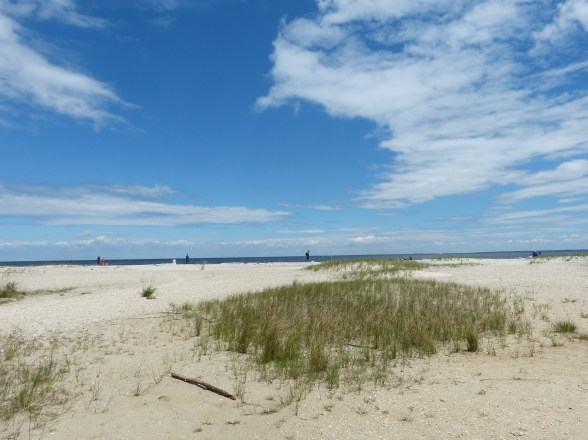
For Wordless Wednesday, taken in 2011.
not yet….


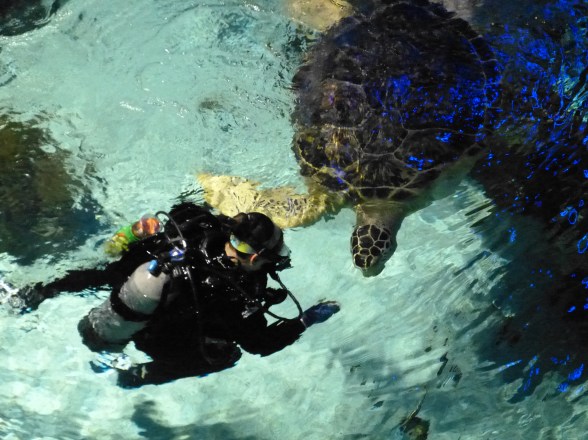
For Wordless Wednesday, taken in 2011.
A patient of mine saw a cardiologist recently.
His previous cardiologist has retired. The patient had a cardiac bypass in the past, he has a stent, he has known coronary heart disease and he’s in the young half of my practice. That is, under 60.
He had not seen a cardiologist for 2-3 years because he had a work injury, worked with Labor and Industries, the case was closed, he couldn’t go back to work, he found a lawyer. He lost his regular health insurance along with the job, so couldn’t see the cardiologist.
The L & I case is reopened. A physiatrist recommended specific treatment that was not done, and that allowed the case to reopen.
The specific treatment center then notes that he has heart disease and that he needs clearance from a cardiologist. I set him up with a new cardiologist.
“How was the visit?” I ask.
He shrugs. “The staff was nice.”
“I have the note.”
“The cardiologist spent under ten minutes with me. It was clear that she was rushed. She did not seem very interested. It was difficult to get my questions answered.”
“Her note is six pages.”
He snorts. “Great that she could get a six page note out of that visit.”
“Do you want a copy?”
“No.”
He is cleared for the specific treatment.
I have no doubt that the cardiologist spent more than 6-8 minutes on his visit and his note. But not in the room. Other people are entering the information filled out in the waiting room, medicines, allergies, past medical history, family history. Hopefully the cardiologist is reading my note and letter. But the problem is, doctors aren’t doing it in the room. So the impression left with the patient is that we spend 6-8 minutes on their visit, we are late, we are rushed. Doctors are looking at data. They are not listening to patients.
Medical Economics, a journal that arrives without me asking for it, says over and over that we need more physician “extenders”, that we need to have people doing the data entry, people doing the patient teaching, more people and machines….No. They are wrong. We need LESS barriers between us and the patients, not MORE. We need more time with patients. Every single extender we add burns physicians out more, because the salary has to be paid AND more patients seen faster to do that AND we are still ultimately responsible for knowing and reading and absorbing every single piece of information that is placed in that patient’s chart. An extender is NOT an extension of my brain and an extender is another person I have to communicate with and train.
Just. Say. No. to the managers who pile MORE barriers between the physician and the patient. NO.
It just makes me so mad that he lost his health insurance BECAUSE he got injured at work and so then his heart disease goes untreated as well… can’t afford medicines…if he then has a heart attack while uninsured we lifeflight him to Seattle, it costs a fortune, he loses his house and property and then is on medicaid and may end up on permanent disability, and what are the chances he returns to work? The US medical corporate money grubbing is insane. Single payer, medicare for all, make the US great again.

For the Daily Prompt: archaic.
I hope you sing for joy on a beautiful morning, too.

The letter P and my theme is happy things. But what comes to mind are these P words: prior authorization, pharmaceutical, payer.
Prior authorizations are NOT a happy thing. The latest twist from insurance companies, three different ones in the last week, is that they are requiring prior authorization for old inexpensive medicines. I ordered a muscle relaxant for night time only on Thursday last week for a person with a flare of back pain. Friday I was dismayed to see that the insurance company was requiring a prior authorization. I have to prioritize the order of urgency of all the work: I did not have time. I called the patient who had paid cash for it. The insurance company wins. They didn’t have to pay for a covered medicine because they made it difficult to get. They keep the patient’s money.
Prior authorizations are on the rise very rapidly. With over 800 insurance companies, each with a different website, each with multiple insurance “products”, no one can keep up with it. It is a shell game, the ball under the cup, three cups moving, but the ball is the money and it’s already palmed by the insurance companies. I predict that this will continue to get worse. We do need a single payer system for the simple reason that physicians will not be able to hire enough staff to learn and navigate 800 different websites. I do most prior authorizations on the phone in the room with the patient: the other day we spent 35 minutes on the phone only to have the insurance company say that we had called the wrong number. Call another one. Not the one on the insurance card. We could complain to the state insurance commissioner, but my patient is afraid of losing their insurance. Time’s up. The prior authorization is not obtained, and we are five minutes into the next patient’s visit. People are finding that the medicine they have taken for 20 years suddenly requires prior authorization.
And remember: prior authorization is your insurance company making rules and extra paperwork for your physician. It is advertised as a way to save money, but it costs YOU money. Back in 2009, the estimate was that physicians in the US had to spend 90,000$ per year EACH on employees to do prior authorizations by computer or phone. And YOUR insurance dollars go to the employees at the insurance company refusing medicines and dreaming up new medicines to refuse. They change the contract. Every year and during the year. The law is now that 80 cents of each dollar must go to healthcare, not profit, but those computer and phone employees are counted as healthcare. Do we really think that is healthcare?
Take CT scans. Medicare does NOT require prior authorization. But most insurance companies do. Think about that. Is age the difference? CT scans increase cancer risk over time so physicians don’t order them by reflex.
And for pharmaceuticals, insurance companies often have an on line formulary. But it is different for every insurance “product” in individual companies. A patient and I were trying to sort out a less expensive medicine on a website and we were having difficulty figuring out which insurance she had. Multiple abbreviations and color coding and we could spend the entire clinic visit just figuring it out. Is that what medicine is in the United States? You can say that someone else in the office could do it, but the more employees your physician hires, the less time the physician will spend with you, because he or she has to pay all of those people.
If there was one set of rules, one website, I would learn it. Medicare for all, single payer, when will the United States people wake up and tell congress: if you want our vote, make it so.

But wait, where are the happy things? I am so happy that I still am in business in my small clinic, p for patients and patience and prayer and single payer, we will have medicare for all in my lifetime. Whether I am still a practicing physician in the US at that time is uncertain. If I can’t afford my own health insurance, my clinic will close. Wouldn’t that be ironic?

My poems start with a problem, an idea, a worry. I never know where it will go when I start. This poem started with wanting to leave in a positive way and started with the title. So how could I leave but leave with kindness? And what would I leave?
So it is a song. And should include sign language, I think….
I shall leave you
I shall leave you with a song
I shall leave you with music
I shall leave you with a picture
I shall leave you with voice upraised
I leave you with a song
I leave you with music
I leave you with a picture
I leave you with voice upraised
I leave you a song
I leave you music
I leave you a picture
I leave you voice upraised
I leave a song
I leave music
I leave a picture
I leave voice upraised
leave a song
leave music
leave a picture
leave a voice upraised
a song
music
a picture
a voice upraised
song
music
picture
voice
song
Oh small gentle heart, small self, young one. May I listen to you, may I hold you close, may I let your innocent heart be open and joyful, may I not fear contact with others. May I let you open. May I open without fear or in spite of fear. May I be generous and kind. May I listen with you, oh gentle self, and may I hear the gentle self of others: the gentle self of a friend, of a loved one, of an acquaintance, of a stranger, and even of those who have hurt me. May I have no enemies. May my heart shine with your glory, oh small gentle heart, small self, young one. May I stay connected with you, open to you and open through you to the Beloved, to all beings and all things.
Blessings and thank you, Beloved.
For the weekly prompt: satisfaction.
For the daily prompt: Treasure.
This is another song to raise girls. My sister and I loved the double twist at the end. This is a courting song, to be sung by at least two voices. At music parties, my parents would sing it to each other. We would join in joyfully.
First voice:
I’ll give to you a paper of pins
and that’s the way our love begins
If you will marry me oh me,
if you will marry me
Second:
I’ll not accept your paper of pins
if that’s the way your love begins
and I won’t marry you oh you
and I won’t marry you
I’ll give to you a dress of red
all sewn round with golden thread
If you will marry me oh me,
if you will marry me
I’ll not accept your dress of red
all sewn round with golden thread
and I won’t marry you oh you
and I won’t marry you
I’ll give to you a coach and four
so you can ride from door to door
If you will marry me oh me,
if you will marry me
I’ll not accept your coach and four
so I can ride from door to door
and I won’t marry you oh you
and I won’t marry you
I’ll give to you the keys to my heart
so we can love and never part
If you will marry me oh me,
if you will marry me
I’ll not accept the keys to your heart
so we can love and never part
and I won’t marry you oh you
and I won’t marry you
I’ll give to you the keys to my chest
so you can have money at your request
If you will marry me oh me,
if you will marry me
I will accept the keys to your chest
so I can have money at my request
And I will marry you oh you
and I will marry you
I love coffee and you love tea
you love my money you don’t love me
And I won’t marry you oh you
And I won’t marry you
I’ll take my tea and sit in the shade
I think I’d rather be an old maid
And I won’t marry you oh you
And I won’t marry you
We were interested in the escalation of the offer and that in the end, the woman was quite clear: she did not love him and was not for sale.
There are multiple versions on YouTube with different words. I like the one by Rose Lee and Joe Maphis.
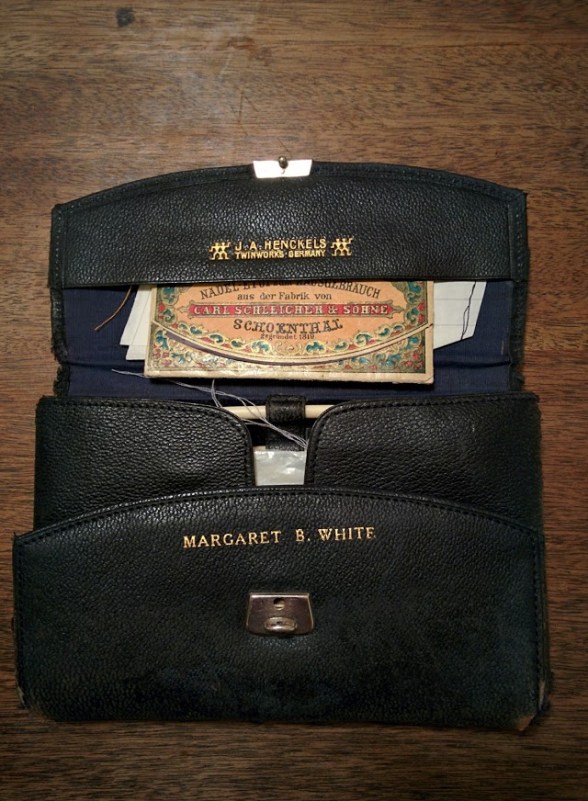
The photograph is of a sewing kit. It belonged to Margaret White, my maternal grandmother’s oldest sister. It says: J. A Henckel, Twinworks, Germany. The paper is a paper of needles, needles of different sizes. I liked small things, so my mother let me have this kit. I have used it since I was a child. Some of the pieces were missing from the start, but I suspect that those that remain are ivory. My grandmother was born in 1899, so this kit would be from the early 1900s. I carefully kept all of the needles in their paper packets.

I see a patient who has had prolonged sinus symptoms AND her right upper molar has been irritated for weeks, but then Saturday it started hurting. She saw her dentist. The dentist did x-rays and said it’s her sinus. “But my tooth hurts too.”
On exam, her gum is bright red above the tooth, but not swollen as it can be with an abscess. No fever. No bright red spot over the maxillary sinus.
I call our independent radiology service and ask for a limited sinus CAT scan. She is off on Mondays only, it is Monday, she is out of town next Monday. Can they do it today? Yes, but she needs a prior authorization.
I call her insurance, after looking up the CPT code for sinus CT on google. As usual I have to enter numbers before I talk to a human:
patient insurance id number
my tax id number
my national provider index number
and others until I get a human.
Then I have to give the numbers AGAIN because the insurance company deliberately makes it inefficient, even though I have entered them into the phone it doesn’t transfer to the representative and you know that it COULD.
I give my name
patient’s name
patient’s date of birth
clinic address
clinic phone
clinic fax number
tax id
national provider index number
and finally explain: we need a prior authorization for a limited sinus CT and she has five ICD 10 symptom codes.
“She doesn’t need a prior authorization.” says the rep.
“What?” I say, “So it’s covered.”
“We don’t guarantee coverage, but we don’t give prior authorization.”
“What do you mean, you don’t guarantee coverage. I am calling to check.”
“We review the chart afterwards and THEN decide if it’s covered.”
“No. That isn’t good enough. I want to speak to someone who will check the codes and tell us if it will be covered.”
“I will have to transfer you to the (patient something).”
“Fine. Transfer our information please too.”
We go on hold. Time passes.
We are back to a recording:
TALKING TO A REPRESENTATIVE DOES NOT GUARANTEE COVERAGE OF A TEST. PRESS ONE IF YOU ACCEPT THIS.
No two. No other options are offered. I press one.
I talk to the new representative. “I have five diagnosis codes and want to know if the sinus CT will be covered. She is off and they can do it today. She is only off on Mondays.”
“We don’t do prior authorizations.”
“Isn’t there ANY WAY we can find out?”
“You can mail a letter to a PO box and we will review it and let you know.”
I am ….. hard to describe…. my head hurts.
“Would you like the PO box address?”
“How long does that take? Yes we want it. Don’t they have a fax?”
We get the fax number too. I hang up and look helplessly at my patient. “I think it will be covered. I would recommend we do it.”
“Ok.” She says. Her face and tooth hurt.
I call the independent radiology center and set it up for 2 pm.
They call back in the afternoon. She has a sinus infection and the tooth is bad too, they don’t quite look connected. I call the Ear Nose and Throat specialist who wants her on three weeks of augmentin if she tolerates it and then to see her. I thank him and get it rolling.
But….. ok, so the insurance companies contract with me and the patient say that they can change the benefits any time they want. They “notify” me with postcards with online links. Like I have time to read and remember the changes for …. 50 different plans? There are over 500 in the US.
When are we going to stop letting insurance companies take our money and refuse care and refuse to pay the physician and the radiologist? Medicare for all, one set of rules, I COULD LEARN THEM. I can memorize huge amounts of data: I am already busily memorizing the ICD10 diagnosis codes. There are only 48,000.
And I don’t know yet if her insurance will pay for the sinus CT…..
The picture is from Lake Matinenda in Ontario: no computers at our cabin, no outlets, phones mostly don’t work…. heaven.

Prior authorization is where, in the insane United States medical system, the doctor orders a test or medicine. The insurance requires “prior authorization”, that is, the doctor or their office have to call or go on line to fill out forms to get the prior authorization. Otherwise the test or therapy or medicine or even surgery will not be covered by the insurance and the patient eats the bill. Over 60% of bankruptcies in the US are now over medical bills*.
In most doctors’ offices, the prior authorization is done in the back rooms. Employees are on the computer or on the phone trying to obtain the permission, the code number, the magic words that will help the patient. This is a HUGE business and a scam as well. Physicians for a National Health Care Program estimated in 2011 that it costs at least $82,975 PER PHYSICIAN PER YEAR to have a person calling.* Now, there is a person on the other end receiving that call or going over the forms. That person is paid with your insurance premium. Is that health care? It seems more like a barrier to health care. Let’s look at an example.
I do my prior authorizations in the room with the patient. I only have a front desk person, no back room people, and anyhow, if I do it face to face with the patient, I can charge the insurance company for the call. It is face to face counseling and coordination of care. I don’t get paid well for this, but it’s worth it for the patient education.
Yesterday I called for a patient. The insurance company first has a recording that tells me it is recording this conversation. I am too, in the chart note. Then it reminds me I could do all this on line. Well, that is sort of true. I could, but every insurance company has a different website, they all require logins and passwords and it would take me hours to learn them all. Nope, not doing that. After the message it says: “Please enter the physicians NPI number.” I do. Then it leads me through choices: confirm the patient is insured, check the status of a prior authorization, appeal a prior authorization, initiate a prior authorization. That one.
At 3 minutes 50 seconds, I get a human. We are on speaker phone.
“This is Rex. You are calling for prior authorization?”
“Yes. This is Dr. Lizard. Mr. X is in the room.”
“Please spell the doctor’s name.” They are not used to doctors calling.
“Please give the NPI number.” (ok, we typed that in. But every time you are transferred, you have to give all of the information again. I am not kidding.)
“Please give your clinic address. Please give your clinic phone number. Please give your clinic tax ID number. Please give your clinic fax number.”
I do.
“Please give the patient id number. Please give the patient name. Please give the patient date of birth.”
Ok.
My patient is looking amazed. This is how insurance companies treat the doctors who call them? Yep.
“What medicine are you authorizing?”
“A compounded testosterone.”
“Please list the ingredients.”
Crap. didn’t think of that. “Ok, we want to authorize an fda approved one.”
That is entered. “What are the instructions for the patient?”
“What is the dose or strength?”
“What is the diagnosis?”
“He has a condition from birth with no testosterone.”
I have to spell the condition for Rex.
“What is the ICD 10 code?”
I give that.
“Have you measured a testosterone level?”
“Yes. It’s zero. His body doesn’t make testosterone. Since birth.”
My patient is rolling his eyes.
“The form will be sent for review and you should get a fax within 24-72 hours regarding the authorization. Here is a number for tracking.”
“Thank you, we are recording this phone call as face to face counseling and coordination of care in the chart.”
Phone call is 13 minutes and 50 seconds. That is a fast one, actually. Most are 25-30 minutes and I fought for an hour once when a patient’s prescription coverage was cancelled.
I wish that every doctor in the country would do one prior authorization on the phone once a week with the patient in the room. The doctors’ heads would blow off. They might finally see what the current system is doing and how the insurance companies throw more and more and more barriers up to refuse people care.
And how is it a scam? One way is that the patient calls the insurance. The insurance has people who only talk to patients. That person says, “Have your doctors office call for a prior authorization.” The patient calls the doctor’s office. The doctors office calls the insurance, but they are talking to a different branch of the insurance company. That branch tells the doctors office “We don’t cover that.” The doctors office calls the patient, who then thinks that the doctor’s office has screwed up the prior authorization.
How do I know that? With the person in the room, the insurance tells me “No.” I have had patients say, “Your company told me yesterday that all I needed was for the doctor to call!” The insurance person replied, “I only talk to doctors. It is another part of the company that talks to patients.” I have also had an insurance person say “Take me off speaker phone, I am only allowed to talk to physician’s offices, not to patients.” Riiiiiight. I took him off but put him right back on. My patients are outraged and furious: at the insurance, not me. The insurance companies are doing brilliant business plan triangulation and I hope whoever thought it up and whoever allows it as a business plan roasts in hell. No, instead I hope that they wake up and realize how many people they are hurting and I hope that they turn and work to heal a broken sick system.
*http://www.pnhp.org/new_bankruptcy_study/Bankruptcy-2009.pdf
http://www.pnhp.org/sites/default/files/docs/Bankruptcy_Fact_Sheet.pdf
**http://www.pnhp.org/news/2011/august/us-doctors-administrative-costs-4-times-higher-than-in-canada
http://www.pnhp.org/news/2014/august/adventures-in-prior-authorization
I took the photograph at Lake Matinenda in August 2015. It is of a storm. A storm is here in medicine: people versus the corporations who prey on us. We need to heal the system and heal the fear and greed.
BLIND WILDERNESS
in front of the garden gate - JezzieG
Discover and re-discover Mexico’s cuisine, culture and history through the recipes, backyard stories and other interesting findings of an expatriate in Canada
Or not, depending on my mood
All those moments will be lost in time, like tears in rain!
An onion has many layers. So have I!
Exploring the great outdoors one step at a time
Some of the creative paths that escaped from my brain!
Books, reading and more ... with an Australian focus ... written on Ngunnawal Country
Engaging in some lyrical athletics whilst painting pictures with words and pounding the pavement. I run; blog; write poetry; chase after my kids & drink coffee.
Coast-to-coast US bike tour
Generative AI
Climbing, Outdoors, Life!
imperfect pictures
Refugees welcome - Flüchtlinge willkommen I am teaching German to refugees. Ich unterrichte geflüchtete Menschen in der deutschen Sprache. I am writing this blog in English and German because my friends speak English and German. Ich schreibe auf Deutsch und Englisch, weil meine Freunde Deutsch und Englisch sprechen.
En fotoblogg
Books by author Diana Coombes
NEW FLOWERY JOURNEYS
in search of a better us
Personal Blog
Raku pottery, vases, and gifts
𝖠𝗇𝗈𝗍𝗁𝖾𝗋 𝖶𝗈𝗋𝖽𝖯𝗋𝖾𝗌𝗌.𝖼𝗈𝗆 𝗌𝗂𝗍𝖾.
Taking the camera for a walk!!!
From the Existential to the Mundane - From Poetry to Prose
1 Man and His Bloody Dog
Homepage Engaging the World, Hearing the World and speaking for the World.
Anne M Bray's art blog, and then some.
My Personal Rants, Ravings, & Ruminations
 KO Rural Mad As Hell Blog
You must be logged in to post a comment.