
Not immune

I am attending multiple Zoom conferences on Long Covid and Chronic Fatigue and PANS/PANDAS and fibromyalgia. The speakers are talking hard science, digging in to the immune system to figure out what is wrong. Then they can find a drug to fix it.

Maybe it doesn’t need to be fixed. I think the immune system is smarter than we are and it knows that Covid-19 is a really really bad virus. What the immune system wants is to keep from getting any other infections so it shuts us down. It hits the chronic fatigue button, so we stay home or in bed. It hits the fibromyalgia button so that it hurts to move: we stay home or in bed. It hits the PANS button so that antibodies seriously change our behavior and we stay home or in bed. Anyone see a theme here? I think that the immune “over-response” is not an over-response. It’s not broken. It is trying to reduce exposure and just maybe we should pay attention. I thought that in residency, in the early 1990s, when chronic fatigue patients would interview me to see if I “believed” in chronic fatigue. Heck yeah, I said, but I don’t know what it is or how to fix it. My chronic fatigue patients had something in common: they were all either working 12-14 hour days continuously when they crashed, or they overworked and had insane stress, deaths of loved ones, car wrecks, accused of a crime, something horrible. The workers all wanted “to get back to where I was.” I would ask, “You want to work 12-14 hours a day again?” “Yes!” they’d say, “I want to be just like I was in the past!” “Um, but that’s what crashed you. Do you think maybe your body is not up to that?” “FIX ME.” I would try to improve things, but fix them back to what crashed them? No way and anyhow, that is not really sane.

There are some levels of illness where we have to intervene. In really bad PANDAS, antibodies to the brain are followed by macrophages that destroy brain cells. I was horrified and wanted to run around screaming “NOT MY BRAIN!” when I heard that. Then I thought, don’t be silly, I am in my 60s and if I had brain eating cells it would have happened by now. I consider myself really really lucky to have the mildest version. At least, that’s what it seems to be. (Officially we don’t believe in PANS or PANDAS in adults in the US but we do in Europe and Canada. Ironic.) With that version, especially in children, I am all for intervention, as soon as possible. And it’s not that I do not think we should intervene in these illnesses. I just think we need to step back and think a little and just maybe listen to our bodies and listen to the immune system. Slow down. Breathe. Watch some stupid cat videos. Whatever makes you relax and laugh. Reduce stress. Limit stupid hyper news to 15 minutes a day and not before bed, ok? Reduce the drama.

I am liking movies less and less. The drama bugs and bores me. I might last an hour. I have nearly quit going to our downtown movie house because it’s always “moving” and art films. Bleagh, drama. Also when it’s about illness or addiction, I want to argue with it. Easy lying endings which are nothing like reality. I like cartoons and sometimes superheroines, but it’s all drama too. I am tired of people behaving badly and don’t want to watch it on tv or a movie. There’s enough for me in the real world. I think it’s time to bring back musicals. I would watch them. Maybe. My father’s last movie was Blazing Saddles. He refused to ever go to another movie. I think I understand that now.

None of us are immune to stress or immune to infection. A person might be immune to Covid-19, or they might be immune until the tenth or hundredth strain shows up. I chose Family Practice for my specialty because I wanted to have children and be able to see them. I thought about Obstetrics-Gynecology or General Surgery, because I loved babies and loved surgery, but the Ob-Gyn residency was 4 years and General Surgery was 7 years and I was starting medical school five years out of college. Choose the more flexible and portable specialty and go rural.

Doctors and nurses are burning out because hospitals and administrators “maximize production”. Hospitals and administrators are stupid and destroying medicine. It’s not about money, it’s about helping people and science and healing. Having it be about money is soul-destroying and causes moral injury to any ethical provider. If we’d prefer unethical ones, keep on the present path. Otherwise we need single payer health care so that any physician or nurse can take care of whoever shows up. The system is breaking down more and more and it is hard to watch. Another nail of stress in the coffin of ethical medicine. I suppose when enough people die, change will come.

My working theory is that anyone can get one of these immune system illnesses: chronic fatigue, fibromyalgia, PANS/PANDAS and so forth. Medicine says that Hashimoto’s Thyroiditis, antibodies to the thyroid is the most common autoimmune disorder, but that may change. The evidence is mounting that Long Covid and these other “vague” illnesses are immune system shifts. Immune systems in “Code Red”, let’s not catch anything else. Are they an illness or are they our immune system trying to keep us quiet to protect us? I think the latter. Time may tell. I am listening to the science and listening to my body, both.

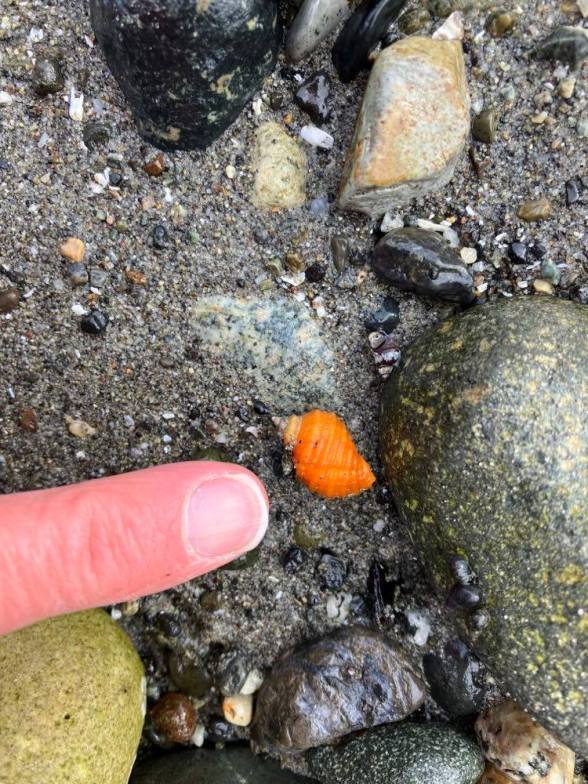
The photographs are from 2016, when a flock appeared in my yard. They demanded money to be moved to the next house.

For the Ragtag Daily Prompt: fiddlesticks. Oh, fiddlesticks, we have to figure out the very very complicated immune system. Or listen to it.
Lungs, again

I saw the pulmonologist from Swedish Hospital last week and am still thinking about the visit.

My lung function on the pulmonary function tests did not change much from December. He gives me an inhaler, with a steroid and a long acting bronchodilator, two puffs twice a day. I use it for one day in December and promptly get Covid-19 mildly. I then ignored the inhaler until I talk to him in March. He says, “Use it for two months and we will see if your lungs improve.” I try it in March and get a cold, not Covid, within a day. I try it again in April and get a cold within two days. I then ignore the inhaler.

But at the end of March I start feeling a lot better and my fast twitch muscles start working again. I would get very tired and stiff when I use them. They are “back” but are very weak. I wanted to know if my lung testing improved too, but it didn’t. So what is going on here? I feel better but the lung studies are not better.

The pulmonologist says, “Well, the infections are probably coincidence.” Yeah, um, well, three for three. “But, if it’s not asthma, it could be bronchiectasis.” He asks when I did the methacholine test, negative, gold standard for asthma. I did it in 2014. Negative along with allergy testing.

I don’t know much about bronchiectasis. Mostly that it’s not asthma and not chronic obstructive pulmonary disease. It may be the garbage can that holds obstructive disorders that don’t fit either of those categories.

“Bronchiectasis means what?” I say. He says, “Usually there is a lot of coughing and mucous.” Nope. Well, I cough a lot with pneumonia and with colds if I don’t rest, but rarely cough anything up. “The test is a chest CT but we can’t do anything about it if you have it, so I don’t know if you want to do a CT.”

“If there’s nothing to do, then I don’t want one.” Because repeated CT scans increase cancer risk, way more so then an x-ray. I ask about work. “I still get really fatigued, and my muscles are recovering. If I am stronger at the end of the summer, I would think about work, but how would I protect my lungs?”

“Mask.” he says. “An N95 all the time would maybe help. We don’t really know.”

Ugh. We agree that I will see him in October. If my fatigue level stays where it is now, returning to work even half days is going to be too high risk, I think. I am liable to get pneumonia AGAIN and this time I might get stuck on oxygen. Or die, which I’d rather not right now.

I am reading about bronchiectasis. The Mayo Clinic doesn’t have an entry for it, though it has clinical trials and a special clinic. That would support it being a garbage can diagnosis. I am reading on Wikipedia, here, not my usual medical resource. Brochiectasis can particularly be caused by tuberculosis, mycobacterial illness. They distinguish cystic fibrosis bronchiectasis from non-cystic fibrosis bronchiectasis and other infections can cause it. Influenza, streptococcus, um, yeah, the infections I’ve had. I do not have cystic fibrosis or the alpha-1-antitrypsis disorder. And there is another disorder listed, a genetic one where the cilia don’t work right. Primary ciliary diskinesia. I don’t have that either, but my working diagnosis is PANS, with antibodies that screw up my cilia and fast twitch muscles. And that would put my lungs at risk for pneumonia.

So, says a friend, what do you need to take?

Nothing, I say. It means I have to keep stress down, be in a parasympathetic state instead of fight or flight sympathetic state, and stay the heck away from sick people. Oh, and mask on airplanes and probably avoid huge crowd things. Jazz Fest, big music festivals, riots, wars, etc. Exercise, eat right, don’t drink too much alcohol, don’t smoke anything, don’t do stupid things. Try not to get tuberculosis.

And still, I am doing well. The treatment for really bad bronchiectasis is lung transplant. I am still quite mild after four pneumonias and the kid illnesses and mononucleosis and colds and so forth. I do not cough all the time and am off oxygen. It’s looking less likely that I could return to work in person, though I don’t know about internet. It really depends on my energy level, what that does. Darn it. Uncertainty, isn’t it hella annoying? Oh, well, I am pretty used to it by now.

And that’s the lung news.

I can always hide in my tree house. But the food and water supply there is not so good.

The work of disability

I look up the CDC website to see how many people are disabled. The CDC says that 27% of adults in the US have a disability. Yes, that is one in four. https://www.cdc.gov/ncbddd/disabilityandhealth/infographic-disability-impacts-all.html.

I find being disabled to be a ton of work.

I think the view of disability in the US is often people who sit at home and have money thrown at them from the government.

This is not so, not so, no, no, no.

In clinic a patient needs a new socket for his artificial leg, having had a cancer amputation. He is an expert still working in disability exams, so we do a visit where he dictates much of my note, because in order to get a new socket, medicare requires very specific information in the clinic note. We also have notes from physical therapy and his occupational therapist and the company that makes the sockets. Why does he need a new one? He has lost weight and the old one doesn’t fit any more so he can’t walk securely.

Even so, I think it took six months and we kept redoing versions of the paperwork.

Another patient needs a new electric wheelchair. That one takes a year of repeating insistence and paperwork.

After my March 2021 pneumonia, I am disabled, which pisses me off. I like my work. It’s unclear how long I will be on oxygen and since we’ve been working on a diagnosis besides “gets pneumonia super easily” since 2003, it’s hard to predict the trajectory. I don’t know if I will be on oxygen permanently. It is exhausting to drag myself to physician visits, in four different hospital systems. Oh, and a patient can apply for patient assistance with the finances, but then all four have different paperwork. I am sick as snot and have to try to keep track of the bills from four systems and four sets of on line passwords and where is the stupid appointment? Edmonds? Seattle? Bremerton? Augh. The fatigue that accompanies the pneumonia makes it hard to cook, hard to clean, hard to comprehend bills, exhausting to make phone calls. Anyone want to trade? I’ll work and you can be disabled?

My disability company requires paperwork too, lots of it, and my taxes, and there is a long list of rules that I reread periodically. I needed an attorney to sort out the rules, since the disability company won’t answer my questions.

Now I am off oxygen and better, though still dogged by fatigue. I think that is probably permanent, but then I sometimes hope it’s just that I am finally rebuilding muscle, since the fast twitch muscles didn’t work for two years. They are a bit recalcitrant now.

And I am not in a wheelchair, have not had an amputation, am not in a rehab. If you have to take buses in your wheelchair everywhere, need two people and a crane to get you out of bed into the wheelchair, have to use a computer to talk for you, imagine. Anyone who thinks disability is easy money is insane.

It’s not clear if I can return to work. I might get pneumonia number five, which would probably take me out. No one knows how to lessen my risk. And I don’t have the energy and do not know if I will.

All the unknowns and unclears and we don’t knows. No one is disabled for easy money because it’s a job trying to get well or trying to survive it. And yet, I am happy to be alive and even to be able to dance some! Dance on!

Neurogognitive effects of Long Covid I

Here is the first part of my notes from this lecture: May 24, 2023 Neurocognitive effects of Long Covid (International) part 2, by Dr. Struminger PhD, neuropsychologist.

I am trying to make this fairly clear to almost anyone. Some words may be unfamiliar to start with, but I will bet that you can sort it out. I would be happy to try to clarify any part if needed. These are my notes from the first half of this lecture, fleshed out to be clearer.

This is the Schmidt Initiative for Long Covid Global in English with real time translation into Arabic, French, Spanish, Portuguese and closed captions. Session recordings: https://app.box.com/s/onh1ma57ttjpi2c19qqxvmdao0kd2nsr

Dr. Struminger said that 1/4 to 1/3 of Long Covid patients have cognitive symptoms. A study comparing Long Covid patients with people who never got Covid-19 shows the Long Covid people to be three times more likely to have attention deficits or confusion. Part of the barrier to treatments is to define the problem, figure out the mechanisms and then start studying treatments. She said that she would share a few proposed mechanisms for cognitive impairment in Long Covid, but that it is probably multifactorial and it’s a rat’s nest. (Ok, I said rat’s nest. Dr. Struminger did not use that term.)

There are two main phenotypes of Long Covid brain problems: Hypoxic/anoxic and Frontal/subcortical. In hypoxic/anoxic certain brain functions are intact: Attention, visuospatial, cognitive fluency and memory encoding. There is impairment in problem solving and memory retention. This pattern is associated with the people who were hospitalized, deathly ill, on ventilators, or heart/lung bypass machines.

Frontal/subcortical is more common in the people who were never hospitalized and were not on a ventilator or ECMO machine. It can show up even in people who seemed to have mild Covid-19. The impairment is in attention, cognitive fluency and memory encoding, while the intact functions are visuospatial, memory retention and problem-solving.

Here are those lists in a table, HA for hypoxic/anoxic and FS for Frontal/subcortical.

Attention: HA intact, FS impaired
Visuospatial skills: HA intact, FS intact
Cognitive fluency: HA Intact, FS impaired
Memory Encoding: HA intact, FS impaired
Memory retention: HA impaired, FS intact
Problem-Solving: HA impaired, FS intact

The two types probably have different mechanisms and the super sick are more often the hypoxic anoxic. And there can be a mixed or both presentation.

Neuropsychologists test people to see what parts of the brain are working. Testing locally usually takes about four hours or more. Some brain functions have been mapped to parts of the brain but others are still mysterious. Efforts continue to match function to neuroanatomy. Going through each of the brain functions, some are mapped and others are not.

Attention is mapped and mediated by the frontal lobes. Attention is impacted by physical fatigue, dysautonomia, pain, shortness of breath, further impacted by emotional symptoms. It is REALLY easy to get stuck in a vicious cycle where physical symptoms or pain or hypoxia decrease attention function, which in turn makes physical symptoms worse. For example, hypoxia can decrease attention, which makes the person anxious and tachycardic, which in turn affects attention more.

The frontal lobes are very sensitive to hypoxic damage and to inflammation. Any inflammation in the body messes with them. The frontal lobes need oxygen and glucose. If a person can’t breathe, this messes up attention; if they are dizzy, it messes up attention.

Cognitive fluency. The anatomical correlates are less clear. Probably frontal and temporal, vulnerable to hypoxia and broad networks in the brain, vulnerable to physiological and mood disturbance. So vulnerable to the same things as the frontal lobes.

Learning and memory: Map to the hippocampi – sensitive to hypoxia and can be injured while the rest of the brain is comparatively unscathed. People have difficulty with retention of new information and not just attention/encoding problems. Neuropsychology distinguishes between attention/encoding and retention/recall problems. Those are different. In alzheimer’s, there is trouble retaining new information, even though people can encode it. In the frontal/subcortical long covid brain fog, there is more difficulty with attention/encoding. That is, if the person is tachycardic or in pain or dizzy or short of breath, it is more difficult to pay attention and encode information into memory.

Executive functioning. Frontal lobe: sensitive to hypoxia and metabolic dysregulation, significantly impacted by physical symptoms and mood disturbance.

The hypoxic/anoxic pattern has effects more like Alzheimer’s or a dementia. The frontal/subcortical is more like a concussion or traumatic brain injury. Neither sounds great, but there is more healing from the second than the first. Treatments for now are coming from the Alzheimer’s/dementia established treatments or from the concussion/traumatic brain injury established treatments. The first part of treatment is rest, rest, rest, and try to keep the brain from getting overwhelmed. I will write more about the ongoing changing recommendations.

More at: https://hsc.unm.edu/echo/partner-portal/echos-initiatives/long-covid-global-echo.html

The photograph is a screen shot of the brain from below from one of the conferences. There were over 300 people attending this zoom lecture, which is encouraging and hopeful.

For the Ragtag Daily Prompt: covert. The covert damage from Covid-19 is being sorted out.

Who would I be?

If I have had PANS since birth, who would I be if I had not contracted it?

No one knows. We are still arguing about whether PANDAS and PANS exist. But, my daughter says, we make up all the words. The definitions of illnesses CHANGE over time, and what an illness MEANS. Tuberculosis was an illness of poets and people too noble for this world, until microscopes became advanced enough to see the tiny bacterium, and then it became an illness of the crowded unclean poor. Medicine and science continued to study it. Once we recognized that it is an airborne illness, tuberculosis sanatoriums were set up, to quarantine people. My mother was diagnosed with tuberculosis when she coughed blood 8 months pregnant, so I was born in a sanatorium and avoided contracting tuberculosis as a newborn.

Antibodies cross the placenta, even though the tuberculosis bacterium does not. Usually infants contract tuberculosis and die, at least when I was born. The antibodies can trigger PANS or PANDAS.

The antibodies prime the fetus’s immune system. This makes sense, right? The fetus has a sick mother and best if its’ immune system is ready to fight.

Did my younger sister have it? I do not know. Not as badly, would be my guess. My mother said that as kids, we’d both get sick, but I got sicker. We both had strep A many times. My sister got mumps, off from school for three weeks, and I did not get it. But I got everything else.

Now the estimate for children with PANS or PANDAS is 1 in 200. This is enormous. A high prevalence. Antibodies, that I suspect are adaptive and lie in readiness for a pandemic or a crisis. And now we have had another pandemic, with the last really world wide bad respiratory one 100 years ago. Is the prevalence rising because of the pandemic or are we figuring out some of the cause of behavioral health illness or is the definition of illness changing or all three? I think all of them.

My cousin’s mother had polio either during her pregnancy or very soon after. My anthropologist uncle took his family to Bangladesh, where he was doing linguistics. So does my cousin have PANS or PANDAS? I do not know.

And what of my children? My pregnancy with my older child was fourth year medical school and went well. My pregnancy with my second was very complicated. I was in my first year of work as a rural Family Practice doctor and working too hard. I ended up on bed rest for three months and on a medicine. Is labor at 23 weeks an illness? Does it affect the fetus? I was on medicine from 23 weeks to 37 weeks. What effect does it have?

Medicine is still changing and changing quickly. We don’t know. There is so much we do not know.

_______________

PANS/PANDAS: https://www.pandasppn.org/guidelines/

_______________

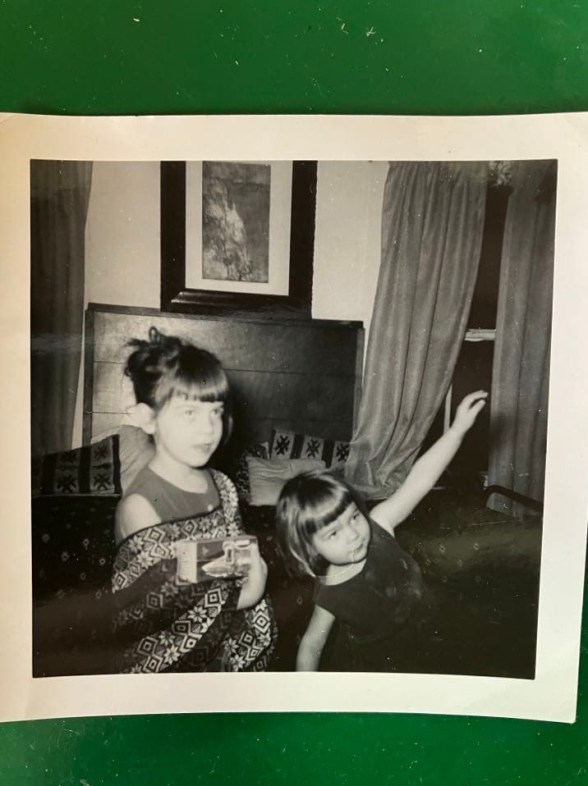
The photograph is me and my sister, in about 1967ish. I do not know who took it.

As I was going to Washington, DC

As I was going to Washington, DC

I met insurance CEOs who said “Whee”!

500 Insurance CEOs said Weeee!

Have ten insurance plans EEEEEach!

Every plan has it’s own website!

Every plan is different, password for each site!

Every plan refuses coverage for different treatments, right?

Every plan demands prior authorization, doctor’s office up all night

If they refuse chemotherapy the doctor has to fight?

Prior auths, treatments, passwords, plans

Insurance companies, all those demands

As I was going to DC

How many passwords will I need?

______________________

For the Ragtag Daily Prompt: snail.

I was pricing health insurance in case I get well enough to work more. I can get an $800 a month with a $8000 deductible or a $1435 a month with a $2000 deductible. I would very much like to work part time treating Long Covid. But, ironically enough, looks like I can’t afford health insurance. It costs more than the malpractice would. Ironic, huh? It’s not like we need doctors. (I do not have a medical release yet anyhow, but time to do research. It’s making me gloomy.)

You know, if we do get Artificial Intelligence, it will take one look at the United States Medical non-system, decide we are insane, and wipe us out.

And honestly, when I was working for the hospital clinics, I thought the most brilliant person in our office was the woman who could extract a prior authorization from so many insurance companies. I would send the referral to print and half the time she would have it authorized by the time the patient got to the front desk. And why do we waste all that brilliance on giving health insurance companies a profit of 20 cents out of every dollar? That is $20,000,000 out of $100,000,000. Looks worse with bigger numbers, doesn’t it?

Physicians for a National Healthcare Program: https://pnhp.org/.

Keep it simple

Sometimes I just despair as I read new guidelines. Don’t you? Maybe you are not a physician and don’t try to keep all of this impossible stuff in your head. Mine is full. Tilt.

Diabetes alone: if someone has type II diabetes, there are specific blood pressure guidelines, cholesterol guidelines, we are to do a hgbA1C lab test every six months minimum and more often if they are out of control, and a urine microalbumin/creatinine ratio yearly. If that starts being abnormal we are to start one of two classes of blood pressure medicines even if they have normal blood pressure.

Oh, and don’t forget: a yearly eye test and we are supposed to check their feet at EVERY visit to make sure they are not getting diabetic ulcers.

Got that? And that is just type II diabetes. And there are a whole raft of medicines, about forty right now. Some are weekly shots, some are daily tablets, some are twice a day or with every meal and they all have their own side effects, how fun. Check drug interactions, are their kidneys ok? Is their liver ok? Diabetes increases the risk of heart attack and stroke and don’t forget those feet.

Diabetes is one of the most complicated sets of guidelines, but there are a rather appalling number of guidelines. Maybe we should sic an AI on that job: Mr. Smith has type II diabetes poorly controlled, hypertension, erectile dysfunction, feels a little short of breath and has a bruise on his left shin after tripping yesterday. Please, AI, organize a twenty minute visit to cover as many things as possible efficiently and have the note finished and followup arranged by the end of it. Then it turns out that what Mr. Smith really wants to talk about is his niece who has just overdosed and nearly died from heroin, so everything else goes out the window. Maybe I should see him weekly for the next month.

Do you want to keep it simple and stay out of the doctor’s office and more importantly out of the hospital? If you are 25 and healthy, you don’t much care because old is unimaginable.

But there is a very nice study that looked at just five things regarding health, over 28 years for men and 34 for women: “The researchers looked at NHS and HPFS data on diet, physical activity, body weight, smoking, and alcohol consumption that had been collected from regularly administered, validated questionnaires.”

Here is an article about the study: https://www.health.harvard.edu/blog/healthy-lifestyle-5-keys-to-a-longer-life-2018070514186

Here is the study: https://www.ahajournals.org/doi/10.1161/CIRCULATIONAHA.117.032047

So let’s break the five things down. Here are the more formal definitions: “Using data from the Nurses’ Health Study (1980–2014; n=78 865) and the Health Professionals Follow-up Study (1986–2014, n=44 354), we defined 5 low-risk lifestyle factors as never smoking, body mass index of 18.5 to 24.9 kg/m2, β‰₯30 min/d of moderate to vigorous physical activity, moderate alcohol intake, and a high diet quality score (upper 40%), and estimated hazard ratios for the association of total lifestyle score (0–5 scale) with mortality.”

First: never smoking. I would add never vaping and not living in a cave and burning wood and hopefully not living right next to a 12 lane superhighway, all of which are bad for the lungs. Ok, while we are at it, don’t use methamphetamines or heroin or cocaine or krocodil, right? They didn’t even include those in the study.

Second: Body mass index 18.5-25. If you aren’t there, it is diet and exercise that need to change.

Third: Thirty minutes or more per day of moderate to vigorous physical activity. That can be ten minute intervals. Three can have an enormous effect on number two.

Fourth: moderate alcohol intake. Ok, alcohol is bad for the heart, period. So is tobacco. They defined moderate as less than or equal to “5 to 15 g/d for women and 5 to 30 g/d for men”. Let’s do the math: a 12 ounce beer that is 5% has 14gm of alcohol. Here: https://www.niaaa.nih.gov/alcohols-effects-health/overview-alcohol-consumption/what-standard-drink. The 8.9% 16 ounce beer at our local pub has quite a bit more. Here is a website where you can calculate how much alcohol is in a drink: https://www.rethinkingdrinking.niaaa.nih.gov/Tools/Calculators/Cocktail-Calculator.aspx.

Fifth: Diet. There is an overwhelming amount of confusing information on the internet and some of it is not only confusing but wrong. “Diet quality in the NHS, HPFS, and NHANES was assessed with the Alternate Healthy Eating Index score (Methods in the online-only Data Supplement), which is strongly associated with the onset of cardiometabolic disease in the general population.” I have not assessed my own Alternate Healthy Eating Index score. However, there are a couple very straightforward things that help with diet. First: No sweetened drinks. That means that sugary coffee with the syrup should go. I quit drinking mochas when I read that a 12 ounce one has 62 grams of carbohydrate. I would rather have a small dark chocolate. And sodas are just evil and juice not much better. Eat the fruit instead. Second: eat vegetables, every meal. A fruit is not a vegetable and no, potato chips don’t count. I mean a green or yellow or red vegetable. You can saute any vegetable, or any that I can think of. I am not counting grains as a vegetable, so pasta, pizza, potato chips and so forth do not count. Beans do count. Third: the DASH diet recommends only a tablespoon of sweetener per day. That is not very much. You can make that cheesecake slice last a week! A small piece of dark chocolate daily or tablespoon size chunk of that cheesecake.

I had a diabetic patient who would be fine, fine, fine, then out of control. “WHAT are you eating? And drinking?” The first time it was two 16 ounce Mochas a day. Then he was fine for a year and a half. Then labs went haywire again. “What are you drinking?” “Well,” he said, not wanting to admit it, “Ok, I decided to try Caramel Machiattos.” “No, no, no! You can’t do that! You’ll end up on insulin!” “Ok, ok, got it, got it.”

And what is the difference if I try to do those five things, you ask, skeptical. “We estimated that the life expectancy at age 50 years was 29.0 years (95% CI, 28.3–29.8) for women and 25.5 years (95% CI, 24.7–26.2) for men who adopted zero low-risk lifestyle factors. In contrast, for those who adopted all 5 low-risk factors, we projected a life expectancy at age 50 years of 43.1 years (95% CI, 41.3–44.9) for women and 37.6 years (95% CI, 35.8–39.4) for men.The projected life expectancy at age 50 years was on average 14.0 years (95% CI, 11.8–16.2) longer among female Americans with 5 low-risk factors compared with those with zero low-risk factors; for men, the difference was 12.2 years (95% CI, 10.1–14.2).”

____________________

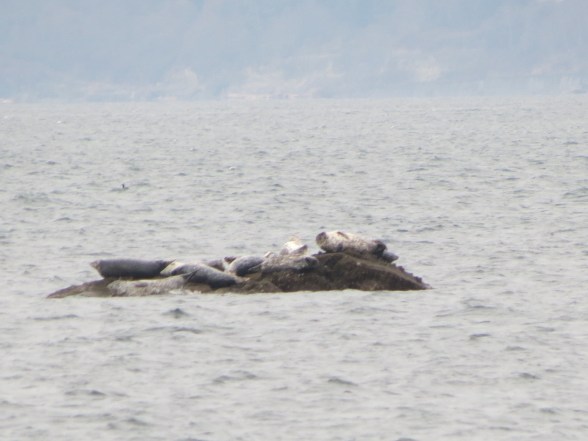
I took the photograph from Marrowstone Island. What does a healthy seal diet look like? I am so lucky to have miles of beach to hike, as long as I watch the tides and don’t mind rain.

Shame and anger in overuse illnesses

“amongst those who treat addicts of any kind generally agree that anger and shame help no one and is actively counter-productive.”*

Wait.

I have to think about that statement.

I do not agree at all.

Ok, for the physician/ARNP/PAC, anger at the patient and shaming the patient are not good practice, don’t work, and could make them worse. BUT anger and shame come up.

In many patients.

Sometimes it goes like this with opioid overuse: the person shows up, gets on buprenorphine, and is clean.

It may be a long time since they have been “clean”.

One young man wants to know WHY I am treating him as an opioid overuse patient. “Why are you treating me like an addict?”

I try to be patient. I recommended that he go inpatient, because I don’t think we will cut through the denial outpatient. Very high risk of relapse. “You have been buying oxycodone on the street for more than ten years.”

“I’ve been buying it for back pain, not to party.”

“Did you ever see a doctor about the back pain?”

“Well, no.”

“Buying it illegally is one of the criteria of opiate overuse.”

“But I’m not an addict! I’ve never tried heroin! I have never used needles!”

“We can go through the criteria again.”

He shakes his head.

He is in denial. He is fine. He doesn’t need inpatient. He is super confident, gets work again, is super proud.

And then angry. “My family still won’t talk to me!”

“Um, yes.”

“I’m clean. I’m going to the stupid AA/NA groups! Though I don’t need to. I’m fine!”

“What have you noticed at the groups?”

“What a bunch of liars!” he says, angry. “There are people court ordered there and they are still using! I can tell. They are lying through their teeth!”

“Obvious, huh?”

“Yeah!”

“Did you ever lie while you were taking the oxycodone?”

Now he ducks his head and looks down. “Well, maybe. A little.”

“Do you think your family and friends could tell?”

He glances up at me and away. “Maybe.”

“Your family may be angry and may have trouble trusting you for a while.”

“But I’ve been clean for four months!”

“How many years did you tell untruths?”

“Well.”

Shame and anger. Anger from the family and old friends, who have heard the story before, who are not inclined to trust, who are hurt and sad. The first hurdle is getting clean, but that is only the first one. Repairing relationships takes time and some people may refuse and they have that right! Sometimes patients are shocked that now that they are clean, a relationship can’t be repaired. Or that it may take years to repair. My overuse folks are not exactly used to being patient. And sometimes as they realize how upset the family and friends are, they are very ashamed. And some are very sad, at years lost, and friendships, and loved ones. I have had at least one person disappear, to relapse, after describing introducing someone else to heroin. He died about two years later, in his forties.

Shame and anger definitely come up in overuse illness.

The above is not a single patient, but cobbled together from more than one.

______________________

*from an essay titled “F—ing yes, I’m a fatphobe” on everything2.com. Today there are two with that title. The quotation is from the second essay.

If it don’t fit, don’t force it

Templates in primary care medicine suck.

Why? The problem with templates in primary care medicine is they focus on getting a specific list of questions answered for something like ear pain or back pain. They miss the weird stuff. They miss the outliers.

I hated the templates when we got our first electronic record in the early 2000s. The doctors who liked computers spent a year picking the system. Then they trained all the clinics for one week and we all went live. One of the biggest problems was that they liked computers and talked the language. We didn’t. We quit asking questions within a week, because when we asked a question it 1. Was a user problem and 2. They treated us like we were stupid and 3. They answered in Geek, which we did not understand.

We quit asking questions. The nurses and I all filed for workman’s comp because our shoulders locked up. Our shoulders hurt. We figured out how to get the stupid thing to work. Every doctor and nurse and PAC and nurse practitioner worked to figure it out on our own.

Two years later, they set up some standards for use. We resisted again, because they gave us orders in Geek and anyhow, we had no respect for them and we didn’t care. Change what we were doing? After no support for two years? Good luck!

It took me two years and three months to get the system to write what I considered a good clinic note. I had contacted an outside specialist three months in and asked how our notes were.

“You want me to be honest?” he said.

“Yes.”

“They suck. They are useless.”

“That’s what I thought.” I went on fighting the system and hating it. I won, eventually. Parts of my note continued to suck, but I figured out how to work around the stupid templates and put in some REAL information.

Now wait, you say, is the template totally useless?

In some situations, like emergency rooms, it may be very useful. It helps keep a harried ER team with four people from a car wreck from missing something. And if you are an ENT, otolaryngologist, you do see a lot of ear and mouth and throat things, so templates may help. But I think they are terrible for primary care.

They are good for billing, though. If you have all the boxes checked, the insurance company pays, and you can move on to the next victim. The insurance companies pay more if you see more people in a day. That is why our administration said, “See people for one thing per visit.”

However, that is not ethical. Say it is a 70 year old diabetic with atrial fibrillation on coumadin with a bladder infection. You cannot just say bladder infection and slap them on sulfa. For one thing sulfa screws up the coumadin and puts them at risk for bleeding. For a second, diabetes can affect kidney function and so can age and you have to adjust antibiotic dose for lower kidney function. For a third, if their glucose levels are out of control, the infection may not be controlled by an antibiotic. It’s not one thing. And the average patient has 4 chronic disorders in a study way back in the early 2000s. That means some people have none, some people have eight or more and most people have 3-5. Hypertension, diabetes, toe fungus, chronic shoulder pain, heart disease, the list goes on and on.

In any visit, I am alert for the things the DON’T fit. One time I am doing a new patient visit for back pain and note that she is hoarse. I bug her about the hoarseness. She admits it is continuous and has been there for two months. I do two referrals, because continuous hoarseness can be laryngeal cancer.

When she returns, she thanks me. She has vocal cord polyps, not cancer, but needs laser surgery. “You didn’t have to do that but you did.” she says. And do I feel good about not ignoring it? The visit went over time, but I’d rather go over time than miss laryngeal cancer, right?

We were taught to let the patient talk. Open ended questions. They’ve done studies that doctors cut people off from telling their stories very very quickly. If you let people talk, sometimes they say something that doesn’t fit the template, and we have to pay attention. Sometimes a comment or a couple comments are the clue, the key, the thing that doesn’t fit. Don’t force it into the template. Pay attention instead.

_______________________

The very serious group of people is a county medical meeting, 2014.

Doing the best with what you have

Medicare doesn’t cover everything.

It can’t. There are new things being thought up all the time. Some are legitimate and some are scams. There are tons of quack medicine videos and supplements and stuff on line.

But there is also a matter of personnel and resources. Sometimes we do not have enough. Then we have to do the best we can with what we have.

There is a particularly difficult case from my second year of rural Family Medicine with Obstetrics. Things went right but just barely. This is from memory and over 25 years ago, in the 1990s, so I can’t violate hipaa because I can’t remember names from then. Mostly.

I had a pregnant woman whose pregnancy had gotten complicated. Her ultrasound showed an abnormal placenta. Very rarely, the placenta can grow into the uterus too far, and form a placenta increta. Even more rarely it can grow THROUGH the wall of the uterus and into another body part. That is called a placenta percreta.

In this case we thought that the placenta had grown into the bladder. We were not certain. The obstetricians were aware. Our patient was aware. A cesarean section was planned for when the fetus was mature.

Then she developed a second pregnancy complication. Preeclampsia. This is a complication where blood pressure rises, there is protein in the urine and many things can go wrong. It can progress to eclampsia, which means seizures. This is Very Bad, which means the mother and fetus can die.

She developed HELLP syndrome. This is an acronym. The P is what I worried about, platelets. Platelets help your blood clot. Her platelet count was dropping out of sight. We were rural, 180 miles from the nearest high risk obstetrician. We did have blood for transfusion but NO PLATELETS.

The treatment for preeclampsia with HELLP syndrome is to deliver the baby. I called our obstetrician the minute I got the lab result. “No platelets — can I fly her out?”

“YES! FLY HER OUT!”

Transfer to a bigger hospital with facilities for a premature infant and with platelets, because she needs a cesearean section and she could need a hysterectomy if that darn placenta has grown through. Messy.

Problem number three: weather. We are in Alamosa, Colorado, at 7500 feet, which is the valley floor. We are surrounded by 14,000 foot peaks with passes in four directions. That nearest hospital with platelets is 180 miles and over a 10,000 foot pass and it is snowing.

I call Denver first. 250 miles. Fixed wing life flight. Nope, the weather is too bad to the east and north.

I call Albuquerque. 250 miles. Nope, the pass is socked in, the plane can’t get through.

I call Grand Junction. About the same distance. They say “WHERE are you?” I’ve never tried to send anyone there before. They demur and I cajole and beg. “Okay, okay!” The high risk obstetrics doctor can’t be looking forward to meeting this patient, but they accept.

From the start of calling to the arrival of a plane and crew usually takes about four hours. I want to chew my nails.At last I hug my patient goodbye and they go.

I get the call about 6 hours later. Delivered and they did have to do a hysterectomy, but mother and baby are fine. Her bladder was untouched. They had platelets.

Whew! I was so happy, and mom and baby too. Let’s give credit to my patient too: she got prenatal care. She paid attention. She knew she was high risk. I had told her to come in if anything changed and she did, so we caught the preeclampsia on time.

But it could have gone wrong in all sorts of ways. We were both careful and we were lucky. If the storm had been over Alamosa we would have done the best we could then, too, but it could have turned out quite differently. And thanks to the high risk obstetrics doctors who accept complex patients that they have never seen from rural doctors like me!

Blessings. Blessings on all the nurses and doctors and midlevels and hospital housecleaners and security and lab workers and the Life Flight personnel and First Responders and everyone who has worked and worked and worked through the pandemic.

________________________________________

I took the photograph in Maryland in December: abstract and complicated water, ice and reflections.