Burning

Rumi’s chickpea poem: http://www.superluminal.com/cookbook/essay_chickpea.html

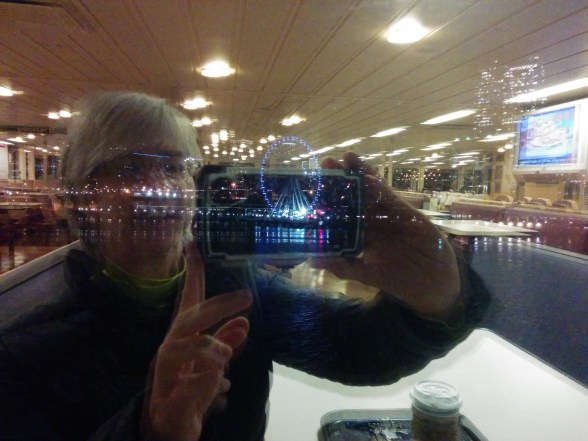
I took the stealthie on the first ferry from Seattle to Bainbridge yesterday morning. A quiet ferry with very few sleepy people…..


The dust stirs
This is not Konya
I am safe

Water falls from the sky on the dust
This is not Turkey
I am safe

The sun warms the dust
I am not of Islaam
I am safe

A seed stirs in the dust
I am not of Christian either: raised atheist
I am safe

A plant grows
I am not a man: a woman
I am safe

Peas ripen
I do not read the Koran
I am safe

Peas are harvested
I have no mystic tradition nor teachers
I am safe

Peas are dried
He does not ask a question
I am safe

Peas are soaked
He is not religious
I am safe

Peas are placed on slow heat
He chooses sex not love
I am safe

Peas come to a slow boil
He refuses love and leaves
I am safe

The ladle of the Beloved smashes down
None of it matters
I am not safe


Four myths about death

Currently I see myths about death and dying in the United States. These myths are very strong and lead to a disconnect between medical personnel and non-medical. The medical personnel talk about end of life and want the answers to certain questions. But we often fail to address the persons deep fears and concerns because medicine sees them as myths, and so there is a disconnect between what the patient and the medical person see as important about the discussion of death.

Here are the four questions and fears:

1. How can I avoid being kept alive on a machine?
2. How can I avoid dying in pain?
3. How can I avoid having too much done, too many resources used, and dying in a hospital?
4. How can I avoid dying of starvation or thirst?

1. How can I avoid being kept alive on a machine?

The myth here is that we can keep someone alive on a machine. We almost never can. Comas are extremely rare. There are a very few people who survive a high spinal cord injury, like Christopher Reeves, and can be kept alive for a period on a ventilator. Or people with a disease that leads to the failure of the breathing muscles: Steven Hawkings with ALS has outlived all predictions.

But for the most part we can’t. I have tried: I have had two patients in 25 years with brain death who had signed organ donor cards. When brain death is established, an organ donor team will fly in to a rural area. Meanwhile, I was to attempt to keep the patient’s body alive. One lived long enough and the other did not. I could not stop the death with machines or drugs and that person was already on a ventilator.

Part of this myth is fear relating to hospital settings. ICUs, intensive care units, frighten people. There are alarms going off and machines with blinking lights and it is brightly lit and quiet and alien. Why? If a person is on a ventilator, they are sedated. Otherwise they will automatically pull the breathing tube out or the urinary catheter or the iv or all of them. It is instinctive. They are sick, may be delirious or injured, they are not in their right minds, they are not logical. So they are sedated. Most of the alarms are rightly ignored by the nurses: most alarms are going off because the patient has moved and the machine is not picking up. The nurses learn to filter automatically which alarms are trivial and which alarms do need attention and are an emergency.

I wanted to see an elderly aunt. When I arrived, my cousin said I couldn’t because she was in the emergency room. I said that I am pretty comfortable in emergency rooms and thought I could talk my way back to see her, since I am a physician. We had to wait in the lobby for a couple of hours, but then they let me back.

Part of the drama and horror that shows up in ICUs is the family’s feelings. Family members may feel guilty or angry or afraid and they often lash out at each other. Families are both at their best and their absolute worst when someone is critically ill. I have a friend who still doesn’t speak to a sibling after their father died in hospice three years ago, because they disagreed so strongly on how he should be cared for. The hospital staff and nurses and doctors and maintenance people and laundry people and dietitians are used to families crying or arguing or even yelling at each other. We try to support the patient and the family. But we cannot make them agree and don’t try.

We will return to the “in hospital” death later.

2. How can I avoid dying in pain?

Wear your seatbelt, wear helmets, don’t drive in blizzards, change the batteries in your smoke alarm, don’t text while driving….

That seems like a joke, but not really. Accidents are in the top ten causes of death in the United States currently. People do die in pain if shot, in car accidents, in falls. If we can’t get to them and get pain medicine on board in time.

When death is coming, the fear is that we will die in pain from, for example, cancer. However, most people that I have seen dying of cancer DECREASE the pain medicine rather than increase. There are at least two reasons. One is that they want to be awake. As the kidneys fail, the pain medicine lasts longer. They may not need as much. If they are in hospice and have family present, my experience has been that they say “Turn it down. I don’t want it. I don’t need it.” They want to be awake with their family.

The second reason is that it really may hurt much less. When people stop eating and go into ketosis, some pain receptors are turned off. This is very interesting. I have been using it in clinic: my patients with osteoarthritis who try a ketotic diet say that the joint stops hurting when they become ketotic. One patient said that when her right hip stopped hurting entirely, she realized that the muscles from the left hip were very sore from limping. “After two weeks, I tried one piece of bread,” she said, “And the right hip joint pain came right back.” So a person with end stage cancer or end stage dementia, who does not want to eat, may have little pain or different pain.

Lastly, the most important pain when there is not a sudden violent death, is emotional pain. We may not want people to feel it, but it is better if we can stay present and let them. Stay present, stay kind, listen, do not shut them off. If we shut them off, it is because of our OWN fears.

3. How can I avoid having too much done, too many resources used, and dying in a hospital?

First, fill out a POLST form: Physician orders for life sustaining treatment. The first question is the one medical people want you to answer: if your heart and lungs STOP, and you are dead, do you want us to try to revive you? If someone is over 80, I don’t want to do CPR. I will break their ribs and if we DO get them back, they WILL have damage. People often say, “Bring me back if I will be ok.” I joke that we don’t have the little turkey pop up that says “Too late. Done.” But it is minutes until brain death. If you want to be revived, your best bet is to die in the emergency room in front of the emergency room staff. They can move very fast. The security guards in Las Vegas are also very very good at putting AEDs on people who drop dead from a big win or a big loss.

Living wills are better than nothing, but they often say “If two doctors agree that I am terminal within six months, no extraordinary measures.” This is entirely too vague. What do YOU mean by an extraordinary measure? A ventilator? Aspirin? An iv? No one has ever defined what an extraordinary measure is.

The other questions on a POLST form ask specifically about resources. Hopefully the medical person will explain a little: what is a ventilator, when would we use it, would oxygen be ok, are antibiotics ok, have you talked to your family about this? The POLST form can’t cover everything but it does give us an idea of what someone wants when they can’t talk to us. And it takes some of the burden off the family: father DID say what he wanted and it is in writing and he talked to his doctor about it. If you are the family, how are you going to decide what an extraordinary measure is?

Now: dying in a hospital. Our culture currently pays lip service to dying at home. Sort of. A survey of Veterans revealed THREE DIFFERENT IDEAL DEATHS. One: the Hallmark death, in hospice, at home, surrounded with friends and family making peace with the world. Two: Sudden death, no warning, no attention. Three: fight to the death. This person won’t go, will fight, a miracle is possible and they are NOT at acceptance. Do EVERYTHING.

And dying in a hospital. In residency in Portland I had two patients dying on my medicine rotation. One was a young man in his 20s, surrounded by family and friends, of HIV. He was in the hospital because that is where he felt comfortable and safe and could get immediate help. The friends asked if our team was tired of wading through a crowd to check on him each day. I replied, “No. I am so glad you are here. I have another person dying, and he has no one, an elderly man. He is alone except for me and the staff.” So we, the hospital staff, are the ones who try to comfort the elderly alcoholic dying, the cancer patient estranged from her family, the lost and depressed and solitary and addicted. And we don’t care what they did to get there, the sins committed, the regrets, the mistakes. We try to help as much as we can. I do addiction medicine in part because I felt so sad watching people with addiction die alone. So dying in the hospital is NOT a failure. Sometimes it is where the person feels safest or they don’t have anyone. And not having anyone is a failure of our culture, not of medicine.

4. How can I avoid dying of starvation or thirst?

When someone is dying of cancer or dementia or another slow disorder, they want to stop eating at some point. Sometimes the family gets them to continue eating and the patient will do so out of love for their family. They have no hunger or thirst. Renal failure sets in and the rising creatinine takes them into a gentle coma and then into the great mystery. This looks like a kind death to me: the brain is quietly sedated and put to sleep by the body, by the rising creatinine. Let them go. We will offer food and drink to anyone, but sometimes they are letting go….let them.

And here is a book I want and haven’t read yet: http://www.tc.umn.edu/~parkx032/AD-OUT-NET.html

nurturance

I love you I will miss you I am going
I am going to the Beloved I am going quietly
I am saying goodbye and bless you and thank you
for letting me love you but now

I want to be loved too and I am going
somewhere there are people who will love me
nurture me care about me and I can nurture them back
I have spent so much time loving people who don’t

love me or perhaps they love me but in a small way
in a limited way in a very closed off way
and now I am breaking the boundaries again but not
with the people who want these boundaries

I am looking for people who want to love and be loved
like the sky like space like the deepest ocean rift
who are not afraid of passion and arguing and loving
who are not afraid to be afraid to be joyous to be sad

I am looking for people who are not afraid to be afraid


I took the photo in a friend’s woods yesterday.

Also published on everything2.com today.

Fear stands

For RonovanWrites Weekly Haiku Prompt #79, the words are crystal and hope….

fear stands strong don’t look
crystal water reveals rocks
open eyes give you hope


I took the photograph in 2012, when my sister was referred to hospice for breast cancer. I took three trips to see her before she died. She was still very engaged with everyone on the second trip. But when she was not talking to anyone, her face was different. She was looking at eternity. She knew that I could see her doing it, because we knew each other so well. She did not want to talk about it to me until my last visit with her in this life. I felt so blessed and honored when she did talk to me, and I hope that she feels loved.


Go on

I must go on without you
the Beloved opens the path before me
let the past fall behind, the clear parts
and the murky, we alter each memory when we
pull the file in our brain and refile it,
I have duty you see, though I will miss you
terribly and keep inviting you along
as our paths diverge by millimeters
I wonder if you mind perhaps you are relieved
or perhaps you refuse to feel whether you mind
or not, we walk in parallel for now and can still
touch fingertips across the gap, more than
fingertips actually, but not for much longer.
I am still small compared to you yet when I said
to the Beloved that I don’t see how to
carry all of this, my back was infinitely broad and strong
for a period, as if a dream. Kiss me and leave, then,
if you must and I will love you always.

The picture is of early morning fog clearing 1/10/16.

Wean yourself

SoFarSoStu has tagged me for the three days, three quotations and tag three other people. This is day three, only I am a day late.

β€œThe rules are to post 3 quotes over 3 days and nominate 3 bloggers each time to carry on with the challenge.”

Today I choose Rumi’s phrase “Wean yourself” and post his poem. This is one of my two favorite Rumi poems.

Wean yourself
Little by little, wean yourself.
This is the gist of what I have to say.
From an embryo, whose nourishment comes in the blood,
move to an infant drinking milk,
to a child on solid food,
to a searcher after wisdom,
to a hunter of more invisible game.

Think how it is to have a conversation with an embryo.
You might say ‘The world outside is vast and intricate.
There are wheatfields and mountain passes,
and orchards in bloom.

At night there are millions of galaxies, and in sunlight
the beauty of friends dancing at a wedding.’

You ask the embryo why he, or she, stays cooped up
in the dark with eyes closed.

Listen to the answer.

There is no ‘other world’
I only know what I have experienced.
You must be hallucinating.

_____________

I love this poem. To me it’s about our human development and I love that we go from a searcher after wisdom to a hunter of more invisible game. Have you ever had the feeling that you have figured some part of your life out, that aha! moment? Smooth sailing now, you think…. only to find out that new challenges present.

I use this poem in clinic. When I am talking to a new patient I have to find out where they are, what some of their medical beliefs are, what their level of education is, what their prior experience with allopathic medicine is, do they see a naturopath, are they taking ANY pills? Prescription, over the counter, alternative, herbal, homemade? I read Rumi’s poem as a discussion about our levels of development: we come out of the dark to be an embryo. Where do we go from there? I have to understand at least some of my patient’s background in order to communicate with them: I have to meet them halfway. Sometimes I fail. Sometimes my doctors fail…. we experienced that when my mother was in hospice. We were not given instructions for how to take care of her nasogastric tube at home…. and it got blocked. I think that the inpatient nurses made assumptions and the hospice nurses may have too… or just didn’t know.

This poem also relates to how my thoughts about healing and health keep evolving. Currently I keep reading on the internet and hearing from patients that they want a stronger immune system. There are all sorts of “immune system boosters” being sold. I think this is interesting and I think it is a wrong approach. Why?

I have gotten seriously ill four times. Each was triggered by severe stress in my life: mononucleosis at age 19, influenza in 2003, systemic strep A in 2012 and systemic strep A in 2014. So… do I think that my immune system needs boosting? No. When I got symptoms in 2014, my thought was “I am so stupid.” My father had died in 2013. His will confused me, the house was full of his things, my mother’s things, my sister’s things, my grandparent’s things, all dead. I would work in clinic and then go out there and try to get things done and mostly sit and cry. I did deal with the estate, but what is wrong with this picture?

I ignored what I would tell a patient to do…. I did not take time off to rest and to grieve and to take care of myself. Rather than a failing immune system, I pictured my immune system marshaling troops. “She won’t rest. We are going to have to take her down AGAIN. Won’t she ever learn to listen to her body? When will she learn to REST? Let’s see, who doΒ  we have to knock her down…. ah, strep A! Great! Here, the door is open, take her out.”

And boy howdy, did it. I was out for ten months and ten months later am still on half time work. And I could have kicked myself! How stupid I am! If there is a major emotional loss in your life, cut back and rest and take time to let yourself heal!

So when people say, “I need an immune booster,” I wonder. I wonder what is happening in their lives, what their level of stress is, are they taking care of themselves. I worry that our culture thinks that we just need the right combination of supplements and then we can keep going and drive our bodies into the ground, instead of stopping and saying: “Oh. I am really cumulatively tired. I really need to rest, and sit at the beach and stare at the waves, or lie on the couch and read a silly novel, or just have a cup of tea and do nothing.” I don’t really like pills. I think that pills are often a band aid on a deeper wound than we admit. If I had rested, I would not have needed high dose penicillin: though I am deeply grateful to have another try at healing and health.

And three people to tag to do the three days of quotations if they so choose… everyone may be too busy at this busy time of year:

hargunwai

mindlovemisery

ohmyglai

The pink edged cloud looks like a giant paramecium or other bacteria, up in the sky….

The enemy

SoFarSoStu has tagged me for the three days, three quotations and tag three other people.

The rules are to post 3 quotes over 3 days and nominate 3 bloggers each time to carry on with the challenge.

I have to say quotation because I can hear my sister scolding me for “verbing” words.

My quotation is from Walt Kelly: “We have met the enemy and he is us.” Pogo Possum says this while he is looking out over the dump, and all the trash that humans have created and thrown away. This was a late strip in the series and earlier other swamp characters were complaining about the dump: then trash is identified from each character.

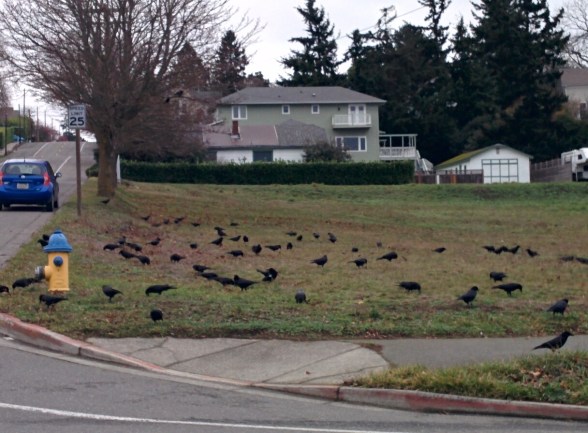
Last night I hoped I would remember a dream. I dream that I am in flowing water and I keep seeing creatures in the water. I pass over one at last that is huge and black. I think, a whale? But it is a gigantic crow, in the water, waiting to rise. A crow, a trickster, a giant black bird. It is not dead or drowned, it is awake and watching.

Three bloggers to continue quotations if they wish:

trablogger

ompong

Amanuensis Sobriquet-Reverie

I took the picture from the top of the mountain, skiing last week. I suspect skiing is not the best activity for my carbon footprint, but I do love it… and the world is so beautiful, isn’t it?


Leaver III

I have subsided back to where I was

before I fell for you

before I fell

you said, thoughtful, meticulous and shy

I am quiet, thoughtful, meticulous with patient charts
I am not shy so much as lonely
and mistrustful

I don’t trust many people

my small child self still loves you
but it’s a child love
and she knows you’re leaving
everyone has left her before
so she is very sad
everyone but me and the Beloved
so not everyone
but you are the first not me
that she opened up to

so yes, shy
she is terribly shy
she hid for years under rock
bedrock
in my soul

now she and I and Beloved
are walking hand in hand
in the gardens of my mind

thoughtful, meticulous and

shy


the photo is me, my grandmother and my father

Look longing

This is for Ronovanwrites weekly haiku challenge #75: the words are charm and look. The prompt includes that the first two lines should make a sentence with the opposite meaning of the sentence made by the second two lines…..

you gift a young girl
I see your charm, look longing
see you lie to me

I took the photo across the street from my clinic just a few days ago.