Hormones and rabbit holes

Medicine is confusing right now. Ok, it is always confusing because we try to base it on science and science is always changing. There are always special areas that are currently a mess. Hormones!

I speak to a patient recently who is female, premenopausal, and is getting hormone replacement therapy for hot flushes and not sleeping well from an outside source. The person wants me to order hormone tests. I do order hormone tests but not the ones she has in mind. I test a TSH, thyroid stimulating hormone, to see if she is low or high in thyroid.

She is thinking of me testing estrogen and progesterone and other related hormone levels. The party line from gynecology MDs and DOs is that these are not useful tests because women’s hormone levels are so varible. However, there are lots of naturopaths out there and functional medicine MDs and DOs who will test levels. Why is the patient asking ME to test them? Most of those naturopaths and functional medicine providers do not take insurance and charge cash. Also, insurance may not pay for them anyhow because the party line is that they aren’t useful. Why would the cash providers check levels? One reason is CASH. Another is to prescribe “bioequivalent hormone replacement”. Sounds natural, right? Well, the natural thing was for the hormones to stop at menopause and all of the hormones are either made in a laboratory from plant pre-estrogens or from pregnant mare urine, so bioequivalent seems to imply natural but it really isn’t. Pills do not grow on trees, they are made by humans in laboratories.

However, I question party lines, and off I go down the hormone rabbit hole. The current guidelines are that female hormone replacement, after menopause, should be lowest dose possible and only for a maximum of three years because of the increased risk of breast cancer. This doesn’t address my question: does premenopausal hormone replacement count as part of those three years? I may need to ask gynecology. I don’t think it counts. A woman is postmenopausal when she has had no periods for a year. Or had her ovaries removed. Or if she’s had a hysterectomy and still has her ovaries, a yearly follicle stimulating hormone and lutienizing hormone test. Both tests rise when the ovaries stop making hormones and eggs.

Also, there is another caveat. We know that when men are on opioids, the opioids can suppress their hormones and lower testosterone. Here is a paper: https://pubmed.ncbi.nlm.nih.gov/31511863/. Half the men studied in multiple studies had low testosterone when on chronic opioid therapy. 18429 subjects (patients) in 52 studies. That is a lot. Women studied? NONE. What? Yeah, none. Why? Here is part of the answer: about a decade ago I worked with the UW Telepain group and asked the head of the UW Pain clinic a question. “If opioids lower hormones in men, do they in women too?”

His reply, “I don’t know.”

“Have you ever tested a woman?”

“No.”

“Isn’t that sort of sexist?”

“Yes.”

So here I am, rechecking a decade later, and we still don’t know if giving women chronic opioids messes up their hormone levels. It would be more complicated and difficult to check women. We might have to do individual hormone baselines or something in premenopausal ones, say, 2 weeks after menses. Remember that for most of the history of medicine, clinical drug trials were only done in men, because, well, sexism. They said women could get pregnant. Yes, but then we gave the drugs to women who could get pregnant. Also, postmenopausal women can’t get pregnant. The whole thing seems stupid to me.

There is an interesting new finding here: https://neurosciencenews.com/estrogen-t-cells-pain-28548/ . Apparently in women, estrogen and progesterone work on receptors at the base of the spine to reduce pain signals using T cells, part of the immune system. The article says this doesn’t happen in men, but they were studying mice. The male mice didn’t seem to have worse pain after estrogen and progesterone were blocked. The female mice were in more pain. But wait, estrogen and progesterone are produced in men as a by product of making testosterone. Less than women, until menopause. Then the 70 year old man has more estrogen and progesterone than his postmenopausal wife. The article says that they don’t know why the receptors are in women and female mice (um, my intuitive guess would be childbirth and micebirth, right? Men don’t do that and women giving birth to a child after the first one sometimes say, “WHY did I want to do THIS again?” I think those receptors are so that women and mice can get through more than one pregnancy.) Now I need to read the article again because maybe men and male mice don’t have the receptors, even though they do have some estrogen and progesterone. Maybe they just don’t have enough estrogen and progesterone.

Maybe we can’t figure out women’s hormone because men aren’t smart enough, heh, heh. Yes, that is sexist right back at all those historical figures who didn’t study women.

At any rate, that still doesn’t answer my two questions: does premenopausal hormone replacement count towards the three year total beyond which hormone replacement increases the risk of breast cancer? And does chronic opioid treatment lower women’s hormone levels?

_________________

For the Ragtag Daily Prompt: hormone.

I took the photograph of a Port Townsend rabbit in 2011.

Forgiveness

Rumi writes about the wound being where the light gets in. Leonard Cohen says the cracks are where the light gets in. My poems about being reborn or changed seem to involve either burning or the sea. I wrote this in 2009.

Forgiveness

I want to forgive something
Someone
In fact a group
Something that hurt a lot
I’ve tried logic
I tell myself
“It was an expression of concern”

My heart doesn’t agree
It is sullen
Immobile and grumpy
It whispers
“They have not apologized”
It whispers
“When people say you’re crazy
It could be a joke
An expression of concern
It wasn’t
It was a palm held out
At arm’s length
To distance me.”

My head argues
“That’s what it felt like to you.
You don’t know their intentions.”

I want to write
A poem of forgiveness
Hoping my heart will follow

My conscious doesn’t write my poems
My conscious wrestles with an idea
The poem comes out of this struggle
I look at the poem I’ve written
I think,
“That is what I would like
my conscious heart to feel.”
My poem is often more generous
than my conscious feels

My poems are not mine
They are a gift
From the unconscious
It is much larger
Than the small conscious me
I dream of feeling envy
I climb into a bathtub
And transform myself
To battle a trickster
We are transported
To the bottom of the ocean

In the ocean
The trickster and I are one
It is unlimited
It is not my unconscious
There is no separation
It is all unconscious

I did not think
A poem would give forgiveness
But pain drove me
Into the sea
I am connected
You gave me these pearls
Thank you

For the Ragtag Daily Prompt: crack.

Long Covid and exercise

Today’s Schmidt Initiative Long Covid and exercise talk is very interesting and discussed controversies! It clarifies an argument that I have not understood very well.

Dr. Abramoff is the speaker. He calls his talk “The E-Word and Long Covid”.

His lecture broke down into three sections.

I: Exercise is good for most people and most conditions. Hippocrates thought so and there are tons of studies. We still frequently fail: more than 1/3 of world population is insufficiently active in studies. No improvement over the last 20 years and a decrease of activity in high income countries, work more sedentary, transport more sedentary, inactivity in time off. (I would add screens to that list.)

II: Before Covid, there is a study that raised major controversy regarding ME/CFS (myalgic encephalomyelitis/chronic fatigue syndrome) and exercise. The paper randomizes people with ME/CFS into four groups. 1. GET — graded exercise 2. Adaptive pacing. 3. CBT – cognitive behavioral therapy and 4. usual treatment. The study has 160 people in each of the four groups. They report lower fatigue scores in groups 1 and 3, graded exercise therapy and cognitive behavioral therapy, but not group 2 and 4. The benefits seem to still be present after two years.

There is a significant backlash from the ME/CFS population, saying this β€œcontradicts the fundamental experience of our illness”. Controversy came out over the study’s patient selection, outcome measure selection/subjective nature, lots of letters. The result is that exercise and PT are removed from NICE and CDC Guidance Statements for treating ME/CFS.

The problem is that exercise can lead to post exertional malaise (PEM) which is not just normal tiredness or soreness from starting a new exercise. People can be bed-bound and can have trouble with ADLs (Activities of Daily Living) for days or weeks. It can disable them from working and make them worse and we still don’t know why.

Another study looked at two days in a row of activity in people reporting PEM and impaired recovery. Day one had fairly normal exercise measurements, but day two showed lower VO2 peak, reduced peak heart rate, reduced endurance, reduced peak oxygen uptake, increase respiratory exchange ratio. Something changed. This study did not have controls.

So exercise for ME/CFS is still under study, controversial and rather loaded, since in the past patients were ignored, told they should just exercise, and treated badly.

Part III:

So does Covid trigger ME/CFS? In some people is it the same? That is still unclear.

Many of the treatments are from ME/CFS – lots overlap for many. 58% of Long Covid patients meet the definition of ME/CFS (Every lecture I’ve heard gives different statistic. Constant change.) PEM is common. PEM is a major diagnostic criteria – post exertional malaise is weighted more heavily than fatigue.

The initial studies came from Italy and were on people who survived hospitalization. They mostly improved with exercise and were thought to be deconditioned.

More studies follow. Eventually studies are partly post hospitalized and partly people never hospitalized. Most of those studies show some improvement with exercise. The length of study and what they measured are all different.

In Italy there is an observational study of 506 persistent fatigue long covid, non hospitalized, group of very active before covid, skiers and ski instructors as well as previously sedentary people. Active groups had less fatigue at 12 months compared to inactive groups. Their conclusion is that functional limitations are much more transient than ME/CFS.

Conclusions: We need more clinical trials!!!

Part of the controversy is over the Recover trial in the United States that is coming up. The Recover study has 1.15 billion in funding for 4 years. There is a proposed exercise trial with PT at different intensities. There is a backlash from ME/CSF groups, who say that people with post exertional malaise should be excluded and the money should go to studying pharmacologic treatments and a potential cure.

My take on this: it is complicated. The panel discussing this says quite sensibly that each patient is different and we have to sort out and look for Post Exertional Malaise. It does change over time. It looks as if people may recover a bit better from Long Covid PEM than overall ME/CFS. However, we have known for a while that ME/CFS can be triggered by one in ten severe infections (or by stress or both!) so it is scarcely surprising that Covid-19 would trigger it. The panel says that if it’s post hospital or there is no PEM, then go ahead with graded exercise. For the PEM folks, be cautious. And the PEM folks who are athletes don’t have a good concept of pacing and find it outrageous that their bodies are responding negatively. Function and exercise level before Covid-19 is important but it does not determine who will improve.

There, can I go? My brain is full, well fed with a lot of information today. I’ve tried to pass it on to you.

Many thanks to the Schmidt Initiative, Dr. Abramoff and the panel and speakers and organizers.

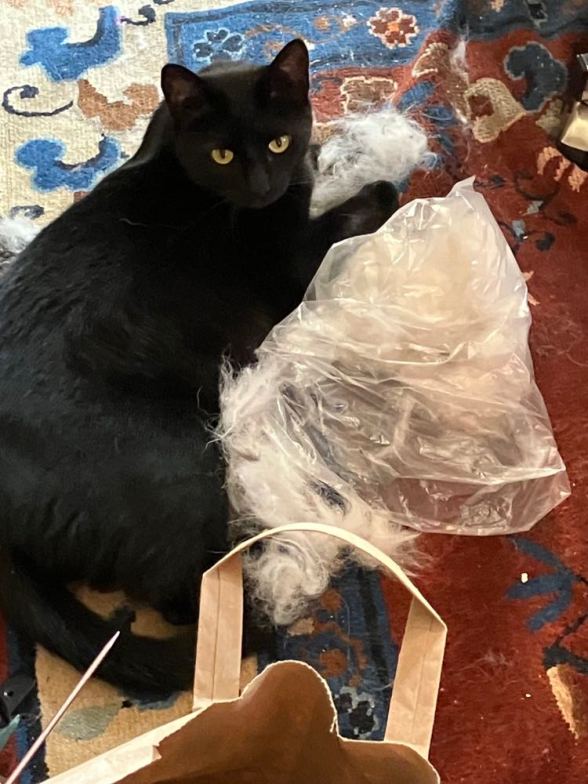
For the Ragtag Daily Prompt: feed. How many hours a day do cats loll? Is it fatigue or do they just like it?

Pulmonary Manifestations of Long Covid

Today’s Zoom lecture was about pulmonary manifestations of Long Covid, and this is from the Schmidt Initiative for Long Covid Global ECHO Webinar Series, out of the U of New Mexico.

First of all, the talk is brilliant. The speaker is Lekshmi Santhosh, MD, MAEd, Asso Prof Med, Pulm Critical Care Med, UCSF, Intensive Care.

Two things to start with: she stressed the six minute walk test for patients, to distinguish oxygen desaturation (dropping) from the people who have terrible tachycardia (fast heart rate) only. The oxygen drop indicates that the person needs lung studies and may need oxygen, while tachycardia alone means either a heart problem, chronic fatigue/ME pattern or dysautonomia, where the heart goes fast when the person sits or stands up. Her point was that it’s a simple test and that Long Covid presents in multiple different patterns.

The second point is that there are least five main mechanisms that Long Covid can mess us up and people can have one or many. There is a review article in Nature last month (I need a copy!) and it talks about these five: immune system problems, gut microbiome problems, autoimmune responses, blood clotting/microclotting/endothelial problems and dysfunctional neurological signalling. SO: this is a MESS. She says that patient care needs to be individualized depending on which mechanism(s) are predominant and it can be more than one. This Covid-19 is a hella bad virus.

So: “The underlying biological mechanism may not be the same in each patient.” That is the understatement of the year.

She reiterates that the current diagnostic criteria, subject to change, is symptoms that last longer than 12 weeks after Covid-19 and two months past that. She states that the symptoms can wax and wane and that we need to listen to and believe patients.

In JAMA this month, there is an article that uses big data to find which symptoms are more associated with Long Covid, and lists 13 symptoms. Smell/taste tops the list but fatigue is there too. However, this is not a list for diagnosis, it’s a study list.

She also is careful to say that the treatment for the pulmonary manifestations is not the same as the people with the pattern that resembles chronic fatigue syndrome/ME. The pulmonary people can build exercise tolerance, but the CFS/ME folks need a different regimen, with pacing and energy conservation. That sounds like a subtle difference. I had both though my CFS/ME is weird. It does not put me in bed, I just can get really tired and need to sleep. It’s a bit invisible. People see me dance and would not guess that I have CFS/ME. All relative to previous function and energy, right?

For lung manifestations, she lists a pyramid, with the more rare things at the bottom. As follows:

  1. persistent dyspnea (shortness of breath)
  2. post viral reactive airways disease (asthma that can resolve from irritated pissed off lung tissue)
  3. deconditioning. She says that the isolation and quarantine with some people in very small rooms, leads to terrible deconditioning in some folks. They can build up, especially with supervised exercise with pulmonary rehabilitation and/or physical therapy. It is scary to exercise when you are short of breath and the supervision really helps, with limits on how much you should push, or encouragement to push.
  4. organizing pneumonia. This is rare and responds to steroids. Otherwise steroids are not good for the muscles in Long Covid, with the exception of inhaled steroids for the asthmatics and post viral reactive airways.
  5. post ARDS fibrosis: fibrosis is fibrous scarring that can form in the lungs. Anyone who has any terrible pneumonia and is in the ICU and intubated and on a ventilator can get this. Not everyone gets it, thankfully. ARDS is Acute Respiratory Distress Syndrome. Luckily the fibrosis is rare and it turns out that in some people it improves with time, like years. She does not recommend the pulmonary fibrosis medicines right now. There are many causes of pulmonary fibrosis besides infection.
  6. PVD: peripheral vascular disease. Covid-19 increases clotting, so we have to look for both clots and for disease in arteries, which could be lungs, brain, heart, anywhere in the body.

She says DON’T assume that chest pain is from the lungs and don’t miss cardiovascular. That is, rule out a heart attack and pulmonary embolus first.

Other lung problems have to be kept in mind that are not caused by Covid-19. This list: Reflux associated cough, pleuritic pain, neuromuscular disease, vocal cord dysfunction, tracheal stenosis, tracheomalacia. Watch for those. She says that it is very very important to look at old chest x-rays and CT scans, because those can show previous signs of emphysema/COPD/asthma/fibrosis.

Testing: She puts the 6 minute walk test first. AFTER the thorough history and making sure there are no red flags for pulmonary embolism and heart attack. Those have to ruled out if there is any suspicion. Next: pulmonary function testing. If the DLCO is low, consider a chest CT. Consider TTE -TransThoracic Echocardiogram, to look at the heart. Labs: CBC (blood count), ESR, CRP, thyroid, +/-CPK.

She has diagnosed people who are sent to her with NOT Long Covid: they have metastatic lung cancer, metastatic prostate cancer, new pregnancy, hypersensitivity pneumonitis and many other things. She says, “Don’t assume it is Long Covid. Sometimes it isn’t.”

Now, this is all a formidable list of problems and this is JUST the lungs. Long Covid can affect every system in the body and every patient is different.

She also says that she has done more disability and accommodation paperwork in the last three years than in her entire career before that. That the US disability system is a horrid mess and that she has to talk to employers and insurers OFTEN to say that the person will get better faster and have less long term problems if she treats now and they have rest and return to work may need to be very gradual.

She approaches new patients by asking which symptoms are worst. She thinks about severity of the infection, vaccination status, previous/present other medical problems and habits that can contribute or worsen things (smoking, vaping, exposures). Her clinic is for Long Covid pulmonary, but now they have opened up a neurological branch. They use multiple other specialists as well.

Last quotation: “Until we elucidate the biology and have clinical trials, treatments are largely symptomatic.” So the basic science studies working on immune system, the gut microbiome, the clotting problems, are huge in figuring out what to do in clinical trials. This is a tremendously complex illness and three years into Covid-19, we are still trying to figure out the multiple mechanisms that cause Long Covid.

This was a very hopeful lecture from my standpoint, admitting that this is complex but that we are also working to sort out the mechanisms and work on treatments. She works hard at getting patient input and feedback as well.

Two links: A free PDF from Johns Hopkins on Bouncing Back from Covid. https://www.hopkinsmedicine.org/physical_medicine_rehabilitation/coronavirus-rehabilitation/_files/impact-of-covid-patient-recovery.pdf

The American Physical Therapy Association has articles as well: https://www.apta.org/patient-care/public-health-population-care/long-covid

Also here are webinar links:

SILC Global ECHO Webinar Series Resource Links June 28, 2023

Now, how will I use the Ragtag Daily Prompt riposte for this? I think I will just say again how important it is to listen to and believe our patients!

The photograph is from Marrowstone Island, East Beach. The shape in the driftwood is sort of lung shaped.

Not immune

I am attending multiple Zoom conferences on Long Covid and Chronic Fatigue and PANS/PANDAS and fibromyalgia. The speakers are talking hard science, digging in to the immune system to figure out what is wrong. Then they can find a drug to fix it.

Maybe it doesn’t need to be fixed. I think the immune system is smarter than we are and it knows that Covid-19 is a really really bad virus. What the immune system wants is to keep from getting any other infections so it shuts us down. It hits the chronic fatigue button, so we stay home or in bed. It hits the fibromyalgia button so that it hurts to move: we stay home or in bed. It hits the PANS button so that antibodies seriously change our behavior and we stay home or in bed. Anyone see a theme here? I think that the immune “over-response” is not an over-response. It’s not broken. It is trying to reduce exposure and just maybe we should pay attention. I thought that in residency, in the early 1990s, when chronic fatigue patients would interview me to see if I “believed” in chronic fatigue. Heck yeah, I said, but I don’t know what it is or how to fix it. My chronic fatigue patients had something in common: they were all either working 12-14 hour days continuously when they crashed, or they overworked and had insane stress, deaths of loved ones, car wrecks, accused of a crime, something horrible. The workers all wanted “to get back to where I was.” I would ask, “You want to work 12-14 hours a day again?” “Yes!” they’d say, “I want to be just like I was in the past!” “Um, but that’s what crashed you. Do you think maybe your body is not up to that?” “FIX ME.” I would try to improve things, but fix them back to what crashed them? No way and anyhow, that is not really sane.

There are some levels of illness where we have to intervene. In really bad PANDAS, antibodies to the brain are followed by macrophages that destroy brain cells. I was horrified and wanted to run around screaming “NOT MY BRAIN!” when I heard that. Then I thought, don’t be silly, I am in my 60s and if I had brain eating cells it would have happened by now. I consider myself really really lucky to have the mildest version. At least, that’s what it seems to be. (Officially we don’t believe in PANS or PANDAS in adults in the US but we do in Europe and Canada. Ironic.) With that version, especially in children, I am all for intervention, as soon as possible. And it’s not that I do not think we should intervene in these illnesses. I just think we need to step back and think a little and just maybe listen to our bodies and listen to the immune system. Slow down. Breathe. Watch some stupid cat videos. Whatever makes you relax and laugh. Reduce stress. Limit stupid hyper news to 15 minutes a day and not before bed, ok? Reduce the drama.

I am liking movies less and less. The drama bugs and bores me. I might last an hour. I have nearly quit going to our downtown movie house because it’s always “moving” and art films. Bleagh, drama. Also when it’s about illness or addiction, I want to argue with it. Easy lying endings which are nothing like reality. I like cartoons and sometimes superheroines, but it’s all drama too. I am tired of people behaving badly and don’t want to watch it on tv or a movie. There’s enough for me in the real world. I think it’s time to bring back musicals. I would watch them. Maybe. My father’s last movie was Blazing Saddles. He refused to ever go to another movie. I think I understand that now.

None of us are immune to stress or immune to infection. A person might be immune to Covid-19, or they might be immune until the tenth or hundredth strain shows up. I chose Family Practice for my specialty because I wanted to have children and be able to see them. I thought about Obstetrics-Gynecology or General Surgery, because I loved babies and loved surgery, but the Ob-Gyn residency was 4 years and General Surgery was 7 years and I was starting medical school five years out of college. Choose the more flexible and portable specialty and go rural.

Doctors and nurses are burning out because hospitals and administrators “maximize production”. Hospitals and administrators are stupid and destroying medicine. It’s not about money, it’s about helping people and science and healing. Having it be about money is soul-destroying and causes moral injury to any ethical provider. If we’d prefer unethical ones, keep on the present path. Otherwise we need single payer health care so that any physician or nurse can take care of whoever shows up. The system is breaking down more and more and it is hard to watch. Another nail of stress in the coffin of ethical medicine. I suppose when enough people die, change will come.

My working theory is that anyone can get one of these immune system illnesses: chronic fatigue, fibromyalgia, PANS/PANDAS and so forth. Medicine says that Hashimoto’s Thyroiditis, antibodies to the thyroid is the most common autoimmune disorder, but that may change. The evidence is mounting that Long Covid and these other “vague” illnesses are immune system shifts. Immune systems in “Code Red”, let’s not catch anything else. Are they an illness or are they our immune system trying to keep us quiet to protect us? I think the latter. Time may tell. I am listening to the science and listening to my body, both.

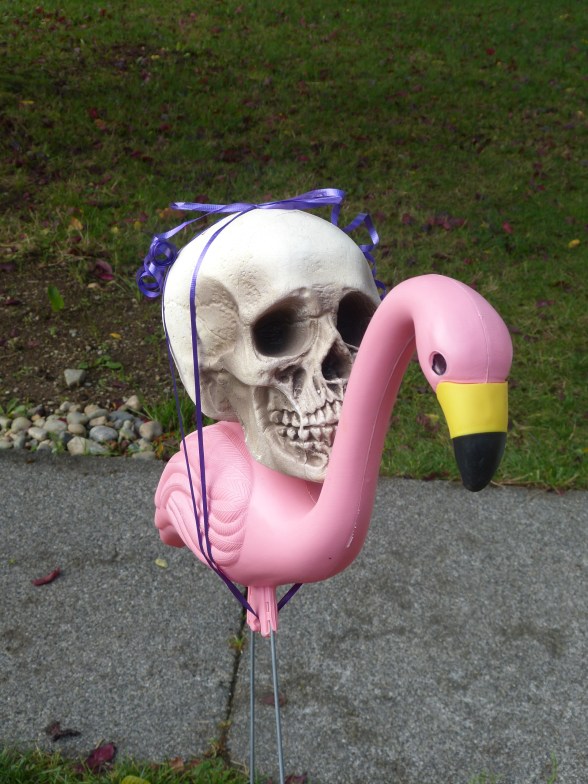
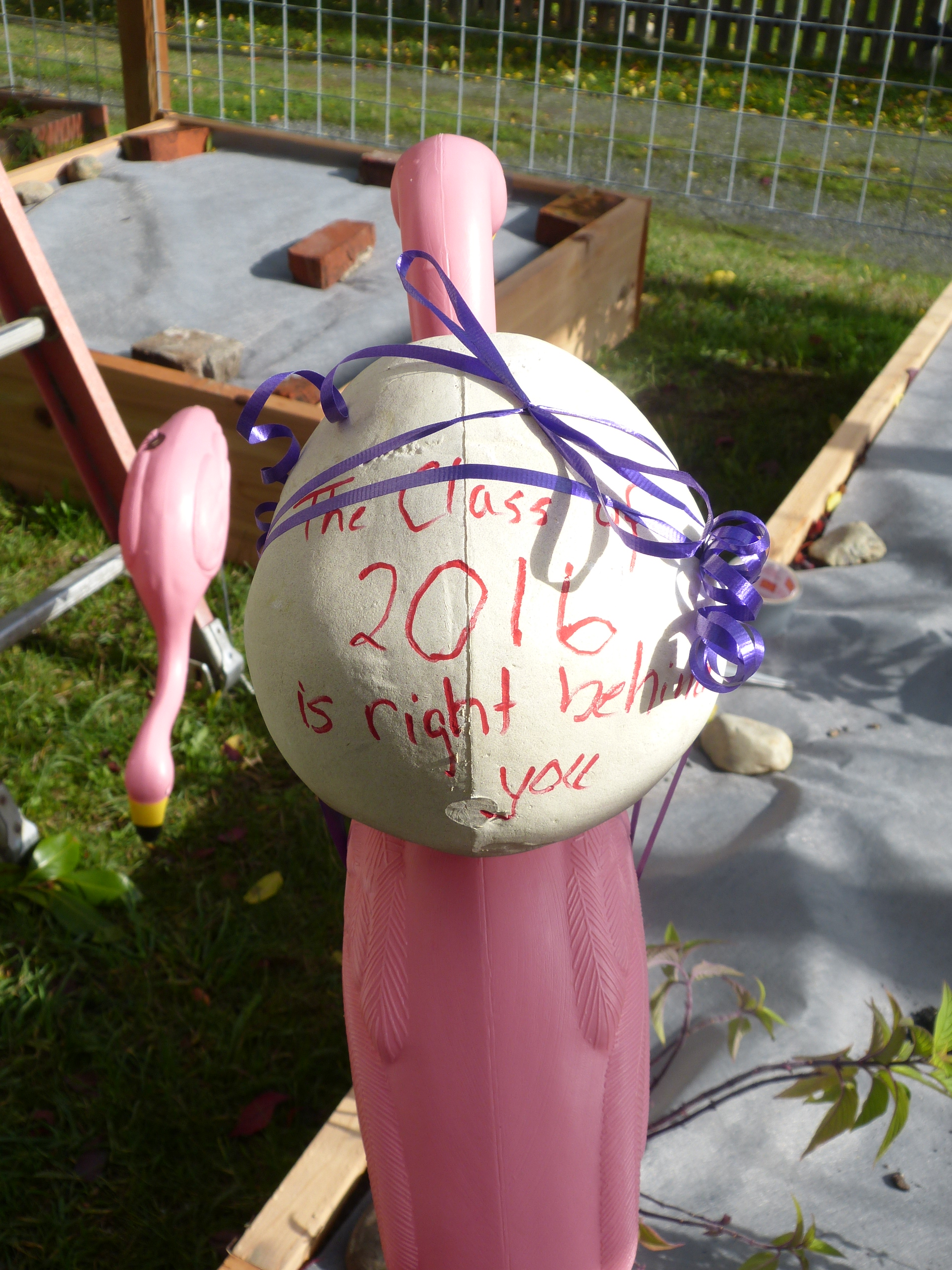
The photographs are from 2016, when a flock appeared in my yard. They demanded money to be moved to the next house.

For the Ragtag Daily Prompt: fiddlesticks. Oh, fiddlesticks, we have to figure out the very very complicated immune system. Or listen to it.

Frame

What is the tree and where is it?

I am still thinking about the Inflammatory Brain Disorder Conference.

The researchers and physicians are talking about the immune system as if it is broken in Long Covid and ME/CFS and the other illnesses, but I am not sure I agree. Maybe the immune system knows what it is doing. Maybe Covid-19 is a really really nasty infection and the immune system sends out antibodies to make us stay down, stay in bed, rest and keep from catching something else. Maybe an antibody that suddenly makes you weird will make you isolate and hide and not interact with the other potentially infectious humans.

Ok, the inflammatory brain disorders that destroy the brain, those are not adaptive. However, I’ve thought that MC/CFS was a “repair mode” since residency.

When I had my third pneumonia in 2014, I refused to admit to myself that I had chronic fatigue. It was sort of obvious. I went back to work six months after I got sick and seeing just four or five patients left me exhausted. I would come home and sleep on the couch. I also skipped breakfast, because I would go to sleep as soon as I ate. My blood sugar was fine and it was not a food allergy. It felt as if my body wanted to do repair work and wanted me to sleep while it was doing the repairs. I would sleep after lunch. For the next six months of work, I slept twelve hours a day and hoped that I would not have more than five patients. Also that I would not get sick.

We had everyone who had upper respiratory symptoms or a cough wear a mask and I wore one too, hoping to not get another pneumonia. That worked. I only got sick when I went to work in another hospital clinic system. I kept walking into rooms with patients with their masks off. I got Covid-19 in a mere five weeks there, after going a year at my clinic without getting it.

I spoke to a friend yesterday. She was talking about her damaged immune system. I said I didn’t think of it as damaged. With enough stress and infection, I think the immune system gets primed. And then it is as if it has PTSD: the immune system says, “Enough already! We are not going to LET you overdo and get sick again! We are putting you DOWN to sleep if you overdo!” It is an extreme version of “listen to your body”, as if the body is shouting. The immune system is hyperalert and goes all out if there is any threat or suspected threat.

Maybe we need to be more gentle with ourselves and each other. The US culture is so oriented to production and work and money as success. But is that really success, if we work 20 hours a day and drive our immune system to desperate measures?

Maybe we need to learn to relax. To take time off. To breathe.

And the talk about Mast Cell Activation Disorder said exactly that. We need to teach how to go from the sympathetic fight or flight crazy to the quiet, relaxed, parasympathetic state. That quiets the immune system down very nicely.

It won’t fix everything, I am not saying that. But it is something everyone can learn. Slow breathe, in five and out five. Practice.

Breathe.

______________________________

The tree is a Redwood and it’s in the Chimacum Woods Rhododendron Nursery. Not just rhodys and on the Olympic Peninsula.

BRAINS

On Thursday and Friday I spent six hours daily glued to zoom, for the Inflammatory Brain Disorders Conference. Speakers, both physicians and scientists and physician-scientists, from all over the world, spoke. The research is intensive and ongoing. They spoke about Long Covid, both the immune response and “brain fog”. They spoke about anti-NMDA antibody disorder (the book Brain on Fire) and now there have been over 500 people identified with that disorder and a whole bunch more antibody-to-brain disorders! They talked about PANS and PANDAS and chronic fatigue and Mast Cell Activation Disorder and about the immune system over and over. The new information is amazing and I need to reread all my notes. Psychiatry and Neurology and Immunology are all overlapping in research, along with Rheumatology, since these disorders overlap all four.

It is a medical revolution in the making.

Best news was that 96% of Long Covid patients are better by 2 years from getting sick. That is tremendously reassuring, though the number may change. And the definition of Long Covid is still being sorted out and we do not know if people relapse.

I felt that MY brain was MELTED by the end, but I managed to enjoy the Rhododendron Parade on Saturday and just puttered around the house on Sunday.

Working theory

I attended two Zoom one hour programs on Long Covid this week.

Thursday from the University of Arizona, 330 people logged on, hard science with thirty minutes of information about Mast Cell Activation Syndrome. They said 17% of the population, which is huge, if it’s correct. This is not mastocytosis, the cancer. This is the immune system going rather batshit. Though I would frame it differently, as the immune system fighting a really difficult battle.

Friday from the University of Washington. I don’t know how many were logged on. This was at a much more aimed right at the physicians level. People sent in questions and they collated and gave answers. They promised to answer some of the questions later on. My question was whether a high Adverse Childhood Experience Score predisposed to Mast Cell Activation and they did not address that.

So mast cells apparently can produce over 1000 different signals: cytokines, histamines, proteases and I don’t know what all. They are all over our bodies (are you creeped out? I am a little.) near the boundaries: skin, nose, gastrointestinal tract, genitals. They produce different signals depending on what is happening. The Thursday researcher basically said that they could affect nearly any system in the body.

I’ve heard of mastocytosis and even had a patient with it, but Mast Cell Activation Syndrome was barely on my radar. I am not sure if 17% of the population is at risk or has it. It is tricky to diagnose, because the best lab test is a rather tricky and rare one, and it is sort of an orphan illness: few doctors know about it and it does not fit neatly into any specialties. Patients have seen an average of ten specialists before they get diagnosed. Hmmm. Sounds familiar.

This researcher has a ton of papers out, that I have not started reading yet. MCAS is implicated in Ehlers-Danlos, a connective tissue disease and in ME/CFS (myalgic encephalomyelitis/chronic fatigue syndrome) as well as POTS (postural orthostatic tachycardia syndrome) and can get triggered by Covid-19. Well.

The good thing is that treatment is quieting the sympathetic nervous system to let the parasympathetic take over. The sympathetic is the fight or flight hyper one. Parasympathetic is the rest, relax, mellow out, slow heart rate, blood pressure down, digestion and quiet one. I think United States culture is crazy fight or flight most of the time (We’re number one!– so what?) and the pandemic has put the whole world into fight or flight mode. Crazy.

Back in Family Medicine residency, 1993-96, I had a number of ME/CFS, chronic fatigue patients. They tended to be hyper sensitive to medicines and have all sorts of symptoms which were fluid and changable and difficult to pin down. What I noticed though is that many of them had been super high acheivers or working multiple jobs or crazy high stress, until they hit some sort of wall. Often an infection but not always. The ones I saw wanted to go back to working 18 hours a day. I said, “Um, that’s how you got this, I do not think that is a good goal.” This often pissed people off. Even back then, I thought that chronic fatigue was a body reset, where the body rebels, some sort of switch is thrown, and people rest whether they want to or not. Some do recover but it can take ages. The Thursday speaker seems to think it’s the mast cells doing this.

The UW speakers were careful. They said we do not know how long Long Covid lasts. One said they do not like to diagnose POTS, because POTS is usually permanent and the Long Covid tachycardia usually resolves. They are seeing people who got sick 2-3 years ago and are still sick, but they also have people who have recovered in 9-12 months. They do not know if patients are entirely recovered or whether there will be other problems later. They also aren’t sure that the chronic fatigue like symptoms are the same as the rest of the ME/CFS. Remember when dementia was Alzheimer’s? Now there are all sorts of different dementia diagnoses, Lewy body, frontotemporal, Huntington’s, stroke dementia, alcoholic dementia, Parkinson’s, Alzheimer’s, and others. When I was in residency, we had hepatitis A, hepatitis B and non A non B. Now we are up to G or beyond. Medicine changes and it’s moving as fast as possible for both acute Covid-19 and Long Covid.

The mast cell reasearcher talked about getting the sympathetic and parasympathetic nervous systems back in balance. I think maybe we ALL need that. Every person in the whole world. One way to quiet the sympathetic nervous system is to slow your breathing. Try it. For five minutes, or three minutes. Slow breath in for a count of four or five and slow breath out for a count of five. Let your brain roam around and fuss, but let go of each thought as it passes by and return to counting and breathing.

Slow in, slow out.

Practice and heal.

_____________________

The musicians are Johnathan Doyle and a friend. They were fabulous, last Tuesday at the Bishop Hotel.

.

Xeno or infection phobic?

So is Xenophobia a pathological fear of strangers or foreigners? Like agoraphobia or arachnophobia? The Mayo Clinic site has a listing for agoraphobia but not for arachnophobia or xenophobia. Perhaps agoraphobia is more disabling. Though with our world having more and more people, xenophobia might be terribly dangerous as well.

Current world population: https://www.worldometers.info/world-population/.

Number of people with Long Covid: at least 65,000,000, though the talk I attended yesterday say that’s a low estimate. Nearly one percent of the world population.

This article in Nature: https://www.nature.com/articles/s41579-022-00846-2 is about Long Covid, the research to date and the areas that need research. This is a very fast moving target with information exploding from multiple labs.

I attended an on line continuing medical education about Long Covid yesterday: https://hsc.unm.edu/echo/partner-portal/echos-initiatives/long-covid-fatiguing-illness-recovery/. This is a global monthly teaching session about Long Covid and current research and diagnosis and treatment. Yesterday’s talk was about immune cell abnormalities that persist and evidence is showing up that they are causing some of the problems. However, as one researcher said, the problems are multifactorial and any system in the body can be affected in more than one way.

Essentially some of the immune cells are puffy, sticky and enlarged. The suspicion is that the postexertional malaise is related to these puffy sticky cells. During exercise, or for some people normal activity, the muscles need more blood flow and more oxygen. The puffy sticky cells are stiff and won’t slide through capillaries easily. The muscles send a panic “I need oxygen!” message to the brain and the muscles do not work. The recovery can take a day or two days because of the food/oxygen deprivation. The researcher said that the same mechanism is suspected in ME-CFS (myalgic encephalopathy-chronic fatigue syndrome).

My muscles are feeling normal. My chronic fatigue is comparatively mild and happens with bad infections or with a vaccine that raises antibody levels, as it is supposed to. That’s how immunizations work. Do I have antibodies that shut down my muscles or do I have puffy cells? I would postulate the former but I can’t be sure right now. My home science kit is not quite up to that study.

When my fast twitch muscles are not working, are affected, it is very weird. They DO NOT WORK RIGHT. It is hard to describe: it is sort of pain, but it’s more of a very very strong STOP EXERCISING NOW message. And then I am exhausted for 1-2 days. In contrast, my muscles are a bit sore after a four mile beach walk 2 days ago and then an intense physical therapy session, but I am not exhausted. No naps the last two days. I have returned to my normal sleep patterns, less hours.

One of the researchers presented new technology that can make a movie of the microscopic cells going though a space with a narrowing like a capillary. Video electron microscopy. They are describing the cell shapes and whether they go through a capillary diameter normally or stick, for people with no Covid, diabetics, acute Covid and Long Covid. All are different. It is fascinating new technology.

I think I am more infection phobic than xenophobic. People all have the same basic blood cells inside, even with lots of different genetic patterns. So far infection phobia has not led me to agoraphobia, but the talk yesterday sure makes me want to keep my mask on.

There were over 350 attendees yesterday from all over the world. Lay people can sign up as well and the videos are stored for anyone to watch. I will watch yesterday’s a second time because five different scientists presented in 30 minutes and I ignored the chat which was going full speed with references to look up. Homework. And progress is being made.

Blessings.

______________

For the Ragtag Daily Prompt: xenophobia.

______________

I took the photograph two days ago from East Beach on Marrowstone Island. The distance between the sea lions and the container ship is much further than it appears, and this is taken with a Canon PowerShot SX40HS zoomed most of the way out.

As I was going to Washington, DC

As I was going to Washington, DC

I met insurance CEOs who said “Whee”!

500 Insurance CEOs said Weeee!

Have ten insurance plans EEEEEach!

Every plan has it’s own website!

Every plan is different, password for each site!

Every plan refuses coverage for different treatments, right?

Every plan demands prior authorization, doctor’s office up all night

If they refuse chemotherapy the doctor has to fight?

Prior auths, treatments, passwords, plans

Insurance companies, all those demands

As I was going to DC

How many passwords will I need?

______________________

For the Ragtag Daily Prompt: snail.

I was pricing health insurance in case I get well enough to work more. I can get an $800 a month with a $8000 deductible or a $1435 a month with a $2000 deductible. I would very much like to work part time treating Long Covid. But, ironically enough, looks like I can’t afford health insurance. It costs more than the malpractice would. Ironic, huh? It’s not like we need doctors. (I do not have a medical release yet anyhow, but time to do research. It’s making me gloomy.)

You know, if we do get Artificial Intelligence, it will take one look at the United States Medical non-system, decide we are insane, and wipe us out.

And honestly, when I was working for the hospital clinics, I thought the most brilliant person in our office was the woman who could extract a prior authorization from so many insurance companies. I would send the referral to print and half the time she would have it authorized by the time the patient got to the front desk. And why do we waste all that brilliance on giving health insurance companies a profit of 20 cents out of every dollar? That is $20,000,000 out of $100,000,000. Looks worse with bigger numbers, doesn’t it?

Physicians for a National Healthcare Program: https://pnhp.org/.