At what age should we talk to our kids about drugs?

I am a rural family physician and my recommendation: before age 9. Before third grade.

WHY? Your eyes are popping out of your head in horror, but my recommendation comes from surveying my patients. For years.

The biggest drug killer is tobacco. However, it takes 30 years to kill people. It is very effective at taking twenty years off someone’s life, destroying their lungs, causing lung cancer, heart disease, mouth cancer, breast cancer, uterine cancer, stomach cancer, emphysema, heart disease….

I ask older smokers what age they started smoking. This is informal. This is not scientific. But most of my male older smokers say that they first tried cigarettes at age 9. I think parents need to be talking to their children about cigarettes by age 9.

And then start talking about alcohol and illegal drugs and the terrible dangers of pills.

“My innocent child would never….” Unfortunately my daughter said that as a senior in high school in our small town, there were 4-5 kids out of the 120+ that were not trying alcohol and marijuana. But there are kids trying far worse substances. We have methamphetamines here, and heroin, and pain pills sold on the street.

The perception that pills are safe is wrong too. Heroin is made from the opium poppy and it’s rather an expensive process, not to mention illegal and has to be imported from dangerous places. But teens take oxycodone and hydrocodone, bought on the street, to get high. And now drug sellers are making FAKE oxycodone and hydrocodone and selling that on the street. It contains fentanyl, which is much much stronger. If the dealer gets the mix wrong, the buyer can overdose and die.

Talk to your children young! NEVER take a pill from a friend, never take someone else’s medicine, never take a pill to party! YOU COULD DIE! And if you have a friend that is not making sense, that you can’t wake up, DON’T LEAVE THEM! Call an ambulance. Your friend may have used something illegal, and may not want you to call an ambulance. But if you think they are too sleepy….. don’t take a chance. People can get so sleepy, so sedated, that they stop breathing.

And parents, you are the ones that have to set a good example. Don’t drink alcohol every night. Don’t use pot every night. Take as few pills as possible. Pills aren’t necessarily safe because they are “supplements” or “natural” — hey, opium and heroin are plant based! Stop using tobacco and if you have a hard time doing it, tell your children you are struggling. It takes an average of eight tries to quit smoking. Get help.

Lastly, we talk about childhood innocence, but we let kids babysit at age 11. That is the Red Cross youngest age. My daughter took a babysitting course at age 11 and babysat. If we think they are responsible enough to do CPR, call 911 and do the heimlich maneuver, shouldn’t we also be talking to them about addictive substances by that age?

Talk to your children about addiction young… so that they can avoid it.

I am submitting this to the Daily Post Prompt: calm. I am not calm about this topic, but the photograph is calm…. and if we can help more children and families…..

Thanks

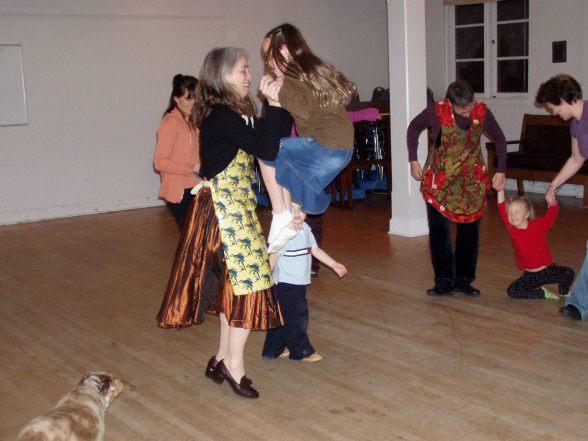
The photograph is from Thanksgiving in 2007, a friend using my camera. That is me and my daughter dancing. She was good at that lift! It’s mostly timing, rather than body weight. She jumps at the same time as I lift — and I’m jumping too!

My daughter called last night, stranded in New York City, the bus company she had set up with turning out to be very fly by night. But her brother got her a train ticket and she ran for Penn Station and now is with family! Hooray! I am thankful!

Stress and the sympathetic nervous system

People talk about adrenal fatigue: what is it that they mean? And how can we address it?

When we are relaxed, or less stressed, we make more sex hormones and thyroid hormone.

When we are in a crisis, or more stressed, we make more adrenaline and cortisol.

The pain conference I went to at Swedish Hospital took this a step further. They said that chronic pain and PTSD patients are in a high sympathetic nervous system state. The sympathetic nervous system is the fight or flight state. It’s great for emergencies: increases heart rate, dilates air passages in the lungs, dilates pupils, reduces gut mobility, increases blood glucose, and tightens the fascia in the muscles so that you can fight or run. But…. what if you are in a sympathetic nervous system state all the time? Fatigue, decreased sex drive, insomnia and agitated or anxious. And remember the tightened fascia? Muscle pain.

When we are relaxed, the parasympathetic system is in charge. Digesting food, resting, sexual arousal, salivation, lacrimation, urination, and defecation. So saliva, tears, urine, and bowel movements, not to mention digesting food and interest in sex. And muscles relax.

If the sympathetic nervous system is in overdrive, how do we shut it off? I had an interesting conversation with a person with PTSD last week, where he said that he finds that all his muscles are tight when he is watching television. He can consciously relax them.

“Do they stay relaxed?” I asked.

“I don’t know.” he replies, “but my normal is the hyperalert state.”

“Maybe the hyperalert state, the sympathetic state, is what you are used to, rather than being your normal.”

He sat and stared at me. A different idea….

So HOW do we switch over from the sympathetic to the parasympathetic state?

Swedish taught a breathing technique.

Twenty minutes. Six breaths per minute, either 5 seconds in and 5 seconds out, or 6 in and 4 out. Your preference. And they said that after 15 minutes, people switch from the sympathetic to the parasympathetic state.

Does this work for everyone? Is it always at 15 minutes? I don’t know yet. But now I am thinking hard about different ways to switch the sympathetic to parasympathetic.

Meditation.
Slow walking outside.
Rocking: a rocking chair or glider.
Breathing exercises.
Massage: but not for people who fear being touched. One study of a one hour massage showed cortisol dropping by 50% on average in blood levels. That is huge.
Playing: (one site says especially with children and animals. But it also says we are intelligently designed).
Yoga, tai chi, and chi kung.
Whatever relaxes YOU: knitting, singing, working on cars, carving, puttering, soduku, jigsaw puzzles, word searches, making bean pictures or macaroni pictures, coloring…..and I’ll bet the stupid pet photos and videos help too….

My patient took my diagrams and notes written on the exam table paper home. He is thinking about the parasympathetic state: about getting to know it and deliberately exploring it.

More ideas: http://www.wisebrain.org/ParasympatheticNS.pdf

I like this picture of Princess Mittens. She looks as if she has her head all turned around. Isn’t that how we get with too much sympathetic and not enough parasympathetic nervous system action?

small child

my small child was locked under rock for years

she came out shy reluctant distrustful

you are special, the first adult in whom
she recognized another small child
locked in and called you
out to play

and we played hard

now she stomps her foot at me
“He does not play fair! He won’t come to my house!
He makes all the rules! He doesn’t listen!”

yes, bear, I know

time to go home, small child
you have had your first playmate
since you were locked away
but he is still locked in a dungeon
of monsters and zombies
you unlocked him for a little while
just a tiny bit

but he has decided not to play
he is locked down

come, small child

she is in my arms, head on my shoulder
sucking her thumb, crying
until she is too tired
and falls asleep

she will always love you, you know

anything, to have someone to play with
she let you make all the rules
for a long time

but now she wants
someone who will play fair
and share the rules
and love her back


12/2015

death in childbirth

When I was in residency, one of the obstetrics-gynecology faculty asked us, “Women died in childbirth. What did they die of?”

We were silent. Stumped. Infection? Well, when there was no infection control and the male physicians went from room to room with no hand washing, yes… but….

Preeclampsia? No. Not that common. Eclampsia? Ditto.

“What if a woman is in labor and the baby is stuck? What do they die of?”

Ick. “Bleeding?”

“The uterus contracts until it ruptures. It contracts until it is thinner and thinner. If there is fetal malposition or a hand presentation or transverse or certain breech positions, the uterus ruptures and both bleed to death.”

We were all silent.

When I hear people bemoaning caesarean section and too much surgery and too many interventions…. I remember what women died of. All the stepmother stories. In the 1797 diary I am reading, the “lady” dies of a fever. She is 24 years old. There is no surprise, just sorrow. The author writing is the same age and grew up with her and grieves, but goes on.

We would like to think this is in the past, but it isn’t. It still is going on, right now, inΒ  poverty stricken areas and war zones where the hospitals have been destroyed, the medical people have left, there are no services…

When I was still delivering babies, I would tell patients: my ideal labor plan is the baby comes out and I hand it to you. And the placenta comes out and the baby nurses and I don’t seem to be doing much. But that is not always what happens. I do not have control nor do you. I will only intervene if I think it is your life or the babies life or both….

http://bmcpregnancychildbirth.biomedcentral.com/articles/10.1186/1471-2393-14-43

http://www.msf.org/en/article/perils-childbirth-democratic-republic-congo

http://www.who.int/maternal_child_adolescent/documents/childbirth/en/

http://www.who.int/mediacentre/factsheets/fs348/en/

Donate:Β  http://www.doctorswithoutborders.org/

The picture is me on my maternal grandfather’s lap. I was one very lucky baby. My mother had tubuculosis through the pregnancy. She coughed blood in her 8th month. If there had not been medical care and a Tuberculosis Sanitorium to be born in, I would not be here.


N is for normal

N is for normal. How often do you feel normal? Are your feelings normal? Are mine?

I kept my books from when I was little and I have some of my mother’s too. Some we wore out. I am thinking of Nobody is Perfick, a book by Bernard Waber. The illustrations are fabulous as are the sentiments from a kid’s point of view. Peter Perfect is held up as a model to all the other children: he is polite, he says thank you, he says please, he doesn’t roll in the glorious mud….. but…. the ending is very satisfying.

Does normal mean average? No one is the perfect average. Does normal mean the cultural norm? Are animals normal? Maybe we are all normal all the time: if a sparrow is normal and a deer is normal and a cat is normal even when she is acting like there is a phantom in the house…. maybe we are all normal too….

N

And since we’re on children’s books, I started playing with N words, inspired by another great children’s author….

Normal is nice, normal is nutty, normal is naughty and nasty and new. Maybe it’s nearly narcissistic to need to know that no one is not normal. It’s nasty to natter that Norman’s not normal. It’s naughty to name a normal nematode Abnormal Norma. Nodes newly known nearly never need normalcy. It’s not nice to knock nude nuts. Knight knapping is not as nice as night napping… nighty night!

Bernard Waber’s website: http://www.bernardwaber.com/

nematodes: http://entnemdept.ufl.edu/creatures/nematode/soil_nematode.htm

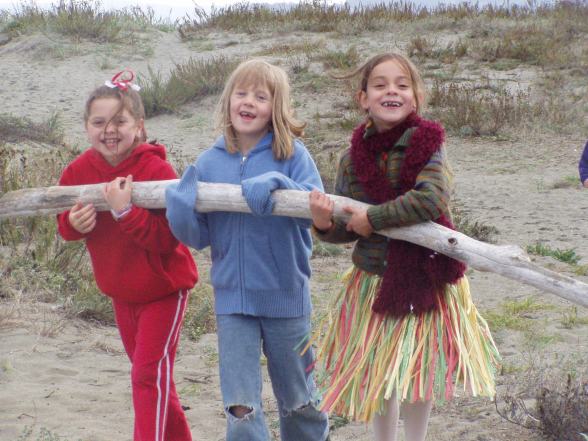
I took the photograph of my daughter and two friends at an October beach Hawaiian birthday party…Β  the coldest Hawaiian birthday party I’ve been to, so the girls were gathering wood for the fire.


B is for bored

B is for bored? All of the emotions that I could pick that start with B, and I pick bored?

But I am going to talk about bored in the context of chronic pain: and suddenly it is not boring at all.

Welcome to 7 Sins and friends, a spectrum, a kaleidoscope, an ABC of emotions.

B

If you hear the same sound over and over, like a faucet dripping, can you tune it out? I can. I can tune out practically any noise and I have fallen asleep under bright light in a Casino room full of ringing and blinging and alarming machines.

You may not have quite that level of ignoring something, but you can certainly tune things out. I have been reading Jon Kabat Zinn’s books on Mindfulness Meditation and I have used his mindfulness CD. I was having trouble sleeping after my father died, and I would use the CD. However, I used it in the reverse of how it is meant.

I used the body scan. Dr. Zinn talks in a slow calm tone and has the listener move from body part to body part, just feeling what is there. Not tightening or releasing muscles, but just starting with the left toes. At the start he says, “This is to fall more awake, not to fall asleep.” And I fell asleep every time.

But what does this have to do with pain? If you have tried meditation and focusing on your breath, your mind wanders. It gets bored. It starts think about the grocery list, or that person who yelled at you or ….. anything but the breath. You keep returning your mind to the breath. One day I had a hurt knee and was trying to go to sleep and thought…. hmmm. So I focused all my attention on the knee pain. Really tried to get inside my knee. Felt the pain fully and entirely….. and soon I was thinking about my grocery list. I pulled my mind back to my knee. My mind was sulky: yes, it hurts some, so what? Can’t we do something else? I am bored!

We are taught that pain is bad and I see many people in clinic who are afraid because of back pain. They are afraid to move because pain means something is wrong. Only most of the time it means that they have injured back muscles. The back muscles cramp up to protect themselves. The muscles must be soothed and stretched and healed and to do that we have to both pay attention to the pain and move without hurting the muscles worse. Sounds a bit boring,Β  right? Bored is more important than we think….

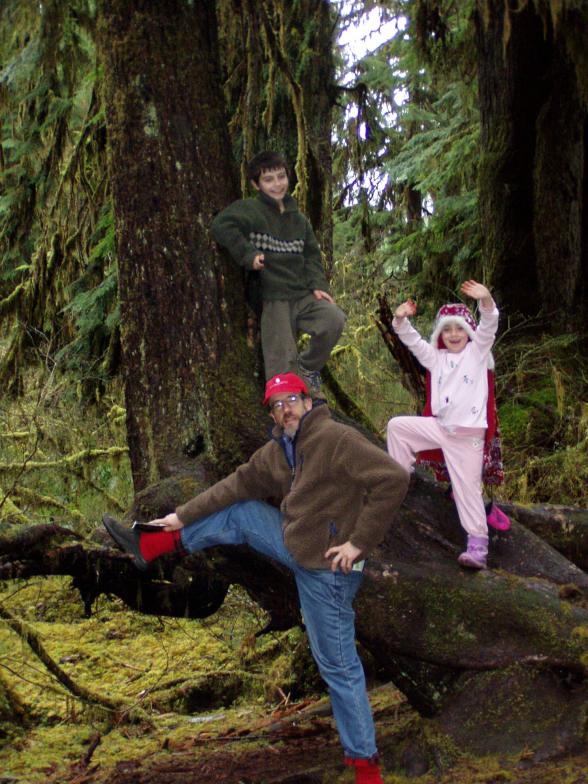
I took the photograph at the Hoh Rainforest on the Olympic Peninsula Washington, in 2004. We were not bored.


Why care for addicts?

Why care for addicts?

Children. If we do addiction medicine and help and treat addicts, we are helping children and their parents and our elderly patients’ children. We are helping families, and that is why I chose Family Practice as my specialty.

Stop thinking of addiction as the evil person who chooses to buy drugs instead of paying their bills. Instead, think of it as a disease where the drug takes over. Essentially, we have trouble with addicts because they lie about using drugs. But I think of it as the drug takes over: when the addict is out of control, the drug has control. The drug is not just lying to the doctor, the spouse, the parents, the family, the police: the drug is lying to the patient too.

The drug says: just a little. You feel so sick. You will feel so much better. Just a tiny bit and you can stop then. No one will know. You are smart. You can do it. You have control. You can just use a tiny bit, just today and then you can stop. They say they are helping you, but they aren’t. Look how horrible you feel! And you need to get the shopping done and you can’t because you are so sick…. just a little. I won’t hurt you. I am your best friend.

I think of drug and alcohol addiction as a loss of boundaries and a loss of control. I treat opiate overuse patients and I explain: you are here to be treated because you have lost your boundaries with this drug. Therefore it is my job to help you rebuild those boundaries. We both know that if the drug takes control, it will lie. So I have to do urine drug tests and hold you to your appointments and refuse to alter MY boundaries to help keep you safe. If the drug is taking over, I will have you come for more frequent visits. You have to keep your part of the contract: going to AA, to NA, to your treatment group, giving urine specimens. These things rebuild your internal boundaries. Meanwhile you and I and drug treatment are the external boundaries. If that fails, I will offer to help you go to inpatient treatment. Some people refuse and go back to the drug. I feel sad but I hope that they will have another chance. Some people die from the drug and are lost.

Addiction is a family illness. The loved one is controlled by the drug and lies. The family WANTS to believe their loved one and often the family “enables” by helping the loved one cover up the illness. Telling the boss that the loved one is sick, procuring them alcohol or giving them their pills, telling the children and the grandparents that everything is ok. Everything is NOT ok and the children are frightened. One parent behaves horribly when they are high or drunk and the other parent is anxious, distracted, stressed and denies the problem. Or BOTH are using and imagine if you are a child in that. Terror and confusion.

Children from addiction homes are more likely to be addicts themselves or marry addicts. They have grown up in confusing lonely dysfunction and exactly how are they supposed to learn to act “normally” or to heal themselves? The parents may have covered well enough that the community tells them how wonderful their father was or how charming their mother was at the funeral. What does the adult child say to that, if they have memories of terror and horror? The children learn to numb the feelings in order to survive the household and they learn to keep their mouths shut: it’s safer. It is very hard to unlearn as an adult.

I have people with opiate overuse syndrome who come to see me with their children. I have drawings by children that have a doctor and a nurse and the words “heroes” underneath and “thank you”. IΒ  have had a young pregnant patient thank me for doing a urine drug screen as routine early in pregnancy. “My friend used meth the whole pregnancy and they never checked,” she said, “Now her baby is messed up.”

Addiction medicine is complicated because we think people should tell the truth. But it is a disease precisely because it’s the loss of control and loss of boundaries that cause the lying. We should be angry at the drug, not the person: love the person and help them change their behavior. We need to stop stigmatizing and demeaning addiction and help people. For them, for their families, for their children and for ourselves.

I took the photo of my daughter on Easter years ago.

my love is so sweet

my love is so sweet
my heart sees him and skips a beat
my heart feels like it trips
how many beats do you think I’ll miss?

(all count the skips out loud)

you’ve got it really bad
it’s pathetic, you’re so sad
all day long I hear your sighs
guess how many times I roll my eyes

(all count the skips out loud)


The photo is mine from the 2015 Wooden Boat Festival