Long Covid imaging

In the last Long Covid talk that I attended and wrote about (here: Pulmonary Manifestations of Long Covid), the pulmonologist and intensivist says that one problem with Long Covid is that we do not have imaging that can “see” it.

That is, the chest x-ray looks normal, the echocardiogram may look normal (heart ultrasound), the chest CT scan may look normal, a brain CT or MRI may look normal, but the patient may still be tachycardic, feel exhausted, feel brain fog and have multiple other symptoms.

That pulmonologist listed five of the top mechanisms that are prolonged in the immune system. Most of the scientists and physicians are framing this as “immune system dysfunction”. I am not. I am framing it as “you were really really sick and your immune system is still on high alert and trying to protect you so you can recover”. Now wait, you say, how could chronic fatigue like symptoms protect me? Well, if you are exhausted, you can’t go to work and you’ll stay quiet at home most of the time and less exposure chance. But what about brain fog? Again, this will slow your interaction with other people and force you to rest and heal. But, you say, I don’t like it. Well, yeah. Patience. We call grumpy patients that are recovering “convalescents”. It is a good sign when they are grumpy and over it and just want to be better. That doesn’t mean I can make myself or anyone else heal faster.

The pulmonologist says that the best test is the six minute walk test. This is usually done by a respiratory therapist. The person walks in a circle for six minutes wearing a pulse ox, with the respiratory therapist doing regular checks. This distinguishes between the people who have primarily a lung issue from all the other issues. If the person is tachycardic (fast heart rate) but not hypoxic (oxygen level dropping), then it’s not primarily lungs though blood clots to the lungs sometimes have to be ruled out. One of the mechanisms in the immune system is microclots and an increased risk of blood clots. That can mean heart attack, stroke, or pulmonary embolus, a clot in the lungs. The microclots are suspected of causing some of the muscle fatigue and exercise intolerance, by clogging capillaries and reducing oxygen flow to muscle cells. Muscle cells do not like this at all.

I have done my own quick walk test with patients since 2003, when I had terrible influenza. About a week after my influenza started, with the temperature of 104 and heart rate at 100 at rest and 135 walking, my temperature came down. However, the fast heart rate continued. Normal heart rate is 70-100 and 135 walking will make you feel exhausted. I lay on the couch and could barely make my kids dinner for two months. It resolved then. I read a book about influenza and thought that I had “influenza viral pneumonia” where there is lung tissue swelling, reducing the air spaces, after influenza.

My quick walk test in clinic is to check a sitting oxygen level and heart rate and then have the person walk. I would have them walk up and down a short hall three times then sit down. When they sat, I watched the pulse oximeter recovery. Some people would jump from a resting heart rate of 62 to a walking heart rate of over 100, say 120. Their oxygen level could stay normal or it could drop. If they dropped below 88, I would get home oxygen and forbid them to return to work. If their oxygen level held, then they needed to rest until their walking heart rate stayed under 100 and they were no longer exhausted by gentle or normal activity. If they return to work with a walking heart rate of 120, they will be exhausted and are more likely to get a secondary pneumonia or have other problems. The heart does not like to run at 120 all the time. You can see why a person who already has some coronary artery blockage would be more likely to have a heart attack if they get pneumonia from influenza or Covid-19.

The conferences I am attending are talking about “targets” in the immune system. That is, new drugs. I think the science is wonderful and amazing, but I also think we need to step back and say, this is a really really bad infection and some people need a lot of support and reassurance and time to heal. Reassure them that even though they have not yet returned to normal, the immune system is working hard to protect them from other infections and it is saying very very loudly that they need to rest. Rest, recuperate and trust the immune system. Some things need immediate treatment, especially blood clots, heart attacks and strokes, but once those are ruled out, we need to support people through their convalescence and healing.

______________

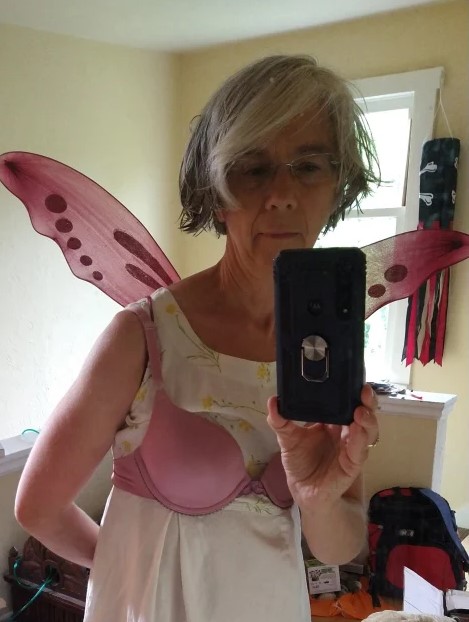
The photograph is from April 2021, a few days after I was put on oxygen. A selfie.

Pulmonary Manifestations of Long Covid

Today’s Zoom lecture was about pulmonary manifestations of Long Covid, and this is from the Schmidt Initiative for Long Covid Global ECHO Webinar Series, out of the U of New Mexico.

First of all, the talk is brilliant. The speaker is Lekshmi Santhosh, MD, MAEd, Asso Prof Med, Pulm Critical Care Med, UCSF, Intensive Care.

Two things to start with: she stressed the six minute walk test for patients, to distinguish oxygen desaturation (dropping) from the people who have terrible tachycardia (fast heart rate) only. The oxygen drop indicates that the person needs lung studies and may need oxygen, while tachycardia alone means either a heart problem, chronic fatigue/ME pattern or dysautonomia, where the heart goes fast when the person sits or stands up. Her point was that it’s a simple test and that Long Covid presents in multiple different patterns.

The second point is that there are least five main mechanisms that Long Covid can mess us up and people can have one or many. There is a review article in Nature last month (I need a copy!) and it talks about these five: immune system problems, gut microbiome problems, autoimmune responses, blood clotting/microclotting/endothelial problems and dysfunctional neurological signalling. SO: this is a MESS. She says that patient care needs to be individualized depending on which mechanism(s) are predominant and it can be more than one. This Covid-19 is a hella bad virus.

So: “The underlying biological mechanism may not be the same in each patient.” That is the understatement of the year.

She reiterates that the current diagnostic criteria, subject to change, is symptoms that last longer than 12 weeks after Covid-19 and two months past that. She states that the symptoms can wax and wane and that we need to listen to and believe patients.

In JAMA this month, there is an article that uses big data to find which symptoms are more associated with Long Covid, and lists 13 symptoms. Smell/taste tops the list but fatigue is there too. However, this is not a list for diagnosis, it’s a study list.

She also is careful to say that the treatment for the pulmonary manifestations is not the same as the people with the pattern that resembles chronic fatigue syndrome/ME. The pulmonary people can build exercise tolerance, but the CFS/ME folks need a different regimen, with pacing and energy conservation. That sounds like a subtle difference. I had both though my CFS/ME is weird. It does not put me in bed, I just can get really tired and need to sleep. It’s a bit invisible. People see me dance and would not guess that I have CFS/ME. All relative to previous function and energy, right?

For lung manifestations, she lists a pyramid, with the more rare things at the bottom. As follows:

  1. persistent dyspnea (shortness of breath)
  2. post viral reactive airways disease (asthma that can resolve from irritated pissed off lung tissue)
  3. deconditioning. She says that the isolation and quarantine with some people in very small rooms, leads to terrible deconditioning in some folks. They can build up, especially with supervised exercise with pulmonary rehabilitation and/or physical therapy. It is scary to exercise when you are short of breath and the supervision really helps, with limits on how much you should push, or encouragement to push.
  4. organizing pneumonia. This is rare and responds to steroids. Otherwise steroids are not good for the muscles in Long Covid, with the exception of inhaled steroids for the asthmatics and post viral reactive airways.
  5. post ARDS fibrosis: fibrosis is fibrous scarring that can form in the lungs. Anyone who has any terrible pneumonia and is in the ICU and intubated and on a ventilator can get this. Not everyone gets it, thankfully. ARDS is Acute Respiratory Distress Syndrome. Luckily the fibrosis is rare and it turns out that in some people it improves with time, like years. She does not recommend the pulmonary fibrosis medicines right now. There are many causes of pulmonary fibrosis besides infection.
  6. PVD: peripheral vascular disease. Covid-19 increases clotting, so we have to look for both clots and for disease in arteries, which could be lungs, brain, heart, anywhere in the body.

She says DON’T assume that chest pain is from the lungs and don’t miss cardiovascular. That is, rule out a heart attack and pulmonary embolus first.

Other lung problems have to be kept in mind that are not caused by Covid-19. This list: Reflux associated cough, pleuritic pain, neuromuscular disease, vocal cord dysfunction, tracheal stenosis, tracheomalacia. Watch for those. She says that it is very very important to look at old chest x-rays and CT scans, because those can show previous signs of emphysema/COPD/asthma/fibrosis.

Testing: She puts the 6 minute walk test first. AFTER the thorough history and making sure there are no red flags for pulmonary embolism and heart attack. Those have to ruled out if there is any suspicion. Next: pulmonary function testing. If the DLCO is low, consider a chest CT. Consider TTE -TransThoracic Echocardiogram, to look at the heart. Labs: CBC (blood count), ESR, CRP, thyroid, +/-CPK.

She has diagnosed people who are sent to her with NOT Long Covid: they have metastatic lung cancer, metastatic prostate cancer, new pregnancy, hypersensitivity pneumonitis and many other things. She says, “Don’t assume it is Long Covid. Sometimes it isn’t.”

Now, this is all a formidable list of problems and this is JUST the lungs. Long Covid can affect every system in the body and every patient is different.

She also says that she has done more disability and accommodation paperwork in the last three years than in her entire career before that. That the US disability system is a horrid mess and that she has to talk to employers and insurers OFTEN to say that the person will get better faster and have less long term problems if she treats now and they have rest and return to work may need to be very gradual.

She approaches new patients by asking which symptoms are worst. She thinks about severity of the infection, vaccination status, previous/present other medical problems and habits that can contribute or worsen things (smoking, vaping, exposures). Her clinic is for Long Covid pulmonary, but now they have opened up a neurological branch. They use multiple other specialists as well.

Last quotation: “Until we elucidate the biology and have clinical trials, treatments are largely symptomatic.” So the basic science studies working on immune system, the gut microbiome, the clotting problems, are huge in figuring out what to do in clinical trials. This is a tremendously complex illness and three years into Covid-19, we are still trying to figure out the multiple mechanisms that cause Long Covid.

This was a very hopeful lecture from my standpoint, admitting that this is complex but that we are also working to sort out the mechanisms and work on treatments. She works hard at getting patient input and feedback as well.

Two links: A free PDF from Johns Hopkins on Bouncing Back from Covid. https://www.hopkinsmedicine.org/physical_medicine_rehabilitation/coronavirus-rehabilitation/_files/impact-of-covid-patient-recovery.pdf

The American Physical Therapy Association has articles as well: https://www.apta.org/patient-care/public-health-population-care/long-covid

Also here are webinar links:

SILC Global ECHO Webinar Series Resource Links June 28, 2023

Now, how will I use the Ragtag Daily Prompt riposte for this? I think I will just say again how important it is to listen to and believe our patients!

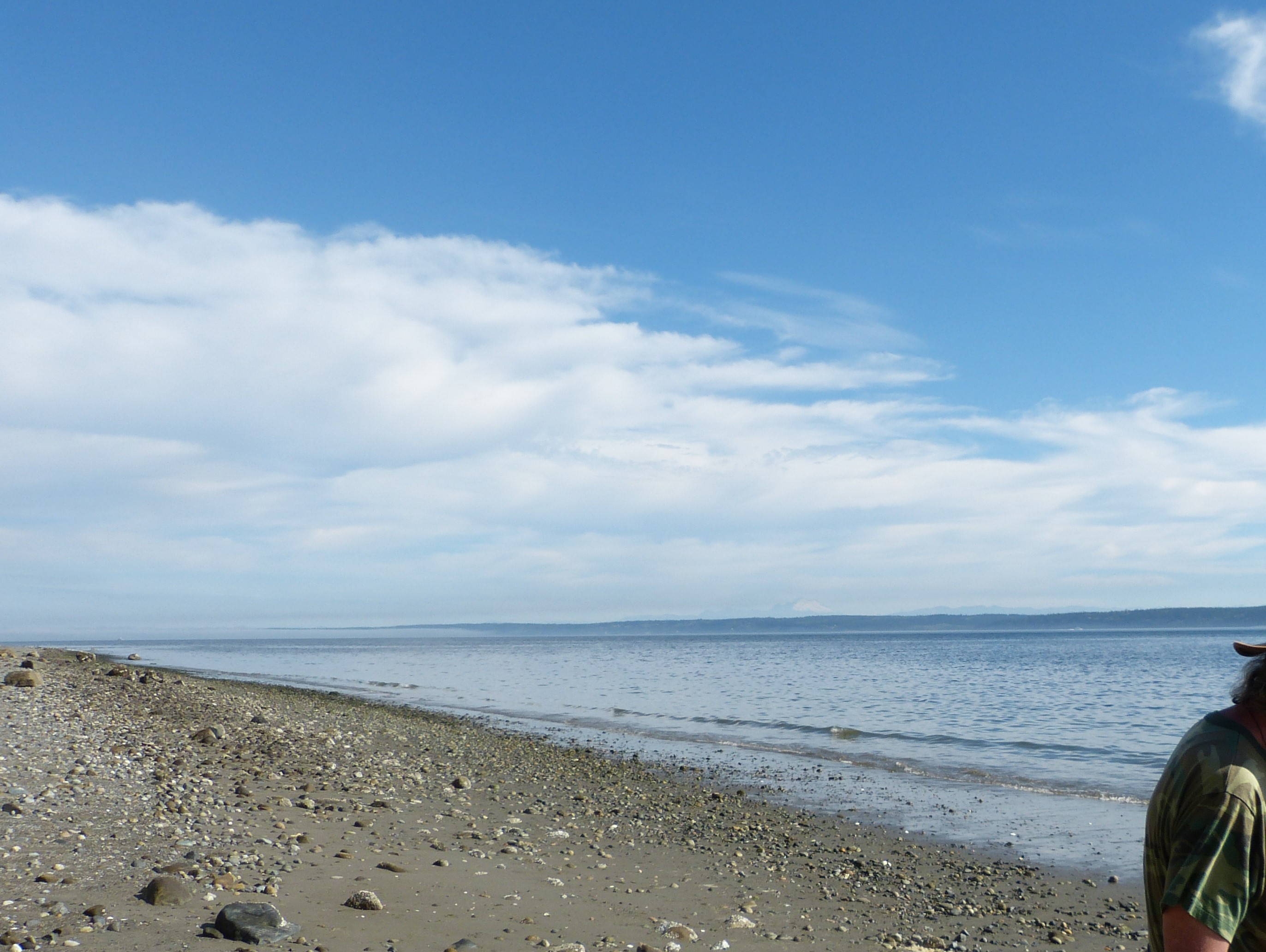
The photograph is from Marrowstone Island, East Beach. The shape in the driftwood is sort of lung shaped.

Breathe

I was trying to think of a debacle. Oh. Getting my fourth pneumonia, March 21, 2021, Covid-19. This is the first pneumonia that put me on oxygen. The fast heart rate, dropping ten pounds, and feeling anxious were familiar from the other three. This photograph was from December 2021, visiting Maryland. We did a bike ride. I was pretty happy that I was able to do it, though the last mile had a sloping uphill that made me think I was not very strong. Oxygen helped.

And Covid-19 is a debacle that we are still trying to understand and absorb and avoid and heal and recover from. I am reading an article that entirely denies viruses existing. I guess it’s like porn on the internet: they say if there is a story, there is a porn version. Every possible idea of what has happened over the last three years is out there, though this article doesn’t make any sense at all.

I don’t remember who took the photograph of me. It may be a steathie. I needed oxygen at night and whenever I was being active, but not at rest. Ok, at rest talking.

Things and people were lost and found and lost during Covid-19. I spent a lot of time on our beaches. I am so grateful for the beaches.

For the Ragtag Daily Prompt: debacle.

Laid bare

My mind and heart talk daily, argue back and forth.
They takes sides on everything and often disagree.
Why is this such a threat to some, what crooked course
makes them hate my inner talk with such intensity?
I thank you for the clarity, discussion and the clues.
The angry bear that attacks you in your sleep.
I see the split and wonder what to do.
The bear protects your heart, hidden deep.
I hug the bear and monsters through bars of steel.
The silly mind thinks feelings are controlled.
Buried and locked away but every day more real.
Under horror, grief and pain lies the gold.
Each must heal the split by going in alone
Invite the bears and monsters of the heart to come back home.

BRAINS

On Thursday and Friday I spent six hours daily glued to zoom, for the Inflammatory Brain Disorders Conference. Speakers, both physicians and scientists and physician-scientists, from all over the world, spoke. The research is intensive and ongoing. They spoke about Long Covid, both the immune response and “brain fog”. They spoke about anti-NMDA antibody disorder (the book Brain on Fire) and now there have been over 500 people identified with that disorder and a whole bunch more antibody-to-brain disorders! They talked about PANS and PANDAS and chronic fatigue and Mast Cell Activation Disorder and about the immune system over and over. The new information is amazing and I need to reread all my notes. Psychiatry and Neurology and Immunology are all overlapping in research, along with Rheumatology, since these disorders overlap all four.

It is a medical revolution in the making.

Best news was that 96% of Long Covid patients are better by 2 years from getting sick. That is tremendously reassuring, though the number may change. And the definition of Long Covid is still being sorted out and we do not know if people relapse.

I felt that MY brain was MELTED by the end, but I managed to enjoy the Rhododendron Parade on Saturday and just puttered around the house on Sunday.

Lose the chest strap

After my fourth pneumonia, I couldn’t stand the chest strap any more. Chest strap? say the guys. “What chest strap?” Dudes, bra, brassiere, whatever you want to call it.

It made my lungs hurt. My lungs already hurt. I thought, ok. I am 60 years old. I am “small” and don’t need any “support” unless I go running or something that really makes breasts jiggle. Don’t need a bra for dancing. And anyone who stares at my tits, well, gosh, thought you guys didn’t like “old” ladies. I don’t care.

Let’s think about that chest strap though. Guys, have you ever tried a bra on? What exactly is a bra for? Well, running or soccer or pole vault or football or all sorts of other heavy athletics, yeah, it can be really uncomfortable. Strap those babies down. But the day to day bra is to enhance support, stop jiggle and hide nipple action.

Uh, and meanwhile guys can take off their shirts in public. I think this is unfair. They have nipples too and breast tissue, just less.

Also, what is wrong with jiggle? The breast tissue drains in multiple directions, through lymphatics. I think some breast jiggle may be important to that drainage. Jiggle means slut to guys? Well, go suck a lemon, guys. And if you really stare at my breasts when I am talking to you, I might not sock your eye, but I sure as hell will lose all respect for you. All. And why are nipples evil in women but not in men? Because they are functional in women and men are jealous? Tit envy.

Now support. Yes, there are women who are so well endowed that they have back pain and may choose a breast reduction. This is covered by insurance if the clinician documents that pain over time. And breasts do change with time and age. But when is our culture going to accept and even celebrate aging! We do congratulate people turning 80 or 90 or 100, but otherwise older women are often ignored. I am delighted by the older actresses and musicians who are now finding parts and are still out there and dancing. Go Tina Turner, the legs go last!

I also think the chest strap is not nice for the lungs. Certainly not after four rounds of pneumonia, but bras have to be tight enough that they do have an effect on a deep breath. I’ve retired my bras. Ok, if I am in a Madonna mood and want to wear a lace see through white shirt, then I might pull out the scarlet one for the evening, but otherwise, no way. How good are bras for people with asthma, with emphysema, with post covid?

Lose that chest strap, ladies, and take a deep breath. Breathe free.

Long Covid and post pneumonia update

I was up above 5000 feet last week and did not need oxygen.

This is wonderful! I was on oxygen continuously from March of 2021 for a year and a half. I was really getting better and then had my Covid booster in early October. I crashed again. Do I regret the shot? No, because the crash is because antibodies went back up. Only some of them, though. My muscles and lungs were not working well again, but brain was fine (ok, some people do not like my brain, but they are idiots) and aside from having to avoid gluten, no digestive stuff.

About a month ago I really started feeling my fast twitch muscles work again. It was two years in March since this fourth pneumonia and I’ve had something Long Covid like after each one. Recovery took 2 months in 2003, 2 months in 2012 and 6 months off in 2014 and then an ongoing mild chronic fatigue, so I worked about half of a regular family medicine schedule. I saw 7-10 people per day instead of 16-22. I was also a single parent running a business with two children, so that has a lot of energy draw as well.

On the second morning there, my pulse was 61 and oxygen level 98% on room air. HOORAY! I am back to baseline from 2014. Since it took 2 years to recover, I really do not want to do this again. No more pneumonia. I have had two more rounds of Covid, but apparently the super high antibody level made it really really mild. An immunologist tested the antibodies since I keep getting pneumonia. He said I have the highest Covid antibody level he’s ever seen. Protective was over 50 and mine was 25,000. I seem to be darn good at making antibodies.

Now what? I have felt better for the last month. I still get tired and have about a half day of the energy level from my 20s or 30s, which was high. I am hiking, up to 6 miles in a day twice two weeks ago. Now to start biking and maybe running. I don’t like to run but it’s good training. I want to ski next winter at least one day. Maybe I will swim too. I used to swim a mile twice a week, but it’s been a long time. Also my swim team daughter expressed scorn for my freestyle stroke. Sigh, children are born to humble us, which sucks.

I am still trying to see if I can work with Long Covid patients. I have rather too much experience with something very like it. But I think I would like to enjoy feeling well for a month or two, first!

Hooray! I hope other Long Covid folks are working their way out of the woods too.

Long Covid healing crash

I have a friend with Long Covid. Eight months now.

My friend describes blood sugar crashes. She does not have diabetes and was tested before Covid. She has not been tested again.

“Sometimes I eat dinner, feel better, and then an hour later I feel terrible again. I have to eat again. And I ate extra in November and all that happened is I gained ten pounds. So eating extra doesn’t work.”

I suspect that as the clue: the feeling terrible an hour after she eats.

I call her the next day: “Spread the carbohydrates out. It could be that your body is producing too much insulin, storing the glucose and carbohydrates, and then your blood sugar gets too low. That can happen early in type 2 diabetes, but this could also be a healing mode.”

I write about carbohydrates to her. Anything that is not a fat or a protein is a carbohydrate. So all the grains and all the vegetables and fruits have carbohydrates, sugars. Glucose, fructose, maltose, lactose. Milk products contain lactose, but also fat and protein. Avocados are weird fruit and mostly fat. Sugar beets and peas are high sugar vegetables. A small apple is 15 grams of carbohydrate and a large one is 30. A tablespoon of sugar is also 15 grams of carbohydrate. A coke had 32 grams and a Starbuck’s mocha has over 60 grams. I quit drinking them when I looked that up. Empty calories.

A cup of kale has only 7 grams of carbohydrate for our bodies. The rest is fiber that we can’t break down into sugars. Fiber doesn’t raise our blood sugar. I wonder about cows with their four stomachs: they can break grass down into food and we can’t.

At any rate, my friend is going to try 3-4 meals a day with only 30-45 grams of carbohydrate and three snacks, at 15-30. This is an athlete and young. Most of my patients were closer to 70, so would need to do the lower end of those numbers.

I had crashes after my second and third pneumonias in 2012 and 2014. Strep A pneumonia and strep throat of the muscles. It hurt, like all over Strep A. After the 2014 one, it was six months before I could go back to work. When I did, it was exhausting. I was only seeing 3-5 patients a day at first and could barely do that. I ate one meal a day because food crashed me. As soon as I ate I went to sleep. My MD did not believe me. I saw a naturopath too. She claimed it was a food allergy and I said, “I don’t think so. I think it is a healing crash. I think my body is doing a ton of repair work and wants me asleep and not moving much.” Over the next six months it slowly improved. I went to 2 meals a day. Since then I really do not eat until I have been up for 4-6 hours. Expect tea with milk. And yes, I am getting a little nutrition through the milk, fat and protein and lactose.

I had one patient who said eating made her faint. I didn’t know what to do, but she was in the ICU, ate lunch and then fainted into her tray. The nurse was standing right there and immediately did a blood sugar and called me. Her blood sugar was in the low normal range. We transferred her to Virginia Mason in Seattle. She came back with a diagnosis that seemed pretty much like hand waving. Idiopathic (meaning the doctors dunno why) central (ok, brain) something syndrome, which meant yeah, she faints after she eats and doesn’t have diabetes and that is weird.

I am reading about similar neurological symptoms with Long Covid and also POTS: postural orthostatic tachycardia syndrome. This translates to heart rate goes faster than it should when the person stands up. Again, the cause is not clear and it’s not clear how to fix it.

Once an older patient went to the neurologist to discuss getting dizzy when she stood up. She returned grumpy. “He said that I just have to stand up slowly because I am 80. I don’t feel like I’m 80. I want to hop out of bed like I always have. But if I do, I nearly faint.” Her body was taking longer to equilibrate blood pressure after she stood up. The neurologist said no medicine: stand up slower. She grumpily complied.

I told my friend that maybe the pancrease is stressed and producing too much insulin. To store food. But another possibility is that her body wants her to lie down and rest so that it can do healing work after eating. This would make any young person impatient, but sometimes we have to listen to our bodies. I have learned THAT the hard way.

Blessings.

__________________

The photograph is of a Barbie ambulance/clinic. It does have a gurney, but the back opens up to be a fairly well appointed clinic, with lots of details, including a television in the waiting room. Today the doctor has wings. Fairy? Angel? We are not really sure.