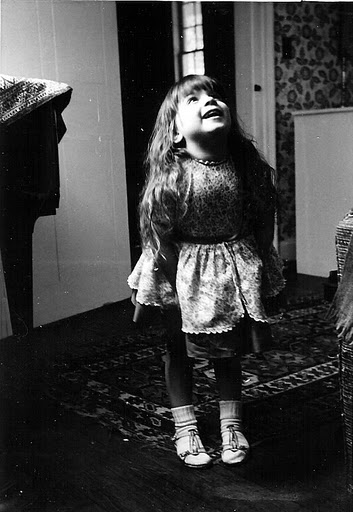
For Six word saturday: to describe my life in six words.
After tears come small quiet joys.
The photo is mine from 2009 at Joshua Tree.

For Six word saturday: to describe my life in six words.
After tears come small quiet joys.
The photo is mine from 2009 at Joshua Tree.

what I miss after 8 years of divorce and 14 years of marriage is sleeping with a warm body not you but anyone after you fill the U-Haul and are surprised because you think that I am the packrat and all the stuff is mine but you have a piano and bicyles and a motorcycle and clothes and music and books and really you are one too, it’s just that I am worse and you drive away and I can’t sleep though really it did start before then we did over a year of couselling and I slept alone some and then kick you out and sleep alone more our daughter moves into the room across the hall up from the basement when you leave and in the middle of the night she comes up with me because you are gone to Colorado and now 6 years later she asks about it and I say you came in with me and she says she didn’t know that and would wonder why I would steal her in the middle of the night and I say I didn’t but as she is older and moves back two flights down to have that distance that one needs from a parent when one is in puberty and growing up and away and I wake at four am and now that same sex marriages are legal I wonder about buying an asian bride and then I would have a body a warm body to sleep with but it wouldn’t work and yes I miss sex too but not in the same way it’s the warm breath and heartbeat and movements and I am the monkey longing for a mother to cling to and I too make do with a pillow I could make a scarecrow for my bed a body not an inflatable too cold but something warm and I could put a watch in its chest an old one that ticked it doesn’t actually help to be in love because I am not sleeping with my love and that makes it all the worse I long for a warm body really no I long for my warm love this particular body and breath and heartbeat and I wake often longing for my warm love
the picture is my sister, who died in 2012 of breast cancer. I made her stuffed animals and puppets for years starting when we were little. I made the red eared puppet and bought her the puppet with legs that year….

I hear people say, “Why is this person so reactive?” “They are suspicious.” “They just aren’t nice. Why can’t they be nice?”
When I get a new patient in clinic who is not friendly and looks suspicious at my questions and is not warm, I do not react. I assume that this person has been hurt and has a past that has a lot of dark in it.
Recently I was talking to a person about chronic pain. We were nearly out of time and I was describing Adverse Childhood Experience scores.
“I have the highest possible score,” he said.
I said, “I believe you.” and waited. He had my attention.
He did not want to tell me about it and he knew we were out of time. “I ran away to live on the streets when I was six.” he said flatly.
I said, “Yes, if things were that bad, I think you would have the highest possible score.”
That was the end of that visit. I gave him the link to the CDC website about ACE scores and studies and set up a follow up.
But think about that. He ran away at age six and lived on the streets. Not with a sibling or a parent or an adult. He was by himself.
He told me a little more on the second visit. I knew he could read. I pictured street classes under bridges. “How did you learn to read?” I asked.
“The authorities kept picking me up. I would run away from foster care as soon as they placed me. Usually the same day. When I was fifteen, a judge said “If you get your GED, I will emancipate you.” It took me a year and three months, but I got my GED.”
So is this your image of a street person? All losers? All crazy? This is a man who left because the street was safer than home and got a GED living on the streets.
He said, “My life has all been like that.”
I said, “Chronic pain is not exactly surprising then, is it?”
There is a song by The Devil Makes Three with this line: “I grew up fast and I grew up mean, there’s a thousand things inside my head I wish I ain’t seen. Now I just wander through a real bad dream, feeling like I’m coming apart at the seams.” That song speaks to me and speaks about the people who view the world with suspicion and fear and whose porcupine defensive spines are quickly raised if they feel threatened. I do well with them because I am the same way and I mostly don’t react to them. I don’t tell them to calm down. I don’t get scared or angry. I stay present and wait. And sometimes they will tell me what happened to them.
How can any of us blame an adult for their fearful terrible childhood? Instead we need to give them space and not reject them out of hand. All that does is reinforce the damage. I think that people can heal, but we must make room for them and behave ourselves and not react.
The photo is my daughter at the Wooden Boat Festival in 2009.

We are not very good at talking about death in the United States, but we are slowly getting better.
I have had families call me in a panic because their loved one’s “Do Not Resuscitate” form was changed to “Do Resuscitate” when the person went into the hospital or went into a nursing home. Often this is because of very little training in discussing end of life code status combined with fear and/or religious beliefs and/or confusion. I have checked with the nursing home and the rumor is that the patient is asked “Do you want to die?” when they are admitted and if they answer “No.” the code status is changed.
I use a POLST form to discuss end of life wishes and plans. Here: http://www.polst.org/. The conversation goes something like this:
“Mrs. Elder, you have transferred care to me. I see that you have had four heart attacks, three bypass operations and two cardiac arrests. You have a living will but I would like to discuss what your wishes would be if you got sick or live another five years and are over 100.”
“Talk louder. Are you really a doctor?” says Mrs. Elder.
“Living wills are written by attorneys. They say that if two doctors agree that you are terminal and might die within 6 months, don’t do too much. This has two problems. One is that doctors are not very good at predicting the 6 month thing and the other is that no one ever has explained what “don’t do too much” means.”
“Ok.” says Mrs. Elder. She bangs her walker on the floor. Her son rolls his eyes.
“The most common cause of death is the heart. If someone drops dead, two doctors will agree that they are dead, but what they really want to know is whether the person wants a natural death or wants to be resuscitated.”
“I don’t want to die yet.” says Mrs. Elder. “That new mailman is cute.” She cackles.
“This is a POLST form. It is to go with the living will. The first question is about a person who has no heart beat and is not breathing. They are dead. If your heart stopped, would you want a natural death or would you want us to try to revive you.”
“Bring me back if I’m gonna be ok.” says Mrs. Elder.
“We don’t know that. You don’t have a little pop up thing like the turkey that says “Too late.” If someone drops dead at 40 and we get them back quickly, they are fine. But at 95 if your heart stops, it’s like a stoke and you won’t be fine.”
“I don’t want a stroke. Also I don’t want to wake up with that scar on my chest again. It hurts.”
“Ok, so natural death.”
“Of course.”
“Next are questions if you have a heart beat and are breathing, so not dead.” I am using the Washington State form:
http://www.doh.wa.gov/YouandYourFamily/IllnessandDisease/PhysiciansOrdersforLifeSustainingTreatment.
Would you want a breathing machine if you were really sick?”
“No, I had that once.”
“Would you want to be moved to a bigger hospital if you had a heart attack?” We are rural and have a 25 bed hospital. “We can give you medicine but we are too small to have a heart surgeon and too small to have a cardiologist.”
“I don’t like that heart surgeon who did it last time. Stay here.”
“We gave you antibiotics last month. Would you want antibiotics if you were going to get better?”
“Yes, sure.”
“The next question is about feeding. If you were really sick and couldn’t eat, would you let us feed you through a tube?”
“I don’t know.”
“This question is really about comas. Most people are willing to be fed for a little while if they are going to get better, but not long term. Some people don’t want it at all. You are 96 pounds and if you got pneumonia, you might not get better if we didn’t feed you.”
“I want whiskey if I’m dying. A shot a day, that’s my secret.”
“We can request that.”
“No feeding. I’m ready.” She signs the form.
“I will photocopy and put it in your chart and send a copy to the hospital. You take the green copy home and put it on your fridge. Any questions?”
“What is the new mailman’s name?” She grins at her son, who is looking very relieved.
“Remember that we only use the form if we can’t talk to you or if you are too sick to answer questions or if you lose your memory. Otherwise you can change your mind.”
“Ok. Can we go now?”
“Yes. You are so healthy, Mrs. Elder, that I think we can go six months before I see you again. Ok?”
“Ha. I’m healthier than him,” she says, nodding at her son, “He doesn’t exercise. I walk out to the mailbox every day.”
I try to do POLST forms not just on my 95 year olds, but on everyone, especially everyone over 50. It does not cover every contingency, but it really does say to the family that the person has had a conversation and it gives better guidance than the living will. It was developed at OHSU, in Portland, Oregon, which is where I had my Family Practice residency. Hooray for OHSU! The last time I looked at the map: http://www.polst.org/programs-in-your-state/ it was in 8 states, but it’s busily spreading all over the United States. The POLST form is designed to be redone every few years as people’s health status changes.
Take the burden off your family and do your POLST form.
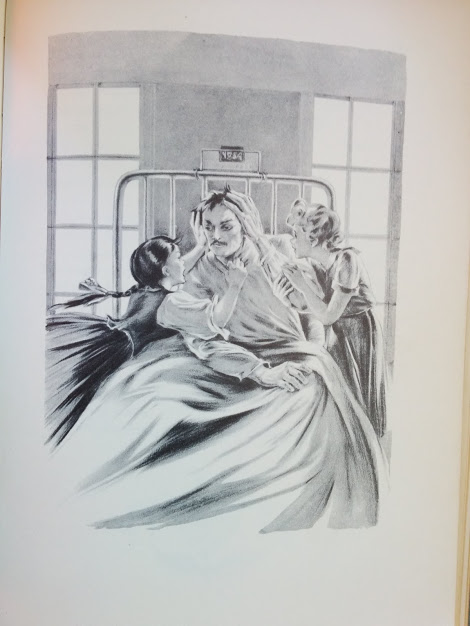
The Singing Tree by Kate Seredy, 1939, is a children’s book that illustrated PTSD for me long before I went to medical school. The Singing Tree is the sequel to The Good Master, and describes the survival of a Hungarian family and farm during World War I.
The good master is Marton Nagy, and he is called up as a Corporal, leaving the farm to be cared for by his wife, son, niece and workers. The farm suffers because so many men are called up. They are getting behind on the work and then find a diary from Marton, which gives suggestions and instructions for the year round work on the farm. One of the instructions is “to make out an application for Russian prisoners if necessary.”
They do. They apply and take 6 Russian prisoners, homesick farmers, who don’t speak Hungarian. Jansi and his cousin Kate take the chains off them and the prisoners quickly become part of the family. “Comrade, eh? Friend?” says one of the prisoners. And they are. They are also excellent workers and homesick.
As the prisoners are taken home in the wagon, they also take Peter, a deserter from the Hungarian army. He has panicked about his wife and new baby. He is crazy with worry. He is hidden under the six Russians, who sympathize. After seeing the baby he returns to his regiment. But Peter is angry and expresses his rage at Jews, even though it is Uncle Moses, the Jewish shopkeeper, who has helped hide him.
Marton is missing and they have not heard from him. Jansci and Kate make the wagon trek to bring back their grandparents, because the front is now too close for them to be safe. Kate and Lily smuggle the cat along. The cat gets “sick” and the girls insist at stopping at a hospital. The sickness is kittens. The nurses laugh at the girls, but then let them help on the wards. Injured soldiers who are healing.
“Whats am-amnesia?” Kate wanted to know.
Every patient was sitting bolt upright. Doctors and nurses were running in, Lily joined Kate, tugging at Uncle Marton’s hands. “Say something…you know us, don’t you? Say something.”
“Kate, if you don’t stop that infamous yelling this minute, I’ll take Milky away from…Say! Where am I? Who are these people?” Uncle Marton was looking around dazedly.
“Never mind them,” sobbed Kate, laughing at the same time. “You know who you are now, don’t you?”
He gets to go home.
The officer sighed. “Go home, Lieutenant. Forget, if you can. I wish I could.”
And will he have to return?
And Jansci talks to one of the Russian prisoners.
Death affects the village.
I wish that we had the sense expressed in this book about PTSD and the effects of war. When I worked at Madigan Army Hospital, some soldiers were getting ready for their fourth or fifth tour of duty. If we as a country are going to continue these wars, we must take more responsibility and have more care for the damage done. When people talk about “curing” PTSD or keeping it from happening: if we didn’t respond with PTSD as a species with horror for the evils of war, we don’t deserve to survive. We will be the Bad People, the Stupid People, who Kill and Laugh. We need to stop. This book was written in 1939 and clearly they knew the effects of PTSD. It’s been almost 80 years since Kate Seredy’s book was published: and still we question PTSD?
http://www.pdhealth.mil/clinicians/assessment_tools.asp
Civilians too: http://www.mirecc.va.gov/docs/visn6/3_PTSD_CheckList_and_Scoring.pdf
illustration from p. 187

My daughter has listened to me talk about medicine all her life. And she comes up with brilliant questions.
“Mom, if the three year old in Anne of Green Gables had croup, why did she get better when Anne treated her with ipecac?”
“Hmmmm.” My daughter has learned enough from me talking about croup to know that I don’t use ipecac. I use a dose of steroids, an oxygen tent with cold mist if needed and possibly epinephrine.
“The doctor in the book says that the baby would have died if Anne hadn’t known what to do.”
I reread the passage in Anne of Green Gables. The book was written in 1908 by Lucy Maud Montgomery. Anne is such an imaginative extrovert that my daughter objected the first time we read it. “Mom, no one is like that.” I named two very extroverted girls in her class. “Oh. Ok, yes.” Anne has been a foster child who helped raise three pairs of twins. She is eleven. This is from Chapter 18:
I finished reading. “I think that the reason ipecac worked is because it wasn’t what we call croup now. I think it was diptheria. With diptheria kids can’t breathe because there is a grey membrane of dead cells that covers the airway and can totally block it. The native americans used spiky seedpods to try to remove it. Vomiting would work too. By making the baby throw up, she was clearing her airway. I have never seen a child with diptheria because of vaccinations. I hope I never do see diptheria because it is much much worse than croup. Croup now is usually a virus like parainfluenza but diptheria is a bacteria and can kill.”
We looked it up on the CDC website. One in two people with diptheria die without treatment. One in ten die with treatment. That little “d” in your tetnus shot, the Td? That is the diptheria part of the vaccination, that you should update every ten years.
“They may have called both “croup” at the time the book was written. That was a really good question.”
My daughter was satisfied that this is a reasonable explanation for the puzzle.
http://www.cdc.gov/diphtheria/about/symptoms.html
http://www.cdc.gov/diphtheria/about/complications.html
http://www.cdc.gov/diphtheria/about/bam-villain-for-kids-fs.html
http://blogs.discovermagazine.com/inkfish/2014/03/25/classic-childrens-books-ruined-modern-medicine/
Also published on everything2.com today. The photo is my niece.

Here I am
what a load of shit I know heracles did it
with brute strength in the allotted day I too
am assigned a day but I am just a girl you see
and small to boot I lean on the shovel and contemplate
the work what a load of shit has been produced and I
know what I have to do clean and sparkling by morning
I know the goddess to pray to and she shows up with all
her nymphs armed the bows aren’t so useful for shoveling
shit but they can shift it fast we are done long before
morning and all I have to do is pledge myself to her
to virginity like a virgin
all I have to do
my photo is from the 2009 US National Junior Synchronized Swimming Olympics

harden my broken heart, please, Beloved
not against you I am openopenopen evermore
I have no enemies nor none to hate
openopenopen transparent like glass they step
on my heart glass it shatters again ow shards
pierce through me all over it takes time for each
clear piece to work its way to the surface I need a
harder heart then glass how do the bodhisattvas do it I
don’t know, oh, Beloved, yet I want to remain
openopenopen even if glass is the only heart I have
I pull the shard from my bleeding chest and back and
this is not a job for sewing or ribbon or lace my
friend gave me tape with a spine printed on it I tape
my heart with boneshards it doesn’t matter anyhow no matter
how I wail and tear my clothes it is all longing
for you, Beloved
my photo from the 2012 US Synchronized Swimming Nationals
remember, the lifts are entirely swimming: no one touches bottom
submitting to Ronavon’s beWOW
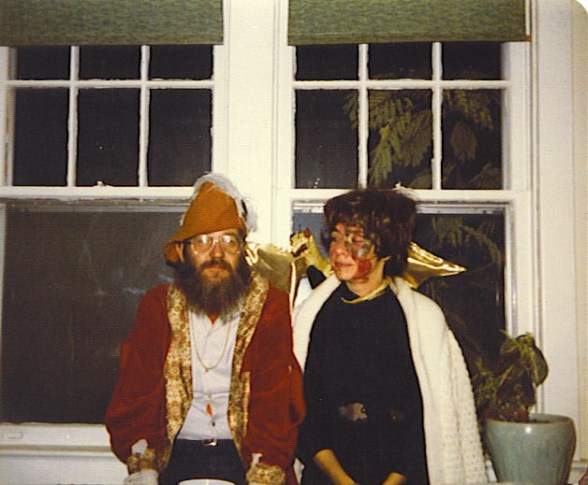
A photo of my parents, that I took during college. Dressed and made up for a costume party. I made the dragon on my mother’s shoulder in college and gave it to my sister. She gave it back to me the last time I saw her in hospice.
Happy Father’s Day
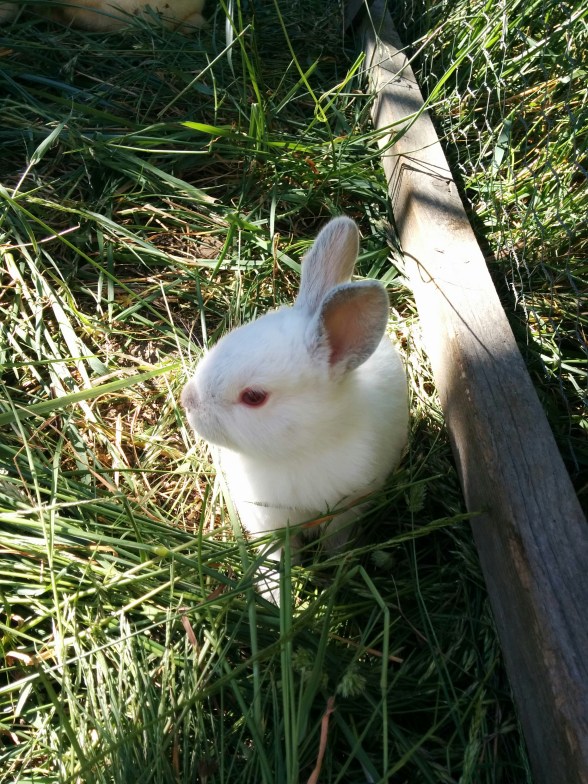
Qia works hard. She enjoys most of her work and she enjoys time off too. She enjoys many activities.
She wakes one day and she is in a space. It is not inside: no ceiling. It is not outside: no clouds or sky or sun or moon.
She is standing in a box. There are more boxes for as far as she can see. They are made of wood. Some are plain and some are ornate. Some are inlaid or carved. Some have rare wood.
She steps from box to box. They are up to her thighs. She is careful. Some are beautiful.
A male voice says “You need to pick a box.”
Some are square, a triangle, octagonal. All shapes.
“You need to pick a box.”
“I am looking.” says Qia. She doesn’t want to pick one. She wants to look at them and examine them. She could spend years looking.
“You need to pick one and stay.” Says the voice. “Sit down.”
Qia starts to sit but feels panicky instantly. “It’s too small.” she says.
“If you sit down and put your head to the side, you will fit.” says the male voice.
Qia has a vision of someone nailing a lid on the box. She is not going to obey. Who is this male voice telling her what to do?
Qia wakes laughing at the dream. But she thinks about it.
Qia tells a few people about her dream.
Her massage person says, “Maybe you need to kick a box.” Her kicking muscles are very very tight this week.
She laughs, but she does go home and kick a box. It helps some, but the male in the dream is a part of herself.
One woman says,”That dream would mean that I needed to pick a box.”
Qia doesn’t like that idea. But she considers it as she continues working. The boxes are too small and claustrophobic and yet, the male voice is part of her. How can she satisfy everyone including herself?
Qia thinks carefully.
Qia is happy. A solution appears, when a third person comments.
Qia is at work. The woods are there. Deer, grass, birds. Roses are there. The ocean is there too and the Beloved, in the shape of a dolphin or a horse or a deer or an orca. She works, happy.
Men come. If she doesn’t see them first, they might see a bird or deer or the ocean. As soon as she sees the man, she calls the box. As she sits, it is there.
“What are you doing?” says the man, if he sees her first and sees the woods or the orca.
Qia looks up at the man from her seat in the box. If the man likes women to smile, she smiles. Some men like her to look frightened; she can do that too. Some men want dull or mean or subservient.
When she sees the men first, they see a good girl, sitting in a box.
When the men see her first, they are upset for a moment. They saw a bird, an orca, the ocean. But then they see a good girl, in a box. Some shake their heads and think that they had too much to drink or smoked too much the night before. But Qia is a good girl.
A few, a very few men, don’t trigger a box. She sees them. They see her. They see the deer or the orca. They have animals and forests or mountains or stars with them. They don’t say much.
Qia thought at first that she would have to change for each man. Change into energy, into a star, to fly as fast as light, to the box appropriate to that man. But then she thought, no, she could just move the boxes. And the men have stopped hammering lids down, mostly. When they used to seal women in, the women were not available for cooking or housework or admiring the men or sex. They often died, suffocated or killed themselves. So most boxes have no bottom and have straps for the woman’s shoulders, so that she can do the housework while she wears the box. The consequence, of course, is that many women escape, running like rabbits into the woods. Or they switch from box to box, almost like Qia. But many women do not feel safe unless they are wearing one of the wooden boxes.
Qia is happy. She wears wooden boxes for the men when she has to. She is a good girl. But the box she has chosen is the universe.
Home to the Longette & Longette Lite
Intelligence that is not artificial: we are real.
BLIND WILDERNESS
in front of the garden gate - JezzieG
Discover and re-discover Mexico’s cuisine, culture and history through the recipes, backyard stories and other interesting findings of an expatriate in Canada
Or not, depending on my mood
All those moments will be lost in time, like tears in rain!
An onion has many layers. So have I!
Exploring the great outdoors one step at a time
Some of the creative paths that escaped from my brain!
Books, reading and more ... with an Australian focus ... written on Ngunnawal Country
Engaging in some lyrical athletics whilst painting pictures with words and pounding the pavement. I run; blog; write poetry; chase after my kids & drink coffee.
Coast-to-coast US bike tour
Generative AI
Climbing, Outdoors, Life!
imperfect pictures
Refugees welcome - Flüchtlinge willkommen I am teaching German to refugees. Ich unterrichte geflüchtete Menschen in der deutschen Sprache. I am writing this blog in English and German because my friends speak English and German. Ich schreibe auf Deutsch und Englisch, weil meine Freunde Deutsch und Englisch sprechen.
En fotoblogg
Books by author Diana Coombes
NEW FLOWERY JOURNEYS
in search of a better us
Less Noise. More Meaning
Art from the Earth
𝖠𝗇𝗈𝗍𝗁𝖾𝗋 𝖶𝗈𝗋𝖽𝖯𝗋𝖾𝗌𝗌.𝖼𝗈𝗆 𝗌𝗂𝗍𝖾.
Taking the camera for a walk!!!
From the Existential to the Mundane - From Poetry to Prose
1 Man and His Bloody Dog


You must be logged in to post a comment.