Taken in December 2023 at the US Botanic Gardens.
For Cee’s Flower of the Day.


Taken in December 2023 at the US Botanic Gardens.
For Cee’s Flower of the Day.

I don’t think the team of four taking down the four trunks of this cedar were fearless. They were sensibly afraid and stopped between each trunk. They discussed the next step and had all the safety gear in place that was possible. It was still very dangerous.


For the Ragtag Daily Prompt: fearless.

For Judy’s Numbers Game: 128.
I have enough showing up that it can be all beach. Brandt geese out in the early morning.

Let’s look closer at the eagle in the tree. Splotchy feathers, not quite fully mature.

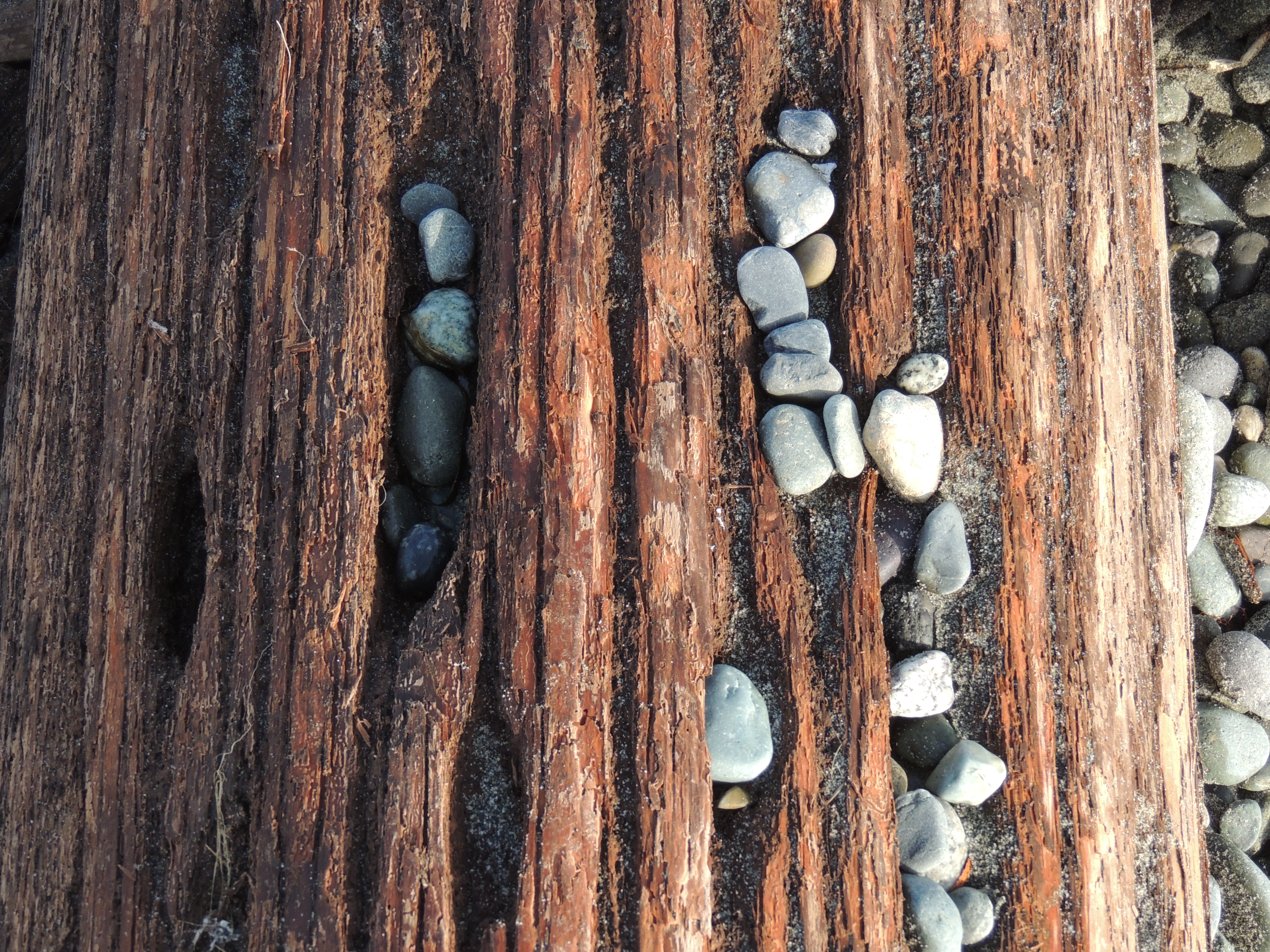
Rocks and logs and sand.
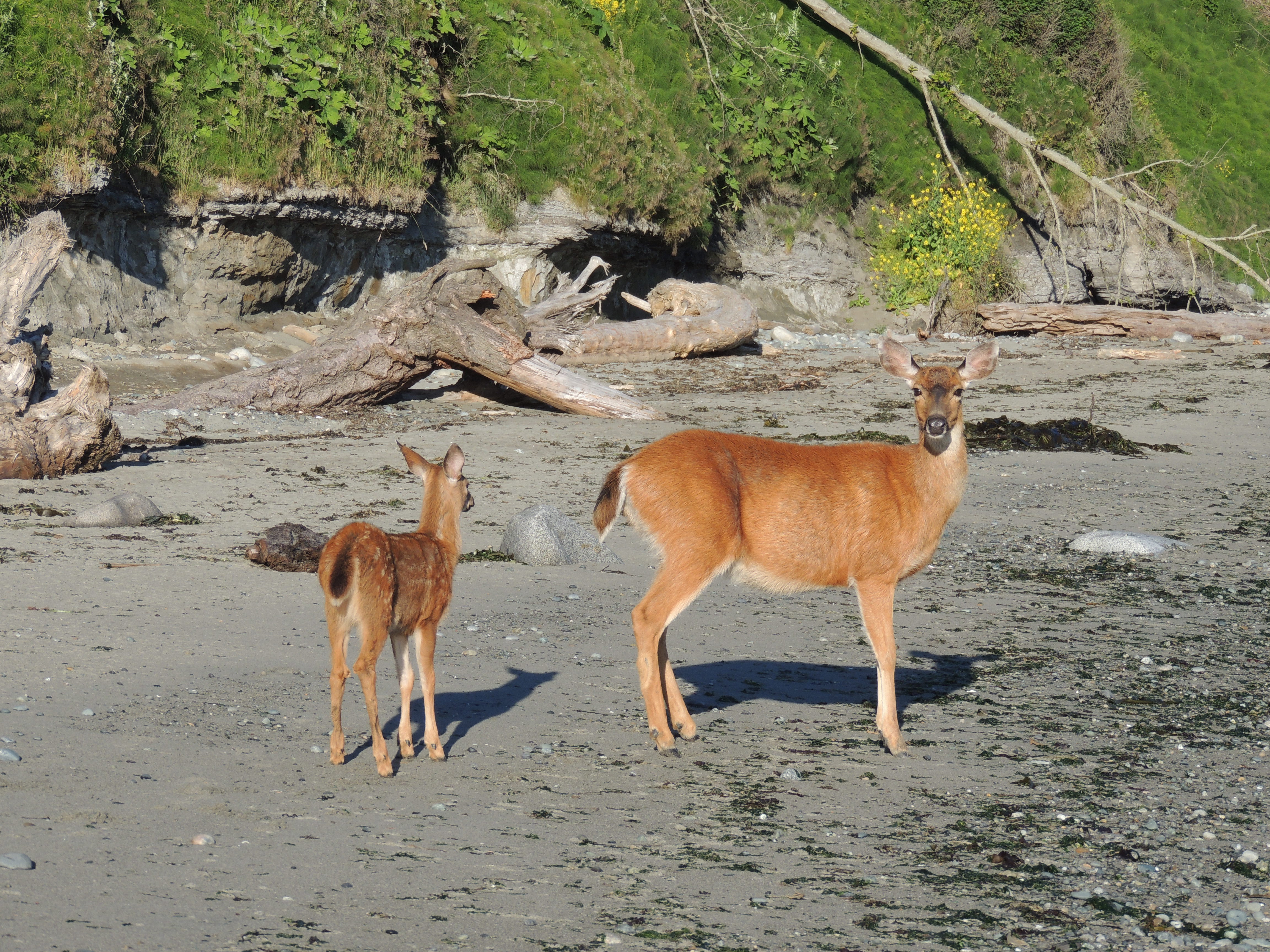
The deer come down too.
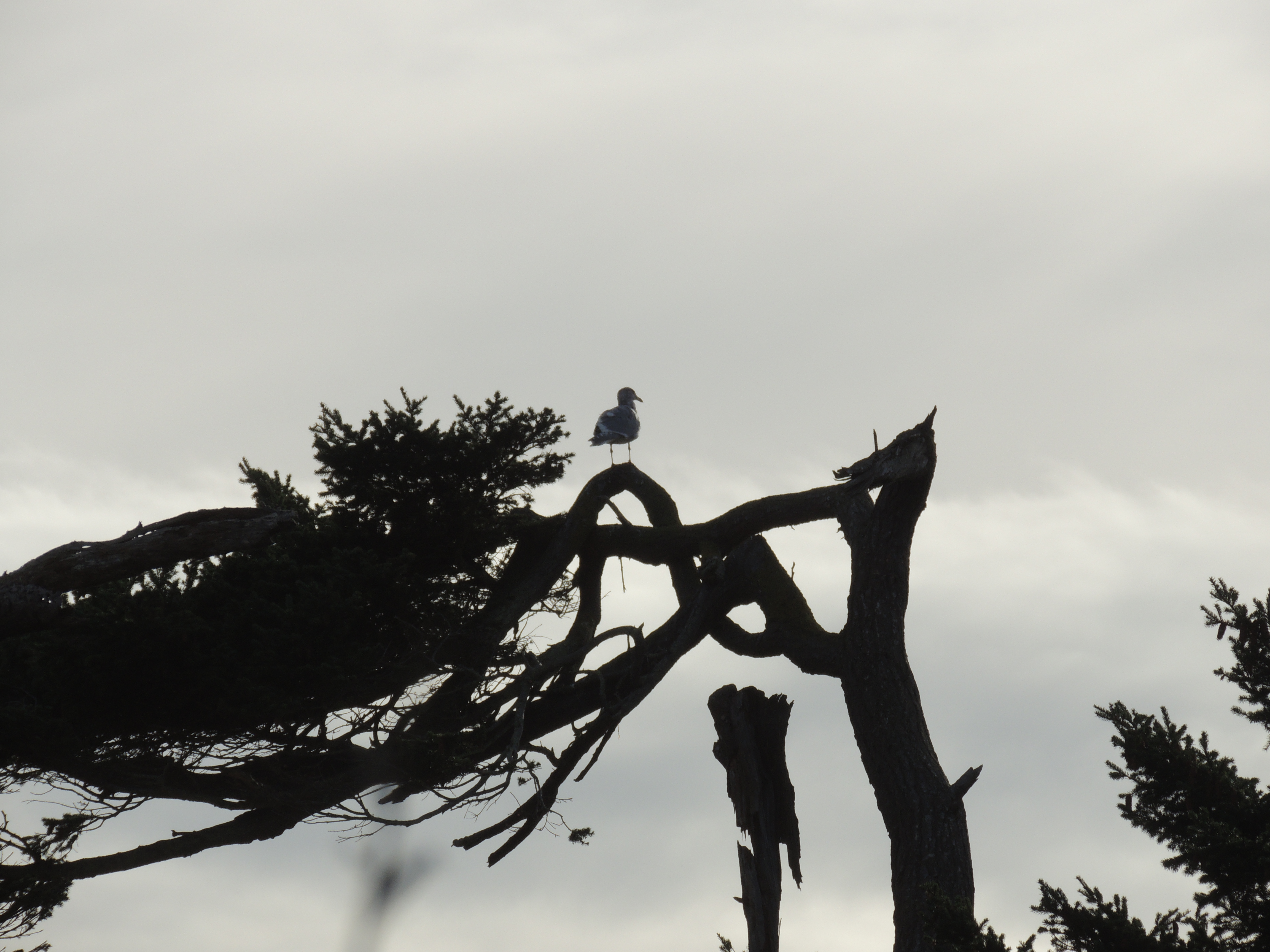
A gull in the evening as the light falls.

Is the sea lion the scamp? Or the ocean wave splashing up? Or the cormorant in front of the right hand sea lion?
These are sea lions rather than seals, in Puget Sound. The small ear flaps give them away. They are also just bigger than most of our local seals. Males are bigger than females, up to 390 pounds, while the females are up to 110. Here: https://www.eopugetsound.org/articles/california-sea-lion
For the Ragtag Daily Prompt: scamp.
We learned this one as kids and sang it very happily.

I goose sat last week, for friends going out of town. The geese knew I was a stranger and they were unenthused. I sang “Go tell Aunt Rhody”, but they didn’t like it. I tried “Molly Malone” on the second visit, but this was not received with joy either. I gave them fresh water and food anyhow.
For the Ragtag Daily Prompt: goose.
I didn’t think they would appreciate “The Fox” either.
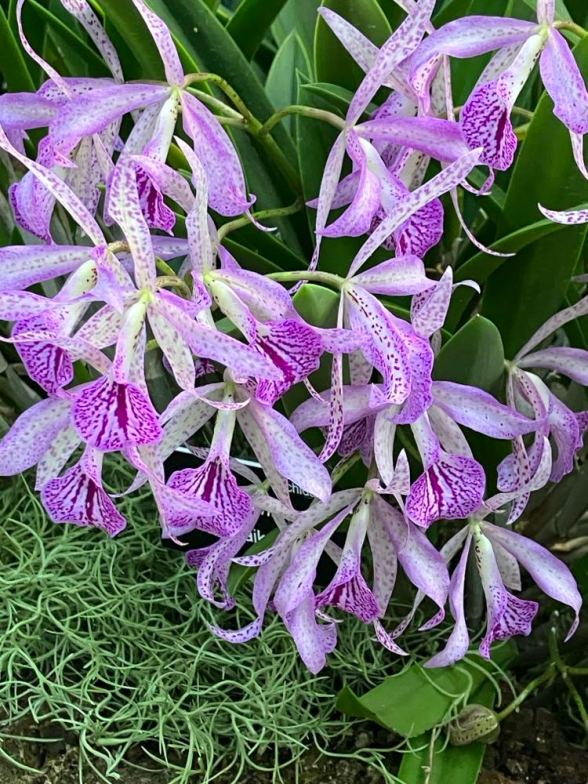
White to lavender to purple: an orchid from the US Botanic Garden.
For Cee’s Flower of the Day.
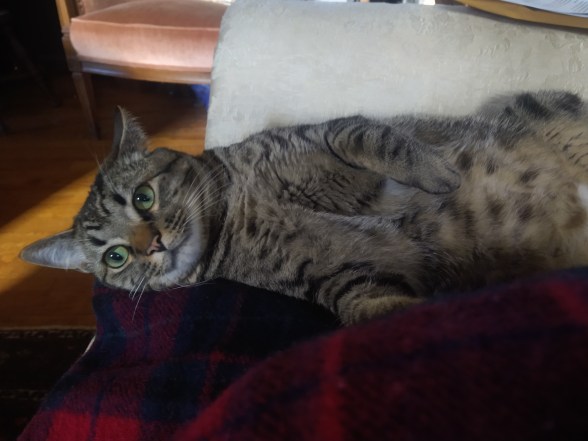
The Yes Yes Boys, Take Your Tomorrow.

Andrews Creek flows from up in the Olympic Mountains in Washington State. It empties into Crocker Lake. Andrews Creek exits Crocker Lake, empties in Snow Creek and Snow Creek empties into Discovery Bay.
I took the pictures and video yesterday.
For the Ragtag Daily Prompt: bubbles.
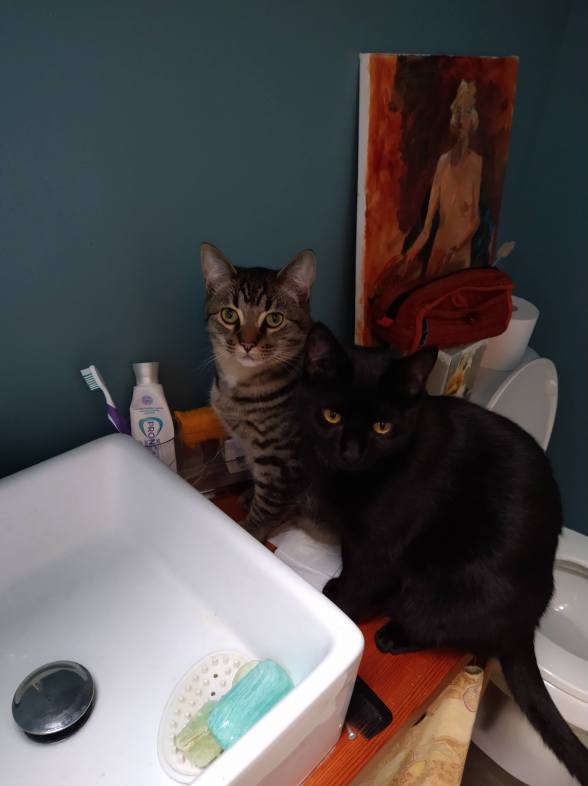
My cats are pound kitties, rescues that were still half-starved kittens when they arrived. They were supposedly six weeks old when I got them, so born in August 2021. This photo is from February 2022. They are still exploring and fascinated by water and faucets and showers. They are doing cat research. Meanwhile, Long Covid research continues.
This is a report on a study which started in October of 2020. “Participants were actively followed for severe acute respiratory syndrome coronavirus 2 (SARS‑CoV‑2) infection. In the study, Hannah E Maier, PhD, University of Michigan, Ann Arbor, Michigan, and colleagues compared the prevalence of symptoms and symptom severity between vaccinated and unvaccinated individuals.” People were enrolled for a year as they got infected, with demographic and health information recorded as they enrolled. They turned in information every two weeks and had blood draws every two months. After a year they were invited to continue for a second year. 3375 were enrolled, more than 1370 filled out Long Covid forms, and 1007 of the 1370 were vaccinated. Long Covid was defined after 90 days.
“At 30 and 90 days post infection, 38% and 13% of individuals reported persistent symptoms, and 6% and 2% reported ≥5 symptoms, respectively. Fatigue (19%), cough (15%), and cognitive dysfunction (12%) were the most commonly reported symptoms at 30 days, whereas loss of smell/taste (8%), fatigue (6%), and cognitive dysfunction (5%) were the most commonly reported symptoms at 90 days. The mean score of symptom severity was 3.6 and 3.9 at 30 days and 90 days post infection, respectively.
At 90 days post infection, 8% of vaccinated individuals reported persistence of any symptoms compared with 27% of unvaccinated individuals (relative risk [RR] = 0.31; 95% confidence interval [CI], 0.22-0.42). Similarly, vaccinated individuals were less likely to have ≥5 symptoms compared with unvaccinated individuals (RR = 0.34; 95% CI, 0.15-0.79).
Furthermore, vaccinated individuals had significantly lower average symptom severity scores at 90 days post infection compared with unvaccinated individuals (relative severity [RS], -2.70; 95% CI, -1.68 to -3.73).“
There also was more Long Covid in the pre Omicron group than Omicron and beyond.
This study is community based and most of the patients were not hospitalized. Overall it has a lower estimate of how common Long Covid is than studies in hospitalized patients. It is reassuring that Long Covid symptoms and prevalence are lower with vaccination, but some people are still severely affected even with vaccination. Vaccination does not stop Long Covid completely though I certainly wish that it did. Mixed good news, but vaccination still looks like the best bet other than moving to a bunker permanently.
The study is published in Open Forum Infectious Diseases: https://academic.oup.com/ofid/advance-article/doi/10.1093/ofid/ofae039/7585852. The quotations are from the DGAlerts article.

Taken in January 2022, on a hike with friends.
For the Ragtag Daily Prompt: river.
BLIND WILDERNESS
in front of the garden gate - JezzieG
Discover and re-discover Mexico’s cuisine, culture and history through the recipes, backyard stories and other interesting findings of an expatriate in Canada
Or not, depending on my mood
All those moments will be lost in time, like tears in rain!
An onion has many layers. So have I!
Exploring the great outdoors one step at a time
Some of the creative paths that escaped from my brain!
Books, reading and more ... with an Australian focus ... written on Ngunnawal Country
Engaging in some lyrical athletics whilst painting pictures with words and pounding the pavement. I run; blog; write poetry; chase after my kids & drink coffee.
Coast-to-coast US bike tour
Generative AI
Climbing, Outdoors, Life!
imperfect pictures
Refugees welcome - Flüchtlinge willkommen I am teaching German to refugees. Ich unterrichte geflüchtete Menschen in der deutschen Sprache. I am writing this blog in English and German because my friends speak English and German. Ich schreibe auf Deutsch und Englisch, weil meine Freunde Deutsch und Englisch sprechen.
En fotoblogg
Books by author Diana Coombes
NEW FLOWERY JOURNEYS
in search of a better us
Personal Blog
Art from the Earth
𝖠𝗇𝗈𝗍𝗁𝖾𝗋 𝖶𝗈𝗋𝖽𝖯𝗋𝖾𝗌𝗌.𝖼𝗈𝗆 𝗌𝗂𝗍𝖾.
Taking the camera for a walk!!!
From the Existential to the Mundane - From Poetry to Prose
1 Man and His Bloody Dog
Homepage Engaging the World, Hearing the World and speaking for the World.
Anne M Bray's art blog, and then some.
My Personal Rants, Ravings, & Ruminations
 KO Rural Mad As Hell Blog
You must be logged in to post a comment.