

This is from the University of New Mexico Roam Echo PASC (Post Acute Sequelae of Covid-19) talk on 11/9/2023 over Zoom.
Cardiovascular Outcomes in Post-COVID Conditions
Jeffrey Hsu, MD, PhD, FACC, Assistant Professor, Division of Cardiology – University of California, Los Angeles Health and Founder, COVID Cardiology Program – University of California, Los Angeles
I am going to include the references in the order that Dr. Hsu talked about them. This is a sobering and upsetting lecture with the research showing a post Covid-19 increase in cardiovascular risk factors (cholesterol, hypertension, diabetes), and an increase in cardiovascular events in people with no previous cardiovascular diagnosis including heart attack, stroke, pulmonary embolus, blood clots and sudden death.
I don’t expect the general population to read the studies, but look at a few of them. It is very very impressive, the amount of work being done. Now let’s explore the talk and boil it down to three sentences for primary care to explain in clinic. Right. (You can always skip to the last two paragraphs if you get overwhelmed, and come back later.)
Part 1: The Research.
The first paper is about veterans without cardiovascular disease, followed for one year after Covid-19, matched with a cohort who did not have Covid-19. This is before immunization was available. They were studying the heart and cardiovascular risk. The veterans who had had Covid-19 infection were twice as likely to be diagnosed with cardiovascular risk then the veterans who had not had Covid-19. The risk was higher in the veterans with more severe Covid-19, the risk was present in all subgroups: old, young, male, female, with or without other risk factors. At two years out, the people who had been hospitalized for Covid-19 still had a persistent increased risk of death and cardiovascular incidents (heart attack, stroke, sudden death, blood clots).
To be clear, this is NOT Long Covid patients. This is just a cohort of veterans who had Covid-19. This would indicate that everyone who had Covid-19 has an increased cardiovascular risk.
Here is the first paper: 1. https://www.nature.com/articles/s41591-022-01689-3
Two more papers looked at more general populations who got Covid-19 before the vaccine was available and found the same thing. The veterans tended to be older and more male patients, but the general population studies found the same pattern in women and younger patients. Papers:
2. https://www.scientificamerican.com/article/the-risk-of-heart-disease-after-covid/, “Health modeller Sarah Wulf Hanson at the University of Washington’s Institute for Health Metrics and Evaluation in Seattle used Al-Aly’s data to estimate how many heart attacks and strokes COVID-19 has been associated with. Her unpublished work suggests that, in 2020, complications after COVID-19 caused 12,000 extra strokes and 44,000 extra heart attacks in the United States, numbers that jumped up to 18,000 strokes and 66,000 heart attacks in 2021. This means that COVID-19 could have increased the rates of heart attack by about 8% and of stroke by about 2%. “It is sobering,” Wulf Hanson says.
3.https://www.nature.com/articles/s41591-023-02521-2
Non hospitalized patients had decreased risk for some cardiovascular problems but not all and still had significantly higher risk than people who had not had Covid-19. I am busily thinking UH-OH, this is really bad, in this lecture.
He stated that the data is not in yet about vaccination, whether it lowers the cardiovascular damage compared to unvaccinated.
The initial study was on veterans, mostly male and mostly white, but then was replicated in other similar studies that were not on veterans, but on a general population.
From the second and third study, 700,000 patients with a mean age 40 and more than half female, were studied for new cardiovascular disease in the year following Covid-19 and found an increased risk of death within one year, 0.34% vs 0.28% HR 1.6. That was in 2020, a nonvaccinated population. Another study showed similar results, 13,000 patients with Covid-19 and 26,000 without, average age 51. There was a similar risk increase in cardiovascular disease and an increased risk of death within one year.
4. https://www.thelancet.com/journals/eclinm/article/PIIS2589-5370(22)00349-2/fulltext
5. https://jamanetwork.com/journals/jama-health-forum/fullarticle/2802095
So do other infections do the same thing? Studies of acute risk of myocardial infarction risk after influenza, done before the pandemic, indicate an increased risk of myocardial infarction within one week after infection, but not beyond that week. So Covid-19 is really really nasty to our cardiovascular system.
6. https://www.nejm.org/doi/10.1056/NEJMoa1702090
7. https://www.nejm.org/doi/10.1056/NEJMra1808137
Pneumonia and sepsis can increase risk of cardiovascular disease, but there have not been the extensive studies as in Covid-19. More and better studies.
One to two years after diagnosis, there is increased cardiovascular and cerebrovascular risk, both:
- Cardiovascular risk factors, worsening after covid
- Thrombosis risk
8. https://www.thelancet.com/journals/landia/article/PIIS2213-8587(22)00044-4/fulltext
The risk of is up diabetes 40% in the post Covid-19 patients. That does not mean that 40% are diagnosed with diabetes, but that the risk is higher after Covid-19. For example, if in the non-Covid cohort 100 of 1000 40 year olds develop type 2 diabetes, then it’s 140 of 1000 in the post Covid-19 group.
The risk of dyslipidemia in 50,000 patients went up 24%. Dyslipidemia means increased LDL cholesterol or increased triglycerides and lower HDL or all of them.
9. https://www.thelancet.com/journals/landia/article/PIIS2213-8587(22)00355-2/fulltext
10. https://www.ahajournals.org/doi/10.1161/HYPERTENSIONAHA.123.21174
Hypertension is up too and weight gain.
11. https://www.nature.com/articles/s41577-022-00762-9
New onset hypertension is up 22% in hospitalized patients post Covid-19 and 11% in unhospitalized post Covid patients.
Myocardial infarction (heart attack) and ischemic stroke both go up. Ischemic stroke is the more common kind of stroke and is the clotting version. Bleeding strokes are less common.
Why does Covid-19 do this? What is the mechanism? The studies are pointing towards thromboembolism as the mechanism in both increased cardiovascular risk factors (dyslipidemia, hypertension, stroke, heart attack, clots). Thrombosis means clots. Remember the talk about micro-clots? (My write up here: https://drkottaway.com/2023/04/14/xeno-or-infection-phobic/). Micro-clots can lead to bigger clots. A clot in a heart artery causes a heart attack; in the brain an ischemic stroke; a clot in the leg can break into pieces and block the lung arteries. Irritation in the heart and the arteries can increase blood pressure. I’m not sure how it can increase diabetes, but it does.
Next he shows a slide about thrombosis and how complex it is. Sars covid-19 seems to promote perfect storm of events that leads to environment for thrombosis in multiple ways.
Covid-19 infects epithelial cells, causes a hyperactive immune response, orchestrates subsequent response, causes platelet hyperactivation and then hyperactive innate immune response, causes damage to glycocalyx that protects and vascular endothelial injury, decreases antithrombogenic and increases prothrombogenic activity which promotes thrombosis in the vasculature, platelet activation and coagulopathy. Got that? No? Me either, my last immune system class was in 1988 when I was working at the National Institutes of Health. It’s bad, meaning it can kill us or cause damage that is disabling.
12. https://www.thelancet.com/journals/lancet/article/PIIS0140-6736(20)30937-5/fulltext
My notes are a bit disjointed here: The endothelial cells (which line arteries) express H2 receptors that Covid-19 virus needs to enter the cells. The H2 receptors are also in glomerular capillary loops (kidneys), and immune cells and cause apoptosis of lung endothelial cells. Apoptosis is a form of programmed cell death that occurs in multicellular organisms and some eukaryotic microorganisms. So you don’t want your lung cells doing that. Lung, small bowel, and pulmonary microvasculature can all be affected.
13. https://www.thelancet.com/journals/landia/article/PIIS2213-8587(22)00355-2/fulltext
Plaque in human coronary vessels, in the immune cells, spike and Sars cov 2 identified in coronary artherosclerotic plaque.
Direct on coronary and cerebrovascular cells. (Ok, I don’t know what I meant by this note.)
Part II: Now what? What is our approach to healing this?
There is still limited data! (The clinical trials are roaring along but they take time.) Here are a bunch of studies, all using blood thinners. Blood thinners include aspirin, plavix, heparin, enoxaparin or apixaban. Do NOT start aspirin at home at this point, because when you add a blood thinner, there is a risk of bleeding, including bleeding stroke and intestinal bleeding. So far, the studies are discouraging.
Aspirin 150Mg Recovery trial: no difference in mortality: major bleeding 1.6% vs 1/0 % Lancet 2022. This is a double baby aspirin dose, 30 days in study, no benefit in acute setting.
14. https://www.thelancet.com/journals/lancet/article/PIIS0140-6736(20)30937-5/fulltext
Non critically ill hosp patients ACTIV 4A trial P2Y12 inhibitor – heparin alone or clopidigril (plavix) plus heparin, no benefit, major bleeding 2.0% vs 0.7% so worse in the both group.
15. https://www.nejm.org/doi/10.1056/NEJMoa2103417
16. https://doi.org/10.1001/jama.2021.17272
Harmed patients with severe disease.
ACTIV-4B aspirin or apixiban in outpatient, stopped early, event rate low, higher rates of minor bleeding in the 5mg apixiban group.
Feedom covid 19 trial: Non ICU Hospitalized, compared prophylactic heparin to enoxaparin or apixaban. Signal to provide benefit, lower rates of death and intubation, similar bleeding rates
17. https://www.sciencedirect.com/science/article/pii/S0735109723045278?via%3Dihub
So what does our Post Covid Cardiologist recommend to physicians and patients:
First year post covid: look for cardiovascular symptoms.
Screen for risk factors, hypertension, diabetes, hyperlipidemia, obeisity.
Optimization of risk factors, smoking cessation (and I would add that alcohol also causes damage to the heart and arteries, though tobacco is worse.
Assess candidacy for statin therapy for primary prevention.
18. https://cardiab.biomedcentral.com/articles/10.1186/s12933-021-01359-7
There is a study of triple therapy (meaning THREE blood thinners) that showed improvement but that was in older patients who already have heart disease before Covid-19. So it doesn’t apply.
He says there aren’t any good studies of blood thinners in Long Covid-19 yet and it is not clear that the Long Covid people are worse as far as the cardiovascular risk than everyone else. And remember, these studies are on unvaccinated people, so for the year following the first year of Covid-19. We don’t have the results for vaccinated people. He says that if someone is high risk or has cardiac symptoms chest pain etc put on 81 mg aspirin and a statin (and work it up, of course. Do the testing.
For now use anticoagulation (blood thinners) only if there is clear evidence of thrombus: deep venous thrombosis or pulmonary embolus. Freedom covid-19 study showed major bleed risk 0.1-0.4%.
The cardiologist speaker has not started triple therapy on any patents given unknown benefit at this time, with known significant major bleeding risk. He recommends shared decision making, meaning the patient should be presented with the risks and choices. Um, ok, boil this talk down into three sentences. Good luck. EEEEEEE!
Part III: Summary.
Whether you had Covid-19 before being vaccinated or after, or aren’t sure if you ever had it, it is worth seeing your provider to check your blood pressure, do diabetes screening, stop smoking (anything, and I include vaping in that), reduce or eliminate alcohol, keep your weight reasonable, check your cholesterol and go to your provider if there is any weirdness post Covid-19. And if you have not been vaccinated, oh, my gosh. Unless you have an immunology problem where your immunologist says “NO!”, get vaccinated.
Lastly, I’ve heard many claims that death rates were “over reported” for Covid-19. No. In a death certificate, the acute injury or infection is reported FIRST and then other related causes. Such as: Covid-19, ischemic stroke, hypertension, tobacco overuse syndrome. There were MORE strokes and heart attacks and sudden death, with Covid-19 as the final straw in many people who already had cardiovascular disease. They died sooner than they would have if not infected. That is not over reporting.
____________________________________________________________________________
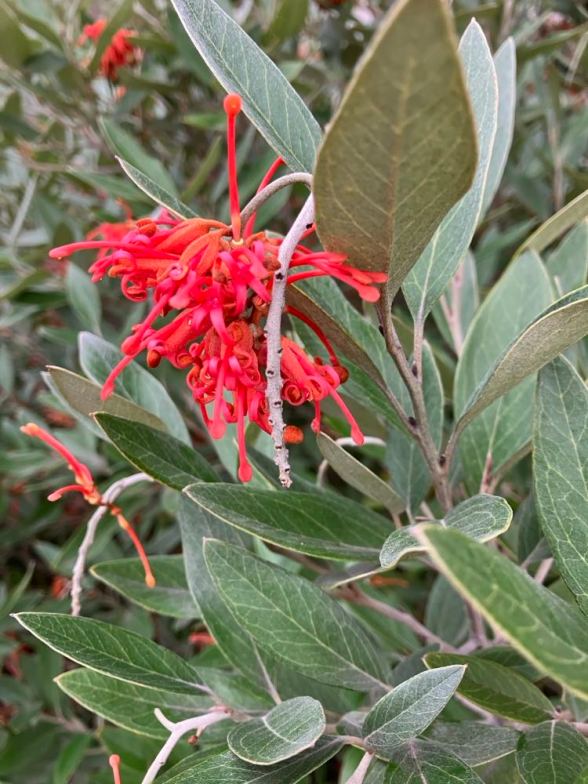
A friend, Brent Butler, took the photograph, used with permission. I think it shows how I felt after this talk. Yet I still have hope, because you can’t deal with something unless you know about it.
If you want a link for the talks, message me. Anyone can tune in.
Covid-19 continues to fandangle us. There. I verbed the Ragtag Daily Prompt: fandangle.













 KO Rural Mad As Hell Blog
You must be logged in to post a comment.