grebes in waves

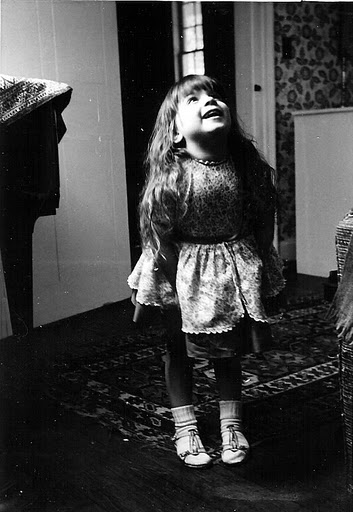

For the Ragtag Daily Prompt: broadcast.
“Were you, like me, brought up on listening the the radio? Or do you prefer more modern ways of communication? How do you broadcast your news? And how do others broadcast to you?”
I was not brought up on radio. More record player. No television until I was nine, and I think my parents mostly got their information from newspapers. And they discussed articles and ideas…
But the deeper answer to this question is that mostly I don’t.
I am introverted and shy. I also failed small talk in school very early and learned to shut up. I was comfortable talking in my family and would talk to friends after I’d known them for years. We moved every 2-5 years while I was in school so my peer friends were really my sister and cousins. When we moved, I pretty much would only talk to teachers for the first year. After a year, I might try to make a friend, having studied everyone. After a year, they might or might not be interested.
I got to know one woman from high school after we’d graduated. After a while she said, “I thought you were shy in high school.” I laughed and said, “No, I just didn’t talk.” This is really about opinions: I was way more opinionated than she realized and when I got comfortable enough to talk, I could talk a lot.
I also found that smart women are not admired, so I hid it. There are different ways of hiding it: mine was to be multi talented. I played instruments, scored equally well on the math and english part of the SAT, read voraciously, and mostly talked to adults. My parents’ house had a wild array of interesting and unconventional adults. Artists, trumpet players, singers, world travelers, university professors, rich women, poor women, beggerwoman, thieves, doctors, lawyers, native chiefs. I didn’t discover sports until college, other than hiking, skiing and swimming. My high school had no swim team.
My daughter complained about small talk in preschool. Why were kids she didn’t know talking to her? And why did they talk to each other when the teacher was talking? If everyone would just shut up and listen, they could move on to more interesting topics. I sympathize but also think that we all have to live with and care about each other. So how do we do that when we are so different?
In clinic all of my patients are smart. I treat them all as smart and the result is they ARE all smart. Now, that doesn’t mean that they immediately do smart things like quit smoking or quit drinking a 6 pack of coke a day or quit eating too many donuts….But change is incremental. It is hard to change.
Also, all of my patients ARE smart, about something. It could be car engines or church organs or comic books or Russian. I have an elderly woman who is fluent in Russian and feeling rather lonely. Another turns out to be a silversmith, though her lungs won’t tolerate it now.
I had a new patient recently who said that she didn’t understand what I was on about. I slowed down, explained the meaning of some of the words, and I think she understood. At least some of it. I am very happy that she felt comfortable saying, “I don’t know what that word means.” I was talking about a pathology report and needed to back off and define the words. I feel the same way when I talk to my accountant: wait, what does that word mean? I don’t know the language. I need bookkeeping for dummies…
I wish that we all broadcast that everyone is smart. Imagine what it will be like when we all assume that everyone has secret talents and genius.

For the Ragtag Daily Prompt: jewel.
I have an amber necklace that belonged to my grandmother. Patrick noticed the insect and took the close up. The necklace is over 60 years old judging by the clasp. But the insect is far older…..

For Mundane Monday #185, my theme is balance.
I took this yesterday, hiking the beach with my daughter.
How would you photograph balance? Or what photograph does it make you think of?
Send your links and I will post them next week.
__________________________________________
Last weeks theme was rats.

USPSTF is the United States Preventative Services Task Force.
Here: https://www.uspreventiveservicestaskforce.org/.
This is a site I often use and frequently show to patients. For further reading….that is, if they want to know more about a topic. There is a nice two minute video about the Task Force right now, saying that it’s a volunteer organization that started 30 years ago, to review research about preventative care, agree on a recommendation and publish that recommendation.
Before they publish or update a recommendation, they ask for public comments and expert comments.
I have great respect for the USPSTF. Let’s take breast cancer screening. The current recommendation is here: https://www.uspreventiveservicestaskforce.org/Page/Document/RecommendationStatementFinal/breast-cancer-screening1. There was a big furor when this came out, because the recommendation is for biennial mammograms. Every other year, not every year. The USPSTF went through reams of data and papers and said that they could discern no difference between yearly and every other year screens in normal risk patients. The screening recommendations are different for people with abnormal BRCA1 and BRCA2 genes.
So who yelled about that recommendation? Radiologists for one. Now, there is a financial incentive on their part to have women get the mammograms yearly. The American Cancer Society was annoyed and the Susan B. Komen Foundation too. But the USPSTF stand their ground. The guidelines get updated in a 5-10 year cycle.
Reasons that I like the guidelines:
1. They are online. My patients can look at them too.
2. They make recommendations for screening by age groups.
3. They rate their recommendation: A, B or C level evidence or I for Insufficient Evidence.
4. You can read the fine print. They put the article with all the detail and all the references on the website. The weight of evidence is apparent.
5. They say “We don’t know.” when there is insufficient evidence.
6. The site is pretty easy to use.
I have to weigh evidence in medicine. A functional medicine “study” that is not a randomized double blind clinical trial and that only has 20 patients is really more of a case report. Hey, we tried this supplement and they liked it. The recent study about alcohol from Europe with 599,912 patients has a lot more weight. The Women’s Health Initiative had 28,000 women in the estrogen/progesterone arm, and 21,000 in the estrogen only/had a hysterectomy arm. Length of study, design, all of these are important.
There is a recent headline about a study saying that coronary calcium scores have now had one study where they were useful. That is a study. The guideline from the USPSTF is here: https://www.uspreventiveservicestaskforce.org/Page/Document/UpdateSummaryFinal/cardiovascular-disease-screening-using-nontraditional-risk-assessment. The guideline says “insufficient evidence” and that’s what I tell patients who ask for it. I offer referral to a cardiologist to discuss it, but I am reluctant to do a test where I really don’t know what to do with the results. I pay very close attention to the guidelines and they are always changing. They have the strongest and least biased (by money and greed) evidence that I can find. And patients can read them too, which is wonderful.
Even though the USPSTF says that there is insufficient evidence for mammograms after age 75, we can still do them. That is, medicare will keep covering them. Some people keep doing them, some don’t. I discuss guidelines, but I will support the person continuing the care if that is what they want and they are informed. People are infinitely variable in their choices and logic.

For the Ragtag Daily Prompt: snooze.
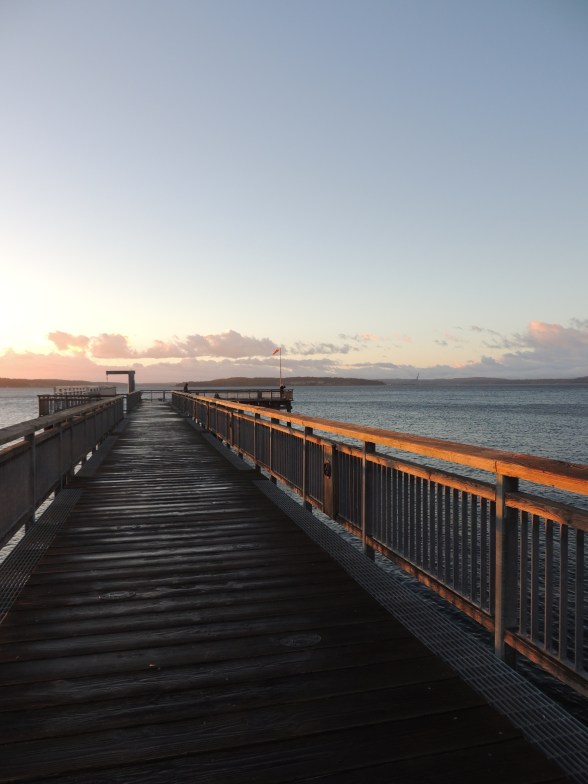

For the Ragtag Daily Prompt: orchestrate.
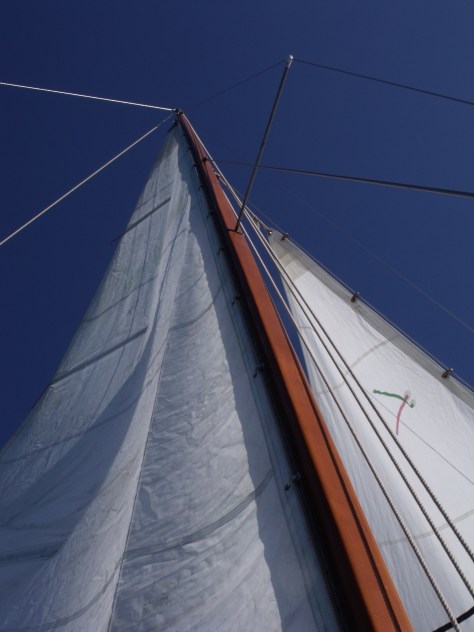
Photographs of my father’s boat, Sun Tui, returning to the water after a lot of repair work. I was looking for photos of my children playing violin or viola, but came across these. We had a team to repair the boat and a team to put her back in the water and raise the mast again. All the players play their parts and play together.

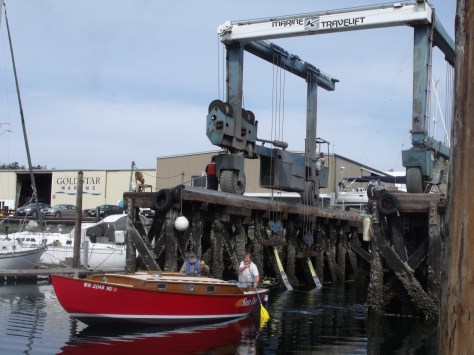
Dang motor.

And out and about:
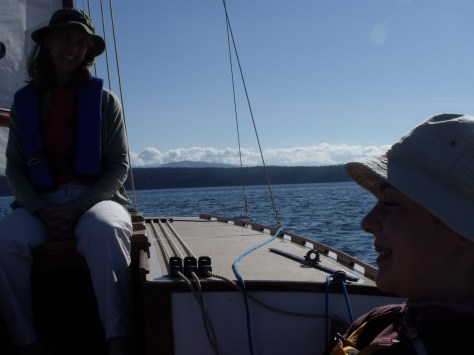
For Norm2.0’s Thursday doors: here.
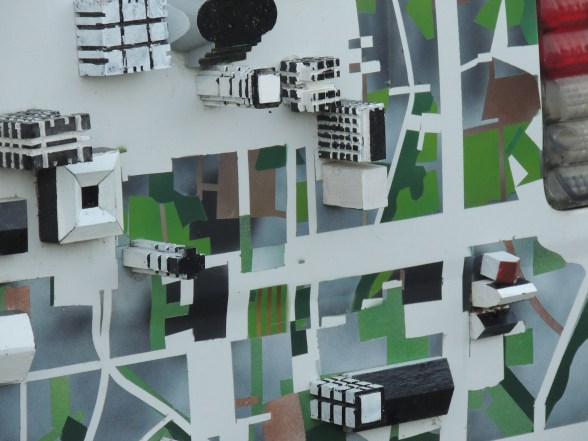
But the buildings are sideways. And there aren’t many doors. No, that’s true, but it’s because the whole thing is a door:
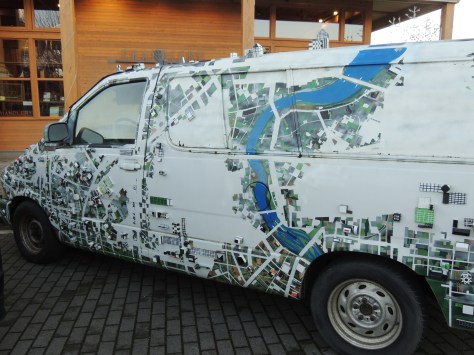
…a door on a van…with a city scape.

For the Ragtag Daily Prompt: birthday.
Another day is birthed as the sun rises.
BLIND WILDERNESS
in front of the garden gate - JezzieG
Discover and re-discover Mexico’s cuisine, culture and history through the recipes, backyard stories and other interesting findings of an expatriate in Canada
Or not, depending on my mood
All those moments will be lost in time, like tears in rain!
An onion has many layers. So have I!
Exploring the great outdoors one step at a time
Some of the creative paths that escaped from my brain!
Books, reading and more ... with an Australian focus ... written on Ngunnawal Country
Engaging in some lyrical athletics whilst painting pictures with words and pounding the pavement. I run; blog; write poetry; chase after my kids & drink coffee.
Coast-to-coast US bike tour
Generative AI
Climbing, Outdoors, Life!
imperfect pictures
Refugees welcome - Flüchtlinge willkommen I am teaching German to refugees. Ich unterrichte geflüchtete Menschen in der deutschen Sprache. I am writing this blog in English and German because my friends speak English and German. Ich schreibe auf Deutsch und Englisch, weil meine Freunde Deutsch und Englisch sprechen.
En fotoblogg
Books by author Diana Coombes
NEW FLOWERY JOURNEYS
in search of a better us
Personal Blog
Raku pottery, vases, and gifts
𝖠𝗇𝗈𝗍𝗁𝖾𝗋 𝖶𝗈𝗋𝖽𝖯𝗋𝖾𝗌𝗌.𝖼𝗈𝗆 𝗌𝗂𝗍𝖾.
Taking the camera for a walk!!!
From the Existential to the Mundane - From Poetry to Prose
1 Man and His Bloody Dog
Homepage Engaging the World, Hearing the World and speaking for the World.
Anne M Bray's art blog, and then some.
My Personal Rants, Ravings, & Ruminations
 KO Rural Mad As Hell Blog
You must be logged in to post a comment.