Cheer for the other team

On Friday I was at the Washington State Swim and Dive Championships, at the Weyerhauser Pool in Federal Way, with our small town swim team. The girls did a great job and every race that they’d qualified for at districts, they also qualified for finals. None in the top eight, but all in the top 16.

The parents and our young women were excited and delighted. The pool is Olympic size with international flags hanging in two parallel rows along the roof. I love the flags and was admiring them. My daughter and I went to that pool for the first time when she was 8, for the National Junior Synchronized Swimming Competition. We volunteered to help at the competition.

Hearing the news of more bombs and shootings later in the day, I felt terribly sad. But there is hope in peoples’ kindness: in the culture of girls’ high school swimming each team does a cheer at the start of the meet. And the tradition is to do a cheer for the other team.

Finals started with cheers before the National Anthem. I asked my daughter if the cheers were for the other team and she said, “No, not at the State Competition.”

I am not cheering for anyone who has committed violence. But I am cheering for the voices of tolerance and love and peace and refusal to generalize hate on all sides. I hope we can all remember to cheer for the other team.

Mozart Requiem: Confutatis lacrimosa

It’s about caring

I described helping a woman bring her bad LDL cholesterol down from 205 to 158 with two clinic visits the other day, and someone said, “I can replace you with a teacher who is much cheaper. Why should you go to medical school to talk about the things people already know? Let’s free you up to do heart surgery or something important.”

Well? What about that? Is my career as a doctor wasted because I am in primary care? I am in Family Practice and I spend tons of time counseling people about diet, exercise, lifestyle choices.

My work is not wasted.

If all we had to do was give people information, we have the information. Every magazine and newspaper screams at us: “Obesity! Stop smoking! Exercise for health! Eat right! Don’t eat junk food!”

Why do two visits with me make a difference?

People do not feel valuable and do not feel cared for in our culture. In the same magazine with articles about losing weight, getting organized, shouting “You can do it!” there are multiple advertisements for sugary desserts and things to consume. My spouse used to joke, “If I get (whatever he wanted at that time) then I’ll be a better person.”

I see pregnant woman who can stop smoking while pregnant, to care for the baby on board, but who often can’t extend the same caring to themselves after the child is born.

The history is often listed as the most important part of a clinic visit. I agree, but not just for diagnosing illness. I am listening to the person, and now with a laptop, I am recording their history. Why are they here today, what medical problems have they had, allergies, surgeries, do they smoke, are they married, do they have children? I want a picture of the person and I must listen hard. What do they reveal about their trust in medicine, about favorable or unfavorable medical interactions in the past, about what they understand or believe about their health? The visit is a negotiation. I need their view of what is happening and their questions.

The physical exam is often an interlude for me. I look at the persons throat, in their ears, listen to their heart and lungs. And part of me is collating the information that I’ve gathered, so that we can move to the next step: analysis and plan.

If I am doing a preventative check, a wellness visit, a physical, whatever you want to call it, I name the positives and negatives. Are they exercising regularly, have they stopped smoking, are they trying to eat a good diet? I name these. Are they lucky enough to have four grandparents who lived to 102 or do the men in their family die at 52 of a heart attack? A 55 year old man who has lost multiple relatives in their early 50s is surprised that he’s alive, and starting to wonder if it might be worth attending a little to his own health. He is a bit shy about hoping that he might not die tomorrow, and ready for encouragement in taking care of himself.

The visit is really about caring. Many people in our culture do not feel cared for. Moms are supposed to care for everyone else. Parents are very very busy, trying to take care of children and have jobs. People are afraid that they will lose their job, their insurance, their homes. We try to do the tasks of adulthood: have the career, find the true love, raise the children, achieve the lifestyle, home and place in our society. And many people feel that they are failing or fear failing. They have not gotten the job they hoped for. They have a house, but it is a huge amount of work. They are working very hard, but there are still so many things they would like to do or see or have. They have become overweight, they have gotten hooked on tobacco, their children are not turning out as they’d planned, the ungrateful wretches. And their parents’ health is crumbling, and in all the chaos, why would the person attend to themselves? The cell phone rings, the computer beckons, it’s time to work, to cook, to clean, to stay on the hamster wheel of life.

In clinic, for a few moments, this person is the center. They explain their health to me. They are painting a picture of their life. A patient will say, “I’ve been worrying about my mother, my son, my spouse, and I don’t take the time to exercise or eat right.”

And I say, “I hope that your mother, son, spouse does better. But you are important too. It is wonderful that you have stopped smoking, excellent! But we’re both worried about your cholesterol, right? It is too high. How are we going to take care of you? What can you fit in?”

Most people do not want to start with a medicine. They want to take care of themselves, too. They are willing to make lifestyle changes. They need encouragement and permission and to come back to see how it is going. What they need is my caring. And I do care.

I used to think that somehow complex patients would gravitate to me. But that is not true: the truth is that everyone is complex. Each person has layers and thoughts and feelings: fears and joys. I barely scratch the surface. It is the caring that is most important and each person that I see is important.

At the end of the visit, I print my note. I give it to the person. “Check it. Tell me if something is wrong. I cannot change the note, but I can put an addendum.” I see that people are shy and often show some confusion. Two pages? Single spaced? About me?

Yes. About you.

written in 2010 and published first here: http://everything2.com/title/It%2527s+about+caring?searchy=search

I took the photo in 2004, a school overnight trip to explore settlers 100 years ago….

Why care for addicts?

Why care for addicts?

Children. If we do addiction medicine and help and treat addicts, we are helping children and their parents and our elderly patients’ children. We are helping families, and that is why I chose Family Practice as my specialty.

Stop thinking of addiction as the evil person who chooses to buy drugs instead of paying their bills. Instead, think of it as a disease where the drug takes over. Essentially, we have trouble with addicts because they lie about using drugs. But I think of it as the drug takes over: when the addict is out of control, the drug has control. The drug is not just lying to the doctor, the spouse, the parents, the family, the police: the drug is lying to the patient too.

The drug says: just a little. You feel so sick. You will feel so much better. Just a tiny bit and you can stop then. No one will know. You are smart. You can do it. You have control. You can just use a tiny bit, just today and then you can stop. They say they are helping you, but they aren’t. Look how horrible you feel! And you need to get the shopping done and you can’t because you are so sick…. just a little. I won’t hurt you. I am your best friend.

I think of drug and alcohol addiction as a loss of boundaries and a loss of control. I treat opiate overuse patients and I explain: you are here to be treated because you have lost your boundaries with this drug. Therefore it is my job to help you rebuild those boundaries. We both know that if the drug takes control, it will lie. So I have to do urine drug tests and hold you to your appointments and refuse to alter MY boundaries to help keep you safe. If the drug is taking over, I will have you come for more frequent visits. You have to keep your part of the contract: going to AA, to NA, to your treatment group, giving urine specimens. These things rebuild your internal boundaries. Meanwhile you and I and drug treatment are the external boundaries. If that fails, I will offer to help you go to inpatient treatment. Some people refuse and go back to the drug. I feel sad but I hope that they will have another chance. Some people die from the drug and are lost.

Addiction is a family illness. The loved one is controlled by the drug and lies. The family WANTS to believe their loved one and often the family “enables” by helping the loved one cover up the illness. Telling the boss that the loved one is sick, procuring them alcohol or giving them their pills, telling the children and the grandparents that everything is ok. Everything is NOT ok and the children are frightened. One parent behaves horribly when they are high or drunk and the other parent is anxious, distracted, stressed and denies the problem. Or BOTH are using and imagine if you are a child in that. Terror and confusion.

Children from addiction homes are more likely to be addicts themselves or marry addicts. They have grown up in confusing lonely dysfunction and exactly how are they supposed to learn to act “normally” or to heal themselves? The parents may have covered well enough that the community tells them how wonderful their father was or how charming their mother was at the funeral. What does the adult child say to that, if they have memories of terror and horror? The children learn to numb the feelings in order to survive the household and they learn to keep their mouths shut: it’s safer. It is very hard to unlearn as an adult.

I have people with opiate overuse syndrome who come to see me with their children. I have drawings by children that have a doctor and a nurse and the words “heroes” underneath and “thank you”. I  have had a young pregnant patient thank me for doing a urine drug screen as routine early in pregnancy. “My friend used meth the whole pregnancy and they never checked,” she said, “Now her baby is messed up.”

Addiction medicine is complicated because we think people should tell the truth. But it is a disease precisely because it’s the loss of control and loss of boundaries that cause the lying. We should be angry at the drug, not the person: love the person and help them change their behavior. We need to stop stigmatizing and demeaning addiction and help people. For them, for their families, for their children and for ourselves.

I took the photo of my daughter on Easter years ago.

Gleaning

This is for Ronovanwrites weekly haiku challenge #70, with prompt words crane and gold.

quick look gleaning fields
sandhill cranes glean gold near Sand
Dunes National Park

I lived in Alamosa, Colorado for three years, at 7500 feet in the San Luis Valley, land of cool sunshine. The sandhill cranes would migrate through and glean the potato fields, flocks with thousands. There were more cranes than people at the height of migration. And in the northeastern corner of the Valley, surrounded by the Sangro de Cristo Mountains and the San Juans, is the Great Sand Dunes National Park and Preserve, with dunes up to 600 feet high. We were surrounded at 7500 feet by 14,000 foot peaks and passes out the Valley in all four directions. It is an amazing place.

I took the photo in 2007 at the dunes: I chose this one to try to give an idea of the scale…..we had just climbed up to the top of the first dunes….

Rural medicine crisis: Job offers

One of the signs that we are entering a worse crisis for rural medicine is job offers.

I am starting to keep the email job offers: so far the record is from Texas, a random out of the blue job offer for $500,000 yearly.

One half million dollars for a Family Practice job. I won’t take it. I like my clinic and anyhow, the pace they would set me to work is burning out physicians. They are quitting, though some die instead. A recent article said that this year a physician poll reports the number at burnout this year has risen from 40% to 50%.The job offers roll in. I get phone calls, emails, mailing and now my cat is getting rural family medicine job offers. Really. Desperate times.

Years ago I read that only 30% of family practice doctors are willing to take a rural job and that only 30% of those are willing to do obstetrics in a rural area. I did obstetrics as part of my practice from 1996 to 2009. I stopped when I opened my own practice, because the malpractice price tag is three times as much and my rural hospital was grumpy at me. Starting in my third year of medical school, I did deliveries for 19 years. During my nine years here, the cesarean sections were done by the general surgeons and we did not have an OB-gyn. I called Swedish Hospital Perinatology when I needed help. I got to know them well enough that if I had someone in preterm labor I would call and find out who was on call BEFORE I chose a medicine, because I knew which perinatologist liked terbutaline and which one would rather I would skip it and use procardia. They were fighting out the research: I didn’t know who was right, but it is a huge benefit to have your consultant be happy with your choice if you have to lifeflight the patient by helicopter at 3 am. With a 25 bed rural hospital, we try not to deliver a baby under 35 weeks, and it’s better to fly the baby in mother if you can’t stop the labor.

Back to the numbers: so 33 out of 100 family practice doctors will take a rural job and only 11 of those are willing to do obstetrics. Our first day of medical school, the faculty said, “Shake hands with the person on your right. Shake hands with the person on your left. At least one of the three of you will be sued for malpractice in your career.” Oh, goody, let’s start training with paranoia. Or is it just being realistic and prepared?

I worked for five years between college and medical school and took the GREs first. I thought I was going to get a PhD. However, I did not want to write a thesis and did not want to be one of three world experts in anything. I had a friend who was one of three world experts in honeybee behavior. I asked what happened when they got together. “We argue.” he said. I also did not want to publish or perish, tenure was becoming more of a problem and anyhow, I did not want to be tied to a university. I got a job working as a lab tech in the National Cancer Institute at NIH in Bethesda. Two years there gave me my answer: primary care is the ultimate generalist. I could work anywhere in the world, in a city, in a small town, and there is endless lifelong learning. I took the MCATs and got into medical school, determined to do primary care.

Back to the job offers: 450K for Iowa. 310K, 350K, signing bonus, paid move, 6 weeks “off” (As far as I can tell it’s always unpaid leave. No sick leave, no paid holidays, no paid leave at all. Do factor that in.)Production bonus. No call or phone calls only. Near a city! In a city! Cheap houses! Excellent schools for your children and 6 stellar golf courses! FP job in Texas, 315K, 4 day work week, signing bonus, loan forgiveness!

The most that I’ve made in a year, I think, is less than half the listed average income for family doctors, though that has risen by nearly 1/3 in the last ten years. And that was enough and I didn’t see enough of my two children and the next year I worked less. I have never made the “MGMA average” for what a family doctor makes and it was more than ten years ago. I am below average in income but I think I am above average in personal happiness and way below average in burn out! I made way less last year, because I was out sick for 6 months. Ok, I lost money. However, my clinic still nearly covered expenses and stayed open, with no provider from early June to November 15, thanks to my receptionist, my patients, the PA who stepped in in November and the other independent practitioners in town. The hospital system refused to help except that they took over my 18 patients on controlled substances… after I threatened to complain to the state that they were refusing care. How nice.

I have an old house and old cars. I have a son finishing college and a daughter about to start. More money to retirement seems like a good idea. I now have 25 years as a member of the American Academy of Family Practice and I am an “old” doctor, because I didn’t retire at 50. I told a younger partner at the hospital that I was deliberately being “below average” because I was going for a career with longevity and wanted to avoid burning out. He left town last year….

From the American Academy of Family Practice paper http://www.aafp.org/about/policies/all/rural-practice-paper.html : family practice providers are 15% of physicians in the US, but do 23% of the visits each year. And in rural areas about 42%. “In the U.S. as a whole there is 1 Primary Care physician per 1300 persons while in rural areas the ratio is 1 Primary Care physician per 1910 persons and 1 Family Physician per 2940 persons. In the most rural counties, those with a community of at least 2500 people but no town over 20,000, close to 30,000 additional Family Physicians are needed to achieve the recommended 1:1200 ratio.” I have patients driving from over an hour away because it takes months on the waiting list to see a primary care doctor in their area, and now I am seeing veterans too, because we are more than 40 miles by road from the nearest VA hospital.

This article:  http://doctordrain.journalism.cuny.edu/the-broken-system/family-practice-just-doesnt-pay/ makes me laugh. The student says that 90% of family practice visits are probably coughs and colds. Uh, I would say that less than 5% of mine are. Half of my patients are over 65 and what I do is care for chronic disease with some acute disease thrown in. Diabetes, hypertension, coronary artery disease, rheumatoid arthritis, stage III renal failure, opiate overuse syndrome, depression, PTSD, and the average patient has 4-5 chronic diseases, not one. So the complicated ones have 9 chronic diseases. If they have walking pneumonia and diabetes and are 80, what was their last creatinine so I can adjust the antibiotic dose for their stage three renal failure? My oldest current patient is 98, has diabetes and still is out haying…. rural medicine is never ever boring and some days I think, oh, I would pay to see a simple cold. In the last two months one patient had a four vessel bypass, two have hepatitis C, one has hepatitis B and last month I found one with pertussis: whooping cough. And one has to go to the Big City to see the gynecologist-oncologist….

Rural family medicine is the ultimate generalist. I have to know a little bit of everything and know when to call and ask questions and who to call. Once I had an obstetrics patient with severe and confusing back pain after an epidural. I knew it was something peculiar because we could barely control it with opiates and her back exam was fine. I started calling specialists: ob-gyn didn’t know. The nurse anesthetist. My local internist. An orthopedist. A neurologist, the closest one 90 miles away. Then I got it: I called an anesthesiologist in Denver, 250 miles from where I was. He said it was an inflammatory reaction to the epidural medicine and to give her steroids, which would fix it. It did… but it was my being sure that I had something different on my hands and the stubbornness to keep calling until someone knew the answer….

A friend from college got a PhD in genetics and then went to medical school at the same time as I did. We talked when we picked our specialties. She chose pathology. I chose Family Practice. “Not Family Practice!” she said. “Why not?” I asked. “You can’t know everything!” she said. I said, “Well, no one knows everything. Put three top specialists in a room and they argue about the research. The trick is knowing what you know and what you don’t know.”

We need more primary care physicians and more rural family doctors. And it’s only getting worse.

http://www.aafp.org/about/policies/all/rural-practice-paper.html
http://www.ncbi.nlm.nih.gov/pmc/articles/PMC1071163/
http://healthleadersmedia.com/content/COM-208773/Physicians-Offer-Insights-on-Practicing-Rural-Medicine.html
http://www.siumed.edu/academy/jc_articles/Distlehorst_0410.pdf
http://doctordrain.journalism.cuny.edu/the-broken-system/family-practice-just-doesnt-pay/
https://www.aamc.org/newsroom/newsreleases/358410/20131024.html
https://www.washingtonpost.com/news/to-your-health/wp/2014/05/22/how-many-patients-should-your-doctor-see-each-day/
This blog post helped inspire this article: https://theridiculousmrsh.wordpress.com/2015/11/03/why-i-hope-my-doctor-is-off-having-a-cup-of-tea-as-seen-on-the-huffington-post-yup-actual-huffpost/

The picture is some of the madashell doctors on our first trip stumping for single payer health care in 2009.

Walk away

I used to carry my phone around
hoping you would call me now
I walk away

my house is three stories and
I can’t hear the phone and still
I walk away

I long to hear your voice I send
a hopeful query to you then
I walk away

I leave the phone plugged in the wall
and go up the stairs and down the hall
I walk away

I listen in the quiet to hope sighing
in my heart and maybe dying as
I walk away

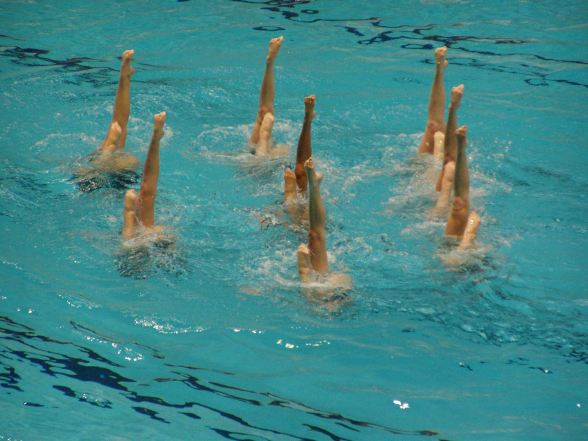
I took the photo at the National Junior Synchronized Swimming Competition in 2009.

Where oh where is love?

How could we have love without grief?

The US culture seems to suppress grief, take grief away, heal grief, get over grief, but think about love without grief.

Could we love someone if we didn’t grieve when they died?

No. We couldn’t. That wouldn’t be love. Or that would be the pale shadow of love, love without loss, love that turned from the grave and forgot.

We cannot love without grief, so we need to make room for grief. We need to stand by each other during grief. We need to help each other, be present, be there, say the wrong thing, say the right thing, say nothing and just give love.

Love builds the Taj Mahal. Love writes Rumi’s poems. Love is the memories of the person we loved, we tell our children about them, we hold them in our hearts.

Love loves without logic, without sense. Love in spite of alcohol, addiction, lies, how can a person love an abuser? They love the person, not the abuse. They love the person, not the actions, not when the alcohol takes over, when the meth takes over, when the oxycontin takes over. Love loves the whole person and grieves the damage.

Love and grief are intertwined, a rosebush with thorns, there is no one without the other. No joy without despair, no light without dark, no you without me, no joining without separation.

I enter grief as I enter love, whole heartedly, oh, I may be afraid of the dark but I go there anyhow, I know as the waves close over my head and I sink into the depths:

There is no love without grief.


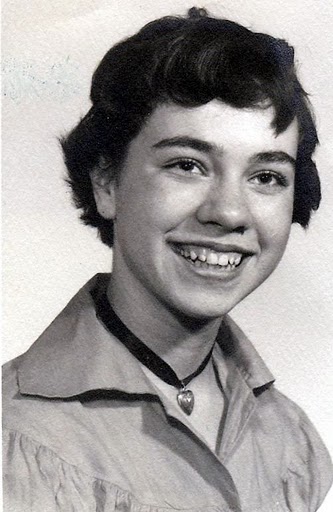
The picture is my mother, Helen Burling Ottaway, in high school. She died of cancer in 2000 and I still miss her terribly.

Why I Hope My Doctor is Off Having a Cup of Tea (as seen on The Huffington Post. Yup, ACTUAL Huffpost!)

I have helped out in the ER when the doctor was running two codes simultaneously… the last time a person yelled at me for running late, I said, “Well, I had to call pulmonology, cardiology and infectious disease about my last person. How are you?” In the US, apparently primary care doctors running at burnout has risen from 40% to 50%. Not a good situation, so thank you for this post…..

theridiculousmrsh's avatarThe Ridiculous Mrs H

I recently wrote an article on the eight weeks I spent in the NHS, in the build up to having my tiny little Iris. It was the scariest time ever, and unfortunately I’m not very good at being funny when I talk about it! I was over the moon to find out that The Huffington Post wanted to publish it!

I’m so overwhelmed by the reaction I’ve received off the back of it from the amazing people in the NHS and their patients. Please, take a read, and share if you want, and as always I would love to know your thoughts on it!

Here it is….

The other day, I was in a hospital waiting room waiting for an ultrasound appointment. There was a couple next to me, and they were not happy. Apparently, as the whole waiting room were finding out: their doctor was running late. After…

View original post 1,796 more words

Spare the rod

You say you want a partner to join in work or love
It bothers me to hear you say those words
sand inside my clothes

a partner is someone that you respect and listen to
I hear a disconnect between your words and plan
someone to improve upon

You’ve chosen your next target for this thoughtfully
I can see that your plan would work quite well
practical and logical

I do not think that he will bend to your desire
Carved and polished, obedient as wood
sanded to a shine

Earthquakes and fire shake and forge our world
I stand in awe before the forces on us all
that make us grow

There is only one that you should try to change
The stubborn foe that eyes you when you shave
will keep you busy

And God will gild the lily

I took the photo in 2012 from the Kai Tai Lagoon in one of our rare snows. It looks like a magic castle on a hill to me.
I published this on everything.com today too.