G6PD deficiency and diabetes

Today I follow an online trail to this article on diabetes from Nature Medicine here.

It is talking about a genetic variant that is found in people with African-American heritage called G6PDdef. This genetic pattern makes the HgbA1C test inaccurate. It will look low and “in control” even when blood sugars are high. Since the blood sugars are NOT in control, complications from diabetes can happen: damage to vision, to kidneys, to nerves in the hands and feet.

I have been reading articles about current and changing guidelines about diabetes. The current guidelines say that checking blood sugars at home doesn’t make a difference. I REALLY disagree with this and at the same time, I don’t think that physicians are approaching blood sugars in a practical manner.

I saw a man recently who is diagnosed with “insulin resistance”. His HgbA1C is in between 5.6 and 6.0. Normal is 4.5 to 5.6. Over 6.5 is diabetes. He has prediabetes. He has not checked blood sugars at all, but he is on metformin.

There is evidence that metformin is helpful, and still, I think it is putting the cart before the horse. I ask my people to go buy an over the counter glucometer. Ask for the one that has cheap strips, 6 for a dollar instead of a dollar apiece. Then we go over the normal and abnormal blood sugar ranges and I ask them to start checking blood sugars. If I give them a medicine right away, they don’t learn how to control their blood sugar with diet. ALL of my patients can figure out how to bring their blood sugars down with diet. If we can’t get to a good range, then we will add metformin. I do explain that the guidelines say use a medicine right away, but I ask, “Would you like to see if you can control your blood sugars with diet?” The answer is overwhelmingly “YES!” I have never had someone say no. If we do not give them the chance and explain the goals, why would they even try?

Also, I read the dietician handouts for diabetes yesterday and I am not satisfied. I do not think they explain carbohydrates well. Foods have fats, proteins, and carbohydrates, and anything that isn’t fat or protein has carbohydrates. I think of carbohydrates as a line, from ones with high fiber that do not send the blood sugar up fast, to ones that shoot it way high. At the low end is kale and lettuce and chard and celery. Then the green and yellow and red vegetables that are not sweet. Then beets and sweet peas. Next come the fruits, from blueberries up to much sweeter ones. Fruits overlap with grains: bread and pasta and potatoes and rice. The whole grains have more fiber and are slower to digest. Candy then sweet drinks (sodas are evil) and sugar.

Sugar has 15 grams of carbohydrate in a tablespoon. Kale has 7 grams of carbohydrate in a cup. That’s a pretty huge difference. A small apple has about 15 grams of carbohydrate and a large one 30 grams. Read labels for grains. There is a lot of carbohydrate in a small amount. The issue with fruit juice is that most of the fiber is gone, so the sugars are broken down and absorbed much faster. A 12 oz coke has 32 grams of carbohydrate and a Starbucks mocha has 62! I quit drinking the latter when I looked it up.

Most people with diabetes are supposed to stay at 30 grams of carbohydrate per meal, or 45 if it is a big person or if someone is doing heavy labor. Snacks are 15 grams.

Avocados are weird. They have about 17 grams of carbohydrate in a whole one, but they also have a lot of fat. They do have a lot of fiber, which surprises me.

Diet control takes a combination of paying attention to what is on the plate and serving amounts. Three servings of pasta is not going to work, unless you are out fighting forest fires or are on the swim team. Fire fighters are allotted 6000 calories a day, but most of us do not get that much exercise.

At the same time that articles are telling me that home blood sugars are not useful with a glucometer, everyone is pushing the continuous glucose monitors. I think we like technology. And other articles say that diabetes can be reversed with major lifestyle changes.

Articles: about not using home glucose checks, here. Starting metformin, here. Starting with one of the newer medicines, here.

I think people feel a lot more successful if they get a glucometer and can bring their blood sugar down by messing about with diet. I tell them to check after what they think is a “good” meal and after a “bad” one. How much difference is there? Contrast that with being handed a pill to control it, while someone talks about diet and says all the same stuff that we’ve heard for years. Nearly all of my people want to avoid more pills and are willing to try a glucometer to see if they can avoid a pill. People who have been on diabetes medicine for a while are less willing to try, but sometimes they do too. And sometimes they are surprised that some meals do not do good things for their blood sugar.

This is all type II diabetes. For type I, we have to have insulin. If type II has been out of control for a long time, sometimes those people have to have insulin too. Right now insurances will usually cover continuous glucose monitors for people with diabetes who are on insulin, both type I and II. I do hope that they really make a huge difference for those people!

The spectrum from the low carbohydrate vegetable, the green and yellow and orange ones, up to the really high simple sugar ones is also called the glycemic index. There are lists of low to high glycemic index foods. Perhaps some people with diabetes find that helpful, but I think it’s simpler to say, ok, the stuff that doesn’t taste sweet will send the blood sugar up less. Also, since we are all genetically different and then our gut bacteria and microbiome are all different, it is individualized care to say how does this person at this time respond to this food? We change over time!

There are other examples of the HgbA1C not working to track diabetes. A resident and I looked over a person with diabetes and spherocytosis. The HgbA1C was nearly normal but the blood sugars were in the 300 range. Spherocytosis is a genetic blood cell abnormality, and the red blood cells don’t live as long. People with a past bone marrow transplant also have red cells that live for a shorter time. The G6PD deficiency is thought to help people survive malaria, so persists in the population, like sickle cell anemia. Isn’t genetics fascinating?

Elder Care: Goals

I really enjoy elder care in Family Medicine. Mostly. Even some of the very difficult or very complicated people.

One thing I would try to figure out is what is the person’s goal? This can be quite funny at times.

“Can we talk about what you would want if you got really sick? If you were too sick to talk to us?”

“I don’t want to talk about death.” Ok, this person is in their 90s.

“That is fine, but if we don’t talk about it, your daughter and I have to guess what you want. And we tend to do more when we don’t know.”

That person glares at me. “Oh, all right.”

Sometimes a person says, “I don’t want to die of cancer.”

It turns out that this is an opening. “Ok, what DO you want to die of?”

“I don’t want to die!”

“Well, me either, but I can’t fix that. There are at least three “ideal” deaths that the Veterans Administration talks to people about. Maybe we could go over them. You could put your request in with your higher power.” I have written about the three here: https://drkottaway.com/2023/10/06/an-ideal-death/. The “Hallmark” or hospice death, sudden death and fight it all the way.

But, other than not dying, what is the goal? To stay in one’s home? To move to a retirement organization that has a nursing home and care until death? Home care insurance to stay home? I do have people imply that they will go into the woods or crash their car or something if they get very sick, but not very often. They are usually aware that I have to respond to any suicide threat. How much care do they want? People often say, “I wouldn’t want to be disabled,” but it turns out that life is often worth living even when very challenging. Most people want to be treated for cancer, for heart disease, for congestive heart failure, to go on.

Sometimes death comes from a cumulative load of chronic problems. We had a gentleman in his 80s in the hospital ICU many years ago. He had pneumonia, congestive heart failure and bad kidneys as well as a host of other problems. I sat down with him. “We are treating you, but when we give you enough medicine to help you breathe, your kidneys are getting worse. This is a small rural hospital. I could transfer you to the Seattle hospital, 2 hours away. You would have a cardiologist, a kidney doctor, a lung doctor. Here you just have me and the nurses. Either way, I do not know if you will live through this. What do you want to do?”

He chose to stay. “My family can visit me here.” His family was visiting daily. “I do not want a breathing tube. I do not want dialysis. If my kidneys go, let me go.” We discussed this with the family.

Four days later it was clear that without dialysis, he was dying. Dialysis might have slowed it, but he may still have died. He was no longer waking up. We withdrew the antibiotics and removed most of the monitoring and switched him to hospice. His family continued to visit and he died a few days later.

He did die in the hospital, and yes, we used some machines up until care was withdrawn, but this still seems like he got to make choices and his family understood. It can be much harder with memory loss when the person really can’t make choices any more.

He was complicated. To keep him breathing well without a machine, we had to give him diuretics, that were eventually too much for his kidneys. A bad heart, lungs with emphysema and pneumonia, and bad kidneys. Sometimes the liver is not working either, and then what is there left to work with? Nearly all drugs are broken down by either the liver or kidneys. Simethicone is not absorbed, so that’s the exception.

Sometimes people get along until too many things accumulate and then they end up in the hospital and on multiple new medicines. It can be very confusing. Regular maintenance is a good idea.

Sometimes the family wants something different from the patient. Or there is an elder parent and three adult children, who all disagree. My job is advocate for the patient. But this is Family Medicine, so I have a responsibility to the patient but also to the family. The person, the family, the community, how is it all fitting together? Sometimes functional, sometimes not.

I had one person who called me when he had been flown to a Seattle hospital. “I have to get home.” he says, “Can you release me? I have to take care of my wife!” I panicked for a moment. “Is your wife bedridden? Where is she? Why are you in the hospital?” She was not bedridden and she was fine. He was being more and more behaviorally squirrelly. He could no longer drive, but drove anyhow. His wife disabled the car, because he would disappear. I sent him to a neurologist for memory testing. The neurologist said, “Hmmm.” and sent him for neuropsych testing. The neuropsych report said dryly that his memory was fine, but he had certain long standing behaviors related to past heavy alcohol use. Oh. He was quite proud of not drinking and going to AA, but he also triangulated with his family and me. I sat him down and said, “Ok, I am not going to talk to a different one of your five children every time you see me in the clinic, because you’ve said, “Don’t tell mom I called you.” Pick ONE person for me to talk to and now you have to have a family member with you when you come to clinic.” He grinned and chose his wife. He had certainly fooled me about his memory, because he blamed his behavior on his memory. The neurologist was not quite fooled. The family calmed down and he did not drive any more, thank goodness. He was not an easy patient, but he was entertaining and educational too. And I felt that I had helped both him and the family.

Sometimes families fight. Sometimes a dysfunctional family will get way worse when someone is sick or dies. Sometimes families go on fighting. Other families are so kind and so good to each other and their elders. Every family is different.

For the Ragtag Daily Prompt: concentration.

Elder care: stairs

Most of us do NOT live in homes practical for aging. My house has four steps in the front and five in the back to get in and out. The main floor has almost everything needed if I cannot climb a flight of stairs: only the laundry is in the basement.

I am helping a friend in her 80s. The issue, from my practical and pragmatic Family Medicine standpoint, is that she is falling. She told me that she was falling, five times in a day, in November. I got involved right away, because she had a surgery canceled because of it. She has three specialists and a primary. I called them all and took her to the emergency room first and then to her primary.

We asked her primary for disabled parking and for home health services. In Washington State, if you can’t leave your house except to the store or the doctor, you qualify for home health. I also fussed about her blood pressure, but her primary thought she was fine.

The thing is, we should not always have a blood pressure goal of 130 or less systolic once we hit 75 or 80. With weight loss, people can drop a blood pressure point for each 2 pounds lost. The blood pressure range that is safer at age 75 or 80 is to keep it around 140-150, unless the person has heart disease or congestive heart failure. Over 150 is getting too high. The brain must get good oxygen by blood flow and if it doesn’t, there are sensors in our neck that make us faint. That can be a full on loss of consciousness, or just a decrease and drop to the floor. There are some instances where the blood pressure still needs to be kept down at 125-130 systolic: bad coronary artery disease and congestive heart failure especially. But being able to stand up and walk is rather important to elder health.

The distraction for my friend’s physicians is that she has had cancer for three years. We are told that she needs an MRI of her head to rule out brain tumors, metastases from her cancer. Yes, brain tumors can cause falls, so that does need to be ruled out. My friend only falls when standing, sometimes at the counter, gets lightheaded and once has had a full on syncope. No chest pain or heart racing.

It took two months to get the brain MRI, which is negative. We saw her oncologist this week and I pushed for her cardiologist to see her sooner than June. He saw her yesterday. She is on medicine for a heart arrhythmia, but it doesn’t sound like her arrhythmia is acting up. He’s still checking: a monitor and heart ultrasound, but meanwhile he says, “I don’t tell many people this, but you need to drink more fluid and eat more salt.”

“They told me low salt. I stopped salt when I cook.”

“Start salt again and more fluid and return in 3 weeks.” She has been falling 1-5 times a day in her home. She lives alone. She is stubbornly resisting leaving her home and I am ok with that. But, it would be most helpful for her health if she was not falling. That is the priority here. She will not live forever, but she wants to stay in her home. Let’s help with that.

I am NOT saying that everyone over 75 should increase salt. If a person has bad hypertension, or heart disease, or congestive heart failure, they should not increase salt unless their doctor has a specific reason. And heart is the number one killer, so there are lots of people who should continue to eat a low salt diet. But falling and breaking a hip is also a killer.

My friend has three steps to get out of her house. The first day last week that I took her to get labs, she fell three times. “But Jim, I’m a doctor, not a nurse!” Ok, I am not a good nurse. However, we got her back inside after labs and getting the CT scan contrast for her to drink. She has not fallen when I have gotten her in or out since. I’ve had to enlist help twice, since she’s taller than me. Going down the steps is worse than going up. Home health is doing physical therapy and she has a raised seat on her commode. That is good, except those are the muscles that help us go up and down stairs. She has a walker too. She is still falling, because to cook, one has to let go of the walker, right?

So if someone wants to stay at home, think about the home. Are there steps? How strong is the person? Do they have the resources to pay for around the clock care if they become bedridden? I am practicing getting down on the floor and back up every single day, because I want to be strong. I have an upstairs and a basement, and I am going to continue with stairs for as long as possible. If I break my leg, those four front stairs are going to be an issue, but I am thinking about it. Perhaps I should design a decorative ramp, or a sloping earth entry.

Will the house accomodate a wheelchair? Is there a bathroom and a bedroom, as well as the kitchen, on the main floor? Is there clutter? I know I am supposed to keep the floors clear to reduce fall risk. I had one person who kept falling at night because he wouldn’t turn on a light. “It would wake my wife and disturb her,” he said. “It will disturb her more if you break your hip.” I said. “Turn on a light or a flashlight or something.”

Harvard Medicine agrees: https://www.health.harvard.edu/staying-healthy/master-the-stairs

Be careful out there. Or maybe in there.

For the Ragtag Daily Prompt: Elder care can’t be laissez-faire.

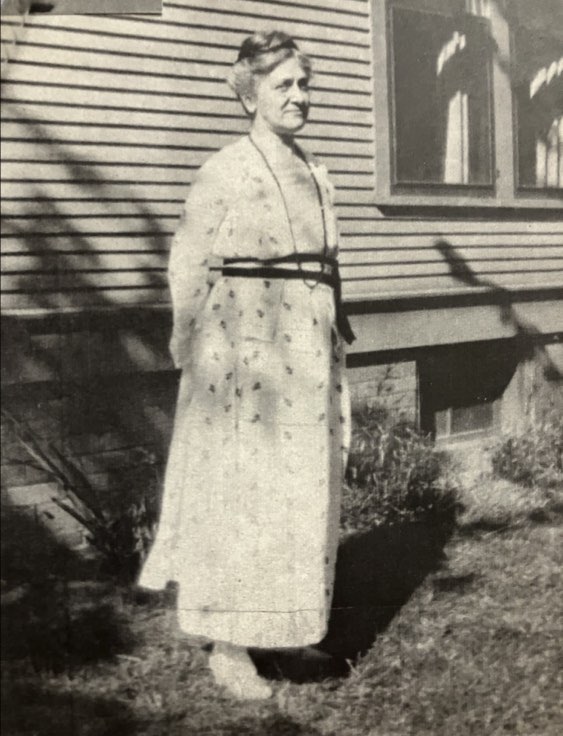
The photograph is not my friend. This is Tessie Temple, my maternal grandfather’s mother. I do not have a date nor who took the photograph. Another photograph is stamped on the back: Battle Creek. She must have gone to one of the famous sanatoriums, like Kellogg’s, for rest or the cures.

Ethical stupor

My friend M is twenty years older than me. A friend of my parents since college. When I went to college in Madison, WI, I got to know her and her husband and their two sons. I lived with them my third year of college and it was a ball! I loved the family.

I visited over the years and more often when her husband had lung cancer and died. She wanted me to come out for her younger son’s fiftieth birthday. Her daughter-in-law said, “It’s nice to meet the daughter.” Apparently M considered me a daughter. I was delighted, since both of my parents had died by then.

A year ago M was feeling less well. She started losing weight. A work up was done, finding no cause. She had a rare cancer that had been treated two years prior. But by July, she had lost thirty pounds.

Thirty pounds! As a primary care doctor, RED FLAG! Very high likelihood of dying, if that went on. She was eighty years old.

I flew out in September. We took a road trip, just the two of us, from Michigan back to Wisconsin. We visited multiple old friends of hers. She thanked me afterwards, because one friend had Parkinson’s and died ten days after our visit. We saw her sisters-in-law and we did a circuit around Madison.

Afterwards, she said that was her last time driving on highways.

By December, she had dropped another ten pounds. Then she had difficulty walking. The daughter-in-law called me. She was having trouble getting any medical attention. They had had trouble for a year! Over a week, M went from walking to not being able to support her weight or stand up. I flew up right after New Years.

Something was wrong, clearly. She’d carried her own bags in September. I was the out of state doctor. The daughter-in-law, B, was moving her from bed to chair alone. I couldn’t. I am 5’4″ and M was 5’10” and now my weight. B found a private practitioner.

On my third day there, M had chest pain. We took her to the Emergency Room. The Emergency Room did the usual things. Then the ER doctor came in. “She is not having a heart attack and she doesn’t have pulmonary emboli. So you can take her home.”

“No, something is wrong! She can’t walk! She could walk two weeks ago! We did a road trip in September!”

The ER doctor shrugged. “What do you expect me to do?”

“Figure out what is going on!”

“She is eighty.” he said. As if eighty meant we stop caring.

“No, we won’t take her home. It isn’t safe. We can’t move her. M, do you want to stay?”

“Yes,” said M.

The ER doctor looked annoyed. “All right. I’ll admit her for placement in a nursing home.”

The inpatient doctor was scarcely more interested.

“What do you expect me to do?” he said, knowing he was dealing with an annoying out of town doctor.

“Steroids.” I said, “Maybe it’s a weird form of polymyalgia rheumatica. She deserves a trial of steroids.”

He too shrugged, and started steroids.

The next day she was stronger, and the third day she could stand. It was SOMETHING, but not clearly polymyalgia rheumatica. The hospital was small and did not have a cancer doctor and did not have a neurologist. They were sending her out on steroids. Follow up outpatient.

We looked at a nursing home, but went to a private assisted living instead. The staff were minimally helpful. We took turns sleeping there. Physical therapy and occupational therapy were started. M was a bit better but not the miraculous return to normal that steroids cause in polymyalgia.

I flew home. The private physician saw her. M was set up to see the U of Michigan. B kept asking if it was lymphoma, because that can be a side effect of the treatment for M’s cancer. M’s cancer doctor said no. M got covid and the appointments were delayed two weeks.

In February she went to the U of Michigan. The neurologists came through and said, nope, not polymyalgia rheumatica, and not neurological. The cancer doctor came through. The GI doctors did an upper endoscopy and biopsied. Cancer. Lymphoma.

M said no to treatment. She was discharged to hospice. She died within 24 hours of reaching the hospice.

The cancer doctor sent an apology to B, who was right all along. This was a particular lymphoma that responds to steroids for a while. M had said that if it was another cancer, she would refuse treatment.

So what the hell is going on here? This: https://www.technologyreview.com/2019/08/21/238642/a-doctor-and-medical-ethicist-argues-life-after-75-is-not-worth-living/

“These people who live a vigorous life to 70, 80, 90 years of ageβ€”when I look at what those people β€œdo,” almost all of it is what I classify as play. It’s not meaningful work. They’re riding motorcycles; they’re hiking. Which can all have valueβ€”don’t get me wrong. But if it’s the main thing in your life? Ummm, that’s not probably a meaningful life.”

Ok, so now some doctors don’t care once you reach 75. That’s it. They define everything as “useful and productive” and if you are not doing meaningful work, well, you’d might as well die. I hope that doctor does die. Slowly. And that everyone around him refuses to do any tests to see what is happening. And who the hell defines what is meaningful work? That can be helping raise grandchildren, like, hello!

I have another friend who is going through the same thing. She is failing and the medical community in my town is shrugging their shoulders. She should have a head MRI, says the cancer doctor. So that was a month ago and it still isn’t scheduled.

Some of this is pandemic fatigue and backlash. People refusing to get vaccinated, people refusing to believe that Covid-19 exists, doctors and nurses dying of Covid-19, people refusing masks. If everyone is exhausted, what do you let go?

Apparently people over 75. But NOT everyone over 75. If you are wealthy, you will get care. Our Senators and House of Representatives certainly get care after 75. It is the isolated, the rural, the poor, the ones who don’t have an advocate, who will be sent home to die.

I took my friend here to her primary. “What do you want me to do?” he says.

“Here is the Home Health paperwork and she needs disability tags.” My friend is falling, five times that week.

“Ok,” says the primary. “I will set those up.”

When Home Health arrived, she had fallen. She had been down for 15 minutes and unable to get up. Home Health called the fire department. The fire department helped and also came back to put no slip pads on the steps. If she can buy the wood, they will build a ramp for her.

And I will go with her to the cancer doctor and I will rattle cages. She lives alone, she has no children, she has a brother in Alaska. But she also has an advocate. One who knows the medical system and who is not in an ethical stupor.

For the Ragtag Daily Prompt: stupor.

Thanks

And no thanks do I get
for thirty years in medicine
for thirty years of rural work
for working alone without a net
not a whisper from officials

The thanks I get are on the street
in the shops, at live music
at Gallery Walk, at thrift stores
walking through town, from friends
from patients or spouses or mothers or fathers
who thank me and update me

Thank you, Beloved, for my odd career
for leading me rural, leading me to primary care
endless learning daily and people
they are all interesting, all different
all have depths that none would guess
all of your beautiful people, Beloved

Thank you for all of it

For the Ragtag Daily Prompt: tiara.

This is one of those poems where I started grumpy and did not know where it was going until it went there. The light at the end of the tunnel photograph is on the Metro in Washington, DC last week.

Tiaras probably quality as stuff.

Doctors are leaving medicine

https://www.healthgrades.com/pro/7-reasons-doctors-are-leaving-medicine?CID=64embrdTINL120523

Ok, reason number five: “One study finds doctors spend two hours on EHR record-keeping for every single hour in clinical contact with patients. EHR dissatisfaction has been linked to higher burnout scores, and burnout can lead doctors to leave clinical practice or quit medicine altogether.”

Back in 2009 I argued with my employer about their policy. They had put us all to 20 minute visits, one 40 minute one a day, and continuous visits 8-noon and 1 to 5. Also, they had daily meetings from noon to 1. Full time was four eight hour days, except they are nine hours with the meetings. I said, “Look, one day of clinic generates at least two hours of work: reading lab results, reading radiology reports, calling patients, calling specialists, dealing with insurance, dealing with phone calls, refills, patient requests, calling pharmacies. So four 8 hour clinic days generates another 8 hours minimum of work, plus I have call nights, plus those four hours of meetings every weeks, so I am working 44 hours of week minimum and with call I can hit 60-80 hours in a week.” The administration did not care. I promptly cut to 3.5 patient days. They initially said, “You can only do 3 or 4 days, not 3.5.” I said, “Why?” They said it was not the most efficient use of clinic space. I said, “You don’t have anyone to put in for the full day, so using it for a half day generates more income than having it empty.” They reluctantly agreed.

I could finish a clinic EMR (electronic medical record) note in the room with the patient in 25 minutes but not 20, during the visit. The administration and computer loving doctors had said, this system is to let you finish the note in the room. It took me three years to be able to consistently do that in 25 minutes. Many providers were allowing their home computer to access the system. This meant they were working after hours at home after everyone else was asleep or on weekend morning. I refused to have it at home. I came into clinic at 5 am to do the work, since then I wouldn’t get interrupted, but I wanted home to be home. Also, I live four blocks from that employer.

I decided that I was sticking with finishing the notes in the room. I ran late. I apologized to patients, saying that the hospital was now requiring a quota of 18 patients a day and that I disagreed with it. I tried to convince the administration that I needed more time and help, but they dispensed with me.

Two years later another physician quit medicine and the hospital dropped the quota to 16 patients a day.

So it makes me laugh to see that it says in that article that eight hours of clinic generates sixteen hours of “EMR work”. The implication is often that it is busywork but much of it is NOT busywork. I have to read the xray report and decide what to do with it. Same for every lab. Same for the specialist letter. Same for physical therapy, respiratory therapy, home health, hospice, occupational therapy, notes from psychology or psychiatry, notes from the hospitalization here or elsewhere. Read, decide if I need to do anything, update the EMR? Sign the document off. Decide, decide, decide and get it right. Call the patient or a letter or call a specialist or ask my partner for a second set of brains, am I missing something? This is all WORK.

At one point a clinic shut down in three counties. My clinic (post hospital) took a new patient daily for months. We couldn’t get the notes so we had to look at med lists, get history from the patients and wing it. Or get hospital records labs xrays specialist notes. Yep. Nearly every patient had “deferred maintenance”: they were behind on colonoscopy, mammogram, labs, specialist visit, echocardiogram. We ordered and ordered. Then we had to deal with all the results! After about five months I say to my receptionist, “I’m TIRED.” She was too. We dropped to three new patients a week. Then two. Then one.

I also spent an hour with new patients and my visits were 30 minutes. I was the administrator of my clinic too, and pointed out to the physician (me) that we were not making much money. With 30 minutes I could look at things during the visit and explain results and get much of it, but not all, done.

So if a 20 minute clinic visit generates 40 more minutes of work, in labs, reviewing old records, reading specialist notes, reading about a new medical problem, keeping up on continuing medical education, reading xray reports, echocardiograms, writing letters for jury duty exclusion, sports physicals, disability paperwork, sleep apnea equipment, oxygen equipment, cardiac rehab reports and orders,etc, then how many patients would give us a forty hour week? At one hour per patient, that is 40 patients a week, right? 18 patients daily for 4 days is 72 per week and that is not including the on call or obstetrics done at night and on the weekend. 72 patients would generate another 144 hours of work according to that article which is untenable. 36 hours+144 hours+call = over 180 hours weekly. And so I am not surprised at the levels of burnout and people quitting.

We have to value the actual work of not only “seeing a patient” but “thinking about the patient, reading about a disorder, reading all of the notes and test results and specialist notes”. Isn’t that what we want, someone who will really spend the time and think?

Marijuana update

https://newsroom.heart.org/news/marijuana-use-linked-with-increased-risk-of-heart-attack-heart-failure

Marijuana is still illegal at the federal level, but some states have legalized it. I agree with legalization but I don’t think of it as benign or safe at all. It’s clear that it can be addictive. A study of teens (with parental consent and where they paid the teens to try to quit for a month) showed that the teens that smoked daily had real trouble stopping, even when quite motivated. The U of WA Pain and Addiction telemedecine said that about half of daily users have “overuse syndrome” and have trouble quitting.

I worked with two people who were trying to quit. The big issues for them in quitting were insomnia and anxiety. Marijuana can suppress both anxiety and help with sleep. However, our brains do not really like that sort of daily interference. The neurons can remove receptors from the cell walls if they are feeling overwhelmed. It is like trying to listen to music with ear plugs. You turn the music up. The drug is the ear plug: when the earplugs are gone, the music is way too loud. We can’t really “turn the music down”, so it is not much fun letting the neurons recover.

With the edibles and THC vs the other one, it’s even more confusing. I had many patients taking edibles or tinctures to sleep. Some said, “Oh, it’s CBD, so it doesn’t make me high. So it is not addictive.” We do not know it that is true. With opioids, people can have opioid overuse syndrome without ever getting high, just from being on pain medicine as directed. And marijuana does not have only CBD and THC. There are over 300 different cannabinoids in the plants, and CBD and THC are just two of them. I have no idea if the edibles and tinctures have the other 298 or more and what they do to the cannibinoid receptors in our brains alone or in combination.

I don’t want to have any overuse syndrome: alcohol, opioids, gambling, marijuana, whatever. I know I can get off caffeine in 24 hours, though it involves an awful headache. I am nearly off coffee now, because my body only likes coffee when I have pneumonia. I quit coffee from 2014 to 2021 and now am quitting again.

The two studies in the article look at people who do not smoke tobacco and who are using marijuana. They are seeing an significant increase in heart disease, heart attacks, sudden death and congestive heart failure. Congestive heart failure is pump failure, where the heart does not pump correctly. This is a major problem, as you might guess.

Be careful out there.

I took the photograph at Fort Worden last week on a day where both the wind and the tide were howling.

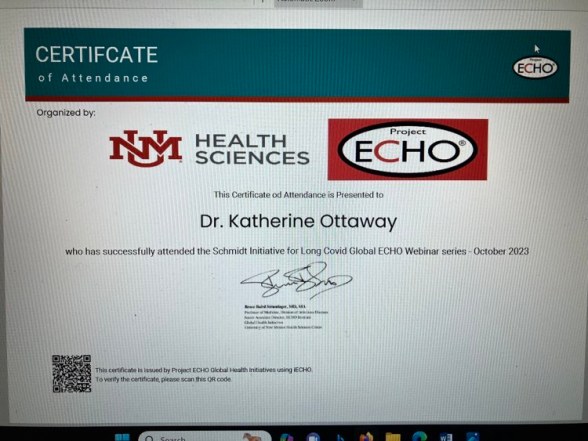
Schmidt International iECHO: Long Covid Patient Perspective

The latest Schmidt Initiative iECHO Long Covid zoom two days ago is by Hannah E. Davis, MPS, the co-founder of the Patient Led Research Collaborative (PLRC).

She got Covid-19 in March of 2020. Her first sign that something was really off was that she couldn’t read a text message. She thought that most people recover in two weeks so didn’t do much about it. She went on to clotting and neurocognitive problems and MECFS.

Her job and expertise were in machine learning data sets. As she realized that she was really sick and was not improving, she also realized that Long Covid was not even on the radar for physicians, overwhelmed by the acutely ill and dying. She started the interdisciplinary team co-led by four women and with over fifty patient researchers. The group is 61% women and 70% disabled.

They published an op ed piece about the body politic in the New York Times in April of 2020. By May of 2020 they had a fifty page article out documenting that even mild cases of Covid-19 could cause long term impacts. They describe multiple symptoms long term, not just respiratory. They also noted and documented medical stigma happening and were instrumental in changing the dialog from anecdotes of non-recover to data about non-recovery.

In June to August of 2020 they appealed the the World Health Organization (WHO) with a video message presenting data about long term effects.

In December of 2020 they presented a paper characterizing Long Covid. There are now 3-4 biomedical papers coming out each day.

She states that there are multiple myths about Long Covid: “It’s mysterious, we don’t know anything about it.” is not true. She listed other myths, but I have to go back through the slides.

The group is still highly active in research and is advocating for patient involvement in research. They have developed score cards for the level and quality of patient engagement. Tokenizing gives a score of -1 or -2, where instead of patient engagement in all stages of the research project, they are told “Come look at our final paper and give us the patient engagement gold star.” That is not adequate engagement. Other diseases have also made patients push for engagement in research: HIV, Parkinsons, PANDAS and more. Patients just want to get better and they want research that matters.

Worrisome data include that 10-12% of vaccinated people who get Covid-19 still can get Long Covid. This is less than the unvaccinated, but it’s still one in ten.

Their data shows that the majority of that 10-12% are not recovered at one year.

Another myth is that there is no treatment, but there are treatments at least for symptom management.

They published the Long Covid paper in the January 2023 Nature, documenting the many many symptoms and ongoing early stage treatments, many taken from other diseases such as MECFS.

One third of people who get Long Covid do NOT have preexisting conditions. It attacks all ages, women more then men, and prior infection may increase risk. Respiratory problems are more likely to recover, barring lung scarring. 43% of Long Covid patients report a delayed onset of neurocognitive symptoms.

Regarding mental health, research shows that stigmatization is still common and that patients who have experienced that are more likely to be depressed, anxious or even suicidal. In contrast, even one non-stigmatizing encounter, medical or family or friends, makes people have lower rates of depression, anxiety or suicidal ideation.

It is abundantly clear that this is a biomedical illness. Enabling google research will allow those papers to be delivered daily. I am on a list where I get daily reports of Covid-19 research and papers.

Next she talked about the current treatments, many taken from other similar illnesses. I have to say that the microclots scare me the most. There are clinical trials ongoing as well as amazing bench science, but meanwhile physicians need to listen to patients, believe them, pay attention to the ongoing research and help patients.

I spoke to a provider yesterday that I last saw two years ago. I said I wanted to work with Long Covid patients. “Good!” he said, “Because I don’t want to!” I think that attitude may be very wide spread.

I also looked at our county (and only) hospital’s page on Covid-19. There is not ONE WORD about Long Covid. Isn’t that interesting? Denial ain’t just a river in Egypt.

This is just what I got from the lecture. There was and is more. Physicians and patients can attend and they file the talks so that you too can watch them. Here:

https://hsc.unm.edu/echo/partner-portal/echos-initiatives/long-covid-global-echo.html

Blessings.

Work again

I have been wondering whether to try to work again. It’s risky.

I asked the pulmonologist from Swedish Hospital if there was any way to keep from getting pneumonia number five. “We don’t know.” Is it safe for me to return to work? “We don’t know.” I like the plural in the answer, is he speaking for pulmonologists or Swedish or what? Anyhow, the risk is pneumonia number five and death or ending up permanently on oxygen or needing a lung transplant or something stupid like that.

It’s not raining yet and I promised not to even attempt to return to work until it rains.

I saw my cardiologist yesterday. He thinks I should return to work. Early on he said that I am smart, “like one of those old fashioned internists who read everything.” I laughed, because yes, I am a science geek. At the next visit he said, “The family doctors aren’t always as thorough as they could be.” I replied, “I don’t know, after all, I’m a Family Practice Doctor.” “Oh.” he said, “I thought you were an internist.” Which made me laugh because it’s a sort of back handed compliment. Cardiologists do a three year internal medicine training and then more years of sub specialty to become a cardiologist. Most specialists seem to scorn Family Practice a bit, though not all. And I have definitely had specialists ask me for help. A perinatologist: “How do I help people stop smoking?” I laughed at that, too, and replied, “Do you want the five minute , the ten minute, the thirty minute or the one hour lecture?” A med-peds doc asks me to put a cast on a child’s arm because even though she is board certified in internal medicine and pediatrics, she has almost no orthopedic training. I was at that clinic to see obstetric patients that day, but was happy to do the cast too. I love the broad training and the infinite variety of rural Family Practice. It is SO INTERESTING and OFTEN FUN THOUGH NOT ALWAYS. Sometimes it’s sad.

Here is an article about a physician doing what I want to do: https://nymag.com/intelligencer/article/long-covid-treatment-lisa-sanders.html. She thrives on complexity, she thrives on diagnostic puzzles and she writes the column that the television series “House” was based on. When I watched House, what I noticed was the nearly all of the patients on the show were either leaving something out or lying. In reality, I think it’s just that sometimes we need a lot of time to pull together the complex picture and clues. I always pay attention to the pieces of the puzzle that do not fit and sometimes those are the key to finding a diagnosis that is unexpected. Dr. Sanders spends an hour with a new patient. That is what I did in my clinic for the last decade, because that hour gave me so much information and it allows people to feel heard. A ten or fifteen minute visit doesn’t let people speak. It’s slam bam here is your prescription ma’am. What I see in the multitude of notes from all the doctors I’ve seen since 2014 is that they leave most of the conversation out of the note. Things I think are important. I think most of the clinic notes about me are crap and the physician is not listening and doesn’t know what to do. I include the stuff that doesn’t fit and doesn’t seem to make sense in the notes I write. Patient appreciated, when I gave them their note at the end of the visit. “You got all that?” Oh, yes, I tried.

One of the Long Covid symptoms that Dr. Sanders mentions is people “feeling like they are trembling inside.” I’ve seen that before Covid-19. That was a symptom that I did not pin down in a particular patient, but now there is more than one person complaining of the same thing. Really, why don’t physicians include those complaints? It’s egotism to cut out anything you don’t understand and most patients want help so are motivated not to lie. Ok, they might admit that they’ve been out of their blood pressure medicine for two weeks and that’s why their blood pressure is too high, or they’ve been drinking mochas and that’s why their blood sugar is way too high, but they are really in to get help. I think it is a terrible disservice not to document what they say, even if it’s not understood and the physician thinks it’s unrelated to their specialty and they don’t know what to do.

So: I want to do a Long Covid Clinic, with an hour for the first visit, and longer than usual follow ups. Part time because of my lungs and the fatigue. We shall see, right? I am going to look for grants to help set this up.

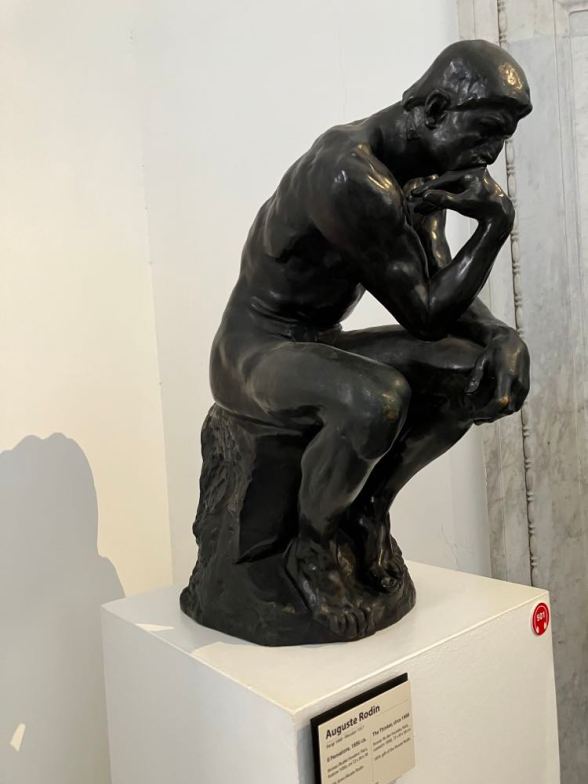
Think of how much work went in to this statue and this church. The Basilica di San Marco took at least 400 years to build and decorate!

The next stage

It is hard to build a new life after pneumonia number four.

Running my own clinic and seeing patients and keeping track of a business for eleven years, along with two children, now adults done with college and masters and jobs, I did not have an enormous amount of time.

During covid, I started beach walking with a person. Two years into covid, they say, “I have to get back to my real life.” Oh. They say, “You need your own life.” Um, yes, and clearly they are not in it, by their choice. That was a year into pneumonia four and I was still on oxygen. The person bailed. I was a detour to get them through covid. Ugly, but I am trying to learn everything I can from them. About myself and who and what to avoid!

WordPress and the blogging community helps sustain me through this! I can write when I am ill (at least so far) and when the pandemic closed down. I am so encouraged that people contribute from all over the world. A small candle of hope.

I don’t know if I’ll be able to do a limited clinic or not. I am hoping so.

Meanwhile, I’ve been getting to know more people outside clinic and going to live music and dancing and doing open mikes. I am doing the poetry open mikes. A friend in a band says, “But you don’t come to mine!” “That’s a music open mike.” “We need poetry,” he says. So I’ve gone twice and it has been really fun and I am getting to know that community as well. Last Thursday someone said my poems are weird. “I don’t mean bad, just from a different angle.” Meaning unusual, I think. Perspective.

I have been here for 23 years. I know many people in the music community from singing in chorus all those years, I have a church community, I know many people in the dance community, my father and I were in the Wooden Boat community, I have both good and not so good connections in the medical community. The legal community knows both my children, through Mock Trial competitions. I was in the Rotary for ten years and that is another wonderful community. The exchange students going all over the world and people giving back also give me hope!

Suddenly I am busy. I will have to start choosing between things. I still have the aftereffects of Covid-19. I had mild chronic fatigue before it and still do. I think I am stuck with that, so I have to build in rest and quiet time. At least, physical quiet time. My brain doesn’t really do quiet, but that is ok.

Hooray for every day and for building the next stage.

________________

I took the photograph this week from Point Defiance, Mount Tahoma, aka Rainier.

Limited: