Ethical stupor

My friend M is twenty years older than me. A friend of my parents since college. When I went to college in Madison, WI, I got to know her and her husband and their two sons. I lived with them my third year of college and it was a ball! I loved the family.

I visited over the years and more often when her husband had lung cancer and died. She wanted me to come out for her younger son’s fiftieth birthday. Her daughter-in-law said, “It’s nice to meet the daughter.” Apparently M considered me a daughter. I was delighted, since both of my parents had died by then.

A year ago M was feeling less well. She started losing weight. A work up was done, finding no cause. She had a rare cancer that had been treated two years prior. But by July, she had lost thirty pounds.

Thirty pounds! As a primary care doctor, RED FLAG! Very high likelihood of dying, if that went on. She was eighty years old.

I flew out in September. We took a road trip, just the two of us, from Michigan back to Wisconsin. We visited multiple old friends of hers. She thanked me afterwards, because one friend had Parkinson’s and died ten days after our visit. We saw her sisters-in-law and we did a circuit around Madison.

Afterwards, she said that was her last time driving on highways.

By December, she had dropped another ten pounds. Then she had difficulty walking. The daughter-in-law called me. She was having trouble getting any medical attention. They had had trouble for a year! Over a week, M went from walking to not being able to support her weight or stand up. I flew up right after New Years.

Something was wrong, clearly. She’d carried her own bags in September. I was the out of state doctor. The daughter-in-law, B, was moving her from bed to chair alone. I couldn’t. I am 5’4″ and M was 5’10” and now my weight. B found a private practitioner.

On my third day there, M had chest pain. We took her to the Emergency Room. The Emergency Room did the usual things. Then the ER doctor came in. “She is not having a heart attack and she doesn’t have pulmonary emboli. So you can take her home.”

“No, something is wrong! She can’t walk! She could walk two weeks ago! We did a road trip in September!”

The ER doctor shrugged. “What do you expect me to do?”

“Figure out what is going on!”

“She is eighty.” he said. As if eighty meant we stop caring.

“No, we won’t take her home. It isn’t safe. We can’t move her. M, do you want to stay?”

“Yes,” said M.

The ER doctor looked annoyed. “All right. I’ll admit her for placement in a nursing home.”

The inpatient doctor was scarcely more interested.

“What do you expect me to do?” he said, knowing he was dealing with an annoying out of town doctor.

“Steroids.” I said, “Maybe it’s a weird form of polymyalgia rheumatica. She deserves a trial of steroids.”

He too shrugged, and started steroids.

The next day she was stronger, and the third day she could stand. It was SOMETHING, but not clearly polymyalgia rheumatica. The hospital was small and did not have a cancer doctor and did not have a neurologist. They were sending her out on steroids. Follow up outpatient.

We looked at a nursing home, but went to a private assisted living instead. The staff were minimally helpful. We took turns sleeping there. Physical therapy and occupational therapy were started. M was a bit better but not the miraculous return to normal that steroids cause in polymyalgia.

I flew home. The private physician saw her. M was set up to see the U of Michigan. B kept asking if it was lymphoma, because that can be a side effect of the treatment for M’s cancer. M’s cancer doctor said no. M got covid and the appointments were delayed two weeks.

In February she went to the U of Michigan. The neurologists came through and said, nope, not polymyalgia rheumatica, and not neurological. The cancer doctor came through. The GI doctors did an upper endoscopy and biopsied. Cancer. Lymphoma.

M said no to treatment. She was discharged to hospice. She died within 24 hours of reaching the hospice.

The cancer doctor sent an apology to B, who was right all along. This was a particular lymphoma that responds to steroids for a while. M had said that if it was another cancer, she would refuse treatment.

So what the hell is going on here? This: https://www.technologyreview.com/2019/08/21/238642/a-doctor-and-medical-ethicist-argues-life-after-75-is-not-worth-living/

“These people who live a vigorous life to 70, 80, 90 years of age—when I look at what those people “do,” almost all of it is what I classify as play. It’s not meaningful work. They’re riding motorcycles; they’re hiking. Which can all have value—don’t get me wrong. But if it’s the main thing in your life? Ummm, that’s not probably a meaningful life.”

Ok, so now some doctors don’t care once you reach 75. That’s it. They define everything as “useful and productive” and if you are not doing meaningful work, well, you’d might as well die. I hope that doctor does die. Slowly. And that everyone around him refuses to do any tests to see what is happening. And who the hell defines what is meaningful work? That can be helping raise grandchildren, like, hello!

I have another friend who is going through the same thing. She is failing and the medical community in my town is shrugging their shoulders. She should have a head MRI, says the cancer doctor. So that was a month ago and it still isn’t scheduled.

Some of this is pandemic fatigue and backlash. People refusing to get vaccinated, people refusing to believe that Covid-19 exists, doctors and nurses dying of Covid-19, people refusing masks. If everyone is exhausted, what do you let go?

Apparently people over 75. But NOT everyone over 75. If you are wealthy, you will get care. Our Senators and House of Representatives certainly get care after 75. It is the isolated, the rural, the poor, the ones who don’t have an advocate, who will be sent home to die.

I took my friend here to her primary. “What do you want me to do?” he says.

“Here is the Home Health paperwork and she needs disability tags.” My friend is falling, five times that week.

“Ok,” says the primary. “I will set those up.”

When Home Health arrived, she had fallen. She had been down for 15 minutes and unable to get up. Home Health called the fire department. The fire department helped and also came back to put no slip pads on the steps. If she can buy the wood, they will build a ramp for her.

And I will go with her to the cancer doctor and I will rattle cages. She lives alone, she has no children, she has a brother in Alaska. But she also has an advocate. One who knows the medical system and who is not in an ethical stupor.

For the Ragtag Daily Prompt: stupor.

We change

In clinic, a very common complaint was, “My body has changed!” This was often with shock or annoyance or betrayal. Weight up, a knee hurting, headaches, menses behaving badly as menopause approached, gentlemen with their own problems.

My muscles are getting stronger but are really grumpy. I am starting to rebuild muscle and endurance but my muscles and joint complain. I think that pain is the pain of wisdom. I am clearly very very wise, if that pain is wisdom pain. It feels better to frame it as wisdom than as “Oh, I am old.” Also it’s fun to watch people when I say, “My wisdom is really acting up today.” They get a funny look on their faces.

Medicine changes all the time too. Isn’t that a little unsettling? Science changes, ideas change, frames change. A treatment that I used 15 years ago would not be done for the same problem now. And we can treat hepatitis B and C! Hepatitis C was still named “Non A, non B hepatitis” back when I was in residency in the early 1990s. Hoorah for some things getting better.

It’s been interesting watching the changing ideas about Long Covid. Over the last year they’ve said, “Better in nine months.” “Mostly better by a year.” “Better by two years, mostly.” Also the estimates of people affected in the US have ranged from 3% to 7.4%. There is not even agreement about the definition, with the CDC talking about symptoms staying present after four weeks. Meanwhile the World Health Organization says, “It is defined as the continuation or development of new symptoms 3 months after the initial SARS-CoV-2 infection, with these symptoms lasting for at least 2 months with no other explanation.” Here: https://www.who.int/europe/news-room/fact-sheets/item/post-covid-19-condition. CDC here: https://www.cdc.gov/coronavirus/2019-ncov/long-term-effects/index.html.

I hope that we vote grown ups into office. I hope we aren’t tempted by the childish want to be dictators who say, “I can fix anything, I can do what I want, I am so great. I can make YOU great too.” I think the pandemic was very frightening and the temptation is to try to hide in an imaginary past or freeze the future or think that if we make everyone behave a certain way, no further pandemics will come. I do not think that will work, people. Vote for adults.

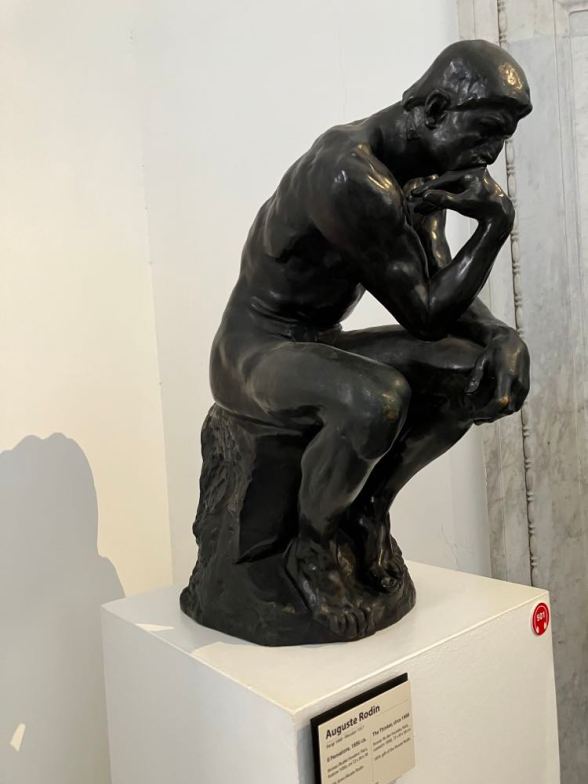
The photograph is from the US Botanic Gardens. Here is the model, inside:

The sculpture faces are over each arch. Here is a close up.

I think the carved face will last the longest, then probably me, then the one on the model. The model looks like it would be delicious for various smaller creatures.

For the Ragtag Daily Prompt: change.

Post Covid Sartorial Splendor

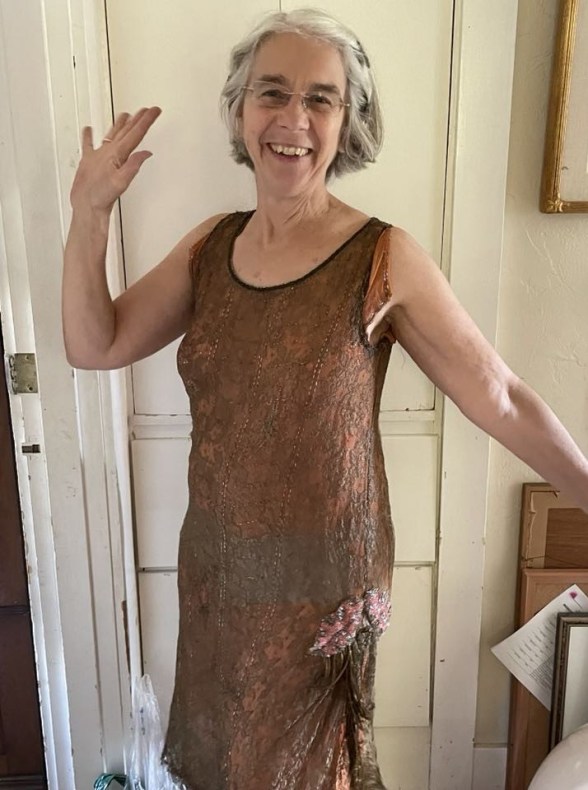
I dressed up in November for the Chamber of Commerce masquerade. This is a 1920s dress and I had to repair the lace around both arm openings. The underdress is rust colored silk and is beaded. The overdress is lace with the beaded and fringed flower with a tassel on the side. The lace is definitely see through and I wore a slip. The silk underdress has beaded squared off tags that hang outside the lace, which is a detail I haven’t seen before. I do not remember where I got this, second hand.

When the silk is nearly 100 years old, it wants to fall apart. I took a second dress just in case there was dancing. If I danced in this dress, it would probably disintegrate.

In other news, here is an article about the Post Covid exercise intolerance. It is a small sample size, but they biopsied skin and muscle in people who were still exercise intolerant one year out from Covid 19. These people all had Covid-19 in 2020, so unimmunized.

https://actaneurocomms.biomedcentral.com/articles/10.1186/s40478-023-01662-2

“Compared to two independent historical control cohorts, patients with post-COVID exertion intolerance had fewer capillaries, thicker capillary basement membranes and increased numbers of CD169+ macrophages. SARS-CoV-2 RNA could not be detected in the muscle tissues. In addition, complement system related proteins were more abundant in the serum of patients with PCS, matching observations on the transcriptomic level in the muscle tissue. We hypothesize that the initial viral infection may have caused immune-mediated structural changes of the microvasculature, potentially explaining the exercise-dependent fatigue and muscle pain.”

This is a big deal. More needs to be done to confirm this, but a talk earlier this year said that the muscles don’t get adequate blood flow and get hypoxic and that the fatigue is recovery afterwards, taking 1-3 days. That is the best hypothesis for why people have the activity “crashes” after exercise or doing a little bit more than usual. My chronic fatigue shuts my fast twitch muscles down when I have pneumonia. This time it was two years before I got them back and I still have to be careful. It’s weird when they won’t work. It’s like the muscles go on strike. They didn’t really hurt (ok, they burned like strep throat all over the two times I had systemic strep A) but it’s more like the muscles are screaming NO NO NO NO! at the brain. It is hard to describe. If I tried to push, it felt like dying. Perhaps the muscle cells really DO start dying if we push them too hard. Mine is annoying but it doesn’t confine me to bed. My slow twitch muscles were fine though this time I needed oxygen. I hope not to experience it again.

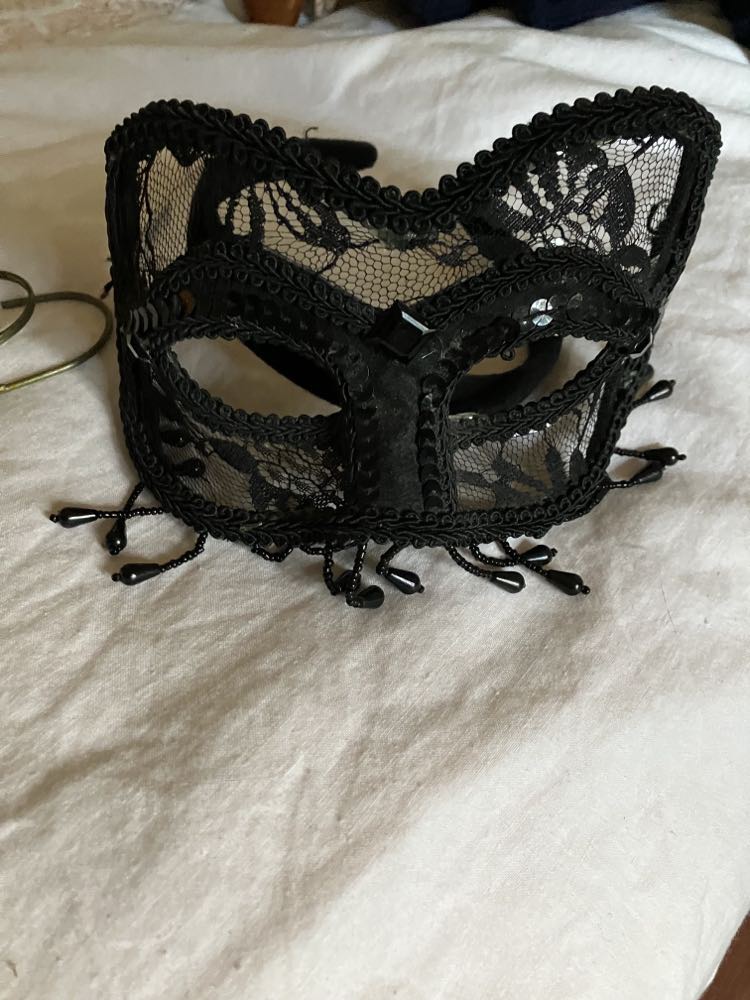
This is the mask I wore. Nice to be in a different sort of mask, but I masked at a concert last night and will mask for travel with an N95.

For the Ragtag Daily Prompt: sartorial choices.

Doctors are leaving medicine

https://www.healthgrades.com/pro/7-reasons-doctors-are-leaving-medicine?CID=64embrdTINL120523

Ok, reason number five: “One study finds doctors spend two hours on EHR record-keeping for every single hour in clinical contact with patients. EHR dissatisfaction has been linked to higher burnout scores, and burnout can lead doctors to leave clinical practice or quit medicine altogether.”

Back in 2009 I argued with my employer about their policy. They had put us all to 20 minute visits, one 40 minute one a day, and continuous visits 8-noon and 1 to 5. Also, they had daily meetings from noon to 1. Full time was four eight hour days, except they are nine hours with the meetings. I said, “Look, one day of clinic generates at least two hours of work: reading lab results, reading radiology reports, calling patients, calling specialists, dealing with insurance, dealing with phone calls, refills, patient requests, calling pharmacies. So four 8 hour clinic days generates another 8 hours minimum of work, plus I have call nights, plus those four hours of meetings every weeks, so I am working 44 hours of week minimum and with call I can hit 60-80 hours in a week.” The administration did not care. I promptly cut to 3.5 patient days. They initially said, “You can only do 3 or 4 days, not 3.5.” I said, “Why?” They said it was not the most efficient use of clinic space. I said, “You don’t have anyone to put in for the full day, so using it for a half day generates more income than having it empty.” They reluctantly agreed.

I could finish a clinic EMR (electronic medical record) note in the room with the patient in 25 minutes but not 20, during the visit. The administration and computer loving doctors had said, this system is to let you finish the note in the room. It took me three years to be able to consistently do that in 25 minutes. Many providers were allowing their home computer to access the system. This meant they were working after hours at home after everyone else was asleep or on weekend morning. I refused to have it at home. I came into clinic at 5 am to do the work, since then I wouldn’t get interrupted, but I wanted home to be home. Also, I live four blocks from that employer.

I decided that I was sticking with finishing the notes in the room. I ran late. I apologized to patients, saying that the hospital was now requiring a quota of 18 patients a day and that I disagreed with it. I tried to convince the administration that I needed more time and help, but they dispensed with me.

Two years later another physician quit medicine and the hospital dropped the quota to 16 patients a day.

So it makes me laugh to see that it says in that article that eight hours of clinic generates sixteen hours of “EMR work”. The implication is often that it is busywork but much of it is NOT busywork. I have to read the xray report and decide what to do with it. Same for every lab. Same for the specialist letter. Same for physical therapy, respiratory therapy, home health, hospice, occupational therapy, notes from psychology or psychiatry, notes from the hospitalization here or elsewhere. Read, decide if I need to do anything, update the EMR? Sign the document off. Decide, decide, decide and get it right. Call the patient or a letter or call a specialist or ask my partner for a second set of brains, am I missing something? This is all WORK.

At one point a clinic shut down in three counties. My clinic (post hospital) took a new patient daily for months. We couldn’t get the notes so we had to look at med lists, get history from the patients and wing it. Or get hospital records labs xrays specialist notes. Yep. Nearly every patient had “deferred maintenance”: they were behind on colonoscopy, mammogram, labs, specialist visit, echocardiogram. We ordered and ordered. Then we had to deal with all the results! After about five months I say to my receptionist, “I’m TIRED.” She was too. We dropped to three new patients a week. Then two. Then one.

I also spent an hour with new patients and my visits were 30 minutes. I was the administrator of my clinic too, and pointed out to the physician (me) that we were not making much money. With 30 minutes I could look at things during the visit and explain results and get much of it, but not all, done.

So if a 20 minute clinic visit generates 40 more minutes of work, in labs, reviewing old records, reading specialist notes, reading about a new medical problem, keeping up on continuing medical education, reading xray reports, echocardiograms, writing letters for jury duty exclusion, sports physicals, disability paperwork, sleep apnea equipment, oxygen equipment, cardiac rehab reports and orders,etc, then how many patients would give us a forty hour week? At one hour per patient, that is 40 patients a week, right? 18 patients daily for 4 days is 72 per week and that is not including the on call or obstetrics done at night and on the weekend. 72 patients would generate another 144 hours of work according to that article which is untenable. 36 hours+144 hours+call = over 180 hours weekly. And so I am not surprised at the levels of burnout and people quitting.

We have to value the actual work of not only “seeing a patient” but “thinking about the patient, reading about a disorder, reading all of the notes and test results and specialist notes”. Isn’t that what we want, someone who will really spend the time and think?

Tamped

The Ragtag Daily Prompt is “trial by fire“.

Which makes me think of the wars, ongoing and restarting, and the fire and death. What do we get out of killing children? Burning homes and families. I don’t understand. Revenge? To “teach a lesson”? I think it will only teach more hate.

So this morning I am listening to the Bach Magnificat and then the Rutter Magnificat. Tamp the flames of hate and lift my voice in song and may the world work towards peace. I light my candles in the early morning in prayer for us all.

Mortal

I am feeling mortal.

I am in my post-pneumonia phase where people say, “Well, you LOOK great.” This is round four, so it’s not a surprise. It just took two years this time, instead of two months. In 2003 it took two months.

There are various things feeding in to this. A friend my age has had a stroke. “NO!” I think, “TOO YOUNG!” The death of the actor from friends bothers me mostly because he’s nearly a decade younger. Drugs and alcohol shorten the lifespan by quite a bit. A study checking for five things: inactivity, drugs, tobacco, alcohol and very heavy weight showed that the people with all five tended to die 20 years sooner than the people with none. That study was at least a decade ago if not two. So cross off about 4 years for any of those, sigh. A cardiologist recently said tobacco is worse than alcohol and now I am wondering how much worse? And how do they measure that? Tobacco kills more but serious alcohol use is a lot faster at killing people. Both of them affect all body systems: GI, heart, lungs, brain, bone marrow, liver, kidneys, and so forth. Even skin.

Also, the last lung test was still abnormal even though I am off oxygen and feeling mostly good. I am having muscle trouble though. Every morning I wake with really bad pain in both thighs and whatever muscles I’ve been trying to build. This has been going on since at least August. Since I think that this is an antibody disorder, it implies that the antibody baseline has risen to the point where my muscles are grumpy and hurt. Alternatively it could be a Long Covid issue: microclots could be clogging the capillaries in the muscles when I exercise and causing hypoxia in muscles, which means they can’t build. Muscle cells are fascinating. When you exercise the cells need more food and build new insulin receptors in the cell wall. So exercise changes the individual muscle cells! How very amazing. My muscles are resisting the build and it is very annoying. There is research going on re the microclots, but there is bleeding risk from the anticoagulants including strokes. So, um, well, I seem to be stuck. It is not stopping me from hiking and dancing and being active but boy does it hurt in the mornings.

This is not very bucolic, is it? I am still attending the Long Covid talks and it is really fascinating and quite scary. It’s just a very very nasty virus. I wish it would calm down. The 1918-1921 influenza really calmed down after three years, but there are no guarantees. Anyhow, at least I can dance!

For the Ragtag Daily Prompt: bucolic.

The photograph is taken in Michigan in 2014.

Car situation

What did happen in my situation?

I am worried that a car will come around the corner and hit the car partway in the street. Plus, what if there is a medical situation? A heart attack, or drugs, or alcohol, or a seizure? I want help. I call 911. The dispatcher asks for the license plate and if I can see anyone inside. I give her the plate, but the car is fogged up, so I can’t see inside. This does make it more likely that someone is alive inside, but they could still be ill.

I wait, but I am anxious. I text my neighbor and ask if he will come back me up while I bang on the car. He comes out, but the police have just arrived. We wave and go back inside. I do peek out. There is a fairly young man and a dog, who get out of the car. He can walk without difficulty. They don’t move the car. The policeman leaves, then calls me. He says that the person is having an allergic reaction and is waiting to move his car until he can see. The car will be gone by the afternoon.

“Oh, thank you!” I say. “Can I take him coffee?”

“That would be nice.”

I go out and ask if he wants coffee. He does. I take him a cup and he leaves it on my steps. The car is gone later, so I hope he is much better. It’s lucky that he is on our side street rather than the faster main one. More chance of an accident there.

I did feel like a little old lady complaining about a strange car, but I was worrying about something medical more than a stranger. And with the possibility of alcohol or methamphetamines or opioids, I want help. We had an overdose death in our hospital parking lot within the last few years and our police have nalaxone to reverse opioids. I am very glad that it was not an overdose.

________________________________

For the Ragtag Daily Prompt: situation.

The photograph is my 1986 Honda Civic, not the car in the story.

Age-defying

I get lots of quasi and fringe medical emails. I subscribe to some so that I know what they are “pushing”. The current trend is online “classes” where you sign up and then they have hours of talk and interviews and stuff. The talks can be three hours or more for a week. I am offered a bargain daily to sign up to be able to access the talks over and over. Hmmm, not today, thanks. I have very low tolerance for videos and television.

Currently I’m getting notes from an “age-defying” one.

I am skeptical about “age-defying” as they are describing it. However, there is a study that I think is very convincing about how to stay healthy as you get older. It was done in England. They looked at five habits: excess alcohol (averaging more than two drinks a day), inactivity (couch potato), addictive drugs, obesity and tobacco.

They had people who had none of the five, people who had all of them and people who had one or two or more. The conclusion was that for each one added, the average lifespan dropped by about four years. That is, the people who did all five tended to die 20 years sooner on average than the ones with none of the bad habits.

Recently in the US, the news said “Gosh, it turns out that any alcohol is bad for us.” I thought, how silly, when various studies made that clear over a decade ago. There was a very nice study from Finland, with 79,000 people where they looked at alcohol and atrial fibrillation. Atrial fibrillation increases the risk of strokes. They concluded that lifetime dose of alcohol was directly related to atrial fibrillation. That is, the more you drink, the sooner your heart gets really grumpy and starts fibrillating. Alcohol is toxic to the heart, the liver, the brain. Tobacco is toxic to the lungs, the heart, the brain and everything else. The addictive drugs: well, you get the picture.

So the anti-aging prescription is pretty simple to recommend. It just is not always simple to do. That is why we still have doctors. For chronic bad habits I am part mom/cheerleader/bearleader/nag/kind helper. Here is the prescription. Feel free to send me money instead of buying that seven day set of twenty one hours of lectures:

  1. Minimal or no alcohol.
  2. No addictive drugs (that includes marijuana and THC and we have almost no studies indicating that CBD is not addictive.Remember that THC and CBD and the other 300+ cannabinoids produced by the marijuana plant were not studied because it is illegal at the federal level.)
  3. No tobacco.
  4. Exercise every day: a walk is fine.
  5. Maintain your weight, which means as you get older you either have to exercise more or eat less or both. Muscle mass decreases with age.

The last anti-aging piece is some luck. Born into a war zone? Caught in a disaster, flood, fire, tsunami? Born into a family with trauma and addiction and few resources? Huge stress in your life? Discrimination or abuse? If you have had none of these, help someone else, because you have the luck. Pass it on.

The header photograph is all family members: two are my aunts and one is a cousin of my father’s and they all play church organ! Music sustains that side of the family. I took that in 2017 in Baltimore, Maryland. We had the uncles along too!

This is my grandmother on my mother’s side. I took this in the early 1980s at Lake Matinenda.

I will try to dig up the links to the two studies.

Long Covid imaging

In the last Long Covid talk that I attended and wrote about (here: Pulmonary Manifestations of Long Covid), the pulmonologist and intensivist says that one problem with Long Covid is that we do not have imaging that can “see” it.

That is, the chest x-ray looks normal, the echocardiogram may look normal (heart ultrasound), the chest CT scan may look normal, a brain CT or MRI may look normal, but the patient may still be tachycardic, feel exhausted, feel brain fog and have multiple other symptoms.

That pulmonologist listed five of the top mechanisms that are prolonged in the immune system. Most of the scientists and physicians are framing this as “immune system dysfunction”. I am not. I am framing it as “you were really really sick and your immune system is still on high alert and trying to protect you so you can recover”. Now wait, you say, how could chronic fatigue like symptoms protect me? Well, if you are exhausted, you can’t go to work and you’ll stay quiet at home most of the time and less exposure chance. But what about brain fog? Again, this will slow your interaction with other people and force you to rest and heal. But, you say, I don’t like it. Well, yeah. Patience. We call grumpy patients that are recovering “convalescents”. It is a good sign when they are grumpy and over it and just want to be better. That doesn’t mean I can make myself or anyone else heal faster.

The pulmonologist says that the best test is the six minute walk test. This is usually done by a respiratory therapist. The person walks in a circle for six minutes wearing a pulse ox, with the respiratory therapist doing regular checks. This distinguishes between the people who have primarily a lung issue from all the other issues. If the person is tachycardic (fast heart rate) but not hypoxic (oxygen level dropping), then it’s not primarily lungs though blood clots to the lungs sometimes have to be ruled out. One of the mechanisms in the immune system is microclots and an increased risk of blood clots. That can mean heart attack, stroke, or pulmonary embolus, a clot in the lungs. The microclots are suspected of causing some of the muscle fatigue and exercise intolerance, by clogging capillaries and reducing oxygen flow to muscle cells. Muscle cells do not like this at all.

I have done my own quick walk test with patients since 2003, when I had terrible influenza. About a week after my influenza started, with the temperature of 104 and heart rate at 100 at rest and 135 walking, my temperature came down. However, the fast heart rate continued. Normal heart rate is 70-100 and 135 walking will make you feel exhausted. I lay on the couch and could barely make my kids dinner for two months. It resolved then. I read a book about influenza and thought that I had “influenza viral pneumonia” where there is lung tissue swelling, reducing the air spaces, after influenza.

My quick walk test in clinic is to check a sitting oxygen level and heart rate and then have the person walk. I would have them walk up and down a short hall three times then sit down. When they sat, I watched the pulse oximeter recovery. Some people would jump from a resting heart rate of 62 to a walking heart rate of over 100, say 120. Their oxygen level could stay normal or it could drop. If they dropped below 88, I would get home oxygen and forbid them to return to work. If their oxygen level held, then they needed to rest until their walking heart rate stayed under 100 and they were no longer exhausted by gentle or normal activity. If they return to work with a walking heart rate of 120, they will be exhausted and are more likely to get a secondary pneumonia or have other problems. The heart does not like to run at 120 all the time. You can see why a person who already has some coronary artery blockage would be more likely to have a heart attack if they get pneumonia from influenza or Covid-19.

The conferences I am attending are talking about “targets” in the immune system. That is, new drugs. I think the science is wonderful and amazing, but I also think we need to step back and say, this is a really really bad infection and some people need a lot of support and reassurance and time to heal. Reassure them that even though they have not yet returned to normal, the immune system is working hard to protect them from other infections and it is saying very very loudly that they need to rest. Rest, recuperate and trust the immune system. Some things need immediate treatment, especially blood clots, heart attacks and strokes, but once those are ruled out, we need to support people through their convalescence and healing.

______________

The photograph is from April 2021, a few days after I was put on oxygen. A selfie.

Forever or not?

Once someone has cancer, do they have it forever?

I think that is a complex question. But one example comes to mind.

An older woman, in her early eighties, is seeing me. She wants to go back on hormone replacement.

“But you have a history of breast cancer.” I say.

“That was six years ago. And I took that horrible tamoxifen for 5 years and I still am having hot flushes after a year off it and I am sick of it. Give me hormones.”

“Hmmm.” I say. “Let me do some research.”

I call the oncology group south of us. This is over ten years ago when we had no oncologists in our county.

“How old is she?” Her oncologist is digging up her records. “Ok, got her. Hmmm. Well, she had a stage one cancer and a lumpectomy and five years of tamoxifen. THAT cancer is gone, for sure. If she wants hormone replacement, it puts her at a bit more risk for a new breast cancer, but the old one is gone. As long as she understands the risk.”

My patient is back and we negotiate. “Ok, the oncologist says your previous cancer is truly gone, but hormones put you at risk for a new breast cancer. At least, raise your risk a little.” Age is the biggest risk in women, if they do not have the abnormal BRCA I or II genes. “Also, if we have you on hormones, you have to do your mammogram, because I’d want to catch any cancer early. That’s the deal.”

“Fine, I want the hormones.” She signs a consent that I’ve prepared and we put her back on her hormone replacement.

“I want to hear from you, ok? Whether it works?”

She calls in a week, delighted. “No more hot flushes! I feel great!”

__________

I took the photograph at Mats Mats Bay last week. There is a sign about osprey nests. I look up and think, oh, yes! Pretty obvious if you look up!

__________

I don’t remember her exact age and I don’t remember if the five years was tamoxifen or one of the other hormone blockers. She could have been in her seventies. At first I thought, no way back on hormones! Then I thought, quality of life is important. Maybe I choose this photograph because the nest is out on a limb.

Some cancers ARE currently forever, especially those that are stage III or IV and metastatic. Maybe they won’t always be forever.