Prayers for people and animals and horses in California.
And everywhere else.

Prayers for people and animals and horses in California.
And everywhere else.

For Thursday Doors.
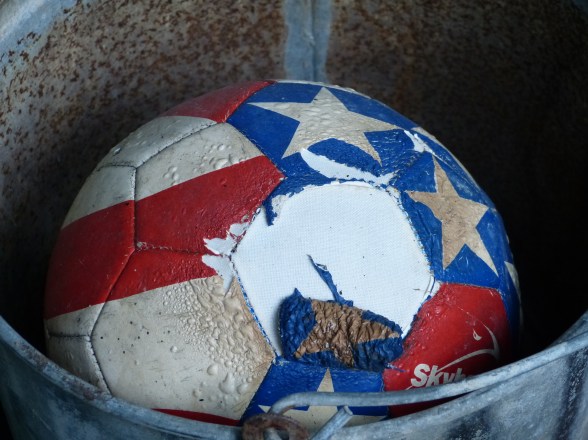
This is for photrablogger’s Mundane Monday #129.
We were two of the three first responders to a house fire across the street and two doors down two weekends ago. The house was an inferno when we got there. Both the resident and two cats got out. The fire was in the morning. We returned in the evening and walked around. It is terrifying to see what melts, what explodes, how fast the destruction can happen.
And sending love to the injured and lost in Las Vegas and still thinking of all of the hurricane victims.
I wish today were mundane.

I took this on Saturday. Yesterday we had smoke, not fog, from all the fires. When I went out to my car, there was a fine rain of ash. The smoke frightens me and I feel like a child again, in a car with the smell of my father’s cigarettes, unfiltered camels. I feel edgy all day.
I would rather have the fog.
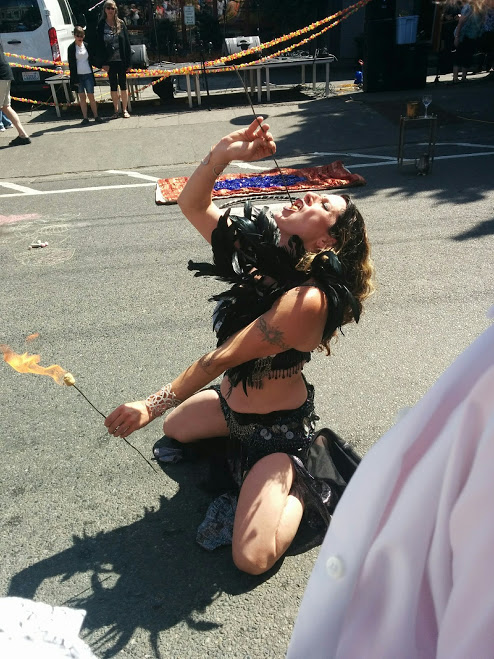
I spent much of yesterday at the Uptown Street Fair in Port Townsend. The Farmer’s Market was beautiful and busy, a second street was blocked off for craft stalls, and Lawrence Street had entertainment on stage from 11:00 until after 4:30. I finally danced myself into the ground and went home! I am a bit stiff this morning! Hooray for the bands and the tiny uptown parade, the color guard, the police and all of the people and businesses who put the fair on, came out, and shared a stunningly gorgeous day!
The Kinetic Sculptures were out, a wonderful drum group, the Port Townsend brass band, artists, dancers, buskers and lots of food.
Today is the County Picnic…..
For the Daily Prompt: trance, though I don’t think she was in a trance at all. I think the audience was entranced!

This is an early morning photograph, downtown, not this year.
It was frightening to fly back from Wisconsin last week and have the plane descend into smoke in Seattle. The smoke from fires in British Columbia and Washington blanketed the city. I am used to descending into cloud, but smoke looks brown and was neither opaque nor transparent. Haze.
I missed the worst air, but the smoke still bothers me. One afternoon my receptionist and I both were having trouble with eye irritation from the bad air. My clinic is in a 1950s building and closing all the windows and doors is hot! No air conditioning.
I am hoping that we make changes to slow and mitigate climate change and global warming: I don’t want the world on fire!
How many summers will it take? My guess is three consecutive summers….
I wrote this in 2010 and I am posting it again. It’s TIME, Congress, time for single payer, medicare for all! Lots of Senators are all talk about repealing Obamacare. One part of that law is that your health insurance company can ONLY keep 20% of each dollar for profit. The other 80% must be spent on health care. Before that, health insurance companies kept 30% of every health dollar. So tell me, US citizens, WHY do you want to repeal that? So health insurance corporation owners can go back to keeping 30% of every premium? Call you Senator and say NO.
And by the way, Senators who want to repeal Obamacare. You could have been writing a new bill with transparency and honesty for the last seven years, but all you’ve done is say “We will repeal Obamacare.” Saying “We can do better,” is boasting: you haven’t done the work. Stop hiding behind closed doors. I am submitting this to the Daily Prompt: hidden.
From 2010:
I went on the Mad as Hell Doctor’s tour for a week. I went from Seattle to Denver with stops for town halls one to three times a day. We are talking about single payer, HR676.
One question or objection to a single payer system was: Why should my money go to pay for some obese person who drinks and smokes, doesn’t exercise and doesn’t eat right?
Three answers to start with:
1. You already pay for them.
2. Put out the fire.
3. People want to change.
First: You already pay for them. As a society, we have agreed that people who show up in an emergency room get care. Suppose we have a 53 year old man, laid off, lost his insurance, not exercising, not eating right, smokes, drinks some and he starts having chest pain. Suppose that he lives in my small town.
He calls an ambulance. They take him to our rural emergency room. Oh, yes, he is having a heart attack, so they call a helicopter to life flight him from small town hospital to a big one in Seattle. This alone costs somewhere between $7000 and $12000. Now, do you know how many clinic visits he could have had for $7000? To see me, a lowly rural specialist in Family Practice where I would have looked at his blood pressure and nagged, that is, encouraged him to stop smoking. We would have talked about alcohol and depression. And who is paying for the helicopter meanwhile? All of us. The hospital has to pass on the costs of the uninsured to the rest of the community, the government is paying us extra, with a rural hospital designation. 60% of health care dollars already flow through the government. One estimate of the money freed from administrative costs by changing to a single payer system is $500 million.
Taking care of people only when they have their big heart attack is ridiculously expensive. It is a bit like driving a car and never ever doing maintenance until suddenly it dies on the highway. No oil, tires flat, transmission shot and ran into a tree in the rain because the windshield wiper fluid had been gone for a while. I get to take care of Uncle Alfred. He is 80 and has not seen a doctor for 30 years and is now in the hospital. “But he’s been fine,” says the family. Nope. He has had high blood pressure for years, that has led to heart failure, he has moderate kidney failure, his lungs are shot from smoking, turns out he developed diabetes sometime in the last 30 years and he’s going blind. Can’t hear much either. We have a minor celebration in the ICU because he doesn’t drink, so his liver actually works. He goes home on 8 new medicines.
Secondly: Put out the fire. When someone’s house is burning down, as a society we do not say, well, she didn’t store her paint thinner right or trim her topiary enough and she has too many newspapers stacked up. We go put out the fire. Putting out the fire helps us as a society: it keeps the fire from spreading to other houses. It saves lives and is compassionate. We think firemen and women are heros and heroines. And they are.
In the past, a homeowner would have to pay for fire service and would have a sign on their home. If the house was on fire and a different company was going by, that company wouldn’t put out the fire. We have the equivalent with health insurance right now. It would be much more efficient and less costly to have a single payer. Medicare has a 3-4% overhead: it is a public fund paying private doctors and hospitals. For private insurers the administrative costs are 30% or greater. That is, 1/3 of every dollar of your premium goes to administration, not health care. The VA is a socialized system, with the hospitals owned by the government and the medical personnel paid by them.
When someone asks why they should help someone else, I also know that they haven’t been hit yet. They have not gotten rheumatoid arthritis at age 32 or had another driver run in to them and broken bones or had another unexpected surprise illness or injury that happened in spite of the fact that they don’t smoke, don’t drink, eat right and exercise. Everyone has a health challenge at sometime in their life.
Third: people want to get better. Really. In clinic I do not see anyone who doesn’t hope a little that their life could change, that they could lose weight, stop smoking. True, there are some drinkers who are in denial, but I will never forget taking the time to tell a patient why he would die of liver failure if he didn’t stop drinking. He came back 6 weeks later sober. I said, “You are sober!” (We don’t see that response very frequently.) He looked at me in surprise: “You said I’d die if I didn’t stop.” He never drank again. It made it really hard to be totally cynical about alcohol and I can’t do it. People change and there is hope for change. I feel completely blessed to support change in clinic and watch people do it. They are amazing. But they need support and they need someone to listen and they need a place to take their fears and their confusion. Primary care is, in a sense, a job of nagging. But it is also a job of celebration because people do get better.
We are already paying, in an expensive, inefficient and dysfunctional way. It saves money to put out the fire. People want to get better. Winston Churchill said, “Americans always do the right thing after they have exhausted all other possibilities.” It is time to do the right thing. Single payer. The current bill is HR676. We can and we will.

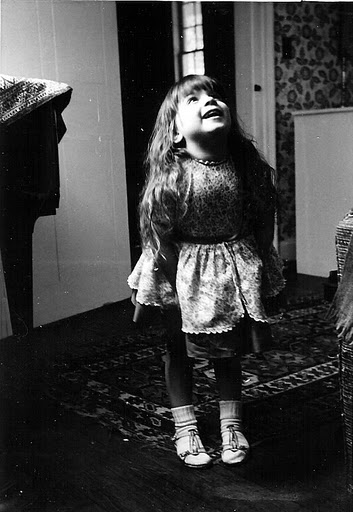
This is my daughter, five years ago, at Lake Matinenda in Ontario. I cried when I read about the baby thrown from the London fire.
Prayers for the children in the London fire and their parents and grandparents. Prayers for the refugee’s children, that they are not lost and drowned. Prayers for the Congresspeople shot yesterday and their families and friends.
Prayers for all the children in the world.

A recent article in the Family Practice News says that a survey of 225 physicians reveals that 33% of them think that the opioid crisis in the US is caused by over prescribing opioids. 24% said aggressive patient drug seeking and 18% said it is due to drug dealers. How quickly things change.
In 1996 pain was declared the fifth vital sign, after temperature, pulse (heart rate), respiration rate and blood pressure. I disagreed with it because it focused on pain, by telling the nurses in the hospital and the outpatient providers to always to ask about pain. I thought it would be better to focus on level of comfort than pain. I thought we were using opioids far too freely and I thought that patients were getting addicted. The pain specialists said that we had to treat pain, and we were given very few tools other than opioids. Primary care providers were told that they could be sued for too much or too little pain medicine.
I also disagreed with it because pain is NOT a vital sign. That is, the level of pain does not correlate with illness. If a person has a high fever of 104 I am sure they are sick, a fast or very slow heart rate, a blood pressure too high or two low, they are breathing too fast: these are vital signs. They often correlate to illness and help us decide if this is outpatient, urgent or emergent. But pain does not. A chronic pain patient may have a pain level of 8/10 and yet not be an emergency or in a life-threatening state at all. That does not mean that they are lying or that we don’t wish to help with pain.
In June, 2016, the American Medical Association recommended dropping pain as a vital sign. https://www.painnewsnetwork.org/stories/2016/6/16/ama-drops-pain-as-vital-sign. The Joint Commission for Hospital Accreditation dropped pain as a vital sign in August, 2016. https://www.jointcommission.org/joint_commission_statement_on_pain_management/
Why? Not only were people getting addicted to opiates, but they were and are dying of unintentional overdoses: sedation from opiates with alcohol, with anxiety medicines such as benzodiazepines, with soma, with sleep medicines such as ambien and zolpidem. If the person is sedated enough, they stop breathing and die. The CDC declared an epidemic of unintentional overdoses in 2012: https://www.cdc.gov/mmwr/preview/mmwrhtml/mm6101a3.htm and said that more US citizens were dying of prescription medicines taken as instructed then from motor vehicle accidents and guns and illegal drugs.
So the poem below and a second poem I will post tomorrow reflect how I thought about pain as a vital sign. It is not a vital sign, because a high pain level does not tell me if the person is critically ill and may die. It does not correlate. Pain matters and we want to treat it, but the first responsibility is “do not harm”. Letting people get addicted and killing some is harm.
Also, opioids have limited effectiveness and high risk for chronic pain. I have worked with The University of Washington Pain and Addiction Clinic since 2010 via telemedicine. They say that average improvement of chronic pain with opioids is about 30%. Higher and higher doses do not help and increase the risk of overdose and death. And the risk of addiction.
I think of pain as information. Studies of fibromyalgia patients with functional MRI of the brain show that they are not lying about their pain. In a study normal and fibromyalgia patients were given the same pain stimulus on the hand. The normal patients said that they felt 3-4/10 pain. The fibromyalgia patients felt 7-8/10 pain with the same stimulus and the pain centers lit up correspondingly more in their brains. So they are not lying.
Why would opioids only lower chronic pain about 30% even with higher doses? The brain considers pain important information. We need to snatch our finger away from a flame, stop if we smash our toe, deal with a broken bone. I think of opioids like noise cancelling headphones. Say you are listening to music. You put on headphones/take round the clock opioids. Your brain automatically turns up the gain: the music volume or the pain sensors. Now it hurts again. You take more. The brain turns up the gain. Now: take the noise cancelling headphones off. The music/pain is too loud and it hurts! With music we can turn it down, but the brain cannot adjust the gain for pain quickly.
We do not understand the shift from acute pain to chronic pain, yet. The shift is in the brain. I think that we are too quick to mask and block pain rather than use the information. Now the recommendations for opioids are to only use them for 3-5 days for acute pain and injury. For years I have said with any opioid prescription: try not to take them around the clock and try to decrease the use as soon as possible. Some people get addicted. Be careful.
If we don’t hand people a pill for pain, what can we do? There are more and more therapies. Jon Kabot Zinn’s 30 years of studying mindfulness meditation is very important. His chronic pain classes reduce pain by an average of 50%: better than opiates. Pain and stress hormones drop by 50% in a study of a one hour massage. Massage, physical therapy, chiropracty and acupuncture: different people respond to different modalities. Above all, reassuring people that the level of pain in chronic pain does not correlate to the level of illness or ongoing damage. And pain is composed of at least three parts: the sharp nocioceptive pain, nerve pain (neuropathic) and emotional pain. We must address the emotional part too. We have no tool at this time to sort the pain into the three categories. My rule is that I always address all three. That does not mean every person needs a counselor or psychiatrist. It means that we must have time to discuss stress and discuss life events and check in about coping.
In the survey of 225 providers, 50% estimated that they prescribe opioids to fewer than 10% of their patients. 38% said less than half. 12% estimated that they prescribe opioids to more than half their patients. The survey included US primary care, emergency department and pain management physicians.
Handing people a pill is quicker. But we can do better and primary care must have the time to really help people with pain.
Vital Signs I
In the hospital now
I am told we have a new
Vital sign
Like blood pressure and pulse
We are to measure
Pain
And always treat it
Sometimes I wonder
Mr. X is in the ICU
I tell his family
He may die
On a scale of one to ten
What is his wife’s pain?
His daughter’s
We are not treating them
Only Mr. X
We try to suppress pain
Signals from our nerves
Physical pain is easier
I think of our great forests
We suppressed fire
And that was wrong
If fire is suppressed
Undergrowth builds up
Fuel levels rise
Fire comes
Rages out of control
All is destroyed
If fires burn
More naturally
More regularly
What is left?
At first it looks desolate
The tall trees are burnt
Around their bases
But they live
Adapted to the fire
Majestic pines
Revealed
Would our values were as clear
Some pines
Seeds
Pinecones
Will only germinate
In fire
When the undergrowth
Is cleared
Conditions are right
For new growth
Perhaps pain is our fire
Grief is our fire
If we block pain
Where does it go?
Does the fuel build?
I wonder if the tall pines
Fear fire
Would they avoid it
If they could
Perhaps suppression
Is not the answer
Perhaps we can change
Remain present
Acknowledge pain
As normal
As joy
Perhaps if I
Step into the fire
I can remain
Present
For you
And you will be
Less alone
Less afraid
I open my doors
Let the fire burn
poem written before 2009
CDC guidelines for treating chronic pain: https://www.cdc.gov/drugoverdose/pdf/guidelines_factsheet-a.pdf

We went for a walk last night down town. On the way back, the bell in the fire tower was illuminated and looks magical. The tower was built in 1890 for the town fire bell and has been preserved. Read about it at the Jefferson County Historical Society : http://www.jchsmuseum.org/Resources/Resources-HistoricPreservationBellTower.html
I hope we can come together as a country for health care as this community has for the bell tower….
This is for the Photo Prompt: resilient.
BLIND WILDERNESS
in front of the garden gate - JezzieG
Discover and re-discover Mexico’s cuisine, culture and history through the recipes, backyard stories and other interesting findings of an expatriate in Canada
Or not, depending on my mood
All those moments will be lost in time, like tears in rain!
An onion has many layers. So have I!
Exploring the great outdoors one step at a time
Some of the creative paths that escaped from my brain!
Books, reading and more ... with an Australian focus ... written on Ngunnawal Country
Engaging in some lyrical athletics whilst painting pictures with words and pounding the pavement. I run; blog; write poetry; chase after my kids & drink coffee.
Coast-to-coast US bike tour
Generative AI
Climbing, Outdoors, Life!
imperfect pictures
Refugees welcome - Flüchtlinge willkommen I am teaching German to refugees. Ich unterrichte geflüchtete Menschen in der deutschen Sprache. I am writing this blog in English and German because my friends speak English and German. Ich schreibe auf Deutsch und Englisch, weil meine Freunde Deutsch und Englisch sprechen.
En fotoblogg
Books by author Diana Coombes
NEW FLOWERY JOURNEYS
in search of a better us
Personal Blog
Art from the Earth
𝖠𝗇𝗈𝗍𝗁𝖾𝗋 𝖶𝗈𝗋𝖽𝖯𝗋𝖾𝗌𝗌.𝖼𝗈𝗆 𝗌𝗂𝗍𝖾.
Taking the camera for a walk!!!
From the Existential to the Mundane - From Poetry to Prose
1 Man and His Bloody Dog
Homepage Engaging the World, Hearing the World and speaking for the World.
Anne M Bray's art blog, and then some.
My Personal Rants, Ravings, & Ruminations
 KO Rural Mad As Hell Blog
You must be logged in to post a comment.