the unwashed masses

I don’t have any of THEM as patients. The unwashed masses. All of my patients are smart.

There aren’t any unwashed masses.

I have a gentleman who is overweight, obese, diabetes. He is not stupid. He is not unwashed. He is not exercising or controlling his blood sugar right now because the temperature is below freezing. He has a hole in his trailer floor and no heat. So he huddles under the electric blanket.

I have a gentlewoman, also diabetic. She too is not stupid. She is not unwashed. She lost her husband to cancer and then everything else and then was homeless for a period. She has a small house but she has no heat. She stays in bed to stay warm. Her contractor quit before he put in the furnace and he’s gone bankrupt. She is cold.

I have veterans. They are not stupid. They are not unwashed. One was homeless for a long period and pooled his resources with another to rent a section 8 house. I am so proud of them. They are having trouble living together, each would rather live alone. Only sometimes they would rather not be alone. It is hard.

I have a massage therapist. She started to train as a counselor. To be a counselor, she needs a certain number of supervised hours and was getting this through the county mental health. “I didn’t know.” she says. “It is taking twice as long as I thought because half the time they don’t show up. They don’t show up because they don’t have gas, they don’t have food, they have been evicted, their son is in jail, they are in jail. I had no idea. My massage clientele is so different, they pay. I thought poverty was in third world countries, but it is here, in my county. I didn’t know.”

I know the people who live in the woods. A schizophrenic who comes once a month for his shot. He was losing weight. “Why are you losing weight?” I demand. “I am only eating once a day.” he says. I nag him to go to the community meals. He is shy, he is afraid of people and he is hungry. He is not stupid. He is not unwashed.

I have opiate addicts. Six years ago one expressed concern. He is 6 foot 5 and big. “I am afraid of some of the other people. You shouldn’t be doing this! It’s too scary and dangerous!” My opiate addicts are not stupid. My opiate addicts are not unwashed. Sometimes they relapse. Sometimes they die, in their 50s, 40s, 30s, 20s.

One in six people in the US is below the poverty level. They are not stupid. They are not unwashed.

And when someone talks about the masses, the people, the stupid people, most people are stupid, the sheep….

….I am beyond angry….

….my heart hurts….

Poverty in the US: http://www.census.gov/newsroom/press-releases/2016/cb16-tps153.html.

More: http://www.census.gov/topics/income-poverty/poverty.html.

The examples are taken from 25 years of practice, details changed for hipaa, but I can list dozens at any one time. The photograph is during the sunset after clinic, when I walked down town, the view across the sound.


Weaning methadone

Weaning high dose methadone down to a lower, safer, less likely to stop breathing and die dose is difficult, but it can be done. It needs both a determined patient and a determined physician who are willing to work together.

In 2010 I took a class in buprenorphine treatment for opiate overuse syndrome from the University of WA Medical Center and got started with their telemedicine, once a week, on line with the Pain and Addiction Clinic. Each week there was a teaching half hour and then an hour where we could present patients anonymously on the telemedecine to a panel: a pain specialist, an addiction specialist, a psychiatrist, a physiatrist, and a guest physician. Five consults at once! And they would discuss the case and fax recommendations to me.

Three weeks after the course, police and Medicaid and the DEA shut down the pain clinic 5 blocks from me, taking the computers. I acquired 30 patients in 3 weeks. Trial by fire.

By 2012 Washington State passed a pain medicine law. This says that a primary care physician can only prescribe up to 120 morphine dose equivalents for chronic pain. Anything higher and the patient should be checked by a pain specialist and there were not that many in the state.

120 morphine dose equivalents is up to 20 mg of methadone or possibly 30mg. Methadone has a very long half life so it’s a bit weird. Hydrocodone is one to one with morphine and oxycodone is 1.5 to one, so 90 mg of oxycodone is 120 morphine dose equivalents.

The law requires urine drug screens, careful record keeping, screening for adverse childhood experiences and regular visits. If the pain medicine is not effective, it is to be weaned. I had a couple of patients with over 100mg of methadone daily. That is way over the 120 morphine does equivalents and UW helped me help the patients start weaning.

First, they recommended dropping the dose by about 1/3. Some patients left immediately. I would give patients links to the law on line and explain that the concern is that opioids in combination with other sedating drugs and alcohol are killing more people than either guns or car wrecks or illegal drugs in the United States and the CDC has declared it an epidemic. Honestly, doctors really take the “first, do no harm” seriously and we do not want to kill people. One angry patient said “Your first job is to keep me pain free.” I said, “No, my first job is to not kill you.”

For those who stayed, dropping the dose by 1/4 or 1/3 worked. They had about two weeks of mild withdrawal symptoms and then gradually felt better. These were at doses of 120-150mg methadone daily. We started weaning then by 10mg or about 10% every couple of months. The UW Pain Clinic was doing this simultaneously.

In 2012 the WA PMP started as well. This is a central pharmacy reporting for all controlled substances. Controlled substances means addictive and monitored by the DEA. Even the head of the WA Pain Clinic found that he had 5-6 patients who were getting opioids from 4-5 different doctors. He said, “We do have to check because I thought I knew my patients and I would have none. I was wrong and I was surprised.” Those patients could be taking way more than any of their doctors knew or could be selling pills. Not a happy thing.

Once the methadone folks got down to about 1/3 of the high dose, we had to slow down. For my patients that meant at 40-50mg. The head of the pain clinic said wean by 5 mg or 2.5mg and do it every 6-8 weeks.

As people were weaned, their pain level stayed about the same. They would have an initial increase for the first two weeks. I describe it as follows: Think of it as if you are in a room listening to a stereo. The pain medicine is like noise protecting headphones. Once you are wearing the headphones, your brain says, uh, I can’t hear (feel pain). Hearing (feeling pain) is important information, so the brain turns up the volume. Way up if the dose is really high. Then you take the headphones off: OW!! IT’S TOO LOUD! THE SOUND (PAIN) IS BLOWING OUT YOUR EARDRUMS (HURTING LIKE HELL)!!!

Weaning slowly gives the brain a chance to turn the volume down on the receptors. UW said that at best chronic opiates lower pain an average of 30%. After a while, I said I had trouble telling the difference between withdrawal pain and increased chronic pain: they look the same. UW said, “Looks the same to us too.” But we had frequent visits and an ongoing discussion about pain. Pain is necessary for survival: you have to know if you are injured. Diabetics who can’t feel their feet are instructed to look all over their feet every day to check for injury and infection. I had one gentleman who couldn’t feel his feet and put them on a wood stove because they felt cold. He was needing skin grafts from the burns. So we need to feel pain and not numb it all the time. Also pain has three or more componants: the sharp cut/broken/bruised immediate pain. Second is nerve pain. Third is emotional pain, and we don’t yet have a meter that gives us what percentage each is contributing to the total sum. When I have a new chronic pain patient, I say that ALL THREE must be treated. We can argue about the details, but they can’t leave the emotional piece out…. or they have to find another doctor.

Also, at the higher doses, hyperalgesia is common, pain from the opioid itself. People felt better at lower doses. I gave people the links so they could read the law and the CDC information themselves. They were shocked and angry and threatened at first, but the “I don’t want you to die from too high a dose and it’s not safe and I am sorry.” message would get through eventually.

“Why do you have to do urine drug screens?” say some people. “You are treating me like an addict.”

My reply, “What do you think the addicts tell me?”

The person thinks about it. “The same thing?”

“Absolutely. So I can’t tell unless I check. Also, the boundary between chronic opiate use and opiate overuse is a lot thinner than we thought, so I have to check because all chronic opiate people are at risk for overuse.” The DSM-V combines opioid dependence and opiate addiction into opiate overuse syndrome, a spectrum from mild to moderate to severe.

We also talked about other ways of dealing with chronic pain. John Kabat Zinn’s mindfulness meditation classes drop pain levels by an average of 50%, so better than opioids. And way safer.

Meanwhile, since people could no longer get opioid pills from 4-5 doctors at once, the supply in Washington started drying up. Some people realized they had opiate overuse syndrome as well as chronic pain and turned to methadone clinics or buprenorphine clinics. Others went to heroin. The heroin overdose death rate has risen. I hope that as the stigma surrounding “addiction” changes into a better understanding of chronic pain and opiate overuse syndrome, more people will be able to get treatment and the death rate and heroin use will go back down.

https://depts.washington.edu/anesth/care/pain/pain-roosevelt.shtml

http://www.cdc.gov/cdcgrandrounds/archives/2011/01-february.htm

http://www.doh.wa.gov/ForPublicHealthandHealthcareProviders/HealthcareProfessionsandFacilities/PainManagement

http://www.doh.wa.gov/ForPublicHealthandHealthcareProviders/HealthcareProfessionsandFacilities/PrescriptionMonitoringProgramPMP

http://www.uwmedicine.org/referrals/telehealth-services

https://www.drugabuse.gov/publications/research-reports/prescription-drugs/opioids/what-are-opioids

http://www.umassmed.edu/cfm/about-us/people/2-meet-our-faculty/kabat-zinn-profile/


sing for the girls

Sing for the girls who grow up in war zones.
Sing for the girls who grow up scared.
Sing for the girls who grow up abused.
Sing for the girls unprepared.

Sing for the girls who grow up with alcohol.
Sing for the girls who grow in broken homes.
Sing for the girls who don’t tell anyone.
Sing for the girls alone.

Sing for the girls who grow up beaten.
Sing for the girls who grow up raped.
Sing for the girls who care for siblings.
Sing for the girls who learn to hate.

Sing for the women who now look frozen.
Sing for the women who now look old.
Sing for the women who survived it anyway.
Sing for the women who told.

Sing for the girls who grow up broken.
Sing for the girls who break everything.
Sing for the girls who break the silence.
We are broken and breaking: sing.

I took the photograph at the US Synchronized Swimming Nationals in 2012.

Adverse Childhood Experiences 8: Social cues

I am thinking about social cues for people with high Adverse Childhood Experience scores. With crisis brain wiring the response to social cues may be very different than what is considered the acceptable “norm”.

I always miss the cue when someone says “see you later”. I think “When?” Then I realize it’s a social comment and they do not in fact plan to see me later. I have a moment of disappointment. I do the same thing when someone says, “Let’s get together for dinner.” or “Let’s have coffee some time!” or “I will call you back!” or “Why don’t you come to our cabin some day?” Yes, I think, when?

And then I think “Liar.”

So I fail social cues….. or do I? Maybe I am not responding to the “correct” or “conventional” or “nice” social cues.

My father drank too much and especially while I was in high school and college. And my mother would enable and cover up and pretend nothing was happening. Children in this situation, which is way too common, develop special skills.

My sister was three years younger. As adults we discussed the stages of drinking and which one we hated most. We would both walk in the house from school with trepidation. In the door and almost feeling the air: what is happening? Am I safe? Do I need to hide? How dangerous is it? How much will it hurt?

I walked in once during high school and missed the cue. I was thinking about something. I thought my father was asleep in the kitchen. I went in to get something. I was very quiet so as not to wake him. I made a cup of tea.

He was not asleep, or else he woke up. And it was the worst stage, or the one I hated most.
Not physical violence. But he started talking. One of things he said was “You can tell me anything.” Now, he meant it. But he was crying by then and I knew I did not want to tell him anything and all I wanted was desperately to leave the room. And neither my sister or my mother was home. Finally I was crying too, because I said “I just want to go read my book.” and he was more crushed and maudlin and emotional and crying. And I tore out of the room and up to my room, as my mother walked in.

I did not cry much. Ever.

I refused to talk to my mother about it.

The next day she said to me, “Your father told me that you were talking about Lamont.” Lamont Cranston was a very beloved cat, The Shadow, who was missing now. Dead, we thought.

I said nothing. Because we had not talked about Lamont. So either my father was lying or else he’d had a blackout, didn’t remember and was making shit up. And if I told my mother the truth, she would back him and deny what I said or make it into a joke.

The stages my sister and I identified were:
1. sober
2. a little bit
3. goofy/silly/makes no sense
4. crying
5. asleep

We were ok with 2 and 5. I don’t think we saw 1 for years. We disliked 3 intensely, especially in public and especially when our mother was doing a cover up dance. And 4 we hated.
And yet I loved my parents and mostly miss them now that they are gone. Except when I remember things like this.

So, what is the point?

I miss “social cues” because that is NOT what the crisis brain, the ACE score brain, pays attention to. I am paying attention to far more intuitive things: body language. Whether what the person is saying matches what I know about them and what they have done in the past. I am looking for whether this person is telling me the truth.

I don’t trust instantly. Why would I?

I said to a counselor once that reading the “cloud” around the person was terribly useful in medicine but made me a social misfit. “I don’t know how to turn it off.” I said. She grimaced and said, “Why do you think I went into counseling?” She said, “I can’t turn it off either but I have learned to ignore it during social situations.” I was in my forties before I realized that there are people who don’t sense this cloud, who trust people until the person is dishonest, who understand that it is just fine to say “Let’s get together.” and not mean it.

Because actually, when someone says “I’ll see you later.” and they don’t mean it, they are saying an untruth. They are not planning to see me later. They don’t mean it. And my brain automatically files that under evidence that this person is not trustworthy. To them it is a social cue that is polite. To some of us, it is clearly something that is not actually true. I pick up on a cloud of social cues, but not the ones that are acceptable or conventional. And I am not the only one.

my sister on the left and me on the right, in the 1960s

Why care for addicts?

Why care for addicts?

Children. If we do addiction medicine and help and treat addicts, we are helping children and their parents and our elderly patients’ children. We are helping families, and that is why I chose Family Practice as my specialty.

Stop thinking of addiction as the evil person who chooses to buy drugs instead of paying their bills. Instead, think of it as a disease where the drug takes over. Essentially, we have trouble with addicts because they lie about using drugs. But I think of it as the drug takes over: when the addict is out of control, the drug has control. The drug is not just lying to the doctor, the spouse, the parents, the family, the police: the drug is lying to the patient too.

The drug says: just a little. You feel so sick. You will feel so much better. Just a tiny bit and you can stop then. No one will know. You are smart. You can do it. You have control. You can just use a tiny bit, just today and then you can stop. They say they are helping you, but they aren’t. Look how horrible you feel! And you need to get the shopping done and you can’t because you are so sick…. just a little. I won’t hurt you. I am your best friend.

I think of drug and alcohol addiction as a loss of boundaries and a loss of control. I treat opiate overuse patients and I explain: you are here to be treated because you have lost your boundaries with this drug. Therefore it is my job to help you rebuild those boundaries. We both know that if the drug takes control, it will lie. So I have to do urine drug tests and hold you to your appointments and refuse to alter MY boundaries to help keep you safe. If the drug is taking over, I will have you come for more frequent visits. You have to keep your part of the contract: going to AA, to NA, to your treatment group, giving urine specimens. These things rebuild your internal boundaries. Meanwhile you and I and drug treatment are the external boundaries. If that fails, I will offer to help you go to inpatient treatment. Some people refuse and go back to the drug. I feel sad but I hope that they will have another chance. Some people die from the drug and are lost.

Addiction is a family illness. The loved one is controlled by the drug and lies. The family WANTS to believe their loved one and often the family “enables” by helping the loved one cover up the illness. Telling the boss that the loved one is sick, procuring them alcohol or giving them their pills, telling the children and the grandparents that everything is ok. Everything is NOT ok and the children are frightened. One parent behaves horribly when they are high or drunk and the other parent is anxious, distracted, stressed and denies the problem. Or BOTH are using and imagine if you are a child in that. Terror and confusion.

Children from addiction homes are more likely to be addicts themselves or marry addicts. They have grown up in confusing lonely dysfunction and exactly how are they supposed to learn to act “normally” or to heal themselves? The parents may have covered well enough that the community tells them how wonderful their father was or how charming their mother was at the funeral. What does the adult child say to that, if they have memories of terror and horror? The children learn to numb the feelings in order to survive the household and they learn to keep their mouths shut: it’s safer. It is very hard to unlearn as an adult.

I have people with opiate overuse syndrome who come to see me with their children. I have drawings by children that have a doctor and a nurse and the words “heroes” underneath and “thank you”. IΒ  have had a young pregnant patient thank me for doing a urine drug screen as routine early in pregnancy. “My friend used meth the whole pregnancy and they never checked,” she said, “Now her baby is messed up.”

Addiction medicine is complicated because we think people should tell the truth. But it is a disease precisely because it’s the loss of control and loss of boundaries that cause the lying. We should be angry at the drug, not the person: love the person and help them change their behavior. We need to stop stigmatizing and demeaning addiction and help people. For them, for their families, for their children and for ourselves.

I took the photo of my daughter on Easter years ago.

Adverse Childhood Experiences 7 : Revisiting Erikson

Welcome back, to Adverse Childhood Experiences, and I have been thinking about Erikson’s Eight Stages of Psychosocial Development.

These were mentioned in medical school and in residency. I was in medical school from 1989 to 1993 and in Family Practice Residency from 1993 to 1996. Family Practice is at least half psychiatry, if you have time. We are losing the time with patients in order to achieve “production”. I complained about the 20 minutes I was allotted per patient and was told that I should spend 8 minutes with the patient and 12 minutes doing paperwork and labs and calling specialists. This is why I now have my own practice. A new patient under 65 gets 45 minutes and over 65 gets an hour and my “short” visits are 25 minutes. I am a happy doctor. And on the Boards last year I scored highest in psychiatry….

So, back to Erikson. The first stage, at birth to one year is Basic Trust vs Mistrust. “From warm, responsive care infants gain trust or confidence that the world is good.”

I was taught that people would have to “redo” the stage if they “failed”. Let’s look at that a little more closely.

Take an infant in a meth house. No, really, there are babies and small toddlers that have addict parents, alcohol, opiates, methamphetamines. We do not like to think about this.

A social worker told me that the toddlers from a meth house were really difficult to deal with. They do not trust adults. The first thing they do in foster care is hide food.

Hide food? Well, adults on meth are not hungry, sometimes for 24 hours or more, and they are high. So they may not feed the child.

Now, should this child trust the adult? No. No, no, no. This child is adaptable and would like to survive. So even under three they will learn to hide food. In more than one place. This is upsetting to foster care parents, but perfectly understandable from the perspective of the child.

So has the child “failed” the first stage? Well, I would say absolutely not. The child looked at the situation, decided not to starve and learned not to trust adults and hid food. Very sensible. Adaptive.

Is the child “damaged”? That is a very interesting question. After 25 years of family practice medicine I would say that no, the child is not damaged. However, the child has started out with a “crisis” brain. The brain is plastic, all our life, and so this child did what was needed to survive.

Is the child “sick”? Again, I would argue no, though our society often treats the child as sick. We think everyone should be “nice” and “warm” and “why isn’t he/she friendly?” Well, if you started in an addiction household or a crazy household or a war zone, it would not be a good adaptation to be warm and fuzzy to everyone.

How do we treat the adult? In a warm fuzzy nice world the child would have a foster parent who adored them, was patient with them, healed them and they would be a nice adult. I have a friend who said that foster care was so bad that he chose to live in an abandoned car his senior year rather than stay in foster care. He couldn’t play football because he had to get back to the car and under the layer of newspapers before it got too cold. I am sure that most foster parents are total wonders and angels. But some aren’t.

I have a person who says that he lived on the streets from age 8. He did get picked up and put into foster care. He kept running away. “The miliary loved me because I could go from zero to 60 in 60 seconds.” That is, he has crisis wiring. He is great in a crisis. The military is a sort of a safe place, because it has rules and a hierarchy and stands in for the failed parenting. Expect that then you get blown up by an AED in Afganistan and hello, that makes the crisis wiring worse.

How DO we treat the adult? We treat them horribly. We say why can’t this person be nice. We diagnose them we drug them we shun them we isolate them we as a society discriminate against them deny them and we are a horror.

I get so angry when I see the Facebook posts where people say “surround yourself with only nice people”. Ok, how dare you judge someone? You don’t know that person’s history. You don’t know what they grew up with. How dare they say that everyone should be NICE.

I am a Veteran’s Choice provider. I have 6 new veterans in the last 3 months. I suspect I will get more. They are not “NICE”. They come in suspicious, hurt, wary, cadgy. And I don’t care, because I am not “NICE” either. We get along just fine.

When I run into someone who isn’t “NICE”, I think, oh, what has happened to this person? What happened to them when they were little? What happened to them as an adult? How have they been hurt?

Pema Chodron writes about sending love: to your loved ones, to a friend, to an acquaintance, to a stranger, to a difficult person and to an “enemy”.

Send love. And do something about it. Help at your local school, help families on the edge, help single parents, sponsor a child to a sport if their parents can’t afford it, pay for musical instrument lessons, do Big Brother/Big Sister, become a “grandparent” to a child at risk, be a good foster parent, donate to addiction care….

The photo is from 2007, when my children and I visited their father in Colorado. A stranger in the parking lot took it at our request…..

Chronic pain update 2015

As a rural family practice physician, I am in an area with very few specialists. Our county has a 25 bed hospital and we have a urologist, three general surgeons, three orthopedists (except when we were down to none at one point), two part time hematologist oncologists and that’s it. We have a cardiologist who comes one day a week. We have a physicians assistant who worked with an excellent dermatologist for years: hooray! Local derm! Our neurologist retired and then died. We had two psychiatrists but one left. We had one working one half day a week.

I trained in treating opiate addiction with buprenorphine in 2010 and attended telemedicine with the University of Washington nearly weekly for a year and a half. Then life intervened. I attended last week again, but not the addiction medicine group. That is gone. Now there are two telemedicine pain groups.

And what have I learned since my Chronic pain update 2011?

Chronic opiates suck, and especially for “disorders of central pain processing” which includes fibromyalgia, reflex sympathetic dystrophy, TMJ, chronic fatigue, and all of the other pain disorders where the brain pain centers get sensitized. We don’t know what triggers the sensitization, though a high Adverse Childhood Experience score puts a person more at risk. Cumulative trauma? Tired mitochondria? Incorrect gut microbiome? All of them, I suspect.

Jon Kabot Zinn, PhD has been studying mindfulness meditation for over 30 years. He has books, CDs, classes. Opiates at best drop pain levels an average of 30%. His classes drop pain levels an average of 50%. I’ve read two of his books, Full Catastrophe Living and ….. and I used the CD that came with the former to help me sleep after my father and sister died. Worked. Though I used the program where he says, “This is to help you fall more awake, not fall asleep.” Being contrary, it put me to sleep 100% of the time.

Body work is being studied. Massage, physical therapy, accupuncture, touch therapy and so forth. It turns out that when you have new physical input, the brain says, “Hey, turn down the pain fibers, I have to pay attention to the feathers touching my left arm.” So, if you have a body part with screwed up pain fibers, touch it. Touch it a lot, gently, with cold, with hot, with feathers, a washcloth, a spoon, something knobby, plastic. Better yet, have someone else touch it with things with your eyes closed and guess what the things are: your brain may tell the pain centers “Shut up, I’m thinking.” Well, sensing. A study checking hormone blood levels every ten minutes during a massage showed the stress hormone cortisol dropping in half and pain medicating hormones dropping in half. So, massage works. Touch works. Hugs work. Go for it.

There are new medicines. I don’t like pills much. However, the tricyclic antidepressants, old and considered passe, are back. They especially help with the central pain processing disorders. I haven’t learned the current brain pathway theories. The selective serotonin uptake reinhibitors (prozac, paxil, celexa, etc) increase the amount of serotonin in the receptors: chronic pain folks and depressed folks have low serotonin there, so increasing it helps many. As an “old” doc, that is, over 50, I view new medicines with suspicion. They often get pulled off the market in 10 to 20 years. I can wait. I will use them cautiously.

We are less enthused about antiinflammatories. People bleed. The gut bleeds. Also, the body uses inflammation to heal an area. So, does an antiinflammatory help? Very questionable.

Diet can affect pain. When I had systemic strep, I would go into ketosis within a couple of hours of eating as the strep A in my muscles and lungs fed on the carbohydrates in my blood. This did not feel good. However, the instant I was ketotic, my burning strep infected muscles would stop hurting. Completely. I am using a trial diet in clinic for some of my chronic pain patients. I had a woman recently try it for two weeks. She came back and said that her osteoarthritis pain disappeared in her right hip entirely. She then noticed that the muscles ached around her left hip. She has been limping for a while. The muscles are pissed off. She ate a slice of bread after the two weeks and the right hip osteoarthritis pain was back the next day. “Hmmmm.” I said. She and I sat silent for a bit. It’s stunning if we can have major effects on chronic pain with switching from a carb based diet to a ketotic one.

I attended one of the chronic pain telemedicines last week and presented a patient. My question was not about opiates at all, but about ACE scores and PTSD in a veteran. The telemedicine specialists ignored my question. They told me to wean the opiate. He’s on a small dose and I said I would prefer to wean his ambien and his benzodiazepines first. They talked down to me. One told me that when I was “taking a medicine away” I could make the patient feel better by increasing another one. As I weaned the oxycodone, I should increase his gabapentin. I thought, yeah, like my patients don’t know the difference between oxycodone and gabapentin. No wonder patients are angry at allopaths. I didn’t express that. Instead, I said that he’d nearly died of urosepsis two weeks ago, so we were focused on that rather than his back pain at the third visit. All but one physician ignored everything I said: but the doctor from Madigan thanked me for taking on veterans and offered a telepsychiatry link. That may actually be helpful. Maybe.

And that is my chronic pain update for 2015. Blessings to all.

http://www.cdc.gov/violenceprevention/acestudy/

http://www.umassmed.edu/cfm/about-us/people/2-meet-our-faculty/kabat-zinn-profile/

I can’t think of a picture for this. I don’t think it should have a picture.

Chronic pain and antidepressants

Continue reading

Adverse Childhood Experiences 4: Psychophysiological Illness

I went to the 46th Annual OHSU Primary Care Review, held at the Sentinel Hotel in Portland, Oregon last week.

It was excellent. It was surreal since the Sentinel Hotel started as a 1923 Elks’ Club and the satyr cupid friezes kept distracting me with the marble penises and war chariots during the lecture updating us on urinary incontinence.

Three lectures that I went to talked about Adverse Childhood Experiences.

This is the first conference that I’ve been to that anyone has talked about that study since I heard about it, in about 2005. I have not been to a lot of big conferences over the last few years because I opened my own clinic and money was tight.

Anyhow, the study is creeping into consciousness.

In the mornings, we had the big lectures in a large hall. There were three break out sessions in the afternoon, held in the main meeting, billiard room, club room and library. We all joked about Colonel Mustard and candlesticks.

A gastroenterologist, Dr. David Clarke, gave a two hour session titled “Hidden Stresses and Unexplained Symptoms II”.

Objectives:
1. How to uncover the cause of an illness when diagnostic tests are normal.
2. How to find hidden psychosocial stresses that are responsible for physical symptoms.
3. The process used to achieve successful outcomes in stress-related illness.

He talked about childhood stress. That if someone had a really difficult childhood:
“Surviving a dysfunction home is a heroic act and produces individuals who are:
a. reliable and get things done
b. detail-oriented
c. Perfectionist
d. Hard-working
e. Compassionate”

So what is the down side? “Surviving a dysfunctional home also produces emotional consequences that may lead to :
a. Long-term relationships with partners who treat you poorly.
b. Addictions to nicotine, Alcohol, Drugs, Food, Sex, Gambling, Work, Shopping, Exercise.
c. Quick Temper or being violence prone
d. Anorexia and/or bulimia
e. Mental health problems such as nervous breakdown or suicide attempts
f. Sacrificing your own needs to help others
g. Self-mutilation
h. Learning not to express or feel your emotions.”

Got that? Right. Not everyone, not all the time, but the adverse childhood experiences add up. These reliable individuals may eventually get enough positive feedback to decide that they deserve a relationship that is actually good. They may get angry about their childhood or past bad treatment. “They may have a really hard time expressing that anger because they spent years learning how to suppress emotion and the feelings may be directed at people for whom there is still some caring. When there is enough of this anger present it can cause physical symptoms that can be mild or severe or anywhere in between.”

Let me give two examples from my own practice. I can’t remember their names or the details, so I am making those up: no hipaa violation.

The first was an elderly woman who came in with her husband for stomach pain. We started with a careful history. We tested for helicobacter pylori. We tried ranitidine. We tried omeprazole. We studied her diet and did an ultrasound to rule out gallbladder disease.

At the third visit I was starting to talk about an upper endoscopy. This was more than 15 years ago, back when we did not start with a CT scan. Her husband said, “Doctor, is there anything else it could be?”

I was surprised. “Well, yes. Depression is on the diagnosis list. Sometimes depression can present as stomach pain. Could you be depressed?”

My elderly lady covered her face with her hands, started crying and said, “I try not to be!” while her husband nodded.

We cancelled the endoscopy. I said it really was not something to be ashamed of and we talked about therapy. She did not want talk therapy and we tried paxil. She came back in two weeks, and already she and her husband were brighter and relieved.

Second case: again, stomach pain, this time in a four year old. Mom brought her in.

I did a history and did a gentle exam. The exam was normal. Her stomach was not hurting now. She wouldn’t say anything.

We established that the stomach pain occurred on week days only, not on the weekend. In fact, usually at the after school daycare, not in school.

“Is there a time at the school daycare that she has stomach pain?” Mom was shaking her head when big sister piped up.

“It happens before recess.” Mom and I turned to stare at the six year old.

I said, “What happens at recess?”

“The big kids knock her down,” said big sister, pissed. “I try to stop them, but they are bigger than me. She’s scared. The teachers don’t see.”

“Oh. Thank you for telling us!” Little sister was crying and mom hugged her and big sister. Mom did not need instruction at that point. She called me a few days later. She talked to the daycare, they watched and the four year old was protected. Her stomach stopped hurting.

Dr. Clarke also described a case, where driving through a town would trigger four days of nausea and vomiting that required hospitalization. This had been going on for 15 years. He figured out why that particular town was a trigger: when the patient recognized the why, he was able to go for therapy.

People aren’t lying about these illness, they are not making them up. Doctors have called it somatization, but really it is the body holding the emotions until the person is safe enough to deal with them. Doctors need to learn how to recognize this and help with respect instead of stigmatization and dismissal.

I hope that more doctors learn soon…

Dr. Clarke’s list for further reading is below. I don’t have any of these yet, but they are on my wish list.

They can’t find anything wrong!, by David Clarke, MD. See also www.stressillness.com

Psychophysiologic Disorders Association: www.ppdassociation.org

Caring for Patients, Alan Barbour, MD

Unlearn Your Pain, Howard Schubiner, MD

Pathways to Pain Relief, Frances Anderson PhD and Eric Sherman PhD

Ted talk about ACE scores: http://www.acesconnection.com/blog/nadine-burke-harris-how-childhood-trauma-affects-health-across-a-lifetime-16-min
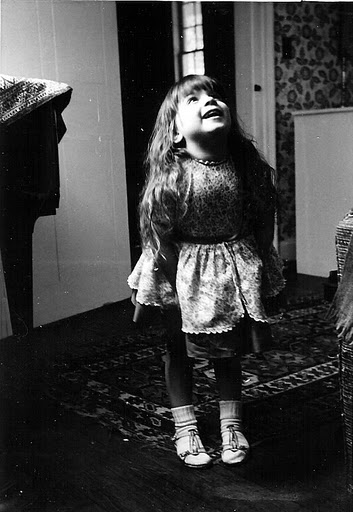

Angel Witness

Sometimes
Even as you make
The same mistake
Cross the threshold
Open the door
Lift the glass

You feel the presence
Of angels
Drawn by the seriousness
Of your decision

Present
Not to pull you away
From the cup
The drug
The wrong man
The dire pattern
You feel their intensity
The presence
As if outer space
Has clung to their wings
Or motes from heaven
Alien
The weight of their gaze
And their interest

Sometimes
Even as you make
The same mistake
It’s not the same
To sense an angel
Witness

previously published on an obscure writing site