On order

Back in 2002, our private clinic became part of the hospital. The biggest local insurer had quit paying for everyone’s work for 9 months and then was taken over by the state. We were still not getting paid.

One day the employees were very tickled and happy. I cornered the office manager at lunch and asked what was going on.

“We have to use the hospital to order everything,” she said. The nurses and staff at lunch had expectant grins. “We asked them to procure a henway. The order was put in. Yesterday we got a call from someone in the ordering department. She said, “We’ve searched the medical catalogs, but we can’t find it. What’s a henway?” She got transferred a few times and reached the office manager. Reply: “About the same as a rooster.” The clinic staff broke up again. My office manager said, “Well, that person was pretty new, so we hope they’ll get over it.”

I am sure that the hospital loved having us on board.

For the Ragtag Daily Prompt: procure.

Doctors are leaving medicine

https://www.healthgrades.com/pro/7-reasons-doctors-are-leaving-medicine?CID=64embrdTINL120523

Ok, reason number five: “One study finds doctors spend two hours on EHR record-keeping for every single hour in clinical contact with patients. EHR dissatisfaction has been linked to higher burnout scores, and burnout can lead doctors to leave clinical practice or quit medicine altogether.”

Back in 2009 I argued with my employer about their policy. They had put us all to 20 minute visits, one 40 minute one a day, and continuous visits 8-noon and 1 to 5. Also, they had daily meetings from noon to 1. Full time was four eight hour days, except they are nine hours with the meetings. I said, “Look, one day of clinic generates at least two hours of work: reading lab results, reading radiology reports, calling patients, calling specialists, dealing with insurance, dealing with phone calls, refills, patient requests, calling pharmacies. So four 8 hour clinic days generates another 8 hours minimum of work, plus I have call nights, plus those four hours of meetings every weeks, so I am working 44 hours of week minimum and with call I can hit 60-80 hours in a week.” The administration did not care. I promptly cut to 3.5 patient days. They initially said, “You can only do 3 or 4 days, not 3.5.” I said, “Why?” They said it was not the most efficient use of clinic space. I said, “You don’t have anyone to put in for the full day, so using it for a half day generates more income than having it empty.” They reluctantly agreed.

I could finish a clinic EMR (electronic medical record) note in the room with the patient in 25 minutes but not 20, during the visit. The administration and computer loving doctors had said, this system is to let you finish the note in the room. It took me three years to be able to consistently do that in 25 minutes. Many providers were allowing their home computer to access the system. This meant they were working after hours at home after everyone else was asleep or on weekend morning. I refused to have it at home. I came into clinic at 5 am to do the work, since then I wouldn’t get interrupted, but I wanted home to be home. Also, I live four blocks from that employer.

I decided that I was sticking with finishing the notes in the room. I ran late. I apologized to patients, saying that the hospital was now requiring a quota of 18 patients a day and that I disagreed with it. I tried to convince the administration that I needed more time and help, but they dispensed with me.

Two years later another physician quit medicine and the hospital dropped the quota to 16 patients a day.

So it makes me laugh to see that it says in that article that eight hours of clinic generates sixteen hours of “EMR work”. The implication is often that it is busywork but much of it is NOT busywork. I have to read the xray report and decide what to do with it. Same for every lab. Same for the specialist letter. Same for physical therapy, respiratory therapy, home health, hospice, occupational therapy, notes from psychology or psychiatry, notes from the hospitalization here or elsewhere. Read, decide if I need to do anything, update the EMR? Sign the document off. Decide, decide, decide and get it right. Call the patient or a letter or call a specialist or ask my partner for a second set of brains, am I missing something? This is all WORK.

At one point a clinic shut down in three counties. My clinic (post hospital) took a new patient daily for months. We couldn’t get the notes so we had to look at med lists, get history from the patients and wing it. Or get hospital records labs xrays specialist notes. Yep. Nearly every patient had “deferred maintenance”: they were behind on colonoscopy, mammogram, labs, specialist visit, echocardiogram. We ordered and ordered. Then we had to deal with all the results! After about five months I say to my receptionist, “I’m TIRED.” She was too. We dropped to three new patients a week. Then two. Then one.

I also spent an hour with new patients and my visits were 30 minutes. I was the administrator of my clinic too, and pointed out to the physician (me) that we were not making much money. With 30 minutes I could look at things during the visit and explain results and get much of it, but not all, done.

So if a 20 minute clinic visit generates 40 more minutes of work, in labs, reviewing old records, reading specialist notes, reading about a new medical problem, keeping up on continuing medical education, reading xray reports, echocardiograms, writing letters for jury duty exclusion, sports physicals, disability paperwork, sleep apnea equipment, oxygen equipment, cardiac rehab reports and orders,etc, then how many patients would give us a forty hour week? At one hour per patient, that is 40 patients a week, right? 18 patients daily for 4 days is 72 per week and that is not including the on call or obstetrics done at night and on the weekend. 72 patients would generate another 144 hours of work according to that article which is untenable. 36 hours+144 hours+call = over 180 hours weekly. And so I am not surprised at the levels of burnout and people quitting.

We have to value the actual work of not only “seeing a patient” but “thinking about the patient, reading about a disorder, reading all of the notes and test results and specialist notes”. Isn’t that what we want, someone who will really spend the time and think?

Work again

I have been wondering whether to try to work again. It’s risky.

I asked the pulmonologist from Swedish Hospital if there was any way to keep from getting pneumonia number five. “We don’t know.” Is it safe for me to return to work? “We don’t know.” I like the plural in the answer, is he speaking for pulmonologists or Swedish or what? Anyhow, the risk is pneumonia number five and death or ending up permanently on oxygen or needing a lung transplant or something stupid like that.

It’s not raining yet and I promised not to even attempt to return to work until it rains.

I saw my cardiologist yesterday. He thinks I should return to work. Early on he said that I am smart, “like one of those old fashioned internists who read everything.” I laughed, because yes, I am a science geek. At the next visit he said, “The family doctors aren’t always as thorough as they could be.” I replied, “I don’t know, after all, I’m a Family Practice Doctor.” “Oh.” he said, “I thought you were an internist.” Which made me laugh because it’s a sort of back handed compliment. Cardiologists do a three year internal medicine training and then more years of sub specialty to become a cardiologist. Most specialists seem to scorn Family Practice a bit, though not all. And I have definitely had specialists ask me for help. A perinatologist: “How do I help people stop smoking?” I laughed at that, too, and replied, “Do you want the five minute , the ten minute, the thirty minute or the one hour lecture?” A med-peds doc asks me to put a cast on a child’s arm because even though she is board certified in internal medicine and pediatrics, she has almost no orthopedic training. I was at that clinic to see obstetric patients that day, but was happy to do the cast too. I love the broad training and the infinite variety of rural Family Practice. It is SO INTERESTING and OFTEN FUN THOUGH NOT ALWAYS. Sometimes it’s sad.

Here is an article about a physician doing what I want to do: https://nymag.com/intelligencer/article/long-covid-treatment-lisa-sanders.html. She thrives on complexity, she thrives on diagnostic puzzles and she writes the column that the television series “House” was based on. When I watched House, what I noticed was the nearly all of the patients on the show were either leaving something out or lying. In reality, I think it’s just that sometimes we need a lot of time to pull together the complex picture and clues. I always pay attention to the pieces of the puzzle that do not fit and sometimes those are the key to finding a diagnosis that is unexpected. Dr. Sanders spends an hour with a new patient. That is what I did in my clinic for the last decade, because that hour gave me so much information and it allows people to feel heard. A ten or fifteen minute visit doesn’t let people speak. It’s slam bam here is your prescription ma’am. What I see in the multitude of notes from all the doctors I’ve seen since 2014 is that they leave most of the conversation out of the note. Things I think are important. I think most of the clinic notes about me are crap and the physician is not listening and doesn’t know what to do. I include the stuff that doesn’t fit and doesn’t seem to make sense in the notes I write. Patient appreciated, when I gave them their note at the end of the visit. “You got all that?” Oh, yes, I tried.

One of the Long Covid symptoms that Dr. Sanders mentions is people “feeling like they are trembling inside.” I’ve seen that before Covid-19. That was a symptom that I did not pin down in a particular patient, but now there is more than one person complaining of the same thing. Really, why don’t physicians include those complaints? It’s egotism to cut out anything you don’t understand and most patients want help so are motivated not to lie. Ok, they might admit that they’ve been out of their blood pressure medicine for two weeks and that’s why their blood pressure is too high, or they’ve been drinking mochas and that’s why their blood sugar is way too high, but they are really in to get help. I think it is a terrible disservice not to document what they say, even if it’s not understood and the physician thinks it’s unrelated to their specialty and they don’t know what to do.

So: I want to do a Long Covid Clinic, with an hour for the first visit, and longer than usual follow ups. Part time because of my lungs and the fatigue. We shall see, right? I am going to look for grants to help set this up.

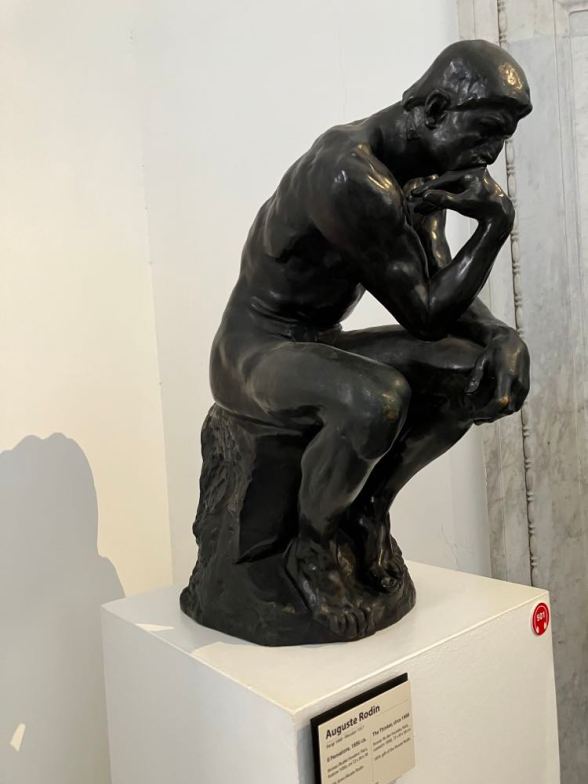
Think of how much work went in to this statue and this church. The Basilica di San Marco took at least 400 years to build and decorate!

Shame and anger in overuse illnesses

“amongst those who treat addicts of any kind generally agree that anger and shame help no one and is actively counter-productive.”*

Wait.

I have to think about that statement.

I do not agree at all.

Ok, for the physician/ARNP/PAC, anger at the patient and shaming the patient are not good practice, don’t work, and could make them worse. BUT anger and shame come up.

In many patients.

Sometimes it goes like this with opioid overuse: the person shows up, gets on buprenorphine, and is clean.

It may be a long time since they have been “clean”.

One young man wants to know WHY I am treating him as an opioid overuse patient. “Why are you treating me like an addict?”

I try to be patient. I recommended that he go inpatient, because I don’t think we will cut through the denial outpatient. Very high risk of relapse. “You have been buying oxycodone on the street for more than ten years.”

“I’ve been buying it for back pain, not to party.”

“Did you ever see a doctor about the back pain?”

“Well, no.”

“Buying it illegally is one of the criteria of opiate overuse.”

“But I’m not an addict! I’ve never tried heroin! I have never used needles!”

“We can go through the criteria again.”

He shakes his head.

He is in denial. He is fine. He doesn’t need inpatient. He is super confident, gets work again, is super proud.

And then angry. “My family still won’t talk to me!”

“Um, yes.”

“I’m clean. I’m going to the stupid AA/NA groups! Though I don’t need to. I’m fine!”

“What have you noticed at the groups?”

“What a bunch of liars!” he says, angry. “There are people court ordered there and they are still using! I can tell. They are lying through their teeth!”

“Obvious, huh?”

“Yeah!”

“Did you ever lie while you were taking the oxycodone?”

Now he ducks his head and looks down. “Well, maybe. A little.”

“Do you think your family and friends could tell?”

He glances up at me and away. “Maybe.”

“Your family may be angry and may have trouble trusting you for a while.”

“But I’ve been clean for four months!”

“How many years did you tell untruths?”

“Well.”

Shame and anger. Anger from the family and old friends, who have heard the story before, who are not inclined to trust, who are hurt and sad. The first hurdle is getting clean, but that is only the first one. Repairing relationships takes time and some people may refuse and they have that right! Sometimes patients are shocked that now that they are clean, a relationship can’t be repaired. Or that it may take years to repair. My overuse folks are not exactly used to being patient. And sometimes as they realize how upset the family and friends are, they are very ashamed. And some are very sad, at years lost, and friendships, and loved ones. I have had at least one person disappear, to relapse, after describing introducing someone else to heroin. He died about two years later, in his forties.

Shame and anger definitely come up in overuse illness.

The above is not a single patient, but cobbled together from more than one.

______________________

*from an essay titled “F—ing yes, I’m a fatphobe” on everything2.com. Today there are two with that title. The quotation is from the second essay.

Nanowrimo

I have finished my first try at Nanowrimo.

I do NOT have a coherent novel at the end. I have pieces and sections and chapters and questions. I have to look up a bunch of microbiology and also how the goblets cells in the stomach work, because I don’t remember and anyhow, I am sure it has changed since I was in medical school.

BUT I DO have 50,000 words.

I got stuck twice at the beginning and had two days where I didn’t write anything except this blog. And then another two. I kept dreaming about an ogre who wanted to be in the novel. Well, ok. I finally decided that the goal was to write the 50, 000 words, not stick to an outline. I added the ogre and have not missed a day since. To finish 50,000 words in 30 days, it breaks down to 1667 per day. If you miss four days it is more. I had two days where I wrote over 5100 words. That helped a lot.

Now I think I will rest for a day or two and then start looking it over. Write a list of questions, work on some needed research, think about it. That ogre is interesting. Unexpected.

I think it was fun! At least, some of it was. I got stuck writing about something based on when I was ill, so that was difficult. It brought up the fear and the deep loneliness of that time. I learned to skip to something else when I get overwhelmed.

Anyhow, HOORAY!

Sterling too

I grow up with sterling.

My mother has a set of sterling. It is important to her. It is an emblem, a badge. She does not have as extensive a set as her mother.

My sister and I know the silver is special because of our mother. We like the tiny spoons best. They are silver with gold on the bowl.

β€œCan we use the special spoons?” we ask. For ice cream.

β€œYes,” says my mother, smiling.

We run to get them, the small spoons, heavy for their size. Silver is heavier than stainless steel. The spoon also gets colder than stainless steel and tastes different. We eat our ice cream with our special spoons very happily.

We know that the silver is sterling. I don’t know what that means for a while. It means it is not plate. Plate? But these are spoons.

My mother shows us the stamp on the back of each spoon. β€œSee? It says sterling. That means it is silver all the way through. Plate has silver over another metal.” She shows us the back of another spoon. The bowl has a worn spot. β€œThe silver has worn away. And it does not say sterling.” We both study the two spoons and weigh them in our hands. The plate one is lighter. My mother is scornful of silver plate.

My mother is an artist and goes to museums. She comes back from one laughing. β€œThey have an exhibit about homes and decoration. There is a room with tv trays and very few books and wall to wall carpet and a large color television. I thought it was so dull and ugly. Then I went to the next room. Oriental carpet and books and a guitar and no television and art!” She laughs. β€œThey have me nailed. I am such a snob and it looked just like our house!”

We do have a tv but it is the smallest black and white that you can get. And my father knocked it over one night. Now the picture is cup shaped. The top of heads are wide and swollen. Neither of my parents care enough to get it fixed or replace it. They spend their money on art supplies and books and music. Friends visit. β€œWhat is wrong with your tv?” I look at it in surprise. I am so used to the deformed picture, I stopped noticing long ago.

Once we are at my mother’s mother’s house. My mother tells another story. β€œI found mother sweeping to get ready for guests. She swept the dirt under the edge of the rug! I said, β€œMOTHER! What are you DOING!” Mother just looked at me and said, β€œIt’s a poor mistress who doesn’t know the maid’s tricks.” My mother’s mother did grow up with servants. But not here. She was born in Turkey because her father was a minister, running an orphanage and school. My grandmother lived there until she was sixteen and the family was exiled from Turkey at the start of World War I.

I give my mother’s sterling to my niece, after my sister dies. My children are not very interested in sterling. That is ok with me. Things change and values change.

I still have some special spoons, and think of my mother and father and sister when I eat ice cream.

___________________

For the Ragtag Daily Prompt: sterling.

All of my patients are smart 2

I did a porch call a bit over a year ago. It’s like a house call except on a porch.

A friend/patient asks me to see a long time friend of his. The friend has multiple chemical sensitivities. We meet, the three of us, on his porch.

My friend has had me as a physician but he has not seen me at work with someone else.

I ask a lot of questions and then launch into an explanation of the immune system and how antibodies work.

My friend states, “He can’t understand that.’

I smile at his friend. “Oh yes he can. And you followed what I said, didn’t you?”

His friend grins back and said, “Yes, I did. Most of it. Or enough.”

All of my patients are smart. One day in clinic I think how blessed I am, that ALL of my patients are smart and fascinating people. Then I think, how could that be? And, how lucky am I?

And then I think: everyone is smart.

They are not all educated in the same way I am. They may not be well read. They may not have my science background or my geeky fiction and poetry and song brain. But they ALL are smart.

Some are brilliant at mechanical things. I have a patient who is an expert in restoring church organs and is working 3000 miles away in New York City. “They are driving me crazy.” he says. “You have to have the approval signed off on over 20 groups, historic preservation, the fire fighters, etc, etc, to remove one board from the church. The organ was covered over by bad repairs over the years. We’re trying to get it back. After this I will put in new organs, but this is my last restoration.”

Veterans, teachers, attorneys, physicians, retired computer engineers, car mechanics, marine engineers, parents, grandparents. They are all smart, men and women.

We finish the porch visit with some options and the friend of my friend says he will think about what I said and try some things.

A few days later my friend calls. “I couldn’t believe he was following your science talk, but he was. He got it. He remembers it and understood it.”

“Of course he did,” I say.

“I am actually impressed,” says my friend. “It was really interesting watching you do that.”

That may be one of my weird skills. To be able to listen to the person thoroughly and then respond in language that they understand and a bit more. An assumption, always, that they can follow a complex and intricate idea.

I do not know if they always follow what I say. But they always respond to the assumption that they are smart and that they can understand and that they are an equal. I am explaining from my expertise, but I know they can understand when I explain it correctly.

And I have not seen this in the physicians that I have seen. Out of 22 physicians since 2012, four were excellent and met me and explained as an equal.

The rest did not. They dismiss me. They talk down or avoid me once they realize that they do not understand why I keep getting pneumonia. They are afraid to say “I don’t know.” Four are not afraid and recognize that it’s something weird and say, “We do not understand this and we don’t know how to fix it.”

Four out of 22 have my respect. And that is a sad number. Medical training needs to change and physicians need time to listen and need to learn how to listen.

Meanwhile, all of my patients are smart. And I am so blessed.

Reblog: Desertification

I don’t want to argue about global warming. Let’s talk about deserts instead. Overgrazing, cutting down all the trees and losing topsoil: we have seen this in the United States, with the dust bowl. We have a lot of people in the world to feed, even after all the deaths from Covid-19. We need to take care of land.

Ok, I am lame, that is embedded, not a reblog. I will have to figure out the difference. Feel free to laugh at me. My problem with technology is that it is NOT intuitive. I was horrible with computers until I realized that they are linear and stupid. That is, they only follow the exact right command and they have very little capacity to guess what I mean. I decided that computers were glorified hammers and very very annoying and that the manuals are usually written by people who speak computer, not English. That made it much easier for me to work with computers.

Anyhow, plant a tree. Blessings and peace you.

Exercise mets

Mets could be metastases, a terrible word in cancer. But this is exercise mets. I am half way through my pulmonary rehabilitation for pneumonia and getting stronger. So what is a met? “One MET is approximately 3.5 milliliters of oxygen consumed per kilogram (kg) of body weight per minute.” (from https://www.healthline.com/health/what-are-mets#definition).

Ok, that doesn’t seem very useful. I find this way more useful, a chart of how many mets are used for certain activities:

https://www.healthline.com/health/what-are-mets#examples

The treadmill I am using at pulmonary rehab tells me how many mets I am using. However, last time I turned it on and didn’t enter my weight. It uses 155 pounds, which is more than I weigh. I think that then the mets are wrong. It isn’t exact anyhow. The important thing is that I am improving and off oxygen! I am now up to 5.3 mets, going at 3.3 mph, on a 4% grade, for 40 minutes. Pulmonary rehab is twelve weeks, twice a week, with a respiratory therapist and a physical therapist.

My respiratory therapist asks my goals. To bicycle distance, hike across the Olympics, and to ski again, off oxygen. That means altitude. Once we are above 5500 feet, the body really starts noticing the thinner air. I am not there yet but I am so pleased to be improving.

On the chart, I am in the moderate exercise range. To bicycle, I would have to be able to sustain 8 mets. Not yet, not yet.

Being off oxygen (except night, flute, sustained singing and heavy exercise) is GREAT! The intrinsic problem has not been fixed, thought. Fully twenty specialists since 2012 have not figured out why I get pneumonia easily and how to protect me, other than masking and not working in Family Medicine or anything people intensive. It’s annoying, my career has been blown up. I don’t have much hope of an overarching diagnosis at this point, but I’m willing to keep trying. We don’t know everything in medicine and really, I do not think we ever will. It’s endlessly complex and fascinating.

I think the mets chart should be shared with patients. I had one couple who insisted that the woman had PMS even though she was postmenopausal. I scratch my head and continue to watch her. After months something made me suspicious and I order an echocardiogram. She had congestive heart failure, seriously reduced heart output. I promptly called the cardiologist and said, “This is new, she is on NO MEDICINES.” He saw her within a week. Sometimes things do not present in a straight forward manner. She felt much better once we got her heart functioning better. If a person is losing their ability to perform moderate intensity mets, they should see their doctor. It could be spending too many hours in front of a screen (turn it off, get up, go outside, walk daily!) but it could also be something else. Heart is the number one killer still.

Stay healthy and keep those mets up!

Ha. I did use the word certain, didn’t I? And one of my favorite exercises is dancing. Listening to this right now: