Shim Sham Shimmy

I had to choose shim as my Ragtag Daily Prompt today because I am relearning the Shim Sham!

I learned it years ago, but forgot it. Now the dance group that I hang out with on Fridays does the Shim Sham as the end of their dance evening. This is a line dance but it’s a line dance from Harlem in the 1920s and 30s. It started from tap dance. “At the end of many performances, all of the musicians, singers, and dancers would get together on stage and do one last routine: the Shim Sham Shimmy.” Here.

I am learning it from this teaching tape. The individual moves are not that hard, but it is fast and it’s the transitions that I really have to work on. It is fast enough that it has to be memorized and automatic, I can’t think about the next step.

Frankie Manning was an American dancer, instructor, and choreographer. Manning is considered one of the founders of Lindy Hop, an energetic form of the jazz dance style known as swing. I got to take lindy hop classes with him in the 1980s in the Washington, DC area, when swing and lindy hop were having a revival. It is still going on, and what better exercise is there than dance?

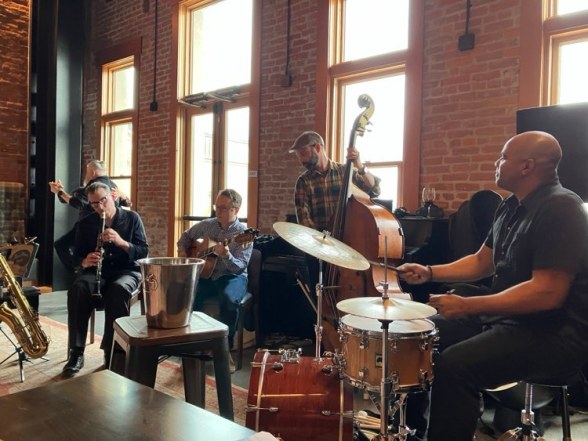
And the photograph is Jonathan Doyle and friends playing in late March 2023. I love dancing to live music!

Tool

I don’t wear livery at work
and anyhow that’s a uniform for men
or a place to board horses
though the horses can be male or female.
Once I go to my daughter’s second grade
for a bring your parent day
and bring part of my uniform,
or perhaps it is a tool or instrument,
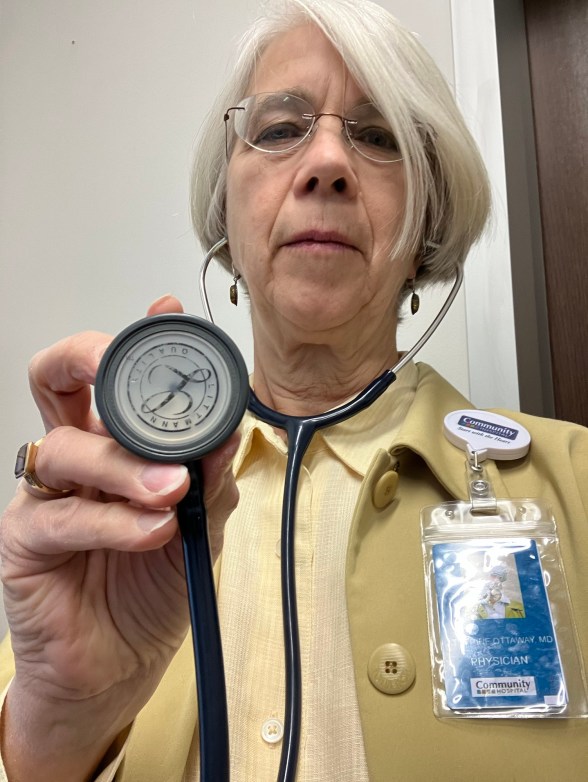
my stethoscope. The children all want
to listen to my heart
or at least touch this magical tool.
Afterwards I receive thank you notes.
I think that every one, except my daughter’s
thanks me for bringing the stethoscope
to their classroom. I did not know how
special and magical a tool can be.

__________________

For the Ragtag Daily Prompt: livery.

G6PD deficiency and diabetes

Today I follow an online trail to this article on diabetes from Nature Medicine here.

It is talking about a genetic variant that is found in people with African-American heritage called G6PDdef. This genetic pattern makes the HgbA1C test inaccurate. It will look low and “in control” even when blood sugars are high. Since the blood sugars are NOT in control, complications from diabetes can happen: damage to vision, to kidneys, to nerves in the hands and feet.

I have been reading articles about current and changing guidelines about diabetes. The current guidelines say that checking blood sugars at home doesn’t make a difference. I REALLY disagree with this and at the same time, I don’t think that physicians are approaching blood sugars in a practical manner.

I saw a man recently who is diagnosed with “insulin resistance”. His HgbA1C is in between 5.6 and 6.0. Normal is 4.5 to 5.6. Over 6.5 is diabetes. He has prediabetes. He has not checked blood sugars at all, but he is on metformin.

There is evidence that metformin is helpful, and still, I think it is putting the cart before the horse. I ask my people to go buy an over the counter glucometer. Ask for the one that has cheap strips, 6 for a dollar instead of a dollar apiece. Then we go over the normal and abnormal blood sugar ranges and I ask them to start checking blood sugars. If I give them a medicine right away, they don’t learn how to control their blood sugar with diet. ALL of my patients can figure out how to bring their blood sugars down with diet. If we can’t get to a good range, then we will add metformin. I do explain that the guidelines say use a medicine right away, but I ask, “Would you like to see if you can control your blood sugars with diet?” The answer is overwhelmingly “YES!” I have never had someone say no. If we do not give them the chance and explain the goals, why would they even try?

Also, I read the dietician handouts for diabetes yesterday and I am not satisfied. I do not think they explain carbohydrates well. Foods have fats, proteins, and carbohydrates, and anything that isn’t fat or protein has carbohydrates. I think of carbohydrates as a line, from ones with high fiber that do not send the blood sugar up fast, to ones that shoot it way high. At the low end is kale and lettuce and chard and celery. Then the green and yellow and red vegetables that are not sweet. Then beets and sweet peas. Next come the fruits, from blueberries up to much sweeter ones. Fruits overlap with grains: bread and pasta and potatoes and rice. The whole grains have more fiber and are slower to digest. Candy then sweet drinks (sodas are evil) and sugar.

Sugar has 15 grams of carbohydrate in a tablespoon. Kale has 7 grams of carbohydrate in a cup. That’s a pretty huge difference. A small apple has about 15 grams of carbohydrate and a large one 30 grams. Read labels for grains. There is a lot of carbohydrate in a small amount. The issue with fruit juice is that most of the fiber is gone, so the sugars are broken down and absorbed much faster. A 12 oz coke has 32 grams of carbohydrate and a Starbucks mocha has 62! I quit drinking the latter when I looked it up.

Most people with diabetes are supposed to stay at 30 grams of carbohydrate per meal, or 45 if it is a big person or if someone is doing heavy labor. Snacks are 15 grams.

Avocados are weird. They have about 17 grams of carbohydrate in a whole one, but they also have a lot of fat. They do have a lot of fiber, which surprises me.

Diet control takes a combination of paying attention to what is on the plate and serving amounts. Three servings of pasta is not going to work, unless you are out fighting forest fires or are on the swim team. Fire fighters are allotted 6000 calories a day, but most of us do not get that much exercise.

At the same time that articles are telling me that home blood sugars are not useful with a glucometer, everyone is pushing the continuous glucose monitors. I think we like technology. And other articles say that diabetes can be reversed with major lifestyle changes.

Articles: about not using home glucose checks, here. Starting metformin, here. Starting with one of the newer medicines, here.

I think people feel a lot more successful if they get a glucometer and can bring their blood sugar down by messing about with diet. I tell them to check after what they think is a “good” meal and after a “bad” one. How much difference is there? Contrast that with being handed a pill to control it, while someone talks about diet and says all the same stuff that we’ve heard for years. Nearly all of my people want to avoid more pills and are willing to try a glucometer to see if they can avoid a pill. People who have been on diabetes medicine for a while are less willing to try, but sometimes they do too. And sometimes they are surprised that some meals do not do good things for their blood sugar.

This is all type II diabetes. For type I, we have to have insulin. If type II has been out of control for a long time, sometimes those people have to have insulin too. Right now insurances will usually cover continuous glucose monitors for people with diabetes who are on insulin, both type I and II. I do hope that they really make a huge difference for those people!

The spectrum from the low carbohydrate vegetable, the green and yellow and orange ones, up to the really high simple sugar ones is also called the glycemic index. There are lists of low to high glycemic index foods. Perhaps some people with diabetes find that helpful, but I think it’s simpler to say, ok, the stuff that doesn’t taste sweet will send the blood sugar up less. Also, since we are all genetically different and then our gut bacteria and microbiome are all different, it is individualized care to say how does this person at this time respond to this food? We change over time!

There are other examples of the HgbA1C not working to track diabetes. A resident and I looked over a person with diabetes and spherocytosis. The HgbA1C was nearly normal but the blood sugars were in the 300 range. Spherocytosis is a genetic blood cell abnormality, and the red blood cells don’t live as long. People with a past bone marrow transplant also have red cells that live for a shorter time. The G6PD deficiency is thought to help people survive malaria, so persists in the population, like sickle cell anemia. Isn’t genetics fascinating?

Dance!

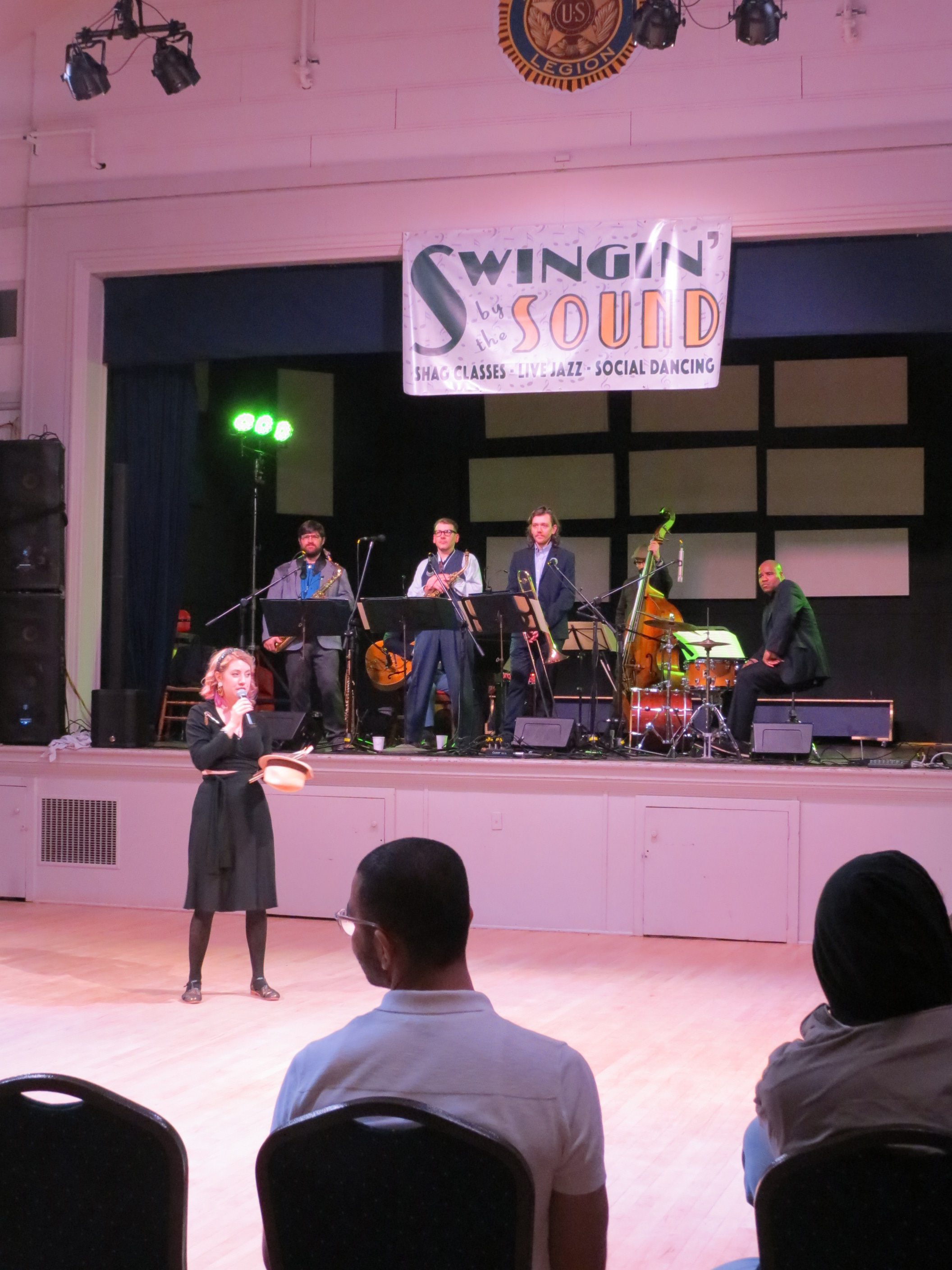
I took this at the 2023 Swinging by the Sound Dance weekend in Port Townsend, Washington. This is the dance contest at the live band dance in the evening. The ballroom is at our American Legion Hall and has a fabulous floor to dance on. I was volunteering, since my lungs still were not up to that much dancing.

I do love to dance, though, and plan to for as long as I can. It helps with balance and reduces fall risk, too! My ex says it’s the most fun you can have with people standing up.

Jonathan Doyle led the band and they were and are fabulous.

For the Ragtag Daily Prompt: ballroom.

Fear and Finials

The word finial takes me straight to Portland, Oregon and Family Medicine Residency. My grandmother loaned us the down payment for a house and we were in Southeast, on Belmont Street. The neighborhood was coming up rapidly. My son was six months old when we moved there.

Across the street were two houses owned by two couples. All four worked for the Oregon Shakespeare Festival in the summers. One woman quit and started a landscaping business. She had six foot tomato plants in her back yard by the end of the summer. She had a gorgeous flower garden in front. She also put up a decorative fence with elegant plexiglass finials.

One day all the finials were smashed. We were all sure that it was Mike. Mike lived in a duplex next to us and was terrifying. Initially it was his mother living there with a potbelly pig that would use a ramp to go down in the yard. The son moved in with his wife and child. His mother and the pig left and then the wife and child did too. Before the wife and child left, Mike knocked on my door and asked about exchanging baby sitters. I explained that we had an arrangement with someone and could not do that. After he left, I told my husband, “Don’t let that man into our house ever.”

As a neighborhood, we discussed what to do if Mike came at one of us. We figured he was on crack, he was terrifying, and we should go for head or knees, because we did not think pain would slow him down. This sounds over the top, right? Nope. My little family was in Eastern Oregon for a ten week rotation. “You missed the fun,” said our neighbors. “Mike threatened to shoot himself, they called out the SWAT team. He shot himself but he missed and only creased his head. He’s in the state hospital for six months.” Except he was back in three months. I’ve also written about him chasing his upstairs neighbor into traffic stark naked, trying to hit him with a five iron. Rush hour traffic stopped dead to watch the show.

We thought the 5 iron probably took out the finials. The owner of the house next door sold it and Mike left. We were all terribly relieved. And that is what the word finial brings up.

For the Ragtag Daily Prompt: finial.

The photograph is not from Portland, Oregon in the 1990s. It is from London in March 2022.

The New Old Time Chautauqua

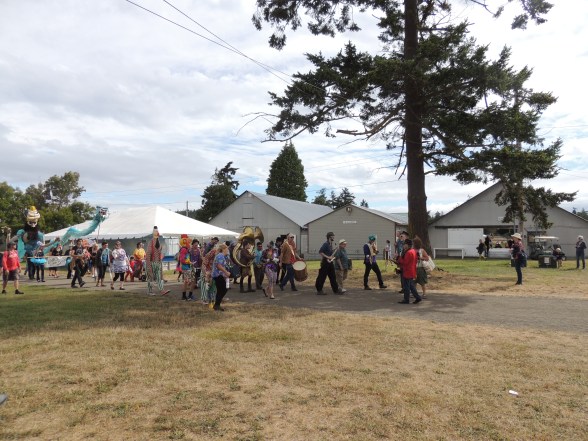
Funny how our brains work. I think of going to the other computer and then think I will look in this one for a moment. I have photographs from years past of the New Old Time Chautauqua. I open the file of Nikon photographs. There are 28 subfiles. I go to July 2018. At the end of the file, here is this motley parade. The New Old Time Chautauqua with our local Unexpected Brass Band and Other Friends.

I didn’t “know” that these photographs were even on this laptop. At least, not consciously. These are taken at the fairgrounds, August 11, 2018, in Port Townsend, Washington.

The New Old Time Chautauqua is the last one on the road. They are fundraising to go work and play with the Blackfoot Confederacy in Canada and the US. There are too many people dying from fentanyl, so the Chautauqua is part of the healing process. They are fundraising as they hit the road. I wish all of them the best.

And here is the Unexpected Brass Band at THING last year. You can hear them even if you can’t see them!

To donate to the New Old Time Chautauqua, go here. No, I mean back there. Right.

For the Ragtag Daily Prompt: Chautauqua.

Tea with a friend

I have a friend over for tea on Thursday.

I make Katy B’s fruit torte, recipe here. Katherine Burling was my maternal grandmother.

The friend worked with me for five years and is surviving lung cancer. She has one of the new treatments. She gets an infusion every three weeks. “For the rest of my life.” she says, but they may come up with something new eventually. She feels pretty terrible after the infusion for a few days.

I use this tea set. I love this set. It says Rose China, Japan, on the bottom. What I like best is that the lid of the teapot has the roof of the pagoda, to line up before I pour. There are six plates, but only three cups and saucers. The sugar bowl and creamer are intact.

For the Ragtag Daily Prompt: tea.

Vaccination talk

My cousin asks me once, why do doctors say, “This will only hurt a little?’ when they give a shot.

I thought about it. “It’s a matter of scale. Picture this: in room one, I have a woman who thinks her lung cancer is back and it is. In room two I have a mother and daughter crying because the daughter is pregnant and frightened. In room three, I have a well adult who needs a vaccination. Scale their levels of pain.”

Room one is very high, room two is very high, room three barely registers on my pain scale.

I would give out a health department vaccination information booklet by 24 weeks to my pregnant patients, especially the first pregnancy. I previously had given it later, but then I had a woman who refused the child’s vaccines at visit after visit after visit, saying that they were still doing research. The child still had no vaccinations at 9 months.

Remember the woman who refused vaccinations for her children? She had more than four children. They all got whooping cough, pertussis. They whooped for months and were on quarantine. They were not allowed out of the household, any of them, until they were no longer infectious. The mother said she now was for vaccines and got them vaccinated.

I have seen adults with pertussis. Adults do not whoop but they cough. They can cough until they throw up or until they break a rib. For months. It is not fun at all. The adult Tdap stands for tetnus, diptheria, and acellular pertussis. I have never seen a case of diptheria and I don’t want to. It sounds horrible and can kill.

Have I seen a complication of a vaccination? One in 30 years of practice. And I know a person who had a complication, but they were not my patient.

The illnesses cause way more damage and disability than the vaccine. In residency I care for a young man in a group home. He can’t talk and has an odd skull shape. His mother got measles during the pregnancy. Measles is one of the infections that can cause severe birth defects. Get vaccinated before getting pregnant, though half the pregnancies in the US are “unintended”. That usually means “unbirthcontrolled”. I do not really understand that, since the risk of pregnancy in a fertile woman is one in four every time. Twenty five percent seems a pretty high risk to me.

I’ve written about my response to my last Covid-19 vaccination. It’s not a complication. It is an antibody response and it means that my immune system is WORKING, though admittedly it is weird and annoying. I don’t like the muscle dysfunction, but I will get the vaccinations anyhow.

I have a very alternative young woman in for prenatal care once. I give her the vaccination booklet. “Oh, my child is getting every vaccine there is,” she says.

“May I ask why? I was not expecting you to say that.”

“I was in the Peace Corps in Africa. I have seen kids die from every single one of the diseases we vaccinate for. My kid will get ALL the vaccinations.”

I said, “Please would you talk to my other moms?”

She smiled at that. “Maybe.”

I hope she did and does.