Long Covid/PASC thoughts

I am still thinking about the last two Long Covid/PASC talks. (PASC is post-acute sequelae SARS-CoV-2.) I have not written about the earlier talk, which was from the group of Long Covid patients, many of the medical people, who have banded together to do their own research and advocate for research. That group said that half have ME/CFS (myalgic encephalomyopathy/chronic fatigue syndrome) and did say that they are unhappy about the research into exercise.

How do I interpret that in light of the more recent talk, with studies about exercise?

Remember that before Long Covid, we thought that about one in ten people with any severe infection may get ME/CFS. Covid-19 is a really nasty infection and hitting people way harder. However, the second talk did show evidence that many though not all Long Covid patients respond to exercise therapy. Here is my prediction: many of the Long Covid people will recover in the two year time line. Two years more or less and that’s if they get help and therapy. However, we may have ten percent, and that’s a guess, that will have a longer course. Ten percent of the people with Long Covid is a very large number of people.

My hope is also that we will learn much more about the immune system and we will be much better at treating and even curing ME/CFS. Something good out of a terrible pandemic.

There also is a recent article about people who tested negative for Covid-19, who have Long Covid. I think I am one of them. In March of 2021 I was tested twice for Covid-19 and was negative. I was also negative for strep A, influenza and RSV and we stopped testing. I needed oxygen. I did take penicillin because of the two previous strep A pneumonias. I had had my three vaccines already. Why do I think it was Covid-19? When the immunologist tested my antibody level in November 2021, he said it was the highest level he’d ever seen. Over 50 was protective and I had 25,000. I thought, that’s weird, from the vaccines? Then I got Covid-19 again in April and had super mild sniffles. I tested because I was traveling and had to push my travel back a week. I think that I tested negative, but remember, we were testing nasal drainage. I’ve only ever had one sinus infection in my life and I’m one of those people who got strep A as a child over and over. As an adult it is throat and lungs that are most vulnerable. I think some people do not shed Covid-19 in their nose. They might have gotten a different result if they had swabbed my tonsils. With that second round the home test was negative again, but I had to get an official travel test. I did it right away, five days before my plane. That test was positive.

There is discussion going on, whether Long Covid that looks like ME/CFS is the same thing or not. My suspicion is that we will see many of the people recover from the PEM (post exertional malaise), but that some will have a longer, more difficult course. And it is not very predictable. The hospitalized people who go through exercise are mostly recovering. They were debilitated from time in bed, on a ventilator, on a heart lung bypass machine. Yet there are people who were never hospitalized, had no preexisting conditions, were athletes and are still struggling. This is a nasty, unpredictable virus. A scintilla of hope and of fear.

For the Ragtag Daily Prompt: scintilla.

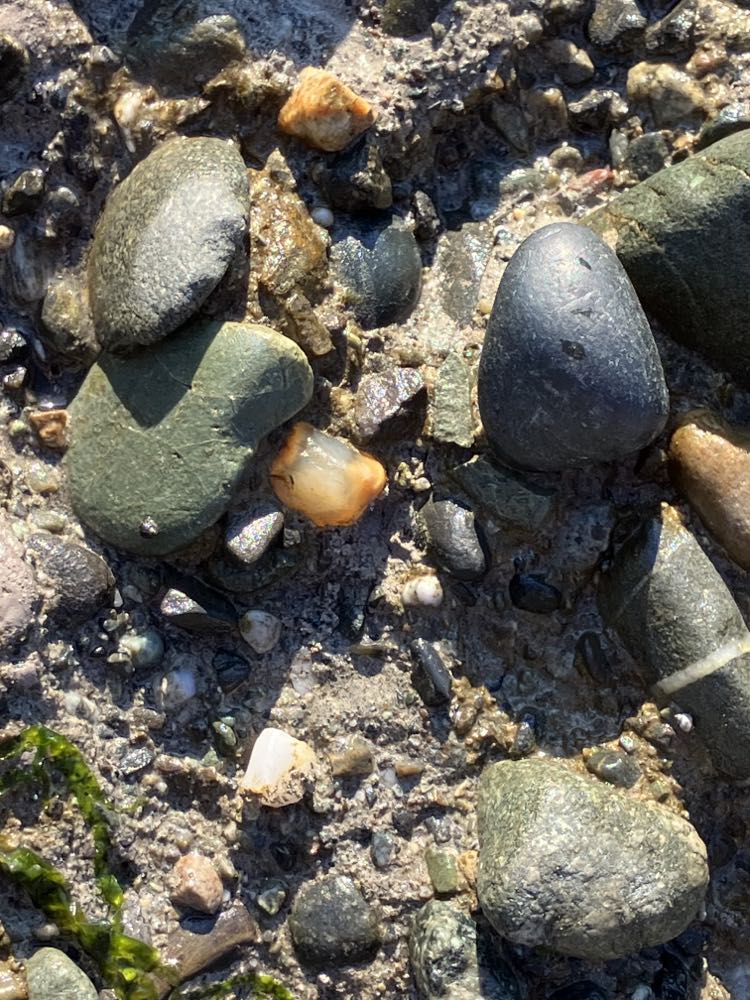
The agate is from Marrowstone Island. Only part of it is clear. This is one I had to dig out of hard mud.

Partially clear agate in hard mud on a beach.

The next stage

It is hard to build a new life after pneumonia number four.

Running my own clinic and seeing patients and keeping track of a business for eleven years, along with two children, now adults done with college and masters and jobs, I did not have an enormous amount of time.

During covid, I started beach walking with a person. Two years into covid, they say, “I have to get back to my real life.” Oh. They say, “You need your own life.” Um, yes, and clearly they are not in it, by their choice. That was a year into pneumonia four and I was still on oxygen. The person bailed. I was a detour to get them through covid. Ugly, but I am trying to learn everything I can from them. About myself and who and what to avoid!

WordPress and the blogging community helps sustain me through this! I can write when I am ill (at least so far) and when the pandemic closed down. I am so encouraged that people contribute from all over the world. A small candle of hope.

I don’t know if I’ll be able to do a limited clinic or not. I am hoping so.

Meanwhile, I’ve been getting to know more people outside clinic and going to live music and dancing and doing open mikes. I am doing the poetry open mikes. A friend in a band says, “But you don’t come to mine!” “That’s a music open mike.” “We need poetry,” he says. So I’ve gone twice and it has been really fun and I am getting to know that community as well. Last Thursday someone said my poems are weird. “I don’t mean bad, just from a different angle.” Meaning unusual, I think. Perspective.

I have been here for 23 years. I know many people in the music community from singing in chorus all those years, I have a church community, I know many people in the dance community, my father and I were in the Wooden Boat community, I have both good and not so good connections in the medical community. The legal community knows both my children, through Mock Trial competitions. I was in the Rotary for ten years and that is another wonderful community. The exchange students going all over the world and people giving back also give me hope!

Suddenly I am busy. I will have to start choosing between things. I still have the aftereffects of Covid-19. I had mild chronic fatigue before it and still do. I think I am stuck with that, so I have to build in rest and quiet time. At least, physical quiet time. My brain doesn’t really do quiet, but that is ok.

Hooray for every day and for building the next stage.

________________

I took the photograph this week from Point Defiance, Mount Tahoma, aka Rainier.

Limited:

Pulmonary Manifestations of Long Covid

Today’s Zoom lecture was about pulmonary manifestations of Long Covid, and this is from the Schmidt Initiative for Long Covid Global ECHO Webinar Series, out of the U of New Mexico.

First of all, the talk is brilliant. The speaker is Lekshmi Santhosh, MD, MAEd, Asso Prof Med, Pulm Critical Care Med, UCSF, Intensive Care.

Two things to start with: she stressed the six minute walk test for patients, to distinguish oxygen desaturation (dropping) from the people who have terrible tachycardia (fast heart rate) only. The oxygen drop indicates that the person needs lung studies and may need oxygen, while tachycardia alone means either a heart problem, chronic fatigue/ME pattern or dysautonomia, where the heart goes fast when the person sits or stands up. Her point was that it’s a simple test and that Long Covid presents in multiple different patterns.

The second point is that there are least five main mechanisms that Long Covid can mess us up and people can have one or many. There is a review article in Nature last month (I need a copy!) and it talks about these five: immune system problems, gut microbiome problems, autoimmune responses, blood clotting/microclotting/endothelial problems and dysfunctional neurological signalling. SO: this is a MESS. She says that patient care needs to be individualized depending on which mechanism(s) are predominant and it can be more than one. This Covid-19 is a hella bad virus.

So: “The underlying biological mechanism may not be the same in each patient.” That is the understatement of the year.

She reiterates that the current diagnostic criteria, subject to change, is symptoms that last longer than 12 weeks after Covid-19 and two months past that. She states that the symptoms can wax and wane and that we need to listen to and believe patients.

In JAMA this month, there is an article that uses big data to find which symptoms are more associated with Long Covid, and lists 13 symptoms. Smell/taste tops the list but fatigue is there too. However, this is not a list for diagnosis, it’s a study list.

She also is careful to say that the treatment for the pulmonary manifestations is not the same as the people with the pattern that resembles chronic fatigue syndrome/ME. The pulmonary people can build exercise tolerance, but the CFS/ME folks need a different regimen, with pacing and energy conservation. That sounds like a subtle difference. I had both though my CFS/ME is weird. It does not put me in bed, I just can get really tired and need to sleep. It’s a bit invisible. People see me dance and would not guess that I have CFS/ME. All relative to previous function and energy, right?

For lung manifestations, she lists a pyramid, with the more rare things at the bottom. As follows:

  1. persistent dyspnea (shortness of breath)
  2. post viral reactive airways disease (asthma that can resolve from irritated pissed off lung tissue)
  3. deconditioning. She says that the isolation and quarantine with some people in very small rooms, leads to terrible deconditioning in some folks. They can build up, especially with supervised exercise with pulmonary rehabilitation and/or physical therapy. It is scary to exercise when you are short of breath and the supervision really helps, with limits on how much you should push, or encouragement to push.
  4. organizing pneumonia. This is rare and responds to steroids. Otherwise steroids are not good for the muscles in Long Covid, with the exception of inhaled steroids for the asthmatics and post viral reactive airways.
  5. post ARDS fibrosis: fibrosis is fibrous scarring that can form in the lungs. Anyone who has any terrible pneumonia and is in the ICU and intubated and on a ventilator can get this. Not everyone gets it, thankfully. ARDS is Acute Respiratory Distress Syndrome. Luckily the fibrosis is rare and it turns out that in some people it improves with time, like years. She does not recommend the pulmonary fibrosis medicines right now. There are many causes of pulmonary fibrosis besides infection.
  6. PVD: peripheral vascular disease. Covid-19 increases clotting, so we have to look for both clots and for disease in arteries, which could be lungs, brain, heart, anywhere in the body.

She says DON’T assume that chest pain is from the lungs and don’t miss cardiovascular. That is, rule out a heart attack and pulmonary embolus first.

Other lung problems have to be kept in mind that are not caused by Covid-19. This list: Reflux associated cough, pleuritic pain, neuromuscular disease, vocal cord dysfunction, tracheal stenosis, tracheomalacia. Watch for those. She says that it is very very important to look at old chest x-rays and CT scans, because those can show previous signs of emphysema/COPD/asthma/fibrosis.

Testing: She puts the 6 minute walk test first. AFTER the thorough history and making sure there are no red flags for pulmonary embolism and heart attack. Those have to ruled out if there is any suspicion. Next: pulmonary function testing. If the DLCO is low, consider a chest CT. Consider TTE -TransThoracic Echocardiogram, to look at the heart. Labs: CBC (blood count), ESR, CRP, thyroid, +/-CPK.

She has diagnosed people who are sent to her with NOT Long Covid: they have metastatic lung cancer, metastatic prostate cancer, new pregnancy, hypersensitivity pneumonitis and many other things. She says, “Don’t assume it is Long Covid. Sometimes it isn’t.”

Now, this is all a formidable list of problems and this is JUST the lungs. Long Covid can affect every system in the body and every patient is different.

She also says that she has done more disability and accommodation paperwork in the last three years than in her entire career before that. That the US disability system is a horrid mess and that she has to talk to employers and insurers OFTEN to say that the person will get better faster and have less long term problems if she treats now and they have rest and return to work may need to be very gradual.

She approaches new patients by asking which symptoms are worst. She thinks about severity of the infection, vaccination status, previous/present other medical problems and habits that can contribute or worsen things (smoking, vaping, exposures). Her clinic is for Long Covid pulmonary, but now they have opened up a neurological branch. They use multiple other specialists as well.

Last quotation: “Until we elucidate the biology and have clinical trials, treatments are largely symptomatic.” So the basic science studies working on immune system, the gut microbiome, the clotting problems, are huge in figuring out what to do in clinical trials. This is a tremendously complex illness and three years into Covid-19, we are still trying to figure out the multiple mechanisms that cause Long Covid.

This was a very hopeful lecture from my standpoint, admitting that this is complex but that we are also working to sort out the mechanisms and work on treatments. She works hard at getting patient input and feedback as well.

Two links: A free PDF from Johns Hopkins on Bouncing Back from Covid. https://www.hopkinsmedicine.org/physical_medicine_rehabilitation/coronavirus-rehabilitation/_files/impact-of-covid-patient-recovery.pdf

The American Physical Therapy Association has articles as well: https://www.apta.org/patient-care/public-health-population-care/long-covid

Also here are webinar links:

SILC Global ECHO Webinar Series Resource Links June 28, 2023

Now, how will I use the Ragtag Daily Prompt riposte for this? I think I will just say again how important it is to listen to and believe our patients!

The photograph is from Marrowstone Island, East Beach. The shape in the driftwood is sort of lung shaped.
Not immune

I am attending multiple Zoom conferences on Long Covid and Chronic Fatigue and PANS/PANDAS and fibromyalgia. The speakers are talking hard science, digging in to the immune system to figure out what is wrong. Then they can find a drug to fix it.

Maybe it doesn’t need to be fixed. I think the immune system is smarter than we are and it knows that Covid-19 is a really really bad virus. What the immune system wants is to keep from getting any other infections so it shuts us down. It hits the chronic fatigue button, so we stay home or in bed. It hits the fibromyalgia button so that it hurts to move: we stay home or in bed. It hits the PANS button so that antibodies seriously change our behavior and we stay home or in bed. Anyone see a theme here? I think that the immune “over-response” is not an over-response. It’s not broken. It is trying to reduce exposure and just maybe we should pay attention. I thought that in residency, in the early 1990s, when chronic fatigue patients would interview me to see if I “believed” in chronic fatigue. Heck yeah, I said, but I don’t know what it is or how to fix it. My chronic fatigue patients had something in common: they were all either working 12-14 hour days continuously when they crashed, or they overworked and had insane stress, deaths of loved ones, car wrecks, accused of a crime, something horrible. The workers all wanted “to get back to where I was.” I would ask, “You want to work 12-14 hours a day again?” “Yes!” they’d say, “I want to be just like I was in the past!” “Um, but that’s what crashed you. Do you think maybe your body is not up to that?” “FIX ME.” I would try to improve things, but fix them back to what crashed them? No way and anyhow, that is not really sane.

There are some levels of illness where we have to intervene. In really bad PANDAS, antibodies to the brain are followed by macrophages that destroy brain cells. I was horrified and wanted to run around screaming “NOT MY BRAIN!” when I heard that. Then I thought, don’t be silly, I am in my 60s and if I had brain eating cells it would have happened by now. I consider myself really really lucky to have the mildest version. At least, that’s what it seems to be. (Officially we don’t believe in PANS or PANDAS in adults in the US but we do in Europe and Canada. Ironic.) With that version, especially in children, I am all for intervention, as soon as possible. And it’s not that I do not think we should intervene in these illnesses. I just think we need to step back and think a little and just maybe listen to our bodies and listen to the immune system. Slow down. Breathe. Watch some stupid cat videos. Whatever makes you relax and laugh. Reduce stress. Limit stupid hyper news to 15 minutes a day and not before bed, ok? Reduce the drama.

I am liking movies less and less. The drama bugs and bores me. I might last an hour. I have nearly quit going to our downtown movie house because it’s always “moving” and art films. Bleagh, drama. Also when it’s about illness or addiction, I want to argue with it. Easy lying endings which are nothing like reality. I like cartoons and sometimes superheroines, but it’s all drama too. I am tired of people behaving badly and don’t want to watch it on tv or a movie. There’s enough for me in the real world. I think it’s time to bring back musicals. I would watch them. Maybe. My father’s last movie was Blazing Saddles. He refused to ever go to another movie. I think I understand that now.

None of us are immune to stress or immune to infection. A person might be immune to Covid-19, or they might be immune until the tenth or hundredth strain shows up. I chose Family Practice for my specialty because I wanted to have children and be able to see them. I thought about Obstetrics-Gynecology or General Surgery, because I loved babies and loved surgery, but the Ob-Gyn residency was 4 years and General Surgery was 7 years and I was starting medical school five years out of college. Choose the more flexible and portable specialty and go rural.

Doctors and nurses are burning out because hospitals and administrators “maximize production”. Hospitals and administrators are stupid and destroying medicine. It’s not about money, it’s about helping people and science and healing. Having it be about money is soul-destroying and causes moral injury to any ethical provider. If we’d prefer unethical ones, keep on the present path. Otherwise we need single payer health care so that any physician or nurse can take care of whoever shows up. The system is breaking down more and more and it is hard to watch. Another nail of stress in the coffin of ethical medicine. I suppose when enough people die, change will come.

My working theory is that anyone can get one of these immune system illnesses: chronic fatigue, fibromyalgia, PANS/PANDAS and so forth. Medicine says that Hashimoto’s Thyroiditis, antibodies to the thyroid is the most common autoimmune disorder, but that may change. The evidence is mounting that Long Covid and these other “vague” illnesses are immune system shifts. Immune systems in “Code Red”, let’s not catch anything else. Are they an illness or are they our immune system trying to keep us quiet to protect us? I think the latter. Time may tell. I am listening to the science and listening to my body, both.

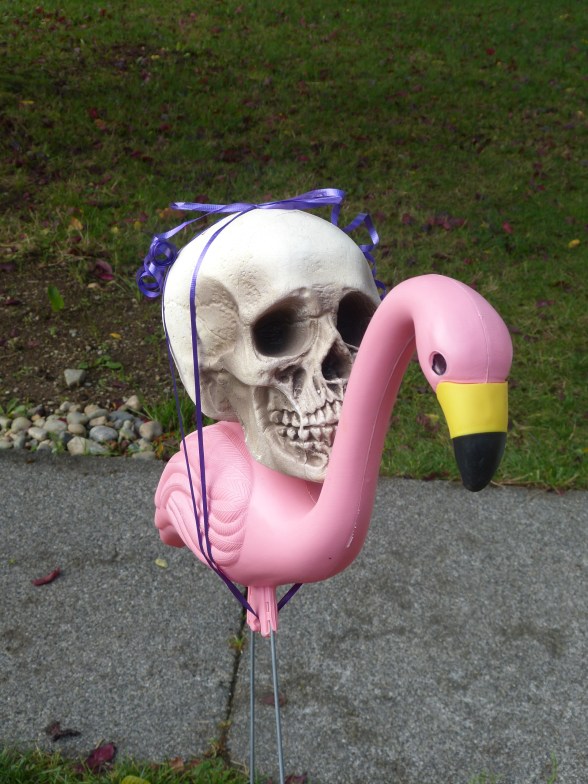
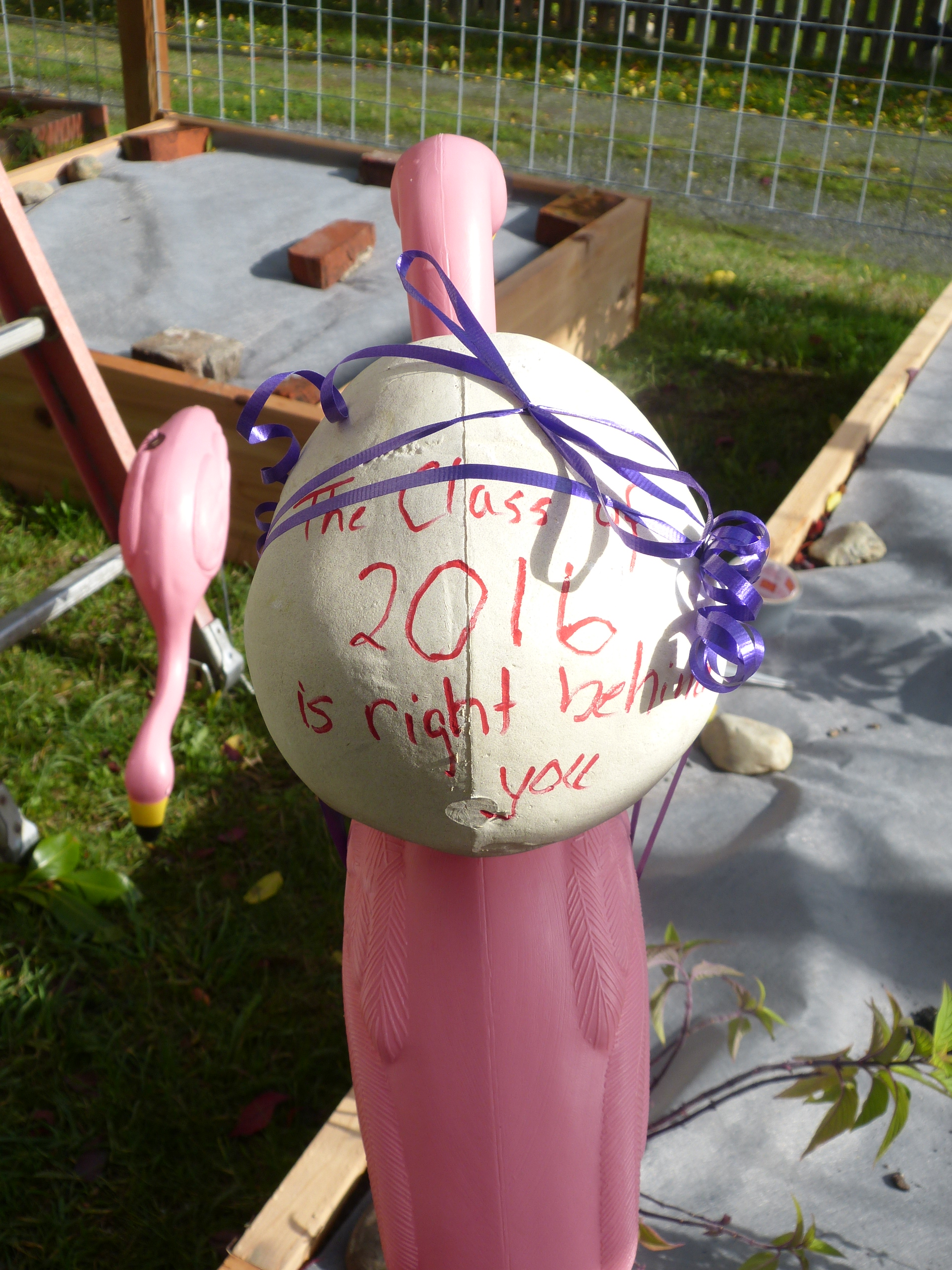
The photographs are from 2016, when a flock appeared in my yard. They demanded money to be moved to the next house.

For the Ragtag Daily Prompt: fiddlesticks. Oh, fiddlesticks, we have to figure out the very very complicated immune system. Or listen to it.

The work of disability

I look up the CDC website to see how many people are disabled. The CDC says that 27% of adults in the US have a disability. Yes, that is one in four. https://www.cdc.gov/ncbddd/disabilityandhealth/infographic-disability-impacts-all.html.

I find being disabled to be a ton of work.

I think the view of disability in the US is often people who sit at home and have money thrown at them from the government.

This is not so, not so, no, no, no.

In clinic a patient needs a new socket for his artificial leg, having had a cancer amputation. He is an expert still working in disability exams, so we do a visit where he dictates much of my note, because in order to get a new socket, medicare requires very specific information in the clinic note. We also have notes from physical therapy and his occupational therapist and the company that makes the sockets. Why does he need a new one? He has lost weight and the old one doesn’t fit any more so he can’t walk securely.

Even so, I think it took six months and we kept redoing versions of the paperwork.

Another patient needs a new electric wheelchair. That one takes a year of repeating insistence and paperwork.

After my March 2021 pneumonia, I am disabled, which pisses me off. I like my work. It’s unclear how long I will be on oxygen and since we’ve been working on a diagnosis besides “gets pneumonia super easily” since 2003, it’s hard to predict the trajectory. I don’t know if I will be on oxygen permanently. It is exhausting to drag myself to physician visits, in four different hospital systems. Oh, and a patient can apply for patient assistance with the finances, but then all four have different paperwork. I am sick as snot and have to try to keep track of the bills from four systems and four sets of on line passwords and where is the stupid appointment? Edmonds? Seattle? Bremerton? Augh. The fatigue that accompanies the pneumonia makes it hard to cook, hard to clean, hard to comprehend bills, exhausting to make phone calls. Anyone want to trade? I’ll work and you can be disabled?

My disability company requires paperwork too, lots of it, and my taxes, and there is a long list of rules that I reread periodically. I needed an attorney to sort out the rules, since the disability company won’t answer my questions.

Now I am off oxygen and better, though still dogged by fatigue. I think that is probably permanent, but then I sometimes hope it’s just that I am finally rebuilding muscle, since the fast twitch muscles didn’t work for two years. They are a bit recalcitrant now.

And I am not in a wheelchair, have not had an amputation, am not in a rehab. If you have to take buses in your wheelchair everywhere, need two people and a crane to get you out of bed into the wheelchair, have to use a computer to talk for you, imagine. Anyone who thinks disability is easy money is insane.

It’s not clear if I can return to work. I might get pneumonia number five, which would probably take me out. No one knows how to lessen my risk. And I don’t have the energy and do not know if I will.

All the unknowns and unclears and we don’t knows. No one is disabled for easy money because it’s a job trying to get well or trying to survive it. And yet, I am happy to be alive and even to be able to dance some! Dance on!

Brain thoughts

The attendees of the conference are all excited and hopeful at the fleshment of our understanding of Covid-19’s effects on the brain.

I am still absorbing the information, getting ready to write about it.

For the Ragtag Daily Prompt: fleshment.

Frame

What is the tree and where is it?

I am still thinking about the Inflammatory Brain Disorder Conference.

The researchers and physicians are talking about the immune system as if it is broken in Long Covid and ME/CFS and the other illnesses, but I am not sure I agree. Maybe the immune system knows what it is doing. Maybe Covid-19 is a really really nasty infection and the immune system sends out antibodies to make us stay down, stay in bed, rest and keep from catching something else. Maybe an antibody that suddenly makes you weird will make you isolate and hide and not interact with the other potentially infectious humans.

Ok, the inflammatory brain disorders that destroy the brain, those are not adaptive. However, I’ve thought that MC/CFS was a “repair mode” since residency.

When I had my third pneumonia in 2014, I refused to admit to myself that I had chronic fatigue. It was sort of obvious. I went back to work six months after I got sick and seeing just four or five patients left me exhausted. I would come home and sleep on the couch. I also skipped breakfast, because I would go to sleep as soon as I ate. My blood sugar was fine and it was not a food allergy. It felt as if my body wanted to do repair work and wanted me to sleep while it was doing the repairs. I would sleep after lunch. For the next six months of work, I slept twelve hours a day and hoped that I would not have more than five patients. Also that I would not get sick.

We had everyone who had upper respiratory symptoms or a cough wear a mask and I wore one too, hoping to not get another pneumonia. That worked. I only got sick when I went to work in another hospital clinic system. I kept walking into rooms with patients with their masks off. I got Covid-19 in a mere five weeks there, after going a year at my clinic without getting it.

I spoke to a friend yesterday. She was talking about her damaged immune system. I said I didn’t think of it as damaged. With enough stress and infection, I think the immune system gets primed. And then it is as if it has PTSD: the immune system says, “Enough already! We are not going to LET you overdo and get sick again! We are putting you DOWN to sleep if you overdo!” It is an extreme version of “listen to your body”, as if the body is shouting. The immune system is hyperalert and goes all out if there is any threat or suspected threat.

Maybe we need to be more gentle with ourselves and each other. The US culture is so oriented to production and work and money as success. But is that really success, if we work 20 hours a day and drive our immune system to desperate measures?

Maybe we need to learn to relax. To take time off. To breathe.

And the talk about Mast Cell Activation Disorder said exactly that. We need to teach how to go from the sympathetic fight or flight crazy to the quiet, relaxed, parasympathetic state. That quiets the immune system down very nicely.

It won’t fix everything, I am not saying that. But it is something everyone can learn. Slow breathe, in five and out five. Practice.

Breathe.

______________________________

The tree is a Redwood and it’s in the Chimacum Woods Rhododendron Nursery. Not just rhodys and on the Olympic Peninsula.

BRAINS

On Thursday and Friday I spent six hours daily glued to zoom, for the Inflammatory Brain Disorders Conference. Speakers, both physicians and scientists and physician-scientists, from all over the world, spoke. The research is intensive and ongoing. They spoke about Long Covid, both the immune response and “brain fog”. They spoke about anti-NMDA antibody disorder (the book Brain on Fire) and now there have been over 500 people identified with that disorder and a whole bunch more antibody-to-brain disorders! They talked about PANS and PANDAS and chronic fatigue and Mast Cell Activation Disorder and about the immune system over and over. The new information is amazing and I need to reread all my notes. Psychiatry and Neurology and Immunology are all overlapping in research, along with Rheumatology, since these disorders overlap all four.

It is a medical revolution in the making.

Best news was that 96% of Long Covid patients are better by 2 years from getting sick. That is tremendously reassuring, though the number may change. And the definition of Long Covid is still being sorted out and we do not know if people relapse.

I felt that MY brain was MELTED by the end, but I managed to enjoy the Rhododendron Parade on Saturday and just puttered around the house on Sunday.

Tubulin and antibodies

This is very science dense because I wrote it for a group of physicians. I keep thinking that physicians are scientists and full of insatiable curiosity but my own experience with to date 25 specialists since 2012 would say that many are not curious at all. This continues to surprise and sadden me.

______________________________

All science starts with theories. Mothers of children with PANS/PANDAS reactions had to fight to get the medical community to believe that their children had changed after an infection and that symptoms of Obsessive Compulsive disorder and all the other symptoms were new and unexpected and severe. This is a discussion of tubulin and how antibodies work, theorizing based on my own adult experience of PANS. I was diagnosed by a psychiatrist in 2012. No specialist since has agreed yet no specialist has come up with an “overaching diagnosis” to explain recurrent pneumonia with multiple other confusing symptoms.

The current guidelines for treating PANS/PANDAS are here: https://www.liebertpub.com/doi/full/10.1089/cap.2016.0148. This section discusses four antibodies that are a common thread in PANS/PANDAS patients. Antibodies to dopamine 1 receptors, dopamine 2 receptors, tubulin and lysoganglioside.

Per wikipedia “Tubulin in molecular biology can refer either to the tubulin protein superfamily of globular proteins, or one of the member proteins of that superfamily.” Tubulin is essential in cell division and also makes up the proteins that allow movement of cilia, flagella and muscles in the human body. There are six members of the tubulin superfamily, so there are multiple kinds.

Antibodies are complicated. Each person makes different antibodies, and the antibodies can attach to a different part of a protein. For example, there is more than one vaccine for the Covid-19 virus, attaching to different parts of the virus and alerting the body to the presence of an infection. Viruses are too small to see yet have multiple surface sites that can be targets for a vaccine. When a cell or a virus is coated with antibodies, other immune cells get the signal to attack and kill cells. At times the body makes antibodies that attach to healthy cells, and this can cause autoimmune disease.

Antibodies also can act like a key. They can block a receptor or “turn it on”. Blockade is called an antagonist when a pharmaceutical blocks a receptor and “turning it on” is called an agonist. As an example of how an agonist and antagonist work, take the pharmaceutical buprenorphine. Buprenorphine is a dual agonist/antagonist drug. In low doses it works as an agonist at opioid receptors. At high doses it is an antagonist and blocks the receptors. It also has strong receptor affinity. This means that it will replace almost all other opioids at the receptor: oxycodone, hydrocodone, morphine, heroin. The blockage and ceiling dose make it an excellent choice for opioid overuse. Higher doses do not give a high nor cause overdose and when a person is on buprenorphine, other opioids do not displace the buprenorphine and give no effect.

Similarly, a tubulin antibody could be an agonist or an antagonist or both. As an agonist, it would block function. My version of PANS comes with a weird version of chronic fatigue. When I am affected, my fast twitch muscles do not work right and I instantly get short of breath and tachycardic. I suspect that my lung cilia are also affected, because that would explain the recurrent pneumonias. My slow twitch muscles are fine. With this fourth round of pneumonia I needed oxygen for over a year, but with oxygen my slow twitch muscles do fine. We have fast twitch fatiguable muscles, fast twitch non-fatiguable, and slow twitch. With six families of tubulin and multiple subfamilies and every person making different antibodies, it is no wonder that each person’s symptoms are highly variable.

Currently the testing for the four antibodies is experimental. It is not used for diagnosis. When I had pneumonia in 2012 and 2014, the antibodies had not yet been described. There is now a laboratory in New York State that will test for them but insurance will not cover the test, it costs $1000 as of last year, and it is not definitive nor useful yet anyhow.

There are studies going on of antibodies in ME-CFS, fibromyalgia, chronic lyme disease, PANS/PANDAS and Long Covid. Recently antibodies from humans with fibromyalgia were injected into mice. The antibodies caused fibromyalgia symptoms in the mice: https://www.sciencedaily.com/releases/2021/07/210701120703.htm. One of the barriers to diagnosis and treatment of fibromyalgia is that science has not found a marker in common that we can test for. Even the two inflammatory markers that we use (C-reactive protein and Erythrocyte Sedimentaion rate) are negative in fibromyalgia. This doesn’t mean that people do not have pain or that it is not real, it just means we have not found the markers. It may be that the markers are diverse antibodies and there is not a single marker.

The research is fascinating and gives me hope. It boggles the mind, doesn’t it?

For the Ragtag Daily Prompt boggle.

Paths

I am reinventing myself now. After my fourth pneumonia, oxygen continuously for a year and now my fifth pulmonologist since 2012. He did not have much to offer. An inhaler but “We can’t be sure that it will keep you from getting pneumonia.”

Well. So with ME-CFS, myalgic encephalopathy chronic fatigue syndrome, now what?

I am at a fork in the path. At least three forks.

  1. Try to do a micropractice, working with Long Covid people. Who either wear masks or I do not see them. I would have to convince the hospital district that it needs me.
  2. Write. I am doing that, but really focus on it and work on publishing. I have so much art from my mother. She did not really enjoy selling it though she loved having shows and would dress up.
  3. I could focus on publicizing and selling my mother’s art.
  4. There is a trunk from my grandfather. I could focus on that. He states that he wants it published. Grandfather, you were a piece of work.
  5. I could just lie around and travel and play with the cats and make music.
  6. Focus on music. I have written a number of songs. Apparently being hypoxic makes me write songs. I think they are peculiar and wonderful too. Flute, voice, guitar, piano, bass. Hmmmm.
  7. Something else. Who knows what will appear? I am doing art too, the two large sculptural pieces in my yard. A fellow doctor scolded me about one. It’s the one with a logging chain and an oxygen tank, attached to a tree. The title is “Tethered”. Now, why would a local doctor object to that? I have some small pieces too that involve found objects and especially feathers and small stemmed glassware.

Many forks! Now I just need more spoons of energy!

________________

For the Ragtag Daily Prompt: reinvent.

The photograph was taken in September 2021. Where is the path? I got to hear Jonathan Doyle last night, with George Radabaugh on piano. FABULOUS!