Frail

I wrote this poem about my father at least a year before he died. He was on oxygen, on steroids, terrible emphysema from 55 years of unfiltered Camel cigarettes. He would not accept much help and became more and more of a hermit. He did continue with the Rainshadow Chorale and because of it he quit smoking three years before he died.

Frail

We are going sailing
My partner says to me
“Invite him if you want.”

Then I am busy for a while

I think of calling, then forget

He was not at chorus on Monday

At last I say,
“I haven’t called. We’ll just sail.
Just us today.”

I haven’t called
because he was not at chorus on Monday

He is frail
55 years of camels
two packs a day
as if each cigarette
destroyed one alveolus
in his lungs
one tiny air/blood interface
built to exchange oxygen
and carbon dioxide
the loss is cumulative


He is frail
he is proud that the choral director
says, “I need you.”
He can’t sustain
but his entrances and time
are the best
among the basses.
They need him.

Chorus
is our winter link
two introverts
we hug at the start of chorus
sing for two hours
and talk for a few minutes at the end

Occasionally we go for a beer
I invite him for dinner
but he comes less and less
he often does not feel well at night

He looks smaller at chorus
this season
this is normal in emphysema
the body sheds weight
too much tissue to oxygenate
too hard for the lungs
and the heart, working overtime
to make up the difference
he is blessed with low blood pressure
genetic, from his father,
tough English stock,
otherwise I think he’d be dead

I didn’t call
before we went sailing
because I am afraid

I’ve driven out before
when he has not answered the phone
for a day or two
wondering if I would find him dead

I didn’t call
before we went sailing
because he was not at chorus on Monday
because if he didn’t answer today
I would not go

______________________

For the Ragtag Daily Prompt: frail.

Covid 19 and the heart

This is from the University of New Mexico Roam Echo PASC (Post Acute Sequelae of Covid-19) talk on 11/9/2023 over Zoom.

Cardiovascular Outcomes in Post-COVID Conditions
Jeffrey Hsu, MD, PhD, FACC, Assistant Professor, Division of Cardiology – University of California, Los Angeles Health and Founder, COVID Cardiology Program – University of California, Los Angeles 

I am going to include the references in the order that Dr. Hsu talked about them. This is a sobering and upsetting lecture with the research showing a post Covid-19 increase in cardiovascular risk factors (cholesterol, hypertension, diabetes), and an increase in cardiovascular events in people with no previous cardiovascular diagnosis including heart attack, stroke, pulmonary embolus, blood clots and sudden death.

I don’t expect the general population to read the studies, but look at a few of them. It is very very impressive, the amount of work being done. Now let’s explore the talk and boil it down to three sentences for primary care to explain in clinic. Right. (You can always skip to the last two paragraphs if you get overwhelmed, and come back later.)

Part 1: The Research.

The first paper is about veterans without cardiovascular disease, followed for one year after Covid-19, matched with a cohort who did not have Covid-19. This is before immunization was available. They were studying the heart and cardiovascular risk. The veterans who had had Covid-19 infection were twice as likely to be diagnosed with cardiovascular risk then the veterans who had not had Covid-19. The risk was higher in the veterans with more severe Covid-19, the risk was present in all subgroups: old, young, male, female, with or without other risk factors. At two years out, the people who had been hospitalized for Covid-19 still had a persistent increased risk of death and cardiovascular incidents (heart attack, stroke, sudden death, blood clots).

To be clear, this is NOT Long Covid patients. This is just a cohort of veterans who had Covid-19. This would indicate that everyone who had Covid-19 has an increased cardiovascular risk.

Here is the first paper: 1. https://www.nature.com/articles/s41591-022-01689-3

Two more papers looked at more general populations who got Covid-19 before the vaccine was available and found the same thing. The veterans tended to be older and more male patients, but the general population studies found the same pattern in women and younger patients. Papers:

2. https://www.scientificamerican.com/article/the-risk-of-heart-disease-after-covid/, “Health modeller Sarah Wulf Hanson at the University of Washington’s Institute for Health Metrics and Evaluation in Seattle used Al-Aly’s data to estimate how many heart attacks and strokes COVID-19 has been associated with. Her unpublished work suggests that, in 2020, complications after COVID-19 caused 12,000 extra strokes and 44,000 extra heart attacks in the United States, numbers that jumped up to 18,000 strokes and 66,000 heart attacks in 2021. This means that COVID-19 could have increased the rates of heart attack by about 8% and of stroke by about 2%. “It is sobering,” Wulf Hanson says.

3.https://www.nature.com/articles/s41591-023-02521-2

Non hospitalized patients had decreased risk for some cardiovascular problems but not all and still had significantly higher risk than people who had not had Covid-19. I am busily thinking UH-OH, this is really bad, in this lecture.

He stated that the data is not in yet about vaccination, whether it lowers the cardiovascular damage compared to unvaccinated.

The initial study was on veterans, mostly male and mostly white, but then was replicated in other similar studies that were not on veterans, but on a general population.

From the second and third study, 700,000 patients with a mean age 40 and more than half female, were studied for new cardiovascular disease in the year following Covid-19 and found an increased risk of death within one year, 0.34% vs 0.28% HR 1.6. That was in 2020, a nonvaccinated population. Another study showed similar results, 13,000 patients with Covid-19 and 26,000 without, average age 51. There was a similar risk increase in cardiovascular disease and an increased risk of death within one year.

4. https://www.thelancet.com/journals/eclinm/article/PIIS2589-5370(22)00349-2/fulltext

5. https://jamanetwork.com/journals/jama-health-forum/fullarticle/2802095

So do other infections do the same thing? Studies of acute risk of myocardial infarction risk after influenza, done before the pandemic, indicate an increased risk of myocardial infarction within one week after infection, but not beyond that week. So Covid-19 is really really nasty to our cardiovascular system.

6. https://www.nejm.org/doi/10.1056/NEJMoa1702090

7. https://www.nejm.org/doi/10.1056/NEJMra1808137

Pneumonia and sepsis can increase risk of cardiovascular disease, but there have not been the extensive studies as in Covid-19. More and better studies.

One to two years after diagnosis, there is increased cardiovascular and cerebrovascular risk, both:

  1. Cardiovascular risk factors, worsening after covid
  2. Thrombosis risk

8. https://www.thelancet.com/journals/landia/article/PIIS2213-8587(22)00044-4/fulltext

The risk of is up diabetes 40% in the post Covid-19 patients. That does not mean that 40% are diagnosed with diabetes, but that the risk is higher after Covid-19. For example, if in the non-Covid cohort 100 of 1000 40 year olds develop type 2 diabetes, then it’s 140 of 1000 in the post Covid-19 group.

The risk of dyslipidemia in 50,000 patients went up 24%. Dyslipidemia means increased LDL cholesterol or increased triglycerides and lower HDL or all of them.

9. https://www.thelancet.com/journals/landia/article/PIIS2213-8587(22)00355-2/fulltext

10. https://www.ahajournals.org/doi/10.1161/HYPERTENSIONAHA.123.21174

Hypertension is up too and weight gain.

11. https://www.nature.com/articles/s41577-022-00762-9

New onset hypertension is up 22% in hospitalized patients post Covid-19 and 11% in unhospitalized post Covid patients.

Myocardial infarction (heart attack) and ischemic stroke both go up. Ischemic stroke is the more common kind of stroke and is the clotting version. Bleeding strokes are less common.

Why does Covid-19 do this? What is the mechanism? The studies are pointing towards thromboembolism as the mechanism in both increased cardiovascular risk factors (dyslipidemia, hypertension, stroke, heart attack, clots). Thrombosis means clots. Remember the talk about micro-clots? (My write up here: https://drkottaway.com/2023/04/14/xeno-or-infection-phobic/). Micro-clots can lead to bigger clots. A clot in a heart artery causes a heart attack; in the brain an ischemic stroke; a clot in the leg can break into pieces and block the lung arteries. Irritation in the heart and the arteries can increase blood pressure. I’m not sure how it can increase diabetes, but it does.

Next he shows a slide about thrombosis and how complex it is. Sars covid-19 seems to promote perfect storm of events that leads to environment for thrombosis in multiple ways.

Covid-19 infects epithelial cells, causes a hyperactive immune response, orchestrates subsequent response, causes platelet hyperactivation and then hyperactive innate immune response, causes damage to glycocalyx that protects and vascular endothelial injury, decreases antithrombogenic and increases prothrombogenic activity which promotes thrombosis in the vasculature, platelet activation and coagulopathy. Got that? No? Me either, my last immune system class was in 1988 when I was working at the National Institutes of Health. It’s bad, meaning it can kill us or cause damage that is disabling.

12. https://www.thelancet.com/journals/lancet/article/PIIS0140-6736(20)30937-5/fulltext

My notes are a bit disjointed here: The endothelial cells (which line arteries) express H2 receptors that Covid-19 virus needs to enter the cells. The H2 receptors are also in glomerular capillary loops (kidneys), and immune cells and cause apoptosis of lung endothelial cells. Apoptosis is a form of programmed cell death that occurs in multicellular organisms and some eukaryotic microorganisms. So you don’t want your lung cells doing that. Lung, small bowel, and pulmonary microvasculature can all be affected.

13. https://www.thelancet.com/journals/landia/article/PIIS2213-8587(22)00355-2/fulltext

Plaque in human coronary vessels, in the immune cells, spike and Sars cov 2 identified in coronary artherosclerotic plaque.

Direct on coronary and cerebrovascular cells. (Ok, I don’t know what I meant by this note.)

Part II: Now what? What is our approach to healing this?

There is still limited data! (The clinical trials are roaring along but they take time.) Here are a bunch of studies, all using blood thinners. Blood thinners include aspirin, plavix, heparin, enoxaparin or apixaban. Do NOT start aspirin at home at this point, because when you add a blood thinner, there is a risk of bleeding, including bleeding stroke and intestinal bleeding. So far, the studies are discouraging.

Aspirin 150Mg Recovery trial: no difference in mortality: major bleeding 1.6% vs 1/0 % Lancet 2022. This is a double baby aspirin dose, 30 days in study, no benefit in acute setting.

14. https://www.thelancet.com/journals/lancet/article/PIIS0140-6736(20)30937-5/fulltext

Non critically ill hosp patients ACTIV 4A trial P2Y12 inhibitor – heparin alone or clopidigril (plavix) plus heparin, no benefit, major bleeding 2.0% vs 0.7% so worse in the both group.

15. https://www.nejm.org/doi/10.1056/NEJMoa2103417

16. https://doi.org/10.1001/jama.2021.17272

Harmed patients with severe disease.

ACTIV-4B aspirin or apixiban in outpatient, stopped early, event rate low, higher rates of minor bleeding in the 5mg apixiban group.

Feedom covid 19 trial: Non ICU Hospitalized, compared prophylactic heparin to enoxaparin or apixaban. Signal to provide benefit, lower rates of death and intubation, similar bleeding rates

17. https://www.sciencedirect.com/science/article/pii/S0735109723045278?via%3Dihub

So what does our Post Covid Cardiologist recommend to physicians and patients:

First year post covid: look for cardiovascular symptoms.

Screen for risk factors, hypertension, diabetes, hyperlipidemia, obeisity.

Optimization of risk factors, smoking cessation (and I would add that alcohol also causes damage to the heart and arteries, though tobacco is worse.

Assess candidacy for statin therapy for primary prevention.

18. https://cardiab.biomedcentral.com/articles/10.1186/s12933-021-01359-7

There is a study of triple therapy (meaning THREE blood thinners) that showed improvement but that was in older patients who already have heart disease before Covid-19. So it doesn’t apply.

He says there aren’t any good studies of blood thinners in Long Covid-19 yet and it is not clear that the Long Covid people are worse as far as the cardiovascular risk than everyone else. And remember, these studies are on unvaccinated people, so for the year following the first year of Covid-19. We don’t have the results for vaccinated people. He says that if someone is high risk or has cardiac symptoms chest pain etc put on 81 mg aspirin and a statin (and work it up, of course. Do the testing.

For now use anticoagulation (blood thinners) only if there is clear evidence of thrombus: deep venous thrombosis or pulmonary embolus. Freedom covid-19 study showed major bleed risk 0.1-0.4%.

The cardiologist speaker has not started triple therapy on any patents given unknown benefit at this time, with known significant major bleeding risk. He recommends shared decision making, meaning the patient should be presented with the risks and choices. Um, ok, boil this talk down into three sentences. Good luck. EEEEEEE!

Part III: Summary.

Whether you had Covid-19 before being vaccinated or after, or aren’t sure if you ever had it, it is worth seeing your provider to check your blood pressure, do diabetes screening, stop smoking (anything, and I include vaping in that), reduce or eliminate alcohol, keep your weight reasonable, check your cholesterol and go to your provider if there is any weirdness post Covid-19. And if you have not been vaccinated, oh, my gosh. Unless you have an immunology problem where your immunologist says “NO!”, get vaccinated.

Lastly, I’ve heard many claims that death rates were “over reported” for Covid-19. No. In a death certificate, the acute injury or infection is reported FIRST and then other related causes. Such as: Covid-19, ischemic stroke, hypertension, tobacco overuse syndrome. There were MORE strokes and heart attacks and sudden death, with Covid-19 as the final straw in many people who already had cardiovascular disease. They died sooner than they would have if not infected. That is not over reporting.

____________________________________________________________________________

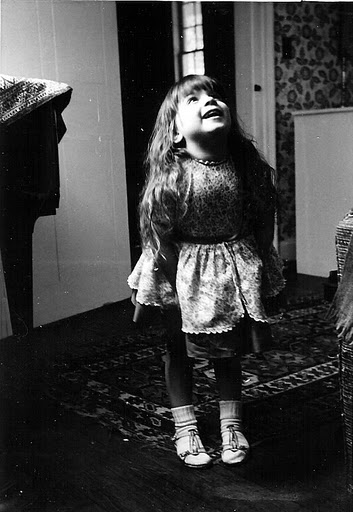
A friend, Brent Butler, took the photograph, used with permission. I think it shows how I felt after this talk. Yet I still have hope, because you can’t deal with something unless you know about it.

If you want a link for the talks, message me. Anyone can tune in.

Covid-19 continues to fandangle us. There. I verbed the Ragtag Daily Prompt: fandangle.
Mortal

I am feeling mortal.

I am in my post-pneumonia phase where people say, “Well, you LOOK great.” This is round four, so it’s not a surprise. It just took two years this time, instead of two months. In 2003 it took two months.

There are various things feeding in to this. A friend my age has had a stroke. “NO!” I think, “TOO YOUNG!” The death of the actor from friends bothers me mostly because he’s nearly a decade younger. Drugs and alcohol shorten the lifespan by quite a bit. A study checking for five things: inactivity, drugs, tobacco, alcohol and very heavy weight showed that the people with all five tended to die 20 years sooner than the people with none. That study was at least a decade ago if not two. So cross off about 4 years for any of those, sigh. A cardiologist recently said tobacco is worse than alcohol and now I am wondering how much worse? And how do they measure that? Tobacco kills more but serious alcohol use is a lot faster at killing people. Both of them affect all body systems: GI, heart, lungs, brain, bone marrow, liver, kidneys, and so forth. Even skin.

Also, the last lung test was still abnormal even though I am off oxygen and feeling mostly good. I am having muscle trouble though. Every morning I wake with really bad pain in both thighs and whatever muscles I’ve been trying to build. This has been going on since at least August. Since I think that this is an antibody disorder, it implies that the antibody baseline has risen to the point where my muscles are grumpy and hurt. Alternatively it could be a Long Covid issue: microclots could be clogging the capillaries in the muscles when I exercise and causing hypoxia in muscles, which means they can’t build. Muscle cells are fascinating. When you exercise the cells need more food and build new insulin receptors in the cell wall. So exercise changes the individual muscle cells! How very amazing. My muscles are resisting the build and it is very annoying. There is research going on re the microclots, but there is bleeding risk from the anticoagulants including strokes. So, um, well, I seem to be stuck. It is not stopping me from hiking and dancing and being active but boy does it hurt in the mornings.

This is not very bucolic, is it? I am still attending the Long Covid talks and it is really fascinating and quite scary. It’s just a very very nasty virus. I wish it would calm down. The 1918-1921 influenza really calmed down after three years, but there are no guarantees. Anyhow, at least I can dance!

For the Ragtag Daily Prompt: bucolic.

The photograph is taken in Michigan in 2014.

Particles

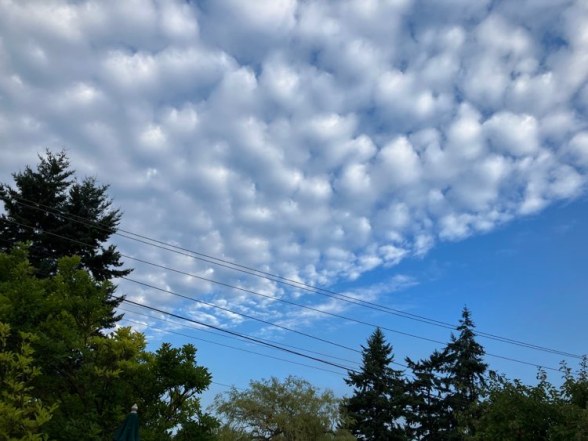
Oh, dear. My not so cheerful take on “micro” today is the tiny particles in the air from the fires. The sky held this front yesterday and the weather changed. The air was brownish by afternoon. Yesterday at 5 the Air Quality Index was 36, not too awful. This am it is 78 here, though a map of Washington State AQI shows that it is really severe in Eastern Washington. Fire season.

The screen shot is from here.

I set up my home air filter: a box fan and four filters. I had my windows open last night and woke with a headache from the air. It also makes me irritable. When I really smell the smoke, my brain keeps sounding an alarm: “Fire! fire!” I have to reassure it: yes, there is a fire, but it is not here right now. Cross your fingers. Now I’ve closed the house and have the fan running. Inelegant but very effective at filtering the tiny particles and cleaning up the air.

Consider wearing an N95 if you have to be out. We do not want those tiny micro particles in our lungs. I am holed up in the house today. We may have rain tomorrow which will quiet it down.

When the air gets really bad, the cats even refuse to go out.

Be careful out there.

For the Ragtag Daily Prompt: micro.

Filter instructions: https://encycla.com/Corsi-Rosenthal_Cube.

Lungs, again

I saw the pulmonologist from Swedish Hospital last week and am still thinking about the visit.

My lung function on the pulmonary function tests did not change much from December. He gives me an inhaler, with a steroid and a long acting bronchodilator, two puffs twice a day. I use it for one day in December and promptly get Covid-19 mildly. I then ignored the inhaler until I talk to him in March. He says, “Use it for two months and we will see if your lungs improve.” I try it in March and get a cold, not Covid, within a day. I try it again in April and get a cold within two days. I then ignore the inhaler.

But at the end of March I start feeling a lot better and my fast twitch muscles start working again. I would get very tired and stiff when I use them. They are “back” but are very weak. I wanted to know if my lung testing improved too, but it didn’t. So what is going on here? I feel better but the lung studies are not better.

The pulmonologist says, “Well, the infections are probably coincidence.” Yeah, um, well, three for three. “But, if it’s not asthma, it could be bronchiectasis.” He asks when I did the methacholine test, negative, gold standard for asthma. I did it in 2014. Negative along with allergy testing.

I don’t know much about bronchiectasis. Mostly that it’s not asthma and not chronic obstructive pulmonary disease. It may be the garbage can that holds obstructive disorders that don’t fit either of those categories.

“Bronchiectasis means what?” I say. He says, “Usually there is a lot of coughing and mucous.” Nope. Well, I cough a lot with pneumonia and with colds if I don’t rest, but rarely cough anything up. “The test is a chest CT but we can’t do anything about it if you have it, so I don’t know if you want to do a CT.”

“If there’s nothing to do, then I don’t want one.” Because repeated CT scans increase cancer risk, way more so then an x-ray. I ask about work. “I still get really fatigued, and my muscles are recovering. If I am stronger at the end of the summer, I would think about work, but how would I protect my lungs?”

“Mask.” he says. “An N95 all the time would maybe help. We don’t really know.”

Ugh. We agree that I will see him in October. If my fatigue level stays where it is now, returning to work even half days is going to be too high risk, I think. I am liable to get pneumonia AGAIN and this time I might get stuck on oxygen. Or die, which I’d rather not right now.

I am reading about bronchiectasis. The Mayo Clinic doesn’t have an entry for it, though it has clinical trials and a special clinic. That would support it being a garbage can diagnosis. I am reading on Wikipedia, here, not my usual medical resource. Brochiectasis can particularly be caused by tuberculosis, mycobacterial illness. They distinguish cystic fibrosis bronchiectasis from non-cystic fibrosis bronchiectasis and other infections can cause it. Influenza, streptococcus, um, yeah, the infections I’ve had. I do not have cystic fibrosis or the alpha-1-antitrypsis disorder. And there is another disorder listed, a genetic one where the cilia don’t work right. Primary ciliary diskinesia. I don’t have that either, but my working diagnosis is PANS, with antibodies that screw up my cilia and fast twitch muscles. And that would put my lungs at risk for pneumonia.

So, says a friend, what do you need to take?

Nothing, I say. It means I have to keep stress down, be in a parasympathetic state instead of fight or flight sympathetic state, and stay the heck away from sick people. Oh, and mask on airplanes and probably avoid huge crowd things. Jazz Fest, big music festivals, riots, wars, etc. Exercise, eat right, don’t drink too much alcohol, don’t smoke anything, don’t do stupid things. Try not to get tuberculosis.

And still, I am doing well. The treatment for really bad bronchiectasis is lung transplant. I am still quite mild after four pneumonias and the kid illnesses and mononucleosis and colds and so forth. I do not cough all the time and am off oxygen. It’s looking less likely that I could return to work in person, though I don’t know about internet. It really depends on my energy level, what that does. Darn it. Uncertainty, isn’t it hella annoying? Oh, well, I am pretty used to it by now.

And that’s the lung news.

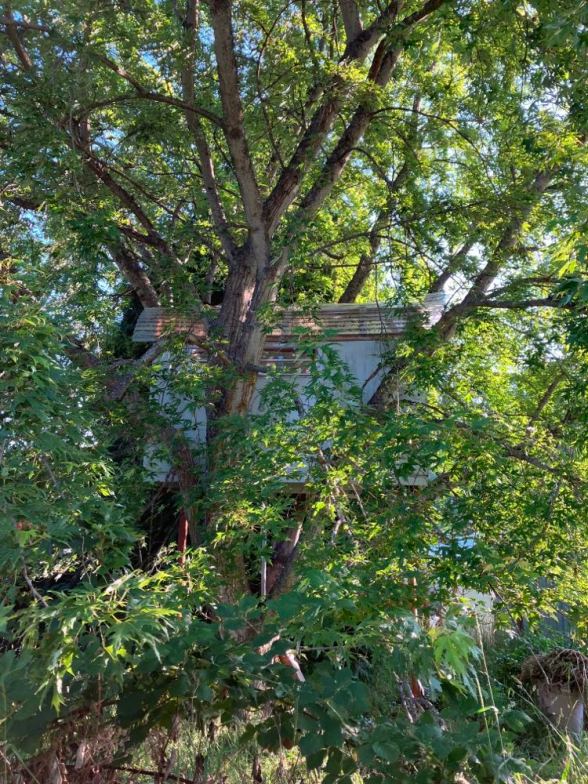
I can always hide in my tree house. But the food and water supply there is not so good.

Lose the chest strap

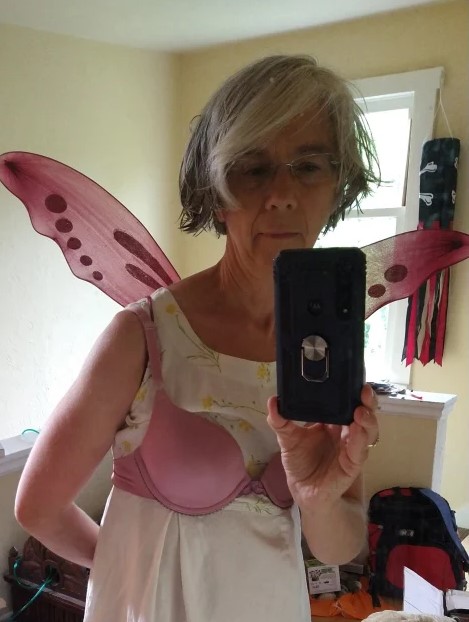
After my fourth pneumonia, I couldn’t stand the chest strap any more. Chest strap? say the guys. “What chest strap?” Dudes, bra, brassiere, whatever you want to call it.

It made my lungs hurt. My lungs already hurt. I thought, ok. I am 60 years old. I am “small” and don’t need any “support” unless I go running or something that really makes breasts jiggle. Don’t need a bra for dancing. And anyone who stares at my tits, well, gosh, thought you guys didn’t like “old” ladies. I don’t care.

Let’s think about that chest strap though. Guys, have you ever tried a bra on? What exactly is a bra for? Well, running or soccer or pole vault or football or all sorts of other heavy athletics, yeah, it can be really uncomfortable. Strap those babies down. But the day to day bra is to enhance support, stop jiggle and hide nipple action.

Uh, and meanwhile guys can take off their shirts in public. I think this is unfair. They have nipples too and breast tissue, just less.

Also, what is wrong with jiggle? The breast tissue drains in multiple directions, through lymphatics. I think some breast jiggle may be important to that drainage. Jiggle means slut to guys? Well, go suck a lemon, guys. And if you really stare at my breasts when I am talking to you, I might not sock your eye, but I sure as hell will lose all respect for you. All. And why are nipples evil in women but not in men? Because they are functional in women and men are jealous? Tit envy.

Now support. Yes, there are women who are so well endowed that they have back pain and may choose a breast reduction. This is covered by insurance if the clinician documents that pain over time. And breasts do change with time and age. But when is our culture going to accept and even celebrate aging! We do congratulate people turning 80 or 90 or 100, but otherwise older women are often ignored. I am delighted by the older actresses and musicians who are now finding parts and are still out there and dancing. Go Tina Turner, the legs go last!

I also think the chest strap is not nice for the lungs. Certainly not after four rounds of pneumonia, but bras have to be tight enough that they do have an effect on a deep breath. I’ve retired my bras. Ok, if I am in a Madonna mood and want to wear a lace see through white shirt, then I might pull out the scarlet one for the evening, but otherwise, no way. How good are bras for people with asthma, with emphysema, with post covid?

Lose that chest strap, ladies, and take a deep breath. Breathe free.

Sailing with my father

Sailing with my father
after I’m divorced
we take my two children.
They and I are small.
My father is frail,
55 years of Camel cigarettes
in his lungs.
“Papa,” I say, “How would we
pull you in if you went
overboard? We aren’t strong enough.”
Nor is he strong enough
to pull me in.
My father thinks. “You are right,”
he says, “We’ll make a Go Bag.”
A 3 to 1 pulley, with a clip.
We can clip it to the boom
and push it out over the water.
Attach the pulley to the life jacket
and I can winch nearly anyone aboard.
Maybe. We have it in a dry bag,
with towels and chocolate
and a set of sweats,
a space blanket
because the water is cold here,
45-55. My father knows, I’m sure,
that if he falls in, he’d be unlikely
to survive even if I did reel him in,
an unlikely catch. We wear our life jackets
and the kids do too.

One time we hit container ship waves
when my son is on the bow.
He is thrown up and drops, flat,
prone on the bow, holding on.
This boat has no railings
but my children pay attention.

We never have to use the pulley.

____________________________

At first my father said that we could unhook the haul down and use the boom, but I said, if it’s me and two little kids and I have to drop sail and get back to someone, that is too hard. How do we make it easier?

In the box

Wednesday was interesting and frustrating and part was beautiful.

The beautiful part was arriving at the Kingston, Washington ferry dock early. I took photographs of the quite gorgeous light display while I waited for the 6:25 ferry.

On the other side, I drove to Swedish Hospital, Cherry Hill. There I had another set of pulmonary function tests. The technician was very good. She said that since I have a normal forced vital capacity it does not look like asthma. However, a ratio was at 64% of normal, which is related to small airways.

“Have you had allergy testing?” she asks, “And a methacholine challenge?”

“Yes,” I say. “Both. In 2014. No allergies at all and the methacholine was negative.”

“Hmmmm.” she says.

Afterwards we call pulmonary. I have an appointment on this next Wednesday but we call and ask if there is a cancellation and I can get seen today, since I am two hours from home already.

Yes, there is, but I have to hurry to Issaquah, Washington.

There is an accident on the I90 bridge, so I do not think I will make it. But I am there by ten and the pulmonologist will see me. I check in, fill out paperwork, wait, go in the room, a medical assistant asks questions.

The pulmonologist comes in. He is nice and is able to pull up the chest CT from 2012, two of them since the first one “couldn’t rule out cancer”. Since I am referred for hypoxia without a clear cause, he questions me about my heart. Echocardiogram, zio patch (2), bubble study, yeah, it has all been normal. I describe getting sick and tachycardic and hypoxic and coughing.

“Do you cough anything up?”

“No.”

“Do you cough now?”

“Yes, if I exercise or get tired.”

He is like many physician specialists that I have seen. He has a number of pulmonary diagnoses, or boxes. Emphysema, COPD, lung cancer, bronchiectasis, chronic bronchitis, the progressive muscular disorders. All of those are ruled out in the past. So he puts me in the asthma box.

“I thought asthma was ruled out with the methacholine.” I say.

“Well, you have SOMETHING going on in the lower airways, and it was present in the 2021 and the 2012 pulmonary function tests. Maybe an asthma medicine will help.”

I mention ME-CFS and my muscles not working right, but he only deals with lungs. He won’t say a word about those disorders.

Sigh. I do not get the improvement with albuterol that diagnoses asthma on the pfts and never have. The formal reading of the pfts is that I do not meet criteria for asthma but there is something in the lower airways.

Monsters, maybe? I’ll try the inhaler, though with skepticism. Antibodies seem like a better guess, but antibodies are outside this pulmonologist’s set of boxes.

________________________

The photograph is from Swedish, Cherry Hill, bird’s eye view from the balcony.

Methacholine test.

Vape

First, the definition of vapor:

noun

  1. The gaseous state of a substance that is liquid or solid at room temperature.
  2. A faintly visible suspension of fine particles of matter in the air, as mist, fumes, or smoke.
  3. A mixture of fine droplets of a substance and air, as the fuel mixture of an internal-combustion engine.

So vaping is smoking. It can be called vaping, but that is to trick us into thinking that it is not smoking, that we are not sucking chemicals into our delicate lung tissue. We only have one set of lungs. Lungs are like a tree, either the roots or the leaf parts upside down. Air is drawn in by our muscles expanding the chest and diaphragm, down the trachea, the bronchi, the bronchioles and at last to the alveoli, where tiny veins wrap each alveoli, trading carbon dioxide for oxygen.

I think of smoking as every cigarrette distroying an alveolus.

Vaping too, vaping is smoking. The nicotine is suspended in a solution and the vaporizer heats up until it is in vapor form. I started reading about vaporizers at least a decade ago. There were over 500 different types, mostly made in China, and there are all sorts of solutions. I was horrified to read that ethylene glycol was one of the solutions that held nicotine. When a dog drinks antifreeze, ethylene glycol, it is poisonous to the brain. Does anyone think that we should inhale smoke with antifreeze and nicotine in it? Really?

There is no control of what is put in the solutions. We don’t know what they will do long term but we know that nicotine is addictive and damages the lungs. Some of the vaporizers get so hot that the metal is also vaporized. Heavy metals are clearly bad for the lungs and poisonous as well.

Here is an article from the U of Colorado Medical Center with further reasons NEVER to start vaping. Because vaping is smoking: don’t let the term fool YOU. 4 reasons why you should stop vaping.

For the RDP: vapor.