Long Covid and exercise

Today’s Schmidt Initiative Long Covid and exercise talk is very interesting and discussed controversies! It clarifies an argument that I have not understood very well.

Dr. Abramoff is the speaker. He calls his talk “The E-Word and Long Covid”.

His lecture broke down into three sections.

I: Exercise is good for most people and most conditions. Hippocrates thought so and there are tons of studies. We still frequently fail: more than 1/3 of world population is insufficiently active in studies. No improvement over the last 20 years and a decrease of activity in high income countries, work more sedentary, transport more sedentary, inactivity in time off. (I would add screens to that list.)

II: Before Covid, there is a study that raised major controversy regarding ME/CFS (myalgic encephalomyelitis/chronic fatigue syndrome) and exercise. The paper randomizes people with ME/CFS into four groups. 1. GET — graded exercise 2. Adaptive pacing. 3. CBT – cognitive behavioral therapy and 4. usual treatment. The study has 160 people in each of the four groups. They report lower fatigue scores in groups 1 and 3, graded exercise therapy and cognitive behavioral therapy, but not group 2 and 4. The benefits seem to still be present after two years.

There is a significant backlash from the ME/CFS population, saying this “contradicts the fundamental experience of our illness”. Controversy came out over the study’s patient selection, outcome measure selection/subjective nature, lots of letters. The result is that exercise and PT are removed from NICE and CDC Guidance Statements for treating ME/CFS.

The problem is that exercise can lead to post exertional malaise (PEM) which is not just normal tiredness or soreness from starting a new exercise. People can be bed-bound and can have trouble with ADLs (Activities of Daily Living) for days or weeks. It can disable them from working and make them worse and we still don’t know why.

Another study looked at two days in a row of activity in people reporting PEM and impaired recovery. Day one had fairly normal exercise measurements, but day two showed lower VO2 peak, reduced peak heart rate, reduced endurance, reduced peak oxygen uptake, increase respiratory exchange ratio. Something changed. This study did not have controls.

So exercise for ME/CFS is still under study, controversial and rather loaded, since in the past patients were ignored, told they should just exercise, and treated badly.

Part III:

So does Covid trigger ME/CFS? In some people is it the same? That is still unclear.

Many of the treatments are from ME/CFS – lots overlap for many. 58% of Long Covid patients meet the definition of ME/CFS (Every lecture I’ve heard gives different statistic. Constant change.) PEM is common. PEM is a major diagnostic criteria – post exertional malaise is weighted more heavily than fatigue.

The initial studies came from Italy and were on people who survived hospitalization. They mostly improved with exercise and were thought to be deconditioned.

More studies follow. Eventually studies are partly post hospitalized and partly people never hospitalized. Most of those studies show some improvement with exercise. The length of study and what they measured are all different.

In Italy there is an observational study of 506 persistent fatigue long covid, non hospitalized, group of very active before covid, skiers and ski instructors as well as previously sedentary people. Active groups had less fatigue at 12 months compared to inactive groups. Their conclusion is that functional limitations are much more transient than ME/CFS.

Conclusions: We need more clinical trials!!!

Part of the controversy is over the Recover trial in the United States that is coming up. The Recover study has 1.15 billion in funding for 4 years. There is a proposed exercise trial with PT at different intensities. There is a backlash from ME/CSF groups, who say that people with post exertional malaise should be excluded and the money should go to studying pharmacologic treatments and a potential cure.

My take on this: it is complicated. The panel discussing this says quite sensibly that each patient is different and we have to sort out and look for Post Exertional Malaise. It does change over time. It looks as if people may recover a bit better from Long Covid PEM than overall ME/CFS. However, we have known for a while that ME/CFS can be triggered by one in ten severe infections (or by stress or both!) so it is scarcely surprising that Covid-19 would trigger it. The panel says that if it’s post hospital or there is no PEM, then go ahead with graded exercise. For the PEM folks, be cautious. And the PEM folks who are athletes don’t have a good concept of pacing and find it outrageous that their bodies are responding negatively. Function and exercise level before Covid-19 is important but it does not determine who will improve.

There, can I go? My brain is full, well fed with a lot of information today. I’ve tried to pass it on to you.

Many thanks to the Schmidt Initiative, Dr. Abramoff and the panel and speakers and organizers.

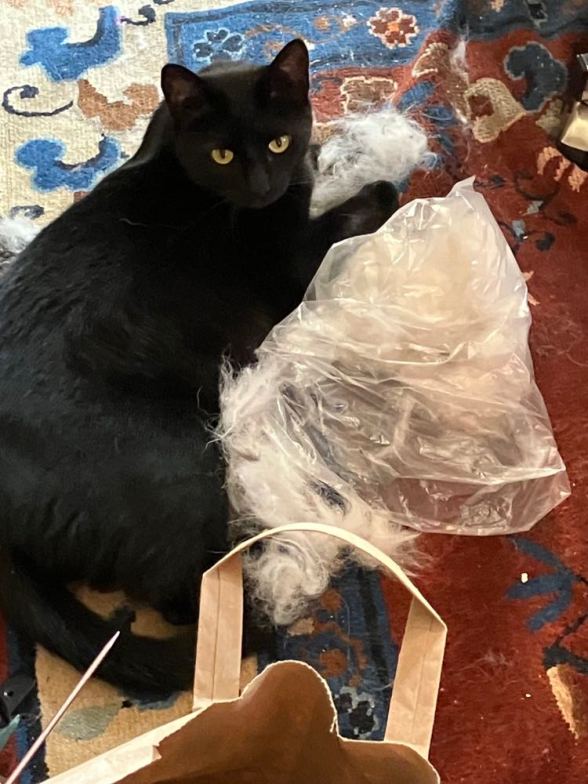
For the Ragtag Daily Prompt: feed. How many hours a day do cats loll? Is it fatigue or do they just like it?

The DSM Stew

Pyschosis
Neurosis
Babeiosis
Psittacosis

Medicine shifts
out the old, in the new
neurosis is gone
from the DSM stew

https://www.nimh.nih.gov/health/publications/understanding-psychosis

https://www.cdc.gov/parasites/babesiosis/

https://www.cdc.gov/pneumonia/atypical/psittacosis/index.html

The DSM V is the Diagnostic and Statistical Manual of Mental Disorders, volume V. The DSM III was published in 1980, DSM-IV in 1994 and the DSM-V in 2013. Some disorders are dropped or combined with others or the criteria are changed. In the DSM-V, tolerance and overuse (formerly addiction) were combined from two disorders into one spectrum.

Medicine is always changing and updating. Before h. pylori was recognized as a cause of stomach ulcers, there was much more ulcer surgery and ulcer bleeding deaths.

I don’t know what will come out of Covid-19, but the research on the immune system and Long Covid (now called PASC) is formidable.

The DSM-V and the ICD-10 are humans categorizing things, defining diseases. They will continue to change.

For a history of the DSM, read here: https://www.psychiatry.org/psychiatrists/practice/dsm/about-dsm/history-of-the-dsm.

____________________

For the Ragtag Daily Prompt: neuroses.

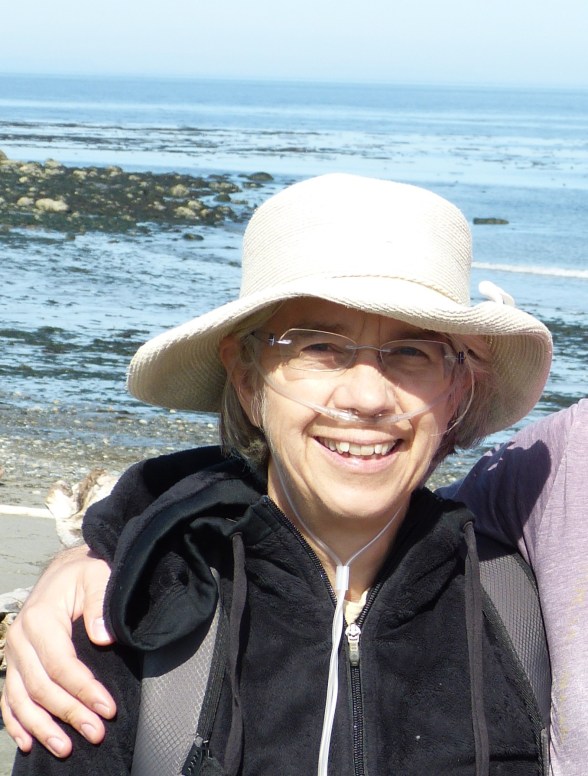
The photograph is taken in September 2021, with my camera. Hypoxia and a fast heart rate makes me really anxious, but neither is considered a psychiatric disorder.

Enemy

A friend and I are talking this morning and he is talking about praying daily. “Forgive us our trespasses as we forgive those who trespass against us”. That turns into a discussion of enemies and ourselves. It’s easier to have an external enemy identified than to deal with ourselves, isn’t it? Here is today’s poem.

_________________________________

Enemy

Do you have an enemy?

Do I have an enemy?

maybe I have no enemy
I have people I have forgiven
I have people who I have asked to forgive me
I have people I have forgiven
but keep distanced
no reconciliation
possible if they continue abuse
blind and deaf
saying “We are righteous!”
over and over to each other

A book teaches me
asks what are you most proud of
in yourself?

Three things:
strong, smart, tough.
The mirror is what you fear the most
weak, foolish, vulnerable
I shy back, hate the author
and he is correct
at least for me

Like the sutra
sometimes I am weak
sometimes I am foolish
sometimes I am vulnerable

When there is a person
or people
I want to hate
What aspect of myself
of my past
of my psyche
are they bringing up?
Are they stronger, smarter, tougher?
Are they weaker, foolish, more vulnerable?
Why do I want to hate them?

It’s easier, I see
to hate another person
and cast them out like a demon
then to look in the mirror
and see the aspect of myself
that I long so much
to hate

That demon
once cast out
will return with seven more

Mirror mirror
on the wall
tell my why
the angels fall

if an angel gets it’s wings
every time a bell rings
each time we hate another, as well
an angel falls heaven to hell

Long Covid and framing

Long Covid is being framed as the immune system going nuts and there are all sorts of ideas about what it is doing and why. And it may be that more than one of them is correct. But the assumptions that I am hearing are that we have to “fix” it. A disease model.

Since I have been through four rounds of pneumonia, and two other rounds that were probably also flares, I have a different feeling. I think that Covid-19 is a really nasty virus and that the immune system is CORRECT to be on high alert and upset.

But wait, you say, we are just supposed to put up with it?

No, that is not what I am saying. Treat infection. I wouldn’t be here if it weren’t for penicillin and clindamycin, not to mention that we know that tuberculosis is airborne and infectious. I would most probably have died as an infant if we did not know what we did about tuberculosis. However, rather than thinking of my immune system as broken now, I am thinking of it as being hyperalert. Perhaps having PTSD. What it is really saying is, “Do not get another infection.”

How does it say this? In my case, relatively mild chronic fatigue. Also, slower healing each round, this time taking two full years to get back to a chronic fatigue baseline. I am still feeling very lucky to not have a hypoxia and permanent oxygen baseline. I am also feeling lucky that my fast twitch muscles work again. But I have about half of what I would consider my “normal” energy. But don’t we all judge that “normal” from our peak energies in our teens and twenties? One friend says, “Welcome to your sixties!” when I complain that each time it takes more work and is slower rebuilding muscle.

Am I an outlier? I don’t think so. I think I am the canary in the coal mine, warning of what can come. I think that ANYONE can get a version of this, resulting from too much stress, infection or a combination of the two.

I don’t think we have to develop medicines to tweak the immune system. I think we have to change our CULTURE in the United States. We have to learn to value the parasympathetic state, not just the sympathetic fight or flight, aggressive, go go go, peak performance state. I think we are driving ourselves nuts and setting ourselves and our children up for illness and damage and a highly unhappy immune system.

So my approach to my version of PANS or Long Covid is to work on the parasympathetic state. Listen to my body. Rest. Think about what I want to do and then plan half of it. Be realistic about my energy level. Because if I can convince my immune system that I will take care of myself as best I can, and rest daily, and not be crazy, it will stand down. It will calm down. It doesn’t need drugs as much as rest, good food, good friends, and some work but not too much.

In a high sympathetic nervous system state, the immune system works less well. It is hyperalert too. People are more likely to develop auto-immune diseases, with Hashimoto’s thyroiditis being the most common. People are more likely to get infections too. We have to learn to value and support the parasympathetic nervous system.

The start is rest. If that sounds awful, the next step is breathing. Five seconds in, five seconds out, count and use a timer. Start with a couple minutes and work up to twenty. Pay attention to how your body feels at twenty minutes. It may feel unfamiliar. It’s also hard to keep paying attention to that five seconds in, five seconds out, even if you count. I start thinking about my grocery list or food or a friend I want to call and I have been doing this for YEARS. When you realize that you are not counting, return again.

I am a minimalist on pills, any pills. Supplements, vitamins, prescription. None of the pills grow on trees so I don’t distinguish between “natural” and um, what, “unnatural”? I think of it as “less tested” and “more tested”. As an allopathic physician, I prescribe when necessary and I get rid of pills whenever I can. It is better to take a daily walk and eat healthy food. And maybe take a nap too.

So this is where I start. I attended a whole program on LDN this week, low dose naltrexone. It is being used for fibromyalgia pain and for Long Covid and ME/CFS fatigue and brain fog. It has a very reassuring safety profile, pharmaceutical companies don’t want to fund research because it is old and relatively cheap, and we don’t know how long to put people on it, or what it does long term. More detail soon.

_______________________

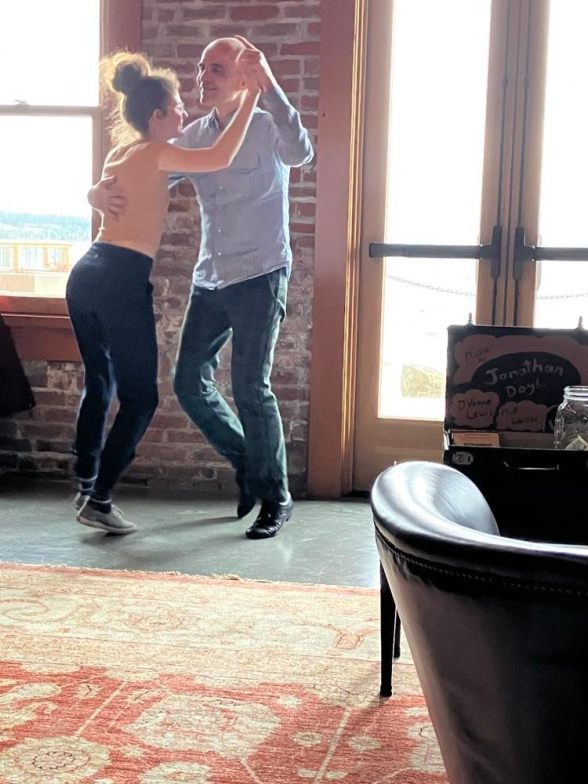
One thing I am doing for health and joy is dancing. I try to dance at the Bishop Hotel every Tuesday, because it makes me so happy. The music makes me happy too and my friends.

Neurogognitive effects of Long Covid I

Here is the first part of my notes from this lecture: May 24, 2023 Neurocognitive effects of Long Covid (International) part 2, by Dr. Struminger PhD, neuropsychologist.

I am trying to make this fairly clear to almost anyone. Some words may be unfamiliar to start with, but I will bet that you can sort it out. I would be happy to try to clarify any part if needed. These are my notes from the first half of this lecture, fleshed out to be clearer.

This is the Schmidt Initiative for Long Covid Global in English with real time translation into Arabic, French, Spanish, Portuguese and closed captions. Session recordings: https://app.box.com/s/onh1ma57ttjpi2c19qqxvmdao0kd2nsr

Dr. Struminger said that 1/4 to 1/3 of Long Covid patients have cognitive symptoms. A study comparing Long Covid patients with people who never got Covid-19 shows the Long Covid people to be three times more likely to have attention deficits or confusion. Part of the barrier to treatments is to define the problem, figure out the mechanisms and then start studying treatments. She said that she would share a few proposed mechanisms for cognitive impairment in Long Covid, but that it is probably multifactorial and it’s a rat’s nest. (Ok, I said rat’s nest. Dr. Struminger did not use that term.)

There are two main phenotypes of Long Covid brain problems: Hypoxic/anoxic and Frontal/subcortical. In hypoxic/anoxic certain brain functions are intact: Attention, visuospatial, cognitive fluency and memory encoding. There is impairment in problem solving and memory retention. This pattern is associated with the people who were hospitalized, deathly ill, on ventilators, or heart/lung bypass machines.

Frontal/subcortical is more common in the people who were never hospitalized and were not on a ventilator or ECMO machine. It can show up even in people who seemed to have mild Covid-19. The impairment is in attention, cognitive fluency and memory encoding, while the intact functions are visuospatial, memory retention and problem-solving.

Here are those lists in a table, HA for hypoxic/anoxic and FS for Frontal/subcortical.

Attention: HA intact, FS impaired
Visuospatial skills: HA intact, FS intact
Cognitive fluency: HA Intact, FS impaired
Memory Encoding: HA intact, FS impaired
Memory retention: HA impaired, FS intact
Problem-Solving: HA impaired, FS intact

The two types probably have different mechanisms and the super sick are more often the hypoxic anoxic. And there can be a mixed or both presentation.

Neuropsychologists test people to see what parts of the brain are working. Testing locally usually takes about four hours or more. Some brain functions have been mapped to parts of the brain but others are still mysterious. Efforts continue to match function to neuroanatomy. Going through each of the brain functions, some are mapped and others are not.

Attention is mapped and mediated by the frontal lobes. Attention is impacted by physical fatigue, dysautonomia, pain, shortness of breath, further impacted by emotional symptoms. It is REALLY easy to get stuck in a vicious cycle where physical symptoms or pain or hypoxia decrease attention function, which in turn makes physical symptoms worse. For example, hypoxia can decrease attention, which makes the person anxious and tachycardic, which in turn affects attention more.

The frontal lobes are very sensitive to hypoxic damage and to inflammation. Any inflammation in the body messes with them. The frontal lobes need oxygen and glucose. If a person can’t breathe, this messes up attention; if they are dizzy, it messes up attention.

Cognitive fluency. The anatomical correlates are less clear. Probably frontal and temporal, vulnerable to hypoxia and broad networks in the brain, vulnerable to physiological and mood disturbance. So vulnerable to the same things as the frontal lobes.

Learning and memory: Map to the hippocampi – sensitive to hypoxia and can be injured while the rest of the brain is comparatively unscathed. People have difficulty with retention of new information and not just attention/encoding problems. Neuropsychology distinguishes between attention/encoding and retention/recall problems. Those are different. In alzheimer’s, there is trouble retaining new information, even though people can encode it. In the frontal/subcortical long covid brain fog, there is more difficulty with attention/encoding. That is, if the person is tachycardic or in pain or dizzy or short of breath, it is more difficult to pay attention and encode information into memory.

Executive functioning. Frontal lobe: sensitive to hypoxia and metabolic dysregulation, significantly impacted by physical symptoms and mood disturbance.

The hypoxic/anoxic pattern has effects more like Alzheimer’s or a dementia. The frontal/subcortical is more like a concussion or traumatic brain injury. Neither sounds great, but there is more healing from the second than the first. Treatments for now are coming from the Alzheimer’s/dementia established treatments or from the concussion/traumatic brain injury established treatments. The first part of treatment is rest, rest, rest, and try to keep the brain from getting overwhelmed. I will write more about the ongoing changing recommendations.

More at: https://hsc.unm.edu/echo/partner-portal/echos-initiatives/long-covid-global-echo.html

The photograph is a screen shot of the brain from below from one of the conferences. There were over 300 people attending this zoom lecture, which is encouraging and hopeful.

For the Ragtag Daily Prompt: covert. The covert damage from Covid-19 is being sorted out.

Nano-influencer

I am thinking about what to say about what I do when I meet new people.

I am getting rather tired of saying I’m a family doc, but I am only working a little because I had my fourth pneumonia, on oxygen for a year and a half, blah, blah, blah. Too much information. I also am tired of the reaction to “doctor”. People are weird about jobs, they categorize and are often hierarchical.

So, how do I describe myself?

Disabled divorcee, not employed? Um, still TMI.

Writer? I have one friend who introduces himself as a “junk mail writer”. He won’t tell them that his clients are the Smithsonian and the Kennedy Center and so forth unless they ask more questions. Some people just dismiss him instantly.

Blogger? No, I don’t think so.

I looked up an article on “influencers”. It is ostensibly written for companies looking to place products on blogs or whatever platform and it breaks the influencers down into groups. With 1000 followers, I am categorized as a “nano-influencer”. That cracked me up. I think it would be fun to see what reaction I get to that instead of to Family Practice doctor.

I just repaid my license for two more years. I still am very interested in working with Long Covid people, but I do not want to run my own business again. So, I am considering approaches. And do I really want to risk another pneumonia? Well, being alive is a risk, after all. And it always ends the same way.

Blessings from your nano-influencer!

_____________________

For the Ragtag Daily Prompt: influencer.

I took the photograph at the start of the Swinging by the Sound dance weekend.

Here is a fabulous video of a Shag Dance warm up and then couple dancing. Wow!

You will be labeled

If you get sick
with something the doctors don’t understand
you will be labeled
unstable
mental
bipolar
crazy.

They will try to drug you.

How do you tell
when they are right
and you are crazy
brain on fire
and when you aren’t?

Don’t ask me.
I’m a Family Practice doc
and I’m rural
and I’m a girl.

I’m the one they make fun of
in the medical schools.
“The rural doctor
transferred this patient.”

Yes we did.
Because we knew it was something
different
that needed more
than we had
in our small town
in our small hospital.

Once a neurosurgeon says,
“You are transferring the patient
because it’s Friday
and you don’t want to work
on the weekend.”
“She needs an MRI,” I say
“and we don’t have one.”
and transfer her anyway.
I call two days later.
After the MRI, she is in
the operating room
for a tumor in her spine.
He doesn’t call me back
but I hope he remembers.
I certainly do, after years
and years.

If you get sick
with something the doctors don’t understand
you will be labeled
unstable
mental
bipolar
crazy.

As I was going to Washington, DC

As I was going to Washington, DC

I met insurance CEOs who said “Whee”!

500 Insurance CEOs said Weeee!

Have ten insurance plans EEEEEach!

Every plan has it’s own website!

Every plan is different, password for each site!

Every plan refuses coverage for different treatments, right?

Every plan demands prior authorization, doctor’s office up all night

If they refuse chemotherapy the doctor has to fight?

Prior auths, treatments, passwords, plans

Insurance companies, all those demands

As I was going to DC

How many passwords will I need?

______________________

For the Ragtag Daily Prompt: snail.

I was pricing health insurance in case I get well enough to work more. I can get an $800 a month with a $8000 deductible or a $1435 a month with a $2000 deductible. I would very much like to work part time treating Long Covid. But, ironically enough, looks like I can’t afford health insurance. It costs more than the malpractice would. Ironic, huh? It’s not like we need doctors. (I do not have a medical release yet anyhow, but time to do research. It’s making me gloomy.)

You know, if we do get Artificial Intelligence, it will take one look at the United States Medical non-system, decide we are insane, and wipe us out.

And honestly, when I was working for the hospital clinics, I thought the most brilliant person in our office was the woman who could extract a prior authorization from so many insurance companies. I would send the referral to print and half the time she would have it authorized by the time the patient got to the front desk. And why do we waste all that brilliance on giving health insurance companies a profit of 20 cents out of every dollar? That is $20,000,000 out of $100,000,000. Looks worse with bigger numbers, doesn’t it?

Physicians for a National Healthcare Program: https://pnhp.org/.

Keep it simple

Sometimes I just despair as I read new guidelines. Don’t you? Maybe you are not a physician and don’t try to keep all of this impossible stuff in your head. Mine is full. Tilt.

Diabetes alone: if someone has type II diabetes, there are specific blood pressure guidelines, cholesterol guidelines, we are to do a hgbA1C lab test every six months minimum and more often if they are out of control, and a urine microalbumin/creatinine ratio yearly. If that starts being abnormal we are to start one of two classes of blood pressure medicines even if they have normal blood pressure.

Oh, and don’t forget: a yearly eye test and we are supposed to check their feet at EVERY visit to make sure they are not getting diabetic ulcers.

Got that? And that is just type II diabetes. And there are a whole raft of medicines, about forty right now. Some are weekly shots, some are daily tablets, some are twice a day or with every meal and they all have their own side effects, how fun. Check drug interactions, are their kidneys ok? Is their liver ok? Diabetes increases the risk of heart attack and stroke and don’t forget those feet.

Diabetes is one of the most complicated sets of guidelines, but there are a rather appalling number of guidelines. Maybe we should sic an AI on that job: Mr. Smith has type II diabetes poorly controlled, hypertension, erectile dysfunction, feels a little short of breath and has a bruise on his left shin after tripping yesterday. Please, AI, organize a twenty minute visit to cover as many things as possible efficiently and have the note finished and followup arranged by the end of it. Then it turns out that what Mr. Smith really wants to talk about is his niece who has just overdosed and nearly died from heroin, so everything else goes out the window. Maybe I should see him weekly for the next month.

Do you want to keep it simple and stay out of the doctor’s office and more importantly out of the hospital? If you are 25 and healthy, you don’t much care because old is unimaginable.

But there is a very nice study that looked at just five things regarding health, over 28 years for men and 34 for women: “The researchers looked at NHS and HPFS data on diet, physical activity, body weight, smoking, and alcohol consumption that had been collected from regularly administered, validated questionnaires.”

Here is an article about the study: https://www.health.harvard.edu/blog/healthy-lifestyle-5-keys-to-a-longer-life-2018070514186

Here is the study: https://www.ahajournals.org/doi/10.1161/CIRCULATIONAHA.117.032047

So let’s break the five things down. Here are the more formal definitions: “Using data from the Nurses’ Health Study (1980–2014; n=78 865) and the Health Professionals Follow-up Study (1986–2014, n=44 354), we defined 5 low-risk lifestyle factors as never smoking, body mass index of 18.5 to 24.9 kg/m2, ≥30 min/d of moderate to vigorous physical activity, moderate alcohol intake, and a high diet quality score (upper 40%), and estimated hazard ratios for the association of total lifestyle score (0–5 scale) with mortality.”

First: never smoking. I would add never vaping and not living in a cave and burning wood and hopefully not living right next to a 12 lane superhighway, all of which are bad for the lungs. Ok, while we are at it, don’t use methamphetamines or heroin or cocaine or krocodil, right? They didn’t even include those in the study.

Second: Body mass index 18.5-25. If you aren’t there, it is diet and exercise that need to change.

Third: Thirty minutes or more per day of moderate to vigorous physical activity. That can be ten minute intervals. Three can have an enormous effect on number two.

Fourth: moderate alcohol intake. Ok, alcohol is bad for the heart, period. So is tobacco. They defined moderate as less than or equal to “5 to 15 g/d for women and 5 to 30 g/d for men”. Let’s do the math: a 12 ounce beer that is 5% has 14gm of alcohol. Here: https://www.niaaa.nih.gov/alcohols-effects-health/overview-alcohol-consumption/what-standard-drink. The 8.9% 16 ounce beer at our local pub has quite a bit more. Here is a website where you can calculate how much alcohol is in a drink: https://www.rethinkingdrinking.niaaa.nih.gov/Tools/Calculators/Cocktail-Calculator.aspx.

Fifth: Diet. There is an overwhelming amount of confusing information on the internet and some of it is not only confusing but wrong. “Diet quality in the NHS, HPFS, and NHANES was assessed with the Alternate Healthy Eating Index score (Methods in the online-only Data Supplement), which is strongly associated with the onset of cardiometabolic disease in the general population.” I have not assessed my own Alternate Healthy Eating Index score. However, there are a couple very straightforward things that help with diet. First: No sweetened drinks. That means that sugary coffee with the syrup should go. I quit drinking mochas when I read that a 12 ounce one has 62 grams of carbohydrate. I would rather have a small dark chocolate. And sodas are just evil and juice not much better. Eat the fruit instead. Second: eat vegetables, every meal. A fruit is not a vegetable and no, potato chips don’t count. I mean a green or yellow or red vegetable. You can saute any vegetable, or any that I can think of. I am not counting grains as a vegetable, so pasta, pizza, potato chips and so forth do not count. Beans do count. Third: the DASH diet recommends only a tablespoon of sweetener per day. That is not very much. You can make that cheesecake slice last a week! A small piece of dark chocolate daily or tablespoon size chunk of that cheesecake.

I had a diabetic patient who would be fine, fine, fine, then out of control. “WHAT are you eating? And drinking?” The first time it was two 16 ounce Mochas a day. Then he was fine for a year and a half. Then labs went haywire again. “What are you drinking?” “Well,” he said, not wanting to admit it, “Ok, I decided to try Caramel Machiattos.” “No, no, no! You can’t do that! You’ll end up on insulin!” “Ok, ok, got it, got it.”

And what is the difference if I try to do those five things, you ask, skeptical. “We estimated that the life expectancy at age 50 years was 29.0 years (95% CI, 28.3–29.8) for women and 25.5 years (95% CI, 24.7–26.2) for men who adopted zero low-risk lifestyle factors. In contrast, for those who adopted all 5 low-risk factors, we projected a life expectancy at age 50 years of 43.1 years (95% CI, 41.3–44.9) for women and 37.6 years (95% CI, 35.8–39.4) for men.The projected life expectancy at age 50 years was on average 14.0 years (95% CI, 11.8–16.2) longer among female Americans with 5 low-risk factors compared with those with zero low-risk factors; for men, the difference was 12.2 years (95% CI, 10.1–14.2).”

____________________

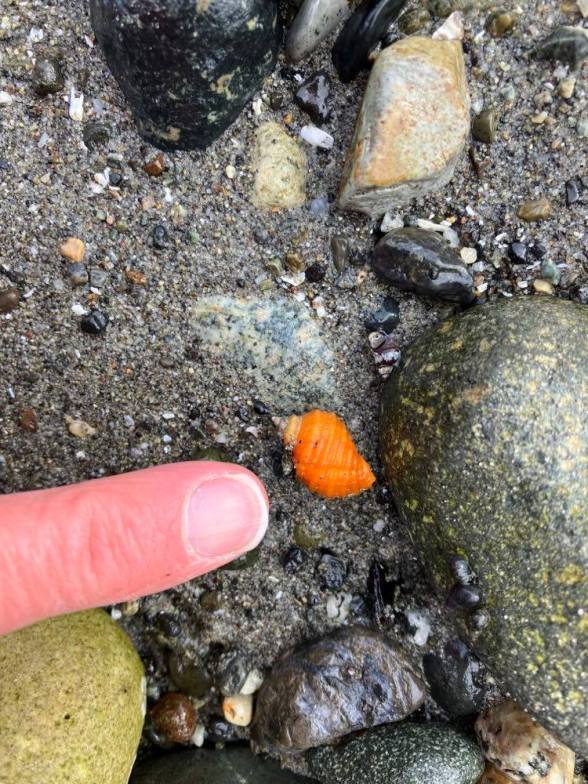
I took the photograph from Marrowstone Island. What does a healthy seal diet look like? I am so lucky to have miles of beach to hike, as long as I watch the tides and don’t mind rain.

Shame and anger in overuse illnesses

“amongst those who treat addicts of any kind generally agree that anger and shame help no one and is actively counter-productive.”*

Wait.

I have to think about that statement.

I do not agree at all.

Ok, for the physician/ARNP/PAC, anger at the patient and shaming the patient are not good practice, don’t work, and could make them worse. BUT anger and shame come up.

In many patients.

Sometimes it goes like this with opioid overuse: the person shows up, gets on buprenorphine, and is clean.

It may be a long time since they have been “clean”.

One young man wants to know WHY I am treating him as an opioid overuse patient. “Why are you treating me like an addict?”

I try to be patient. I recommended that he go inpatient, because I don’t think we will cut through the denial outpatient. Very high risk of relapse. “You have been buying oxycodone on the street for more than ten years.”

“I’ve been buying it for back pain, not to party.”

“Did you ever see a doctor about the back pain?”

“Well, no.”

“Buying it illegally is one of the criteria of opiate overuse.”

“But I’m not an addict! I’ve never tried heroin! I have never used needles!”

“We can go through the criteria again.”

He shakes his head.

He is in denial. He is fine. He doesn’t need inpatient. He is super confident, gets work again, is super proud.

And then angry. “My family still won’t talk to me!”

“Um, yes.”

“I’m clean. I’m going to the stupid AA/NA groups! Though I don’t need to. I’m fine!”

“What have you noticed at the groups?”

“What a bunch of liars!” he says, angry. “There are people court ordered there and they are still using! I can tell. They are lying through their teeth!”

“Obvious, huh?”

“Yeah!”

“Did you ever lie while you were taking the oxycodone?”

Now he ducks his head and looks down. “Well, maybe. A little.”

“Do you think your family and friends could tell?”

He glances up at me and away. “Maybe.”

“Your family may be angry and may have trouble trusting you for a while.”

“But I’ve been clean for four months!”

“How many years did you tell untruths?”

“Well.”

Shame and anger. Anger from the family and old friends, who have heard the story before, who are not inclined to trust, who are hurt and sad. The first hurdle is getting clean, but that is only the first one. Repairing relationships takes time and some people may refuse and they have that right! Sometimes patients are shocked that now that they are clean, a relationship can’t be repaired. Or that it may take years to repair. My overuse folks are not exactly used to being patient. And sometimes as they realize how upset the family and friends are, they are very ashamed. And some are very sad, at years lost, and friendships, and loved ones. I have had at least one person disappear, to relapse, after describing introducing someone else to heroin. He died about two years later, in his forties.

Shame and anger definitely come up in overuse illness.

The above is not a single patient, but cobbled together from more than one.

______________________

*from an essay titled “F—ing yes, I’m a fatphobe” on everything2.com. Today there are two with that title. The quotation is from the second essay.