Music Magnifies Joy

Ben Sollee is new to me. I heard him at Over the Rhine‘s NoWhereElse Festival. In Ohio.

What a fabulous line up of musicians! Ben Sollee makes joyous music with a cello, his voice and a drummer! They made more noise and more complex rhythms than many much bigger groups! I got one of his albums and three other fabulous groups!

This is lovely:

All things shall perish from under the sky, music alone shall live never to die.

For the Ragtag Daily Prompt: magnify.

The photograph is of another group at the festival: Carolina Story.

thinking of spring

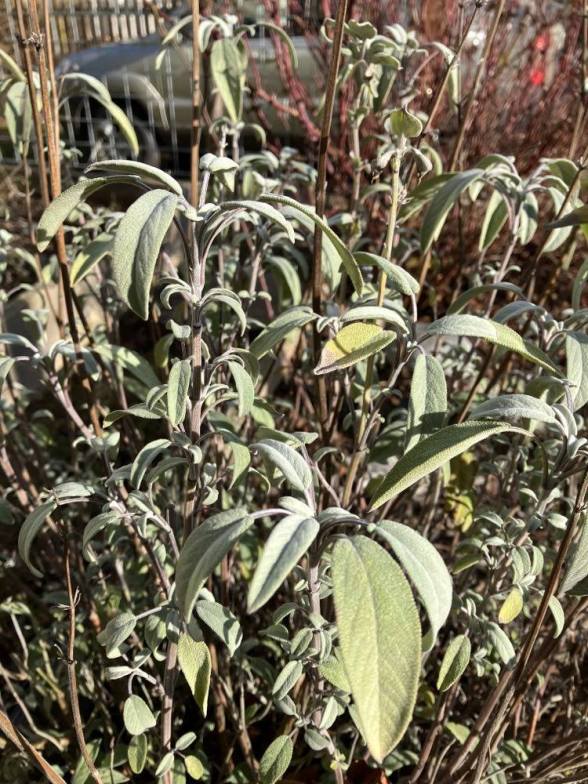
I have a very happy pineapple sage plant. It does not care that my street is a bit of a wind tunnel up from sea level. The roses don’t like the wind howling up and tomatoes really hate it. It is happily putting out new leaves even though we could have more freezing weather and even snow and snot and ice. (Snot was a typo, but it comes with snow and ice, right?) No flowers yet but soon and soon.

For Cee’s Flower of the Day.

Peace Prompt

Today’s Ragtag Daily Prompt is prompt, because we need a seventh person. Sounds pretty easy, right? To pick a word once a week and post it and then watch the replies.

It is easy and it isn’t! That day sneaks up on me. Now I try to post the Tuesday prompt 5-7 days early and set it to post on Tuesday morning.

If another prompt is missing, I can check the Ragtag site. Sometimes a prompter is gone or has something happening in their life or has put 9 pm instead of 9 am! I can intervene and fix the last problem. We fill in for each other, too.

This is an international group and a prompt for peace! Peace us and join us! I love seeing photographs from all over the world. I am itching to go to Australia to see all the birds and to India and back to Alamosa, Colorado and in fact, I would go to any of the areas that people post from. With all of the stress from the pandemic and the ongoing war, this is a daily place that makes me hopeful that people can get along and that we will reach the point where the color of our skin matters no more than the color of our eyes. It is Martin Luther King Day in the US and I am celebrating peace and hope.

I heard a wonderful sermon yesterday from a man who works in our school system, here: https://www.youtube.com/watch?v=DfmPjcEIbBA. I went to a music jam which had wonderful diversity of music. I went to hear Chicago Bob play and I have to say that I did not expect him to play Teddy Bear’s Picnic. A friend came to dinner too.

I hope that you too have pockets of peace and can peace someone today. And hooray for this musician as well: https://www.bbc.com/culture/article/20230113-martin-luther-king-day-the-song-that-changed-the-us.

Blessings.

How many cats do you see in the photograph?

Don’t shilly-shally! DANCE!

Ooooooo! Listening to Mitch Ryder and the Wheels Sock it to me baby, one of the songs here.

My muscles are BACK. Sometime in the last two weeks, while I was helping a friend in Michigan, my muscles came back. Three days ago I felt better than I have since before March of 2021. My normal energy level was back.

So what did I do? Overdid, of course. I did a beach walk on Thursday and then a local walk with a friend on Friday and then went to hear Johnathan Doyle on Saturday, fabulous! I had to dance!

Paid for it yesterday. The fast twitch muscles are back but it doesn’t mean they are strong. They are NOT strong. I have to be patient (I am not patient!). Yesterday I spent most of the day lying on the couch. Everything hurt and cramped. Ow.

BUT I can build those muscles up!

Here are some of my ex’es and my favorite bands and songs from jitterbug and lindyhop dance back in Washington, DC. I was delighted to see that Little Red and the Renegades is still playing. They played at the Kennedy Center early on New Year’s Eve. My spirit wanted to go but the body did not.

That is not a song they played back in the 1980s. We all get older!

And Doc Scantlin and his Imperial Palms Orchestra! We danced to them and I know the gentleman lindy hopping at the start. Probably others there too. We loved the Spanish Ballroom at Glen Echo.

And this was one of my ex’s and my favorite recorded songs to dance to… gosh, how naughty but true right?

I am so happy to have my fast twitch muscles BACK. Now I just need to build them up!

The photograph is from 1989, at our wedding. We are doing a move that was called “New York Kicks”. I think the photographer is my ex’s uncle. The band was Darryl Davis who is also still playing and is a friend and have you seen any of his Ted Talks?

Don’t Shilly-Shally! Get your dance shoes on now!

For the Ragtag Daily Prompt: shilly-shally.

Clouds are my favorite blur

Clouds two days ago on the Fort Worden Beach. Washington State.

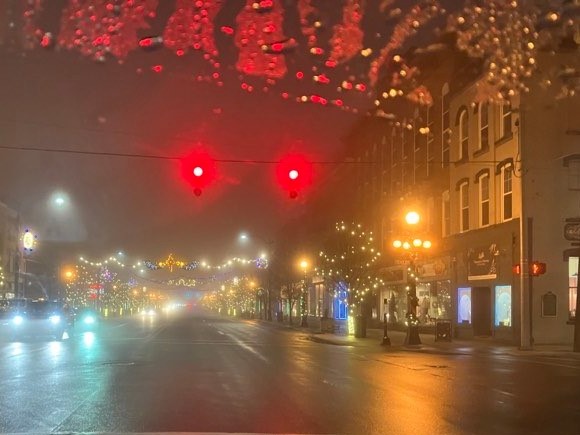
I was back east over the winter holidays. Nine days got added on for an ill friend. I was lucky to be able to change my flight and be able to help. This is the early morning holiday lights on the way to the hospital.

Clouds further blurred by water. Taken in Ontario, Canada in 2012.

Water blur study. Somewhere in Washington.

More water.

Sunrise, a new day, blurry but beautiful anyhow. Mount Tahoma, Washington State.

For the Ragtag Daily Prompt: blur.

Stone flower

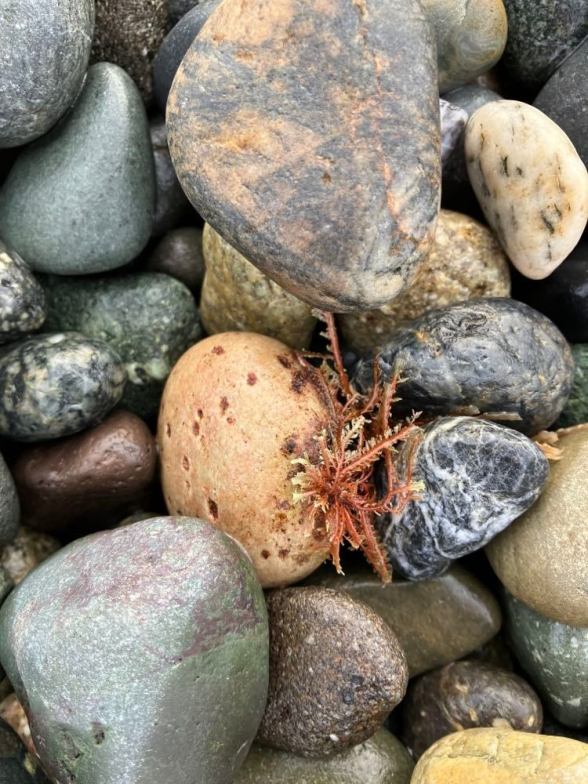
Actually I am not sure if this is a flower. It is a plant attached to a rock, from the Fort Worden beach yesterday. Do seaweeds flower? Some of them do change color at different times of year. This one is wearing fall and winter colors.

For Cee’s Flower of the Day.

NOAA’s What is Seaweed?

Wikipedia says yes, some seaweed flower: https://en.wikipedia.org/wiki/Seaweed.

Immunomodulation

I wrote this for a group of physicians, so it’s heavy on the science. BUT I think everyone can benefit from understanding the difference between the sympathetic nervous system and the parasympathetic. Also, we can survive without the sympathetic but not without the parasympathetic.

My essay yesterday was about antibodies to tubulin, what tubulin is and how antibodies work. This doesn’t seem very useful if the only thing we can do about the antibodies is remove them by theraputic plasma exchange or give anti-inflammatories. However, there are other approaches. As a rural Family Physician, I have an ever expanding toolbox that I learn from multiple specialties and patients. Mothers of children with PANS/PANDAS may already have figured out many of these techniques.

Our bodies have two basic modes for the nervous system. The well known mode is the sympathetic nervous system. This is the amped up fight or flight system. When we have a very activated sympathetic nervous system, we make less thyroid hormone and less sex hormones and switch production to more cortisol and adrenaline. This helped me to understand adult patients who say they are constantly tired, don’t want sex, they keep getting sick and they also have trouble sleeping. Borderline low thyroid, low sex hormones, elevated cortisol and elevated adrenaline, though it may be at the upper range of normal. The sympathetic nervous system readies muscles for flight or flight, turns digestion to low, reduces secretions everywhere (eyes, salivary glands, stomach, gall bladder, urine, etc) and tightens fascia around the muscles. Blood pressure and heart rate rise. High cortisol over time is not good for the immune system.

The other mode is the parasympathetic nervous system. This is the relaxed system. Digestion and urination works well, muscles relax, cortisol and adrenaline come down, thyroid and sex hormones are manufactured. Blood pressure is lower and heart rate is lower.

The first technique I use to change from sympathetic to parasympathetic is breathing. Swedish hospital is teaching the anxious patients, chronic pain patients and veterans slow breathing. Five seconds in and five seconds out. They recommend building up to 20 minutes over time. If done for 20 minutes, they said that almost everyone calms from sympathetic to parasympathetic. Some people endorse square breathing: in, hold, out, hold, in. I did daily Zen Buddhist meditation facing a wall for 40 minutes during college. This also works and some children might find it an enjoyable challenge. I find Zen meditation easier in a group than alone. I asked a 30 year veteran of the Special Forces to try the 5 in and 5 out breathing because he would find his muscles tight just watching television. He was reluctant, but he returned and said that he is surprised that it works. He also said that he is not used to the relaxed feeling and it feels weird.

Other ways of activating the parasympathetic nervous system for adults include walking, rocking, laughing, magazines seem to love hot baths, anything that relaxes. Playgrounds include places to climb, spin, swing and hang upside down, for children to get a break and play. Again, different people find different things relaxing. During my second strep A pneumonia, an antibody titer came back at 600 with normal being 200 and below. I have read that children can have titers of 2000. I could barely function with a titrer of 600 (off work, obviously) and thought that if my titer was 2000 I would hide under my bed and not come out. I would like input from child psychiatry on downregulating the sympathetic nervous system to parasympathetic in children, but my guess would be that a safe place is very important. Where is that safe place for each child and when they are not having a flare, can they practice going to it in their minds?

Another helpful parasympathetic activity is games or puzzles. My father died leaving an out of date will and a difficult estate. For the year that I worked on it, I did a suduko every day. I could not solve the estate quickly but I could solve the number puzzle every day and that gave me a small window of feeling good and relaxation. Board games or puzzles could work as well. I am less certain about computer games: my understanding is that the visual cortex is activated along with other parts of the brain. This seems more sympathetic than parasympathetic but I could be wrong. The familiarity of a video game may feel very safe and more predictable than the illness. Old movies and reading beloved books is parasympathetic for me. Oddly, sex is parasympathetic in women but both sympathetic and parasympathetic in men. Music can relax many people, and repeating the same music or album over and over. Comics and silly cat videos are parasympathetic.

As a physician, I often acted in a high sympathetic nervous system. A friend of my son’s said, “Your mother is crazy.” My son replied, “No, she’s just intense. About EVERYTHING.” I had to learn not to be intense about everything. We can model relaxation and parasympathetic activity and slowing down for our children, but we may have to set more boundaries at work.

Here is the best write up I have found on the internet about the parasympathetic nervous system: http://www.wisebrain.org/ParasympatheticNS.pdf. They have a great explanation as well as exercises to calm to parasympathetic.

Tubulin and antibodies

This is very science dense because I wrote it for a group of physicians. I keep thinking that physicians are scientists and full of insatiable curiosity but my own experience with to date 25 specialists since 2012 would say that many are not curious at all. This continues to surprise and sadden me.

______________________________

All science starts with theories. Mothers of children with PANS/PANDAS reactions had to fight to get the medical community to believe that their children had changed after an infection and that symptoms of Obsessive Compulsive disorder and all the other symptoms were new and unexpected and severe. This is a discussion of tubulin and how antibodies work, theorizing based on my own adult experience of PANS. I was diagnosed by a psychiatrist in 2012. No specialist since has agreed yet no specialist has come up with an “overaching diagnosis” to explain recurrent pneumonia with multiple other confusing symptoms.

The current guidelines for treating PANS/PANDAS are here: https://www.liebertpub.com/doi/full/10.1089/cap.2016.0148. This section discusses four antibodies that are a common thread in PANS/PANDAS patients. Antibodies to dopamine 1 receptors, dopamine 2 receptors, tubulin and lysoganglioside.

Per wikipedia “Tubulin in molecular biology can refer either to the tubulin protein superfamily of globular proteins, or one of the member proteins of that superfamily.” Tubulin is essential in cell division and also makes up the proteins that allow movement of cilia, flagella and muscles in the human body. There are six members of the tubulin superfamily, so there are multiple kinds.

Antibodies are complicated. Each person makes different antibodies, and the antibodies can attach to a different part of a protein. For example, there is more than one vaccine for the Covid-19 virus, attaching to different parts of the virus and alerting the body to the presence of an infection. Viruses are too small to see yet have multiple surface sites that can be targets for a vaccine. When a cell or a virus is coated with antibodies, other immune cells get the signal to attack and kill cells. At times the body makes antibodies that attach to healthy cells, and this can cause autoimmune disease.

Antibodies also can act like a key. They can block a receptor or “turn it on”. Blockade is called an antagonist when a pharmaceutical blocks a receptor and “turning it on” is called an agonist. As an example of how an agonist and antagonist work, take the pharmaceutical buprenorphine. Buprenorphine is a dual agonist/antagonist drug. In low doses it works as an agonist at opioid receptors. At high doses it is an antagonist and blocks the receptors. It also has strong receptor affinity. This means that it will replace almost all other opioids at the receptor: oxycodone, hydrocodone, morphine, heroin. The blockage and ceiling dose make it an excellent choice for opioid overuse. Higher doses do not give a high nor cause overdose and when a person is on buprenorphine, other opioids do not displace the buprenorphine and give no effect.

Similarly, a tubulin antibody could be an agonist or an antagonist or both. As an agonist, it would block function. My version of PANS comes with a weird version of chronic fatigue. When I am affected, my fast twitch muscles do not work right and I instantly get short of breath and tachycardic. I suspect that my lung cilia are also affected, because that would explain the recurrent pneumonias. My slow twitch muscles are fine. With this fourth round of pneumonia I needed oxygen for over a year, but with oxygen my slow twitch muscles do fine. We have fast twitch fatiguable muscles, fast twitch non-fatiguable, and slow twitch. With six families of tubulin and multiple subfamilies and every person making different antibodies, it is no wonder that each person’s symptoms are highly variable.

Currently the testing for the four antibodies is experimental. It is not used for diagnosis. When I had pneumonia in 2012 and 2014, the antibodies had not yet been described. There is now a laboratory in New York State that will test for them but insurance will not cover the test, it costs $1000 as of last year, and it is not definitive nor useful yet anyhow.

There are studies going on of antibodies in ME-CFS, fibromyalgia, chronic lyme disease, PANS/PANDAS and Long Covid. Recently antibodies from humans with fibromyalgia were injected into mice. The antibodies caused fibromyalgia symptoms in the mice: https://www.sciencedaily.com/releases/2021/07/210701120703.htm. One of the barriers to diagnosis and treatment of fibromyalgia is that science has not found a marker in common that we can test for. Even the two inflammatory markers that we use (C-reactive protein and Erythrocyte Sedimentaion rate) are negative in fibromyalgia. This doesn’t mean that people do not have pain or that it is not real, it just means we have not found the markers. It may be that the markers are diverse antibodies and there is not a single marker.

The research is fascinating and gives me hope. It boggles the mind, doesn’t it?

For the Ragtag Daily Prompt boggle.