It’s about caring

I described helping a woman bring her bad LDL cholesterol down from 205 to 158 with two clinic visits the other day, and someone said, “I can replace you with a teacher who is much cheaper. Why should you go to medical school to talk about the things people already know? Let’s free you up to do heart surgery or something important.”

Well? What about that? Is my career as a doctor wasted because I am in primary care? I am in Family Practice and I spend tons of time counseling people about diet, exercise, lifestyle choices.

My work is not wasted.

If all we had to do was give people information, we have the information. Every magazine and newspaper screams at us: “Obesity! Stop smoking! Exercise for health! Eat right! Don’t eat junk food!”

Why do two visits with me make a difference?

People do not feel valuable and do not feel cared for in our culture. In the same magazine with articles about losing weight, getting organized, shouting “You can do it!” there are multiple advertisements for sugary desserts and things to consume. My spouse used to joke, “If I get (whatever he wanted at that time) then I’ll be a better person.”

I see pregnant woman who can stop smoking while pregnant, to care for the baby on board, but who often can’t extend the same caring to themselves after the child is born.

The history is often listed as the most important part of a clinic visit. I agree, but not just for diagnosing illness. I am listening to the person, and now with a laptop, I am recording their history. Why are they here today, what medical problems have they had, allergies, surgeries, do they smoke, are they married, do they have children? I want a picture of the person and I must listen hard. What do they reveal about their trust in medicine, about favorable or unfavorable medical interactions in the past, about what they understand or believe about their health? The visit is a negotiation. I need their view of what is happening and their questions.

The physical exam is often an interlude for me. I look at the persons throat, in their ears, listen to their heart and lungs. And part of me is collating the information that I’ve gathered, so that we can move to the next step: analysis and plan.

If I am doing a preventative check, a wellness visit, a physical, whatever you want to call it, I name the positives and negatives. Are they exercising regularly, have they stopped smoking, are they trying to eat a good diet? I name these. Are they lucky enough to have four grandparents who lived to 102 or do the men in their family die at 52 of a heart attack? A 55 year old man who has lost multiple relatives in their early 50s is surprised that he’s alive, and starting to wonder if it might be worth attending a little to his own health. He is a bit shy about hoping that he might not die tomorrow, and ready for encouragement in taking care of himself.

The visit is really about caring. Many people in our culture do not feel cared for. Moms are supposed to care for everyone else. Parents are very very busy, trying to take care of children and have jobs. People are afraid that they will lose their job, their insurance, their homes. We try to do the tasks of adulthood: have the career, find the true love, raise the children, achieve the lifestyle, home and place in our society. And many people feel that they are failing or fear failing. They have not gotten the job they hoped for. They have a house, but it is a huge amount of work. They are working very hard, but there are still so many things they would like to do or see or have. They have become overweight, they have gotten hooked on tobacco, their children are not turning out as they’d planned, the ungrateful wretches. And their parents’ health is crumbling, and in all the chaos, why would the person attend to themselves? The cell phone rings, the computer beckons, it’s time to work, to cook, to clean, to stay on the hamster wheel of life.

In clinic, for a few moments, this person is the center. They explain their health to me. They are painting a picture of their life. A patient will say, “I’ve been worrying about my mother, my son, my spouse, and I don’t take the time to exercise or eat right.”

And I say, “I hope that your mother, son, spouse does better. But you are important too. It is wonderful that you have stopped smoking, excellent! But we’re both worried about your cholesterol, right? It is too high. How are we going to take care of you? What can you fit in?”

Most people do not want to start with a medicine. They want to take care of themselves, too. They are willing to make lifestyle changes. They need encouragement and permission and to come back to see how it is going. What they need is my caring. And I do care.

I used to think that somehow complex patients would gravitate to me. But that is not true: the truth is that everyone is complex. Each person has layers and thoughts and feelings: fears and joys. I barely scratch the surface. It is the caring that is most important and each person that I see is important.

At the end of the visit, I print my note. I give it to the person. “Check it. Tell me if something is wrong. I cannot change the note, but I can put an addendum.” I see that people are shy and often show some confusion. Two pages? Single spaced? About me?

Yes. About you.

written in 2010 and published first here: http://everything2.com/title/It%2527s+about+caring?searchy=search

I took the photo in 2004, a school overnight trip to explore settlers 100 years ago….

Walk away

I used to carry my phone around
hoping you would call me now
I walk away

my house is three stories and
I can’t hear the phone and still
I walk away

I long to hear your voice I send
a hopeful query to you then
I walk away

I leave the phone plugged in the wall
and go up the stairs and down the hall
I walk away

I listen in the quiet to hope sighing
in my heart and maybe dying as
I walk away

I took the photo at the National Junior Synchronized Swimming Competition in 2009.

Where oh where is love?

How could we have love without grief?

The US culture seems to suppress grief, take grief away, heal grief, get over grief, but think about love without grief.

Could we love someone if we didn’t grieve when they died?

No. We couldn’t. That wouldn’t be love. Or that would be the pale shadow of love, love without loss, love that turned from the grave and forgot.

We cannot love without grief, so we need to make room for grief. We need to stand by each other during grief. We need to help each other, be present, be there, say the wrong thing, say the right thing, say nothing and just give love.

Love builds the Taj Mahal. Love writes Rumi’s poems. Love is the memories of the person we loved, we tell our children about them, we hold them in our hearts.

Love loves without logic, without sense. Love in spite of alcohol, addiction, lies, how can a person love an abuser? They love the person, not the abuse. They love the person, not the actions, not when the alcohol takes over, when the meth takes over, when the oxycontin takes over. Love loves the whole person and grieves the damage.

Love and grief are intertwined, a rosebush with thorns, there is no one without the other. No joy without despair, no light without dark, no you without me, no joining without separation.

I enter grief as I enter love, whole heartedly, oh, I may be afraid of the dark but I go there anyhow, I know as the waves close over my head and I sink into the depths:

There is no love without grief.


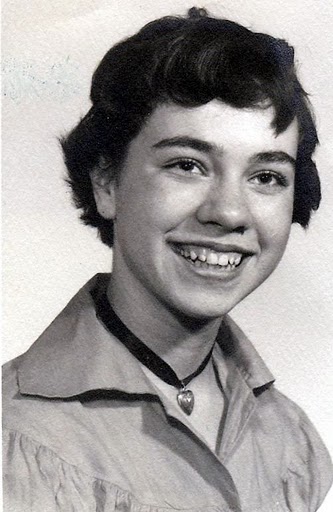
The picture is my mother, Helen Burling Ottaway, in high school. She died of cancer in 2000 and I still miss her terribly.

Spare the rod

You say you want a partner to join in work or love
It bothers me to hear you say those words
sand inside my clothes

a partner is someone that you respect and listen to
I hear a disconnect between your words and plan
someone to improve upon

You’ve chosen your next target for this thoughtfully
I can see that your plan would work quite well
practical and logical

I do not think that he will bend to your desire
Carved and polished, obedient as wood
sanded to a shine

Earthquakes and fire shake and forge our world
I stand in awe before the forces on us all
that make us grow

There is only one that you should try to change
The stubborn foe that eyes you when you shave
will keep you busy

And God will gild the lily

I took the photo in 2012 from the Kai Tai Lagoon in one of our rare snows. It looks like a magic castle on a hill to me.
I published this on everything.com today too.

Songs to raise girls: Pack up your sorrows

This song interests me. It is the fourth in my series about the songs that my sister and I learned growing up.

When we recorded our family songs, my sister said she liked it. I said, I think it is creepy, with that juxtaposition of a sweet tune and then words that are not so sweet.

No use cryin’
Talking to a stranger
Namin’ the sorrows you’ve seen

Oh, ’cause there are
Too many bad times
Too many sad times
Nobody knows what you mean

If somehow
You could pack up your sorrows
And give them all to me

You would lose them
I know how to use them
Give them all to me

The line that bothered me was “I know how to use them”. What does that mean? Use them for what?

No use ramblin’
Walkin’ in the shadows
Trailin’ a wanderin’ star

No one beside you
No one to hide you
An’ nobody knows where you are

Ah, if somehow
You could pack up your sorrows
And give them all to me

You would lose them
I know how to use them
Give them all to me

And how could you give your sorrows to someone else? The singer is offering to listen to sorrows but also take them away. “You would lose them.” And then the singer “knows how to use them”.

No use roamin’
Walking by the roadside
Seekin’ a satisfied mind

Ah, ’cause there are
Too many highways
Too many byways
Nobody’s walkin’ behind

Ah, if somehow
You could pack up your sorrows
And give them all to me

You would lose them
I know how to use them
Give them all to me

I never got around to asking my sister if it was the tune she liked or the words or what it meant to her. I chose to play that recording at her Washington memorial. I could not go to her California memorial because I was too ill. My father had terrible emphysema and was on oxygen. I thought I had pertussis but it turned out to be systemic strep A, which hurts. At any rate, I was too sick to travel. Her Washington Memorial was a month or two later, when I was well enough to organize it…..

You would lose them
I know how to use them
Give them all to me

It is by Pauline Baez. The version by Richard and Mimi Farina is the one I’m familiar with, so my parents probably had the record:  https://www.youtube.com/watch?v=U4LbU8w7Th4.

Joan Baez, Pauline and Mimi Farina were sisters. Joan Baez recorded it https://www.youtube.com/watch?v=NAMe1bRW8Ao. So did Peter, Paul and Mary: https://www.youtube.com/watch?v=IVxNleqVpx4.

And so did Johnny Cash and June Carter: https://www.youtube.com/watch?v=_ctVhDEuTYE

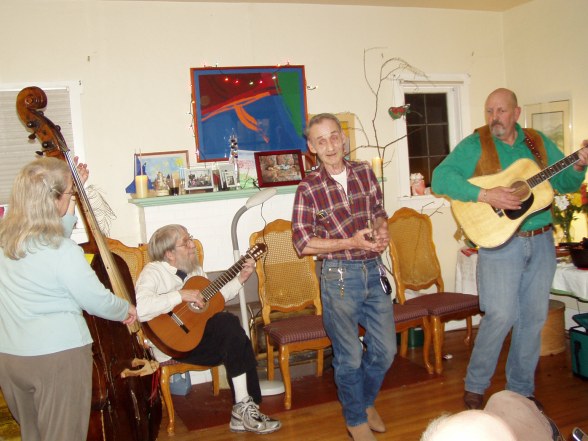
The picture is a music party at my house in 2009, my father seated and Andy Makie on harmonica, Jack Reid standing with the guitar.

Swim fast

This is for Photrablogger’s Mundane Monday Challenge #31. I shot this at the senior swim meet in our 1950s pool. The windows are covered so that everyone can see. The team members each have a secret sister for the meet and deliver posters and gifts at school. This was shot with a zoom lens, across the pool, back lit by the afternoon sun…..

Adverse Childhood Experiences 7 : Revisiting Erikson

Welcome back, to Adverse Childhood Experiences, and I have been thinking about Erikson’s Eight Stages of Psychosocial Development.

These were mentioned in medical school and in residency. I was in medical school from 1989 to 1993 and in Family Practice Residency from 1993 to 1996. Family Practice is at least half psychiatry, if you have time. We are losing the time with patients in order to achieve “production”. I complained about the 20 minutes I was allotted per patient and was told that I should spend 8 minutes with the patient and 12 minutes doing paperwork and labs and calling specialists. This is why I now have my own practice. A new patient under 65 gets 45 minutes and over 65 gets an hour and my “short” visits are 25 minutes. I am a happy doctor. And on the Boards last year I scored highest in psychiatry….

So, back to Erikson. The first stage, at birth to one year is Basic Trust vs Mistrust. “From warm, responsive care infants gain trust or confidence that the world is good.”

I was taught that people would have to “redo” the stage if they “failed”. Let’s look at that a little more closely.

Take an infant in a meth house. No, really, there are babies and small toddlers that have addict parents, alcohol, opiates, methamphetamines. We do not like to think about this.

A social worker told me that the toddlers from a meth house were really difficult to deal with. They do not trust adults. The first thing they do in foster care is hide food.

Hide food? Well, adults on meth are not hungry, sometimes for 24 hours or more, and they are high. So they may not feed the child.

Now, should this child trust the adult? No. No, no, no. This child is adaptable and would like to survive. So even under three they will learn to hide food. In more than one place. This is upsetting to foster care parents, but perfectly understandable from the perspective of the child.

So has the child “failed” the first stage? Well, I would say absolutely not. The child looked at the situation, decided not to starve and learned not to trust adults and hid food. Very sensible. Adaptive.

Is the child “damaged”? That is a very interesting question. After 25 years of family practice medicine I would say that no, the child is not damaged. However, the child has started out with a “crisis” brain. The brain is plastic, all our life, and so this child did what was needed to survive.

Is the child “sick”? Again, I would argue no, though our society often treats the child as sick. We think everyone should be “nice” and “warm” and “why isn’t he/she friendly?” Well, if you started in an addiction household or a crazy household or a war zone, it would not be a good adaptation to be warm and fuzzy to everyone.

How do we treat the adult? In a warm fuzzy nice world the child would have a foster parent who adored them, was patient with them, healed them and they would be a nice adult. I have a friend who said that foster care was so bad that he chose to live in an abandoned car his senior year rather than stay in foster care. He couldn’t play football because he had to get back to the car and under the layer of newspapers before it got too cold. I am sure that most foster parents are total wonders and angels. But some aren’t.

I have a person who says that he lived on the streets from age 8. He did get picked up and put into foster care. He kept running away. “The miliary loved me because I could go from zero to 60 in 60 seconds.” That is, he has crisis wiring. He is great in a crisis. The military is a sort of a safe place, because it has rules and a hierarchy and stands in for the failed parenting. Expect that then you get blown up by an AED in Afganistan and hello, that makes the crisis wiring worse.

How DO we treat the adult? We treat them horribly. We say why can’t this person be nice. We diagnose them we drug them we shun them we isolate them we as a society discriminate against them deny them and we are a horror.

I get so angry when I see the Facebook posts where people say “surround yourself with only nice people”. Ok, how dare you judge someone? You don’t know that person’s history. You don’t know what they grew up with. How dare they say that everyone should be NICE.

I am a Veteran’s Choice provider. I have 6 new veterans in the last 3 months. I suspect I will get more. They are not “NICE”. They come in suspicious, hurt, wary, cadgy. And I don’t care, because I am not “NICE” either. We get along just fine.

When I run into someone who isn’t “NICE”, I think, oh, what has happened to this person? What happened to them when they were little? What happened to them as an adult? How have they been hurt?

Pema Chodron writes about sending love: to your loved ones, to a friend, to an acquaintance, to a stranger, to a difficult person and to an “enemy”.

Send love. And do something about it. Help at your local school, help families on the edge, help single parents, sponsor a child to a sport if their parents can’t afford it, pay for musical instrument lessons, do Big Brother/Big Sister, become a “grandparent” to a child at risk, be a good foster parent, donate to addiction care….

The photo is from 2007, when my children and I visited their father in Colorado. A stranger in the parking lot took it at our request…..
Songs to raise girls: Dark as a Dungeon

We sang Dark as a Dungeon as a family song and at singing parties from when my sister and I were very little. We learned many of the songs before we knew what the words meant. At some age I considered this a cautionary song and was glad that my father was not mining coal. I also decided that I didn’t want to mine coal.

It was written by Merle Travis, whose father was a miner in an Appalachian shaft mine: https://www.youtube.com/watch?v=-FPmSLzsbdM&list=RD-FPmSLzsbdM#t=1. Johnny Cash sang it: and Willie Nelson: https://www.youtube.com/watch?v=nKGCKwACj1I and Willie Nelson https://www.youtube.com/watch?v=s66nbyzqq8o. It became a protest song, to fight for safer conditions. We learned this and Drill ye Terriers, Drill and Sixteen Tons, so we were raised on protest songs.

The song words have morphed a little, since we sang from memory. Here is our version:

Come all ye young fellows so young and so fine
And seek not your fortune in the dark, dreary mines
It will form as a habit and seep in your soul
‘Til the stream of your blood runs as black as the coal

Where it’s dark as a dungeon and damp as the dew
Where the danger is double and the pleasures are few
Where the rain never falls and the sun never shines
It’s dark as a dungeon way down in the mines

I wrote an essay in college about a song that I learned from my mother. I researched versions of Green Grow the Rushes Oh. I had always wondered about some of the verses, because it’s a counting song, from one to 12. Twelve for the twelve apostles and eleven for the eleven that went up to heaven. In an atheist household it takes a while to figure out the meaning of apostle. But other verses are mysterious to this day: nine for the nine Bright Shiners and eight for the April Rainers. In oral traditions if you forget a verse you make up a new one.

There’s many a man that I have seen in my day
Who lived just to labor his whole life away
Like a fiend with his dope and a drunkard his wine
A man will have lust for the lure of the mine

The comparison of  mining to addiction impressed me: “it will creep in your soul, til the stream of your blood runs as dark as the coal”. “Like a fiend with his dope” — opiate addicts were called fiends. And people were called drunkards. So this song also made me cautious about both drugs and alcohol.

We didn’t learn the third verse:

The midnight, the morning, or the middle of the day
It’s the same to the miner who labors away
Where the demons of the death often come by surprise
One fall of the slate and you are buried alive

The last verse interested me. I liked the idea of bones turning to coal over time. My parents were atheists and did not go to church, but there were lots of songs that talked about God or heaven or the devil: including sacred music. We went to big chorus rehearsals when my parents couldn’t find a sitter and we were expected to behave politely during concerts: The Messiah. And we got to go to operettas. I saw Ruddigore in Ithaca at Cornell when I was 5 and the ancestral ghosts stepping out of their portraits and singing was terrible and wonderful.

I hope when I’m gone and the ages shall roll
My body will blacken and turn into coal
Then I’ll look out the door of my heavenly home
And I’ll pity the miners A-diggin’ my bones

The photo is my father’s family and he is in the back, first trumpet. This is the Bayers Family Orchestra. My great grandfather is conducting, my grandmother on violin and my grandfather on saxophone. They became a band when my grandparents moved away, because my grandmother was the only string player.