Emergency preparedness

In Venezuela now
some people get water once a week
and sicken from it

First, withdrawal
When we have our eathquake
Tsumani and roads and bridges are gone

If one in three adults in Utah
Got an opioid prescription in 2014
What are the numbers here?
Opioids
Alcohol
Benzos
Caffeine
After the first wave of death
and grief, withdrawal begins
Not just addictive drugs
from insulin
from blood pressure meds
anticoagulants
seizure medicine
chemo ground to a halt
I read that alcohol is best to trade in disaster
and chaos and loss
Guarded by guns in small gangs
We are told to store water
Where?
If the house falls down
and I can get out, where would I put water?
A bunker in the ground?
I stock straws for water
I wish I could buy 9000
for my town
I stock books for when the computers
go silent
I stock songs in my head
memorized all
I fight for all my patients
Who would I not fight for?
Maybe it would be better to die
or be captured early
I stock love not guns.

http://www.nytimes.com/slideshow/2016/05/26/world/americas/desperate-times-in-venezuela/s/27VENEZUELA-SS-slide-3ZIT.html?_r=0

http://www.theguardian.com/us-news/2016/may/26/utah-mormons-prescription-painkiller-addiction

http://www.newyorker.com/magazine/2015/07/20/the-really-big-one

Weaning methadone

Weaning high dose methadone down to a lower, safer, less likely to stop breathing and die dose is difficult, but it can be done. It needs both a determined patient and a determined physician who are willing to work together.

In 2010 I took a class in buprenorphine treatment for opiate overuse syndrome from the University of WA Medical Center and got started with their telemedicine, once a week, on line with the Pain and Addiction Clinic. Each week there was a teaching half hour and then an hour where we could present patients anonymously on the telemedecine to a panel: a pain specialist, an addiction specialist, a psychiatrist, a physiatrist, and a guest physician. Five consults at once! And they would discuss the case and fax recommendations to me.

Three weeks after the course, police and Medicaid and the DEA shut down the pain clinic 5 blocks from me, taking the computers. I acquired 30 patients in 3 weeks. Trial by fire.

By 2012 Washington State passed a pain medicine law. This says that a primary care physician can only prescribe up to 120 morphine dose equivalents for chronic pain. Anything higher and the patient should be checked by a pain specialist and there were not that many in the state.

120 morphine dose equivalents is up to 20 mg of methadone or possibly 30mg. Methadone has a very long half life so it’s a bit weird. Hydrocodone is one to one with morphine and oxycodone is 1.5 to one, so 90 mg of oxycodone is 120 morphine dose equivalents.

The law requires urine drug screens, careful record keeping, screening for adverse childhood experiences and regular visits. If the pain medicine is not effective, it is to be weaned. I had a couple of patients with over 100mg of methadone daily. That is way over the 120 morphine does equivalents and UW helped me help the patients start weaning.

First, they recommended dropping the dose by about 1/3. Some patients left immediately. I would give patients links to the law on line and explain that the concern is that opioids in combination with other sedating drugs and alcohol are killing more people than either guns or car wrecks or illegal drugs in the United States and the CDC has declared it an epidemic. Honestly, doctors really take the “first, do no harm” seriously and we do not want to kill people. One angry patient said “Your first job is to keep me pain free.” I said, “No, my first job is to not kill you.”

For those who stayed, dropping the dose by 1/4 or 1/3 worked. They had about two weeks of mild withdrawal symptoms and then gradually felt better. These were at doses of 120-150mg methadone daily. We started weaning then by 10mg or about 10% every couple of months. The UW Pain Clinic was doing this simultaneously.

In 2012 the WA PMP started as well. This is a central pharmacy reporting for all controlled substances. Controlled substances means addictive and monitored by the DEA. Even the head of the WA Pain Clinic found that he had 5-6 patients who were getting opioids from 4-5 different doctors. He said, “We do have to check because I thought I knew my patients and I would have none. I was wrong and I was surprised.” Those patients could be taking way more than any of their doctors knew or could be selling pills. Not a happy thing.

Once the methadone folks got down to about 1/3 of the high dose, we had to slow down. For my patients that meant at 40-50mg. The head of the pain clinic said wean by 5 mg or 2.5mg and do it every 6-8 weeks.

As people were weaned, their pain level stayed about the same. They would have an initial increase for the first two weeks. I describe it as follows: Think of it as if you are in a room listening to a stereo. The pain medicine is like noise protecting headphones. Once you are wearing the headphones, your brain says, uh, I can’t hear (feel pain). Hearing (feeling pain) is important information, so the brain turns up the volume. Way up if the dose is really high. Then you take the headphones off: OW!! IT’S TOO LOUD! THE SOUND (PAIN) IS BLOWING OUT YOUR EARDRUMS (HURTING LIKE HELL)!!!

Weaning slowly gives the brain a chance to turn the volume down on the receptors. UW said that at best chronic opiates lower pain an average of 30%. After a while, I said I had trouble telling the difference between withdrawal pain and increased chronic pain: they look the same. UW said, “Looks the same to us too.” But we had frequent visits and an ongoing discussion about pain. Pain is necessary for survival: you have to know if you are injured. Diabetics who can’t feel their feet are instructed to look all over their feet every day to check for injury and infection. I had one gentleman who couldn’t feel his feet and put them on a wood stove because they felt cold. He was needing skin grafts from the burns. So we need to feel pain and not numb it all the time. Also pain has three or more componants: the sharp cut/broken/bruised immediate pain. Second is nerve pain. Third is emotional pain, and we don’t yet have a meter that gives us what percentage each is contributing to the total sum. When I have a new chronic pain patient, I say that ALL THREE must be treated. We can argue about the details, but they can’t leave the emotional piece out…. or they have to find another doctor.

Also, at the higher doses, hyperalgesia is common, pain from the opioid itself. People felt better at lower doses. I gave people the links so they could read the law and the CDC information themselves. They were shocked and angry and threatened at first, but the “I don’t want you to die from too high a dose and it’s not safe and I am sorry.” message would get through eventually.

“Why do you have to do urine drug screens?” say some people. “You are treating me like an addict.”

My reply, “What do you think the addicts tell me?”

The person thinks about it. “The same thing?”

“Absolutely. So I can’t tell unless I check. Also, the boundary between chronic opiate use and opiate overuse is a lot thinner than we thought, so I have to check because all chronic opiate people are at risk for overuse.” The DSM-V combines opioid dependence and opiate addiction into opiate overuse syndrome, a spectrum from mild to moderate to severe.

We also talked about other ways of dealing with chronic pain. John Kabat Zinn’s mindfulness meditation classes drop pain levels by an average of 50%, so better than opioids. And way safer.

Meanwhile, since people could no longer get opioid pills from 4-5 doctors at once, the supply in Washington started drying up. Some people realized they had opiate overuse syndrome as well as chronic pain and turned to methadone clinics or buprenorphine clinics. Others went to heroin. The heroin overdose death rate has risen. I hope that as the stigma surrounding “addiction” changes into a better understanding of chronic pain and opiate overuse syndrome, more people will be able to get treatment and the death rate and heroin use will go back down.

https://depts.washington.edu/anesth/care/pain/pain-roosevelt.shtml

http://www.cdc.gov/cdcgrandrounds/archives/2011/01-february.htm

http://www.doh.wa.gov/ForPublicHealthandHealthcareProviders/HealthcareProfessionsandFacilities/PainManagement

http://www.doh.wa.gov/ForPublicHealthandHealthcareProviders/HealthcareProfessionsandFacilities/PrescriptionMonitoringProgramPMP

http://www.uwmedicine.org/referrals/telehealth-services

https://www.drugabuse.gov/publications/research-reports/prescription-drugs/opioids/what-are-opioids

http://www.umassmed.edu/cfm/about-us/people/2-meet-our-faculty/kabat-zinn-profile/


Advice to young people

My biggest piece of advice to young singles and young couples is: put half of each take home salary away. Married or not married, and I don’t care how committed you are.

I know people who lose their house when one half of a couple is sick, and the other can’t pay all the bills on one salary. We don’t want to think about illness or cancer, but it happens. Young parents, with one very ill and the other with a job, children and a sick spouse. Having a reserve is way more important than keeping up with the Joneses, unless you happen to inherit like Mr. Trump.

If you each put half of your take home salary away, then when life throws surprises at you, you will have a reserve. A big reserve if the surprises hold off for a while. Divide that half into retirement and half into money that you have access to in emergencies.

I listed the top ten causes of death in the US in 2012 here, but lets look by age: http://www.cdc.gov/injury/wisqars/pdf/leading_causes_of_death_by_age_group_2012-a.pdf.

From age 1 to 44 the top cause of death is accidents, unintentional injuries.

Suicide is second from age 15 to 44.

Cancer takes over as number one, malignant neoplasms, at age 45 to 65.

After 65, the number one cause of death is the heart, and that is where the biggest numbers are. But if a younger cause of death affects your family, it feels unfair, wrong, as if we all expect to like to age 78 or beyond.

Untintentional injury, that is, accidents, are broken down here:Β http://www.cdc.gov/injury. When I do physicals on teens, I ask them what the number one cause of death is for teens. They all know the answer, even if they have to think for a moment: motor vehicle accidents.

But lets look at accidents in the age 25-65 age group: poisonings. What? Poisoning? And NOT intentional…. what is going on there? It is drugs, legal and illegal, but more legal. Sedating drugs in combination are effective at sedating people enough to stop breathing and die. Alcohol with benzodiazepines (valium, ativan, etc.), opiates and opioids, sleep medicines such as ambien and sonata, withdrawal from methamphetamines, cocaine, crack….people die. And supplements may be contributing as well.

75 years of US mortality data: http://www.cdc.gov/nchs/data/databriefs/db88.pdf#x2013;2010%20

At birth now in the US the life expectancy averages 78, but not everyone reaches that….some people still die younger and some live longer.

The age of death is rising, world wide. In the US, many of us have a world envied standard of living and yet we have a significant number of people who are anxious and depressed and way too high a rate of substance abuse, alcohol, opiates and opioids, benzodiazepines and yes, marijuana is addictive. How do I reconcile this? How do you reconcile this?

Keep your reserve, young singles and young couples…..

http://www.worldlifeexpectancy.com/usa-cause-of-death-by-age-and-gender
As of the day I am writing this on 5/2/16:

POPULATION
318,857,056

Numbers to be corrected, first set was wrong, wrong, wrong.

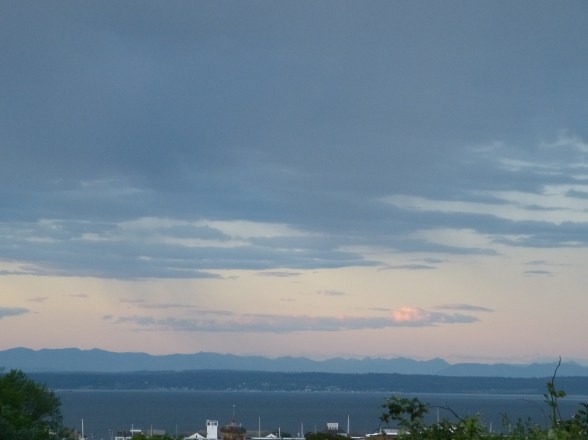
I took the photograph yesterday evening: there were the most amazing Maxfield Parish clouds…. life and death are a mystery.

W is for wrath

W is for wrath, the seventh sin.

From Webster 1913:

Wrath

1. Violent anger; vehement exasperation; indignation; rage; fury; ire.
Wrath is a fire, and jealousy a weed. Spenser.
When the wrath of king Ahasuerus was appeased. Esther ii. 1.
Now smoking and frothing Its tumult and wrath in. Southey.

2. The effects of anger or indignation; the just punishment of an offense or a crime.
“A revenger to execute wrath upon him that doeth evil.” Rom. xiii. 4.
Syn. — Anger; fury; rage; ire; vengeance; indignation; resentment; passion. See Anger.


Wrath is a sin, yet is it ever justified?

I am wrathful about this: http://www.npr.org/sections/health-shots/2016/03/23/471595323/drug-company-jacks-up-cost-of-aid-in-dying-medication

In my state a terminally ill patient may choose Death with Dignity: http://www.doh.wa.gov/YouandYourFamily/IllnessandDisease/DeathwithDignityAct

The person must be terminally ill, must not be suicidal and must go through a process. But one of the tablets prescribed, which only the person may administer to themselves, has had a price increase from $200.00 to over $3000.00.

I heard this from another physician, who has a patient who is going through the process.

I feel wrath and anger and hurt and rage that a corporation is choosing to make an enormous profit from terminally ill patients.

And so wrath may be a sin, but it is also an appropriate feeling at times.

In a sermon about forgiveness, hate is also discussed:

“Let me also say a word here about hatred, since I am speaking of forgiveness as being the release of hatred. ManyΒ  of us,Β  I suppose, like myself, have been taught not to hate.Β  We have been taught that hatred is always a bad thing and there is no place for it.Β  Thus, we feel uncomfortable in the face of this intense emotion and attitude.Β  Many times I have stumbled on the line from the biblical book of Ecclesiastes which reads, β€œThere’s a time to love and a time to hate.”

Can there beΒ  a time to hate?Β  Ironically, whenΒ  reflecting on the subject of forgiveness, I see that there is a place for hatred.
Β 
First,Β  yourΒ  hatredΒ  letsΒ  youΒ  knowΒ  thatΒ  youΒ  areΒ  feelingΒ  diminishedΒ  andΒ  perhapsΒ  being stepped on and treated as no human being ought to be treated.

Secondly,Β  yourΒ  hatredΒ  letsΒ  youΒ  knowΒ  thatΒ  you’reΒ  fightingΒ  backΒ  andΒ  thatΒ  youΒ  have somethingΒ  toΒ  fightΒ  backΒ  with.Β Β Β  ItΒ  letsΒ  youΒ  knowΒ  thatΒ  theΒ  situationΒ  isΒ  intolerableΒ  andΒ  you will not put up with it.

AndΒ  soΒ  hatredΒ  canΒ  beΒ  aΒ  naturalΒ  andΒ  evenΒ  necessaryΒ  responseΒ  toΒ  situationsΒ  thatΒ  threaten human dignity.Β  Says one author, β€œNot to feel resentment when resentment is called for is a sign of servility,… a lack of self-respect.”  (Forgiveness, Haber)”

From: November 15, 2009, here: http://www.quuf.org/index.php?page=2009—2010-sermons

p7
http://www.quuf.org/uploads/Sermons/Is%20Forgiveness%20Always%20Called%20For%20Part%20II%20Nov%2015%2009%20print.pdf

I took the picture in 2007. No wrath here, but three different expressions, and all complex….

Dream: loving and loved

I read this article yesterday: The rise of American authoritarianism.

I ask for a dream about loving and being loved before going to sleep.

I dream of a prison. I am there as a consultant. There is a woman there, younger than me and beautiful, and the men want to know how to get her out of the prison. It has thick walls and iron bars and security exits and alarms. It is clean, modern, bare, and smells worse than a hospital. But it is the men who run the prison and work in it who want to know how to get her out. How to rehabilitate her. She does not listen to or obey their instructions.

They will not let me talk to the woman or go in the cell with her. They hand me a tablet, where I can see her live. As soon as I have the tablet, I know that she is not trapped in the prison. I turn the tablet around slowly, so the image is upside down. Light appears in the center of the tablet. She can leave any time she wants and she frequently is gone. She walks into the light. The connection is with her all the time. I am so glad that she can walk into the light.

I do not tell the men. They built the prison. They are in the prison, though they think that they are keeping her there. The prison is built of what they think should happen, their authority, their rules.

I am sorry for the men, but they would not believe me even if I told them. I have tried many times.

They don’t see that they are the ones who are in prison.

I give the tablet back.

I wake up.

I took the picture in the sunrise mist in 2006, Lake Matinenda, Ontario, Canada.

Adverse Childhood Experiences 8: Social cues

I am thinking about social cues for people with high Adverse Childhood Experience scores. With crisis brain wiring the response to social cues may be very different than what is considered the acceptable “norm”.

I always miss the cue when someone says “see you later”. I think “When?” Then I realize it’s a social comment and they do not in fact plan to see me later. I have a moment of disappointment. I do the same thing when someone says, “Let’s get together for dinner.” or “Let’s have coffee some time!” or “I will call you back!” or “Why don’t you come to our cabin some day?” Yes, I think, when?

And then I think “Liar.”

So I fail social cues….. or do I? Maybe I am not responding to the “correct” or “conventional” or “nice” social cues.

My father drank too much and especially while I was in high school and college. And my mother would enable and cover up and pretend nothing was happening. Children in this situation, which is way too common, develop special skills.

My sister was three years younger. As adults we discussed the stages of drinking and which one we hated most. We would both walk in the house from school with trepidation. In the door and almost feeling the air: what is happening? Am I safe? Do I need to hide? How dangerous is it? How much will it hurt?

I walked in once during high school and missed the cue. I was thinking about something. I thought my father was asleep in the kitchen. I went in to get something. I was very quiet so as not to wake him. I made a cup of tea.

He was not asleep, or else he woke up. And it was the worst stage, or the one I hated most.
Not physical violence. But he started talking. One of things he said was “You can tell me anything.” Now, he meant it. But he was crying by then and I knew I did not want to tell him anything and all I wanted was desperately to leave the room. And neither my sister or my mother was home. Finally I was crying too, because I said “I just want to go read my book.” and he was more crushed and maudlin and emotional and crying. And I tore out of the room and up to my room, as my mother walked in.

I did not cry much. Ever.

I refused to talk to my mother about it.

The next day she said to me, “Your father told me that you were talking about Lamont.” Lamont Cranston was a very beloved cat, The Shadow, who was missing now. Dead, we thought.

I said nothing. Because we had not talked about Lamont. So either my father was lying or else he’d had a blackout, didn’t remember and was making shit up. And if I told my mother the truth, she would back him and deny what I said or make it into a joke.

The stages my sister and I identified were:
1. sober
2. a little bit
3. goofy/silly/makes no sense
4. crying
5. asleep

We were ok with 2 and 5. I don’t think we saw 1 for years. We disliked 3 intensely, especially in public and especially when our mother was doing a cover up dance. And 4 we hated.
And yet I loved my parents and mostly miss them now that they are gone. Except when I remember things like this.

So, what is the point?

I miss “social cues” because that is NOT what the crisis brain, the ACE score brain, pays attention to. I am paying attention to far more intuitive things: body language. Whether what the person is saying matches what I know about them and what they have done in the past. I am looking for whether this person is telling me the truth.

I don’t trust instantly. Why would I?

I said to a counselor once that reading the “cloud” around the person was terribly useful in medicine but made me a social misfit. “I don’t know how to turn it off.” I said. She grimaced and said, “Why do you think I went into counseling?” She said, “I can’t turn it off either but I have learned to ignore it during social situations.” I was in my forties before I realized that there are people who don’t sense this cloud, who trust people until the person is dishonest, who understand that it is just fine to say “Let’s get together.” and not mean it.

Because actually, when someone says “I’ll see you later.” and they don’t mean it, they are saying an untruth. They are not planning to see me later. They don’t mean it. And my brain automatically files that under evidence that this person is not trustworthy. To them it is a social cue that is polite. To some of us, it is clearly something that is not actually true. I pick up on a cloud of social cues, but not the ones that are acceptable or conventional. And I am not the only one.

my sister on the left and me on the right, in the 1960s

Why care for addicts?

Why care for addicts?

Children. If we do addiction medicine and help and treat addicts, we are helping children and their parents and our elderly patients’ children. We are helping families, and that is why I chose Family Practice as my specialty.

Stop thinking of addiction as the evil person who chooses to buy drugs instead of paying their bills. Instead, think of it as a disease where the drug takes over. Essentially, we have trouble with addicts because they lie about using drugs. But I think of it as the drug takes over: when the addict is out of control, the drug has control. The drug is not just lying to the doctor, the spouse, the parents, the family, the police: the drug is lying to the patient too.

The drug says: just a little. You feel so sick. You will feel so much better. Just a tiny bit and you can stop then. No one will know. You are smart. You can do it. You have control. You can just use a tiny bit, just today and then you can stop. They say they are helping you, but they aren’t. Look how horrible you feel! And you need to get the shopping done and you can’t because you are so sick…. just a little. I won’t hurt you. I am your best friend.

I think of drug and alcohol addiction as a loss of boundaries and a loss of control. I treat opiate overuse patients and I explain: you are here to be treated because you have lost your boundaries with this drug. Therefore it is my job to help you rebuild those boundaries. We both know that if the drug takes control, it will lie. So I have to do urine drug tests and hold you to your appointments and refuse to alter MY boundaries to help keep you safe. If the drug is taking over, I will have you come for more frequent visits. You have to keep your part of the contract: going to AA, to NA, to your treatment group, giving urine specimens. These things rebuild your internal boundaries. Meanwhile you and I and drug treatment are the external boundaries. If that fails, I will offer to help you go to inpatient treatment. Some people refuse and go back to the drug. I feel sad but I hope that they will have another chance. Some people die from the drug and are lost.

Addiction is a family illness. The loved one is controlled by the drug and lies. The family WANTS to believe their loved one and often the family “enables” by helping the loved one cover up the illness. Telling the boss that the loved one is sick, procuring them alcohol or giving them their pills, telling the children and the grandparents that everything is ok. Everything is NOT ok and the children are frightened. One parent behaves horribly when they are high or drunk and the other parent is anxious, distracted, stressed and denies the problem. Or BOTH are using and imagine if you are a child in that. Terror and confusion.

Children from addiction homes are more likely to be addicts themselves or marry addicts. They have grown up in confusing lonely dysfunction and exactly how are they supposed to learn to act “normally” or to heal themselves? The parents may have covered well enough that the community tells them how wonderful their father was or how charming their mother was at the funeral. What does the adult child say to that, if they have memories of terror and horror? The children learn to numb the feelings in order to survive the household and they learn to keep their mouths shut: it’s safer. It is very hard to unlearn as an adult.

I have people with opiate overuse syndrome who come to see me with their children. I have drawings by children that have a doctor and a nurse and the words “heroes” underneath and “thank you”. IΒ  have had a young pregnant patient thank me for doing a urine drug screen as routine early in pregnancy. “My friend used meth the whole pregnancy and they never checked,” she said, “Now her baby is messed up.”

Addiction medicine is complicated because we think people should tell the truth. But it is a disease precisely because it’s the loss of control and loss of boundaries that cause the lying. We should be angry at the drug, not the person: love the person and help them change their behavior. We need to stop stigmatizing and demeaning addiction and help people. For them, for their families, for their children and for ourselves.

I took the photo of my daughter on Easter years ago.

Rural medicine crisis: Job offers

One of the signs that we are entering a worse crisis for rural medicine is job offers.

I am starting to keep the email job offers: so far the record is from Texas, a random out of the blue job offer for $500,000 yearly.

One half million dollars for a Family Practice job. I won’t take it. I like my clinic and anyhow, the pace they would set me to work is burning out physicians. They are quitting, though some die instead. A recent article said that this year a physician poll reports the number at burnout this year has risen from 40% to 50%.The job offers roll in. I get phone calls, emails, mailing and now my cat is getting rural family medicine job offers. Really. Desperate times.

Years ago I read that only 30% of family practice doctors are willing to take a rural job and that only 30% of those are willing to do obstetrics in a rural area. I did obstetrics as part of my practice from 1996 to 2009. I stopped when I opened my own practice, because the malpractice price tag is three times as much and my rural hospital was grumpy at me. Starting in my third year of medical school, I did deliveries for 19 years. During my nine years here, the cesarean sections were done by the general surgeons and we did not have an OB-gyn. I called Swedish Hospital Perinatology when I needed help. I got to know them well enough that if I had someone in preterm labor I would call and find out who was on call BEFORE I chose a medicine, because I knew which perinatologist liked terbutaline and which one would rather I would skip it and use procardia. They were fighting out the research: I didn’t know who was right, but it is a huge benefit to have your consultant be happy with your choice if you have to lifeflight the patient by helicopter at 3 am. With a 25 bed rural hospital, we try not to deliver a baby under 35 weeks, and it’s better to fly the baby in mother if you can’t stop the labor.

Back to the numbers: so 33 out of 100 family practice doctors will take a rural job and only 11 of those are willing to do obstetrics. Our first day of medical school, the faculty said, “Shake hands with the person on your right. Shake hands with the person on your left. At least one of the three of you will be sued for malpractice in your career.” Oh, goody, let’s start training with paranoia. Or is it just being realistic and prepared?

I worked for five years between college and medical school and took the GREs first. I thought I was going to get a PhD. However, I did not want to write a thesis and did not want to be one of three world experts in anything. I had a friend who was one of three world experts in honeybee behavior. I asked what happened when they got together. “We argue.” he said. I also did not want to publish or perish, tenure was becoming more of a problem and anyhow, I did not want to be tied to a university. I got a job working as a lab tech in the National Cancer Institute at NIH in Bethesda. Two years there gave me my answer: primary care is the ultimate generalist. I could work anywhere in the world, in a city, in a small town, and there is endless lifelong learning. I took the MCATs and got into medical school, determined to do primary care.

Back to the job offers: 450K for Iowa. 310K, 350K, signing bonus, paid move, 6 weeks “off” (As far as I can tell it’s always unpaid leave. No sick leave, no paid holidays, no paid leave at all. Do factor that in.)Production bonus. No call or phone calls only. Near a city! In a city! Cheap houses! Excellent schools for your children and 6 stellar golf courses! FP job in Texas, 315K, 4 day work week, signing bonus, loan forgiveness!

The most that I’ve made in a year, I think, is less than half the listed average income for family doctors, though that has risen by nearly 1/3 in the last ten years. And that was enough and I didn’t see enough of my two children and the next year I worked less. I have never made the “MGMA average” for what a family doctor makes and it was more than ten years ago. I am below average in income but I think I am above average in personal happiness and way below average in burn out! I made way less last year, because I was out sick for 6 months. Ok, I lost money. However, my clinic still nearly covered expenses and stayed open, with no provider from early June to November 15, thanks to my receptionist, my patients, the PA who stepped in in November and the other independent practitioners in town. The hospital system refused to help except that they took over my 18 patients on controlled substances… after I threatened to complain to the state that they were refusing care. How nice.

I have an old house and old cars. I have a son finishing college and a daughter about to start. More money to retirement seems like a good idea. I now have 25 years as a member of the American Academy of Family Practice and I am an “old” doctor, because I didn’t retire at 50. I told a younger partner at the hospital that I was deliberately being “below average” because I was going for a career with longevity and wanted to avoid burning out. He left town last year….

From the American Academy of Family Practice paper http://www.aafp.org/about/policies/all/rural-practice-paper.html : family practice providers are 15% of physicians in the US, but do 23% of the visits each year. And in rural areas about 42%. “In the U.S. as a whole there is 1 Primary Care physician per 1300 persons while in rural areas the ratio is 1 Primary Care physician per 1910 persons and 1 Family Physician per 2940 persons. In the most rural counties, those with a community of at least 2500 people but no town over 20,000, close to 30,000 additional Family Physicians are needed to achieve the recommended 1:1200 ratio.” I have patients driving from over an hour away because it takes months on the waiting list to see a primary care doctor in their area, and now I am seeing veterans too, because we are more than 40 miles by road from the nearest VA hospital.

This article:Β  http://doctordrain.journalism.cuny.edu/the-broken-system/family-practice-just-doesnt-pay/ makes me laugh. The student says that 90% of family practice visits are probably coughs and colds. Uh, I would say that less than 5% of mine are. Half of my patients are over 65 and what I do is care for chronic disease with some acute disease thrown in. Diabetes, hypertension, coronary artery disease, rheumatoid arthritis, stage III renal failure, opiate overuse syndrome, depression, PTSD, and the average patient has 4-5 chronic diseases, not one. So the complicated ones have 9 chronic diseases. If they have walking pneumonia and diabetes and are 80, what was their last creatinine so I can adjust the antibiotic dose for their stage three renal failure? My oldest current patient is 98, has diabetes and still is out haying…. rural medicine is never ever boring and some days I think, oh, I would pay to see a simple cold. In the last two months one patient had a four vessel bypass, two have hepatitis C, one has hepatitis B and last month I found one with pertussis: whooping cough. And one has to go to the Big City to see the gynecologist-oncologist….

Rural family medicine is the ultimate generalist. I have to know a little bit of everything and know when to call and ask questions and who to call. Once I had an obstetrics patient with severe and confusing back pain after an epidural. I knew it was something peculiar because we could barely control it with opiates and her back exam was fine. I started calling specialists: ob-gyn didn’t know. The nurse anesthetist. My local internist. An orthopedist. A neurologist, the closest one 90 miles away. Then I got it: I called an anesthesiologist in Denver, 250 miles from where I was. He said it was an inflammatory reaction to the epidural medicine and to give her steroids, which would fix it. It did… but it was my being sure that I had something different on my hands and the stubbornness to keep calling until someone knew the answer….

A friend from college got a PhD in genetics and then went to medical school at the same time as I did. We talked when we picked our specialties. She chose pathology. I chose Family Practice. “Not Family Practice!” she said. “Why not?” I asked. “You can’t know everything!” she said. I said, “Well, no one knows everything. Put three top specialists in a room and they argue about the research. The trick is knowing what you know and what you don’t know.”

We need more primary care physicians and more rural family doctors. And it’s only getting worse.

http://www.aafp.org/about/policies/all/rural-practice-paper.html
http://www.ncbi.nlm.nih.gov/pmc/articles/PMC1071163/
http://healthleadersmedia.com/content/COM-208773/Physicians-Offer-Insights-on-Practicing-Rural-Medicine.html
http://www.siumed.edu/academy/jc_articles/Distlehorst_0410.pdf
http://doctordrain.journalism.cuny.edu/the-broken-system/family-practice-just-doesnt-pay/
https://www.aamc.org/newsroom/newsreleases/358410/20131024.html
https://www.washingtonpost.com/news/to-your-health/wp/2014/05/22/how-many-patients-should-your-doctor-see-each-day/
This blog post helped inspire this article: https://theridiculousmrsh.wordpress.com/2015/11/03/why-i-hope-my-doctor-is-off-having-a-cup-of-tea-as-seen-on-the-huffington-post-yup-actual-huffpost/

The picture is some of the madashell doctors on our first trip stumping for single payer health care in 2009.

Where oh where is love?

How could we have love without grief?

The US culture seems to suppress grief, take grief away, heal grief, get over grief, but think about love without grief.

Could we love someone if we didn’t grieve when they died?

No. We couldn’t. That wouldn’t be love. Or that would be the pale shadow of love, love without loss, love that turned from the grave and forgot.

We cannot love without grief, so we need to make room for grief. We need to stand by each other during grief. We need to help each other, be present, be there, say the wrong thing, say the right thing, say nothing and just give love.

Love builds the Taj Mahal. Love writes Rumi’s poems. Love is the memories of the person we loved, we tell our children about them, we hold them in our hearts.

Love loves without logic, without sense. Love in spite of alcohol, addiction, lies, how can a person love an abuser? They love the person, not the abuse. They love the person, not the actions, not when the alcohol takes over, when the meth takes over, when the oxycontin takes over. Love loves the whole person and grieves the damage.

Love and grief are intertwined, a rosebush with thorns, there is no one without the other. No joy without despair, no light without dark, no you without me, no joining without separation.

I enter grief as I enter love, whole heartedly, oh, I may be afraid of the dark but I go there anyhow, I know as the waves close over my head and I sink into the depths:

There is no love without grief.


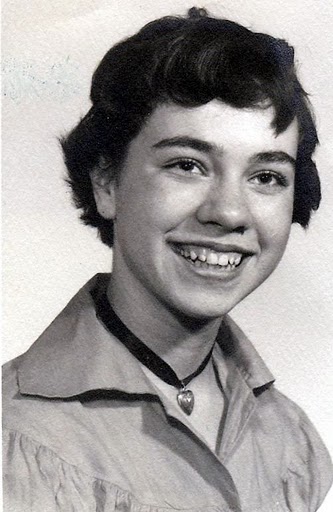
The picture is my mother, Helen Burling Ottaway, in high school. She died of cancer in 2000 and I still miss her terribly.

Adverse Childhood Experiences 7 : Revisiting Erikson

Welcome back, to Adverse Childhood Experiences, and I have been thinking about Erikson’s Eight Stages of Psychosocial Development.

These were mentioned in medical school and in residency. I was in medical school from 1989 to 1993 and in Family Practice Residency from 1993 to 1996. Family Practice is at least half psychiatry, if you have time. We are losing the time with patients in order to achieve “production”. I complained about the 20 minutes I was allotted per patient and was told that I should spend 8 minutes with the patient and 12 minutes doing paperwork and labs and calling specialists. This is why I now have my own practice. A new patient under 65 gets 45 minutes and over 65 gets an hour and my “short” visits are 25 minutes. I am a happy doctor. And on the Boards last year I scored highest in psychiatry….

So, back to Erikson. The first stage, at birth to one year is Basic Trust vs Mistrust. “From warm, responsive care infants gain trust or confidence that the world is good.”

I was taught that people would have to “redo” the stage if they “failed”. Let’s look at that a little more closely.

Take an infant in a meth house. No, really, there are babies and small toddlers that have addict parents, alcohol, opiates, methamphetamines. We do not like to think about this.

A social worker told me that the toddlers from a meth house were really difficult to deal with. They do not trust adults. The first thing they do in foster care is hide food.

Hide food? Well, adults on meth are not hungry, sometimes for 24 hours or more, and they are high. So they may not feed the child.

Now, should this child trust the adult? No. No, no, no. This child is adaptable and would like to survive. So even under three they will learn to hide food. In more than one place. This is upsetting to foster care parents, but perfectly understandable from the perspective of the child.

So has the child “failed” the first stage? Well, I would say absolutely not. The child looked at the situation, decided not to starve and learned not to trust adults and hid food. Very sensible. Adaptive.

Is the child “damaged”? That is a very interesting question. After 25 years of family practice medicine I would say that no, the child is not damaged. However, the child has started out with a “crisis” brain. The brain is plastic, all our life, and so this child did what was needed to survive.

Is the child “sick”? Again, I would argue no, though our society often treats the child as sick. We think everyone should be “nice” and “warm” and “why isn’t he/she friendly?” Well, if you started in an addiction household or a crazy household or a war zone, it would not be a good adaptation to be warm and fuzzy to everyone.

How do we treat the adult? In a warm fuzzy nice world the child would have a foster parent who adored them, was patient with them, healed them and they would be a nice adult. I have a friend who said that foster care was so bad that he chose to live in an abandoned car his senior year rather than stay in foster care. He couldn’t play football because he had to get back to the car and under the layer of newspapers before it got too cold. I am sure that most foster parents are total wonders and angels. But some aren’t.

I have a person who says that he lived on the streets from age 8. He did get picked up and put into foster care. He kept running away. “The miliary loved me because I could go from zero to 60 in 60 seconds.” That is, he has crisis wiring. He is great in a crisis. The military is a sort of a safe place, because it has rules and a hierarchy and stands in for the failed parenting. Expect that then you get blown up by an AED in Afganistan and hello, that makes the crisis wiring worse.

How DO we treat the adult? We treat them horribly. We say why can’t this person be nice. We diagnose them we drug them we shun them we isolate them we as a society discriminate against them deny them and we are a horror.

I get so angry when I see the Facebook posts where people say “surround yourself with only nice people”. Ok, how dare you judge someone? You don’t know that person’s history. You don’t know what they grew up with. How dare they say that everyone should be NICE.

I am a Veteran’s Choice provider. I have 6 new veterans in the last 3 months. I suspect I will get more. They are not “NICE”. They come in suspicious, hurt, wary, cadgy. And I don’t care, because I am not “NICE” either. We get along just fine.

When I run into someone who isn’t “NICE”, I think, oh, what has happened to this person? What happened to them when they were little? What happened to them as an adult? How have they been hurt?

Pema Chodron writes about sending love: to your loved ones, to a friend, to an acquaintance, to a stranger, to a difficult person and to an “enemy”.

Send love. And do something about it. Help at your local school, help families on the edge, help single parents, sponsor a child to a sport if their parents can’t afford it, pay for musical instrument lessons, do Big Brother/Big Sister, become a “grandparent” to a child at risk, be a good foster parent, donate to addiction care….

The photo is from 2007, when my children and I visited their father in Colorado. A stranger in the parking lot took it at our request…..