Last evening my daughter and I were on the Kitsap Peninsula for a kayak excursion. The sunset was gorgeous. Then the mosquitoes came out: itchy. We were happy once we were in our boat!
For the Ragtag Daily Prompt: Itch!


Last evening my daughter and I were on the Kitsap Peninsula for a kayak excursion. The sunset was gorgeous. Then the mosquitoes came out: itchy. We were happy once we were in our boat!
For the Ragtag Daily Prompt: Itch!

From the Kitsap Memorial State Park, yesterday.
For Cee’s Flower of the Day.

Buds not quite blooming yet.

It’s hard not to romanticize a good dancer, especially with fabulous music.

Johnathan Doyle at the Bishop Hotel last Tuesday with friends from Texas and from New Orleans!
For the Ragtag Daily Prompt: romanticize.
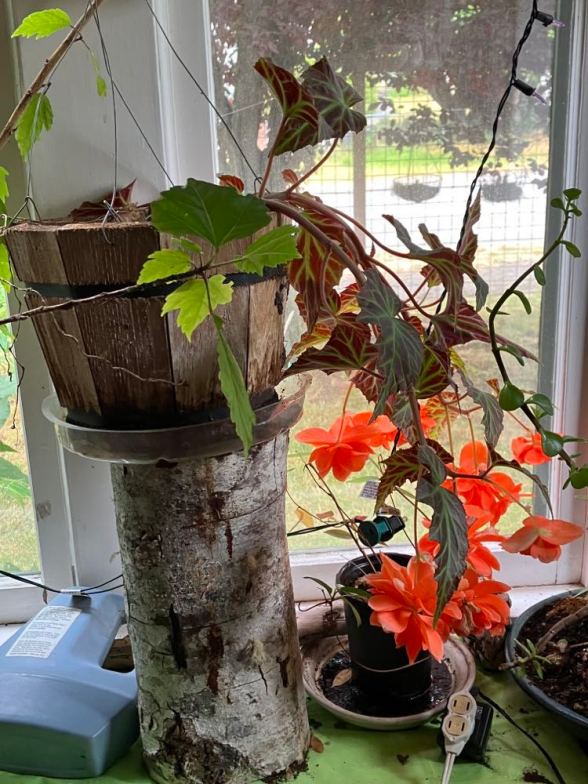
My begonia is the happiest it has ever been.
For Cee’s Flower of the Day.

We have the best deer. Really.
I took the photograph Tuesday night, from the garden behind the Bishop Hotel. “So what?” you say, “She’s just lying there.”
Let’s pan out.

She is on the hill up to the right. She is listening to the jazz, Johnathan Doyle and friends, first time this year playing outside on Tuesday night. She has at least one fawn, too. I spotted it in the garden on the other side of the band. Mom deer came behind the band, stopped and considered whether the jazz was up to her standards or not, and then she went to the hill. The fawn stayed hidden, back to the left of the dancers.

Mom deer stayed close to keep an eye on everyone and she listened to the jazz.
We really do have the most sophisticated deer.
Maybe next she’ll dance or try the saxophone.


Today’s Zoom lecture was about pulmonary manifestations of Long Covid, and this is from the Schmidt Initiative for Long Covid Global ECHO Webinar Series, out of the U of New Mexico.
First of all, the talk is brilliant. The speaker is Lekshmi Santhosh, MD, MAEd, Asso Prof Med, Pulm Critical Care Med, UCSF, Intensive Care.
Two things to start with: she stressed the six minute walk test for patients, to distinguish oxygen desaturation (dropping) from the people who have terrible tachycardia (fast heart rate) only. The oxygen drop indicates that the person needs lung studies and may need oxygen, while tachycardia alone means either a heart problem, chronic fatigue/ME pattern or dysautonomia, where the heart goes fast when the person sits or stands up. Her point was that it’s a simple test and that Long Covid presents in multiple different patterns.
The second point is that there are least five main mechanisms that Long Covid can mess us up and people can have one or many. There is a review article in Nature last month (I need a copy!) and it talks about these five: immune system problems, gut microbiome problems, autoimmune responses, blood clotting/microclotting/endothelial problems and dysfunctional neurological signalling. SO: this is a MESS. She says that patient care needs to be individualized depending on which mechanism(s) are predominant and it can be more than one. This Covid-19 is a hella bad virus.
So: “The underlying biological mechanism may not be the same in each patient.” That is the understatement of the year.
She reiterates that the current diagnostic criteria, subject to change, is symptoms that last longer than 12 weeks after Covid-19 and two months past that. She states that the symptoms can wax and wane and that we need to listen to and believe patients.
In JAMA this month, there is an article that uses big data to find which symptoms are more associated with Long Covid, and lists 13 symptoms. Smell/taste tops the list but fatigue is there too. However, this is not a list for diagnosis, it’s a study list.
She also is careful to say that the treatment for the pulmonary manifestations is not the same as the people with the pattern that resembles chronic fatigue syndrome/ME. The pulmonary people can build exercise tolerance, but the CFS/ME folks need a different regimen, with pacing and energy conservation. That sounds like a subtle difference. I had both though my CFS/ME is weird. It does not put me in bed, I just can get really tired and need to sleep. It’s a bit invisible. People see me dance and would not guess that I have CFS/ME. All relative to previous function and energy, right?
For lung manifestations, she lists a pyramid, with the more rare things at the bottom. As follows:
She says DON’T assume that chest pain is from the lungs and don’t miss cardiovascular. That is, rule out a heart attack and pulmonary embolus first.
Other lung problems have to be kept in mind that are not caused by Covid-19. This list: Reflux associated cough, pleuritic pain, neuromuscular disease, vocal cord dysfunction, tracheal stenosis, tracheomalacia. Watch for those. She says that it is very very important to look at old chest x-rays and CT scans, because those can show previous signs of emphysema/COPD/asthma/fibrosis.
Testing: She puts the 6 minute walk test first. AFTER the thorough history and making sure there are no red flags for pulmonary embolism and heart attack. Those have to ruled out if there is any suspicion. Next: pulmonary function testing. If the DLCO is low, consider a chest CT. Consider TTE -TransThoracic Echocardiogram, to look at the heart. Labs: CBC (blood count), ESR, CRP, thyroid, +/-CPK.
She has diagnosed people who are sent to her with NOT Long Covid: they have metastatic lung cancer, metastatic prostate cancer, new pregnancy, hypersensitivity pneumonitis and many other things. She says, “Don’t assume it is Long Covid. Sometimes it isn’t.”
Now, this is all a formidable list of problems and this is JUST the lungs. Long Covid can affect every system in the body and every patient is different.
She also says that she has done more disability and accommodation paperwork in the last three years than in her entire career before that. That the US disability system is a horrid mess and that she has to talk to employers and insurers OFTEN to say that the person will get better faster and have less long term problems if she treats now and they have rest and return to work may need to be very gradual.
She approaches new patients by asking which symptoms are worst. She thinks about severity of the infection, vaccination status, previous/present other medical problems and habits that can contribute or worsen things (smoking, vaping, exposures). Her clinic is for Long Covid pulmonary, but now they have opened up a neurological branch. They use multiple other specialists as well.
Last quotation: “Until we elucidate the biology and have clinical trials, treatments are largely symptomatic.” So the basic science studies working on immune system, the gut microbiome, the clotting problems, are huge in figuring out what to do in clinical trials. This is a tremendously complex illness and three years into Covid-19, we are still trying to figure out the multiple mechanisms that cause Long Covid.
This was a very hopeful lecture from my standpoint, admitting that this is complex but that we are also working to sort out the mechanisms and work on treatments. She works hard at getting patient input and feedback as well.
Two links: A free PDF from Johns Hopkins on Bouncing Back from Covid. https://www.hopkinsmedicine.org/physical_medicine_rehabilitation/coronavirus-rehabilitation/_files/impact-of-covid-patient-recovery.pdf
The American Physical Therapy Association has articles as well: https://www.apta.org/patient-care/public-health-population-care/long-covid
Also here are webinar links:
SILC Global ECHO Webinar Series Resource Links June 28, 2023
Now, how will I use the Ragtag Daily Prompt riposte for this? I think I will just say again how important it is to listen to and believe our patients!
The photograph is from Marrowstone Island, East Beach. The shape in the driftwood is sort of lung shaped.

Wild ones from the road up to Deer Park, Olympic National Park.
For Cee’s Flower of the Day.
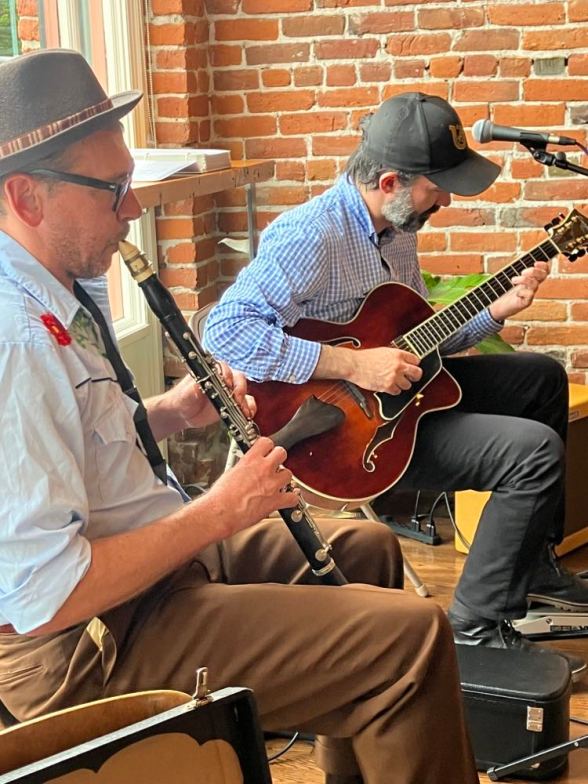
Johnathan Doyle and Jack Dwyer last week at the Bishop. The music is the bee’s knees!
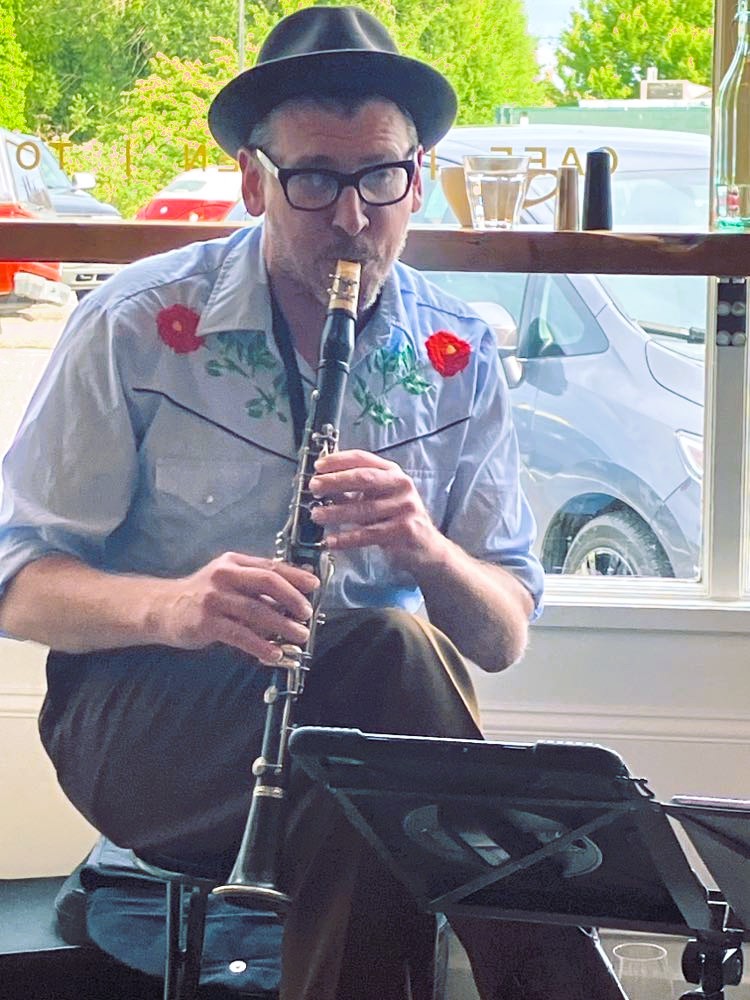
https://www.jonathandoylemusic.com/
For the Ragtag Daily Prompt: the bee’s knees.

Taken up near Deer Park yesterday.
For Cee’s Flower of the Day.
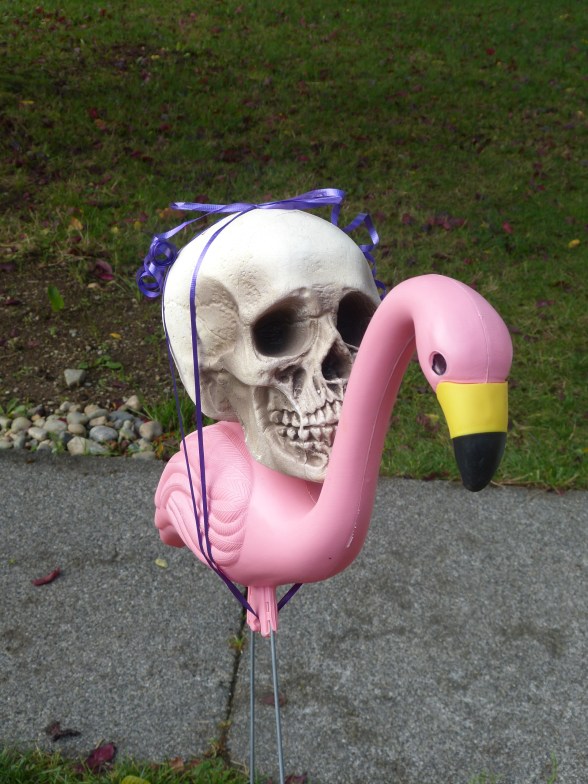
I am attending multiple Zoom conferences on Long Covid and Chronic Fatigue and PANS/PANDAS and fibromyalgia. The speakers are talking hard science, digging in to the immune system to figure out what is wrong. Then they can find a drug to fix it.
Maybe it doesn’t need to be fixed. I think the immune system is smarter than we are and it knows that Covid-19 is a really really bad virus. What the immune system wants is to keep from getting any other infections so it shuts us down. It hits the chronic fatigue button, so we stay home or in bed. It hits the fibromyalgia button so that it hurts to move: we stay home or in bed. It hits the PANS button so that antibodies seriously change our behavior and we stay home or in bed. Anyone see a theme here? I think that the immune “over-response” is not an over-response. It’s not broken. It is trying to reduce exposure and just maybe we should pay attention. I thought that in residency, in the early 1990s, when chronic fatigue patients would interview me to see if I “believed” in chronic fatigue. Heck yeah, I said, but I don’t know what it is or how to fix it. My chronic fatigue patients had something in common: they were all either working 12-14 hour days continuously when they crashed, or they overworked and had insane stress, deaths of loved ones, car wrecks, accused of a crime, something horrible. The workers all wanted “to get back to where I was.” I would ask, “You want to work 12-14 hours a day again?” “Yes!” they’d say, “I want to be just like I was in the past!” “Um, but that’s what crashed you. Do you think maybe your body is not up to that?” “FIX ME.” I would try to improve things, but fix them back to what crashed them? No way and anyhow, that is not really sane.
There are some levels of illness where we have to intervene. In really bad PANDAS, antibodies to the brain are followed by macrophages that destroy brain cells. I was horrified and wanted to run around screaming “NOT MY BRAIN!” when I heard that. Then I thought, don’t be silly, I am in my 60s and if I had brain eating cells it would have happened by now. I consider myself really really lucky to have the mildest version. At least, that’s what it seems to be. (Officially we don’t believe in PANS or PANDAS in adults in the US but we do in Europe and Canada. Ironic.) With that version, especially in children, I am all for intervention, as soon as possible. And it’s not that I do not think we should intervene in these illnesses. I just think we need to step back and think a little and just maybe listen to our bodies and listen to the immune system. Slow down. Breathe. Watch some stupid cat videos. Whatever makes you relax and laugh. Reduce stress. Limit stupid hyper news to 15 minutes a day and not before bed, ok? Reduce the drama.
I am liking movies less and less. The drama bugs and bores me. I might last an hour. I have nearly quit going to our downtown movie house because it’s always “moving” and art films. Bleagh, drama. Also when it’s about illness or addiction, I want to argue with it. Easy lying endings which are nothing like reality. I like cartoons and sometimes superheroines, but it’s all drama too. I am tired of people behaving badly and don’t want to watch it on tv or a movie. There’s enough for me in the real world. I think it’s time to bring back musicals. I would watch them. Maybe. My father’s last movie was Blazing Saddles. He refused to ever go to another movie. I think I understand that now.
None of us are immune to stress or immune to infection. A person might be immune to Covid-19, or they might be immune until the tenth or hundredth strain shows up. I chose Family Practice for my specialty because I wanted to have children and be able to see them. I thought about Obstetrics-Gynecology or General Surgery, because I loved babies and loved surgery, but the Ob-Gyn residency was 4 years and General Surgery was 7 years and I was starting medical school five years out of college. Choose the more flexible and portable specialty and go rural.
Doctors and nurses are burning out because hospitals and administrators “maximize production”. Hospitals and administrators are stupid and destroying medicine. It’s not about money, it’s about helping people and science and healing. Having it be about money is soul-destroying and causes moral injury to any ethical provider. If we’d prefer unethical ones, keep on the present path. Otherwise we need single payer health care so that any physician or nurse can take care of whoever shows up. The system is breaking down more and more and it is hard to watch. Another nail of stress in the coffin of ethical medicine. I suppose when enough people die, change will come.
My working theory is that anyone can get one of these immune system illnesses: chronic fatigue, fibromyalgia, PANS/PANDAS and so forth. Medicine says that Hashimoto’s Thyroiditis, antibodies to the thyroid is the most common autoimmune disorder, but that may change. The evidence is mounting that Long Covid and these other “vague” illnesses are immune system shifts. Immune systems in “Code Red”, let’s not catch anything else. Are they an illness or are they our immune system trying to keep us quiet to protect us? I think the latter. Time may tell. I am listening to the science and listening to my body, both.
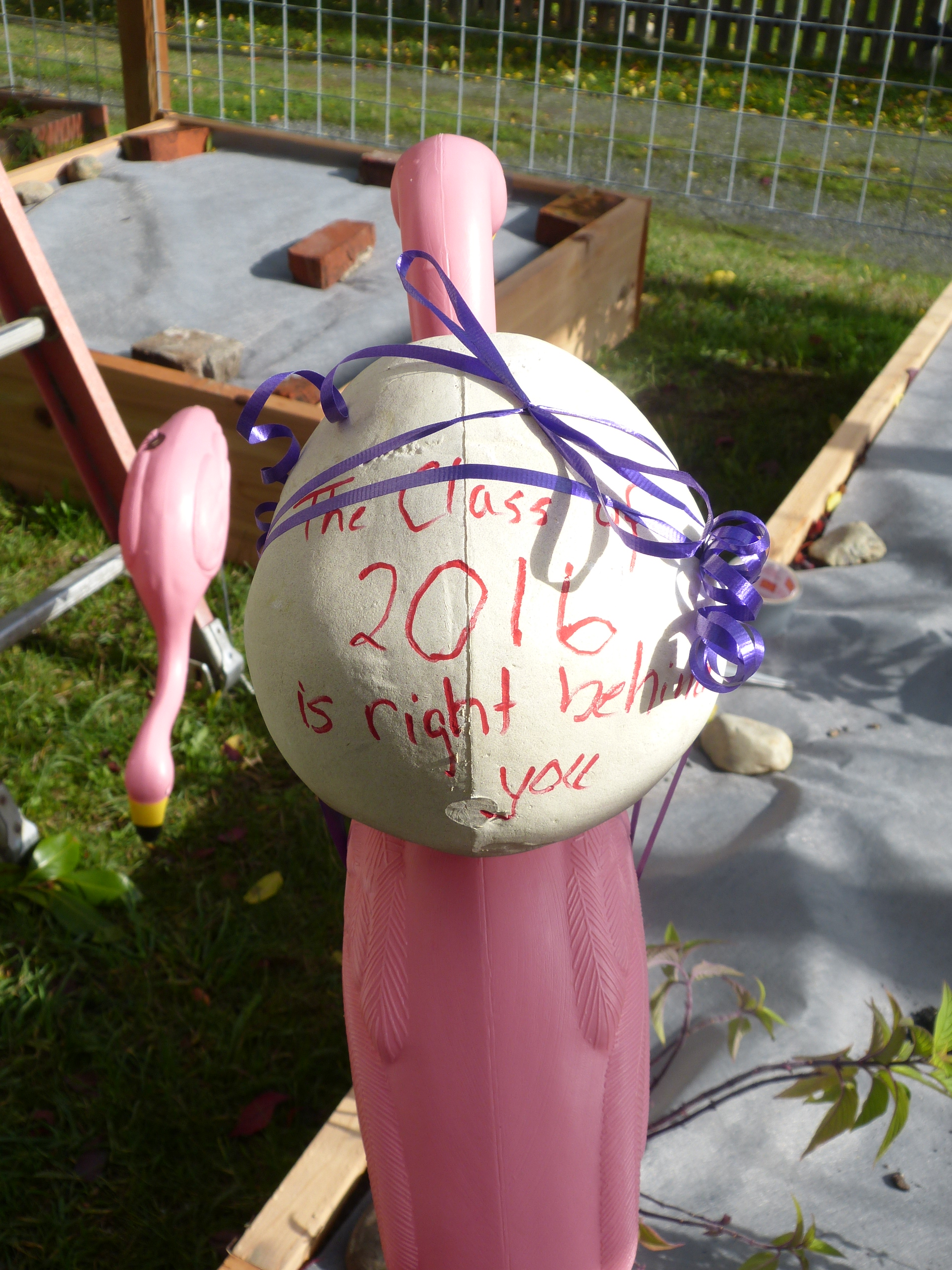
The photographs are from 2016, when a flock appeared in my yard. They demanded money to be moved to the next house.
For the Ragtag Daily Prompt: fiddlesticks. Oh, fiddlesticks, we have to figure out the very very complicated immune system. Or listen to it.
BLIND WILDERNESS
in front of the garden gate - JezzieG
Discover and re-discover Mexico’s cuisine, culture and history through the recipes, backyard stories and other interesting findings of an expatriate in Canada
Or not, depending on my mood
All those moments will be lost in time, like tears in rain!
An onion has many layers. So have I!
Exploring the great outdoors one step at a time
Some of the creative paths that escaped from my brain!
Books, reading and more ... with an Australian focus ... written on Ngunnawal Country
Engaging in some lyrical athletics whilst painting pictures with words and pounding the pavement. I run; blog; write poetry; chase after my kids & drink coffee.
Coast-to-coast US bike tour
Generative AI
Climbing, Outdoors, Life!
imperfect pictures
Refugees welcome - Flüchtlinge willkommen I am teaching German to refugees. Ich unterrichte geflüchtete Menschen in der deutschen Sprache. I am writing this blog in English and German because my friends speak English and German. Ich schreibe auf Deutsch und Englisch, weil meine Freunde Deutsch und Englisch sprechen.
En fotoblogg
Books by author Diana Coombes
NEW FLOWERY JOURNEYS
in search of a better us
Personal Blog
Art from the Earth
𝖠𝗇𝗈𝗍𝗁𝖾𝗋 𝖶𝗈𝗋𝖽𝖯𝗋𝖾𝗌𝗌.𝖼𝗈𝗆 𝗌𝗂𝗍𝖾.
Taking the camera for a walk!!!
From the Existential to the Mundane - From Poetry to Prose
1 Man and His Bloody Dog
Homepage Engaging the World, Hearing the World and speaking for the World.
Anne M Bray's art blog, and then some.
My Personal Rants, Ravings, & Ruminations
 KO Rural Mad As Hell Blog
You must be logged in to post a comment.