Weaning methadone

Weaning high dose methadone down to a lower, safer, less likely to stop breathing and die dose is difficult, but it can be done. It needs both a determined patient and a determined physician who are willing to work together.

In 2010 I took a class in buprenorphine treatment for opiate overuse syndrome from the University of WA Medical Center and got started with their telemedicine, once a week, on line with the Pain and Addiction Clinic. Each week there was a teaching half hour and then an hour where we could present patients anonymously on the telemedecine to a panel: a pain specialist, an addiction specialist, a psychiatrist, a physiatrist, and a guest physician. Five consults at once! And they would discuss the case and fax recommendations to me.

Three weeks after the course, police and Medicaid and the DEA shut down the pain clinic 5 blocks from me, taking the computers. I acquired 30 patients in 3 weeks. Trial by fire.

By 2012 Washington State passed a pain medicine law. This says that a primary care physician can only prescribe up to 120 morphine dose equivalents for chronic pain. Anything higher and the patient should be checked by a pain specialist and there were not that many in the state.

120 morphine dose equivalents is up to 20 mg of methadone or possibly 30mg. Methadone has a very long half life so it’s a bit weird. Hydrocodone is one to one with morphine and oxycodone is 1.5 to one, so 90 mg of oxycodone is 120 morphine dose equivalents.

The law requires urine drug screens, careful record keeping, screening for adverse childhood experiences and regular visits. If the pain medicine is not effective, it is to be weaned. I had a couple of patients with over 100mg of methadone daily. That is way over the 120 morphine does equivalents and UW helped me help the patients start weaning.

First, they recommended dropping the dose by about 1/3. Some patients left immediately. I would give patients links to the law on line and explain that the concern is that opioids in combination with other sedating drugs and alcohol are killing more people than either guns or car wrecks or illegal drugs in the United States and the CDC has declared it an epidemic. Honestly, doctors really take the “first, do no harm” seriously and we do not want to kill people. One angry patient said “Your first job is to keep me pain free.” I said, “No, my first job is to not kill you.”

For those who stayed, dropping the dose by 1/4 or 1/3 worked. They had about two weeks of mild withdrawal symptoms and then gradually felt better. These were at doses of 120-150mg methadone daily. We started weaning then by 10mg or about 10% every couple of months. The UW Pain Clinic was doing this simultaneously.

In 2012 the WA PMP started as well. This is a central pharmacy reporting for all controlled substances. Controlled substances means addictive and monitored by the DEA. Even the head of the WA Pain Clinic found that he had 5-6 patients who were getting opioids from 4-5 different doctors. He said, “We do have to check because I thought I knew my patients and I would have none. I was wrong and I was surprised.” Those patients could be taking way more than any of their doctors knew or could be selling pills. Not a happy thing.

Once the methadone folks got down to about 1/3 of the high dose, we had to slow down. For my patients that meant at 40-50mg. The head of the pain clinic said wean by 5 mg or 2.5mg and do it every 6-8 weeks.

As people were weaned, their pain level stayed about the same. They would have an initial increase for the first two weeks. I describe it as follows: Think of it as if you are in a room listening to a stereo. The pain medicine is like noise protecting headphones. Once you are wearing the headphones, your brain says, uh, I can’t hear (feel pain). Hearing (feeling pain) is important information, so the brain turns up the volume. Way up if the dose is really high. Then you take the headphones off: OW!! IT’S TOO LOUD! THE SOUND (PAIN) IS BLOWING OUT YOUR EARDRUMS (HURTING LIKE HELL)!!!

Weaning slowly gives the brain a chance to turn the volume down on the receptors. UW said that at best chronic opiates lower pain an average of 30%. After a while, I said I had trouble telling the difference between withdrawal pain and increased chronic pain: they look the same. UW said, “Looks the same to us too.” But we had frequent visits and an ongoing discussion about pain. Pain is necessary for survival: you have to know if you are injured. Diabetics who can’t feel their feet are instructed to look all over their feet every day to check for injury and infection. I had one gentleman who couldn’t feel his feet and put them on a wood stove because they felt cold. He was needing skin grafts from the burns. So we need to feel pain and not numb it all the time. Also pain has three or more componants: the sharp cut/broken/bruised immediate pain. Second is nerve pain. Third is emotional pain, and we don’t yet have a meter that gives us what percentage each is contributing to the total sum. When I have a new chronic pain patient, I say that ALL THREE must be treated. We can argue about the details, but they can’t leave the emotional piece out…. or they have to find another doctor.

Also, at the higher doses, hyperalgesia is common, pain from the opioid itself. People felt better at lower doses. I gave people the links so they could read the law and the CDC information themselves. They were shocked and angry and threatened at first, but the “I don’t want you to die from too high a dose and it’s not safe and I am sorry.” message would get through eventually.

“Why do you have to do urine drug screens?” say some people. “You are treating me like an addict.”

My reply, “What do you think the addicts tell me?”

The person thinks about it. “The same thing?”

“Absolutely. So I can’t tell unless I check. Also, the boundary between chronic opiate use and opiate overuse is a lot thinner than we thought, so I have to check because all chronic opiate people are at risk for overuse.” The DSM-V combines opioid dependence and opiate addiction into opiate overuse syndrome, a spectrum from mild to moderate to severe.

We also talked about other ways of dealing with chronic pain. John Kabat Zinn’s mindfulness meditation classes drop pain levels by an average of 50%, so better than opioids. And way safer.

Meanwhile, since people could no longer get opioid pills from 4-5 doctors at once, the supply in Washington started drying up. Some people realized they had opiate overuse syndrome as well as chronic pain and turned to methadone clinics or buprenorphine clinics. Others went to heroin. The heroin overdose death rate has risen. I hope that as the stigma surrounding “addiction” changes into a better understanding of chronic pain and opiate overuse syndrome, more people will be able to get treatment and the death rate and heroin use will go back down.

https://depts.washington.edu/anesth/care/pain/pain-roosevelt.shtml

http://www.cdc.gov/cdcgrandrounds/archives/2011/01-february.htm

http://www.doh.wa.gov/ForPublicHealthandHealthcareProviders/HealthcareProfessionsandFacilities/PainManagement

http://www.doh.wa.gov/ForPublicHealthandHealthcareProviders/HealthcareProfessionsandFacilities/PrescriptionMonitoringProgramPMP

http://www.uwmedicine.org/referrals/telehealth-services

https://www.drugabuse.gov/publications/research-reports/prescription-drugs/opioids/what-are-opioids

http://www.umassmed.edu/cfm/about-us/people/2-meet-our-faculty/kabat-zinn-profile/


does chronic pain kill you?

Another writer sent me this story, saying that chronic pain killed Prince, not an overdose.

http://www.rawstory.com/2016/05/prince-did-not-die-from-pain-pills-he-died-from-chronic-pain/

My response is complex.

1. Is chronic pain an “illness” in it’s own right?

My answer is yes and no. It’s complicated and our understanding is evolving. Right now I think of chronic pain as a switch in the brain that gets thrown. It can be thrown by adverse childhood experiences, by infection, by trauma or war or abuse, by too much stress… or a combination of any of these.

2. Why a switch in the brain?

In fibromyalgia patients we can’t find much on physical exam, except that the pain seems out of proportion to the exam. Ditto with chronic fatigue, reflex sympathetic dystrophy, TMJ, etc. However, now we can image the brain with a functional MRI and watch which parts are lighting up and how much. A study of “normal” and fibromyalgia patients involved a standardized pain stimulus: a thumbscrew. (Kinky, right?) The normal patients said the pain stimulus was 3-4 out of 10 and their brains lit up a certain amount. The fibromyalgia patients said the same pain stimulus was 7-8 out of 10 and the pain parts of the brain lit up MORE corresponding to their pain level. So they are not lying… and it IS in their heads. Sort of. We aren’t sure whether the muscle is yelling more than normal or whether the brain is hypersensitive or both. My guess would be both.

And I think this is an adaptation. It is to get us to rest, heal, calm down, introspect, stop being type A, etc. Boy, do we suck at it. Though recently I had a person in clinic who said what their body wanted to do was nothing. They just wanted to lie around. I said, well, ok, so when can you do that? They did, for two weeks, at the holidays. And my patient said, “One day I had a cup of tea and a book and the cat on my lap and the dog at my feet. I realized that my adrenaline system was turning off and I felt calm and relaxed. Healed.” Back at work the person cannot always maintain it but is getting better at it.

3. What does this have to do with Prince?

The problem is that for 20 years we treated chronic pain with opiates. Unfortunately on continuous opiates, the brain cells change in many people and “down-regulate” the opiate receptors. Less receptors, the pain rises. The person needs more opiate. The brain removes more receptors. So two myths: one that if you have chronic pain and take medicine as directed, you can’t get addicted. Only dependent. Since that is a myth, the DSM-V has combined addiction and dependence into one diagnosis: opioid overuse syndrome. It is a spectrum, not two separate responses.

The second myth is that if you give enough opioid, it will help the pain. Well, no. UW Pain and Addiction Clinic says that on average pain is reduced about 30% by opiods, whatever the dose. And high doses start causing some weird  hyperalgesias. I’ve weaned two people from over 100mg methadone daily down to 20-30mg. It took two years. They felt better on the lower dose after they got through withdrawal symptoms and a short term increase in the pain receptors complaining at them. And they are much less likely to overdose and die.

Page two here http://www.supportprop.org/wp-content/uploads/2014/01/PROP_OpioidPrescribing.pdf discusses current knowledge about opioids.

4. So like, Prince?

He may have died from a combination of fatigue and sedating drugs. If you get enough sedating drugs, then you stop breathing. Opioids are the biggest offenders combined with alcohol or sleep medicine like ambien or benzodiazepines like valium or ativan or alprazolam or muscle relaxants like methacarbomal or a combination of all of the above. I am a strict physician about urine drugs screens and I do the dip in clinic in front of the person. Way too often, the person does not tell me about the alprazolam or whatever until I am holding the dip over the cup…. and that’s when they tell me. They got it from the ER or a friend or two years ago or … took their dog’s. Really.

He may have died from influenza, if he had it, with sedating drugs. Bad influenza causes lung tissue swelling and can mess up your oxygenation. Your heart has to take up the slack and go faster. If you are trying to work and your heart rate is well above normal, it’s exhausting. It can kill you.

He may have died from overwork, another infection, sedating medicines…. but not directly from chronic pain. Chronic pain slows us but I do not think it kills us*. What kills us is trying to treat it with a pill instead of resting and doing gentle exercise and saying: What does my body want?


5. Overdose?

Also, are we talking about an accidental overdose? Are we talking about drug abuse? Are we talking about accidental death or suicide or do we as a society think that addiction deserves overdose death but a person taking medicine for chronic pain is a tragedy? Aren’t we a bit judgemental?

Prince may have taken a pain pill as directed but taken it with too many other controlled substances or with alcohol or while sick and exhausted. Overdose means too high a dose. If it was two percocets, alcohol, flu and xanax…. it could be an accidental poisoning.

6. Are you sure?

No. Medicine changes. Our understanding of the brain changes. Science is about change and deepening understanding. We are barely getting started on the brain and I would say that we are in preschool there.


*Stress alone can cause heart attacks and sudden death:    http://www.health.harvard.edu/blog/stress-cardiomyopathy-a-different-kind-of-heart-attack-201509038239

The photograph is from a week ago, part of my Maxfield Parish cloud series, zoomed way in to the mountains across the water.


Maxfield Parish clouds I

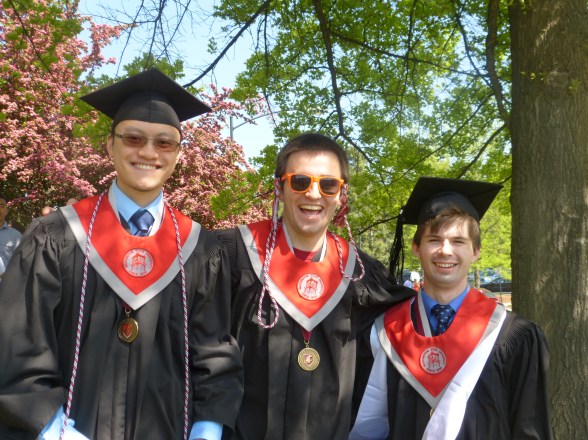
This is for photrablogger’s Mundane Monday Challenge #58, though Monday didn’t feel mundane at all! My son graduated from WSU this weekend and we were in Pullman, in the frenzy of excited students and parents and families.

The photograph is from last Monday. I left chorus and the clouds put on a gorgeous show over Port Townsend Bay, light and lit like a Maxfield Parish painting….

Congratulations to all of the graduates everywhere….

Advice to young people

My biggest piece of advice to young singles and young couples is: put half of each take home salary away. Married or not married, and I don’t care how committed you are.

I know people who lose their house when one half of a couple is sick, and the other can’t pay all the bills on one salary. We don’t want to think about illness or cancer, but it happens. Young parents, with one very ill and the other with a job, children and a sick spouse. Having a reserve is way more important than keeping up with the Joneses, unless you happen to inherit like Mr. Trump.

If you each put half of your take home salary away, then when life throws surprises at you, you will have a reserve. A big reserve if the surprises hold off for a while. Divide that half into retirement and half into money that you have access to in emergencies.

I listed the top ten causes of death in the US in 2012 here, but lets look by age: http://www.cdc.gov/injury/wisqars/pdf/leading_causes_of_death_by_age_group_2012-a.pdf.

From age 1 to 44 the top cause of death is accidents, unintentional injuries.

Suicide is second from age 15 to 44.

Cancer takes over as number one, malignant neoplasms, at age 45 to 65.

After 65, the number one cause of death is the heart, and that is where the biggest numbers are. But if a younger cause of death affects your family, it feels unfair, wrong, as if we all expect to like to age 78 or beyond.

Untintentional injury, that is, accidents, are broken down here: http://www.cdc.gov/injury. When I do physicals on teens, I ask them what the number one cause of death is for teens. They all know the answer, even if they have to think for a moment: motor vehicle accidents.

But lets look at accidents in the age 25-65 age group: poisonings. What? Poisoning? And NOT intentional…. what is going on there? It is drugs, legal and illegal, but more legal. Sedating drugs in combination are effective at sedating people enough to stop breathing and die. Alcohol with benzodiazepines (valium, ativan, etc.), opiates and opioids, sleep medicines such as ambien and sonata, withdrawal from methamphetamines, cocaine, crack….people die. And supplements may be contributing as well.

75 years of US mortality data: http://www.cdc.gov/nchs/data/databriefs/db88.pdf#x2013;2010%20

At birth now in the US the life expectancy averages 78, but not everyone reaches that….some people still die younger and some live longer.

The age of death is rising, world wide. In the US, many of us have a world envied standard of living and yet we have a significant number of people who are anxious and depressed and way too high a rate of substance abuse, alcohol, opiates and opioids, benzodiazepines and yes, marijuana is addictive. How do I reconcile this? How do you reconcile this?

Keep your reserve, young singles and young couples…..

http://www.worldlifeexpectancy.com/usa-cause-of-death-by-age-and-gender
As of the day I am writing this on 5/2/16:

POPULATION
318,857,056

Numbers to be corrected, first set was wrong, wrong, wrong.

I took the photograph yesterday evening: there were the most amazing Maxfield Parish clouds…. life and death are a mystery.