Rural medicine crisis: Job offers

One of the signs that we are entering a worse crisis for rural medicine is job offers.

I am starting to keep the email job offers: so far the record is from Texas, a random out of the blue job offer for $500,000 yearly.

One half million dollars for a Family Practice job. I won’t take it. I like my clinic and anyhow, the pace they would set me to work is burning out physicians. They are quitting, though some die instead. A recent article said that this year a physician poll reports the number at burnout this year has risen from 40% to 50%.The job offers roll in. I get phone calls, emails, mailing and now my cat is getting rural family medicine job offers. Really. Desperate times.

Years ago I read that only 30% of family practice doctors are willing to take a rural job and that only 30% of those are willing to do obstetrics in a rural area. I did obstetrics as part of my practice from 1996 to 2009. I stopped when I opened my own practice, because the malpractice price tag is three times as much and my rural hospital was grumpy at me. Starting in my third year of medical school, I did deliveries for 19 years. During my nine years here, the cesarean sections were done by the general surgeons and we did not have an OB-gyn. I called Swedish Hospital Perinatology when I needed help. I got to know them well enough that if I had someone in preterm labor I would call and find out who was on call BEFORE I chose a medicine, because I knew which perinatologist liked terbutaline and which one would rather I would skip it and use procardia. They were fighting out the research: I didn’t know who was right, but it is a huge benefit to have your consultant be happy with your choice if you have to lifeflight the patient by helicopter at 3 am. With a 25 bed rural hospital, we try not to deliver a baby under 35 weeks, and it’s better to fly the baby in mother if you can’t stop the labor.

Back to the numbers: so 33 out of 100 family practice doctors will take a rural job and only 11 of those are willing to do obstetrics. Our first day of medical school, the faculty said, “Shake hands with the person on your right. Shake hands with the person on your left. At least one of the three of you will be sued for malpractice in your career.” Oh, goody, let’s start training with paranoia. Or is it just being realistic and prepared?

I worked for five years between college and medical school and took the GREs first. I thought I was going to get a PhD. However, I did not want to write a thesis and did not want to be one of three world experts in anything. I had a friend who was one of three world experts in honeybee behavior. I asked what happened when they got together. “We argue.” he said. I also did not want to publish or perish, tenure was becoming more of a problem and anyhow, I did not want to be tied to a university. I got a job working as a lab tech in the National Cancer Institute at NIH in Bethesda. Two years there gave me my answer: primary care is the ultimate generalist. I could work anywhere in the world, in a city, in a small town, and there is endless lifelong learning. I took the MCATs and got into medical school, determined to do primary care.

Back to the job offers: 450K for Iowa. 310K, 350K, signing bonus, paid move, 6 weeks “off” (As far as I can tell it’s always unpaid leave. No sick leave, no paid holidays, no paid leave at all. Do factor that in.)Production bonus. No call or phone calls only. Near a city! In a city! Cheap houses! Excellent schools for your children and 6 stellar golf courses! FP job in Texas, 315K, 4 day work week, signing bonus, loan forgiveness!

The most that I’ve made in a year, I think, is less than half the listed average income for family doctors, though that has risen by nearly 1/3 in the last ten years. And that was enough and I didn’t see enough of my two children and the next year I worked less. I have never made the “MGMA average” for what a family doctor makes and it was more than ten years ago. I am below average in income but I think I am above average in personal happiness and way below average in burn out! I made way less last year, because I was out sick for 6 months. Ok, I lost money. However, my clinic still nearly covered expenses and stayed open, with no provider from early June to November 15, thanks to my receptionist, my patients, the PA who stepped in in November and the other independent practitioners in town. The hospital system refused to help except that they took over my 18 patients on controlled substances… after I threatened to complain to the state that they were refusing care. How nice.

I have an old house and old cars. I have a son finishing college and a daughter about to start. More money to retirement seems like a good idea. I now have 25 years as a member of the American Academy of Family Practice and I am an “old” doctor, because I didn’t retire at 50. I told a younger partner at the hospital that I was deliberately being “below average” because I was going for a career with longevity and wanted to avoid burning out. He left town last year….

From the American Academy of Family Practice paper http://www.aafp.org/about/policies/all/rural-practice-paper.html : family practice providers are 15% of physicians in the US, but do 23% of the visits each year. And in rural areas about 42%. “In the U.S. as a whole there is 1 Primary Care physician per 1300 persons while in rural areas the ratio is 1 Primary Care physician per 1910 persons and 1 Family Physician per 2940 persons. In the most rural counties, those with a community of at least 2500 people but no town over 20,000, close to 30,000 additional Family Physicians are needed to achieve the recommended 1:1200 ratio.” I have patients driving from over an hour away because it takes months on the waiting list to see a primary care doctor in their area, and now I am seeing veterans too, because we are more than 40 miles by road from the nearest VA hospital.

This article:Β  http://doctordrain.journalism.cuny.edu/the-broken-system/family-practice-just-doesnt-pay/ makes me laugh. The student says that 90% of family practice visits are probably coughs and colds. Uh, I would say that less than 5% of mine are. Half of my patients are over 65 and what I do is care for chronic disease with some acute disease thrown in. Diabetes, hypertension, coronary artery disease, rheumatoid arthritis, stage III renal failure, opiate overuse syndrome, depression, PTSD, and the average patient has 4-5 chronic diseases, not one. So the complicated ones have 9 chronic diseases. If they have walking pneumonia and diabetes and are 80, what was their last creatinine so I can adjust the antibiotic dose for their stage three renal failure? My oldest current patient is 98, has diabetes and still is out haying…. rural medicine is never ever boring and some days I think, oh, I would pay to see a simple cold. In the last two months one patient had a four vessel bypass, two have hepatitis C, one has hepatitis B and last month I found one with pertussis: whooping cough. And one has to go to the Big City to see the gynecologist-oncologist….

Rural family medicine is the ultimate generalist. I have to know a little bit of everything and know when to call and ask questions and who to call. Once I had an obstetrics patient with severe and confusing back pain after an epidural. I knew it was something peculiar because we could barely control it with opiates and her back exam was fine. I started calling specialists: ob-gyn didn’t know. The nurse anesthetist. My local internist. An orthopedist. A neurologist, the closest one 90 miles away. Then I got it: I called an anesthesiologist in Denver, 250 miles from where I was. He said it was an inflammatory reaction to the epidural medicine and to give her steroids, which would fix it. It did… but it was my being sure that I had something different on my hands and the stubbornness to keep calling until someone knew the answer….

A friend from college got a PhD in genetics and then went to medical school at the same time as I did. We talked when we picked our specialties. She chose pathology. I chose Family Practice. “Not Family Practice!” she said. “Why not?” I asked. “You can’t know everything!” she said. I said, “Well, no one knows everything. Put three top specialists in a room and they argue about the research. The trick is knowing what you know and what you don’t know.”

We need more primary care physicians and more rural family doctors. And it’s only getting worse.

http://www.aafp.org/about/policies/all/rural-practice-paper.html
http://www.ncbi.nlm.nih.gov/pmc/articles/PMC1071163/
http://healthleadersmedia.com/content/COM-208773/Physicians-Offer-Insights-on-Practicing-Rural-Medicine.html
http://www.siumed.edu/academy/jc_articles/Distlehorst_0410.pdf
http://doctordrain.journalism.cuny.edu/the-broken-system/family-practice-just-doesnt-pay/
https://www.aamc.org/newsroom/newsreleases/358410/20131024.html
https://www.washingtonpost.com/news/to-your-health/wp/2014/05/22/how-many-patients-should-your-doctor-see-each-day/
This blog post helped inspire this article: https://theridiculousmrsh.wordpress.com/2015/11/03/why-i-hope-my-doctor-is-off-having-a-cup-of-tea-as-seen-on-the-huffington-post-yup-actual-huffpost/

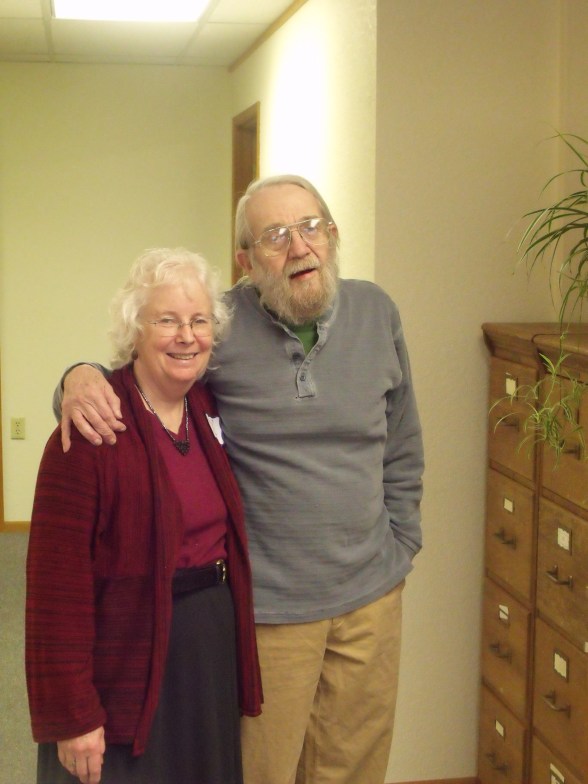
The picture is some of the madashell doctors on our first trip stumping for single payer health care in 2009.

Headache without words

When I was in residency, a staff member brought a young man to see me.

The young man couldn’t talk. He could make some sounds. His head was a funny shape, asymmetric. His mother had rubella during her pregnancy: German measles.

“His head hurts.” said the group home staff member.

“How do you know?” I asked.

“He isn’t acting right. There is something wrong. He’s different.”

“How long?”

“About a week or ten days.”

“Did he fall?”

“We’ve talked about that but we don’t think so.”

I tell the young man what I am going to do before each part of the exam. I look in his ears carefully. His ear canals are odd too and I can’t see well. His exam is basically pretty normal for him. He is not running a fever. He doesn’t have a stiff neck. He doesn’t seem to have nasal congestion.

“If he hit his head, he could have a subdural, a bleed pressing on his brain.”

The staff member shakes their head.

“Ok. I can treat him for an ear infection, though I can’t see that well. If that doesn’t work, we will have to image his head. Would he stay still in a CT scanner?”

“No.” says the staff member.

“Then I would have to set it up with anesthesia. Which is difficult.”

So we treated him for an ear infection. No improvement. He returned. Exam unchanged. The staff was still sure his head hurt. I had never seen him before the initial visit, so I couldn’t tell.

I set up the CT scan with anesthesia. Twice, because they mucked it up the first time and it wasn’t coordinated right. I had to explain to multiple people on both anesthesia and radiology what and why I was doing it. “His head hurts and he can’t talk?” I argued until they gave in.

The ENT chief resident called me with the results. Not radiology. “What?” I said.

“It’s the biggest pseudocyst we’ve ever seen!” said the ENT chief. Surgeon. “He needs surgery!” His voice said “Cool!”

In residency I’d noticed a striking difference between family practice and other residency folks: internal medicine, surgery, neurology, all the subspecialties. They got excited when there was something rare or weird. I always thought, oh, shit, my poor patient.

“What is a pseudocyst?” I actually didn’t ask, because they knew I was just a lowly family practice resident and would probably not have heard of a pseudocyst. A cyst like structure can form of snot in the sinuses and can cause headaches. It can erode through the bone into the brain. His hadn’t, thank goodness, because that can be bad. Bad as in lethal.

Because of the measles, he had some of the largest sinuses ENT had seen ever, and the largest pseudocyst. ENT happily took him off to surgery. Great case.

I got to see him in follow up. He was his normal self. His group home staff member was delighted. “He’s back to normal! Thank you so much!”

But it’s the group home staff that noticed and cared and brought him in. “Thank you for bringing him in,” I said, “I would not have noticed. And some people wouldn’t have cared.”

Differentiating pseudocysts and other things: http://www.oapublishinglondon.com/article/1266

More on pseudocysts: http://www.ncbi.nlm.nih.gov/pubmed/6595617

Pseudocyst images: https://www.google.com/search?q=maxillary+sinus+pseudocyst&biw=1366&bih=634&source=lnms&tbm=isch&sa=X&ved=0CAcQ_AUoAWoVChMIoZzWwv_QyAIVUJuICh248gGC

Rubella in pregnancy: http://www.marchofdimes.org/complications/rubella-and-pregnancy.aspx

Rubella, aka German measles: http://www.mayoclinic.org/diseases-conditions/rubella/basics/definition/con-20020067

Top ten causes of death: US 1915

Now, let’s do the time warp again, back to 1915 in the United States.

All causes of death 815,500 recorded deaths. Rate of deaths per 100,000: 1317.6

Rates are per 100,000 estimated midyear population.

According to http://www.demographia.com/db-uspop1900.htm, the US population was 100,546,000 in 1915.

Top ten causes of death US 1015

1. Diseases of the heart: 101,429

2. Pneumonia (all forms) and influenza:90,330

3. Tuberculosis (all forms):86,725

4. Nephritis (all forms):62,841

5. Intracranial lesions of vascular origin: 58,460

6. Cancer and other malignant tumors: 49,935

7. Accidents excluding motor-vehicle: 42,500

8. Diarrhea, enteritis and ulceration of the intestines: 41,771

9. Premature birth: 27,712

10. Senility : 11,555

Premature birth is on this list, at a rate of 2.6% of all the deaths. Heart disease is at the top of the list, though pneumonia and influenza take over the top of the list in 1918 and stay at the top for a while. We have not had an influenza that deadly since then, but it looks like we will…..

The 1915 list used the Fifth Revision of International Lists. This changes as I go through the table of death causes and rates, the International Classification of Disease is used, the Ninth Revision in 1975 and the Tenth Revision in May of 1990. The Eleventh has a release date of 2018. The US goes to ICD 10 on October first, but not the same ICD-10 as the rest of the world. Ours has 48,000 diagnosis codes. The rest of the world uses one with 14,000 codes. So senility had a different definition than Alzheimer’s.

http://www.who.int/classifications/icd/en/

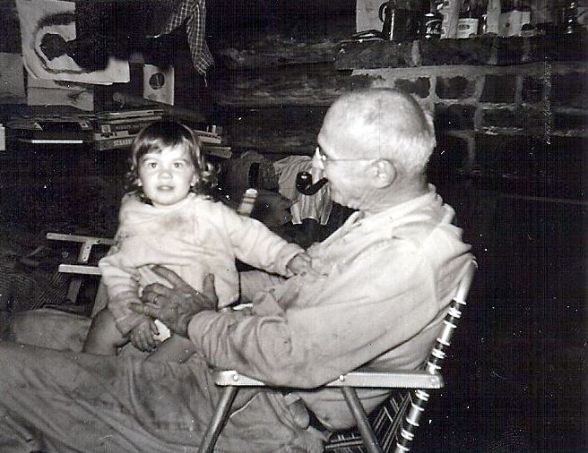
The picture is me on my maternal grandfather’s lap in a summer cabin in Ontario, Canada. He was a physician, a psychiatrist. Think how much things have changed since he finished medical school until I did…..

Causes of Death in the United States in 2012

When I first started doing annual physicals I sat down and looked at the top causes of death and then organized the counseling part of the physical around them: starting with heart disease and working down the list. I think of the annual physical as my opportunity to “MOM” patients and say “STOP DRINKING LIKE A FISH OR YOU GONNA DIE EARLY,” though perhaps with a little more diplomacy. Sometimes without much diplomacy at all.

The top ten causes of death in the United States in 2012 were heart disease, cancer, chronic lower respiratory diseases, stroke, unintentional injuries, Alzheimer’s disease, diabetes, influenza and pneumonia, kidney disease, and suicide.

http://www.cdc.gov/nchs/data/databriefs/db168.htm#which_population

This is 2,543,279 deaths in 2012.

Let’s take the causes one by one.

Heart disease: This is number one. 599,711 deaths. 23.6% of total deaths all ages both sexes in the US in 2012. So that is where I start when I do the counseling part of a physical.

Let’s review heart disease risk factors:
hypertension
high cholesterol
family history
diabetes
kidney failure
lack of exercise
tobacco
alcohol
smoking other things…
illegal drugs
stress
obeisity
As you might guess, this part of the discussion can use up a lot of the visit….

Cancer: All the cancer deaths together are 22.9% of the 2012 total.
We can screen for a few cancers: lung cancer is now the number one killer for both sexes. A chest xray is useless for screening. There is a certain population of current or former heavy smokers where a screening CT is useful. No, I do not recommend a “screening full body CT”, that is crap. Yes, lung cancers do get picked up randomly when we do a chest film for some other reason.
We can screen for breast cancer, colon cancers, look for skin cancers, the prostate cancer screen is a counseling nightmare and I don’t recommend a PSA but will do one if the person wants and other cancers pretty much we have to watch for symptoms….stop smoking, ok? That’s what causes 70% of the lung cancer and breast cancer used to be number one in women but smoking made lung cancer beat it out….
If you want details about any screening test, go to the US Preventative Task Force site:
http://www.uspreventiveservicestaskforce.org/Page/Name/tools-and-resources-for-better-preventive-care

Chronic lower respiratory diseases at 5.6%: ok, smoking again. Emphysema and chronic obstructive pulmonary disease, AKA COPD. Asthma too. This article is fascinating, that third generation children of smokers in a polluted part of California are worse and have inherited genetic modifications than third generation children of non-smokers who live in a less polluted part of California. Lovely. I grew up in a two pack a day camel household and no wonder my lungs are tricky.

Stroke, also called CVA, cerebrovascular accident, at 5.1% and then there are TIAs, transient ischemic accidents, the stroke warning symptom.

What are the risk factors for stroke?
Oh, smoking of course
hypertension
high cholesterol
stress
lack of exercise
obeisity
blocked carotid arteries
blood clots
atrial fibrillation

Unintentional injuries at 5.3%, also known as accidents.

Deaths from prescription medicines taken correctly outstripped deaths by MVAs, motor vehicle accidents and guns in 2007. The CDC declared an epidemic of overdose deaths, but it’s just starting to creep into newspapers and public consciousness.

Here: http://www.cdc.gov/mmwr/preview/mmwrhtml/mm6101a3.htm

The unintentional injury counseling list includes:
wear your seatbelt
don’t drive inebriated
don’t get in the car with inebriated drivers
check your smoke alarms
in the elderly, decrease fall risk. don’t stack stuff on the stairs.
wear a helmet if you bicycle motorcycle ATV rollarblade ski or invent some new way of getting on the Darwin list. Base jump, for example.
don’t take a lot of controlled prescription medicines or combine them with each other or combine them with alcohol: opiates with benzodiazepines with alcohol with ambien or sonata with barbituates and hello, the drug dealer is not your friend and tells lies: they are cutting the methamphetamines here with tricyclic antidepressants and barbituates and my long term cocaine addict patient was getting methamphetamines with benzodiazepines when he was paying for cocaine. Really.

Alzheimer’s at 3%

This is moving up the list. Fast. Everyone dies of something. Alzheimer’s patients live an average of seven years from diagnosis….And the recent article about Human Growth Hormone transmitting not only prions but Alzheimer’s is really interesting, implies an infectious cause.

Here: http://www.nature.com/news/autopsies-reveal-signs-of-alzheimer-s-in-growth-hormone-patients-1.18331

That was HGH from cadavers. I still would not take HGH made in a lab for “anti-aging” either. Nope, nope, nope.

We don’t know how to prevent Alzheimer’s but that is not the only cause of dementia and we’re still naming different kinds. Very frequently a brain CT or MRI says “decreased white matter” or “small vessel disease”, so there is a contribution from all of the heart and stroke risk factors that can do bad things to the brain with the top ones being: tobacco, alcohol, hypertension, high cholesterol, stress, lack of exercise, diabetes, illegal drugs, and so forth. Keep your brain active and busy.

Diabetes at 2.9%
Ok, it can make you more likely to have a heart attack. Also the biggest cause of blindness in US adults and the biggest cause of lower limb, yes, foot or leg amputation and the biggest cause of kidney failure in adults. Also if your legs are numb from uncontrolled diabetes, you don’t feel injuries and are less able to heal infections. And if blood sugar is high, there are lots of bacteria and especially staph and strep that LIKE high sugar.

influenza and pneumonia at 2.1%

Get Your Flu Shot. Really. And if you are 65 or older or you have tricky lungs or you have a tricky heart, get the pneumovax shot. The pneumovax protects against pneumococcal pneumonia ONLY, not all the colds or influenza or hemophilus influenza. And get your Tdap, because that stands for Tetnus, Diptheria, acellular Pertussis. Pertussis is whooping cough. It’s back. We’ve had three outbreaks in our county in five years. It kills babies under six months. They don’t whoop, they just stop breathing, apnea. Other people whoop, but even with antibiotics, they can cough for MONTHS. The flu shot usually gives 80% protection by two weeks after the shot. Only 80%, people say? Well, are you perfect?

Kidney disease at 1.8%

Causes: kidneys get worse as we age, for one thing.
diabetes
supplements and drugs: kidney failure is on the rise! Everything that we absorb and metabolize is metabolized by either the liver or the kidneys. Liver function can be perfect at age 100: that is, if it has not been trashed by alcohol, hepatitis B or C, drugs, supplements, mushrooms, whatever. Kidney function usually drops by age 80 and I am there calculating the function before I choose an antibiotic because you have to use lower doses in the over 80 crowd and the early kidney failure crowd. If you take ANY PILLS you should have a yearly test of your kidneys and liver function.
infection can hurt kidneys
inherited disorders

Suicide at 1.6%
40,600 deaths in the United States in 2013

Risk Factors http://www.cdc.gov/violenceprevention/suicide/riskprotectivefactors.html

Family history of suicide
Family history of child maltreatment
Previous suicide attempt(s)
History of mental disorders, particularly clinical depression
History of alcohol and substance abuse
Feelings of hopelessness
Impulsive or aggressive tendencies
Cultural and religious beliefs (e.g., belief that suicide is noble resolution of a personal dilemma)
Local epidemics of suicide
Isolation, a feeling of being cut off from other people
Barriers to accessing mental health treatment
Loss (relational, social, work, or financial)
Physical illness
Easy access to lethal methods
Unwillingness to seek help because of the stigma attached to mental health and substance abuse disorders or to suicidal thoughts

And for those who want in depth information, 15 leading causes of death by state:
http://www.cdc.gov/nchs/nvss/mortality/lcwk9.htm

Talking about death 2

“But,” you say, having read Talking about death, why should I do a POLST form if I am young and healthy?”

Because of accidents and comas.

How do you feel about comas? Would you want to be fed and kept alive by a machine if there were an accident? Let’s make it an accident where you are the heroine or hero: a bank robber is escaping with money and a child hostage and your best bud trips her (the robber is female) and you grab the little boy and run with him to safety. The ceremony where the mayor pins medals on both of you is really fun but even though the robber was caught, the getaway driver wasn’t. You are leaving the ceremony and a car driven by the getaway wench hits you and you are in a coma…..

The fourth and last question on the Washington State POLST form is the key one for this: do you want long term feeding or not? Would you want short term if you were going to get better? Does long term fill you with horror? Ok, the odds of ending up in a coma are really really really small, but not zero. Most of my patients choose the middle road but some say “No tube feeding or iv feeding EVER!” They may have had family or a friend that were kept alive for longer than they think was right. I do have the rare person who wants feeding and everything forever….and that is ok too. It helps to know that.

Back to question one: for a healthy fifty or sixty or seventy old, I advise them to ask to be resuscitated. That is the default anyhow, to do everything. You don’t have to do a POLST if you want everything done. But if you DON’T, then it is worth filling out and it’s helpful to talk to your family as well as your doctor. And I am often surprised by what people want. It helps me to know a bit more about them as their doctor.

One woman in her upper 80s said, “I don’t want to think about this.”

I replied, “If you don’t want to you don’t have to. But, if you don’t say what you want, your daughter and I will have to guess when something happens.”

She then said what she wanted. In her age group I talk about stroke: some strokes are lethal. Some are not and the person looks horrible. However, they improve after the first 48 hours, as brain swelling goes down. The key that makes a stroke survivable is whether the person can swallow or not. If they can’t protect their airway, they aspirate and get pneumonia.

Think if all our elders knew that, that after the stroke they will improve in 48 hours. Wouldn’t it be less terrifying? And we aren’t going to “unplug” them in the first day, because the amount that they improve is not totally predictable. Nothing in medicine is, really….

I am careful to say to a healthy sixty year old that this form is to be filled out as if something were to happen NOW, this week. Not to think of the form as for being when they are much older and very sick. The form has update slots on the back: we are supposed to revisit it at intervals when a person’s health changes. And people change what they want.

I had a lady in her upper 80s who was on coumadin for atrial fibrillation, to prevent stroke. The family was going through a rough patch with the death of a small child. She said, “I don’t want to take this.” She denied depression but she didn’t want to do the regular blood tests. We switched her to aspirin. Coumadin lowers the stroke risk by 1/2 and aspirin by 1/4.

A year later she said, “I think I want that coumadin again. Things are better.”

Sometimes things are better.

http://www.polst.org/programs-in-your-state/
http://www.wsma.org/wcm/Patients/POLST.aspx
http://americanhospice.org/caregiving/coma-and-persistent-vegetative-state-an-exploration-of-terms/

Chronic pain and antidepressants

Continue reading

Roar

R for roar and rant and rats in the Blogging from A to Z Challenge

We have to buy new computers for the clinic because of ICD10. ICD-10 is the list of diagnosis codes. The list will increase from 17,000 diagnosis codes to codes to 42,000 and is a major pain in the butt. All new, all different, so hypertension is no longer 401.1. My five year old computers “work” but don’t have enough memory for the Amazing Charts Electronic Medical Record update. I need to go ahead and buy new computers because medicare is supposed to be accepting the new codes now (in theory. I haven’t checked if our local medicare provider Noridian really is accepting them.) I need to practice with the stupid new codes until they go full on live in October.

Will this make medicine more precise and give us better data? Well, no. From what I have seen, providers really care about patients and do not care about strings of numbers and letters attached to the diagnosis. At Madigan Army Hospital, the faculty said that they didn’t care about the codes and were not teaching them to the residents. However, medical policy gets based in part on the coding and insurance companies refuse to pay tons of bills because they are “coded wrong”.Β  I think we will lose even more of the solo providers and small medical practice and medicine in the United States will be even more controlled by big corporations. Why do you care? (That is, if you are from the US. If you are from a civilized country you are laughing at us.) Well, for example. In 2012 I was in my local hospital emergency room. I am a physician who worked for our local hospital district from 2000-2009. The emergency room doctor did a CT scan of my neck. I thought, this is the wrong test, he should be doing a lateral neck film, but hey, I was septic. Maybe I was confused. He put in his notes that he’d ordered a lateral neck film and the CT scan was an error.

They charged me and the insurance company anyhow. I went through my records and wrote to them this year. They paid me back the 900.00$. They say it’s “too late” to pay back the insurance company. If I can figure out which stupid insurance company I had in 2012, I will notify them to bill the hospital.

So read every single note in the clinic and the emergency room if you are a patient in the United States. And ask for the itemized bill. And complain to the patient advocate. Just check out how much they charge for the stupid little socks they “give” you. Fight back.

I wish I lived in a country with civilized healthcare not corporate healthcare.

The medicare website has a countdown clock to the initiation of ICD 10. The main advice to doctors is to have “3-6 months” of overhead money stashed, since they expect it to be a mess and we won’t get paid for 3-6 months. Right. Do the work anyhow and cross your fingers and pray. It’s a bit of a challenge for me, since I was out sick for 10 months. Used up that 3-6 month reserve.

Bet half or more of the doctors/hospitals/clinics in the country have to buy new computers. Watch your bill climb…..

A UK writer asks about ICD-10 international. No, that’s not what the stupid US is going to use. ICD-10 international has 14,000 codes that can be stretched to 17,000. No, we are going to use our own stupider version of ICD-10 with 42,000 codes so that more insurance companies can refuse to pay for more visits. Meanwhile, ICD-11i will be released in 2017.

The stupid US has multiple electronic medical records that don’t talk to each other, so yes, I can sort of code with my computer electronic medical record except I have to look things up in the paper coding book, like “bruise”, aka contusion, and any stupid “cut”, aka laceration, because the search sucks. I was trying to find prehypertension the other day. The electronic medical record lists it as “elevated blood pressure without diagnosis of hypertension”. Great. I have a coding book in each exam room. By October, I will have a massive pile ofΒ  coding books in each exam room.

The photo is my father and my wonderful office manager, at the clinic opening party in 2010. My father died in early June 2013. The clinic is due for our five year anniversary…..

Not quite acculturated

N for Not quite, in the Blogging from A to Z Challenge.

Not quite acculturated

And she was unsympathetic
That doctor
That immigrant doctor
I heard she told a patient
“You’re too fat.”
This was whispered
In accents of pleased shocked horror

She came to dinner
That unsympathetic doctor
Southeast asian
Told a little of her story
To my wide eyed children

When she was 10
They were boat people
Escapees
Refugees
Pirates caught them
Real pirates
“They weren’t so bad,” she said
“We were about to die from lack
of food and water.
Though we heard other stories
that were very bad.”

My daughter could imagine the boat.
She moved to my lap.
The pirates were too real.

Perhaps plenty is not always taken
for granted
And sympathy is a matter of degree.

previously published on everything2.com

Adverse Childhood Experiences 4: Psychophysiological Illness

I went to the 46th Annual OHSU Primary Care Review, held at the Sentinel Hotel in Portland, Oregon last week.

It was excellent. It was surreal since the Sentinel Hotel started as a 1923 Elks’ Club and the satyr cupid friezes kept distracting me with the marble penises and war chariots during the lecture updating us on urinary incontinence.

Three lectures that I went to talked about Adverse Childhood Experiences.

This is the first conference that I’ve been to that anyone has talked about that study since I heard about it, in about 2005. I have not been to a lot of big conferences over the last few years because I opened my own clinic and money was tight.

Anyhow, the study is creeping into consciousness.

In the mornings, we had the big lectures in a large hall. There were three break out sessions in the afternoon, held in the main meeting, billiard room, club room and library. We all joked about Colonel Mustard and candlesticks.

A gastroenterologist, Dr. David Clarke, gave a two hour session titled “Hidden Stresses and Unexplained Symptoms II”.

Objectives:
1. How to uncover the cause of an illness when diagnostic tests are normal.
2. How to find hidden psychosocial stresses that are responsible for physical symptoms.
3. The process used to achieve successful outcomes in stress-related illness.

He talked about childhood stress. That if someone had a really difficult childhood:
“Surviving a dysfunction home is a heroic act and produces individuals who are:
a. reliable and get things done
b. detail-oriented
c. Perfectionist
d. Hard-working
e. Compassionate”

So what is the down side? “Surviving a dysfunctional home also produces emotional consequences that may lead to :
a. Long-term relationships with partners who treat you poorly.
b. Addictions to nicotine, Alcohol, Drugs, Food, Sex, Gambling, Work, Shopping, Exercise.
c. Quick Temper or being violence prone
d. Anorexia and/or bulimia
e. Mental health problems such as nervous breakdown or suicide attempts
f. Sacrificing your own needs to help others
g. Self-mutilation
h. Learning not to express or feel your emotions.”

Got that? Right. Not everyone, not all the time, but the adverse childhood experiences add up. These reliable individuals may eventually get enough positive feedback to decide that they deserve a relationship that is actually good. They may get angry about their childhood or past bad treatment. “They may have a really hard time expressing that anger because they spent years learning how to suppress emotion and the feelings may be directed at people for whom there is still some caring. When there is enough of this anger present it can cause physical symptoms that can be mild or severe or anywhere in between.”

Let me give two examples from my own practice. I can’t remember their names or the details, so I am making those up: no hipaa violation.

The first was an elderly woman who came in with her husband for stomach pain. We started with a careful history. We tested for helicobacter pylori. We tried ranitidine. We tried omeprazole. We studied her diet and did an ultrasound to rule out gallbladder disease.

At the third visit I was starting to talk about an upper endoscopy. This was more than 15 years ago, back when we did not start with a CT scan. Her husband said, “Doctor, is there anything else it could be?”

I was surprised. “Well, yes. Depression is on the diagnosis list. Sometimes depression can present as stomach pain. Could you be depressed?”

My elderly lady covered her face with her hands, started crying and said, “I try not to be!” while her husband nodded.

We cancelled the endoscopy. I said it really was not something to be ashamed of and we talked about therapy. She did not want talk therapy and we tried paxil. She came back in two weeks, and already she and her husband were brighter and relieved.

Second case: again, stomach pain, this time in a four year old. Mom brought her in.

I did a history and did a gentle exam. The exam was normal. Her stomach was not hurting now. She wouldn’t say anything.

We established that the stomach pain occurred on week days only, not on the weekend. In fact, usually at the after school daycare, not in school.

“Is there a time at the school daycare that she has stomach pain?” Mom was shaking her head when big sister piped up.

“It happens before recess.” Mom and I turned to stare at the six year old.

I said, “What happens at recess?”

“The big kids knock her down,” said big sister, pissed. “I try to stop them, but they are bigger than me. She’s scared. The teachers don’t see.”

“Oh. Thank you for telling us!” Little sister was crying and mom hugged her and big sister. Mom did not need instruction at that point. She called me a few days later. She talked to the daycare, they watched and the four year old was protected. Her stomach stopped hurting.

Dr. Clarke also described a case, where driving through a town would trigger four days of nausea and vomiting that required hospitalization. This had been going on for 15 years. He figured out why that particular town was a trigger: when the patient recognized the why, he was able to go for therapy.

People aren’t lying about these illness, they are not making them up. Doctors have called it somatization, but really it is the body holding the emotions until the person is safe enough to deal with them. Doctors need to learn how to recognize this and help with respect instead of stigmatization and dismissal.

I hope that more doctors learn soon…

Dr. Clarke’s list for further reading is below. I don’t have any of these yet, but they are on my wish list.

They can’t find anything wrong!, by David Clarke, MD. See also www.stressillness.com

Psychophysiologic Disorders Association: www.ppdassociation.org

Caring for Patients, Alan Barbour, MD

Unlearn Your Pain, Howard Schubiner, MD

Pathways to Pain Relief, Frances Anderson PhD and Eric Sherman PhD

Ted talk about ACE scores: http://www.acesconnection.com/blog/nadine-burke-harris-how-childhood-trauma-affects-health-across-a-lifetime-16-min

Those Elks…

The photo shows part of the ceiling decoration in the Sentinel Hotel in Portland, OR, which was built in 1923 as an Elks’ Club. I have some questions about those Elks…..

This week I was in Portland, Oregon for a Primary Care Review put on by Oregon Health Sciences University. The conference was held in the Sentinel Hotel. It has high beautiful decorated ceilings and walls. In the afternoon there are break out sessions, which are held in the Library or the Billiard Room. We need a candlestick, a wrench and Colonel Mustard. It is a little bit surreal to be in this gorgeous setting and then hear lectures about complications of diabetes and the United States obeisity epidemic.

Our last breakout a few days ago was two hours about addiction medicine, held in the Library. The photo is of the frieze just below the ceiling. There are cupid satyrs with weapons and horses. Some are nude and they are definitely male. They are not engaging in activities like the brothel wall paintings in Pompeii, but it does make me wonder about those Elk members in 1923.

I asked a person at the front desk about the building and she said that it was only an Elk’s club for a few years, because of the depression. I asked what else it had been used for and she looked rather severe and said, “other things”. There are naked women and cupids around the frieze in the lobby: I will try to get a decent picture of them, too.