Does pain mean danger?

Does pain mean danger?

From a physician standpoint, sometimes the answer is “No.”

One example, sent by an alert friend, is a lump on the back of the neck, with pain radiating downwards.

This could be an abscess or an infected cyst, but since they didn’t mention infection, it is most likely an enlarged lymph node. This is one example where the doctor or nurse practitioner or psychic healer will look at it, say “Does it hurt?”, poke it and then be all cheerful while you wonder WHY they have to poke it* after you say, “Yes, it hurts.”

A newly enlarged tender painful lymph node is usually a reactive lymph node. It is swollen with cells from the immune system and is trying to heal something in the vicinity. A cut, irritated acne, a cold virus, that shaving accident, a low grade infection, an ear infection. Usually I talk about it and recheck it in two weeks.

The lymph node that will make your healthcare person worry is the one that DOESN’T hurt. A slowly or quickly enlarging lymph node that is not tender is worrisome for lymphoma or for metastatic cancer. Once it gets to 1 centimenter, I am calling the surgeon to consider doing a biopsy. We have lymph nodes throughout our body, but the ones that we can feel on the surface are only in the neck, the supraclavicular nodes, the axillas (aka underarms) and groin. The rest are under bone or muscle, though they can show up on CT scan or xray: enlarged mediastinal nodes along the great vessels and trachea in the middle of the chest.

So pain does not always correlate with the level of danger of an illness. The reactive nodes hurt because they swell quickly, and they usually go down quickly as well.

*They poked it to be sure that it is not fluid filled, that it is firm but not hard and fixed, so not an abscess or cyst, and doesn’t feel like a cancer.

I took the photograph last night with my cell phone, during a rare thunder and lightning storm here… beautiful.

Weaning methadone

Weaning high dose methadone down to a lower, safer, less likely to stop breathing and die dose is difficult, but it can be done. It needs both a determined patient and a determined physician who are willing to work together.

In 2010 I took a class in buprenorphine treatment for opiate overuse syndrome from the University of WA Medical Center and got started with their telemedicine, once a week, on line with the Pain and Addiction Clinic. Each week there was a teaching half hour and then an hour where we could present patients anonymously on the telemedecine to a panel: a pain specialist, an addiction specialist, a psychiatrist, a physiatrist, and a guest physician. Five consults at once! And they would discuss the case and fax recommendations to me.

Three weeks after the course, police and Medicaid and the DEA shut down the pain clinic 5 blocks from me, taking the computers. I acquired 30 patients in 3 weeks. Trial by fire.

By 2012 Washington State passed a pain medicine law. This says that a primary care physician can only prescribe up to 120 morphine dose equivalents for chronic pain. Anything higher and the patient should be checked by a pain specialist and there were not that many in the state.

120 morphine dose equivalents is up to 20 mg of methadone or possibly 30mg. Methadone has a very long half life so it’s a bit weird. Hydrocodone is one to one with morphine and oxycodone is 1.5 to one, so 90 mg of oxycodone is 120 morphine dose equivalents.

The law requires urine drug screens, careful record keeping, screening for adverse childhood experiences and regular visits. If the pain medicine is not effective, it is to be weaned. I had a couple of patients with over 100mg of methadone daily. That is way over the 120 morphine does equivalents and UW helped me help the patients start weaning.

First, they recommended dropping the dose by about 1/3. Some patients left immediately. I would give patients links to the law on line and explain that the concern is that opioids in combination with other sedating drugs and alcohol are killing more people than either guns or car wrecks or illegal drugs in the United States and the CDC has declared it an epidemic. Honestly, doctors really take the “first, do no harm” seriously and we do not want to kill people. One angry patient said “Your first job is to keep me pain free.” I said, “No, my first job is to not kill you.”

For those who stayed, dropping the dose by 1/4 or 1/3 worked. They had about two weeks of mild withdrawal symptoms and then gradually felt better. These were at doses of 120-150mg methadone daily. We started weaning then by 10mg or about 10% every couple of months. The UW Pain Clinic was doing this simultaneously.

In 2012 the WA PMP started as well. This is a central pharmacy reporting for all controlled substances. Controlled substances means addictive and monitored by the DEA. Even the head of the WA Pain Clinic found that he had 5-6 patients who were getting opioids from 4-5 different doctors. He said, “We do have to check because I thought I knew my patients and I would have none. I was wrong and I was surprised.” Those patients could be taking way more than any of their doctors knew or could be selling pills. Not a happy thing.

Once the methadone folks got down to about 1/3 of the high dose, we had to slow down. For my patients that meant at 40-50mg. The head of the pain clinic said wean by 5 mg or 2.5mg and do it every 6-8 weeks.

As people were weaned, their pain level stayed about the same. They would have an initial increase for the first two weeks. I describe it as follows: Think of it as if you are in a room listening to a stereo. The pain medicine is like noise protecting headphones. Once you are wearing the headphones, your brain says, uh, I can’t hear (feel pain). Hearing (feeling pain) is important information, so the brain turns up the volume. Way up if the dose is really high. Then you take the headphones off: OW!! IT’S TOO LOUD! THE SOUND (PAIN) IS BLOWING OUT YOUR EARDRUMS (HURTING LIKE HELL)!!!

Weaning slowly gives the brain a chance to turn the volume down on the receptors. UW said that at best chronic opiates lower pain an average of 30%. After a while, I said I had trouble telling the difference between withdrawal pain and increased chronic pain: they look the same. UW said, “Looks the same to us too.” But we had frequent visits and an ongoing discussion about pain. Pain is necessary for survival: you have to know if you are injured. Diabetics who can’t feel their feet are instructed to look all over their feet every day to check for injury and infection. I had one gentleman who couldn’t feel his feet and put them on a wood stove because they felt cold. He was needing skin grafts from the burns. So we need to feel pain and not numb it all the time. Also pain has three or more componants: the sharp cut/broken/bruised immediate pain. Second is nerve pain. Third is emotional pain, and we don’t yet have a meter that gives us what percentage each is contributing to the total sum. When I have a new chronic pain patient, I say that ALL THREE must be treated. We can argue about the details, but they can’t leave the emotional piece out…. or they have to find another doctor.

Also, at the higher doses, hyperalgesia is common, pain from the opioid itself. People felt better at lower doses. I gave people the links so they could read the law and the CDC information themselves. They were shocked and angry and threatened at first, but the “I don’t want you to die from too high a dose and it’s not safe and I am sorry.” message would get through eventually.

“Why do you have to do urine drug screens?” say some people. “You are treating me like an addict.”

My reply, “What do you think the addicts tell me?”

The person thinks about it. “The same thing?”

“Absolutely. So I can’t tell unless I check. Also, the boundary between chronic opiate use and opiate overuse is a lot thinner than we thought, so I have to check because all chronic opiate people are at risk for overuse.” The DSM-V combines opioid dependence and opiate addiction into opiate overuse syndrome, a spectrum from mild to moderate to severe.

We also talked about other ways of dealing with chronic pain. John Kabat Zinn’s mindfulness meditation classes drop pain levels by an average of 50%, so better than opioids. And way safer.

Meanwhile, since people could no longer get opioid pills from 4-5 doctors at once, the supply in Washington started drying up. Some people realized they had opiate overuse syndrome as well as chronic pain and turned to methadone clinics or buprenorphine clinics. Others went to heroin. The heroin overdose death rate has risen. I hope that as the stigma surrounding “addiction” changes into a better understanding of chronic pain and opiate overuse syndrome, more people will be able to get treatment and the death rate and heroin use will go back down.

https://depts.washington.edu/anesth/care/pain/pain-roosevelt.shtml

http://www.cdc.gov/cdcgrandrounds/archives/2011/01-february.htm

http://www.doh.wa.gov/ForPublicHealthandHealthcareProviders/HealthcareProfessionsandFacilities/PainManagement

http://www.doh.wa.gov/ForPublicHealthandHealthcareProviders/HealthcareProfessionsandFacilities/PrescriptionMonitoringProgramPMP

http://www.uwmedicine.org/referrals/telehealth-services

https://www.drugabuse.gov/publications/research-reports/prescription-drugs/opioids/what-are-opioids

http://www.umassmed.edu/cfm/about-us/people/2-meet-our-faculty/kabat-zinn-profile/


Paying as I am paid

Perhaps I will feel better about the state of medicine and corporate fraud preying on the poor and elderly and disabled in the United States, if I pay my bills as I am paid: let’s think about that.

I go to the grocery store and ask for a print out of the receipt before I pay. I look at it carefully. “I think that one sku number is incorrect. I am returning the bill for you to correct. Meanwhile I am taking the groceries. Please mail the corrected bill to me and I will check it and respond within 6 weeks. Thank you.” I smile and leave.

I look at my electric bill. My name is misspelled. I write a note. “Your bill is incorrect. Please correct it so that I can pay you promptly.” I mail it.

I look at my garbage and water bill. My ex-husband’s name is still on it. “Mr. Lizard is not at this address. Here is his forwarding address. Thank you.”

I carefully examine my gasoline bill at the pump. I step inside and explain: “I think that your pump dispensed 3 oz less then the measured amount. I have an exacto fuel measuring device, and your pump is wrong. Please mail me a corrected bill so that I can pay you promptly.”

There. I have no more bills to pay. I eat lunch, happy that I will be earning interest on the pittance that I am paid.

Thank you, United States corporations: you have taught me so much.

I took the photograph in 2011 on Halloween.


Dream: home surgery

Yesterday I ask a friend to drive me to pick up my son, on his way home from college for spring break, an hour to a nearby pick up point and back. I can’t walk without limping horribly: apparently the recent stress in clinic has made my muscles mad.

F. drives. He has just finished reading Reinventing Collapse: The Soviet Experience and American Prospects, by Dmitri Orlov. Mr. Orlov says that I, as a physician, should start moonlighting as a midwife for barter to have a back up plan for when the economy collapses.

I laugh. “Not very helpful where the median age is 55.”

“Not to mention people want to use their pathetic health insurance.”

Home and I go to sleep. Dream: I am at F.’s house. There are two other men, one of whom needs abdominal surgery. We argue for a long time but he has no money and finally I agree to do surgery with F. assisting. The other man is to help hold the young man down. We do not, of course have anesthesia. I go over what I am going to do, force them to pay attention, discuss sterile technique, boil everything. Not ideal….

We don’t have a cautery or suction either. But there is almost no bleeding and the two things that need to be removed come out easily, I am very veryΒ  gentle, so I don’t cause other things to bleed. Never mess with the spleen.

Now I need to close the abdomen and I don’t have absorbablesutures. I am going to do a figure 8 from the surface, in skin, out the abdominal fat, across into the fat, down through the fascia, crossing very delicately up into the fascia on the other side, out the fat, in the fat on the other side and out the skin. Then slowly pull it tight, tight, and tie it off. It’s thick nylon. Nonabsorbable. Usually you would take the nylon out in 7-10 days but I am wondering how long I would need it for the fascia….I thought that would take 6 weeks to heal. I am worrying.

But now F. and the other man are not holding my patient, they are backing off and congratulating each other. My patient gets up off the table. “Lie back down!” I say, “Your guts could fall out the opening! We haven’t closed! F!” Surprisingly his guts are not falling out, but it’s because I have done such a beautiful low abdominal incision, bikini style. “Get back on the table or I will make you go to the hospital to have it closed!”

He reluctantly gets back on the table. F. and the other guy are still being morons but are calming down….

….I wake up.


The photo is in my yard during sunrise last summer: spring forward today….

music: https://www.youtube.com/watch?v=aEi_4Cyx4Uw

practical medicine

This week I see a patient that I sent to a specialist that I don’t know well.

“How is he?” I like to get feedback on the specialists.

Q grimaces. “He knows his stuff. But…. he’s by the book. I complained about a side effect. He says it is not listed. But I go on line and there are lots of people complaining about that side effect.”

“Hmmm.” I say.

“He doesn’t really listen if it doesn’t fit…. if it’s not in the book.” Q brightens. “But I am going to call the nurse line for the drug and see what they say.”

“Cool.” I say. “Some doctors are very by the book. I’m into practical medicine: use it if it works. Don’t care if it’s witchcraft.”

Q giggles.

“What about the rash?” I say.

Q pulls up a pant leg. There is almost no rash. “He said it wasn’t related to the problem.”

We both look at Q’s leg. “Looks better to me.” I say. “Looks a lot better.”

“Yeah,” says Q. “It does. It looks nearly gone.” The rash was what initially triggered the testing that led to the diagnosis that led to the specialist.

“I use whatever I can figure out for people.”

Once I had an elderly woman with an intestinal bleed. She is transferred to Virginia Mason and goes through every possible test to localize the bleed. Upper endoscopy, lower endoscopy, swallow the camera, CT scan, probably pet scan and bone scan. Can’t find it. It is too slow a leak to use radioactive tagged red blood cells. She comes back.

I transfuse her every three weeks. This is not good. She will develop antibodies eventually.

She goes back to Virginia Mason. They do it all again. The surgeons discuss opening her up. “No.” they say. “Too frail at 88. She will die on the vent.” They send her back.

I am still transfusing her every three weeks. I am grumpy as hell.

Her daughter says, “I have a friend in Canada who knows a scientist. He is studying aloe vera. They said take aloe vera twice a day. What do you think?”

“Well I don’t have anything! Try it! We will test a chem panel in two weeks and watch the blood count!”

She takes aloe vera twice a day. Her blood count stabilizes. No more transfusion. Happy dance. Not absorbed or at least doesn’t bother her kidneys or liver tests….

After a year she says, “Can I try stopping it?”

“Sure,” I say. “We will check a blood count in 2 weeks.”

It drops. She goes back on aloe vera.

Practical medicine. If the book has nothing, try something else…..

Admitting diagnosis: Old guy, don’t know

During my three months temp job in 2010 at a nearby Army Hospital, I was asked to help the Family Medicine Inpatient Team (FMIT) whenever a faculty member was sick or out, which turned out to be fairly often. I enjoyed this because I wanted to work with residents, Family Practice doctors in training. It was very interesting to be at a training program, watch the other faculty and work at a 400 bed hospital instead of my usual 25 bed one.

Two patients needed to be admitted at the same time on our call day, so the second year resident took one and I took the other. The report on mine was an 82 year old male veteran, coughing for three weeks, emergency room diagnosis was pneumonia.

The resident soon caught up with me because her person was too sick and got diverted to the ICU. Mr. T, our gentleman, was a vague historian. He said that he always coughed since he quit smoking 15 years ago and he couldn’t really describe the problem. He’d gotten up at 4:30 to walk around the assisted living; that was normal for him because he used to do the maintenence. He had either felt bad then or after going back to sleep in a chair and waking at 10. “I didn’t feel good. I knew I shouldn’t drive.”

He’d had a heart attack in the past and heart bypass surgery. Records were vague. The radiologist read the chest xrays essentially as, “Looks just like the one 3 months ago but we can’t guarentee that there isn’t a pneumonia or something in there.” He had a slightly elevated white blood cell count, no fever, and by then I did a Mini-mental status exam. He scored 22 out of 30. That could mean right on the edge of moderate dementia, or it could be delerium. I got his permission to call his wife.

“Oh, his memory has been bad since he spent a year in a chair telling them not to amputate his toes. And he was on antibiotics the whole time. He wasn’t the same after that. He just said he didn’t feel right and that he shouldn’t drive.” So his wife called an ambulance.

The third year chief resident came by and wanted to know the admitting diagnosis. “Old guy, don’t know.” was my reply. “Either pneumonia or a urinary tract infection or a heart attack maybe with delerium or dementia or both.”

The second year was helping me put in the computer orders, because I was terrible at it still. She could put them in upside down and asleep. “Why are we admitting him, anyhow? We can’t really find anything wrong, why not just send him home?”

“We can’t send him home because he can’t tell us what’s wrong. He might have an infection but he might not, and he has a really bad heart. If we send him home and he has a heart attack tonight, we would feel really bad. And he might die.”

I was getting a cold. I had planned to ask to work a half day but half the team was out sick so I just worked. But by morning I had no voice and felt awful. I called in sick.

At noon the phone rang. It was the second year. “You know Mr. T, who we admitted last night?”

“Yes,” I said.

“He had that heart attack during the night. Got taken to the cath lab. You made me look really good.” We had worked on the assumption that it could be early in a heart attack though the first labs and the ECG were negative. I had insisted on cardiac monitoring and repeating the enzymes. The resident had finished the note after I left and the night team had gotten the second and abnormal set of enzymes.

82 year olds are tricky. With some memory loss he couldn’t tell us much except that “I don’t feel right.” He was right not to drive and we were right to keep him in the hospital. And if it had all been normal in the morning, I still would not have felt bad about it. The residents are looking for a definitive diagnosis, but sometimes it’s “Old guy, don’t know,” until you do know.


Previously posted on everything2.com in April 2010. I am not sure if this branch was dead or not, but the moss grows on it here in the wet winter anyhow.

I took the photograph in the woods last weekend.

I will fight no more

I am tired of fighting
I am tired of fighting for justice
I am tired of fighting discrimination
I am tired of fighting for health care for all

I am tired of fighting insurance companies
I am tired of fighting medicare’s contractee
I am tired of fighting for prior authorization
I am tired

I will fight no more forever

I heal
I am a healer
I am trying to heal patients
I am trying to help patients heal

I am a healer
I help heal cancer
I help heal heart disease
I help heal PTSD
I help

heal cancer
heal heart disease
heal PTSD
heal addiction

I am a healer

heal the insurance company
heal the medicare contractor
heal the pharmaceutical company
heal

heal anxiety
heal depression
heal addiction

I will fight no more forever

I heal

The legs in the photograph don’t look delicate, do they? They are strong and beautiful and powerful. I took this at the National Junior Synchronized Swimming Competition in 2009. Those girls on the edge of being women are strong, they are a team, they work and play together. They have the skills and the strength to lift their bodies out of the water that far using their arms… think about the practice and strength needed to do that. We all want to heal and create fun and play and beauty. Let’s work as a team.

also on everything2.com

Fraud in medicine: mail order pharmacies

My clinic refuses to fax to mail order pharmacies. Instead, I give the prescription to the patient and tell them to mail it.

I started this policy over a year ago, when five different patients called in the same week, about two mail order pharmacies.

Patient: “I called my mail order. They say that they don’t have the prescription and the doctor just needs to cal.”

I check. Each of the prescriptions had been faxed. I called the two companies a total of five times that week. Each time they would ask for my identifying information, the patient’s identifying information, transfer me and then say, “Oh, yes, we have the prescription.”

Ah. This is a nice example of triangulation. The patient calls for their refill. The mail order company faxes me a request. I check the chart, see if the person is due for labs or a visit, and fax the prescription. Then the company sits on it. The patient calls them and the company says they don’t have it. They delay. Finally the patient calls me to call the company and then the company admits, oh, yes, actually we do have it.

So we refuse to fax to these companies.

Last week I saw a patient who had mailed her prescriptions. She did not get her medicine.

“I called the company five times. They told me they didn’t have it. They said to call you to send a “hard copy”. I said, “I mailed it to you myself on this date.” Then they said, “Oh, yes, we have it.” However she was out of her medicine for three weeks.

I said, “They saved the cost of three weeks of medicine. That is fraud.” I explained the scam.

Comprehension dawned on her face. “They do it on purpose?”

I shrug. “Five in one week seems like a business operation to me. I recommend that you write to the state insurance commissioner.

She said, “Next time I will mail it certified. And yes, I will call the insurance commissioner if they do it again.

The patient main insurance sends information that getting the prescriptions mail order will be cheaper, and so people want to use the mail order: but the mail order pharmacies in our area are saving costs by ripping people off and delaying prescribed medicine. I do hope they end up in jail: if we can’t jail the corporation, let’s at least jail the CEO and the top 4 officers.

I took the picture yesterday at sunrise.


It’s about caring

I described helping a woman bring her bad LDL cholesterol down from 205 to 158 with two clinic visits the other day, and someone said, β€œI can replace you with a teacher who is much cheaper. Why should you go to medical school to talk about the things people already know? Let’s free you up to do heart surgery or something important.”

Well? What about that? Is my career as a doctor wasted because I am in primary care? I am in Family Practice and I spend tons of time counseling people about diet, exercise, lifestyle choices.

My work is not wasted.

If all we had to do was give people information, we have the information. Every magazine and newspaper screams at us: β€œObesity! Stop smoking! Exercise for health! Eat right! Don’t eat junk food!”

Why do two visits with me make a difference?

People do not feel valuable and do not feel cared for in our culture. In the same magazine with articles about losing weight, getting organized, shouting β€œYou can do it!” there are multiple advertisements for sugary desserts and things to consume. My spouse used to joke, β€œIf I get (whatever he wanted at that time) then I’ll be a better person.”

I see pregnant woman who can stop smoking while pregnant, to care for the baby on board, but who often can’t extend the same caring to themselves after the child is born.

The history is often listed as the most important part of a clinic visit. I agree, but not just for diagnosing illness. I am listening to the person, and now with a laptop, I am recording their history. Why are they here today, what medical problems have they had, allergies, surgeries, do they smoke, are they married, do they have children? I want a picture of the person and I must listen hard. What do they reveal about their trust in medicine, about favorable or unfavorable medical interactions in the past, about what they understand or believe about their health? The visit is a negotiation. I need their view of what is happening and their questions.

The physical exam is often an interlude for me. I look at the persons throat, in their ears, listen to their heart and lungs. And part of me is collating the information that I’ve gathered, so that we can move to the next step: analysis and plan.

If I am doing a preventative check, a wellness visit, a physical, whatever you want to call it, I name the positives and negatives. Are they exercising regularly, have they stopped smoking, are they trying to eat a good diet? I name these. Are they lucky enough to have four grandparents who lived to 102 or do the men in their family die at 52 of a heart attack? A 55 year old man who has lost multiple relatives in their early 50s is surprised that he’s alive, and starting to wonder if it might be worth attending a little to his own health. He is a bit shy about hoping that he might not die tomorrow, and ready for encouragement in taking care of himself.

The visit is really about caring. Many people in our culture do not feel cared for. Moms are supposed to care for everyone else. Parents are very very busy, trying to take care of children and have jobs. People are afraid that they will lose their job, their insurance, their homes. We try to do the tasks of adulthood: have the career, find the true love, raise the children, achieve the lifestyle, home and place in our society. And many people feel that they are failing or fear failing. They have not gotten the job they hoped for. They have a house, but it is a huge amount of work. They are working very hard, but there are still so many things they would like to do or see or have. They have become overweight, they have gotten hooked on tobacco, their children are not turning out as they’d planned, the ungrateful wretches. And their parents’ health is crumbling, and in all the chaos, why would the person attend to themselves? The cell phone rings, the computer beckons, it’s time to work, to cook, to clean, to stay on the hamster wheel of life.

In clinic, for a few moments, this person is the center. They explain their health to me. They are painting a picture of their life. A patient will say, β€œI’ve been worrying about my mother, my son, my spouse, and I don’t take the time to exercise or eat right.”

And I say, β€œI hope that your mother, son, spouse does better. But you are important too. It is wonderful that you have stopped smoking, excellent! But we’re both worried about your cholesterol, right? It is too high. How are we going to take care of you? What can you fit in?”

Most people do not want to start with a medicine. They want to take care of themselves, too. They are willing to make lifestyle changes. They need encouragement and permission and to come back to see how it is going. What they need is my caring. And I do care.

I used to think that somehow complex patients would gravitate to me. But that is not true: the truth is that everyone is complex. Each person has layers and thoughts and feelings: fears and joys. I barely scratch the surface. It is the caring that is most important and each person that I see is important.

At the end of the visit, I print my note. I give it to the person. β€œCheck it. Tell me if something is wrong. I cannot change the note, but I can put an addendum.” I see that people are shy and often show some confusion. Two pages? Single spaced? About me?

Yes. About you.

written in 2010 and published first here: http://everything2.com/title/It%2527s+about+caring?searchy=search

I took the photo in 2004, a school overnight trip to explore settlers 100 years ago….
Why care for addicts?

Why care for addicts?

Children. If we do addiction medicine and help and treat addicts, we are helping children and their parents and our elderly patients’ children. We are helping families, and that is why I chose Family Practice as my specialty.

Stop thinking of addiction as the evil person who chooses to buy drugs instead of paying their bills. Instead, think of it as a disease where the drug takes over. Essentially, we have trouble with addicts because they lie about using drugs. But I think of it as the drug takes over: when the addict is out of control, the drug has control. The drug is not just lying to the doctor, the spouse, the parents, the family, the police: the drug is lying to the patient too.

The drug says: just a little. You feel so sick. You will feel so much better. Just a tiny bit and you can stop then. No one will know. You are smart. You can do it. You have control. You can just use a tiny bit, just today and then you can stop. They say they are helping you, but they aren’t. Look how horrible you feel! And you need to get the shopping done and you can’t because you are so sick…. just a little. I won’t hurt you. I am your best friend.

I think of drug and alcohol addiction as a loss of boundaries and a loss of control. I treat opiate overuse patients and I explain: you are here to be treated because you have lost your boundaries with this drug. Therefore it is my job to help you rebuild those boundaries. We both know that if the drug takes control, it will lie. So I have to do urine drug tests and hold you to your appointments and refuse to alter MY boundaries to help keep you safe. If the drug is taking over, I will have you come for more frequent visits. You have to keep your part of the contract: going to AA, to NA, to your treatment group, giving urine specimens. These things rebuild your internal boundaries. Meanwhile you and I and drug treatment are the external boundaries. If that fails, I will offer to help you go to inpatient treatment. Some people refuse and go back to the drug. I feel sad but I hope that they will have another chance. Some people die from the drug and are lost.

Addiction is a family illness. The loved one is controlled by the drug and lies. The family WANTS to believe their loved one and often the family “enables” by helping the loved one cover up the illness. Telling the boss that the loved one is sick, procuring them alcohol or giving them their pills, telling the children and the grandparents that everything is ok. Everything is NOT ok and the children are frightened. One parent behaves horribly when they are high or drunk and the other parent is anxious, distracted, stressed and denies the problem. Or BOTH are using and imagine if you are a child in that. Terror and confusion.

Children from addiction homes are more likely to be addicts themselves or marry addicts. They have grown up in confusing lonely dysfunction and exactly how are they supposed to learn to act “normally” or to heal themselves? The parents may have covered well enough that the community tells them how wonderful their father was or how charming their mother was at the funeral. What does the adult child say to that, if they have memories of terror and horror? The children learn to numb the feelings in order to survive the household and they learn to keep their mouths shut: it’s safer. It is very hard to unlearn as an adult.

I have people with opiate overuse syndrome who come to see me with their children. I have drawings by children that have a doctor and a nurse and the words “heroes” underneath and “thank you”. IΒ  have had a young pregnant patient thank me for doing a urine drug screen as routine early in pregnancy. “My friend used meth the whole pregnancy and they never checked,” she said, “Now her baby is messed up.”

Addiction medicine is complicated because we think people should tell the truth. But it is a disease precisely because it’s the loss of control and loss of boundaries that cause the lying. We should be angry at the drug, not the person: love the person and help them change their behavior. We need to stop stigmatizing and demeaning addiction and help people. For them, for their families, for their children and for ourselves.

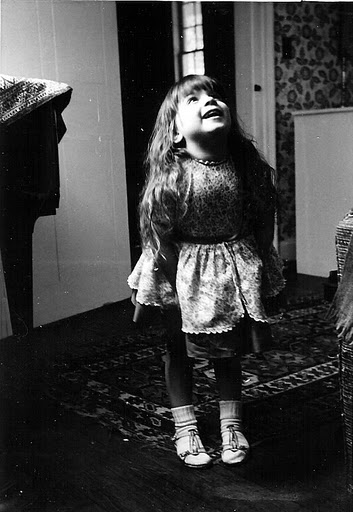
I took the photo of my daughter on Easter years ago.