Rural medicine crisis: Job offers

One of the signs that we are entering a worse crisis for rural medicine is job offers.

I am starting to keep the email job offers: so far the record is from Texas, a random out of the blue job offer for $500,000 yearly.

One half million dollars for a Family Practice job. I won’t take it. I like my clinic and anyhow, the pace they would set me to work is burning out physicians. They are quitting, though some die instead. A recent article said that this year a physician poll reports the number at burnout this year has risen from 40% to 50%.The job offers roll in. I get phone calls, emails, mailing and now my cat is getting rural family medicine job offers. Really. Desperate times.

Years ago I read that only 30% of family practice doctors are willing to take a rural job and that only 30% of those are willing to do obstetrics in a rural area. I did obstetrics as part of my practice from 1996 to 2009. I stopped when I opened my own practice, because the malpractice price tag is three times as much and my rural hospital was grumpy at me. Starting in my third year of medical school, I did deliveries for 19 years. During my nine years here, the cesarean sections were done by the general surgeons and we did not have an OB-gyn. I called Swedish Hospital Perinatology when I needed help. I got to know them well enough that if I had someone in preterm labor I would call and find out who was on call BEFORE I chose a medicine, because I knew which perinatologist liked terbutaline and which one would rather I would skip it and use procardia. They were fighting out the research: I didn’t know who was right, but it is a huge benefit to have your consultant be happy with your choice if you have to lifeflight the patient by helicopter at 3 am. With a 25 bed rural hospital, we try not to deliver a baby under 35 weeks, and it’s better to fly the baby in mother if you can’t stop the labor.

Back to the numbers: so 33 out of 100 family practice doctors will take a rural job and only 11 of those are willing to do obstetrics. Our first day of medical school, the faculty said, “Shake hands with the person on your right. Shake hands with the person on your left. At least one of the three of you will be sued for malpractice in your career.” Oh, goody, let’s start training with paranoia. Or is it just being realistic and prepared?

I worked for five years between college and medical school and took the GREs first. I thought I was going to get a PhD. However, I did not want to write a thesis and did not want to be one of three world experts in anything. I had a friend who was one of three world experts in honeybee behavior. I asked what happened when they got together. “We argue.” he said. I also did not want to publish or perish, tenure was becoming more of a problem and anyhow, I did not want to be tied to a university. I got a job working as a lab tech in the National Cancer Institute at NIH in Bethesda. Two years there gave me my answer: primary care is the ultimate generalist. I could work anywhere in the world, in a city, in a small town, and there is endless lifelong learning. I took the MCATs and got into medical school, determined to do primary care.

Back to the job offers: 450K for Iowa. 310K, 350K, signing bonus, paid move, 6 weeks “off” (As far as I can tell it’s always unpaid leave. No sick leave, no paid holidays, no paid leave at all. Do factor that in.)Production bonus. No call or phone calls only. Near a city! In a city! Cheap houses! Excellent schools for your children and 6 stellar golf courses! FP job in Texas, 315K, 4 day work week, signing bonus, loan forgiveness!

The most that I’ve made in a year, I think, is less than half the listed average income for family doctors, though that has risen by nearly 1/3 in the last ten years. And that was enough and I didn’t see enough of my two children and the next year I worked less. I have never made the “MGMA average” for what a family doctor makes and it was more than ten years ago. I am below average in income but I think I am above average in personal happiness and way below average in burn out! I made way less last year, because I was out sick for 6 months. Ok, I lost money. However, my clinic still nearly covered expenses and stayed open, with no provider from early June to November 15, thanks to my receptionist, my patients, the PA who stepped in in November and the other independent practitioners in town. The hospital system refused to help except that they took over my 18 patients on controlled substances… after I threatened to complain to the state that they were refusing care. How nice.

I have an old house and old cars. I have a son finishing college and a daughter about to start. More money to retirement seems like a good idea. I now have 25 years as a member of the American Academy of Family Practice and I am an “old” doctor, because I didn’t retire at 50. I told a younger partner at the hospital that I was deliberately being “below average” because I was going for a career with longevity and wanted to avoid burning out. He left town last year….

From the American Academy of Family Practice paper http://www.aafp.org/about/policies/all/rural-practice-paper.html : family practice providers are 15% of physicians in the US, but do 23% of the visits each year. And in rural areas about 42%. “In the U.S. as a whole there is 1 Primary Care physician per 1300 persons while in rural areas the ratio is 1 Primary Care physician per 1910 persons and 1 Family Physician per 2940 persons. In the most rural counties, those with a community of at least 2500 people but no town over 20,000, close to 30,000 additional Family Physicians are needed to achieve the recommended 1:1200 ratio.” I have patients driving from over an hour away because it takes months on the waiting list to see a primary care doctor in their area, and now I am seeing veterans too, because we are more than 40 miles by road from the nearest VA hospital.

This article:Β  http://doctordrain.journalism.cuny.edu/the-broken-system/family-practice-just-doesnt-pay/ makes me laugh. The student says that 90% of family practice visits are probably coughs and colds. Uh, I would say that less than 5% of mine are. Half of my patients are over 65 and what I do is care for chronic disease with some acute disease thrown in. Diabetes, hypertension, coronary artery disease, rheumatoid arthritis, stage III renal failure, opiate overuse syndrome, depression, PTSD, and the average patient has 4-5 chronic diseases, not one. So the complicated ones have 9 chronic diseases. If they have walking pneumonia and diabetes and are 80, what was their last creatinine so I can adjust the antibiotic dose for their stage three renal failure? My oldest current patient is 98, has diabetes and still is out haying…. rural medicine is never ever boring and some days I think, oh, I would pay to see a simple cold. In the last two months one patient had a four vessel bypass, two have hepatitis C, one has hepatitis B and last month I found one with pertussis: whooping cough. And one has to go to the Big City to see the gynecologist-oncologist….

Rural family medicine is the ultimate generalist. I have to know a little bit of everything and know when to call and ask questions and who to call. Once I had an obstetrics patient with severe and confusing back pain after an epidural. I knew it was something peculiar because we could barely control it with opiates and her back exam was fine. I started calling specialists: ob-gyn didn’t know. The nurse anesthetist. My local internist. An orthopedist. A neurologist, the closest one 90 miles away. Then I got it: I called an anesthesiologist in Denver, 250 miles from where I was. He said it was an inflammatory reaction to the epidural medicine and to give her steroids, which would fix it. It did… but it was my being sure that I had something different on my hands and the stubbornness to keep calling until someone knew the answer….

A friend from college got a PhD in genetics and then went to medical school at the same time as I did. We talked when we picked our specialties. She chose pathology. I chose Family Practice. “Not Family Practice!” she said. “Why not?” I asked. “You can’t know everything!” she said. I said, “Well, no one knows everything. Put three top specialists in a room and they argue about the research. The trick is knowing what you know and what you don’t know.”

We need more primary care physicians and more rural family doctors. And it’s only getting worse.

http://www.aafp.org/about/policies/all/rural-practice-paper.html
http://www.ncbi.nlm.nih.gov/pmc/articles/PMC1071163/
http://healthleadersmedia.com/content/COM-208773/Physicians-Offer-Insights-on-Practicing-Rural-Medicine.html
http://www.siumed.edu/academy/jc_articles/Distlehorst_0410.pdf
http://doctordrain.journalism.cuny.edu/the-broken-system/family-practice-just-doesnt-pay/
https://www.aamc.org/newsroom/newsreleases/358410/20131024.html
https://www.washingtonpost.com/news/to-your-health/wp/2014/05/22/how-many-patients-should-your-doctor-see-each-day/
This blog post helped inspire this article: https://theridiculousmrsh.wordpress.com/2015/11/03/why-i-hope-my-doctor-is-off-having-a-cup-of-tea-as-seen-on-the-huffington-post-yup-actual-huffpost/

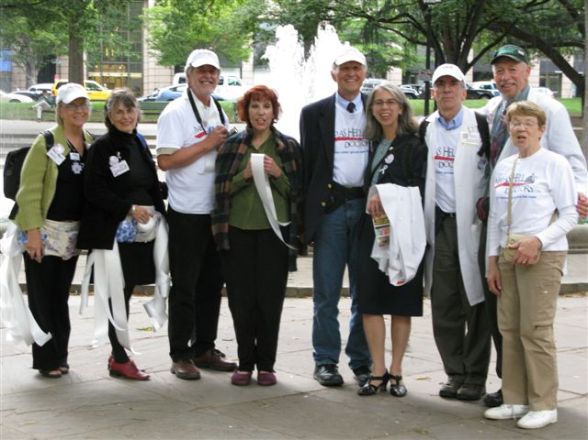
The picture is some of the madashell doctors on our first trip stumping for single payer health care in 2009.
Top ten causes of death: US 1915

Now, let’s do the time warp again, back to 1915 in the United States.

All causes of death 815,500 recorded deaths. Rate of deaths per 100,000: 1317.6

Rates are per 100,000 estimated midyear population.

According to http://www.demographia.com/db-uspop1900.htm, the US population was 100,546,000 in 1915.

Top ten causes of death US 1015

1. Diseases of the heart: 101,429

2. Pneumonia (all forms) and influenza:90,330

3. Tuberculosis (all forms):86,725

4. Nephritis (all forms):62,841

5. Intracranial lesions of vascular origin: 58,460

6. Cancer and other malignant tumors: 49,935

7. Accidents excluding motor-vehicle: 42,500

8. Diarrhea, enteritis and ulceration of the intestines: 41,771

9. Premature birth: 27,712

10. Senility : 11,555

Premature birth is on this list, at a rate of 2.6% of all the deaths. Heart disease is at the top of the list, though pneumonia and influenza take over the top of the list in 1918 and stay at the top for a while. We have not had an influenza that deadly since then, but it looks like we will…..

The 1915 list used the Fifth Revision of International Lists. This changes as I go through the table of death causes and rates, the International Classification of Disease is used, the Ninth Revision in 1975 and the Tenth Revision in May of 1990. The Eleventh has a release date of 2018. The US goes to ICD 10 on October first, but not the same ICD-10 as the rest of the world. Ours has 48,000 diagnosis codes. The rest of the world uses one with 14,000 codes. So senility had a different definition than Alzheimer’s.

http://www.who.int/classifications/icd/en/

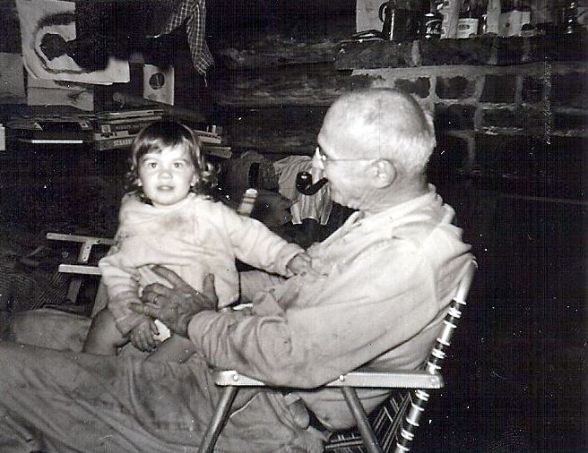
The picture is me on my maternal grandfather’s lap in a summer cabin in Ontario, Canada. He was a physician, a psychiatrist. Think how much things have changed since he finished medical school until I did…..

Guide to determining if you are constantly being mauled by bears

This is for Ronovan’s weekly haiku prompt. The words this week are guide and mad.

Beloved guide me
through red mad anger open
heart to shores of love

The picture is my son and daughter on the shore of Lake Crescent, Washington in 2004. We stopped driving for a rest. My son has just skipped a rock and I love the curve of his body and physical joy expressed. He’s trying to influence what the rock does with his body language. How can we all stay that fluid and joyful?

I stole the title from here: http://everything2.com/title/Guide+to+determining+if+you+are+constantly+being+mauled+by+bears

Branded

This photo is really my brand. In 2009 my rural county hospital dismissed me as a physician because I argued against the daily 18 patient quota that they said that Congress had set us. I said, “I will go argue with Congress.” I was not sure how I would get to Congress or when.

Meanwhile, in Oregon, a group called the Mad as Hell Doctors was readying to hit the road. Two weeks before the Mad as Hell Doctors hit the road to go across the country to give talks about single payer healthcare and to listen to citizens talk about their healthcare experiences, a friend called me.

The friend had gone to the Mad as Hell Doctors’ first program, a practice run in Sequim. It was well attended because the community had a controversy over the word “Hell”. The friend said, “It’s a bunch of older white males. They need a woman. You’re off from work: you should go.”

I researched them and called a friend who is a very experienced agitator. He said, “Do it.” I called them and my father drove me to the Bremerton ferry. I got off the ferry in downtown Seattle and was picked up on a street corner to join the Mad as Hell Doctors. I had never met any of them. That evening I was part of the program.

I was and am mad as hell and often sad, frustrated, appalled and incensed by the healthcare industry in the United States, that leaves people without care and dying in spite of costing each and every one of us twice as much as any other country in the world. And all of the CIVILIZED countries have single payer. Am I saying that the United States is uncivilized? Yes, frankly, I am. We are a country run on greed by corporations currently and I am fighting it.

The Mad as Hell Doctors traveled California in 2010 and I was there for a week of that trip. In 2011 they toured Oregon. We continue to work locally, at the state level and at the national level for single payer healthcare, medicare for all. I think that it will happen and hopefully during my career.

We ended the first trip at Congress and the White House. I sent a postcard to my former employer saying “See? I said I would go to Congress.” We haven’t won the health care battle yet but we will.

Here is a ten minute program that I did in Sequim, WA in (2012) at the American Awakening event:Β  Enjoy. If you want to see WHY we are Mad as Hell, watch “Health, Money and Fear” and the other videos at this site. For more information Physicians for a National Health Care Program is excellent and Health-Care Now! is also excellent.

You can make a difference. Do you know anyone who has lost their house, not gotten care soon enough because they didn’t have insurance or were under insured, or has been harmed or died because they were not able to afford or access care? Gotten sick and lost their job and lost their insurance? You, too, should be Mad as Hell and fight to change this.

Homebody

How funny that the traditional positions are reversed

you to be the homebody
while I go out to fight

I am still struggling with what you have chosen

say yes to everything

because so much of the time you don’t answer

I take that as a brush off, you know
silencing
you don’t want to hear it
you don’t want to discuss it

you have your interests

I am interested in everything

but particularly people
what makes them tick

and discrimination
which makes me want to wade in
with my sword
and carve people into mincemeat

perhaps I am to learn patience from you

perhaps this is a respite

perhaps this is a safe place to retreat

you have been fighting for a long time
I am glad that you have laid down your sword
and are finding rest

though sometimes I think you are missing things
withdrawn from the present world

I see that you seem happy in the past

I am trying to accept that

meanwhile, I am well enough

to pick my sword back up

and wade in.

Fraud in medicine: oxygen

My father died of emphysema in June of 2013. I found him dead on the floor of his house. I expected this because he was nearly a hermit, but it was still hard.

He was on oxygen. It was prescribed to be continuous.

I started cleaning up the house and trying to find his will. I lined up oxygen tanks and called the oxygen company. There were ten tanks.

The oxygen company picked up the tanks.

I found eight more. I was very busy with a large house, a complicated estate, two years of unpaid taxes, he paid bills on line but had not updated the payments when costs increased……

I hired a local estate sale group. They did an excellent job. The house was sold. I picked up the last few things, including the oxygen tanks.

I called the oxygen company. “Why did my father have 18 oxygen tanks?”

They said, “We delivered them as needed.”

I said, “He didn’t need 18 tanks.”

They said, “They are paid for.”

Oh! Medicare paid for the oxygen. No, not medicare. You and he and I paid for it, because we pay taxes to medicare and medicare pays the oxygen company. Well, 80% and then my father paid the other 20% unless he had a medicare secondary insurance, which he also pays for…. Oh, are you under 65 and thought medicare paid for everything once you got it? Sorry to disillusion you…..My fatherΒ  was supposed to be on oxygen continuously. So the company kept delivering it at the intervals covered by medicare, even though he was not using it all. He sometimes didn’t wear his oxygen and he also had bought his own oxygen concentrator, smaller and easier to move than the one from the oxygen company.

I was furious. “So you kept delivering oxygen even though it was not all being used. And kept charging.”

They said, “We delivered it when it was needed.”

Liars. They delivered more than was needed and I gave some back to them, after medicare had already paid for it.

I still have 8 tanks of oxygen. After all, it’s paid for by medicare, by my taxes and by your taxes. The oxygen is paid for. The tanks belong to the company. I’ll return them when they are empty….. I don’t think the corporation should be able to charge medicare for it twice…..

I should check to see if the company reimbursed medicare and my father for the oxygen when it was returned. If not, I can check into filing a fraud complaint with medicare against the company. But even if they reimbursed medicare and my father’s estate, I am still angry that they kept delivering it when they knew darn well that he had tanks already. Or maybe they don’t even keep track of how many tanks they’ve given out. It’s all about money.

Fight back against corporate greed and fraud. Ask questions. Do not give the oxygen back if it’s been paid for….. give it to someone who needs it instead.

Cost comparison of brain MRI

I called Advanced Medical Imaging (AMI) in May 2014Β to get a prior authorizationΒ for a brain MRIΒ with and without contrast.

This is for a woman under 65 who is having short term memory problems. We are looking for treatable causes of short term memory loss. The blood work is negative. Next is the MRI.

Her MRI is already scheduled at the local hospital where I worked for nine years. It is the only hospital because we are a small county.

The AMI representative suggested that the patient get the MRI in Everett.

“The cost there is $917.00. It would be cheaper. It is only 29 miles away.”

“Yes, but Everett is across the sound. She’d have to drive around or take a ferry. What is the cost in Bremerton?” I asked. “At the radiology providers there?”

“The cost there is $967.00.”

“And where she is scheduled?” My local hospital has a “Rural Hospital” designation. Medicare will pay them more than other hospitals.

“$4585.00.”

I squeaked. “For the same MRI?”

“Yes.”

“Um. You should tell the patient.” Except that, is the patient willing to drive to Bremerton? And is the cost to the patientΒ the same? And do they care?

“Do you want the prior authorization for that site.”

“Can it be changed if I talk to the patient?”

“Yes, she can call us.”

The prior authorizations are now site specific. That is, I’m getting approval for the MRI at a specific place. I have no idea why.* Seems stupid. Seems like just another hoop to remember to jump through and if we get it wrong the insurance can say, “Oh, ha, ha, ha, we don’t have to pay for that. You do.” Chalk up some more profit for the investors. Mission accomplished, money made.

I called the woman and explained. She was willing to go to Bremerton and said that she would call AMI. I asked her to call us back if she had any trouble.

The cost really matters to my medicare patients and any patient that has to pay a percentage of the cost. If they only have medicare part B, with no secondary, they pay 20% of the bill. 20% of 4500.00 is a lot more than 20% of $900. But some of my frailest most elderly most confused don’t really have a choice. Going 29 miles might as well be going to the moon.

And this is a woman with memory loss, remember? She wrote down the instructions and repeated them back to me three times.

Every phone call to insurance is like this, and makes me wonder about our culture.

* Actually, the authorizations are site specific because some places are “out of network” and the insurance won’t cover anything done there. Though I think the whole point of health insurance in the US is to try to remove money from people and avoid paying for care.

This was first posted at everything2 on Friday May 9, 2014. The womanΒ died last month.

Comparison of cost of abdominal CT with and without contrast

I keep reading that the US Health System should be a “free market” with competition.

To have an free market, one needs to be able to check the prices. I want to compare price tags. I have a patient who needs a CT scanΒ of the abdomen and pelvis with and without contrast. So can I, as a doctor, find out the price?

I start making phone calls:

I call AIM Specialty Health, a procedure clearing house hired by many insurers here, to get prior authorization for the CT of the abdomen and pelvis with and without contrast. They ask for the usual identifying information: my name, tax id, NPI number, patient name, insurance number, check my address, phone number, fax number. They ask for theICD-9 codesΒ — codes for the diagnosis. I know those. They ask for the CPT code, which is the procedure code for the test. I have to scramble to find the book and look it up: 74178. With the brain MRIΒ the other day they volunteered site specific charges. Not this time. The representative said they didn’t know. I asked for prior authorizationΒ in Poulsbo, since that was most reasonable for the brain MRI. I asked what the patient’s copay is: AIM does not know.

Call to Premara Blue Cross, which is the patient’s insurance company. They can tell me that the patient has a $10,500 deductible each year. She will have to pay that much before the insurance pays anything. I ask them what it will cost at different sites. They say they can’t give me that information.

Next I call 5 different sites to get the price for that CPT code/proceedure.
Call to my local hospital: Charged amount is $4200.00
Call to a free standing radiology clinic in Poulsbo: Charged amount $1416.00
Call to the hospital in Bremerton, south of us: $8958.00.
Call to a free standing radiology clinic further south in Silverdale:$1526.00 + $20.00 for contrast.
Call to the hospital in Port Angeles, north of us: $ 3101.70 for the facility fee. Gave me Radia’s number for the physician fee.
Call to Radia and left message.
Left message with patient.

Radia called back and the fee is $346.80, so that would be added to the $3101.70 at Olympic Medical Center.

Now I know the amount BILLED at five sites. However, that is not the amount my patient will PAY.

If the site is “in network” then the site has a contract with Premara Blue Cross, which states the amount that Premara is going to pay. The patient will get an EOB, an explanation of benefits, from the insurance. “Benefits” is an interesting choice of words. The patient has paid for the insurance so that they will cover the bills. Is that a “benefit”?

On the EOB, it will state the amount that was billed for the service. Next it will state the amount “allowed”. “Allowed” is misleading. To me it implies that the insurance has held the cost down. But the insurance “allowed” the site to be “in network” because the doctor/site signed a contract. So this is a contracted price or agreed upon price.

I want to know the allowed/contracted/agreed upon price.

Call to the WA State Office of the Insurance Commissioner. The office says that the patient should be able to request the allowed cost for a specific site. Each site has a separate contract with the health insurance, so the allowed cost could be different at each site.

Call to Premara Blue Cross. This time they say that it’s not that they refused the information, it’s that it was not available. Now the representative says that they need the “units or minutes billed.” I don’t know what that is, but I will find out. I ask if that is the only other thing that I need. They say yes, but I cannot contact the same rep directly. I have to go through the rigamarole each time: my name, my tax id, patient’s name, patient’s insurance identification number, my clinic address, fax number, phone number, sometimes the patient phone number. Usually I have to punch 4 or five of these into the automated system and then have to repeat it all when I reach a human being.

Call to Poulsbo. The units refer to 100 units of contrast. Some patients will need more, up to 200 units.

Call to Premara Blue Cross again. I go over everything with representative Hailey, who then wants to know the amount that Poulsbo is billing. Explained that I was told only the units were needed. She put me on hold and checked with Poulsbo. She is quoted the same price.

Continuing with call to Premara Blue Cross. Hailey has entered everything and doesn’t get a result. She says she doesn’t know. I explain that they have a contract with Poulsbo that names an actual amount. She transfers me to another department after 25 minutes. The representative there says that she can give the allowed amount information to the provider doing the test, that is, to Poulsbo. I explained that the WA State Office of the Insurance Commissioner says that a patient can indeed request that information. I asked if they are refusing it to the patient. Rep repeats that she can give it to that provider but not me. I offer to have the patient in for a visit and get them on speaker phone and again request the information. Without the information, I will strongly consider filing a complaint with the state insurance commission. She decides to transfer me. That’s at 30 min and I am again put on hold.

The call to Premara Blue Cross ended after 45 min and 37 seconds and the third representative in the provider relations department states that if they get a call from Poulsbo that they could tell THEM the contracted allowable amount. Again stated that the insurance commissioner’s office says that the patient can request the amount. Are they and will they refuse it to the patient? Representative Whitney says that she has access only to provider accounts and that the contract with Poulsbo is proprietary information*. I say that I think health insuranceΒ is also a contract between the patient and the insurance and surely the patient can ask what it will cost in advance. I stated that I would be calling the patient and the state insurance commissioner’s office again.

I talk to the patient. She will now call the insurance and ask the “allowed” amount for this site. I give her the diagnosis code, CPT code and units billed.

She calls back. Premara says “around $600.00”.

I call Poulsbo and ask if they will check the contracted amount. They call Premara. They call me back.

If she only has 100 units of contrast, the CT of the abdomen and pelvis with and without contrast will cost her $641.00, as the “allowed” amount by contract between her insurance and the radiology site.

I still do not know the “allowed”/contracted amount for the other four sites, so I have failed in my attempt at comparing price tags. I only know the amount the sites would bill. The “allowed”/contracted amount for each site could be different. The hospitals bill more because they have a “facility” fee. I think this means that they are allowed to factor in various hospital costs. Even so, it seems outrageous that one hospital bills twice as much as the other two and more than six times as much as the least expensive site, but the allowed amount might be lower then the billed amount.

I don’t think this is a free market. I think it is an obscured market. And this is just one procedure and one single charge. Think of a hospital stay.
AIM Specialty Health http://aimspecialtyhealth.com/about-aim/guidelines
Washington State Office of the Insurance Commissioner is at http://www.insurance.wa.gov/
Premara Blue Cross https://www.premera.com/wa/visitor/

* When I called about the head MRI, why wasn’t the information about what is billed at different sites proprietary then?

This was initially posted on everything2 on Friday, May 16, 2014.

Mad as Hell: Good Insurance

My name is Katherine Temple Ottaway and I am a Mad as Hell Doctor!

I am a Family Practice physician. I live in a rural town of 9000 and I take care of people from birth to death. I have delivered babies for 18 years.

I am Mad as Hell because people are suffering and 30% of the money spent on health care goes to administration and profit, not to health care. 60% of bankruptcies in the United States are triggered by medical bills.

As we crossed the United States, doing town halls on single payer health care, I thought that we cared for our roads better than our fellow citizens. Rest stops and all.

My sister has “good” insurance, through the state of California. Four years ago, at age 41, she was diagnosed with stage IIIC breast cancer, advanced. Each year she pays a deductible of $500 and then a maximum copay of $3000 and then a maximum prescription copay of $1000 dollars. Last year she also paid a second deductible for her family, an additional maximum of 3000$ and the prescription copay for her family. Her cancer recurred in October of 2008 and the chemotherapy rolled over into January, so she is paying all of it again this year: at $4500 per year, that comes to $22,500 dollars over the last 4 years. And remember, she is lucky enough to have “good” insurance and she is lucky enough to have a boss who values her, so she hasn’t lost her job.

She was nauseated with her latest chemotherapy. Only one antinausea medicine worked. It was very expensive and the insurance refused to pay for it. She called them. They said, “95% of people on that chemotherapy have their nausea controlled with the other medicines.” “But I am in the other 5%,” she said. “We will not cover it,” they said. And they are lobbying Congress with $1,400,000 dollars a day. Where, exactly, do they get THAT money? My, they must have some really nice profits to protect.

My sister said to me sadly, “I wish I could save more for my daughter’s college.” Her daughter is 11. They rent and wish that they could buy a house. My sister said that she has nightmares about losing her job and them living on the streets.

And that is happening. People are making choices. They told us as we crossed the country. When a job is lost and the cobra insurance is $700 a month, it is often lost too. And then a cancer patient has to choose: treatment and my house will have to go to pay for it? Or do I preserve the house for my children and choose not to be treated? And possibly come to the emergency room at end stage, deathly ill, be treated with extraordinary measures in the emergency room and ICU. The house may still go.

I am Mad as Hell that we spend 16% of our GNP on health care, twice as much as the second most expensive system in the world, and yet are ranked 37th for over all health care. Our system causes deep suffering and horror for families. I am a Mad as Hell Doctor. Blessings on everyone that took Oct 15, 2009 to sit at health insurance companies. Peaceful social activism, to mourn the 45,000 Americans that now die prematurely from lack of medical care. Fight back.