Schmidt International iECHO: Long Covid Patient Perspective

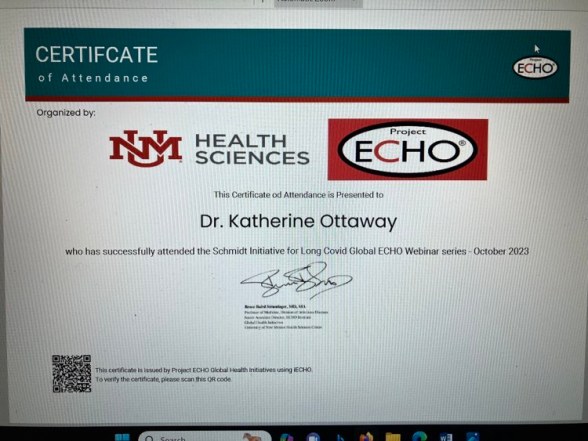
The latest Schmidt Initiative iECHO Long Covid zoom two days ago is by Hannah E. Davis, MPS, the co-founder of the Patient Led Research Collaborative (PLRC).

She got Covid-19 in March of 2020. Her first sign that something was really off was that she couldn’t read a text message. She thought that most people recover in two weeks so didn’t do much about it. She went on to clotting and neurocognitive problems and MECFS.

Her job and expertise were in machine learning data sets. As she realized that she was really sick and was not improving, she also realized that Long Covid was not even on the radar for physicians, overwhelmed by the acutely ill and dying. She started the interdisciplinary team co-led by four women and with over fifty patient researchers. The group is 61% women and 70% disabled.

They published an op ed piece about the body politic in the New York Times in April of 2020. By May of 2020 they had a fifty page article out documenting that even mild cases of Covid-19 could cause long term impacts. They describe multiple symptoms long term, not just respiratory. They also noted and documented medical stigma happening and were instrumental in changing the dialog from anecdotes of non-recover to data about non-recovery.

In June to August of 2020 they appealed the the World Health Organization (WHO) with a video message presenting data about long term effects.

In December of 2020 they presented a paper characterizing Long Covid. There are now 3-4 biomedical papers coming out each day.

She states that there are multiple myths about Long Covid: “It’s mysterious, we don’t know anything about it.” is not true. She listed other myths, but I have to go back through the slides.

The group is still highly active in research and is advocating for patient involvement in research. They have developed score cards for the level and quality of patient engagement. Tokenizing gives a score of -1 or -2, where instead of patient engagement in all stages of the research project, they are told “Come look at our final paper and give us the patient engagement gold star.” That is not adequate engagement. Other diseases have also made patients push for engagement in research: HIV, Parkinsons, PANDAS and more. Patients just want to get better and they want research that matters.

Worrisome data include that 10-12% of vaccinated people who get Covid-19 still can get Long Covid. This is less than the unvaccinated, but it’s still one in ten.

Their data shows that the majority of that 10-12% are not recovered at one year.

Another myth is that there is no treatment, but there are treatments at least for symptom management.

They published the Long Covid paper in the January 2023 Nature, documenting the many many symptoms and ongoing early stage treatments, many taken from other diseases such as MECFS.

One third of people who get Long Covid do NOT have preexisting conditions. It attacks all ages, women more then men, and prior infection may increase risk. Respiratory problems are more likely to recover, barring lung scarring. 43% of Long Covid patients report a delayed onset of neurocognitive symptoms.

Regarding mental health, research shows that stigmatization is still common and that patients who have experienced that are more likely to be depressed, anxious or even suicidal. In contrast, even one non-stigmatizing encounter, medical or family or friends, makes people have lower rates of depression, anxiety or suicidal ideation.

It is abundantly clear that this is a biomedical illness. Enabling google research will allow those papers to be delivered daily. I am on a list where I get daily reports of Covid-19 research and papers.

Next she talked about the current treatments, many taken from other similar illnesses. I have to say that the microclots scare me the most. There are clinical trials ongoing as well as amazing bench science, but meanwhile physicians need to listen to patients, believe them, pay attention to the ongoing research and help patients.

I spoke to a provider yesterday that I last saw two years ago. I said I wanted to work with Long Covid patients. “Good!” he said, “Because I don’t want to!” I think that attitude may be very wide spread.

I also looked at our county (and only) hospital’s page on Covid-19. There is not ONE WORD about Long Covid. Isn’t that interesting? Denial ain’t just a river in Egypt.

This is just what I got from the lecture. There was and is more. Physicians and patients can attend and they file the talks so that you too can watch them. Here:

https://hsc.unm.edu/echo/partner-portal/echos-initiatives/long-covid-global-echo.html

Blessings.

Black and white

Pandas are black and white, clarity
between the parts, yet both are present together
Pandemic has lessened humans charity
Stress rises, fights and a turn to war weather.
It’s hard to fight a virus way smaller than a bee
And as they change and attack birds and us anew
Frustration rises and we attack the humans that we see
We take sides, black or white, and don’t see that we’re a stew
Perspective changes, white to black and back
The pandas eat their daily bamboo pounds
Unworried which parts are white or black
I hope they are far from the crying bombing rounds
I hope every person has the charity
to give all others love and parity.

We are singing Frostiana, poems by Robert Frost, set to music by Randall Thompson, in chorus. The ending of this makes me cry:
“So when at times the mob is swayed
To carry praise or blame too far
We may choose something like a star
To stay our minds on and be staid.”

I took the photograph in Oregon this month, on a Pandasonic (ha, ha).

For the Ragtag Daily Prompt: clarity.

mom proud

In the Vatican Museum, I note that the paintings are attributed to men. I start really looking for a woman artist. Of course, some of the male artists may have stolen the work or be “passing”. I love this small sculpture, by a woman artist. I think I saw two works clearly by women. Dear Vatican: get a clue.

Around age 13, my son listened continuously to three bands or musicians. We had two years where I swear, he wouldn’t play anything else.

And this is where I feel proud as a mom.

Jimi Hendrix. Bob Marley and the Wailers.

And the third is Sweet Honey in the Rock. African American women a capella. And so he knows about Harry Moore and Joanne Little.

Prayers for all the people discriminated against, terrorized, or in the the path of disaster. And for all the motherless children, we who have had our mothers die. Dave Van Ronk: motherless child.

Go Keb’ Mo.

Comfortable with angles

I am thinking about monsters
That I am comfortable with the monsters
in my dreams
but terrified by the angels.
Though I type angles.

But I also dream that all the angels fall
all are made to fall
they fall down then back up
when they fall down they burn
if they fall here
burn in the atmosphere
then they are red or black and burnt
and we think they are devils: monsters.

If angels are monsters
and monsters are angels
and they go back and forth
and I type angles
because everyone makes mistakes
even angels
and to make something perfect
is an offense to the Beloved
because only the Beloved is perfect
and ineffable.

Still the angels.
I am afraid.
So was Mary, sore afraid.
Monsters are easy: at worst they can kill me
and they never have
in my dreams.
And they are sad and alone and weep.
I comfort them. Which makes them afraid,
because they are not used to being loved.
I wonder if I frighten them
like the angels frighten me.

And then I can understand
a little
of why the angels frighten me so much.
I too am not used
to feeling loved.

written September 13, 2023

For the Ragtag Daily Prompt: bread winner. But I can’t eat gluten any more and my lungs are too vulnerable for the work I love. So how bread and how winner? Maybe the angels and angles and monsters will tell me.

Long Covid imaging

In the last Long Covid talk that I attended and wrote about (here: Pulmonary Manifestations of Long Covid), the pulmonologist and intensivist says that one problem with Long Covid is that we do not have imaging that can “see” it.

That is, the chest x-ray looks normal, the echocardiogram may look normal (heart ultrasound), the chest CT scan may look normal, a brain CT or MRI may look normal, but the patient may still be tachycardic, feel exhausted, feel brain fog and have multiple other symptoms.

That pulmonologist listed five of the top mechanisms that are prolonged in the immune system. Most of the scientists and physicians are framing this as “immune system dysfunction”. I am not. I am framing it as “you were really really sick and your immune system is still on high alert and trying to protect you so you can recover”. Now wait, you say, how could chronic fatigue like symptoms protect me? Well, if you are exhausted, you can’t go to work and you’ll stay quiet at home most of the time and less exposure chance. But what about brain fog? Again, this will slow your interaction with other people and force you to rest and heal. But, you say, I don’t like it. Well, yeah. Patience. We call grumpy patients that are recovering “convalescents”. It is a good sign when they are grumpy and over it and just want to be better. That doesn’t mean I can make myself or anyone else heal faster.

The pulmonologist says that the best test is the six minute walk test. This is usually done by a respiratory therapist. The person walks in a circle for six minutes wearing a pulse ox, with the respiratory therapist doing regular checks. This distinguishes between the people who have primarily a lung issue from all the other issues. If the person is tachycardic (fast heart rate) but not hypoxic (oxygen level dropping), then it’s not primarily lungs though blood clots to the lungs sometimes have to be ruled out. One of the mechanisms in the immune system is microclots and an increased risk of blood clots. That can mean heart attack, stroke, or pulmonary embolus, a clot in the lungs. The microclots are suspected of causing some of the muscle fatigue and exercise intolerance, by clogging capillaries and reducing oxygen flow to muscle cells. Muscle cells do not like this at all.

I have done my own quick walk test with patients since 2003, when I had terrible influenza. About a week after my influenza started, with the temperature of 104 and heart rate at 100 at rest and 135 walking, my temperature came down. However, the fast heart rate continued. Normal heart rate is 70-100 and 135 walking will make you feel exhausted. I lay on the couch and could barely make my kids dinner for two months. It resolved then. I read a book about influenza and thought that I had “influenza viral pneumonia” where there is lung tissue swelling, reducing the air spaces, after influenza.

My quick walk test in clinic is to check a sitting oxygen level and heart rate and then have the person walk. I would have them walk up and down a short hall three times then sit down. When they sat, I watched the pulse oximeter recovery. Some people would jump from a resting heart rate of 62 to a walking heart rate of over 100, say 120. Their oxygen level could stay normal or it could drop. If they dropped below 88, I would get home oxygen and forbid them to return to work. If their oxygen level held, then they needed to rest until their walking heart rate stayed under 100 and they were no longer exhausted by gentle or normal activity. If they return to work with a walking heart rate of 120, they will be exhausted and are more likely to get a secondary pneumonia or have other problems. The heart does not like to run at 120 all the time. You can see why a person who already has some coronary artery blockage would be more likely to have a heart attack if they get pneumonia from influenza or Covid-19.

The conferences I am attending are talking about “targets” in the immune system. That is, new drugs. I think the science is wonderful and amazing, but I also think we need to step back and say, this is a really really bad infection and some people need a lot of support and reassurance and time to heal. Reassure them that even though they have not yet returned to normal, the immune system is working hard to protect them from other infections and it is saying very very loudly that they need to rest. Rest, recuperate and trust the immune system. Some things need immediate treatment, especially blood clots, heart attacks and strokes, but once those are ruled out, we need to support people through their convalescence and healing.

______________

The photograph is from April 2021, a few days after I was put on oxygen. A selfie.

Neurogognitive effects of Long Covid I

Here is the first part of my notes from this lecture: May 24, 2023 Neurocognitive effects of Long Covid (International) part 2, by Dr. Struminger PhD, neuropsychologist.

I am trying to make this fairly clear to almost anyone. Some words may be unfamiliar to start with, but I will bet that you can sort it out. I would be happy to try to clarify any part if needed. These are my notes from the first half of this lecture, fleshed out to be clearer.

This is the Schmidt Initiative for Long Covid Global in English with real time translation into Arabic, French, Spanish, Portuguese and closed captions. Session recordings: https://app.box.com/s/onh1ma57ttjpi2c19qqxvmdao0kd2nsr

Dr. Struminger said that 1/4 to 1/3 of Long Covid patients have cognitive symptoms. A study comparing Long Covid patients with people who never got Covid-19 shows the Long Covid people to be three times more likely to have attention deficits or confusion. Part of the barrier to treatments is to define the problem, figure out the mechanisms and then start studying treatments. She said that she would share a few proposed mechanisms for cognitive impairment in Long Covid, but that it is probably multifactorial and it’s a rat’s nest. (Ok, I said rat’s nest. Dr. Struminger did not use that term.)

There are two main phenotypes of Long Covid brain problems: Hypoxic/anoxic and Frontal/subcortical. In hypoxic/anoxic certain brain functions are intact: Attention, visuospatial, cognitive fluency and memory encoding. There is impairment in problem solving and memory retention. This pattern is associated with the people who were hospitalized, deathly ill, on ventilators, or heart/lung bypass machines.

Frontal/subcortical is more common in the people who were never hospitalized and were not on a ventilator or ECMO machine. It can show up even in people who seemed to have mild Covid-19. The impairment is in attention, cognitive fluency and memory encoding, while the intact functions are visuospatial, memory retention and problem-solving.

Here are those lists in a table, HA for hypoxic/anoxic and FS for Frontal/subcortical.

Attention: HA intact, FS impaired
Visuospatial skills: HA intact, FS intact
Cognitive fluency: HA Intact, FS impaired
Memory Encoding: HA intact, FS impaired
Memory retention: HA impaired, FS intact
Problem-Solving: HA impaired, FS intact

The two types probably have different mechanisms and the super sick are more often the hypoxic anoxic. And there can be a mixed or both presentation.

Neuropsychologists test people to see what parts of the brain are working. Testing locally usually takes about four hours or more. Some brain functions have been mapped to parts of the brain but others are still mysterious. Efforts continue to match function to neuroanatomy. Going through each of the brain functions, some are mapped and others are not.

Attention is mapped and mediated by the frontal lobes. Attention is impacted by physical fatigue, dysautonomia, pain, shortness of breath, further impacted by emotional symptoms. It is REALLY easy to get stuck in a vicious cycle where physical symptoms or pain or hypoxia decrease attention function, which in turn makes physical symptoms worse. For example, hypoxia can decrease attention, which makes the person anxious and tachycardic, which in turn affects attention more.

The frontal lobes are very sensitive to hypoxic damage and to inflammation. Any inflammation in the body messes with them. The frontal lobes need oxygen and glucose. If a person can’t breathe, this messes up attention; if they are dizzy, it messes up attention.

Cognitive fluency. The anatomical correlates are less clear. Probably frontal and temporal, vulnerable to hypoxia and broad networks in the brain, vulnerable to physiological and mood disturbance. So vulnerable to the same things as the frontal lobes.

Learning and memory: Map to the hippocampi – sensitive to hypoxia and can be injured while the rest of the brain is comparatively unscathed. People have difficulty with retention of new information and not just attention/encoding problems. Neuropsychology distinguishes between attention/encoding and retention/recall problems. Those are different. In alzheimer’s, there is trouble retaining new information, even though people can encode it. In the frontal/subcortical long covid brain fog, there is more difficulty with attention/encoding. That is, if the person is tachycardic or in pain or dizzy or short of breath, it is more difficult to pay attention and encode information into memory.

Executive functioning. Frontal lobe: sensitive to hypoxia and metabolic dysregulation, significantly impacted by physical symptoms and mood disturbance.

The hypoxic/anoxic pattern has effects more like Alzheimer’s or a dementia. The frontal/subcortical is more like a concussion or traumatic brain injury. Neither sounds great, but there is more healing from the second than the first. Treatments for now are coming from the Alzheimer’s/dementia established treatments or from the concussion/traumatic brain injury established treatments. The first part of treatment is rest, rest, rest, and try to keep the brain from getting overwhelmed. I will write more about the ongoing changing recommendations.

More at: https://hsc.unm.edu/echo/partner-portal/echos-initiatives/long-covid-global-echo.html

The photograph is a screen shot of the brain from below from one of the conferences. There were over 300 people attending this zoom lecture, which is encouraging and hopeful.

For the Ragtag Daily Prompt: covert. The covert damage from Covid-19 is being sorted out.

Brain thoughts

The attendees of the conference are all excited and hopeful at the fleshment of our understanding of Covid-19’s effects on the brain.

I am still absorbing the information, getting ready to write about it.

For the Ragtag Daily Prompt: fleshment.

The New Old Time Chautauqua

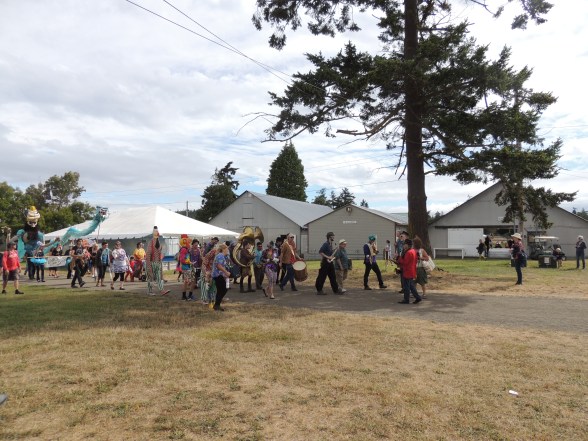
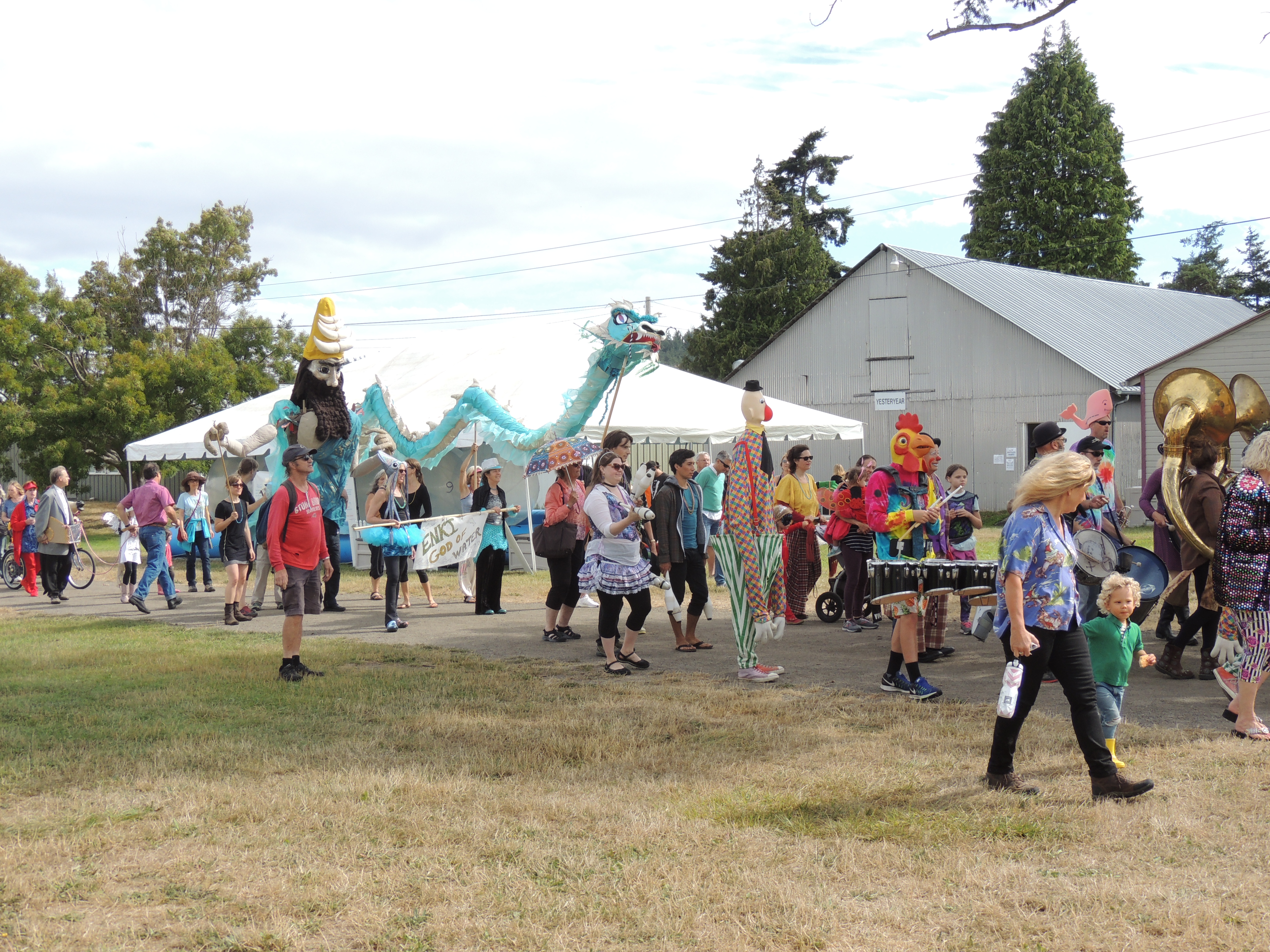
Funny how our brains work. I think of going to the other computer and then think I will look in this one for a moment. I have photographs from years past of the New Old Time Chautauqua. I open the file of Nikon photographs. There are 28 subfiles. I go to July 2018. At the end of the file, here is this motley parade. The New Old Time Chautauqua with our local Unexpected Brass Band and Other Friends.

I didn’t “know” that these photographs were even on this laptop. At least, not consciously. These are taken at the fairgrounds, August 11, 2018, in Port Townsend, Washington.

The New Old Time Chautauqua is the last one on the road. They are fundraising to go work and play with the Blackfoot Confederacy in Canada and the US. There are too many people dying from fentanyl, so the Chautauqua is part of the healing process. They are fundraising as they hit the road. I wish all of them the best.

And here is the Unexpected Brass Band at THING last year. You can hear them even if you can’t see them!

To donate to the New Old Time Chautauqua, go here. No, I mean back there. Right.

For the Ragtag Daily Prompt: Chautauqua.