For the Daily Prompt: awkward.
Do the paparazzi have this problem? This is a rear view of a great blue heron.


For the Daily Prompt: awkward.
Do the paparazzi have this problem? This is a rear view of a great blue heron.

We are in the week of our annual Rhododendron Festival. A tricycle race on Wednesday, run by my Sunrise Rotary. The Bed Race, the Pet Parade. Today is the Rhody Run, but I wore my feet out yesterday, with the Running of the Balls (one of our big Rotary fundraisers) and then the Rhody Parade. I walked to Monroe Street at 9:30 am and was not done until 3:00 pm. My phone went dead, but another person’s recorded 16,000 steps. I iced my feet when I got home, up on pillows!
And the local rhododendrons are gorgeous. Are they narcissists? Or just joyful?

For the Daily Prompt: infect. Maybe heart and brain health could be an infectious idea…..
Heart disease is the number one cause of death in the US, around 24% of deaths every year. Strokes are fifth most common cause of death at 5%, dementia sixth most common at 3.6%, data here from 2014. Accidents have beaten strokes out for fourth place because of “unintentional overdose” deaths.
I did a physical on a man recently, who said what was the best thing he could do for his health?
“Reduce or better yet quit alcohol.” is my reply. Even though he’s within “current guidelines”. I showed him the first of these studies.
Two recent studies get my attention for the relationship between the heart and the brain and alcohol.
In this study: http://www.onlinejacc.org/content/64/3/281, 79,019 Swedish men and women were followed after completing a questionnaire about alcohol consumption.
They were followed from 1998 to 2009 and 7,245 cases of atrial fibrillation were identified. The relative risk for atrial fibrillation was alcohol dose dependent: that is, the people who did not drink had a relative risk of atrial fibrillation set at 1.0. At 1-6 drinks per week the risk was 1.07, at 7-14 per week the risk was 1.07, at 14-21 drinks per week 1.14 and at >21 drinks per week 1.39. They also break it down by number of drinks per day. So why do we care about atrial fibrillation? “Atrial fibrillation (AF)/atrial flutter (AFL), the most common cardiac arrhythmia, is accompanied with a 4- to 5-fold increased risk for stroke, tripling of the risk for heart failure, doubling of the risk for dementia, and 40% to 90% increase in the risk for all-cause mortality.”
Atrial fibrillation, stroke, congestive heart failure, dementia and 40-90% increase in all-cause mortality. Want to protect your brain and live longer? Quit alcohol.
Well, that instantly decreased my enthusiasm for alcohol, now down to one drink per week if that.
Here is a second study: https://www.thelancet.com/journals/lancet/article/PIIS0140-6736(18)30134-X/fulltext?code=lancet-site
“Findings:
In the 599 912 current drinkers included in the analysis, we recorded 40 310 deaths and 39 018 incident cardiovascular disease events during 5·4 million person-years of follow-up. For all-cause mortality, we recorded a positive and curvilinear association with the level of alcohol consumption, with the minimum mortality risk around or below 100 g per week. Alcohol consumption was roughly linearly associated with a higher risk of stroke (HR per 100 g per week higher consumption 1·14, 95% CI, 1·10–1·17), coronary disease excluding myocardial infarction (1·06, 1·00–1·11), heart failure (1·09, 1·03–1·15), fatal hypertensive disease (1·24, 1·15–1·33); and fatal aortic aneurysm (1·15, 1·03–1·28). By contrast, increased alcohol consumption was log-linearly associated with a lower risk of myocardial infarction (HR 0·94, 0·91–0·97). In comparison to those who reported drinking >0–≤100 g per week, those who reported drinking >100–≤200 g per week, >200–≤350 g per week, or >350 g per week had lower life expectancy at age 40 years of approximately 6 months, 1–2 years, or 4–5 years, respectively.”
Ok, over half a million people followed, 40K+ deaths, 39K+ heart events (heart attack, atrial fibrillation, new congestive heart failure, etc), that’s a pretty impressive study.
A 5% 12 ounce beer is 14 grams of alcohol. Here: https://www.niaaa.nih.gov/alcohol-health/overview-alcohol-consumption/what-standard-drink. Our local brewery and pourhouse usually serve pints, 16 oz, and the range is from 5% to over 9% alcohol. Two 9% pints is how many standard drinks? You do the math. Currently the recommendations in the US are no more than seven drinks per week for women (98 grams) and fourteen for men (196 grams) per week, no saving it up for the weekend, no bingeing. The UK stops at 98 grams for both men and women. The rest of Europe goes higher.
Heart and brain, how I love you! I like my brain and don’t want to pickle it. I think I’ll choose heart and brain over alcohol, long term over short term, health over escapism.
Have a great week!
More:
https://www.sciencedaily.com/releases/2018/02/180220183954.htm
https://www.thelancet.com/journals/lanpub/article/PIIS2468-2667(18)30022-7/fulltext
http://www.acc.org/latest-in-cardiology/articles/2016/08/26/16/48/consumer-news-stroke-esc-2016
I took the photograph. It reminds me of neurons in the brain.
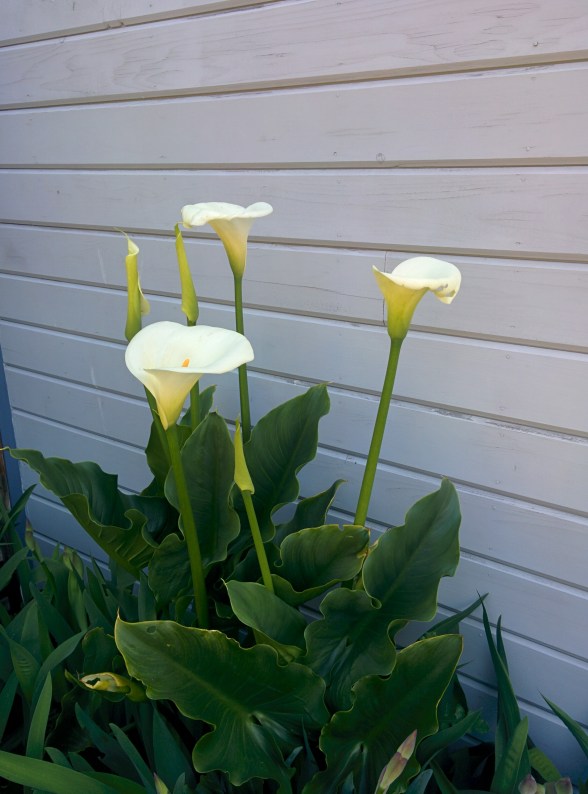
For the Daily Prompt: thin.
Stems for flowers.


For the Daily Prompt: core.
The trees are the core of the forest. Or maybe the core is the earth, the sky, the sun, the rain, the wind, the moon, all together….

For the Daily Prompt: skewed.
I think this is an optical delusion. Taken in Tacoma.

For the Daily Prompt: forest.
My town is a forest at sunrise and sunset. The trees take over, dark against the sky. And look, something is rising from the mist.
Medicine is like that too. Did the epidemic of unintentional overdose deaths catch you by surprise? People, including doctors, thought opioids were safe, if taken correctly. And that we should increase them if the person still had chronic pain. But the information is still changing and taking shape from the fog.
I have worked with the University of Washington Telepain service since 2011. I can’t attend every week, but many weeks I spend Wednesday lunch in front of the computer, logged on to hear a thirty minute lecture from UW and then to hear cases presented from all over the state.
I want to sing the praises of the doctors on Telepain and the Washington State Legislature for having this program. Here is a link to a five minute King5 news program about UW Telepain.
https://www.king5.com/video/news/local/fighting-opioid-epidemic-via-video/281-8115411
Forty two different sites were logged on. There are also UW Telemedicine programs for hepatitis C and for patients with addiction and psychiatric problems. The advantage is that all of we rural doctors learn from one doctor presenting a patient and the panel discussing it and making recommendations. We have Dr. Tauben, head of the pain clinic, a psychiatrist, a physiatrist, a family doctor who treats opioid addiction, a psychologist and a social worker. And often a guest speaker! We have a standard form to fill out, with no names: year of birth and male or female. It is a team that can help us to care for our patients.
New information in healthcare rises out of the mist….


For the Daily Prompt: laughter.
A class on public speaking at the Rotary District 5020 meeting last Friday… a wonderful class!
Who knew that there are over 35,000 Rotary Clubs world wide with people working on ending polio, clean water, efficient and inexpensive stoves, projects locally and internationally? And having fun too….
BLIND WILDERNESS
in front of the garden gate - JezzieG
Discover and re-discover Mexico’s cuisine, culture and history through the recipes, backyard stories and other interesting findings of an expatriate in Canada
Or not, depending on my mood
All those moments will be lost in time, like tears in rain!
An onion has many layers. So have I!
Exploring the great outdoors one step at a time
Some of the creative paths that escaped from my brain!
Books, reading and more ... with an Australian focus ... written on Ngunnawal Country
Engaging in some lyrical athletics whilst painting pictures with words and pounding the pavement. I run; blog; write poetry; chase after my kids & drink coffee.
Coast-to-coast US bike tour
Generative AI
Climbing, Outdoors, Life!
imperfect pictures
Refugees welcome - Flüchtlinge willkommen I am teaching German to refugees. Ich unterrichte geflüchtete Menschen in der deutschen Sprache. I am writing this blog in English and German because my friends speak English and German. Ich schreibe auf Deutsch und Englisch, weil meine Freunde Deutsch und Englisch sprechen.
En fotoblogg
Books by author Diana Coombes
NEW FLOWERY JOURNEYS
in search of a better us
Personal Blog
Raku pottery, vases, and gifts
𝖠𝗇𝗈𝗍𝗁𝖾𝗋 𝖶𝗈𝗋𝖽𝖯𝗋𝖾𝗌𝗌.𝖼𝗈𝗆 𝗌𝗂𝗍𝖾.
Taking the camera for a walk!!!
From the Existential to the Mundane - From Poetry to Prose
1 Man and His Bloody Dog
Homepage Engaging the World, Hearing the World and speaking for the World.
Anne M Bray's art blog, and then some.
My Personal Rants, Ravings, & Ruminations

 KO Rural Mad As Hell Blog
You must be logged in to post a comment.