Happy

Happy

May Sarton writes of happiness, in the quiet at home.

I am so happy when I dance that I smile with joy.
I wonder about the Sufis spinning
and if it is the same.
The poetry has that joy
and anyone who calls God/Dess the Beloved
has my attention.
One who was almost a friend
would laugh with me at restaurants.
Twice strangers thank us for having so much fun.
say our laughter gives them joy.
Thinking about happiness,
I think of my son’s capacity for joy
and wonder where he got it.
Surprise: from me, I think.
From me.

Pulmonary Manifestations of Long Covid

Today’s Zoom lecture was about pulmonary manifestations of Long Covid, and this is from the Schmidt Initiative for Long Covid Global ECHO Webinar Series, out of the U of New Mexico.

First of all, the talk is brilliant. The speaker is Lekshmi Santhosh, MD, MAEd, Asso Prof Med, Pulm Critical Care Med, UCSF, Intensive Care.

Two things to start with: she stressed the six minute walk test for patients, to distinguish oxygen desaturation (dropping) from the people who have terrible tachycardia (fast heart rate) only. The oxygen drop indicates that the person needs lung studies and may need oxygen, while tachycardia alone means either a heart problem, chronic fatigue/ME pattern or dysautonomia, where the heart goes fast when the person sits or stands up. Her point was that it’s a simple test and that Long Covid presents in multiple different patterns.

The second point is that there are least five main mechanisms that Long Covid can mess us up and people can have one or many. There is a review article in Nature last month (I need a copy!) and it talks about these five: immune system problems, gut microbiome problems, autoimmune responses, blood clotting/microclotting/endothelial problems and dysfunctional neurological signalling. SO: this is a MESS. She says that patient care needs to be individualized depending on which mechanism(s) are predominant and it can be more than one. This Covid-19 is a hella bad virus.

So: “The underlying biological mechanism may not be the same in each patient.” That is the understatement of the year.

She reiterates that the current diagnostic criteria, subject to change, is symptoms that last longer than 12 weeks after Covid-19 and two months past that. She states that the symptoms can wax and wane and that we need to listen to and believe patients.

In JAMA this month, there is an article that uses big data to find which symptoms are more associated with Long Covid, and lists 13 symptoms. Smell/taste tops the list but fatigue is there too. However, this is not a list for diagnosis, it’s a study list.

She also is careful to say that the treatment for the pulmonary manifestations is not the same as the people with the pattern that resembles chronic fatigue syndrome/ME. The pulmonary people can build exercise tolerance, but the CFS/ME folks need a different regimen, with pacing and energy conservation. That sounds like a subtle difference. I had both though my CFS/ME is weird. It does not put me in bed, I just can get really tired and need to sleep. It’s a bit invisible. People see me dance and would not guess that I have CFS/ME. All relative to previous function and energy, right?

For lung manifestations, she lists a pyramid, with the more rare things at the bottom. As follows:

  1. persistent dyspnea (shortness of breath)
  2. post viral reactive airways disease (asthma that can resolve from irritated pissed off lung tissue)
  3. deconditioning. She says that the isolation and quarantine with some people in very small rooms, leads to terrible deconditioning in some folks. They can build up, especially with supervised exercise with pulmonary rehabilitation and/or physical therapy. It is scary to exercise when you are short of breath and the supervision really helps, with limits on how much you should push, or encouragement to push.
  4. organizing pneumonia. This is rare and responds to steroids. Otherwise steroids are not good for the muscles in Long Covid, with the exception of inhaled steroids for the asthmatics and post viral reactive airways.
  5. post ARDS fibrosis: fibrosis is fibrous scarring that can form in the lungs. Anyone who has any terrible pneumonia and is in the ICU and intubated and on a ventilator can get this. Not everyone gets it, thankfully. ARDS is Acute Respiratory Distress Syndrome. Luckily the fibrosis is rare and it turns out that in some people it improves with time, like years. She does not recommend the pulmonary fibrosis medicines right now. There are many causes of pulmonary fibrosis besides infection.
  6. PVD: peripheral vascular disease. Covid-19 increases clotting, so we have to look for both clots and for disease in arteries, which could be lungs, brain, heart, anywhere in the body.

She says DON’T assume that chest pain is from the lungs and don’t miss cardiovascular. That is, rule out a heart attack and pulmonary embolus first.

Other lung problems have to be kept in mind that are not caused by Covid-19. This list: Reflux associated cough, pleuritic pain, neuromuscular disease, vocal cord dysfunction, tracheal stenosis, tracheomalacia. Watch for those. She says that it is very very important to look at old chest x-rays and CT scans, because those can show previous signs of emphysema/COPD/asthma/fibrosis.

Testing: She puts the 6 minute walk test first. AFTER the thorough history and making sure there are no red flags for pulmonary embolism and heart attack. Those have to ruled out if there is any suspicion. Next: pulmonary function testing. If the DLCO is low, consider a chest CT. Consider TTE -TransThoracic Echocardiogram, to look at the heart. Labs: CBC (blood count), ESR, CRP, thyroid, +/-CPK.

She has diagnosed people who are sent to her with NOT Long Covid: they have metastatic lung cancer, metastatic prostate cancer, new pregnancy, hypersensitivity pneumonitis and many other things. She says, “Don’t assume it is Long Covid. Sometimes it isn’t.”

Now, this is all a formidable list of problems and this is JUST the lungs. Long Covid can affect every system in the body and every patient is different.

She also says that she has done more disability and accommodation paperwork in the last three years than in her entire career before that. That the US disability system is a horrid mess and that she has to talk to employers and insurers OFTEN to say that the person will get better faster and have less long term problems if she treats now and they have rest and return to work may need to be very gradual.

She approaches new patients by asking which symptoms are worst. She thinks about severity of the infection, vaccination status, previous/present other medical problems and habits that can contribute or worsen things (smoking, vaping, exposures). Her clinic is for Long Covid pulmonary, but now they have opened up a neurological branch. They use multiple other specialists as well.

Last quotation: “Until we elucidate the biology and have clinical trials, treatments are largely symptomatic.” So the basic science studies working on immune system, the gut microbiome, the clotting problems, are huge in figuring out what to do in clinical trials. This is a tremendously complex illness and three years into Covid-19, we are still trying to figure out the multiple mechanisms that cause Long Covid.

This was a very hopeful lecture from my standpoint, admitting that this is complex but that we are also working to sort out the mechanisms and work on treatments. She works hard at getting patient input and feedback as well.

Two links: A free PDF from Johns Hopkins on Bouncing Back from Covid. https://www.hopkinsmedicine.org/physical_medicine_rehabilitation/coronavirus-rehabilitation/_files/impact-of-covid-patient-recovery.pdf

The American Physical Therapy Association has articles as well: https://www.apta.org/patient-care/public-health-population-care/long-covid

Also here are webinar links:

SILC Global ECHO Webinar Series Resource Links June 28, 2023

Now, how will I use the Ragtag Daily Prompt riposte for this? I think I will just say again how important it is to listen to and believe our patients!

The photograph is from Marrowstone Island, East Beach. The shape in the driftwood is sort of lung shaped.

Lungs, again

I saw the pulmonologist from Swedish Hospital last week and am still thinking about the visit.

My lung function on the pulmonary function tests did not change much from December. He gives me an inhaler, with a steroid and a long acting bronchodilator, two puffs twice a day. I use it for one day in December and promptly get Covid-19 mildly. I then ignored the inhaler until I talk to him in March. He says, “Use it for two months and we will see if your lungs improve.” I try it in March and get a cold, not Covid, within a day. I try it again in April and get a cold within two days. I then ignore the inhaler.

But at the end of March I start feeling a lot better and my fast twitch muscles start working again. I would get very tired and stiff when I use them. They are “back” but are very weak. I wanted to know if my lung testing improved too, but it didn’t. So what is going on here? I feel better but the lung studies are not better.

The pulmonologist says, “Well, the infections are probably coincidence.” Yeah, um, well, three for three. “But, if it’s not asthma, it could be bronchiectasis.” He asks when I did the methacholine test, negative, gold standard for asthma. I did it in 2014. Negative along with allergy testing.

I don’t know much about bronchiectasis. Mostly that it’s not asthma and not chronic obstructive pulmonary disease. It may be the garbage can that holds obstructive disorders that don’t fit either of those categories.

“Bronchiectasis means what?” I say. He says, “Usually there is a lot of coughing and mucous.” Nope. Well, I cough a lot with pneumonia and with colds if I don’t rest, but rarely cough anything up. “The test is a chest CT but we can’t do anything about it if you have it, so I don’t know if you want to do a CT.”

“If there’s nothing to do, then I don’t want one.” Because repeated CT scans increase cancer risk, way more so then an x-ray. I ask about work. “I still get really fatigued, and my muscles are recovering. If I am stronger at the end of the summer, I would think about work, but how would I protect my lungs?”

“Mask.” he says. “An N95 all the time would maybe help. We don’t really know.”

Ugh. We agree that I will see him in October. If my fatigue level stays where it is now, returning to work even half days is going to be too high risk, I think. I am liable to get pneumonia AGAIN and this time I might get stuck on oxygen. Or die, which I’d rather not right now.

I am reading about bronchiectasis. The Mayo Clinic doesn’t have an entry for it, though it has clinical trials and a special clinic. That would support it being a garbage can diagnosis. I am reading on Wikipedia, here, not my usual medical resource. Brochiectasis can particularly be caused by tuberculosis, mycobacterial illness. They distinguish cystic fibrosis bronchiectasis from non-cystic fibrosis bronchiectasis and other infections can cause it. Influenza, streptococcus, um, yeah, the infections I’ve had. I do not have cystic fibrosis or the alpha-1-antitrypsis disorder. And there is another disorder listed, a genetic one where the cilia don’t work right. Primary ciliary diskinesia. I don’t have that either, but my working diagnosis is PANS, with antibodies that screw up my cilia and fast twitch muscles. And that would put my lungs at risk for pneumonia.

So, says a friend, what do you need to take?

Nothing, I say. It means I have to keep stress down, be in a parasympathetic state instead of fight or flight sympathetic state, and stay the heck away from sick people. Oh, and mask on airplanes and probably avoid huge crowd things. Jazz Fest, big music festivals, riots, wars, etc. Exercise, eat right, don’t drink too much alcohol, don’t smoke anything, don’t do stupid things. Try not to get tuberculosis.

And still, I am doing well. The treatment for really bad bronchiectasis is lung transplant. I am still quite mild after four pneumonias and the kid illnesses and mononucleosis and colds and so forth. I do not cough all the time and am off oxygen. It’s looking less likely that I could return to work in person, though I don’t know about internet. It really depends on my energy level, what that does. Darn it. Uncertainty, isn’t it hella annoying? Oh, well, I am pretty used to it by now.

And that’s the lung news.

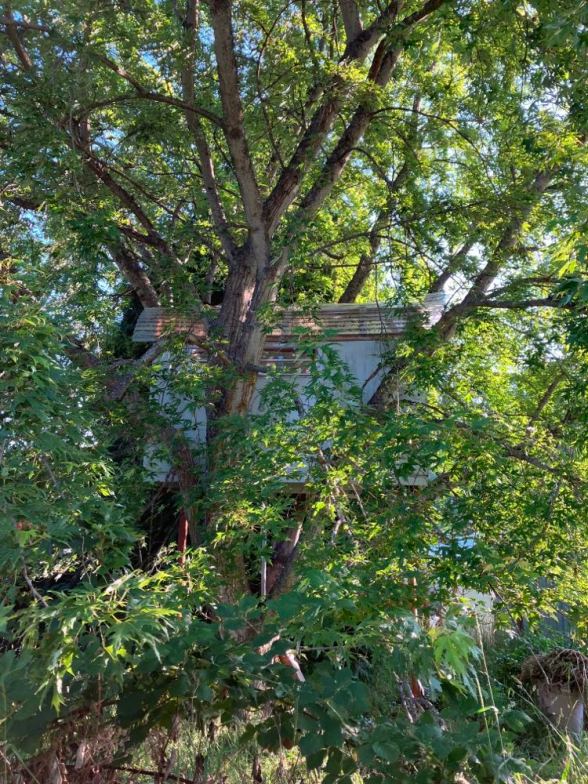
I can always hide in my tree house. But the food and water supply there is not so good.

The work of disability

I look up the CDC website to see how many people are disabled. The CDC says that 27% of adults in the US have a disability. Yes, that is one in four. https://www.cdc.gov/ncbddd/disabilityandhealth/infographic-disability-impacts-all.html.

I find being disabled to be a ton of work.

I think the view of disability in the US is often people who sit at home and have money thrown at them from the government.

This is not so, not so, no, no, no.

In clinic a patient needs a new socket for his artificial leg, having had a cancer amputation. He is an expert still working in disability exams, so we do a visit where he dictates much of my note, because in order to get a new socket, medicare requires very specific information in the clinic note. We also have notes from physical therapy and his occupational therapist and the company that makes the sockets. Why does he need a new one? He has lost weight and the old one doesn’t fit any more so he can’t walk securely.

Even so, I think it took six months and we kept redoing versions of the paperwork.

Another patient needs a new electric wheelchair. That one takes a year of repeating insistence and paperwork.

After my March 2021 pneumonia, I am disabled, which pisses me off. I like my work. It’s unclear how long I will be on oxygen and since we’ve been working on a diagnosis besides “gets pneumonia super easily” since 2003, it’s hard to predict the trajectory. I don’t know if I will be on oxygen permanently. It is exhausting to drag myself to physician visits, in four different hospital systems. Oh, and a patient can apply for patient assistance with the finances, but then all four have different paperwork. I am sick as snot and have to try to keep track of the bills from four systems and four sets of on line passwords and where is the stupid appointment? Edmonds? Seattle? Bremerton? Augh. The fatigue that accompanies the pneumonia makes it hard to cook, hard to clean, hard to comprehend bills, exhausting to make phone calls. Anyone want to trade? I’ll work and you can be disabled?

My disability company requires paperwork too, lots of it, and my taxes, and there is a long list of rules that I reread periodically. I needed an attorney to sort out the rules, since the disability company won’t answer my questions.

Now I am off oxygen and better, though still dogged by fatigue. I think that is probably permanent, but then I sometimes hope it’s just that I am finally rebuilding muscle, since the fast twitch muscles didn’t work for two years. They are a bit recalcitrant now.

And I am not in a wheelchair, have not had an amputation, am not in a rehab. If you have to take buses in your wheelchair everywhere, need two people and a crane to get you out of bed into the wheelchair, have to use a computer to talk for you, imagine. Anyone who thinks disability is easy money is insane.

It’s not clear if I can return to work. I might get pneumonia number five, which would probably take me out. No one knows how to lessen my risk. And I don’t have the energy and do not know if I will.

All the unknowns and unclears and we don’t knows. No one is disabled for easy money because it’s a job trying to get well or trying to survive it. And yet, I am happy to be alive and even to be able to dance some! Dance on!

Forever or not?

Once someone has cancer, do they have it forever?

I think that is a complex question. But one example comes to mind.

An older woman, in her early eighties, is seeing me. She wants to go back on hormone replacement.

“But you have a history of breast cancer.” I say.

“That was six years ago. And I took that horrible tamoxifen for 5 years and I still am having hot flushes after a year off it and I am sick of it. Give me hormones.”

“Hmmm.” I say. “Let me do some research.”

I call the oncology group south of us. This is over ten years ago when we had no oncologists in our county.

“How old is she?” Her oncologist is digging up her records. “Ok, got her. Hmmm. Well, she had a stage one cancer and a lumpectomy and five years of tamoxifen. THAT cancer is gone, for sure. If she wants hormone replacement, it puts her at a bit more risk for a new breast cancer, but the old one is gone. As long as she understands the risk.”

My patient is back and we negotiate. “Ok, the oncologist says your previous cancer is truly gone, but hormones put you at risk for a new breast cancer. At least, raise your risk a little.” Age is the biggest risk in women, if they do not have the abnormal BRCA I or II genes. “Also, if we have you on hormones, you have to do your mammogram, because I’d want to catch any cancer early. That’s the deal.”

“Fine, I want the hormones.” She signs a consent that I’ve prepared and we put her back on her hormone replacement.

“I want to hear from you, ok? Whether it works?”

She calls in a week, delighted. “No more hot flushes! I feel great!”

__________

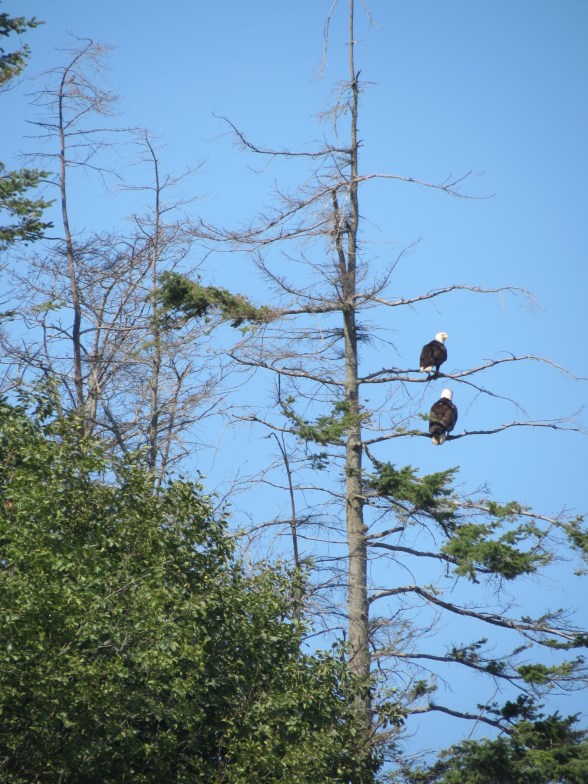
I took the photograph at Mats Mats Bay last week. There is a sign about osprey nests. I look up and think, oh, yes! Pretty obvious if you look up!

__________

I don’t remember her exact age and I don’t remember if the five years was tamoxifen or one of the other hormone blockers. She could have been in her seventies. At first I thought, no way back on hormones! Then I thought, quality of life is important. Maybe I choose this photograph because the nest is out on a limb.

Some cancers ARE currently forever, especially those that are stage III or IV and metastatic. Maybe they won’t always be forever.

Long Covid and framing

Long Covid is being framed as the immune system going nuts and there are all sorts of ideas about what it is doing and why. And it may be that more than one of them is correct. But the assumptions that I am hearing are that we have to “fix” it. A disease model.

Since I have been through four rounds of pneumonia, and two other rounds that were probably also flares, I have a different feeling. I think that Covid-19 is a really nasty virus and that the immune system is CORRECT to be on high alert and upset.

But wait, you say, we are just supposed to put up with it?

No, that is not what I am saying. Treat infection. I wouldn’t be here if it weren’t for penicillin and clindamycin, not to mention that we know that tuberculosis is airborne and infectious. I would most probably have died as an infant if we did not know what we did about tuberculosis. However, rather than thinking of my immune system as broken now, I am thinking of it as being hyperalert. Perhaps having PTSD. What it is really saying is, “Do not get another infection.”

How does it say this? In my case, relatively mild chronic fatigue. Also, slower healing each round, this time taking two full years to get back to a chronic fatigue baseline. I am still feeling very lucky to not have a hypoxia and permanent oxygen baseline. I am also feeling lucky that my fast twitch muscles work again. But I have about half of what I would consider my “normal” energy. But don’t we all judge that “normal” from our peak energies in our teens and twenties? One friend says, “Welcome to your sixties!” when I complain that each time it takes more work and is slower rebuilding muscle.

Am I an outlier? I don’t think so. I think I am the canary in the coal mine, warning of what can come. I think that ANYONE can get a version of this, resulting from too much stress, infection or a combination of the two.

I don’t think we have to develop medicines to tweak the immune system. I think we have to change our CULTURE in the United States. We have to learn to value the parasympathetic state, not just the sympathetic fight or flight, aggressive, go go go, peak performance state. I think we are driving ourselves nuts and setting ourselves and our children up for illness and damage and a highly unhappy immune system.

So my approach to my version of PANS or Long Covid is to work on the parasympathetic state. Listen to my body. Rest. Think about what I want to do and then plan half of it. Be realistic about my energy level. Because if I can convince my immune system that I will take care of myself as best I can, and rest daily, and not be crazy, it will stand down. It will calm down. It doesn’t need drugs as much as rest, good food, good friends, and some work but not too much.

In a high sympathetic nervous system state, the immune system works less well. It is hyperalert too. People are more likely to develop auto-immune diseases, with Hashimoto’s thyroiditis being the most common. People are more likely to get infections too. We have to learn to value and support the parasympathetic nervous system.

The start is rest. If that sounds awful, the next step is breathing. Five seconds in, five seconds out, count and use a timer. Start with a couple minutes and work up to twenty. Pay attention to how your body feels at twenty minutes. It may feel unfamiliar. It’s also hard to keep paying attention to that five seconds in, five seconds out, even if you count. I start thinking about my grocery list or food or a friend I want to call and I have been doing this for YEARS. When you realize that you are not counting, return again.

I am a minimalist on pills, any pills. Supplements, vitamins, prescription. None of the pills grow on trees so I don’t distinguish between “natural” and um, what, “unnatural”? I think of it as “less tested” and “more tested”. As an allopathic physician, I prescribe when necessary and I get rid of pills whenever I can. It is better to take a daily walk and eat healthy food. And maybe take a nap too.

So this is where I start. I attended a whole program on LDN this week, low dose naltrexone. It is being used for fibromyalgia pain and for Long Covid and ME/CFS fatigue and brain fog. It has a very reassuring safety profile, pharmaceutical companies don’t want to fund research because it is old and relatively cheap, and we don’t know how long to put people on it, or what it does long term. More detail soon.

_______________________

One thing I am doing for health and joy is dancing. I try to dance at the Bishop Hotel every Tuesday, because it makes me so happy. The music makes me happy too and my friends.

Establishing a diagnosis

All of the Long Covid information is pretty confusing, isn’t it? I’ve read that most of it resolves at nine months. Another article says a year. The conference last week says that 96% are clear at two years if they are treated. What percentage are being treated? The US defined Long Covid as symptoms lasting over a month at first, while Europe said three months. I think they have now agreed on three months. This will continue to change and evolve.

When viagra first came on the market, women complained that there was not a drug for them. Pharmaceutical companies were working on it, but you cannot treat anything unless you establish a diagnosis first and women’s sexuality is more subtle then men’s. Anyhow, I wrote this silly poem making fun of the whole thing.

Little Blue Pill

Little blue pill
Little blue pill
Help me help me
I’m over the hill

Don’t wanna have sex
Nope nope nope
Little blue pill
Gives my husband hope

Can’t make a pill
Til we define the disease
Doctors would you
Hurry up please

Little blue pill
Little blue pill
Help me help me
I’m over the hill

Thought them hormones
Would make me hot
Doc was right
They did not

Hot flashes make me
Sweat and moan
No help from that
Testosterone

Little blue pill
Little blue pill
Help me help me
I’m over the hill

Doctor this
Is really no joke
My husband says
He’ll slit his throat

Can’t make a pill
Til we define a disease
They’re trying hard
Those drug companies

I think we’ll know
If they define a disease
Drug companies will plaster it
On tv

Doctor I found
Just the thing
A brand new stimulating
Clitoral ring

Don’t wanna have sex
Nope nope nope
Little blue pill
Gives my husband hope

____________________________

For the Ragtag Daily Prompt: establish.

I took the photograph of the old drug bottles today. I like that the potassium oxalate just says POISON on it and gives antidote instructions. Also, no guarantee on the clitoral ring, ok?

BRAINS

On Thursday and Friday I spent six hours daily glued to zoom, for the Inflammatory Brain Disorders Conference. Speakers, both physicians and scientists and physician-scientists, from all over the world, spoke. The research is intensive and ongoing. They spoke about Long Covid, both the immune response and “brain fog”. They spoke about anti-NMDA antibody disorder (the book Brain on Fire) and now there have been over 500 people identified with that disorder and a whole bunch more antibody-to-brain disorders! They talked about PANS and PANDAS and chronic fatigue and Mast Cell Activation Disorder and about the immune system over and over. The new information is amazing and I need to reread all my notes. Psychiatry and Neurology and Immunology are all overlapping in research, along with Rheumatology, since these disorders overlap all four.

It is a medical revolution in the making.

Best news was that 96% of Long Covid patients are better by 2 years from getting sick. That is tremendously reassuring, though the number may change. And the definition of Long Covid is still being sorted out and we do not know if people relapse.

I felt that MY brain was MELTED by the end, but I managed to enjoy the Rhododendron Parade on Saturday and just puttered around the house on Sunday.

Untie

Untie my heart and go find
I am not looking anymore
I am playing for the summer
Back to work in the fall
but my heart is untied
and has escaped control.
It might be wild or quiet
or silly or angry. It might
like this today and that tomorrow.
It might wail with sorrow
and then laugh and laugh.

Heart untied and

Gone.

The white furry object is not a tie. It is a Barbie stole made of rabbit fur and lined with pink fabric. Both cats are enjoying carrying it around the house and shaking it and pretending that it is a live rabbit. That stole has to be nearly 50 years old, so I am letting the cats choose it as a toy. Good that I have great ancient cat toys.

For the Ragtag Daily Prompt: ties.

Medical conditions

I am reading the list of medical conditions that put people at high risk from Covid-19.

I can nearly say that being a live human “bean”, as Walk Kelly would say, puts one at high risk from Covid-19.

My intuition studies medical conditions
alcohol, overweight, diabetes, drugs
it doesn’t say much about auto emissions
or the healthy power of genuine hugs
hypertension, asthma, bad livers or hearts
Covid could get you if you don’t watch out
I wonder if risks include noxious farts
I’m in denial and not a bit stout
dementia, disability, HIV or depression
check off the ones you don’t have, think positive!
I eat an ice cream bar while secretly confessing
that eating and drinking might be causative
Happy or sad or pie in the sky
There is a daily risk that I could die

__________________________________

https://www.cdc.gov/coronavirus/2019-ncov/need-extra-precautions/people-with-medical-conditions.html

Really, that list contains nearly everyone.