what I miss

what I miss after 8 years of divorce and 14 years of marriage is sleeping with a warm body not you but anyone after you fill the U-Haul and are surprised because you think that I am the packrat and all the stuff is mine but you have a piano and bicyles and a motorcycle and clothes and music and books and really you are one too, it’s just that I am worse and you drive away and I can’t sleep though really it did start before then we did over a year of couselling and I slept alone some and then kick you out and sleep alone more our daughter moves into the room across the hall up from the basement when you leave and in the middle of the night she comes up with me because you are gone to Colorado and now 6 years later she asks about it and I say you came in with me and she says she didn’t know that and would wonder why I would steal her in the middle of the night and I say I didn’t but as she is older and moves back two flights down to have that distance that one needs from a parent when one is in puberty and growing up and away and I wake at four am and now that same sex marriages are legal I wonder about buying an asian bride and then I would have a body a warm body to sleep with but it wouldn’t work and yes I miss sex too but not in the same way it’s the warm breath and heartbeat and movements and I am the monkey longing for a mother to cling to and I too make do with a pillow I could make a scarecrow for my bed a body not an inflatable too cold but something warm and I could put a watch in its chest an old one that ticked it doesn’t actually help to be in love because I am not sleeping with my love and that makes it all the worse I long for a warm body really no I long for my warm love this particular body and breath and heartbeat and I wake often longing for my warm love

the picture is my sister, who died in 2012 of breast cancer. I made her stuffed animals and puppets for years starting when we were little. I made the red eared puppet and bought her the puppet with legs that year….

Talking about death 2

“But,” you say, having read Talking about death, why should I do a POLST form if I am young and healthy?”

Because of accidents and comas.

How do you feel about comas? Would you want to be fed and kept alive by a machine if there were an accident? Let’s make it an accident where you are the heroine or hero: a bank robber is escaping with money and a child hostage and your best bud trips her (the robber is female) and you grab the little boy and run with him to safety. The ceremony where the mayor pins medals on both of you is really fun but even though the robber was caught, the getaway driver wasn’t. You are leaving the ceremony and a car driven by the getaway wench hits you and you are in a coma…..

The fourth and last question on the Washington State POLST form is the key one for this: do you want long term feeding or not? Would you want short term if you were going to get better? Does long term fill you with horror? Ok, the odds of ending up in a coma are really really really small, but not zero. Most of my patients choose the middle road but some say “No tube feeding or iv feeding EVER!” They may have had family or a friend that were kept alive for longer than they think was right. I do have the rare person who wants feeding and everything forever….and that is ok too. It helps to know that.

Back to question one: for a healthy fifty or sixty or seventy old, I advise them to ask to be resuscitated. That is the default anyhow, to do everything. You don’t have to do a POLST if you want everything done. But if you DON’T, then it is worth filling out and it’s helpful to talk to your family as well as your doctor. And I am often surprised by what people want. It helps me to know a bit more about them as their doctor.

One woman in her upper 80s said, “I don’t want to think about this.”

I replied, “If you don’t want to you don’t have to. But, if you don’t say what you want, your daughter and I will have to guess when something happens.”

She then said what she wanted. In her age group I talk about stroke: some strokes are lethal. Some are not and the person looks horrible. However, they improve after the first 48 hours, as brain swelling goes down. The key that makes a stroke survivable is whether the person can swallow or not. If they can’t protect their airway, they aspirate and get pneumonia.

Think if all our elders knew that, that after the stroke they will improve in 48 hours. Wouldn’t it be less terrifying? And we aren’t going to “unplug” them in the first day, because the amount that they improve is not totally predictable. Nothing in medicine is, really….

I am careful to say to a healthy sixty year old that this form is to be filled out as if something were to happen NOW, this week. Not to think of the form as for being when they are much older and very sick. The form has update slots on the back: we are supposed to revisit it at intervals when a person’s health changes. And people change what they want.

I had a lady in her upper 80s who was on coumadin for atrial fibrillation, to prevent stroke. The family was going through a rough patch with the death of a small child. She said, “I don’t want to take this.” She denied depression but she didn’t want to do the regular blood tests. We switched her to aspirin. Coumadin lowers the stroke risk by 1/2 and aspirin by 1/4.

A year later she said, “I think I want that coumadin again. Things are better.”

Sometimes things are better.

http://www.polst.org/programs-in-your-state/
http://www.wsma.org/wcm/Patients/POLST.aspx
http://americanhospice.org/caregiving/coma-and-persistent-vegetative-state-an-exploration-of-terms/

Talking about death

We are not very good at talking about death in the United States, but we are slowly getting better.

I have had families call me in a panic because their loved one’s “Do Not Resuscitate” form was changed to “Do Resuscitate” when the person went into the hospital or went into a nursing home. Often this is because of very little training in discussing end of life code status combined with fear and/or religious beliefs and/or confusion. I have checked with the nursing home and the rumor is that the patient is asked “Do you want to die?” when they are admitted and if they answer “No.” the code status is changed.

I use a POLST form to discuss end of life wishes and plans. Here: http://www.polst.org/. The conversation goes something like this:

“Mrs. Elder, you have transferred care to me. I see that you have had four heart attacks, three bypass operations and two cardiac arrests. You have a living will but I would like to discuss what your wishes would be if you got sick or live another five years and are over 100.”

“Talk louder. Are you really a doctor?” says Mrs. Elder.

“Living wills are written by attorneys. They say that if two doctors agree that you are terminal and might die within 6 months, don’t do too much. This has two problems. One is that doctors are not very good at predicting the 6 month thing and the other is that no one ever has explained what “don’t do too much” means.”

“Ok.” says Mrs. Elder. She bangs her walker on the floor. Her son rolls his eyes.

“The most common cause of death is the heart. If someone drops dead, two doctors will agree that they are dead, but what they really want to know is whether the person wants a natural death or wants to be resuscitated.”

“I don’t want to die yet.” says Mrs. Elder. “That new mailman is cute.” She cackles.

“This is a POLST form. It is to go with the living will. The first question is about a person who has no heart beat and is not breathing. They are dead. If your heart stopped, would you want a natural death or would you want us to try to revive you.”

“Bring me back if I’m gonna be ok.” says Mrs. Elder.

“We don’t know that. You don’t have a little pop up thing like the turkey that says “Too late.” If someone drops dead at 40 and we get them back quickly, they are fine. But at 95 if your heart stops, it’s like a stoke and you won’t be fine.”

“I don’t want a stroke. Also I don’t want to wake up with that scar on my chest again. It hurts.”

“Ok, so natural death.”

“Of course.”

“Next are questions if you have a heart beat and are breathing, so not dead.” I am using the Washington State form:
http://www.doh.wa.gov/YouandYourFamily/IllnessandDisease/PhysiciansOrdersforLifeSustainingTreatment.
Would you want a breathing machine if you were really sick?”

“No, I had that once.”

“Would you want to be moved to a bigger hospital if you had a heart attack?” We are rural and have a 25 bed hospital. “We can give you medicine but we are too small to have a heart surgeon and too small to have a cardiologist.”

“I don’t like that heart surgeon who did it last time. Stay here.”

“We gave you antibiotics last month. Would you want antibiotics if you were going to get better?”

“Yes, sure.”

“The next question is about feeding. If you were really sick and couldn’t eat, would you let us feed you through a tube?”

“I don’t know.”

“This question is really about comas. Most people are willing to be fed for a little while if they are going to get better, but not long term. Some people don’t want it at all. You are 96 pounds and if you got pneumonia, you might not get better if we didn’t feed you.”

“I want whiskey if I’m dying. A shot a day, that’s my secret.”

“We can request that.”

“No feeding. I’m ready.” She signs the form.

“I will photocopy and put it in your chart and send a copy to the hospital. You take the green copy home and put it on your fridge. Any questions?”

“What is the new mailman’s name?” She grins at her son, who is looking very relieved.

“Remember that we only use the form if we can’t talk to you or if you are too sick to answer questions or if you lose your memory. Otherwise you can change your mind.”

“Ok. Can we go now?”

“Yes. You are so healthy, Mrs. Elder, that I think we can go six months before I see you again. Ok?”

“Ha. I’m healthier than him,” she says, nodding at her son, “He doesn’t exercise. I walk out to the mailbox every day.”

I try to do POLST forms not just on my 95 year olds, but on everyone, especially everyone over 50. It does not cover every contingency, but it really does say to the family that the person has had a conversation and it gives better guidance than the living will. It was developed at OHSU, in Portland, Oregon, which is where I had my Family Practice residency. Hooray for OHSU! The last time I looked at the map: http://www.polst.org/programs-in-your-state/ it was in 8 states, but it’s busily spreading all over the United States. The POLST form is designed to be redone every few years as people’s health status changes.

Take the burden off your family and do your POLST form.
the kind of people

my cousin’s husband said
I wouldn’t want to be around the kind of people who play paintball
which silenced me as I suppose he meant to as I stared at him thinking that since I was telling him that I had taken my son to play paintball as a celebration of my son getting a 4.0 in sixth grade and we were framing it as a celebration rather than a reward so that low grades would not generate in turn a punishment and I was trying to tell my cousin’s husband about the third round of paintball and I was the only woman there and definitely the only mother there and by then the sharpshooters in camouflage had asked why I was there and I had explained upon which one said “you are a good mom” and so in the third round when my son said that he wanted to be on the opposite team as his mother the guys giggled and we were on opposite teams and I am good at hiding in the woods but was having a bit of trouble with trajectory so everyone on his team was shot but him and everyone on my team was shot but me and I was trying to shoot my son with a paintball in a desultory sort of way since he was peppering the tree I was crouched behind when he ran out of ammo and we walked back to the safe area me with the gun held over my head saying “moms rule” and the sharpshooters in camo said we are going to shoot you next time and they certainly did
and I didn’t say any of that to my cousin’s husband
because I am one of the kind of people who play paintball and so is my son and I realized abruptly when my cousin’s husband said that that I really want to love everyone and so I still send love to my cousin’s husband but honestly I have trouble being around people who divide the world into us and them and didn’t Jesus and buddha and Muhammed all say essentially that god is love and Rumi says that the universe is the Beloved and so everyone is Beloved and we are all part of the one and there is no division and if god is love then there can be no hell
and I don’t really visit that cousin any more
and I still wonder why people want us and them and why people talk about that kind of people and I try to work with every kind of people that comes into my clinic that’s why I became a doctor really because I wanted to understand people and understand love and forgive things that happened when I was very little and thought that really, the big people were insane and loving but not trustworthy and obviously this is a fail in the end because I truly don’t understand how anyone could ever make assumptions about anyone else and ever say that they wouldn’t want to be around
the kind of people

let go

For Ronovan’s weekly haiku challenge, the words are hope and luck.

I saw my doctor yesterday, still on half time and it looks like it will stay that way until January or longer. Slow healing. I am finding it hard though I am healing and often people don’t or aren’t or won’t…..

I let go of hope
for love my luck is to be
alone writing love

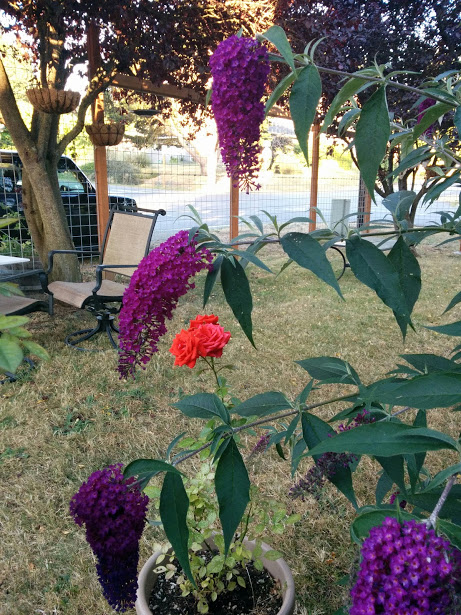
the picture is from my garden

PTSD and The Singing Tree

The Singing Tree by Kate Seredy, 1939, is a children’s book that illustrated PTSD for me long before I went to medical school. The Singing Tree is the sequel to The Good Master, and describes the survival of a Hungarian family and farm during World War I.

The good master is Marton Nagy, and he is called up as a Corporal, leaving the farm to be cared for by his wife, son, niece and workers. The farm suffers because so many men are called up. They are getting behind on the work and then find a diary from Marton, which gives suggestions and instructions for the year round work on the farm. One of the instructions is “to make out an application for Russian prisoners if necessary.”

They do. They apply and take 6 Russian prisoners, homesick farmers, who don’t speak Hungarian. Jansi and his cousin Kate take the chains off them and the prisoners quickly become part of the family. “Comrade, eh? Friend?” says one of the prisoners. And they are. They are also excellent workers and homesick.

As the prisoners are taken home in the wagon, they also take Peter, a deserter from the Hungarian army. He has panicked about his wife and new baby. He is crazy with worry. He is hidden under the six Russians, who sympathize. After seeing the baby he returns to his regiment. But Peter is angry and expresses his rage at Jews, even though it is Uncle Moses, the Jewish shopkeeper, who has helped hide him.

    Mother took Jancsi’s arm then and they left he room. They didn’t speak; what was there to say? Something, somebody had poisoned Peter’s soul against those who had been good to him all his life. Into Jancsi’s mind flashed the words Father had said: “The stampede… the mad whirlwind that sucks in men…and spits out crippled wrecks.” Crippled in body and soul, Jansci thought then, with an understanding far beyond his years.
    “Poor Peter,” he said aloud. Mother pressed his arm. “I knew you would see it that way, Son. I only hope the war ends before this poison has spread too far.” p 163.

Marton is missing and they have not heard from him. Jansci and Kate make the wagon trek to bring back their grandparents, because the front is now too close for them to be safe. Kate and Lily smuggle the cat along. The cat gets “sick” and the girls insist at stopping at a hospital. The sickness is kittens. The nurses laugh at the girls, but then let them help on the wards. Injured soldiers who are healing.

    “Almost an hour passed before all the patients had been fed. “There was only one asleep,” Lily said, coming back with the empty bowls; “he even had the sheet pulled over his face.” The nurse followed Lily’s pointing finger with her eyes. “Oh, the amnesia case. He sleeps most of the time.”

    “Whats am-amnesia?” Kate wanted to know.

    “Loss of memory. They forget who they are and have to begin life all over again; like babies.” “Does it hurt?”
    “No,” smiled the nurse. “It comes from a shock; like a big scare, you know.” She looked toward the bed again. “He is such a nice man too, poor fellow. He tries so hard to remember. if we could find out who he is, find something to remind of his home, he might remember. You wan tto see him?” she asked as Kate kept staring at the bed. “Come on then, but be quiet.”
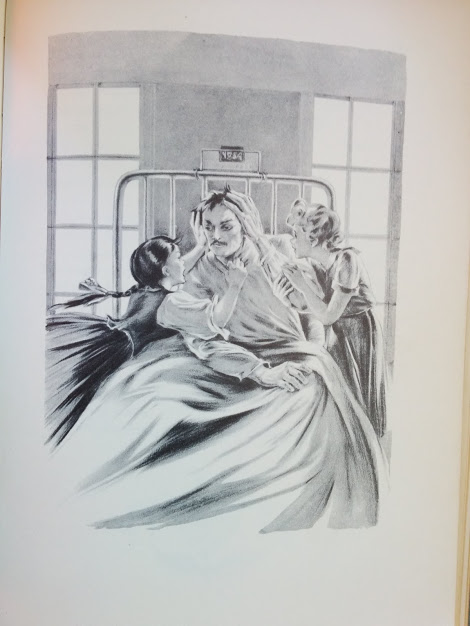
    “No. 54, Amnesia,” was written on the headboard. The nurse gently lifted the sheet. Pandemonium broke loose immediately. Kate, with her famous tin-whistle scream gong at full blast, threw herself on the bed. “UNCLE MARTON! UNCLE MAAARTON! IT’S KATE. Can’t you….? UNCLE MARTO-O-O-ON!”

    Every patient was sitting bolt upright. Doctors and nurses were running in, Lily joined Kate, tugging at Uncle Marton’s hands. “Say something…you know us, don’t you? Say something.”

    “Kate, if you don’t stop that infamous yelling this minute, I’ll take Milky away from…Say! Where am I? Who are these people?” Uncle Marton was looking around dazedly.

    “Never mind them,” sobbed Kate, laughing at the same time. “You know who you are now, don’t you?”

    “Why shouldn’t I? Let me out of this bed!” Uncle Marton cried, trying to peel Kate and Lily off his chest.
    “Take it easy, take it easy,” said a doctor who stepped up. “What is your name?” “Lieutenant Marton Nagy of the Seventh Infantry,” snapped Uncle Marton, glaring at him. “Seventh Infantry… Seventh…oh…”His eyes clouded.
    “Now it all comes back, doesn’t it? You’ll be all right now, Lieutenant Nagy. Don’t think about that now. Tell me who this…this calliope is. That scream was the best I ever heard.” The doctor sat down on the bed, smiling at Kate. “I wish we could produce for each amnesia case we get; we wouldn’t have any.” pp 186-189

He gets to go home.

    “From Corporal to Lieutenant in a year. Pretty good, Lieutenant Nagy,” an officer with a lot of gold braid all over him said to Father. “And a handful of medals to catch up with you, as I heard. What did you do?”
    Father looked him straight in the eye. The muscles in his jaws were working. “I don’t know sir. I would rather not try to remember.”

    The officer sighed. “Go home, Lieutenant. Forget, if you can. I wish I could.”

And will he have to return?

    “Then Father went to report to the hospital and this time Mother and Jansci went with him. The doctors found that in body he was sound, but only time, long months or even years, could make him forget the things he never spoke about.
    “There are none braver than he is,” the doctor told Mother, “but the human mind can stand just so much of horror and no more. We dare not tke the risk of sending him back to war.”
    “Thank God!” Mother had exclaimed, and the doctor smiled very sadly.
    “I hear that every day now. Wives, mothers thanking the Lord for an injury their beloved ones have received. A broken bone, a brave mind darkened with nameless fear, anything that takes a long time to heal, has become a blessing, a gift. They are safe for a little while longer.”

And Jansci talks to one of the Russian prisoners.

    “Big boss come home…maybe war over?” Grigori wanted to know when they had come with Father. Jansci tried to explain and he thought that Grigori didn’t understand because for a long while he didn’t say anything. Then he sighed: “Grigori know. Hear, Jansci. Bad man, stupid man, he go kill and laugh. Good man, man with good heart, good head, no can kill and laugh. He cry inside. Baby cry with big noise. Man cry–no noise, but it hurt very bad. Me know….me know.” p. 203

Death affects the village.

    “More white envelopes were coming to the village now than ever since the war started. The hands of Uncle Moses began to tremble and he seemed to grow smaller, more bent. Aunt Sarah was like a silent little wraith, going from house to house to comfort, to help, or just sit, holding the hand of a woman who would never wait for the mail again because there was no one left to writ to her. Often she and priest met in one of the houses and the priest would bow deeply to her Once he told Father: “She seems to give more comfort, more strength to these poor women than I can.” pp 203-204

I wish that we had the sense expressed in this book about PTSD and the effects of war. When I worked at Madigan Army Hospital, some soldiers were getting ready for their fourth or fifth tour of duty. If we as a country are going to continue these wars, we must take more responsibility and have more care for the damage done. When people talk about “curing” PTSD or keeping it from happening: if we didn’t respond with PTSD as a species with horror for the evils of war, we don’t deserve to survive. We will be the Bad People, the Stupid People, who Kill and Laugh. We need to stop. This book was written in 1939 and clearly they knew the effects of PTSD. It’s been almost 80 years since Kate Seredy’s book was published: and still we question PTSD?

http://www.pdhealth.mil/clinicians/assessment_tools.asp
Civilians too: http://www.mirecc.va.gov/docs/visn6/3_PTSD_CheckList_and_Scoring.pdf

illustration from p. 187

Chronic pain update 2015

As a rural family practice physician, I am in an area with very few specialists. Our county has a 25 bed hospital and we have a urologist, three general surgeons, three orthopedists (except when we were down to none at one point), two part time hematologist oncologists and that’s it. We have a cardiologist who comes one day a week. We have a physicians assistant who worked with an excellent dermatologist for years: hooray! Local derm! Our neurologist retired and then died. We had two psychiatrists but one left. We had one working one half day a week.

I trained in treating opiate addiction with buprenorphine in 2010 and attended telemedicine with the University of Washington nearly weekly for a year and a half. Then life intervened. I attended last week again, but not the addiction medicine group. That is gone. Now there are two telemedicine pain groups.

And what have I learned since my Chronic pain update 2011?

Chronic opiates suck, and especially for “disorders of central pain processing” which includes fibromyalgia, reflex sympathetic dystrophy, TMJ, chronic fatigue, and all of the other pain disorders where the brain pain centers get sensitized. We don’t know what triggers the sensitization, though a high Adverse Childhood Experience score puts a person more at risk. Cumulative trauma? Tired mitochondria? Incorrect gut microbiome? All of them, I suspect.

Jon Kabot Zinn, PhD has been studying mindfulness meditation for over 30 years. He has books, CDs, classes. Opiates at best drop pain levels an average of 30%. His classes drop pain levels an average of 50%. I’ve read two of his books, Full Catastrophe Living and ….. and I used the CD that came with the former to help me sleep after my father and sister died. Worked. Though I used the program where he says, “This is to help you fall more awake, not fall asleep.” Being contrary, it put me to sleep 100% of the time.

Body work is being studied. Massage, physical therapy, accupuncture, touch therapy and so forth. It turns out that when you have new physical input, the brain says, “Hey, turn down the pain fibers, I have to pay attention to the feathers touching my left arm.” So, if you have a body part with screwed up pain fibers, touch it. Touch it a lot, gently, with cold, with hot, with feathers, a washcloth, a spoon, something knobby, plastic. Better yet, have someone else touch it with things with your eyes closed and guess what the things are: your brain may tell the pain centers “Shut up, I’m thinking.” Well, sensing. A study checking hormone blood levels every ten minutes during a massage showed the stress hormone cortisol dropping in half and pain medicating hormones dropping in half. So, massage works. Touch works. Hugs work. Go for it.

There are new medicines. I don’t like pills much. However, the tricyclic antidepressants, old and considered passe, are back. They especially help with the central pain processing disorders. I haven’t learned the current brain pathway theories. The selective serotonin uptake reinhibitors (prozac, paxil, celexa, etc) increase the amount of serotonin in the receptors: chronic pain folks and depressed folks have low serotonin there, so increasing it helps many. As an “old” doc, that is, over 50, I view new medicines with suspicion. They often get pulled off the market in 10 to 20 years. I can wait. I will use them cautiously.

We are less enthused about antiinflammatories. People bleed. The gut bleeds. Also, the body uses inflammation to heal an area. So, does an antiinflammatory help? Very questionable.

Diet can affect pain. When I had systemic strep, I would go into ketosis within a couple of hours of eating as the strep A in my muscles and lungs fed on the carbohydrates in my blood. This did not feel good. However, the instant I was ketotic, my burning strep infected muscles would stop hurting. Completely. I am using a trial diet in clinic for some of my chronic pain patients. I had a woman recently try it for two weeks. She came back and said that her osteoarthritis pain disappeared in her right hip entirely. She then noticed that the muscles ached around her left hip. She has been limping for a while. The muscles are pissed off. She ate a slice of bread after the two weeks and the right hip osteoarthritis pain was back the next day. “Hmmmm.” I said. She and I sat silent for a bit. It’s stunning if we can have major effects on chronic pain with switching from a carb based diet to a ketotic one.

I attended one of the chronic pain telemedicines last week and presented a patient. My question was not about opiates at all, but about ACE scores and PTSD in a veteran. The telemedicine specialists ignored my question. They told me to wean the opiate. He’s on a small dose and I said I would prefer to wean his ambien and his benzodiazepines first. They talked down to me. One told me that when I was “taking a medicine away” I could make the patient feel better by increasing another one. As I weaned the oxycodone, I should increase his gabapentin. I thought, yeah, like my patients don’t know the difference between oxycodone and gabapentin. No wonder patients are angry at allopaths. I didn’t express that. Instead, I said that he’d nearly died of urosepsis two weeks ago, so we were focused on that rather than his back pain at the third visit. All but one physician ignored everything I said: but the doctor from Madigan thanked me for taking on veterans and offered a telepsychiatry link. That may actually be helpful. Maybe.

And that is my chronic pain update for 2015. Blessings to all.

http://www.cdc.gov/violenceprevention/acestudy/

http://www.umassmed.edu/cfm/about-us/people/2-meet-our-faculty/kabat-zinn-profile/

I can’t think of a picture for this. I don’t think it should have a picture.

Chronic pain and antidepressants

Continue reading

Roar

R for roar and rant and rats in the Blogging from A to Z Challenge

We have to buy new computers for the clinic because of ICD10. ICD-10 is the list of diagnosis codes. The list will increase from 17,000 diagnosis codes to codes to 42,000 and is a major pain in the butt. All new, all different, so hypertension is no longer 401.1. My five year old computers “work” but don’t have enough memory for the Amazing Charts Electronic Medical Record update. I need to go ahead and buy new computers because medicare is supposed to be accepting the new codes now (in theory. I haven’t checked if our local medicare provider Noridian really is accepting them.) I need to practice with the stupid new codes until they go full on live in October.

Will this make medicine more precise and give us better data? Well, no. From what I have seen, providers really care about patients and do not care about strings of numbers and letters attached to the diagnosis. At Madigan Army Hospital, the faculty said that they didn’t care about the codes and were not teaching them to the residents. However, medical policy gets based in part on the coding and insurance companies refuse to pay tons of bills because they are “coded wrong”.Β  I think we will lose even more of the solo providers and small medical practice and medicine in the United States will be even more controlled by big corporations. Why do you care? (That is, if you are from the US. If you are from a civilized country you are laughing at us.) Well, for example. In 2012 I was in my local hospital emergency room. I am a physician who worked for our local hospital district from 2000-2009. The emergency room doctor did a CT scan of my neck. I thought, this is the wrong test, he should be doing a lateral neck film, but hey, I was septic. Maybe I was confused. He put in his notes that he’d ordered a lateral neck film and the CT scan was an error.

They charged me and the insurance company anyhow. I went through my records and wrote to them this year. They paid me back the 900.00$. They say it’s “too late” to pay back the insurance company. If I can figure out which stupid insurance company I had in 2012, I will notify them to bill the hospital.

So read every single note in the clinic and the emergency room if you are a patient in the United States. And ask for the itemized bill. And complain to the patient advocate. Just check out how much they charge for the stupid little socks they “give” you. Fight back.

I wish I lived in a country with civilized healthcare not corporate healthcare.

The medicare website has a countdown clock to the initiation of ICD 10. The main advice to doctors is to have “3-6 months” of overhead money stashed, since they expect it to be a mess and we won’t get paid for 3-6 months. Right. Do the work anyhow and cross your fingers and pray. It’s a bit of a challenge for me, since I was out sick for 10 months. Used up that 3-6 month reserve.

Bet half or more of the doctors/hospitals/clinics in the country have to buy new computers. Watch your bill climb…..

A UK writer asks about ICD-10 international. No, that’s not what the stupid US is going to use. ICD-10 international has 14,000 codes that can be stretched to 17,000. No, we are going to use our own stupider version of ICD-10 with 42,000 codes so that more insurance companies can refuse to pay for more visits. Meanwhile, ICD-11i will be released in 2017.

The stupid US has multiple electronic medical records that don’t talk to each other, so yes, I can sort of code with my computer electronic medical record except I have to look things up in the paper coding book, like “bruise”, aka contusion, and any stupid “cut”, aka laceration, because the search sucks. I was trying to find prehypertension the other day. The electronic medical record lists it as “elevated blood pressure without diagnosis of hypertension”. Great. I have a coding book in each exam room. By October, I will have a massive pile ofΒ  coding books in each exam room.

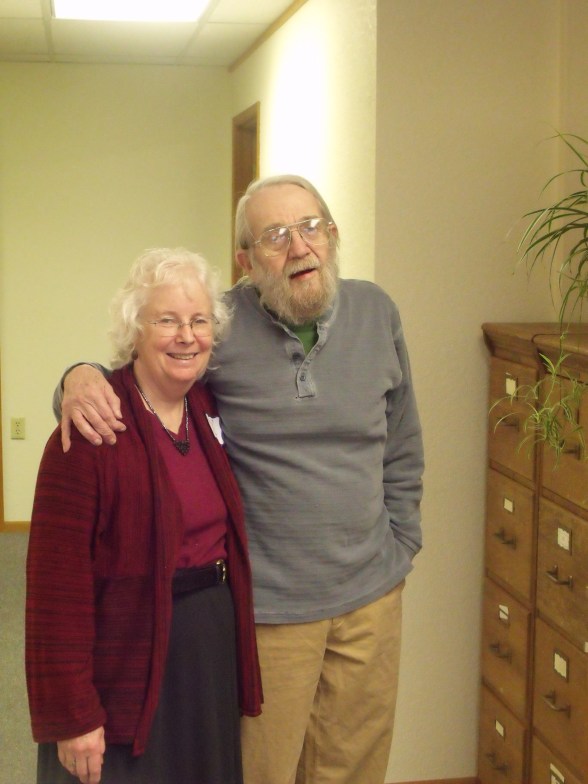
The photo is my father and my wonderful office manager, at the clinic opening party in 2010. My father died in early June 2013. The clinic is due for our five year anniversary…..

Quimper

Q is for Quimper in the Blogging from A to Z Challange.

I live on the Quimper Peninsula in Jefferson County, Washington, USA. The Quimper Peninsula is a small peninsula jutting up from the northeastern corner of the Olympic Peninsula. So, a peninsula attached to a bigger peninsula.

We are surrounded by water. When I first moved here I was confused. I am from the east coast of the US. So, the ocean was to the east. Here on the west coast it is west: except that where I live, the Salish Sea is north and east and south. The Quimper Peninsula runs southwest to northeast and ends at a lighthouse. I can stand on the beach at the lighthouse and look over the Salish Sea and see mountains. It took me a while to get oriented, because I can see the Olympic Mountains looking over the water or the Cascades: Mount Baker, Glacier, Tahoma.

The Quimper Peninsula is named after Manuel Quimper, a Peruvian born Spanish explorer and cartographer. He contributed to the charting of the Strait of Juan de Fuca in the late 1700s. Until I wrote this post, I had not read about him.

Our thin rural phone book for Port Townsend and Port Ludlow lists five Quimper named businesses:

The Quimper Inn, a bed and breakfast. Our town had a boom in the 1860s-1880s and the architecture is still here. There are wonderful old houses and downtown.

Quimper Mercantile, a community started and owned store.

Quimper Sound, a quite fabulous local music store, albums and CDs.

Quimper Unitarian Universalist Fellowship, a church.

And lastly: Quimper Family Medicine, my family practice clinic!