Sending love

Sometimes I wake in the morning, muscles tight and anxious.

This morning I dreamed that I was a teen, going on a trip. I packed my sleeping bag and the new pad. I finally bought a new inflatable pad for camping, last year. I still have my old one, patched and 30 years old and thin. I decided that I am old and stiff enough to have a newer one. I used it for the first time in the tree house. Yoga mat, pad and sleeping bad and I was warm. In the dream that was all I had time to pack: no clothes or books. There was barely room for that. I was worried about the trip and afraid.

When I wake anxious and feeling attacked, I send love. I send love to the people that I am finding most difficult in my life. A family member who with their spouse, have been mean since I was a teen. Not a family member any more: a blood relative, now. I will choose who is family and who is just a blood relative. In the manner of children of alcoholics, this is a terribly slow process. Raised in addiction and enabling, children love their parents anyhow, and it is a slow adult process to learn that love is not addiction, enabling nor enmeshment.

So I send love: may this person be peaceful. May this person be free. May this person be filled with loving kindness. May this person be safe. I send them loving kindness, especially if they are a blood relative who is still cruel. I don’t want them in my life any more and yet I want to forgive them. Forgive but not reconcile, if they are still in the dire pattern. No reconciliation if they continue the behavior.

Sending love.

Sweet Honey in the Rock: In the morning when I rise: https://www.youtube.com/watch?v=ZAJBZXIzKcY

I took the photograph of my mother in the early 1980s. I borrowed my first real camera and took one roll. I scanned this today and my scanner is not up to the detail, but I like the abstraction. I love this photograph of my mother because it is her thinking and concentrating expression.

My clinic and the state of medicine

January has been the busiest month in clinic since I returned to work in April of 2015 after the ten month systemic strep A hiatus. It took another ten months for my fast twitch muscles to start working again. I was working “half time” for the first ten months after I returned.

Right now, though, my receptionist and I are about maxed out. We saw 4-8 people a day in January, averaging 6.5, and with Martin Luther King’s birthday off. I see patients five days a week, try to stop by 2 pm and then do paperwork until 4 or 5. Lately I have been going in at 7 am, because I am feeling behind. Three very sick patients, one who has been sick and hospitalized nearly weekly since October, are each taking 1-2 hours a week and I can’t get to the routine paperwork. Labs, referral letters that need to go out, reading referral letters that come back and updating the med list, xrays, pathology reports….

Yes, we could hire someone to scan it all faster, but scanning it does not mean it has been read. And it is me that has to read it. One of the complex patients has five specialists and four different electronic medical records are involved. I had to call the rheumatologist, because the doc was not responding to the patient’s calls. I had sent the rheumatologist letters and updates: turned out the doc didn’t read any of them until the patient missed a visit because their car broke down. And another of the specialists said they “didn’t have the notes” from the other hospital. I wrote a letter to ALL of the specialists and said, the notes are in there because I faxed them to our hospital myself. Unfortunately scanned notes are difficult to find in the EPIC electronic medical record. Ironically both hospitals use EPIC but the two versions do not share their information. This is REALLY REALLY BAD. It is bad for patient care and bad for this specific patient. Not only that, but when one of the specialists orders something, the report doesn’t get sent to me as well as them. I tracked down labs and I tracked down an xray report and sent him back to the hospital at that visit. I do not know if the hospitalization could have been averted, but….I’ve told the patient and spouse that if ANYONE orders a test, call me. So I can track down the results.

So it looks like five clinic days a week, seeing up to eight patients a day, will take forty hours or more. This is a rural family practice clinic. I cannot see any way to see more and actually keep up with the information coming in with my patient population, half of whom are over 65. And an additional one is in hospice and another on palliative care.

A fellow doc has retired from medicine, in her 50s. She is “med-peds”: internal medicine-pediatrics, which is sort of like family practice except they don’t do obstetrics, less gynecology and less orthopedics. I hear that she is retiring because every 20 minute clinic visit generates an hour of paperwork. The hospital considers 4 days a week, 18 patients a day, full time. Ok, that is 72 patients a week, seen in four 8 hour shifts. 32 hours plus 72 hours of paperwork. One hundred and four hours. Can’t be done.

I dropped to 3.5 days in 2009 when the hospital said we had to see 18 a day. So 28 hours, 63 patients. 28 hours plus 63 hours. That is 91 hours a week. I still could not keep up with the information coming back from specialists, labs, xrays, pathology reports, medicine refill requests, requests for those evil ride on carts, spurious nonsense from insurance companies, and families calling about their loved ones. All ten fingers in holes in the dyke and 90 other holes spouting water.

Something has to give and something IS giving. Care is falling through the cracks and providers are quitting. I am not quitting, I just am not making anything anywhere near to the “average family practice salary” in the US. And we hear that burnout is now at 54% of primary care doctors. Hello, US. If we don’t go to single payer, you might have to ask your naturopath to take out your appendix. And good luck with that.

If I see 7 per day, five days a week: that is 35 patients. I do longer visits and more paperwork in the room, so call it 45 minutes of paperwork per patient. I see patients from 8:30 to 12 and 1 to 2. 4.5 hours five days = 22.5 hours plus (35 patients x 45 minutes)= 26 hours and now I am at 48.5 hours a week. And then if I have three really sick ones: more.

If we hire help, they have to be paid. Then I need to see more patients in order to generate that pay. Then there is more paperwork that I can’t keep up with. An infinite loop.

Let’s look at my clinic population verses county and state.
Clinic: 2.4% under age 18
20.7% age 19-50
28% age 50 to 64
48.9% over 65
Jefferson county (2014): 16.7% under age 19
51.5 age 19-65
31.8% over age 65
Washington state (2014): 29% under age 19
56.9% age 19-65
14.1% over age 65

We have an older county and nearly half my patients are over 65, and 77.9% of my clinic patients are over age 50.

And I should be reading all the new guidelines as they come out. The newest hypertension guidelines say that the blood pressure should be taken standing in all patients over age 60. Those guidelines are now a couple of years old. My patients tell me that I am the ONLY doctor that they have taking their blood pressure standing. The cardiologists aren’t doing it either. Just this week there are articles in the AAFP journal explaining the blood pressure guidelines. But the doctors need time to READ the articles. The guidelines themselves tend to be 400 pages of recommendations and explanations and a list of hundreds of studies reviewed since the last guidelines. And ok, there are also hundreds of guidelines. On blood pressure, who should be on aspirin, what to do for heart pump failure, urinary incontinence, osteoporosis, toenail fungus.

https://www.uspreventiveservicestaskforce.org/
guidelines: https://www.uspreventiveservicestaskforce.org/BrowseRec/Index
Ok, that is a list of 96 guidelines, which doesn’t even include the hypertension ones. The hypertension guidelines are called JNC 8, for the eighth version:
http://jamanetwork.com/journals/jama/fullarticle/1791497
Here is the two page hypertension JNC 8 algorithm: http://www.nmhs.net/documents/27JNC8HTNGuidelinesBookBooklet.pdf. Memorize it and the other guidelines, ok?
And here is the Guideline Clearing House: https://www.guideline.gov/

This week another clinic suddenly closed and we have gotten walk in patients and calls. About eight so far. We are booked for new patients out to April…..

I took this photograph from the beach as the sun set, camera zoomed. Different mountains were lit up while others were in shadow as the sun went down. This is Mount Baker and friends….

out of minutes

I just read your email

my phone was out of minutes

the internet was down

I was really busy working

I didn’t hear the phone

I forgot I turned it down


and you are out of minutes


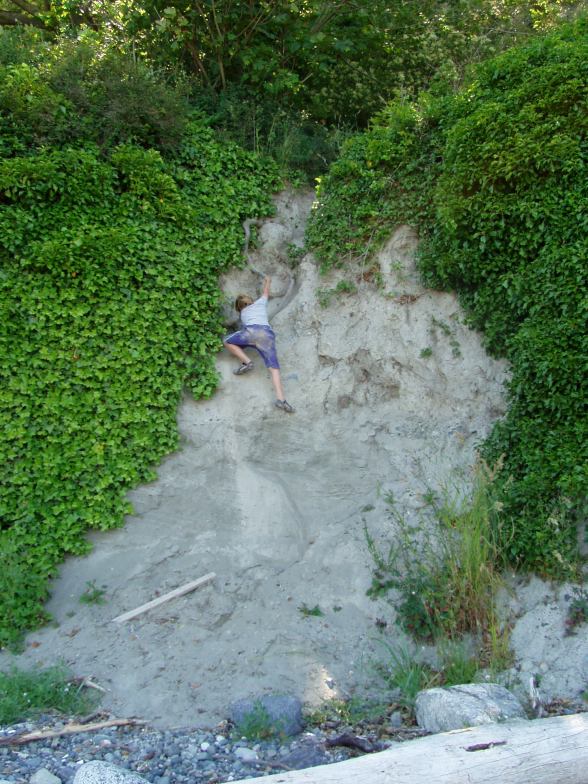
The photograph is from 2007. The dunes collapse, sometimes whole sections with trees. It’s not a safe space to play.
I am choosing this for the Daily Prompt: flames.

Loved

It’s ok

I just want you to know

even if I never see you again
even if I never touch your hand
even if I never hug you again
even if you don’t answer
even if you don’t let me in
even if you are deaf to anything I say
even if you forget the moment you stop reading
even

I just want you to know

you are loved you are loved you are loved

always

even if

for my lost ones, living and dead 9/15/16

The photograph is from 2004, in the Hoh Rain Forest.

I am submitting this to the Friday Night Music Prompt #62 : Never too late for love & Keep me in your heart


Fraud in Medicine: Heartwood

Here in my neck of the woods, people are continuing to quit medicine. TwoΒ  managers who have worked in the clinics eaten by the hospital are leaving on the same day, after 30 years. And another woman doctor, around my age, is retiring from medicine. She is NOT medicare age.

Meanwhile, the Mayo Clinic is publishing articles about how to turn older physicians into “heartwood”.

http://www.mayoclinicproceedings.org/article/S0025-6196(15)00469-3/fulltext

“As trees age, the older cells at the core of the trunk lose some of their ability to conduct water. The tree allows these innermost cells to retire…. This stiffened heartwood core…continues to help structurally support the tree…. Here a tree honors its elderly cells by letting them rest but still giving them something meaningful to do. We non-trees could take a lesson from that.” Spike Carlsen

Oh, wow, let’s honor the elderly. Even elderly physicians. Instead of what, killing them? Currently we dishonor them, right?

But what is the core of the issue? Skim down to “Decreased patient contact”:

“Already, many physicians are choosing to decrease their work to less than full-time, with resultant decreased patient encounters and decreased institutional revenue. Prorating compensation to match full-time equivalent worked will aid in financial balance, but the continued cost of benefits will remain. However, when that benefit expense is compared with the expense of recruiting a new physician (estimated by some to approach $250,000 per physician), the cost of supporting part-time practicing physicians becomes more attractive.”

Ok, so the core of the matter. “Decreased institutional revenue” and the employer still has to pay BENEFITS. NOTHING ABOUT THE QUALITY OF CARE FOR PATIENTS.

Again, the problem is still that you can’t really “do” a patient in twenty minutes, and that full time is really 60 or more hours a week. To be thorough, IΒ  have to absorb the clinical picture for each patient: chief complaint, history of present illness, past medical history, allergies, family history, social history (this includes tobacco, drugs and alcohol), vital signs, review of systems and physical exam. And old records, x-rays, pathology reports, surgical reports, laboratory reports. I fought with my administration about the 18 patient a day quota. I said: ok, I have a patient every twenty minutes for 4 hours in the morning, a meeting scheduled at lunch, four hours in the afternoon. When am I supposed to call a specialist, do refills, read the lab results, look at xray results, call a patient at home to be sure they are ok? The administration replied that I should only spend 8 minutes with the patient and then I would have 12 minutes between patients to do paperwork. I replied that they’d picked the Electronic Medical Record telling us that we could do the note in the room. I could, after three years of practice. But it nearly always took me twenty-five minutes. I would hit send and our referral person had so much experience that she could have the referral approved before my patient made it to the front desk. BUT I felt like I was running as fast as I possibly could all day on a treadmill. Also, the hour lunch meetings pissed me off. I get 20 minutes with a patient and they get an hour meeting? Hell, no! I set my pager for a 20 minute alarm every time I went into a meeting and I walked out when it buzzed. I needed to REST!

After a few weeks of treadmill, I dropped a half clinic day. But of course that didn’t go into effect for another month and I was tired and ran late daily. And every 9 hour clinic day generated two hours of paperwork minimum: nights, weekends, 5 am when I would not get interrupted and could THINK. Do you really want a doctor to review your lab work when they are really tired and have worked for 11 hours or 24 hours? Might they miss something? It might have been best if I had been quiet and just cancelled two people a day, since the front desk knew I was not coming out of any room until I was done, but I argued instead.

The point is, you would like to see a doctor who listens and is thorough. You do not actually want a medical system where there all these other people who read your patient history forms and enter them in to the computer and your doctor tries to find the time to read it, like drinking from a fire hose. If we want doctors and patients to be happy, then doctors need time with patients and we need to off the insurance companies who add more and more and more complicated requirements for the most minimal care. One system, one set of rules, we’ll fight over the details, medicare for all.

Rain on water

My sister wrote Rain on water and posted it on everything2.com in 2009. Here: http://everything2.com/title/Rain+on+water

She was writing about going to Lake Matinenda. Our family has had land with cabins since the 1930s and now the fifth generation has gone there.

My sister died in 2012. I wrote my own version while I was there last summer.

____________________________________

What are you doing?

nothing

outwardly nothing

Inwardly, I am on a journey. I am back at the lake. It’s been three years. I am at the lake when the family is not there. I take old friends who have never been there. One knew my sister as I did and has known me for thirty years.

He and his wife and his six year old love the lake. And the six year old wants freedom as we all want but there are rules and you must wear your lifejacket on the front rocks until you can swim and can swim a certain distance and we never get in the canoe when it is on the rocks, it must be in the water or the canoe will be hurt and my uncle’s shade is over my shoulder and I can hear him yelling about the canoes as his parents yelled at him. The birchbark canoe that he and my mother destroyed still awaits repairs. And I demonstrate how to tip a canoe over when we go swimming and how fast it goes. “You may try it, but first you must practice jumping in the water. Do you want to?” No, he shakes his head, no, the small canoe went over so fast.

They leave and I am alone. I am not alone. The dead are there, their ashes, their words in the log, their voices in my head, their heights marked on the wall of the Little Cabin, my sister’s clothes, a marker for my uncle, my grandmother’s bed has been taken apart and is now a bench and I grieve about change and loss but it goes on. My sister is a sea otter but there are no sea otters at the lake and she is at the lake with me because she said, “How will I find you?” and I told her how and she was satisfied. No sea otters, but there are river otters, they come, a family, three, playing and fishing. I sing to them, Pie Jesu and they watch me curiously and go back to fishing and I think of my father my mother my sister and that I think they would be happy to be river otters in the lake together and fishing. I am with them almost and crying. My grandmother is a white pine and in the mink, my grandfather is a dragonfly, my uncle is the snapping turtle, I wonder what my friend’s son is, dead at 22, and the next animal I see is a merganser, the hooded merganser with two babies and she is leading me away from them while I am in the canoe, they are hidden I know about where and she circles back to say that now they can come out and are safe and I think yes, that would be right, a child who grew to a young man and was lost, he might choose to be a mom next caring for these young and careful and nurturing them, protecting them, hiding them, leading danger away.

Loons call and I answer and my voice lessons have helped my loon calls, I can hit the high notes now. A long conversation with a loon with me in the blue canoe and the loon wondering, do I have a loon trapped in my boat or am I in fact a loon, yes, I think I am, I will be a loon not a human any more

I can’t swim for long, not yet strong enough, the taste of the water is ingrained, layers of memory back to five months old and beyond, in the womb, has the lake marked my dna in three generations, I don’t know but I am in the water I am of the water I am water tears and water

written 8/29/15

Flowers

I want a love who loves me

bring me roses
write me notes

my mother-in-law’s husband
leaves a note on her pillow
with a kiss for each day
he’ll be gone

give me kisses
hold my hand
walk in the rain
in the sun
in the moonlight
on the beach
in the forest
under the stars

I want to love you

more than the rain
the sun
the moonlight
the beach
the forest
the stars

I want a love who loves me

I want a love who loves me
and I love

sing for the girls

Sing for the girls who grow up in war zones.
Sing for the girls who grow up scared.
Sing for the girls who grow up abused.
Sing for the girls unprepared.

Sing for the girls who grow up with alcohol.
Sing for the girls who grow in broken homes.
Sing for the girls who don’t tell anyone.
Sing for the girls alone.

Sing for the girls who grow up beaten.
Sing for the girls who grow up raped.
Sing for the girls who care for siblings.
Sing for the girls who learn to hate.

Sing for the women who now look frozen.
Sing for the women who now look old.
Sing for the women who survived it anyway.
Sing for the women who told.

Sing for the girls who grow up broken.
Sing for the girls who break everything.
Sing for the girls who break the silence.
We are broken and breaking: sing.

I took the photograph at the US Synchronized Swimming Nationals in 2012.